Category Archives: Movements

Egypt, Revolution 2.0: Alia Allana reports from Tahrir Square

This guest post by ALIA ALLANA is a despatch from Cairo for Kafila, the ninth in a series of ground reports from the Arab Spring. Photographs by Alia Allana

This slideshow requires JavaScript.

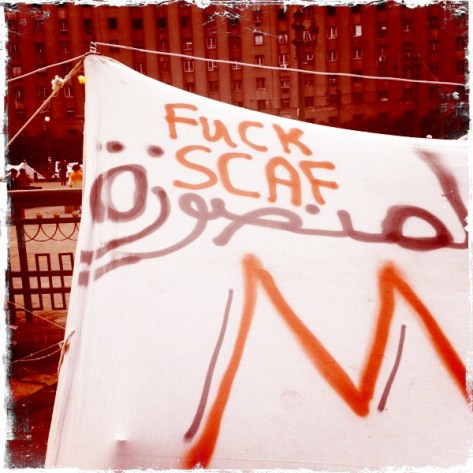
The police lobbed another tear gas canister and soon the feeling of suffocation would take over. But he didn’t move, instead he stood in the center; he continued to wave the Egyptian flag. The sound of rubber bullets being fired drowned under the sound of the drum. The drum was the harbinger of doom: when it was sounded by protestors, when the cacophony cut through the air, the message was simple – run, run as fast as you can because the police would begin their attack, again.

Continue reading Egypt, Revolution 2.0: Alia Allana reports from Tahrir Square

An account of deadly clashes in Tahrir Square: Alia Allana

This guest post by ALIA ALLANA is a despatch for Kafila from Cairo, the eighth in a series of ground reports from the Arab Spring. Videos and photos by Alia Allana

This slideshow requires JavaScript.

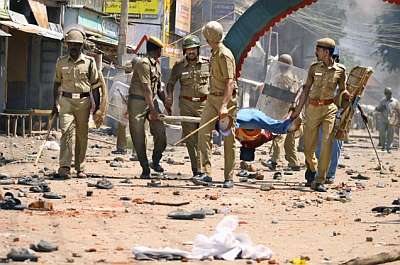
A peaceful protest with men selling candyfloss and making chai turned into an orgy of violence.

Tahrir Square had been quiet for the earlier part of the day today. The Sunday afternoon saw couples strolling, a mother carried her sleeping child, his face was buried in her bosom, scooters with loud speakers blared music.  There was no chanting and very few slogans. Small and sporadic groups of people protested. They called for change.

Continue reading An account of deadly clashes in Tahrir Square: Alia Allana

The Last International: Occupy New York, Occupy the Night, Occupy Earth.

Facebook Found Image of the Occupation of Foley Square, New York

Sometimes just a few images, and a few facebook update texts tell you all you need to know.

New York, 18th November 2011, NYPD estimates say that approximately 36,000 people voted with their feet to take back their city, and their planet. Could this be the beginning of the end of Capitalism, at least as we know it? Continue reading The Last International: Occupy New York, Occupy the Night, Occupy Earth.

Adib Shishakly – The Rebel in the Hotel Room: Alia Allana

This guest post by ALIA ALLANA, a despatch from Istanbul, is the seventh in Kafila series of ground reports from the Arab Spring. Photos by Alia Allana unless otherwise mentioned

Adib Shishakly’s rebellion starts with a small pin on his blue blazer.

Embellishing the the blue of his jacket, clipped on to the left collar is a flag of Syria not seen since the days following the French mandate. Today the flag flies in the besieged areas of Homs, Hama and Dera’a where the protestors have posed Bashar al Assad’s regime with it’s biggest challenge to date. It’s this very flag, with its three golden stars that was outlawed by the Ba’ath Party, by strong man Hafez al Assad.

Continue reading Adib Shishakly – The Rebel in the Hotel Room: Alia Allana

The nuclear energy debate in India: Response to Dr APJ Abdul Kalam from Dr Surendra Gadekar

Dr. SURENDRA GADEKAR is a well-published physicist of international renown, and a Gandhian. After an MSc and PhD (in theoretical physics) in 1979 from IIT Kanpur, he worked for two years as a post-doctoral fellow at Iowa State University, US and then two years as a research associate at IISc in Bangalore. He resigned in 1986 (a little before Chernobyl) to do antinuclear work when the Kakrapar Nuclear Power Plant was started. In 1987, he started Anumukti A Journal Devoted to Non-Nuclear Indiaand has carried out and published studies of the impact of nuclear energy around the plants at Kakrapar, Rawatbata and Jadugoda.  He has also carried out a study at Pokharan, which is as yet unpublished. Dr Gadekar’s response follows:

Dr A P J Abdul Kalam and‭ ‬Mr.‭ ‬Srijan Pal Singh deserve a special thanks for their article in the Sunday edition of The Hindu‭ (‬November‭ ‬6,‭ ‬2011‭) ‬entitled‭ ‬“Nuclear power is our gateway to a prosperous future.‭”‬

Although most of what they write is irrelevant to their topic and the rest just plain wrong,‭ ‬the very fact that the establishment has to bring out its‭ ‬‘Big Guns‭’‬ to answer the questions raised by the Koodankulam movement,‭ ‬is a testimony to the success of the movement.

Originally I had intended to write a point by point refutation of their article,‭ ‬but I have been deterred by the sheer length of the article.‭ ‬What I intend to do here instead is to paraphrase their points and answer them one by one.‭ ‬I would urge activists to visit the Hindu website at and to read the article in the full. I make this request specially so that friends can point out if I have been unfair in summarizing their work or have missed something important.

Continue reading The nuclear energy debate in India: Response to Dr APJ Abdul Kalam from Dr Surendra Gadekar

My Days with Nationalism in Assam: Ankur Tamuli Phukan

Guest post by ANKUR TAMULI PHUKAN

Many of us who have been studying the political process in Assam were surprised when we received the news in December 2009 that Chairman Arabindo Rajkhowa and some of his colleagues of United Liberation Front of Asom (ULFA) had been arrested in Bangladesh. This moment had to come some day, but we were not prepared to face it. We were familiar with the brave and somewhat legendary image they had created for themselves and needed time to believe that they could be defeated. Continue reading My Days with Nationalism in Assam: Ankur Tamuli Phukan

Understanding the Nepali Revolution: Baburam Bhattarai

(Nepal’s Prime Minister, Dr BABURAM BHATTARAI, visited India in his first bilateral trip since taking office, in the third week of October. Bhattarai spoke at the Jawaharlal University, Delhi, where he had earned his PhD from the Centre for Study of Regional Development, about the political evolution in Nepal, particularly after the 1990 and 2006 movements as seen through the prism of the Unified Communist Party of Nepal (Maoist).

Before beginning his substantive speech, he declared, “I am what I am because of JNU,” amidst thundering applause and cries of Lal Salaam.

The full text of the speech, provided to Kafila by his office, is being posted below for the record.)  Continue reading Understanding the Nepali Revolution: Baburam Bhattarai

“We are not like Iran here”: Alia Allana reports from Tunisia

This guest post by ALIA ALLANA is an account of polling day in Tunisia

They had already waited so long, what was a few more hours? Continue reading “We are not like Iran here”: Alia Allana reports from Tunisia

Mickey wants to be the first one to vote: Alia Allana reports from Tunisia

This guest post for Kafila by ALIA ALLANA from Sidi Bou Said on the outskirts of the capital Tunis captures the mood a day before Tunisia goes to the polls. Photos by Alia Allana

Continue reading Mickey wants to be the first one to vote: Alia Allana reports from Tunisia

The Minister of Information maintains that there is no revolution: Alia Allana reports from Damascus

This guest post by ALIA ALLANA is a despatch for Kafila from Damascus, the Syrian capital. All photos by Alia Allana

“You don’t think I’m afraid?” asked Bouthaina Shaaban, advisor to Syrian President, Bashar al Assad.

We were sitting in the Ministry of Protocol in Damascus and she tugged on her black pearl necklace and fidgeted with her black and white tweed jacket. She had more reason to be afraid, she said – not just because she was a woman but also because she is a supporter of the current regime.

Continue reading The Minister of Information maintains that there is no revolution: Alia Allana reports from Damascus

A Despatch from Homs: Alia Allana

This guest post by ALIA ALLANA is a despatch for Kafila from Homs, Syria. All photos by Alia Allana


He was found shot in the chest, bleeding on the streets, alone.

He has no name. He’s just another struggling body in the hospital in Homs — only he’s much younger than most. He’s only four. He doesn’t move, his small frail body is gobbled by wires. The doctors say he hasn’t opened his eyes, hasn’t made a sound, nor has he called out for anyone. Saliva runs down his mouth but there is no one to wipe it off his face. This isn’t the first case and the doctors fear it won’t be the last. There will be other children who will take his place, there will be more victims of random shooting, more deaths and no one knows by whose gun.  Continue reading A Despatch from Homs: Alia Allana

Letter to Occupy Together Movement: Harsha Walia

Cross-posted from Rabble.ca

I wish I could start with the ritual “I love you” which the Occupy Movement is supposed to inspire. To be honest, it has been a space of turmoil. But also, virulent optimism.

What I outline below are not criticisms of the Occupy movement. I am inspired that the dynamic of the movement thus far has been organic, so that all those who choose to participate are collectively responsible for its evolution and development. To all those participating — I offer my deepest gratitude and respect. I am writing today with Grace Lee Boggs on the forefront of my mind: “The coming struggle is a political struggle to take political power out of the hands of the few and put it into the hands of the many. But in order to get this power into the hands of the many, it will be necessary for the many not only to fight the powerful few but to fight and clash among themselves as well.” This may sound dramatic and counter-productive, but I find it a poignant reminder that, in our state of elation, we cannot underestimate the difficult terrain ahead and I look forward to the processes that will further these conversations.

Read the rest of the article here.

A Big Red River: Solidarity Meeting with Maruti-Suzuki Workers

(this video, courtesy, Pratyush, Correspondence Delhi)

A big red river streamed out of the gates of Kamla Nehru Park in Gurgaon last evening (17th October, 2011). Several thousands of workers (according to one estimate – one hundred thousand workers), from many factories in the Gurgaon-Manesar belt had occupied the park from 4:00 pm onwards to stand in solidarity with the struggle of the Maruti-Suzuki, Suzuki Powertrain and Suzuki Motorcycle India Limited workers. In an unprecedented demonstration of solidarity, permanent workers are on strike to demand justice and re-instatement of their contract worker colleagues. The atmosphere at the meeting was of celebration, workers who had been occupying three different factories for more than a week had been evicted by an administration that had brought out all the police and coercive power at its disposal. But yesterday’s gathering was like a reunion, the workers of the three ex-occupied factories, and their comrades in other plants throughout the Gurgaon-Manesar belt were meeting, like old and new friends, to taste the heady experience of peacable solidarity. Continue reading A Big Red River: Solidarity Meeting with Maruti-Suzuki Workers

Bengal Power in Jaipur: Kavita Srivastava

Guest post by KAVITA SRIVASTAVA

4 October 2011

More than 3000 Domestic Workers Take to the Jaipur Streets
SHARE THEIR WOES AND DEMAND RIGHTS

PUBLIC HEARING PANEL:
• Aditi Mehta (Principal Secretary Social Justice and Empowerment),
• Anuradha Talwar. Trade Union Activist, Paschim Banga Khet Mazdoor Sangathan, Kolkata
• Jose Mohan, DCP, Jaipur Police Commissionerate
• Bhagwan Sahai Sharma, member Secretary, State Social Welfare Board,

Domestic worker women power made history today in Jaipur when they took to the streets of Jaipur and demanded their rights from the State and society. We are not “naukranis” they said. We are workers in free India and want the dignity of being a worker. We run two homes, yours and ours, can any of you in society do without our labour, they asked boldly. Ninety percent were Bengally with abotu ten percent from who had come from different parts of Rajasthan. Continue reading Bengal Power in Jaipur: Kavita Srivastava

Occupy Wall Street – An American Spring Amidst Media Blackout?

As governments across the world prostrate themselves before corporations and corporate greed takes over the daily business of governing, mass struggles are breaking out all over the world. What started as the much propagated ‘Arab Spring’ – apparently the Arab world’s yearning for American and Western values represented by ‘democracy’, has now, after spreading through Europe (France, Greece, Spain, Portugal…) engulfed the heart of Empire – the United States of America. The Occupy Wall Street movement that started almost three weeks ago, with thousands of people assembling in Zucotti Park in Lower Manhattan, New York, has now spread amdist media blackout and police repression, to other parts across the United States. A glimpse of the situation about a week ago:

Continue reading Occupy Wall Street – An American Spring Amidst Media Blackout?

Statement condemning raid on Kavita Srivastava’s house: Right to Food Campaign

This statement come from the RIGHT TO FOOD CAMPAIGN

October 3rd, 2011

Arbitrary Raid on Kavita Srivastava’s house: Latest act of harassment of human rights workers

We condemn in the strongest possible terms the arbitrary raid this morning (3 October), in Jaipur, on the house of Kavita Srivastava, General Secretary of PUCL and convenor of the Right to Food Campaign’s steering group. This is yet another instance of harassment of human rights workers under the cover of fighting Naxalism. Kavita Srivastava is the convenor of the Steering Committee of the Right to Food Campaign and PUCL is the petitioner in the Supreme Court case on the Right to Food which has recently challenged the Government on the issue of the poverty line. Continue reading Statement condemning raid on Kavita Srivastava’s house: Right to Food Campaign

An extraordinary general strike for Telangana: A Suneetha, Vasudha Nagaraj and Others

Guest post by A. SUNEETHA, VASUDHA NAGARAJ, R. SRIVATSAN, GOGU SHYAMALA, SARATH DAVALA and R.V. RAMANA MURTHY

[This post was sent to us on the 23rd of September, when the strike, still on-going, entered its tenth day.  On the date of posting this, the strike had entered its sixteenth day].

Sakala Janula Samme (extraordinary general strike) in the ten districts of Telangana has entered its tenth day today. Miners in the Singareni Collieries, private college teachers and students, road transport employees unions, school teachers, university staff, lawyers in the lower and high courts, the electricity employees union—in short almost all employees (who usually refuse to see beyond their immediate benefits) and contract workers (who under normal circumstances cannot afford to lose wages) needed by the state to “govern” its people—have gone on strike.

Telengana general strike
Telengana general strike, photo courtesy: msn news

Government in this region, already seriously impaired and facing severe challenges from the movement since 2009 has come to a standstill. In an extraordinary “do or die” battle for the formation of a separate Telangana state, the various joint action committees promise to continue this strike till a separate Telangana state is formed.

Continue reading An extraordinary general strike for Telangana: A Suneetha, Vasudha Nagaraj and Others

The Decline of Communist Mass Base in Bihar: Jagannath Sarkar

[JAGANNATH SARKAR, who passed away in April, was among those who led the spectacular rise of CPI in Bihar in the 1960s and 1970s. He was among a handful of Bihar CPI leaders who envisioned the crisis in CPI in the mid-1970s. Today is his first birthday after he passed away – he was born on 25 September 1919.  The piece below is an important document that gives a glimpse of the debate on new caste assertions in the CPI. It was written by Sarkar in 1998, following the National Council meeting of the CPI. It has been translated by Raj Ballabh from Hindi. – AN]

The National Council of the CPI accepted, if belatedly, in its review report of March 1998 that there has been a serious decline in the basic mass base of the party and its class-based mass base has fragmented on the basis of caste. It has accepted that the party could not face the deviation of ‘social justice’ in the form of ‘backward casteism’ in its theatricality, or indeed politically and practically; that the party could not maintain its distinct identity, as a party that was politically and practically different from the Laloo-led Janata Dal Government. What is more, the toxin of casteism began to show its effects within the party as well. Indeed, it is an issue of serious concern which should be analyzed in detail.

Continue reading The Decline of Communist Mass Base in Bihar: Jagannath Sarkar

Letter from Japan to the Prime Minister of India

Respected Prime Minister of India, and Chief Minister of Tamilnadu:

We are residents and organisations from Japan, and are intimately aware of the unpredictability and uncontrollable nature of nuclear power. We are the unfortunate witnesses of two nuclear holocausts.  It is with pain that we see the Indian Government pursuing a dangerous path of constructing large nuclear power plants within even larger nuclear “parks” where power generation capacities are pegged at up to 10,000 MW.

Continue reading Letter from Japan to the Prime Minister of India

Out of Development’s Waiting Room, Out of Democracy: The Continuing Agony of the DHRM

[with inputs from Baiju John]

Faced with the never-ending agony to which the members of the Dalit Human Rights Movement (DHRM) in Kerala seem to be subject to, it appears that that the more familiar ways of marginalizing of dalit people in Malayalee people do not work anymore. The past few days have seen horrendous attacks on these people near the town of Varkala in Thiruvanathapuram district. The DHRM has accused the Siva Sena and the BJP of violence, but it appears that both the authorities and the press are equally and irremediably deaf. Continue reading Out of Development’s Waiting Room, Out of Democracy: The Continuing Agony of the DHRM

In Allahpur, a Moment of Truth

(First published in Untold Stories)

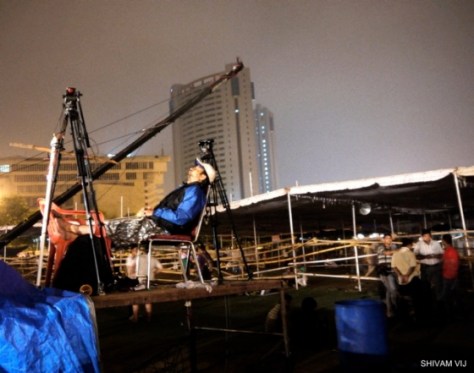
Imam Shamsuddin calls for prayer. Photo credit: Shivam Vij

Like nearly every village in South Asia, Allahpur, in the east Indian state of Bihar, is geographically divided on the lines of caste. On one side of a dirt track live the upper-caste Muslims (Syeds, Sheikhs and Pathans) and on the other side live the lower-caste Muslims (Ansaris, Dhunias and Raains). There are only four Hindu families in Allahpur, and they are all lower castes, their houses amid the low-caste Muslim houses.

For five years now, the low caste Muslims have been praying at a ramshackle mosque they built, boycotting the mosque in the upper-caste Muslim area, a stone’s throw away.

Continue reading In Allahpur, a Moment of Truth