Category Archives: Movements

Who will get the hot roti in the Delhi assembly elections?

My friend Guddi has a great story about a Gujjar wedding she attended recently in Ghaziabad. It was a typically chaotic event, marked accurately by the swirling crowds around the dinner stalls. If Gujjar weddings are chaotic and the dinner doubly so, the scene around the tandoor is triply compounded chaos. Barely concealed competition amongst overmuscled Gujjar men in overtight pants for that precious hot roti ensures that none but the most Hobbesian men remain, circling the tandoor like hungry wolves, periodically thrusting their plate forward like fencing champions and shouting obscenities at the harried servers. In such a heart-stopping scenario, a young server had as Guddi recounts, figured out the formula to keep everybody from killing each other (or him). As soon as the roti would be pulled out of the tandoor, seductively golden brown and sizzling, this man would hold it high up with his tongs so everybody could see, then in an elaborate dance-like ritual, touch each of the empty extended plates in front of him with the roti, and finally, in a mysterious but authoritative decision, place it respectfully on a randomly selected plate. Repeat with every single roti that emerged from the tandoor. A hushed silence followed by nervous laughter followed every such flourish.

Continue reading Who will get the hot roti in the Delhi assembly elections?

Beyond Defeatism – Political Parties and the Fight Against Hindutva

The following, necessarily brief, reflections have been sparked off by two recent posts on Kafila – one by Biju Mathew published on 16 April, and the other by CP Geevan, published today. These reflections should not be seen as a response to the positions taken by Biju and/ or Geevan; they are, in fact, more in the way of addressing the central question raised by Biju Mathew’s piece – that of despondency and pessimism that has followed the UP elections and more importantly, the stealthy manner in which Adityanath was installed as the chief minister in the state. Stealthy, because after all, it was amply clear even to the decision makers in BJP, from the very beginning that if they had entered the election campaign with Adityanath as the chief ministerial face, it might have yielded very different results. It was too  big a risk to be undertaken.The real stroke of Modi-fascist genius lay precisely in keeping not just the electorate but also the organizational machinery in the dark and turning it into an advantage.

As it happens, despite the sharpness of Geevan’s comments, my sense, on reading the two pieces, is that there isn’t really as great a divergence on most issues as might appear at first sight.

Continue reading Beyond Defeatism – Political Parties and the Fight Against Hindutva

Talk Bhima or Bhim, Walk Manu

bhima bhoi के लिए चित्र परिणाम

( Photo Courtesy : http://www.bhubaneswarbuzz.com)

Bhima Bhoi, saint, poet and social reformer, who lived in later part of the 19 th century and who wielded his pen against the prevailing social injustice, religious bigotry and caste discrimination, would not have imagined in his wildest dreams that in the second decade of the 21 st century there would arrive such new claimants to his legacy who stood against everything for which he stood for. A populariser of Mahima movement or Mahima Dharma which ‘draws elements from Islam, Buddhism, Jainism, Vaishnavism and Tantra Yoga,’ the movement Bhima  led was a ‘deeply felt protest against caste system and feudal practices of western and central Orissa.’ and goal of his mission was “Jagata Uddhara” ( liberation of entire world). ((http://roundtableindia.co.in/lit-blogs/?tag=bhima-bhoi))  Continue reading Talk Bhima or Bhim, Walk Manu

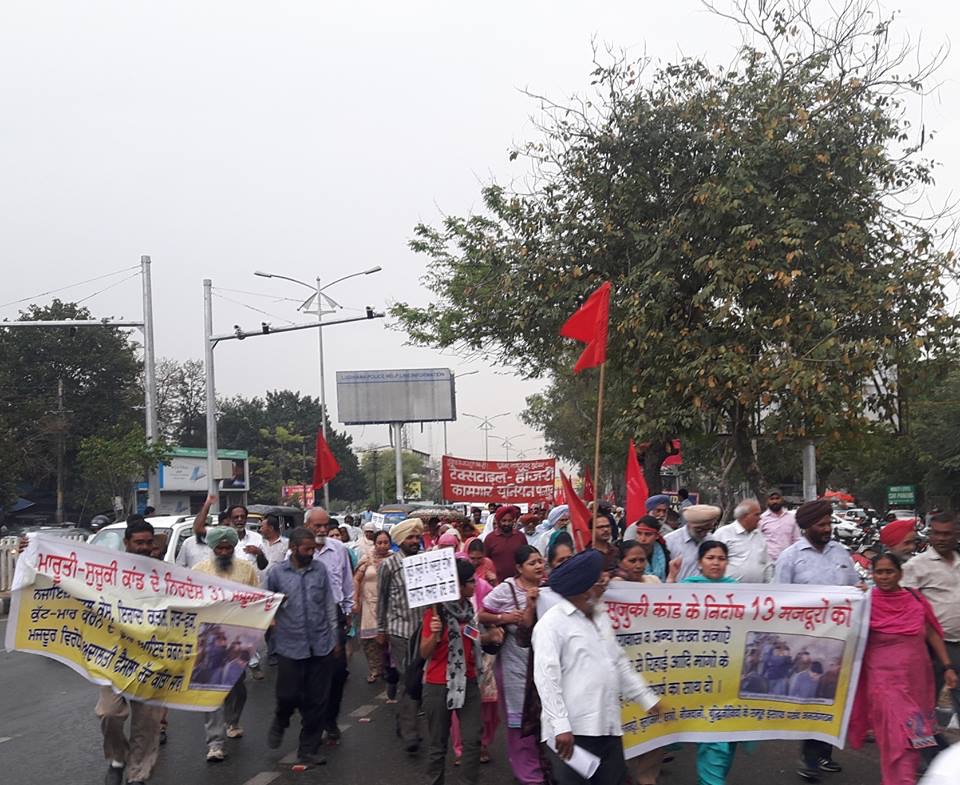
मारूति-सुजुकि मज़दूरों को उम्र कैद व अन्य नाजायज सजाओं के खिलाफ़ पंजाब में उठी जोरदार आवाज़: लखविन्दर

अतिथि post: लखविन्दर

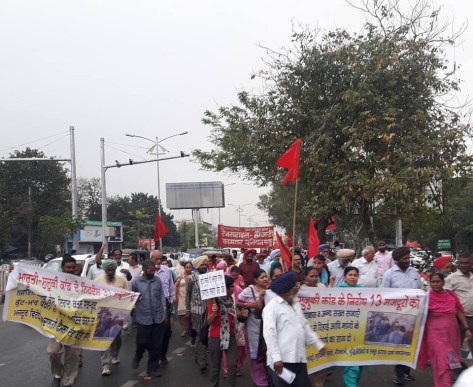
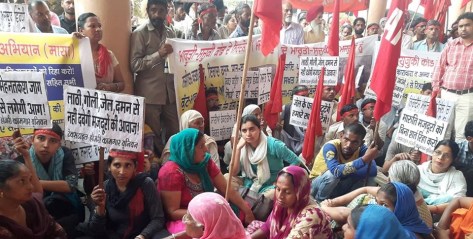
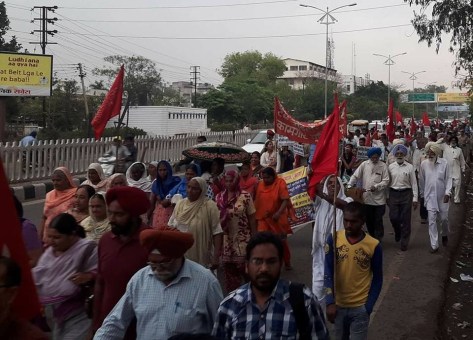
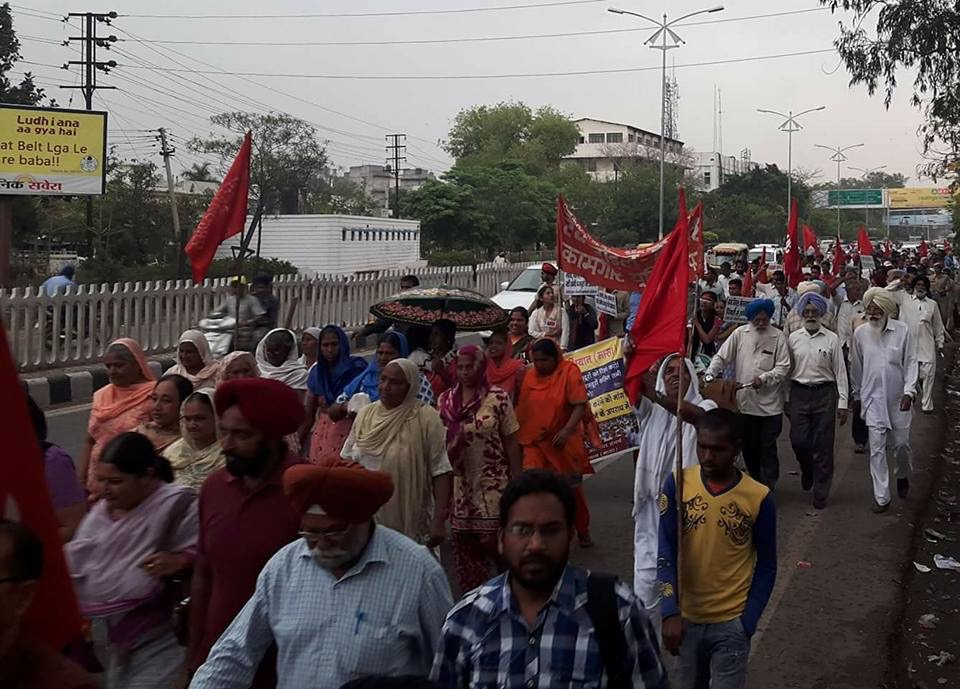
मारूति-सुजुकि मज़दूरों को उम्र कैद व अन्य नाजायज सजाओं के गुड़गांव अदालत के फैसले को घोर पूँजीपरस्त, पूरे मज़दूर वर्ग व मेहनतकश जनता पर बड़ा हमला मानते हुए पंजाब के मज़दूरों, किसानों, नौजवानों, छात्रों, सरकारी मुलाजिमों, जनवादी अधिकारों के पक्ष में आवाज उठाने वाले बुद्धिजीवियों व अन्य नागरिकों के संगठनों ने व्यापक स्तर पर आवाज़ बुलन्द की है। 4 और 5 अप्रैल को देश व्यापी प्रदर्शनों में पंजाब के जनसंगठनों ने भी व्यापक शमूलियत की है। विभिन्न संगठनों ने व्यापक स्तर पर पर्चा वितरण किया, फेसबुक, वट्सएप पर प्रचार मुहिम चलाई। अखबारों, सोशल मीडिया आदि से इन गतिविधियों की कुछ जानकारी प्राप्त हुई है।

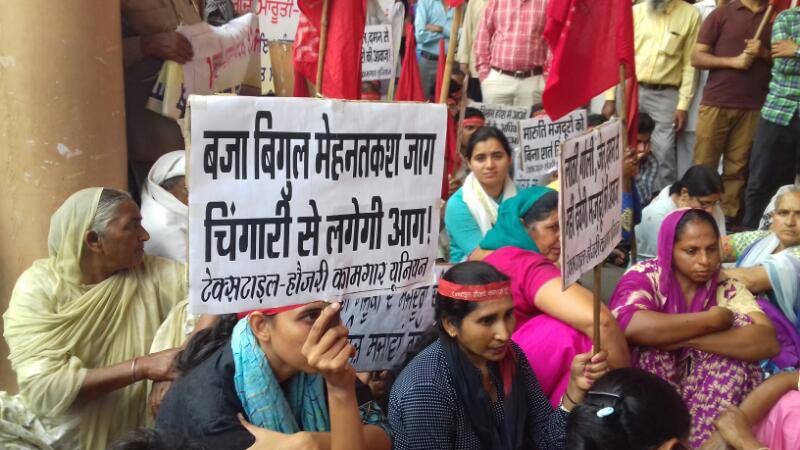
​5 अप्रैल को लुधियाना में लघु सचिवालय पर डीसी कार्यालय पर टेक्सटाईल-हौजऱी कामगार यूनियन, मोल्डर एण्ड स्टील वर्कर्ज यूनियनें, मज़दूर अधिकार संघर्ष अभियान, नौजवान भारत सभा, पी.एस.यू., एटक, सीटू, एस.एस.ए.-रमसा यूनियन, पेंडू मज़दूर यूनियन, डी.टी.एफ., रेलवे पेन्शनर्ज वेल्फेयर ऐसोसिएशन, जमहूरी अधिकार सभा, आँगनवाड़ी मिड डे मील आशा वर्कर्ज यूनियन, कामागाटा मारू यादगारी कमेटी, स्त्री मज़दूर संगठन, कारखाना मज़दूर यूनियन, पेंडू मज़दूर यूनियन (मशाल), कुल हिन्द निर्माण मज़दूर यूनियन आदि संगठनों के नेतृत्व में जोरदार प्रदर्शन हुआ और राष्ट्रपति के नाम माँग पत्र सौंपा गया जिसमें माँग की गई कि सभी मारूति-सुजुकि के सभी मज़दूरों को बिना शर्त रिहा किया जाए. उनपर नाजायज-झूठे मुकद्दमे रद्द हो, काम से निकाले गए सभी मज़दूरों को कम्पनी में वापिस लिया जाए।

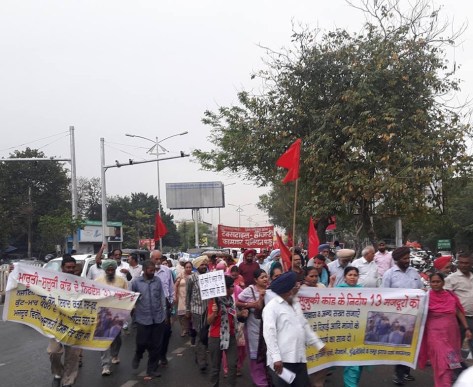
​लुधियाना में 5 अप्रैल के प्रदर्शन की तैयारी के लिए हिन्दी और पंजाबी पर्चा वितरण भी किया गया जिसके जरिए लोगों को मारूति-सुजुकि मज़दूरों के संघर्ष, उनके साथ हुए अन्याय, न्यायपालिका-सरकार-पुलिस के पूँजीपरस्त और मज़दूर विरोधी-जनविरोधी चरित्र से परिचित कराया गया और प्रदर्शन में पहुँचने की अपील की गई। लुधियाना में 16 मार्च को भी बिगुल मज़ूदर दस्ता, मोल्डर एण्ड स्टील वर्कर्ज यूनियनों, मज़दूर अधिकार संघर्ष अभियान, आदि संगठनों द्वारा रोषपूर्ण प्रदर्शन किया गया था।

​जमहूरी अधिकार सभा, पंजाब द्वारा बठिण्डा व संगरूर में 4 अप्रैल, बरनाला में 8 अप्रैल को, लुधियाना में 1 अप्रैल को पिछले दिनों देश की अदालतों द्वारा हुए तीन जनविरोधी फैसलों मारूति-सुजुकि के मज़दूरों को उम्र कैद व अन्य सजाएँ, जनवादी अधिकारों के लिए आवाज उठाने वाले दिल्ली विश्वविद्यालय के प्रो. साईबाबा सहित अन्य बेगुनाह लोगों को उम्र कैद की सजाओं, और हिन्दुत्वी आतन्कवादी असीमानन्द को बरी करने के मुद्दों पर कन्वेंशनें, सेमिनार, प्रदर्शन, मीटिंगें आदि आयोजित किए गए जिनमें अन्य जनसंगठनों नें भी भागीदारी की। जमहूरी अधिकार सभा ने इन मुद्दों पर एक पर्चा भी प्रकाशित किया जो बड़े स्तर पर पंजाब में बाँटा गया।

 पटियाला में 4 अप्रैल को मज़दूरों, छात्रों, किसानों के विभिन्न संगठनों द्वारा रोष प्रदर्शन किया गया। बिजली मुलाजिमों ने भी टेक्नीकल सर्विसज़ यूनियन के नेतृत्व में 4 अप्रैल को अनेकों जगहों पर प्रदर्शन किए। लहरा थरमल पलांट के ठेका मज़दूरों ने 4 अप्रैल को रोष रैली के जरिए मारूति-सुजुकि मज़दूरों के साथ एकजुटता जाहिर करते हुए उनके समर्थन में आवाज़ उठाई। मारूति-सुजुकि मज़दूरों के समर्थन में पंजाब में उठी आवाज़ की कड़ी में लोक मोर्चा पंजाब ने 8 अप्रैल को लम्बी (जिला बठिण्डा) में रैली और रोष प्रदर्शन किया। लम्बी में आर.एम.पी. चिकित्सकों द्वारा भी प्रदर्शन किया गया। अनेकों गाँवों में मज़दूर-किसान-नौजवान संगठनों ने अर्थी फूँक प्रदर्शन भी किए हैं। आप्रेशन ग्रीन हण्ट विरोधी जमहूरी फ्रण्ट, पंजाब ने मोगा में 12 अप्रैल को कान्फ्रेंस और प्रदर्शन आयोजित किया।

मारूति-सुजुकि मज़दूरों का जिस स्तर पर कम्पनी में शोषण हो रहा था और इसके खिलाफ़ उठी आवाज़ को जिस घृणित बर्बर ढंग से कुचलने की कोशिश की गई है उसके खिलाफ़ आवाज़ उठनी स्वाभाविक और लाजिमी थी। पंजाब के इंसाफपसंद लोगों का हक, सच, इंसाफ के लिए जुझारू संघर्षों का पुराना और शानदार इतिहास रहा है। अधिकारों के जूझ रहे मारूति-सुजुकि मज़दूरों का साथ वे हमेशा निभाते रहेंगे।

पूरे देश में मज़दूरों का देशी-विदेशी पूँजीपतियों द्वारा भयानक शोषण हो रहा है। जब मज़दूर आवाज़ उठाते हैं तो पूँजीपति और उनका सेवादार पूरा सरकारी तंत्र दमन के लिए टूट पड़ता है। ऐसा ही मारूति-सुजुकी, मानेसर (जिला गुडग़ांव, हरियाणा) के संघर्षरत

 मज़दूरों के साथ हुआ है। एक बहुत बड़ी साजिश के तहत कत्ल, इरादा कत्ल जैसे पूरी तरह झूठे केसों में फँसाकर पहले तो 148 मज़दूरों को चार वर्ष से अधिक समय तक, बिना जमानत दिए, जेल में बन्द रखा गया और अब गुडग़ाँव की अदालत ने नाज़ायज ढंग से 13 मज़दूरों को उम्र कैद और चार को 5-5 वर्ष की कैद की कठोर सजा सुनाई है। 14 अन्य मज़दूरों को चार-चार साल की सजा सुनाई गई है लेकिन क्योंकि वे पहले ही लगभग साढे वर्ष जेल में रह चुके हैं इसलिए उन्हें रिहा कर दिया गया है। 117 मज़दूरों को, जिन्हें बाकी मज़दूरों के साथ इतने सालों तक जेलों में ठूँस कर रखा गया उन्हें बरी करना पड़ा है। सबूत तो बाकी मज़दूरों के खिलाफ़ भी नहीं है लेकिन फिर भी उन्हें जेल में बन्द रखने का बर्बर हुक्म सुनाया गया है।

​जापानी कम्पनी मारूति-सुजुकि के खिलाफ़ मज़दूरों ने श्रम अधिकारों के उलण्घन, कमरतोड़ मेहनत करवाने, कम वेतन, लंच, चाय, आदि की ब्रेक के बाद एक मिनट के देरी के लिए भी आधे दिन का वेतन काटने, छुट्टी करने के लिए हजारों रूपए वेतन से काटने जैसे भारी जुर्माने लगाने, आदि के खिलाफ़ कुछ वर्ष पहले संघर्ष का बिगुल बजाया था। कम्पनी की दलाल तथाकथित मज़दूर यूनियन की जगह उन्होंने अपनी यूनियन बनाई। नई यूनियन के पंजीकरण में कम्पनी ने ढेरों रूकावटें खड़ी कीं। उस समय हरियाणा में कांग्रेस की सरकार के मुख्यमंत्री भूपेन्द्र हुड्डा ने सरेआम पूँजीपतियों की दलाली का प्रदर्शन करते हुए कहा था कि कारखाने में नई यूनियन नहीं बनने दी जाएगी। मज़दूरों ने लम्बी-लम्बी हड़तालें लड़ीं, अपने अथक संघर्ष से यूनियन का पंजीकरण कराके जीत हासिल की। मज़दूर संघर्ष कम्पनी और समूचे सरकारी तंत्र की आँख की किरकरी बना हुआ था। संघर्ष कुचलने के लिए साजिश रची गई। 18 जुलाई 2012 को कारखाने के भीतर पुलीस की हाजिरी में सैंकड़ों हथियारबन्द गुण्डों से मज़दूरों पर हमला करवाया गया। बड़ी संख्या मज़दूर जख्मी हुए। कारखाने में आग लगवा दी गई। एक मज़दूर पक्षधर मैनेजर की इस दौरान मौत हो गई। साजिश के तहत इसका दोष मज़दूरों पर मढ़ दिया गया। बड़े स्तर पर गिरफतारियाँ की गईं, यातनाएँ दी गईं। ढाई हज़ार मज़दूरों को गैरकानूनी रूप से नौकरी से निकाल दिया गया। 148 मज़दूरों को जेल में ठूँस दिया गया। जमानत की अर्जी पर पंजाब-हरियाणा हाईकोर्ट ने टिप्पणी की कि अगर जमानत दी गई तो भारत में विदेशी पूँजी का निवेश रुकेगा। जिन 13 मज़दूरों को उम्र कैद की सजा सुनाई गई है उनमें 12 लोग यूनियन नेतृत्व का हिस्सा थे। इससे इस झूठे मुकद्दमे का मकसद समझना मुश्किल नहीं है।

अदालत का फैसला कितना अन्यायपूर्ण है इसका अन्दाजा लगाने के लिए सिर्फ कुछ तथ्य ही काफ़ी हैं। कम्पनी में चप्पे-चप्पे पर कैमरे लगे हुए हैं लेकिन अदालत में कहा कि उसके पास 18 जुलाई काण्ड की कोई वीडियो है ही नहीं! कम्पनी के गवाहों के ब्यानों से साफ पता चल रहा था कि झूठ बोल रहे हैं। वो तो मज़दूरों को पहचान तक न सके। गुण्डों व उनका साथ देने वाले मैनेजरों व अन्य स्टाफ के मैंबरों से कहीं अधिक संख्या में मज़दूर जख्मी हुए थे। पोस्ट मार्टम में पाया गया कि मैनेजर अवनीश कुमार की मौत दम घुटने से हुई है न कि जलाए जाने से जिससे साफ़ है कि यह हत्या का मामला है ही नहीं। और भी बहुत सारे तथ्य स्पष्ट तौर मज़दूरों का बेगुनाह होना साबित कर रहे थे लेकिन इन्हें अदालत ने नजरान्दाज कर मज़दूरों को ही दोषी करार दे दिया क्योंकि पूँजी निवेश को बढ़ावा जो देना है! वास्तव में मारूति-सुजुकी घटनाक्रम के जरिए लुटेरे हुक्मरानों ने ऐलान किया है कि अगर कोई लूट-शोषण के खिलाफ़ बोलेगा वो कुचला जाएगा।

ये फैसला तब आया है जब असीमानन्द और अन्य संघी आतन्कवादियों के खिलाफ ठोस सबूत होने, असीमानन्द द्वारा जुर्म कबूल कर लेने के बावजूद भी बरी कर दिया जाता है। दंगे भड़काने वाले, बेगुनाहों का कत्लेआम करने वाले न सिर्फ आज़ाद घूम रहे हैं बल्कि मुख्य मंत्री, प्रधान मंत्री जैसे पदों पर पहुँच रहे हैं !

आज देशी-विदेशी कम्पनियों, लुटेरे धन्नासेठों को खुश करने के लिए सरकारें मज़दूरों से सारे श्रम अधिकार छीन रही हैं। न्यूनतम वेतन, फण्ड, बोनस, हादसों से सुरक्षा के इंतजाम तक लागू न करने वाले पूँजीपतियों पर कोई कार्रवाई नहीं होती, उन्हें कभी जेल में नहीं ठूँसा जाता। उलटा भाजपा, कांग्रेस से लेकर तमाम पार्टियों की सरकारें कानूनी श्रम अधिकारों में मज़दूर विरोधी बदलाव करके पूँजीपतियों को मज़दूरों की बर्बर लूट की और भी खुली छूट दे रही हैं। किसानों, छात्रों, नौजवानों, आदिवासियों, सरकारी कर्मचारियों के अधिकार कुचले जा रहे हैं। भोजन, स्वास्थ्य, शिक्षा, बिजली, पानी, आदि तमाम सरकारी सहूलतें छीनी जा रही हैं। इसके खिलाफ़ उठी हर आवाज को दबाने के लिए पूरा राज्य तंत्र अत्याधिक हमलावर हो चुका है। काले कानून बनाकर एकजुट संघर्ष के जनवादी अधिकार छीने जा रहे हैं। जनपक्षधर बुद्धिजीवियों, पत्रकारों, कलाकारों तक का दमन हो रहा है, जेलों में ठूँसा जा रहा है। जन एकजुटता को तोडऩे के लिए धर्म, जाति, क्षेत्र के नाम पर बाँटने की साजिशें पहले किसी भी समय से कहीं अधिक तेज़ हो चुकी हैं। जहाँ जनता को बाँटा न सके, जहाँ लोगों का ध्यान असल मुद्दों से भटकाया न जा सके, वहाँ जेल, लाठी, गोली से कुचला जा रहा है। यही मारूति-सुजुकी मज़दूरों के साथ हुआ है। लेकिन बर्बर हुक्मरानों को दीवार पर लिखा पढ़ लेना चाहिए। इतिसाह गवाह है- जेल, लाठी, गोली, बर्बर दमन जनता की अवाज़ न कभी दबी है न कभी देबेगी।

Take back the Poison-Rain: Ambikasutan Mangad’s Swarga

Swarga_300_RGBWhen I first encountered Enmakaje, it was already much praised in Kerala as the powerful little book that aroused the Malayali’s moral conscience towards the unspeakable tragedy wrought by the unbelievably-callous aerial spraying of the insecticide Endosulphan in north Kerala, over some of the most lush, verdant areas of the State. It was criticised by some for what I thought was a very interesting experiment with form: it begins as fiction, slowly shades into a historical account of the beginnings of the anti-Endosulphan struggle in north Kerala, and then shades back, in the end, to fiction again. For me, Enmakaje was much more than an activist tale. It was a determined effort to renew the Malayali self, through a prayerful weaving and imaginative retelling of the many stories that have shaped us. Reading of Neelakantan’s and Devayani’s stories, one remembers these stories, but differently. For example, what if Raman and Seetha left Ayodhya forever, renouncing its sickening power games? What if Adam and Eve voluntarily renounced Paradise? What if Vararuchi’s wife had rebelled in the origin-story of Kerala, of the Parayi petta panthirukulam?
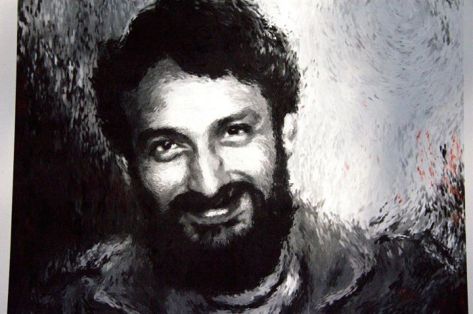

Juggernaut has just published my translation of this gem of a book, and the title of the English version is Swarga: A Posthuman Tale . Below is an excerpt from the book.


It was past midnight.

Jayarajan started from his sleep and sharpened his ears for sounds from outside.

He shook Neelakantan, who was fast asleep, awake. Neelakantan woke to darkness assailing his open eyes. He was frightened.

‘What is it?’

In a trembling voice, Jayarajan said, ‘Something is happening outside. I can hear noises.’

Neelakantan’s throat was parched. He asked in a loud voice, ‘Who is there outside?’

Jayarajan noticed his fear in the dim light of the lantern.

‘Not human beings. Something like a storm and strong winds . . . I can’t make out much . . .’

Neelakantan’s breath returned.

‘Oh, that! Must be the wind . . . I’ve been scared ever since you came in . . . it’s just that I didn’t show it. You lie down, I’ll see you off tomorrow morning; put you on the first bus back. It is not at all safe for you to come and stay here again.’

Jayarajan got up.

‘Come, let’s go out for a bit.’

Neelakantan yawned. His voice was lazy. ‘The rain and wind will go their own way. You should lie down.’

Jayarajan took his hand and made him get up.

‘I’ve seen quite a bit of rain and wind too . . . but something extraordinary is happening outside.’

Neelakantan began to listen, alert now. There was a whole symphony of unpleasant sounds rising outside.

Taking care not to wake Devayani, they opened the door and stepped out.

They saw the most unbelievable sights on top of the Jadadhari Hill.

The huge trees were shaking hard, writhing, in the wind. From the clouds above, golden-coloured lightning-snakes descended, falling on the tops of the massive trees and enveloping them. As if from the impact of the lightning, the tall trees bowed as low as the ground, seeking to shake off the golden serpents . . .

In the next moment, the wind came hurtling like a demon’s hand, swooping up the trees. The branches clung and cleaved to each other as if in a paroxysm of desire, and shivered as though in the throes of an orgasm. And then, the lightning-serpents returned, and the whole cycle began again.

Startled, Jayarajan asked, ‘What is happening up there?’

For a few moments, Neelakantan had no words. He kept watching the hill’s frenzied dance and then said, ‘Terrible thunder and lightning. And the wind and rain besides. All of it together, that’s all.’

But even as he said those words, he knew how inadequate they were. Human language was too limited to describe this miraculous phenomenon. It was too vast to be comprehended by puny human consciousness.

‘Look, it is raining on top of the hill,’ Jayarajan pointed out. ‘Some of it is falling here too. But just see – there is not even a sign of rain or wind anywhere near here. Here the trees are still as if they have stopped breathing. It is a miracle . . . let me call chechi.’

‘No, she will be scared.’

Jayarajan remembered Devappa’s words. ‘On the night of the Kozhikkettu in Bhagyathimaarkandam, no one goes out!’

‘Two years ago, on a night like this, I heard the jungle sway like this around midnight. I thought it was a storm and did not go out.’

‘I think,’ Jayarajan said and stopped.

‘What?’

‘Is this really Siva’s dance of destruction, the thandava? Isn’t this the Jadadhari Hill?’

Neelakantan asked, ‘Are you a believer?’

‘No. What about you?’

‘I haven’t been to temples or shrines after I began to see things differently . . . In my view, Siva is Nature itself. Siva exists in every leaf, every flower. The thandava that you mentioned–’

‘The dance of destruction of Siva, who swallowed the divine serpent Vasuki’s deadly venom! This is it! Is this thandava- Jadadhari Hill’s, Nature’s – that means Siva’s – own attempt to shake off the terrible chemical poison, so like Vasuki’s venom, the Kalakoota?’

‘You tie up everything to your consciousness of the environment!’

Jayarajan pointed out: ‘See, the wind’s grasping fist now eases. The lightning retreats. The rain and thunder depart. The trees stand up straight once again.’

Neelakantan nodded, his eyes wide open and filled with the magic in the air. Yes, the dance of destruction was now ebbing.

Excerpted with permission of Juggernaut Books from Swarga by Ambikasutan Mangad, translated by J Devika available in bookstores and on Juggernaut.


Reclaiming Punjab University-Student Protests Erupt in Chandigarh: Prerna Trehan

Guest Post by Prerna Trehan

While walking through the lawns between the Library and the Chemistry Department , one is confronted with the sudden and  scary sight of policemen brandishing canes.

One of the policemen says, threateningly : “Go inside, before we start shooting bombs” (of tear gas). Behind him two policemen leap at a bewildered group of boys raining lathis and choicest of abuses.

This scene could be right out of the woeful alleys of Palestine, Syria or even Kashmir. However, the events that it describes  took place yesterday in Panjab University, nestled in India’s first planned city, Nehru’s vision of modernity-Chandigarh.

Continue reading Reclaiming Punjab University-Student Protests Erupt in Chandigarh: Prerna Trehan

Remembering Chandu, Friend and Comrade: Kavita Krishnan

Chandrashekhar (Comrade Chandu)

Guest Post by Kavita Krishnan

It’s been twenty years since the assassin’s bullets took Chandu away from us, at 4 pm on 31 March 1997.

I still recall my sheer disbelief when a phone call from my party office at my hostel that evening informed me ‘Chandu has been killed.’ Chandrashekhar as well as youth leader Shyam Narayan Yadav had been shot dead while addressing a street corner meeting in Siwan – ironically at a Chowk named after JP – Jaiprakash Narayan, icon of the movement for democracy against the Emergency. A rickshaw puller Bhuteli Mian also fell to a stray bullet fired by the assassins – all known to be henchmen of the RJD MP and mafia don Mohd. Shahabuddin.

In the spring of 1997, as JNU began to burst into the riotous colours of amaltas and bougainvillea, Chandu bid us goodbye. He had served two terms as JNUSU President (I was Joint Secretary during his second stint) and had decided to return to his hometown Siwan, as a whole-time activist of the CPI(ML) Liberation. He had made the decision to be a whole-time activist a long time ago. Chandu’s friends know that for him, the decision to be an activist rather than pursue a salaried career was no ‘sacrifice.’ It was a decision to do what he loved doing and felt he owed to society.

Continue reading Remembering Chandu, Friend and Comrade: Kavita Krishnan

Slimes Group Vice-Chairman Ameer Jain accused of molesting SOI employee Aaj Faker Shah? Breaking Faking News: Shehla Rashid

Guest Post by Shehla Rashid

Mar 21, Delhi: In a shocking revelation that has triggered panic amongst the media fraternity, renowned media tycoon, Ameer Jain, who is Vice-Chairman of the prestigious Parrot, Caveman & Co. Ltd, has been accused of sexual harassment by an employee of The Slimes of India newspaper, namely Aaj Faker Shah. Parrot, Caveman & Co. Ltd. (PCCL) is the group that owns Slimes of India, Slimes Now, Economic Slimes, Radio Tirchi, Movies Now and Then, Dhoom, Navbharat Slimes, Mumbai Broken Mirror and numerous other media outlets.

After the sexual harassment case filed by an employee of a major news magazine against its high profile editor some years ago, this is the most high-profile case of sexual harassment at the workplace in the media fraternity and is likely to result in a public spectacle, as the complainant, Aaj Faker Shah, has taken to Twitter to publicly make serious accusations of sexual assault against Jain. Normally, in cases of sexual harassment, the complainant must be accorded due anonymity. However, Shah reasons that he was forced to take this extreme step because the Slimes Group, in total violation of the norms prescribed by the Sexual Harassment at the Workplace Act (2013), sat on his complaint, victimised him for speaking out against Jain and even threatened to sack him. This reflects the state of implementation of the Workplace Harassment Law, rules for which were notified in 2014. Continue reading Slimes Group Vice-Chairman Ameer Jain accused of molesting SOI employee Aaj Faker Shah? Breaking Faking News: Shehla Rashid

Free the Maruti Workers: Maruti Suzuki Workers Union


Guest Post by Maruti Suzuki Workers’ Union

[This is a statement and an appeal by the Maruti Suzuki Workers Union condemning the unjust handing down of a life sentence to 13 workers of the Maruti Suzuki Manesar Factory for a ‘murder’ (of an HR Manager) that the prosecution could not prove that they had committed. Here too, the prosecution, and the judgement, relies on a chimera, ‘the reputation of make-in-india’ to justify a harsh punishment. Those who have watched this space will recognize that this recourse to figures of speech in the absence of evidence is a familiar move. It has happened before – to satisfy the hunger of a ‘collective conscience’ when a so-called ‘temple of democracy’ was attacked. This time it has been invoked to defend the ‘fake-in-India temple that houses the deity of a rising GDP’, which would of course otherwise be besieged by insurgent workers.

This text contains a hyperlink to a detailed reading and rebuttal of the prosecution’s arguments, which demonstrates how money and muscle power can always be an adequate replacement for legal acumen in the State of Haryana. Please do follow that link. For the further edification of our readers, we append a short video interview by Aman Sethi of the Hindustan Times of the special public prosecutor, which spins some imaginative legal theory and also radically updates our sense of class struggle. Please do have the patience to view that video. We promise that this will be rewarded. – Kafila Admin.]

Continue reading Free the Maruti Workers: Maruti Suzuki Workers Union

Hail the Students’ Struggle for its Victory in the Battle against Corporate Publishers : New Socialist Initiative

Guest Post by New Socialist Initiative (Delhi Chapter)

On 9 March 2017 three well-established academic corporate publishing houses, Oxford University Press, Cambridge University Press and Taylor and Francis withdrew their copyright suit filed in the High Court against Delhi University and Rameshwari Photocopy Shop, a shop stationed at the Delhi School of Economics campus in Delhi University licensed by the University to carry out photocopying work. The suit that was filed in August 2012 on the grounds that photocopying material from books published by the above three publishers by university students, particularly in the compilation of coursepacks, constituted copyright infringement and revenue loss to the publishers. Right from the beginning it was clear this case was treated as a test case to instate a licensing regime, much like one that exists in the US and other First World countries.
Being the absolute primary constituency to be impacted by such a case and its possible outcomes, students of Delhi University were amongst the first to take up the battle against some of the most powerful publishing houses in academia. The ‘Campaign to Save D.School Photocopy Shop’ soon became the ‘Association of Students for Equitable Access to Knowledge’ (ASEAK), reflecting the growing politicisation of the student community on the issue of the knowledge commons in order to resist an increasing attempt across the world to create a market out of it where it didn’t as yet exist. This can be seen in the case of Costa Rica as well where there was an attempt to make photocopying illegal, a move that was successfully opposed on a massive scale by students.
The students of Delhi University, organised as ASEAK, opposed the move through a range of mechanisms, mobilising students from class to class, organising public meetings, taking out protest rallies, campaigning against these publishers at the annual World Book Fair held in New Delhi, influencing public opinion through writing in newspapers, and last but not the least, taking up the legal battle in the courts. NSI hails the struggle of the students that brought to the centre of the debate questions of equity and justice within the arena of production and distribution of knowledge resources, challenging the private property regime sought to be implemented in the sphere of knowledge production by these big academic corporate publishing houses. 
For the last few years the primary site of the battle has been in the High Court at New Delhi. The publishers have received repeated blow after blow in this process as well, leading to their final withdrawal of the suit altogether. The win is a big victory and testament to the struggle of the students, backed by a legal team that has been seminal to the victory, along with support from the academic community. The case, that attempted to strike a ‘balance’ between private profits of the publishers and the rights of students to access materials in the pursuit of their education, has dealt a blow to precisely such a misconception that the two ‘interests’ are in fact of equal concern.
Along with students, who assert their right over the materials they access as part of their fundamental right to education, scholars, often the authors of these materials, have equally come out to state that there is no better reward for their work as intellectuals, as to be read by as many students as can get hold of their work, photocopied or otherwise. The emphasis of the corporate publishers in asserting absolute ownership over the works they publish, in a rare instance where the labour of writing a book is provided at no cost to the publishers, borne by universities, students’ fees and taxpayers’ money instead, is shameful and needs to be rejected at all cost.
NSI congratulates the students, lawyers, academics and concerned citizens who persisted in their resistance against the bullying tactics of big academic corporate publishing houses and calls on the academic community to engage with new ways of producing and sharing knowledge so as to create equitable, just and democratic structures of knowledge production.
EDUCATION OVER COPYRIGHT! KNOWLEDGE OVER PROFIT!

UAPA – A Video Dossier: Media Collective, Arun Ferreira &Vernon Gonsalves

Video by Media Collective, Article by Arun Ferreira and Vernon Fernandes

Fifty Years of Unreasonable Restrictions

Arun Ferreira & Vernon Gonsalves 

Soon after its adoption, the Constitution of India was amended in 1951. At the time several progressive judgements[i] by the Judiciary held that laws which curb fundamental rights are essentially unconstitutional and fundamental freedoms could only be curbed in the most extreme of cases. The First Amendment, countered this by amending Article 19 to add the word ‘reasonable’ before restrictions and to add ‘public order’ as being one more ground for abridging Fundamental Rights.

The evolution of UAPA[ii] has to be seen in the background of this gradual but steady constriction of Article 19 which guarantees the fundamental freedoms of expression, assembly, association, etc. Continue reading UAPA – A Video Dossier: Media Collective, Arun Ferreira &Vernon Gonsalves

Looking ‘Right’, Talking ‘Liberal’ – The Twists and Turns of Makarand Paranjape: Anirban Bhattacharya

Guest Post by ANIRBAN BHATTACHARYA

[This missive to Makarand Paranjape, who is a professor at Jawaharlal Nehru University, comes in response to his recent op-ed piece in the Indian Express where he comments on the events at Ramjas College, Delhi University on the 21st of February and in their wake, in Delhi University, on the 22nd of February]

Mr. Makarand Paranjape. In your analysis of the post-Ramjas fallout in Delhi University in Indian Express on the 4th of March, one can see that you have donned a “liberal” cloak. But there were way too many holes in that cloak to go without a counter and hence this response.

Continue reading Looking ‘Right’, Talking ‘Liberal’ – The Twists and Turns of Makarand Paranjape: Anirban Bhattacharya

Statements of Solidarity for Ramjas and DU: A Collation

Please find below a collation of statements of solidarity received by Kafila over the past fortnight since the shameful incidents of violence by the ABVP occurred on the 21st and 22nd of February 2017. These are from: Ramjas Alumna, Ambedkar University Delhi Faculty Association, O.P Jindal Teachers: Students and Durham University Politics and International Relations Society, U.S.A; and students and faculty at the University of Minnesota, U.S.A.

UMN STANDS WITH DU
University of Minnesota Students and Faculty

The statements are preceded by a short write-up on what Ramjas College has meant to its alumna, by ANUBHAV PRADHAN.

Nostalgia is made of more than just happiness. It is sulphurous too.

To many who spent three or more years of their life in Ramjas College, visuals of violence in and around it on 21 and 22 February 2017 have been a source of deep, personal shock. The footpath and the areas adjoining the college gate were often sites of lingering conversations between friends, offering moments of respite from studies, tensions accruing from impending exams, or relief to those who had just accomplished a hectic ECA festival and were there catching up their breath or exhaling smoke.

The ABVP struck twice, once attacking the college Seminar Room and then coming back the second day to attack students. In the hundredth year of Ramjas’ establishment, a college founded at a time when protest was an active ideal for most Indians, this singular episode of planned, institutional violence against students and teachers is a grim reminder of the brute silencing of interrogation, peaceful protest, dialogue and dissent being normalised across our colleges and universities, and in our society at large. The audacity with which these perpetrators and their ideologues brand entire institutions and diverse communities of students and academics as anti-national—and therefore fit recipients for their brute censure—also gives the lie to the intellectual and affective bankruptcy of a rapidly emergent cultural orientation premised on simplistic binaries of good and bad, right and wrong, national and anti-national. In a society—and nation—whose ideals are peace, dialogue, and inclusion, these attacks on students and teachers point to the deep ideological rot in the perpetrators’ conception of nation, nationality and nationalism.

As an alumnus of Ramjas College, I cherish the right to self-determination and open debate. I feel outraged that the students’ and faculties’ right to decide what discussion to hold and whom to invite for it within college premises was usurped in this manner. It is disturbing that this violence rippled across the campus as it were, with students being followed, identified and harassed in their personal spaces for having asserted their right to listen to discussions on Bastar and for not bowing down to bodily attacks perpetrated through stones and fisticuffs by members of the ABVP and their affiliates.

Most alumni like me are invested in our respective professions, but the foundations of study and work were laid for us by Ramjas’ teachers and the college’s vibrant culture of extra-curricular instruction. This experience has proved fundamental to our engagement with our immediate workspaces, surroundings, power structures, and our nation. Denying current and future students their right to freely and openly debate issues of their choice in fora of their choice is tantamount to denial of a basic academic right. Threatening and manhandling academicians guided by the spirit of enquiry towards generation of dialogue will prove detrimental to the quality of collegiate education in our nation. We collectively issue the following statement of solidarity with Ramjas’ students and teachers in this moment of crisis:

Statement by Ramjas Alumna

Continue reading Statements of Solidarity for Ramjas and DU: A Collation

Longing for the Future – Two Days with Penkoottu and AMTU at Kozhikode, Kerala

Kozhikode, Hotel Alakapuri, 4-5 March, 2017.

Kozhikode has always upturned my feelings about the male gaze. It is of course a cheerful, bustling, place, full of fabulously good-looking people of all genders. The cheeriness has a certain effortlessly defiant quality – already evident when you look out of the window as the train from the south pulls into the railway station, and see bright, healthy, merrily-swaying wild flowers raise their heads undefeated by the ferocious summer sun– wild sunflowers in hundreds, magnificent vines of kulamariyan flowers ( literally, ‘over-the-top’ flowers, but known here also, interestingly enough, as Antigone vines), creepers happily, constantly, and untiringly winding over  little piles of rubbish and covering them with short-lived if emphatic trumpets of mauve, lavender, red, yellow, and white.  You pass this eternal artwork-in-progress of the flowers and vines and city trash and enter Kozhikode, but realise that it actually tells you a bit about the men there only when you meet them. Continue reading Longing for the Future – Two Days with Penkoottu and AMTU at Kozhikode, Kerala

A Tale of Two and a Half Marches – Two for Azadi and a Half for Ghulami.

[Videos of song by Shehla Rashid and of speeches by Nivedita Menon, Kavita Krishnan, Umar Khalid and Jignesh Mevani, courtesy, Samim Asgor Ali]

February gives way to March and spring returns to Delhi. And what a spring it is. The right wing thugs of the ABVP choose the wrong time to attack, once again. They must really get themselves a better astrologer, or at least a better class of charlatan who can tell them if there ever is a right time to stage their goon show. I suspect there isn’t.

Spring in DU - Fight Back DU
Spring in DU – Fight Back DU

Continue reading A Tale of Two and a Half Marches – Two for Azadi and a Half for Ghulami.

Hard Ways of Lucidity – Thinking About the Crisis in the University: Prasanta Chakravarty

Guest Post by Prasanta Chakravarty

As I see it, university spaces are being assaulted at least from two sides; though it seems as if the two sides are antagonistic to each other, in practice they come dangerously close to each other. How and why is this happening, and what can be done about it?

Prasanta Chakravarty, immediately after being assaulted on February 22nd. Image from the India Today Website.

Continue reading Hard Ways of Lucidity – Thinking About the Crisis in the University: Prasanta Chakravarty

ABVP Riots in Delhi University with Police Protection

For the second successive day, goons affiliated to the RSS-BJP backed right wing student mafia gang called ABVP (Akhil Bharatiya Vidyarthi Parishad) pelted stones and violently attacked peaceful assemblies of students and teachers in Delhi University. Journalists who were present were also beaten up. Phones and cameras and filming equipment were destroyed. An attempt was made to strangle a professor with his own scarf. He, and some other students who were injured had to be hospitalized. Luckily, they are shaken, but out of immediate danger. The incidents have been characterized as ‘clashes’ between right wing and left wing student groups by some sections of the media. Nothing can be further from the truth. These were not ‘clashes’. They were straight-forward one sided attacks by a mob intent on violence. A riot is not a clash. Continue reading ABVP Riots in Delhi University with Police Protection

After a Nuit Debout (night standing up), We Wake Up with a Political Strike: Charles Reeve

Guest post by CHARLES REEVE

[Note from Livia Bocadacce: During 2016, social movements in France and in India have been huge and tough. In both countries, youth, workers, students, oppressed people fought against governments who disregarded their desires of freedom and decent life, and have faced violent repression. But in France, we don’t hear about Indian struggles such as Una Dalits’ movement or Hyderabad and JNU students’ protests. In India, the very strong French movement of last spring, called “Nuits Debout”, has aroused very poor coverage. Because we believe we have to learn from the crossed experiences of fighting, because we refuse a globalization only based on trade and forced migrations, because we hope a globalization that could encourage the circulation of critical thinking and collectiveaction repertoire, we proposed this article on the Nuits debout to Kafila. Hoping it will generate debates and further interests. ]

Nuit Debout, image courtesy gaucherevolutionnaire.fr

After a Nuit debout (night standing up), we wake up with a political strike (1)

Living in a moment is always pleasanter than writing about it— it’s always risky to draw conclusions about situations still evolving or to speculate about what they will become. Going on for now over three months [when this post was written – AN], Nuit debout is a new kind of spontaneous, social movement along the lines of « Occupy » and Spain’s « M15 » movement. It has taken on an unanticipated size and importance, all the while developing characteristic features of French society. I won’t go back over its development or its collective spirit. The two texts already published in the May and June issues of the Brooklyn Rail, the first by Anouk Colombani and the second by Ferdinand Cazalis et Emilien Bernard (CQFD, n°143, mai 2016) have provided sufficient detail and clarity to let us grasp the essence and dynamism of these mobilizations.

Continue reading After a Nuit Debout (night standing up), We Wake Up with a Political Strike: Charles Reeve

Ex-ABVP Activists Reflect on How the ABVP Orchestrated 9th of February in JNU Last Year: Jatin Goraya and Pradeep Narwal

Guest Post by JATIN GORAYA and PRADEEP NARWAL

ABVP ARE THE FOOT-SOLDIERS OF THIS FASCIST GOVERNMENT WHO ORCHESTRATED THE ATTACK ON JNU POST 9TH FEB LAST YEAR!

APPEAL TO EVERYONE TO REJECT AND ISOLATE THE KILLERS OF ROHITH AND THOSE WHO ORCHESTRATED THE #SHUTDOWNJNU CAMPAIGN!

As JNU is still recovering from the aftershocks of last year sangh parivar’s attack on our university post 9th of February we are again facing an unprecedented attack on our university – its democratic space, progressive admission policy, its inclusive character. The latter has been the heart and soul of JNU which the student movement has built over the last four decades. Last year’s attack was an attack on our right to dissent, to curb our democratic spaces and to implement the fascist Hindutva agenda on our universities. This year, in the name of “academic quality” and “excellence”, by reducing the seat intake & closing admission they want to ensure that none is able to access higher education in JNU.

We were members of ABVP previous to the events of Feb 9 last year, and we subsequently resigned because of our differences with this fascist, casteist, Brahmanical and patriarchal organisation. These differences, as we have earlier said, had been long standing ones. But after the orchestrated attack on JNU, we felt a limit had been crossed and we could no longer associate with ABVP. Continue reading Ex-ABVP Activists Reflect on How the ABVP Orchestrated 9th of February in JNU Last Year: Jatin Goraya and Pradeep Narwal

In Solidarity with Adivasis in Bastar, Human Rights Defenders and Bela Bhatia in Bastar: Concerned Students in TISS, Mumbai

Guest Post by CONCERNED STUDENTS OF TATA INSTITUTE OF SOCIAL SCIENCES, MUMBAI

We, the concerned students of Tata Institute of Social Sciences (TISS), Mumbai condemn the continuing state repression of adivasis and recent attack on human rights activist Bela Bhatia in Bastar, Chhattisgarh.

On the 23rd of January, 2017, a group of 30-odd men attacked Bela where they barged into her house in Parpa, near Jagdalpur violently and threatened to burn the building down if she did not leave immediately. The mob also attacked her landlords and their children, threatening them with dire consequences if Bela was not evicted immediately. Despite Bela’s assurances that she would leave, the mob continued to be belligerent, in the presence of the police, and the Sarpanch. The mob has been identified with the right-wing vigilante group Action Group for National Integrity (AGNI). Continue reading In Solidarity with Adivasis in Bastar, Human Rights Defenders and Bela Bhatia in Bastar: Concerned Students in TISS, Mumbai

Maternity Entitlements were Legal Rights 3 years ago, not a New Year Gift: Statement of the Right to Food Campaign


On New Year’s Eve, the Prime Minister in his much-anticipated speech amongst other commitments made a vague announcement of a “nation-wide” scheme for maternity entitlements for pregnant women.

But the PM has not spelled out any specifics – neither the timeframe;budget nor its universal coverage as obligated in the National Food Security Act (NFSA) since2013. Clause 4B of the law already promises all pregnant and lactating women maternity entitlements of atleastRs 6000 for each child. But for three years, the central government didn’t honour this legal obligation. Though better late than never, re-packaging this legal right as the PM’s New Year gift is disingenuous.

Further media reports, from December indicate that the Finance Ministry may hike the budget by a mere 20 percent (instead of the sevenfold increase necessary for universalisation) and that too restrict the benefit to only women Below the Poverty Line (BPL). This would be in complete violation of the NFSA.

But there seems to bearecurring trend to subvert the law. For the last three years, this government continued with the pilot Indira Gandhi MatritvaSahyogYojana (IGMSY) in just 53 districts of the country despite repeated demands by civil society activists and women from across the country. This year, Right to Food Campaign activists from across India even sent postcards to the PM to remind him of the state’s obligation.

In September 2015, even the Supreme Court issued notices to the Centre on the non-implementation of maternity entitlements under the NFSA.

While the government did initially enhance the IGMSY allocations from Rs 4000 to Rs. 6000 to be in tune with the NFSA, neither the coverage nor the budget was enhanced which languishes at Rs. 400 crores. Instead to ensure that all eligible women are covered as per the NFSA, Rs 16,000 crores is necessary. A real test of the Prime Minister’s announcement will be in the fine print of the allocations in next month’s budget.