Endless predictions about the fall of the PPP-led coalition government in Pakistan have been made by pundits since the very day it came to power. The recent hullabaloo about this has been in the context of the forthcoming Senate Elections, due in March 2012, which ceteris paribus will ensure a simple majority to the PPP and its allies in the upper house. Given that the Senate is an equaliser in federalist politics, this would mean that legitimate representatives of smaller provinces would be permanent stakeholders in the system beyond this government. Continue reading Giving democracy in Pakistan a chance: Raza Rumi→
(Nepal’s Prime Minister, Dr BABURAM BHATTARAI, visited India in his first bilateral trip since taking office, in the third week of October. Bhattarai spoke at the Jawaharlal University, Delhi, where he had earned his PhD from the Centre for Study of Regional Development, about the political evolution in Nepal, particularly after the 1990 and 2006 movements as seen through the prism of the Unified Communist Party of Nepal (Maoist).
Before beginning his substantive speech, he declared, “I am what I am because of JNU,” amidst thundering applause and cries of Lal Salaam.
There is a moral compass that every freshman must inculcate, says Harvard College Dean Thomas Dingman. To that end, Dean Dingman has asked incoming Harvard students to sign the ‘Class of 2015 Pledge,’ a solemn testament that reflects a set of distinctive values: “That message serves as a kind of moral compass for the education Harvard College imparts. In the classroom, in extracurricular endeavors, and in the Yard and Houses, students are expected to act with integrity, respect, and industry, and to sustain a community characterized by inclusiveness and civility.” The document goes on to hope that entryways and yards will be places where everyone can thrive and where the “exercise of kindness holds a place on a par with intellectual attainment…we want to have an environment in which people can flourish academically.”
Of all the things about my last workplace, being summoned by one of our editors to her cabin was one that I did not particularly like. The problem was that, unlike other parts of the office, in her cabin I could not even pretend to seem interested in what she had to say. My eyes would involuntarily travel to the soft-board above her desk and get fixated on a slightly hazy colour photograph of Gujarat Chief Minister Narendra Modi. And if I shifted focus a bit towards the left, then I could also see another familiar figure standing next to Mr. Modi. That of the cabin’s proud occupant.
Now, it is not a hidden secret that the Indian business news community admires Mr. Modi. His biennial Vibrant Gujarat Summits, desi version of international pseudo-events like the Davos World Economic Forum, are a definite hit among business news hacks. How can you not be at a place where deals upwards of $452 billion get signed over just a couple of days?
This guest post byALIA ALLANA is a despatch for Kafila from Damascus, the Syrian capital. All photos by Alia Allana
“You don’t think I’m afraid?” asked Bouthaina Shaaban, advisor to Syrian President, Bashar al Assad.
We were sitting in the Ministry of Protocol in Damascus and she tugged on her black pearl necklace and fidgeted with her black and white tweed jacket. She had more reason to be afraid, she said – not just because she was a woman but also because she is a supporter of the current regime.
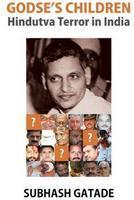
Rahul Gandhi’s answer to that question, given to American diplomats who seem to have his ear more than the people of India, was unequivocal: it’s the Hindu right whose violence he fears more. But fellow-Kafila-ite Subhash Gatade makes the point in an interview to Rediff.com that such violence is difficult to quantify and compare because it takes only a few from a community to perpetrate it:
…one sincerely feels that it is difficult to quantify the relative threats. Remember the period when India witnessed Khalistani terrorism, which involved a fraction of the misguided youth of the Sikh community and the danger it posed to peace and tranquility in the country then. [Link]
Montek Singh Ahluwalia (MSA) has taken over the English news channels [okay, perhaps not all, but two “exclusive” interviews to Headlines Today and CNN-IBN’s FTN (F stands for ‘Face’, btw)] tonight to shoot back at his opponents and detractors, the likes of Roys, Drezes, Aiyars. The discourse had three parts: the sermon, gloss and proto-penance, and the affirmation of the revealed Truth.
The Planning of Commission of the sovereign, socialist, secular, democratic republic of India is not a Stalinist Planning Commission. It has the solemn duty of finding India’s rightful place in the world at the average rate of 8% per year. But India is a poor country [exclusive news which cannot be shared at Davos]. The GDP has to enlarge. Market is what will make it happen. But market has limits. Hence, welfare. But MSA is not happy that the Growth-Decline story did not work out as he would have wished. But that is no reason to be anti-Growth [now go to the first line of the para and read it all over again.]
As governments across the world prostrate themselves before corporations and corporate greed takes over the daily business of governing, mass struggles are breaking out all over the world. What started as the much propagated ‘Arab Spring’ – apparently the Arab world’s yearning for American and Western values represented by ‘democracy’, has now, after spreading through Europe (France, Greece, Spain, Portugal…) engulfed the heart of Empire – the United States of America. The Occupy Wall Street movement that started almost three weeks ago, with thousands of people assembling in Zucotti Park in Lower Manhattan, New York, has now spread amdist media blackout and police repression, to other parts across the United States. A glimpse of the situation about a week ago:
Nothing seems to have changed in the past quarter decade. Past Jhargram, the town in the woods, the metal road connecting Lodhasuli to National Highway No. 6 wraps itself in a shady serenity. At occasional intervals, the artificiality of a clamour, emitted by a motor engine, creates an unquiet irritation, murdering the resonance of the forest and interrupting its slumber. The bus-stops at Kalabani and Boria are as lonely as they used to be; Gar-Salboni, a roadside village, is stuck in its eternal search for a path to survival. The mud road that breaks from the main road to meet the villages Sirsi, Joalbhanga and Lab-Kush, is as tranquil as it had been 25 years ago. Past the lush green rice fields by the road begins the forest that hems the horizon. The leaves that have just had a splash of shower glistens with the brilliance of the sun.
— Last year it was different, whispered the road.
— Yes, I have heard of it – there had been a drought. And it was the same in the year before the last. It used to follow a cycle like this 25 years ago. Rain ensures the crop. Hunger rides free when there is a drought.
Guest post by A. SUNEETHA, VASUDHA NAGARAJ, R. SRIVATSAN, GOGU SHYAMALA, SARATH DAVALA and R.V. RAMANA MURTHY
[This post was sent to us on the 23rd of September, when the strike, still on-going, entered its tenth day. On the date of posting this, the strike had entered its sixteenth day].
Sakala Janula Samme (extraordinary general strike) in the ten districts of Telangana has entered its tenth day today. Miners in the Singareni Collieries, private college teachers and students, road transport employees unions, school teachers, university staff, lawyers in the lower and high courts, the electricity employees union—in short almost all employees (who usually refuse to see beyond their immediate benefits) and contract workers (who under normal circumstances cannot afford to lose wages) needed by the state to “govern” its people—have gone on strike.
Telengana general strike, photo courtesy: msn news
Government in this region, already seriously impaired and facing severe challenges from the movement since 2009 has come to a standstill. In an extraordinary “do or die” battle for the formation of a separate Telangana state, the various joint action committees promise to continue this strike till a separate Telangana state is formed.
What a farce! What a farce of a fast! One doesn’t quite know whether to laugh or cry over this state of affairs in the world’s largest democracy. It is a sad day in a nation’s history when someone who presided over a state-sanctioned genocide goes on fast in the name of “peace and harmony” and media vultures and assorted politicians rush to canonize him as the apostle of peace. When it comes to political theatre, few can beat our politicians. They have no qualms in mimicking their more successful fellow travelers if it can get them a few more votes or push them a couple of notches up the popularity ladder.
[JAGANNATH SARKAR, who passed away in April, was among those who led the spectacular rise of CPI in Bihar in the 1960s and 1970s. He was among a handful of Bihar CPI leaders who envisioned the crisis in CPI in the mid-1970s. Today is his first birthday after he passed away – he was born on 25 September 1919. The piece below is an important document that gives a glimpse of the debate on new caste assertions in the CPI. It was written by Sarkar in 1998, following the National Council meeting of the CPI. It has been translated by Raj Ballabh from Hindi. – AN]
The National Council of the CPI accepted, if belatedly, in its review report of March 1998 that there has been a serious decline in the basic mass base of the party and its class-based mass base has fragmented on the basis of caste. It has accepted that the party could not face the deviation of ‘social justice’ in the form of ‘backward casteism’ in its theatricality, or indeed politically and practically; that the party could not maintain its distinct identity, as a party that was politically and practically different from the Laloo-led Janata Dal Government. What is more, the toxin of casteism began to show its effects within the party as well. Indeed, it is an issue of serious concern which should be analyzed in detail.
Senkodi, a 20 year old woman, part of Makkal Mandram a commune in Kancheepuram immolated herself outside the collector’s office on the 29th of August in Kancheepuram. She left a letter saying that it was in solidarity with the campaign against the death penalty awarded to Perarivalan, Murugan and Santhan in the case relating to Rajiv Gandhi’s killing. Growing up in the commune Senkodi was part of the struggles that were around her such as those for land and other rights of marginalised communities. Much has been written about her both maligning her and her comrades as well as hailing her ‘martyrdom’. Below is a piece that brings into question the reasons for her death and the reactions to it. It is translated as accurately as possible in language and tone from it’s original Tamil version. It is a piece written to raise questions within progressive spaces in tamilnadu, but can be easily read into similar contexts.
Guest post by PREMA REVATHI Translated from the Tamil by Ponni
The human heart is a strange creature. The utter helplessness and pathos I felt after I heard of the death of Senkodi reminded me of lines I had heard ages ago which stuck with me;
Guest Post by PREMA REVATHI An English translation, with a background note, is available here.
மனித மனம் விசித்திரமானது. செங்கொடியின் மரணச்செய்தியை கேட்டதும் ஆறாத இயலாமையின் இருள் சூழ்ந்துகொண்டுவிட்ட மனதில் எப்போதொ ஒரு காலத்தில் மனதில் ஆழப்பதிந்துபோன
“ இந்த பூமியின் தேசங்களில்
ஒளி வீசுக செங்கொடியே…”
என்ற பாடல் வரிகள் மீண்டும் மீண்டும் அலையாடியது.
புரட்சிகர போராட்டத்தால் இந்த பூமியையே மாற்றிவிடும் ஒரு பெருங்கனவு இன்று முள்ளாய் உறுத்தும் ஒரு பழங்கனவாய் விடைகள் இல்லாத திசைவழிகள் இல்லாத நம்பிக்கைதரும் தலைமைகள் இல்லாத இத்தனிமையான அரசியல் இரவில் துறுத்திக்கொண்டிருக்கும் வேதனை முகத்தில் அறைகிறது.
ஆயிரமாயிரம் வார்த்தைகள் செங்கொடி பற்றி எழுதப்பட்டுவிட்ட, எழுதப்பட்டுகொண்டிருக்கும் இக்கணத்தில் நெஞ்சுருக்கும் இந்த இன்மையும் புகைப்படத்தில் தீர்க்கமாயொளிர்ந்து கொண்டிருக்கும் அவள் விழிகள் கேட்கும் கேள்விகளும் அலைகழித்துக் கொண்டே இருக்கின்றன.
It is the sort of place you will not find unless you are looking for it. Even if you find the address in Hardevpuri near Shahdara, you will not know where to knock. There is no signboard that will tell you this is Gautam Book Center. “A signboard will attract the attention of those who don’t like our books,” explains AK Gautam.
Faced with the never-ending agony to which the members of the Dalit Human Rights Movement (DHRM) in Kerala seem to be subject to, it appears that that the more familiar ways of marginalizing of dalit people in Malayalee people do not work anymore. The past few days have seen horrendous attacks on these people near the town of Varkala in Thiruvanathapuram district. The DHRM has accused the Siva Sena and the BJP of violence, but it appears that both the authorities and the press are equally and irremediably deaf. Continue reading Out of Development’s Waiting Room, Out of Democracy: The Continuing Agony of the DHRM→
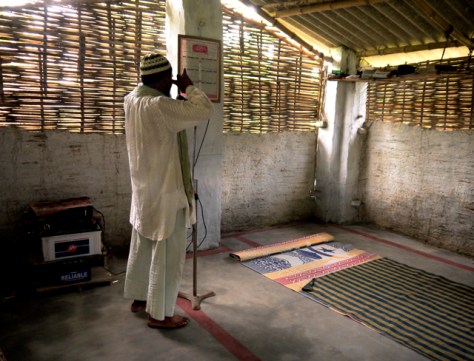
Imam Shamsuddin calls for prayer. Photo credit: Shivam Vij
Like nearly every village in South Asia, Allahpur, in the east Indian state of Bihar, is geographically divided on the lines of caste. On one side of a dirt track live the upper-caste Muslims (Syeds, Sheikhs and Pathans) and on the other side live the lower-caste Muslims (Ansaris, Dhunias and Raains). There are only four Hindu families in Allahpur, and they are all lower castes, their houses amid the low-caste Muslim houses.
For five years now, the low caste Muslims have been praying at a ramshackle mosque they built, boycotting the mosque in the upper-caste Muslim area, a stone’s throw away.
As I read it, neither Aditya, nor Partha nor Gyan seems to deny that the Anna Hazare movement is populist. The debate here seems to be about: what kind of populism is it? Aditya is saying that this populism can lead to progressive political consequences, ‘by the presence of an anti-institutional dimension, of a certain challenge to political normalization’, while Partha (and Gyan too if I read him correctly) seem to be arguing that this populism is not progressive even if sometimes anti-institutional. And here Aditya reads Laclau contra Partha: that populism may indeed be the royal road to the constitution of the political. Partha and Gyan maintain that this populism works with a notion of ‘we the people’ who are free from corruption defined against ‘they the corrupt enemy’ (the government and netas). This ‘we the people’ can very well gloss over all internal contradictions, social divides and heterogeneities – hence Gyan points out that Dalits and minorities will not be counted or simply assumed away.
Recent discussion around the issue of corruption in Kafila has generated several references to and logical possibilities of understanding anti-corruption as an ideology, however, without finally drawing that conclusion. In this post I argue that the specific ideological functioning of this idea of anti-corruption is central for understanding the nature of the movement.
Partha Chatterjee writes: “The word [‘corruption’] creates an illusion – a fundamentally false image – of equivalence between two very different practices.” But for Chatterjee, this illusory character of ‘corruption’ is not comparable to the kind of illusion involved in the ‘mystical character of commodities.’ He argues: “But it is this illusion of equivalence that has been achieved, for the moment at least, by the rhetorical and performative adroitness of the Anna campaign and the spectacular bungling of the Congress leadership.” The multivalent illusion of ‘corruption,’ for Chatterjee, is shaped by the skilful performance from the activists’ side and lack of the same from that of the government. I would later argue that on the contrary, the skilful performance by the activists and the lack of the same from not only the government’s side but also that of different left positions are actually made possible by the essentially multivalent nature of the ideology of anti-corruption.
In a post on the Wall Street Journal’s India Realtime blog, journalist Tom Wright says at one point:
In the open letter, the signatories said it was impossible to have a literary festival in Kashmir [Link]
I asked him on Twitter as to where the open letter says that. He replied:
the opening graph says you can’t hold a literary festival in the context of kashmir [Link]
Given that he was being specific about the location of the “impossible to hold” claim in the open letter, I wondered for a moment if I was wrong. I checked the first two paragraphs of the open letter I had posted but found no such claim: Continue reading Harud Literary Festival: The Misrepresentation Continues→


 (Nepal’s Prime Minister, Dr BABURAM BHATTARAI, visited India in his first bilateral trip since taking office, in the third week of October. Bhattarai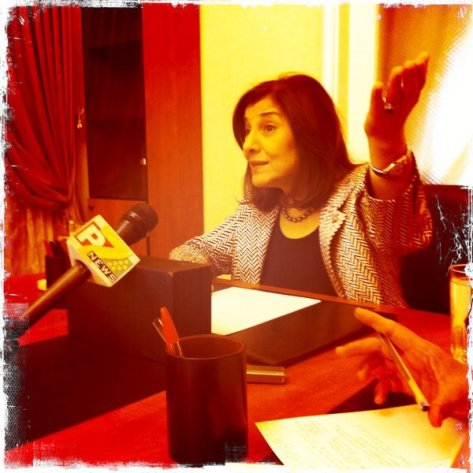


 KAFILA - COLLECTIVE EXPLORATIONS SINCE 2006