Category Archives: Right watch

“SIR” Is a Process of Mass Disenfranchisement

The Solution

After the uprising of the 17th June Election of 2024

The Secretary of the Writers Union Prime Minister’s Office

Had leaflets distributed in the Stalinallee the message sent out via Nagpur

Stating that the people

Had forfeited the confidence of the government

And could win it back only

By redoubled efforts. Would it not be easier

In that case for the government

To dissolve the people

And elect another? – [Courtesy Bertolt Brecht]

The way things are going with the SIR, we are heading for the regime “electing its people” – with the full participation of the Opposition parties, who despite the knowledge of the process, have become unwilling participants. Not knowing how to respond, they seem to be running around like headless chickens. “Vote Chori” and the so-called “Special Intensive Revision” (SIR) are closely tied together and though Rahul Gandhi seems to have got the import of what this means, reports suggest that RSS “sleeper cells” within and outside the Congress Party are hyperactive now, trying to undermine the campaign against vote chori. Some INDIA bloc parties have even openly distanced themselves from it. Continue reading “SIR” Is a Process of Mass Disenfranchisement

A Shadowed Present and the Onus of Thought – Remarks, Non-Polemical or Otherwise: Sasheej Hegde

[This concluding essay of the series in Kafila titled Decolonial Imaginations. Links to the previous essays are given at the end.

The terms ‘decolonization’ or ‘decolonial’ have become quite critical now, given that the impulse of justice lies at the core of these concepts. Neither postcolonial nor decolonial perspectives are compatible with right-wing ideologies but the fact that Hindutva ideologues in India and the rightwing globally are now trying to appropriate that language makes it seem to some that the very idea of the postcolonial or decolonial is suspect. We believe that this demonizing of decolonial theory from a position defensive of the European Enlightenment needs to be unpacked in the interests of a mutually productive debate. Kafila has been publishing a series of interventions on what the idea of the decolonial imagination involves, locating decolonial theory as speaking from the margins, drawing attention to identities which the orthodox Left subsumed under ‘class’ and which the rightwing in India seeks to assimilate into Brahminism. Additionally the orthodox Left’s rejection of spiritual beliefs and inability to engage with them is also a factor that may have produced the space for right wing appropriations of a field marked “religion”. 

We hope that these interventions will clear the ground for productive conversations on the Left rather than polarised and accusatory claims that mark some spurious claims to ‘correctness’.]

Register

In a superbly crafted, and provocative, essay titled ‘In Defense of Presentism,’ the historian David Armitage (2023) has tried to re-present the prospects of ‘presentism’ for historians particularly (even though the essay has its lessons for various practitioners across domains, critical or otherwise).  As he notes: ‘Historians are trained to reject presentism: we are likely to argue that our duty is to the past and its inhabitants – and not to the present and certainly not to the future.’  But, as he shows with great analytical acuity and detail, historians are deploying the word ‘presentism’ in a variety of ways, which he then goes on to unravel, while making a case for what historians ought to be opposing and what about the present they can comfortably be accepting.  My brief is surely not to detail the intricacies of Armitage’s argument for my readers here – although I would urge them to read and absorb the essay themselves (even as my moves here have been made possible by it).  Rather, my effort is to quickly address some critical aspects of the ‘presentism’ that underwrites contemporary scholarship in India (and elsewhere) – although, again, for the purposes of this formulation, I shall limit myself to Meera Nanda (2025) and the terms of her critique of postcolonial and decolonial theory (henceforth PDT).  My own relationship with PDT has been an ambivalent one – and, hopefully, a recent contribution will clarify that (Hegde 2025) – and there are also aspects of the critique mounted by Meera Nanda that I agree with.  But this is not the ground that I will be traversing here in this short note. Continue reading A Shadowed Present and the Onus of Thought – Remarks, Non-Polemical or Otherwise: Sasheej Hegde

Left, Right, Left – Notes on Radical Post/De-Coloniality: Gita Chadha

[This post is the ninth – and penultimate – essay of the series in Kafila titled Decolonial Imaginations. Links to the previous essays are given at the end.

The terms ‘decolonization’ or ‘decolonial’ have become quite critical now, given that the impulse of justice lies at the core of these concepts. Neither postcolonial nor decolonial perspectives are compatible with right-wing ideologies but the fact that Hindutva ideologues in India and the rightwing globally are now trying to appropriate that language makes it seem to some that the very idea of the postcolonial or decolonial is suspect. We believe that this demonizing of decolonial theory from a position defensive of the European Enlightenment needs to be unpacked in the interests of a mutually productive debate. Kafila has been publishing a series of interventions on what the idea of the decolonial imagination involves, locating decolonial theory as speaking from the margins, drawing attention to identities which the orthodox Left subsumed under ‘class’ and which the rightwing in India seeks to assimilate into Brahminism. Additionally the orthodox Left’s rejection of spiritual beliefs and inability to engage with them is also a factor that may have produced the space for right wing appropriations of a field marked “religion”. 

We hope that these interventions will clear the ground for productive conversations on the Left rather than polarised and accusatory claims that mark some spurious claims to ‘correctness’.]

Much has already been said in this set of essays on the difference between two kinds of Indian responses to colonial western modernity. These responses can be classified as the left leaning post(de)-colonial theories and the right-wing responses that may also be classified, by some, as post(de)-colonial theory. This set of essays are in conversations around the allegation that the former feeds into the latter. It is evident to many of us doing post(de)-colonial theory on the left that the difference between the two is unmistakable. Yet, this is missed by many on the left, leading to much misrepresentation; and by many on the right, leading to much appropriation. We also know that the responses to modernity from post(de)-colonial theories on the left are fractured on multiple axes, religion and faith being a major one. Due to the common worlds we inhabit, it is indeed possible for much confusion to occur. I think the act of demarcating the players, the fields, and the actions of the oeuvres, the right and the left is important, especially for a pedagogic purpose.  Each generation seeks clarification in the classroom on several of these confusions and debates. While demarcating the difference regularly and rigorously is an important intellectual exercise for everyone in the discourse, doing this is also an ethical responsibility, particularly for those who do not wish to be either misrepresented or appropriated, which is basically those who are not bedfellows with the orthodox left and definitely not with the orthodox right. The demarcation is required to be done in multiple domains of theory as well as practice. This set of essays seeks to precisely do that. Continue reading Left, Right, Left – Notes on Radical Post/De-Coloniality: Gita Chadha

When Decolonisation turns Inward – On the Dangers of Methodological Nationalism: Sabah Siddiqui

[This post is the eighth essay of the series in Kafila titled Decolonial Imaginations. Links to the previous essays are given at the end.

The terms ‘decolonization’ or ‘decolonial’ have become quite critical now, given that the impulse of justice lies at the core of these concepts. Neither postcolonial nor decolonial perspectives are compatible with right-wing ideologies but the fact that Hindutva ideologues in India and the rightwing globally are now trying to appropriate that language makes it seem to some that the very idea of the postcolonial or decolonial is suspect. We believe that this demonizing of decolonial theory from a position defensive of the European Enlightenment needs to be unpacked in the interests of a mutually productive debate. Kafila has been publishing a series of interventions on what the idea of the decolonial imagination involves, locating decolonial theory as speaking from the margins, drawing attention to identities which the orthodox Left subsumed under ‘class’ and which the rightwing in India seeks to assimilate into Brahminism. Additionally the orthodox Left’s rejection of spiritual beliefs and inability to engage with them is also a factor that may have produced the space for right wing appropriations of a field marked “religion”. 

We hope that these interventions will clear the ground for productive conversations on the Left rather than polarised and accusatory claims that mark some spurious claims to ‘correctness’.]

When I first encountered postcolonial theory as a young scholar, it felt like an opening into a new way of understanding the world. Much of my introduction came through Indian thinkers, some of whom were not located in India, yet their work spoke powerfully to questions of colonial legacies, subjectivity, and the politics of knowledge. These early engagements helped me grasp the goals of postcolonial scholarship: to make visible the structures of power that colonialism left behind and to explore the ways in which it continues to shape our systems of knowledge and self-representation. Over time, however, I noticed a subtle shift; the language of postcolonial studies seems to have receded somewhat, while the term decolonial has gained prominence as a way to address questions of knowledge and authority in the present moment. Other contributors to this blog series have traced the rise and relative decline of postcolonial thinking in South Asia. I still resonate with postcolonial analysis, and have used it within my own work, but for the purposes of reflecting on the current politics of knowledge in Indian universities, I am choosing to engage now with the decolonial project.

Continue reading When Decolonisation turns Inward – On the Dangers of Methodological Nationalism: Sabah Siddiqui

Colonialism, Modernity and Science: K. Sridhar

[This post is the seventh essay of the series in Kafila titled Decolonial Imaginations. Links to the previous essays are given at the end.

The terms ‘decolonization’ or ‘decolonial’ have become quite critical now, given that the impulse of justice lies at the core of these concepts. Neither postcolonial nor decolonial perspectives are compatible with right-wing ideologies but the fact that Hindutva ideologues in India and the rightwing globally are now trying to appropriate that language makes it seem to some that the very idea of the postcolonial or decolonial is suspect. We believe that this demonizing of decolonial theory from a position defensive of the European Enlightenment needs to be unpacked in the interests of a mutually productive debate. Kafila will be publishing a series of interventions on what the idea of the decolonial imagination involves, locating decolonial theory as speaking from the margins, drawing attention to identities which the orthodox Left subsumed under ‘class’ and which the rightwing in India seeks to assimilate into Brahminism. Additionally the orthodox left’s rejection of spiritual beliefs and inability to engage with them is also a factor that may have produced the space for right wing appropriations of a field marked “religion”. 

We hope that these interventions will clear the ground for productive conversations on the left rather than polarised and accusatory claims.]

It is impossible to think of modernity and colonialism, without thinking of their third sibling – science. They are not just siblings, in fact, but a set of triplets which took birth within the same western context and period – and hence, the adjectives ‘modern’ and ‘western’ are used to qualify science, often by the colonizers themselves. Just as the notion of ‘savage native’ was a part of colonial construction, so was the idea of ‘modern science’. Not only did the colonial powers conquer people and knowledge systems across the world, but they also established hegemony within their own societies, colonizing them from within. This was done using complex mechanisms of power, control and appropriation. Continue reading Colonialism, Modernity and Science: K. Sridhar

Javed Akhtar, Bollywood and Urdu’s Ghostly Existence – Rashid Ali

Guest post by RASHID ALI

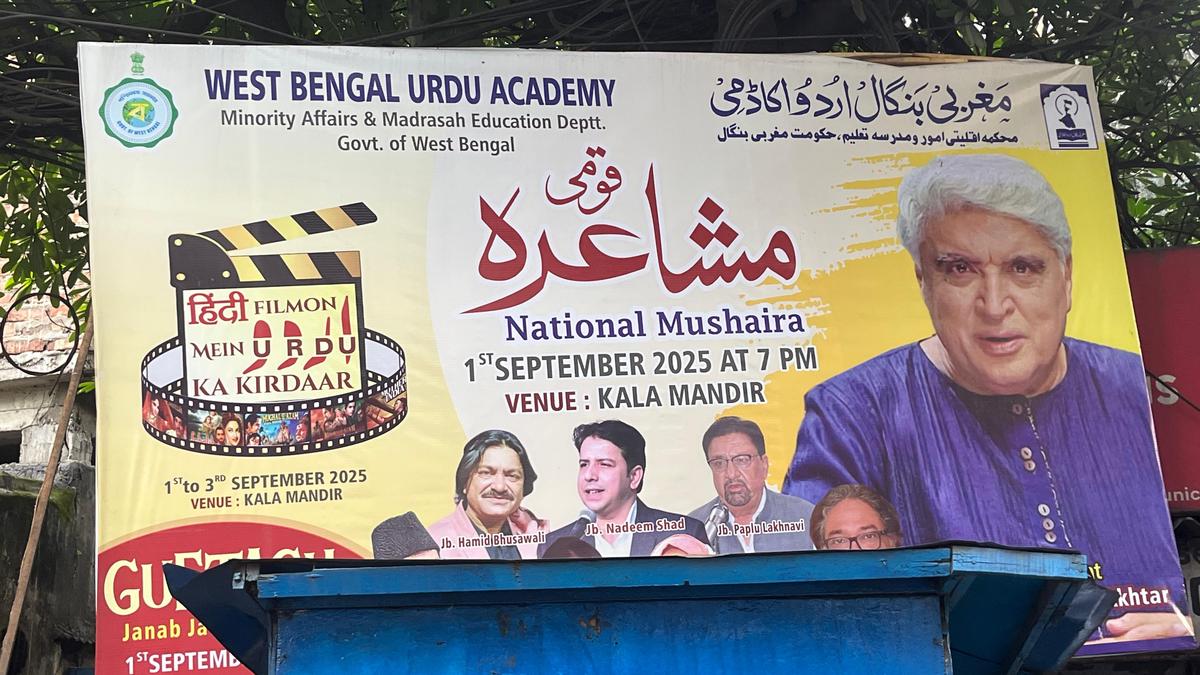
Image courtesy The Hindu

Javed Akhtar’s recent ‘exile’ from the West Bengal Urdu Academy event did more than generate headlines. It dwarfed a bigger debate about Urdu in Hindi cinema, which was the event’s main theme. The media precipitately reduced the whole issue to the conflict between the lyricist and the Urdu Academy. The controversy carried a tinge of ‘Muslim fundamentalism,’ reflecting today’s cultural and political ideologemes. However, the discussion on Bollywood’s uneven relationship with Urdu was lost in the sound and fury of cultural climate of the country. Et tu, Brutus?’ finds a new stage – ‘Et tu, Bollywood?’ You speak against the very world that gives you voice. Continue reading Javed Akhtar, Bollywood and Urdu’s Ghostly Existence – Rashid Ali

Red Dreams, Saffron Marches – Longue Durée of India’s Struggles and Strategies of Power: S. M. Faizan Ahmed

Guest post by S.M. FAIZAN AHMED

[The author writes about the current scenario, reflecting on the one hundred years of the communist movement as well as of the RSS. In these important reflections Ahmed recounts the great achievements of the communist Left, while at the same time speculating on where the RSS scored over it – leaving us with a number of questions to seriously ponder about. – AN]

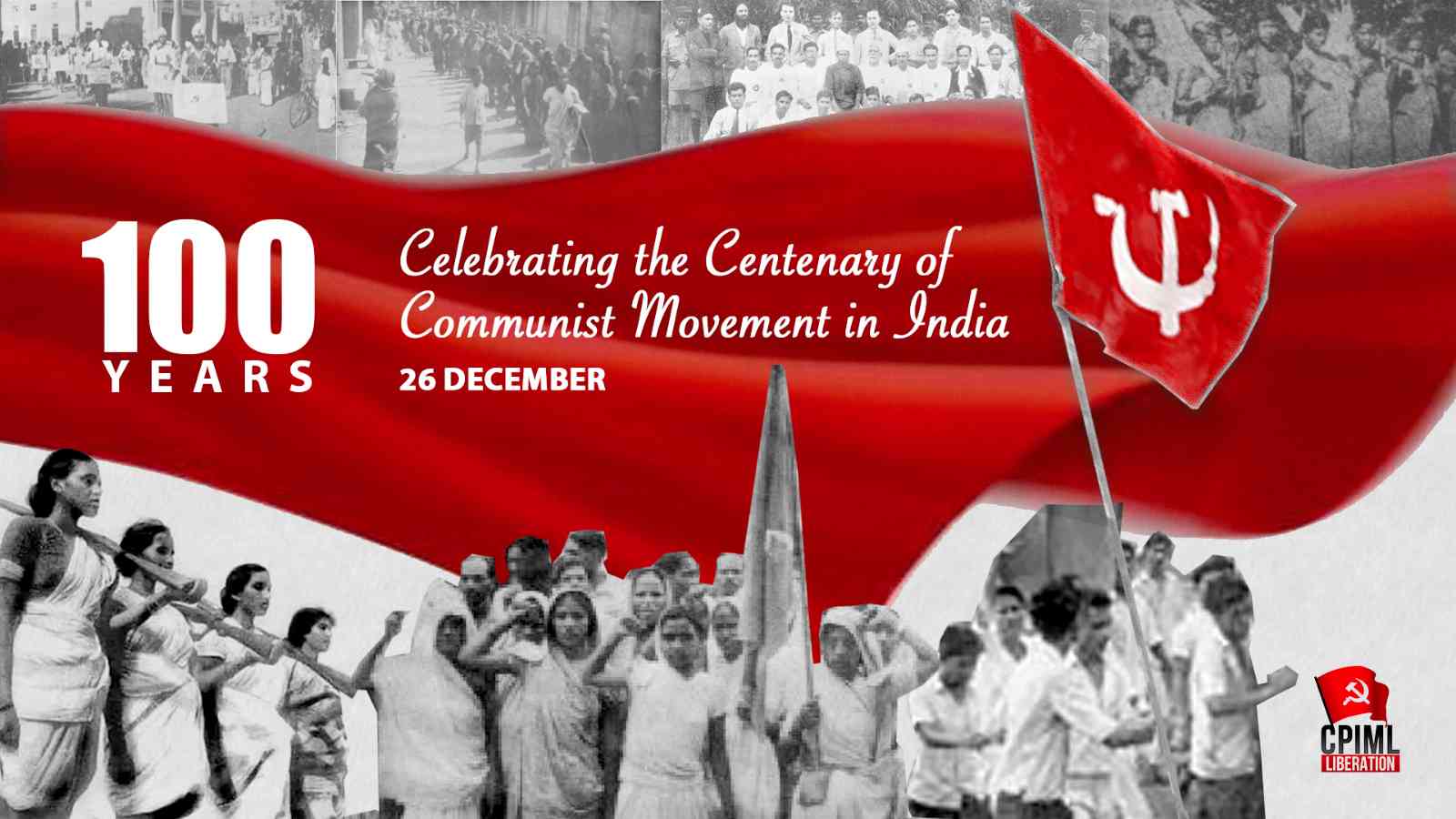
Image courtesy Liberation

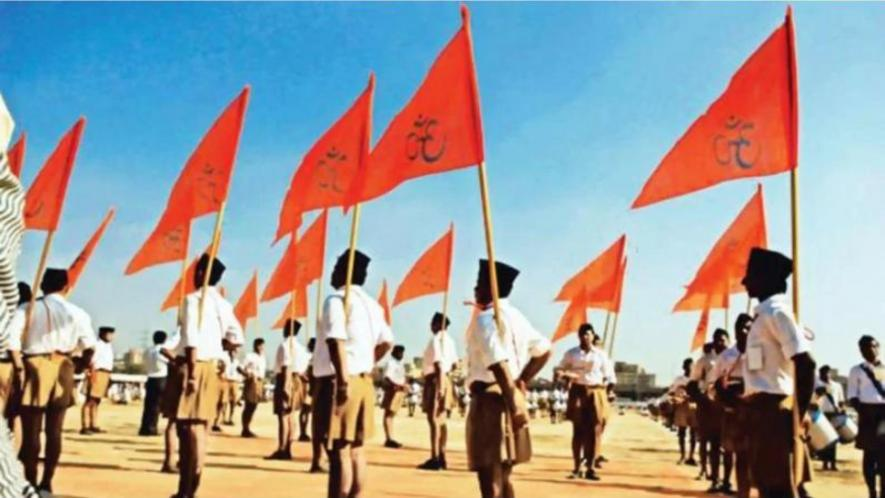
On October 1, 2025, a day before Gandhi’s birth anniversary, long revered and associated with ahimsa and moral conscience, the government unveiled a ₹100 coin at the Dr. Ambedkar International Centre, 15 Janpath, marking a century of the Rashtriya Swayamsevak Sangh. A day earlier, as if to turn ideology into spectacle,  a Shakha parade, named Path Sanchalan, traced its way through Jawaharlal Nehru University—once a fortress of dissent and the audacious poetry of thought. The rhythmic march of uniformed bodies through corridors once alive with debate did more than display ceremony; it signaled a shift in the republic’s moral conscience, where the choreography of discipline seeks to mute the dialectic of doubt, and the university—once a sanctuary of questioning minds—becomes a stage for the theatre of obedience. Continue reading Red Dreams, Saffron Marches – Longue Durée of India’s Struggles and Strategies of Power: S. M. Faizan Ahmed

Books as Crime ? – Whether J and K High-court Will End the ’Unprecedented Situation’ ?  

‘So you are the little woman who wrote the book that made this great (American) civil war’
— Abraham Lincoln to Harriet Beecher Stowe, author of Uncle Tom’s Cabin

The Writers’ Police !

Bruno Fulgini, a nondescript employee at the French Parliament, would not have imagined in his wildest dreams that his tedious and boring job at the Parliament library would lead him to a treasure hunt of another kind.

Nearly two decades back one witnessed him metamorphose into an author and editor, thanks to the sudden discovery of old files of the Paris police, which provided details of its surveillance work done way back in 18 th century. A report filed by AFP then, quotes Fulgini tell us that ’Beyond criminals and political figures, there are files on writers and artists. In some cases, they go far in their indiscretions.’….

It was clear to these protectors of internal security of a tottering regime that the renowned literati then viz. Victor Hugo, Balzac or Charles Dickens, might be writing fiction, but their sharp focus on the hypocrisy of the aristocrats or the livelihood issues of ordinary people is adding to the growing turmoil in the country. They knew very well that they might be writing fiction for the masses but it is turning out to be a sharp political edge that hit the right target and is becoming a catalyst for change.

The Parisian police was engaged in tracking down the daily movements of the writers, was more subtle in its actions; its present-day counterparts in the West do not seem to have such patience.

The strongest democracy in the world namely the US has of late become a site of an ’unprecedented’ ’Multi-level barrage of US book bans’ as per PEN America [1]….

And now there are indications that the biggest democracy in the World namely India is keen to follow the footsteps of the strongest democracy ?
Or it is too early to say that .[ Read the full article here : http://mainstreamweekly.net/article16227.html

ALIFA Condemns Rape and Death Threats to Naga Women’s Rights Leader Prof. Rosemary Dzuvichu

Statement by the All India Feminist Alliance – NAPM calls upon the State to ensure her safety, bring perpetrators to justice and uphold Naga women’s right to reservations in municipal bodies.

NAPM (All India Feminist Alliance – National Alliance of People’s Movements), a pan-India collective of feminist, grassroots organizations and individuals strongly condemns the threats of death and sexual violence made on social media to Kohima-based women’s rights activist and academic, Prof. Rosemary Dzuvichu, Advisor, Naga Mothers’ Association (NMA). The vile, violent and vicious threats on Facebook by one Mr. WJ Longkumer warn her to desist from advocating for women’s political reservation – a hard-won right of Naga women, also upheld by the Supreme Court.  We demand immediate legal action against the perpetrators and call upon the state to ensure the safety of Prof. Rosemary as well as other Naga women, facing similar threats. 

Prof Dzuvichu is no stranger to intimidation. Back in 2017, she was among those leading the struggle to ensure the long-delayed implementation of the Nagaland Municipal (First Amendment) Act of 2006, or the “Nagaland Reservation Bill of 2006″. Through this amendment of the 2001 Municipal Act, women were allotted 33% reservation in urban local bodies (municipalities and town councils), in accordance with the 74th Amendment to the Constitution of India. Article 243 T (3) of the Indian Constitution, mandates that at least one-third of all directly elected seats in every municipality in India must be reserved for women. Yet, all was not smooth as quotas for women in political bodies was posited as ‘going against the customs and culture of Nagaland’, and women who defied these customs were seen as legitimate targets of ire.

Continue reading ALIFA Condemns Rape and Death Threats to Naga Women’s Rights Leader Prof. Rosemary Dzuvichu

Rightwing-Rightwing ‘Bhai Bhai : Who Fears Javed Akhtar?

A ‘unity of purpose’ has been witnessed between Hindu and Muslim supremacists, who consider themselves the sole spokespersons of ‘their community’.

There are rare occasions when literary academies associated with governments wilt under mob pressure.

Rarer are occasions when they even cancel the very programme they had organised with much fanfare.

It has been more than 10 days that West Bengal witnessed such a spectacle, when the West Bengal Urdu Academy suddenly postponed a programme where it intended to discuss ‘Urdu in Indian Cinema’ for four consecutive. Javed Akhtar — one of the foremost living Urdu poets — was also invited as a key speaker in the programme.

Two prominent Islamist organisations in Kolkata, Jamiat Ulema-e-Hind and the Wahyahin Foundation, had protested the invitation, as they considered Akhtar’s views on religion problematic, labelling him as someone who “speaks against religion and God”.

Akhtar is a declared atheist and openly talks about it on public fora, and that had irked these people.

The organisations even threatened to launch a state wide agitation — much on the lines of their agitation against Bangladeshi author Taslima Nasreen which as everyone knows had forced her to leave the state (2007) — if the government did not heed their demand.

Mamata Banerjee, the West Bengal Chief Minister, did not want to take any risk as elections to the state Assembly are not too far.

( Read the full article here : https://www.newsclick.in/rightwing-rightwing-bhai-bhai-who-fears-javed-akhtar)

RSS Centenary: In Search of an Icon!

[Centenary celebrations of RSS – the biggest ‘self-proclaimed’ cultural organisation in the world — comprising of Hindus are on.

Much is being said about its longevity etc., and much will be said about it in coming days, it remains to be seen if it is ready to take a fresh look at some discomforting aspects of its own history when it is embarking on a journey towards what it calls as ‘new horizons]

Ram Lila, the dramatic folk re-enactment of the life of Rama is still popular in Northern India.

Anyone who has watched this programme — especially in villages or towns — might have noticed a particular scene where god curses a sage for his misdemeanour that he will get a donkey’s face for his actions and will not even realise that he has got this new face.

One is reminded of this story — which tells us the great hiatus between claims and reality — whenever an individual or a formation starts bragging about its achievements that have no basis in reality.

Leaders of the Hindutva Supremacist movement in this part of South Asia look no different when they declare from the rooftops the “great role their political ancestors have played during the freedom movement”. It is a different matter that any objective student of India’s history — especially of the Independence struggle — is conversant with hundreds or thousands of pages, books, monographs written or documented to underline the contrary, their meek behaviour and compromising role during the very struggle. [https://www.newsclick.in/rss-centenary-search-icon]

Sleeping With the Enemy? Postcolonialism, Misread and Misjudged: Shamayita Sen

Guest post by SHAMAYITA SEN

[This post is the first of a series in Kafila, titled Decolonial Imaginations.

The terms ‘decolonization’ or ‘decolonial’ have become quite critical now, given that the impulse of justice lies at the core of these concepts. Neither postcolonial nor decolonial perspectives are compatible with right-wing ideologies but the fact that Hindutva ideologues in India and the rightwing globally are now trying to appropriate that language makes it seem to some that the very idea of the postcolonial or decolonial is suspect. We believe that this demonizing of decolonial theory from a position defensive of the European Enlightenment needs to be unpacked in the interests of a mutually productive debate. Kafila will be publishing a series of interventions on what the idea of the decolonial imagination involves, locating decolonial theory as speaking from the margins, drawing attention to identities which the orthodox Left subsumed under ‘class’ and which the rightwing in India seeks to assimilate into Brahminism. Additionally the orthodox left’s rejection of spiritual beliefs and inability to engage with them is also a factor that may have produced the space for right wing appropriations of a field marked “religion”. 

We hope that these interventions will clear the ground for productive conversations on the left rather than polarised and accusatory claims.]

This article comes as a response born from a deep sense of intellectual anguish and frustration. It is a rebuttal to a YouTube video titled The Left’s Accidental Gift to Hindu Nationalism posted by one of India’s leading independent news portals, The Wire on 14th August 2025. The video attempts to summarize Meera Nanda’s critique of Postcolonial Left as elaborated in her latest treatise, Postcolonial Theory and the Making of Hindu Nationalism: The Wages of Unreason (2025). While I have read the newly published work, including the excerpt published in The Wire which have been shared widely in popular social media platforms, this piece restricts itself to the Video which comprehensively outlines Nanda’s arguments. An extensive engagement with the critique that Nanda mounts is reserved for some other time.

Continue reading Sleeping With the Enemy? Postcolonialism, Misread and Misjudged: Shamayita Sen

Genocide in Gaza – All the Perfumes of Arabia Will Not Sweeten These Hands…

As the ongoing livestreamed genocide in Gaza reaches its most despicable and horrendous phase of killing masses people through forced starvation, I am posting here a piece that I wrote for the art journal Art Deal last year. It was also delivered as a talk in a discussion organized by the All India Students’ Association (AISA) in JNU in September 2024. I am publishing it here with some minor additions/ changes.

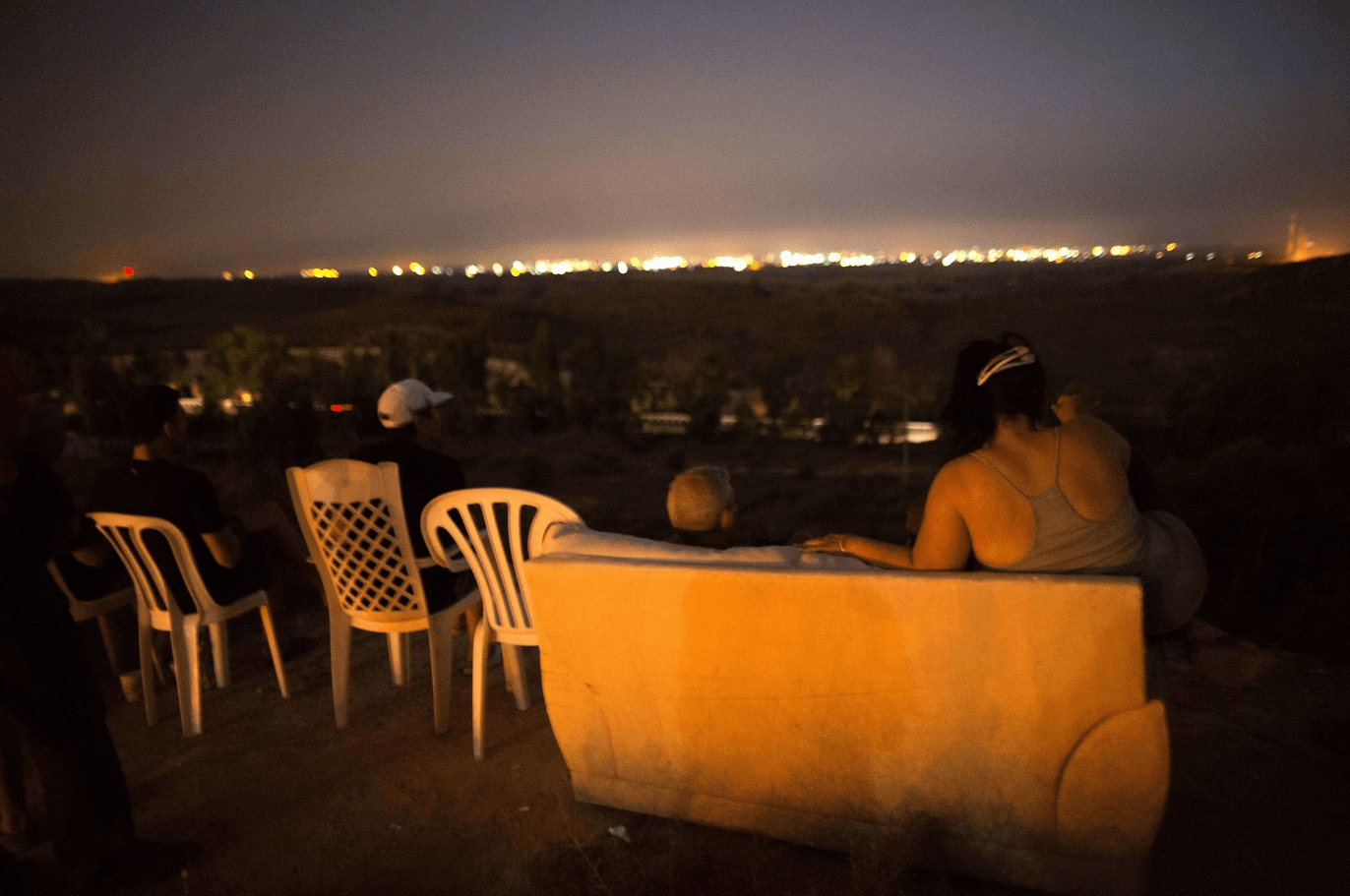
Israelis watch the bombing of Gaza in picnic mode outside a town called Sderot, in 2014, nine years before October 7, 2023. Image courtesy Menahem Kahana, Agence France-Presse.

‘Israel told U.S. officials in 2008 it would keep Gaza’s economy “on the brink of collapse” while avoiding a humanitarian crisis, according to U.S. diplomatic cables published by a Norwegian daily on Wednesday.

Three cables cited by the Aftenposten newspaper, which has said it has all 250,000 U.S. cables leaked to WikiLeaks, showed that Israel kept the U.S. Embassy in Tel Aviv briefed on its internationally criticized blockade of the Gaza Strip.’

 – Reuters, 5 January, 2011, Jerusalem.

I

No, it did not begin on 7 October 2023. Notwithstanding all the gaslighting by Israel and its guardians and arms-suppliers in the USA and Europe, the evidence says something else. The US cables leaked to Wikileaks show that not only had Israel been carrying out its genocidal activities for a very long time, its sponsors in the USA knew everything all along.

Continue reading Genocide in Gaza – All the Perfumes of Arabia Will Not Sweeten These Hands…

Citizens as Infants? – Judiciary ‘Schools’ People in Patriotism

Could it be argued that Bombay HC’s highly debatable decision on a peaceful rally against Gaza genocide is an attempt not to inconvenience the ruling dispensation?

It was the year 1763, when Genevaís ecclesiastical assembly ordered one Robert Covelle to genuflect and listen to a reprimand for having fathered an illegitimate child. Covelle refused to kneel and turned to Voltaire for help.

Voltaire, a leading light of enlightenment, outraged at the very idea that religious authorities daring to make a citizen kneel, wrote a pamphlet against genuflection comparing the act with a tyrant punishing slaves or pedant correcting children. The rest of the philosophes rallied behind Voltaire and after six years of agitation, the Genevaís ecclesiastical assembly was forced to abolish genuflection from its code 

Meera Nanda, writer and historian of science discusses, this episode in one of her monographs

Rereading this episode and seeing if around two-and-half centuries ago, the Church could be compelled to see incongruence, injustice and unreason in its own ruling, can a a similar thing be possible vis-à-vis the judiciary in the 21st century in the ‘biggest democracy in the world’?

This poser is related to a recent debatable decision of the Bombay High Court, which has rightly received enough opprobrium.

( Read the complete article here : https://www.newsclick.in/citizens-infants-judiciary-schools-people-patriotism_

Restore independence of Election Commission of India: Citizens for Democracy

The following is an appeal made by the Citizens for Democracy to the President of India to restore the independence of the Election Commission of India.

A public appeal to the Hon’ble President of India

The apex court is seized of the matter of Special Intensive Revision of voter rolls in Bihar, which the Election Commission of India (ECI) has ordered. The matter being sub judice, the Citizens for Democracy, as a responsible organisation, a defender of people’s democratic rights, would abide by the rules and traditions and refrain from commenting on the matter. In any case, several organisations, political parties and individuals have, as petitioners, already presented their point of view before the highest court of the land.   Needless to say, we are with the petitioners.

We, however, do not hesitate to do our duty to expose the sins of omission and commission of the ECI ever since the BJP government came to power in 2014. ECI, an independent constitutional body, has surrendered its autonomy to the ruling party and has become a willing tool in the party’s efforts to crush democracy in India. Things have taken many turns for the worse with every succeeding incumbent to the exalted position of Chief Election Commissioner.

EC – now a Government Department

In 2023 the Supreme Court suggested the appointment of the Chief Election Commissioner and other commissioners by a committee comprising the Prime Minister, the Leader of the Opposition and the Chief Justice of India and asked the government to amend the Act of 1991 suitably.  The government promptly amended the Act and, as if to mock the Supreme Court, did not include the CJI in the committee. Instead, it made a minister appointed by the Prime Minister as one of its three members. With the Prime Minister leading the Committee, and one of his appointees at his beck and call, the government effectively reduced the existence of the Leader of the Opposition (LoP) in Parliament, the third member of the Committee, to a permanent minority. This has brought down the ECI’s status to that of a government department. One cannot expect fairness from such a body.

Continue reading Restore independence of Election Commission of India: Citizens for Democracy

Democracy For The Few ?

Is Bihar being turned into a test case of disenfranchising people?

Representational Image. Image Courtesy: Flickr

India pledged to usher in a democracy with universal adult franchise.

It was the late 1940s, when India, a newly independent nation, whose less than 10% population was then literate, embarked on this unique experiment, unheard of in those times.

The architects of Independence rejected all the Western prescriptions that openly said that .’.. India had no democratic future‘ (Winston Churchill) or ”monarchial arrangement best suited the Asian people‘ (British Prime Minister Clement Attlee to Nehru, 1949), and (to quote a student of history) ‘met the imperial argument on direct terms, firmly believing in the possibility of creating democratic citizens through democratic politics.’ (India’s Founding Moment: The Constitution of a Most Surprising Democracy by Madhav Khosla)

What is worth emphasising is that all those great leaders who shaped a forward-looking Constitution were on the same page when it came to granting the right to vote. For example, B.R Ambedkar, who was chairman of the Drafting Committee of the Constitution, firmly believed that ‘To limit the franchise, was to misunderstand the meaning of democracy ... ‘

None of them dithered over this provision despite knowing well that even the Western countries had not fully adopted universal adult franchise. Remember, Switzerland granted the right to vote to women only in 1971.

Much water has flown down the Ganges, the Jhelum, the Brahmaputra, the Godavari or the Kaveri.

A good 75 years after the adoption of the Constitution (1950), today we are faced with a challenge that at first looks unbelievable, the present ruling dispensation seems to have embarked on a journey in an exactly reverse direction. [Read the full article here : https://www.newsclick.in/democracy-few]

After Garukhuti Scam – Towards United Assam Citizens Convention: Hiren Gohain et al

Following is a statement issued by some eminent citizens of Assam, issued in Guwahati on 3 July 2025. It calls for a civil society intervention, via the Assam United Citizens Convention to be held today and tomorrow (5 and 6 July), following the Garukhuti cow scam.

We have seen how our state is being run by the present government. The Garukhuti episode has made it amply clear how this government had thrown all the norms of government functioning to the winds and how favouritism and corruption have eaten into the core of governance. We have also seen how the chief minister of Assam is reacting to the situation and what he has been saying all the time. We think that the Garukhuti incident is not a single and isolated one. Garukhuti symbolises the basic character of Himanta Biswa Sarma government.

Continue reading After Garukhuti Scam – Towards United Assam Citizens Convention: Hiren Gohain et al

Conversations on Palestine: Teredide Mane O Baa Athithi

Conversations on Palestine with an activist, a poet, a scholar

Teredide Mane O Baa Athithi (Come in, I have opened my doors dear guest) is an offshoot of Mere Ghar Aakar Toh Dekho, a national campaign in India, in Karnataka. It aims to counter the forces of hate, bigotry and polarization that have gained ground in the country by redrawing boundaries and expanding notions of trust and community. The campaign involves participants from diverse backgrounds opening their own homes and hearts to guests from equally varied locations. Teredide Mane has grown as a community, learning and unlearning through practice the concepts of guest and host, home and house, consent and comfort, celebration and sharing, listening and observing—both commonalities and diversity. [Content and editing by Madhu Bhushan, Winnu and Anita Cheria. Illustrations and design by Winnu]

We invite you into this moving and powerful conversation that has been reproduced largely in the speakers’ own words, and hope that you will add to it and take it forward. Read the whole conversation here (https://shorturl.at/JzvI5). Or a shorter note on the conversation here (https://shorturl.at/NkLHz).

Over the past months, the genocide in Palestine has come up multiple times in our meetings. Apart from engaging in acts of protest and solidarity, there was a need to go beyond ‘news noise’, and meet people engaged with and from Palestine. We decided to create a virtual space, one that was safe and intimate, to be able listen deeply to friends we had connected with in the course of our work and life journeys. This conversation, with Lisa Suhair Majaj, Smadar Lavie and Issa Samander in October, 2024, came about as a result of this intention.

Lisa Suhair Majaj is a passionate Palestinian American poet whose writings and poetry echo with the spirit of the land and people that she was herself exiled and alienated from.

Continue reading Conversations on Palestine: Teredide Mane O Baa Athithi

बच्चों के लिए सैनिक प्रशिक्षण : आखिर महाराष्ट्र सरकार की यह नई योजना क्यों एक चिन्तित करने वाली पहल है ?

‘मैंने जापान में जनता को अपनी स्वतंत्रता की सीमाएं अपनी सरकार द्वारा स्वेच्छा से स्वीकार करते हुए देखा है…लोग इस सर्वव्यापी मानसिक दासता को प्रसन्नता और गर्व के साथ स्वीकार करते हैं क्योंकि वे अपने आपको शक्ति की एक मशीन, जिसे राष्ट्र कहा जाता है, में बदलने की तीव्र इच्छा रखते हैं…’ 

-रवीन्द्रनाथ ठाकुर, ‘नेशनलिज्म’  

बच्चों के लिए फौजी तालीम !

भारतीय संघ के सबसे समृद्ध सूबा कहलाने वाले महाराष्ट्र ने स्कूली शिक्षा के क्षेत्र में एक नयी पहल हाथ में ली है। वह स्कूली छात्रों के लिए कक्षा 1 से ही बुनियादी फौजी प्रशिक्षण देना शुरू करेगा ताकि बच्चों में ‘देशभक्ति, अनुशासन और बेहतर शारीरिक स्वास्थ्य की नींव डाली जा सके।’ एक स्थूल अनुमान के हिसाब से चरणबद्ध तरीके से लागू की जाने वाली इस योजना में लगभग ढाई लाख सेवानिवृत्त  सैनिकों को तैनात किया जाएगा। …..

यह प्रस्ताव कई स्तरों पर चिन्तित करने वाला है:
 
एक, जैसा कि जानकारों एवं शिक्षा शास्त्रियों ने बताया है कि राज्य का शिक्षा जगत एक जटिल संकट से गुजर रहा है, जिसका प्रतिबिम्बन कमजोर होती अवरचना / इन्फ्रास्टक्चर /infrastructure, अध्यापकों की कमी और नीतियों को लागू करने के रास्ते में आने वाली प्रचंड बाधाओं में उजागर होता है। ..अगर सरकार की तरफ से कक्षा एक से आगे फौजी प्रशिक्षण प्रदान करने की योजना को लागू किया गया तो उसका असर स्कूली शिक्षा के लिए आवंटित किए जा रहे संसाधनों में अधिक कटौती में दिखाई देगा

[ Read the full article here :https://janchowk.com/military-training-for-children-why-is-this-new-scheme-of-maharashtra-government-a-worrying-initiative/]

Stop This Insanity in the Name of Patriotism: Axom Nagarik Samaj

Statement by AXOM NAGARIK SAMAJ on the targeting of minorities today

Are we witnessing a textbook case of fascist tendencies being practised in Assam? How long can a section of religious minorities will be subjected to all kinds of atrocities and humiliation by branding them as Bangladeshi foreigners? They are being harassed and humiliated all the time. We have been told time and again that they are the cause of all our evils and they are a threat to our existence. How can the victims turn into victors? What a classic case of distorted logic.

We had a six-year-long Assam movement to get rid of the Bangladeshi foreigners. Then overnight AASU turned into AGP and ruled Assam for ten long years. Thereafter came  the Congress government which ruled Assam for 15 years when the present chief minister was in charge of the implementation of the Assam Accord. Then there was that famous declaration of Modi that all Bangladeshi foreigners would have to leave Assam with their baggage by 16 May, 2014. Now the BJP has been in power for the last 10 years. Nothing happened. Instead, the CAA was brought in to grant citizenship to a section of linguistic minorities. Come any elections, blame the religious minorities and do all kinds of nasty things to them and use them to win the votes of the majority community. The brandishing a particular religion as a threat and criminalizing the religious minorities has become a well-known tactic of the Hindutva brigade. Now they are going to issue weapons to the indigenous people against the religious minorities. Have we seen any civil war-like situation anywhere in Assam? Then why do you have to do this? Why promote this communal hatred and create tension among the common people? It is heartening that the people in Assam have generally maintained peace, except for a few minor incidents here and there, and have remained calm while maintaining amity among themselves everywhere in the state.

We appeal to all right-thinking people including the Opposition political parties and civil society organizations to condemn and oppose this nefarious design of the ruling combine. 

Ajit Kumar Bhuyan, President Paresh Malakar, General Secretary

Axom Nagarik Samaj

The Racist Conspiracy Theory of “White Genocide” and Trump’s Supposed “Ambush” of Cyril Ramaphosa

Today happens to be Africa day and my friend Professor Sabelo Ndlovu-Gatsheni reminds us in a social media post that Africa’s is still a liberation struggle, for “strategic natural resources (minerals. oil, and others) are on the soil of Africa but not yet in our hands.” Something of how Africa is still sought to be kept in subjugation was evident in Trump’s meeting with the South African President in the White House recently.

Julius Malema’s Economic Freedom Fighters, before the 2024 elections. Photo: EFF, courtesy Mail and Guardian

What happened in the White House meeting between POTUS Donald Trump and the South African President, Cyril Ramaphosa three days ago was quite appalling even for a non-South African to watch. The whole thing was a repeat performance, but far more humiliating, of what Trump and JD Vance had done with Volodymyr Zelensky, the Ukranian President. This meeting is being described as Trumps’ “ambush” of Ramaphosa. What is more, timed with this ambush was a staged “arrival” of some 49 families – men, women and children – claiming to be “farmers” fleeing the “white genocide” in South Africa. They were welcomed by US officials at the airport saying things like “Welcome to the United States, the land of freedom. It is such a pleasure to welcome you here” and so on.

Continue reading The Racist Conspiracy Theory of “White Genocide” and Trump’s Supposed “Ambush” of Cyril Ramaphosa