Category Archives: Right watch

Boycott Zionazi Apartheid at Delhi International Arts Festival!

[Posted below is a statement by artistes, writers and the Indian Campaign for the Academic and Cultural Boycott of Israel. The statement is self-explanatory. However, as we shall be explaining in a series of posts on Kafila soon, Zionism in Israel has perfected the most hated techniques of their own twentieth century tormentors, the Nazis, against the people of Palestine. Worse still, it has given these techniques a veneer of ‘normalcy’ – and every ‘cultural exchange’ with Israel only helps further normalize this most despicable form of colonial occupation.  ‘Settlements’, in this game of occupation, become the mode of annexing more and more of the Palestinian territory through settling of civilian Jewish populations in what still remains of Palestinian areas. – AN]

Call to boycott The Cameri Theatre at the Delhi International Arts Festival 2012

The organizers of the Delhi International Arts Festival (DIAF) — the Prasiddha Foundation, the Hindustan Times and the Indian Council of Cultural Relations (ICCR) — have invited The Cameri Theatre from Israel to perform at Siri Fort on November 4th as part of the Festival’s celebration of “the spirit of Delhi”.

The Cameri Theatre serves as an official propaganda tool for the State of Israel — a state that occupies Palestinian lands and practises apartheid policies on the Palestinian people. The Cameri theatre is complicit in the Israeli Occupation of Palestine because it chooses to perform in the illegal settlement of Ariel. Ariel is one of the largest settlements in the occupied West Bank, located on expropriated agricultural Palestinian land. The construction of Israeli settlements on occupied Palestinian land violates international law, and amounts to a war crime.

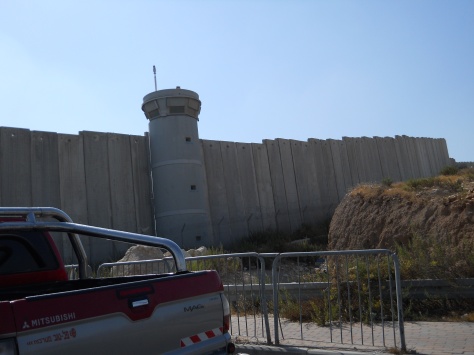
The apartheid wall with watch tower - photo taken during a visit in September
The apartheid wall with watch tower – (photo AN/NM) taken in September

Illegal Ariel contaminates Palestinian water and agricultural lands. Illegal Ariel is surrounded by walls and fences, and closely guarded by soldiers and armed security personnel. A theatrical performance in this illegal settlement is, by definition, a performance to an exclusively Israeli audience. Palestinians living even in the nearest village are physically excluded from attending. By performing in such circumstances, the Cameri profits from and legitimizes Israel’s illegal colonization policies, and becomes an accomplice to these crimes.

Continue reading Boycott Zionazi Apartheid at Delhi International Arts Festival!

The Beginning of the Middle of the End: Haseeb Asif

Guest post by HASEEB ASIF

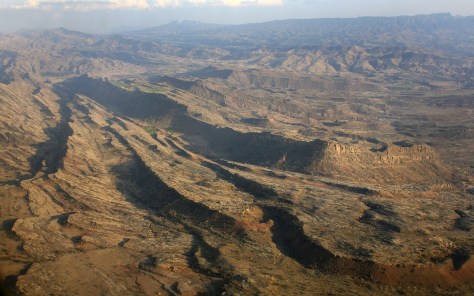
Pakistan’s remote North Waziristan tribal area is seen from the air Feb. 17, 2007. Photo by John Moore/Getty Images

One day as I walked to the market to buy some eggs, I noticed strange graffiti on a wall. Emblazoned in red paint was an invitation to join the fight against zionist subversion, western imperialism and painful hemorrhoids; the end having been muddled with a physician’s note.

It was an open call to Jihad by a militant Islamic organization. Jihad! The camaraderie, the righteousness, the third degree burns; it’s all I’d ever wanted. I was tired of being oppressed. There I was, in the prime of my youth, jobless, eggless, with subnormal visual acuity and four strands of the dengue virus, and who was to blame? I could imagine the conversation with my therapist.

“Doctor, I’m moody, I can’t sleep and I never seem to have enough energy to do anything.”

“Why, I believe you’re suffering from oppression”

I called their toll free number and signed myself up. They sent me a brochure and a medical plan; both had pictures of the same mutilated bodies.

‘Jihad summer camp, three months, graduating candidates get a certificate of martyrculation and up to 72 virgins in heaven (note: amount varies according to stock), HEC accredited, facial hair mandatory’.

I consulted with my parents, my mother was thrilled; she’d always wanted a martyr in the family. Father just grunted and made a time honoured gesture with his middle finger.

Two days later a brother Mehsud showed up at my door, he’d been sent by the organization to escort me back to their base.

“It’s a great thing you’re about to do, brother.” I was only packing my clothes. Continue reading The Beginning of the Middle of the End: Haseeb Asif

How not to handle online hate speech in India

The first amendment to the Indian Constitution, passed in 1951, allows the government to impose “reasonable restrictions” on a citizen’s right to freedom of speech and expression, in order to protect “the interests of the sovereignty and integrity of India, the security of the State, friendly relations with foreign States, public order, decency or morality or in relation to contempt of court, defamation or incitement to an offence”.

The means to impose these “reasonable restrictions” are described in several sections of the Indian Penal Code (IPC) and the Code of Criminal Procedure (CrPc). Section 298 of the IPC makes punishable words uttered “with the deliberate intent of wounding religious feelings”; section 504 addresses “intentional insult with intent to provoke breach of peace”; section 153 makes punishable speech acts that lead or could have led to rioting; section 295A could land you in jail for three years over “deliberate and malicious acts, intended to outrage religious feelings”; section 153B permits the punishment of speech acts that question any social, religious or linguistic group’s allegiance to the Constitution of India or that such a group be denied Constitutional rights. Read more…

Stuck Between Gandhi and Cultural Crap: Papilio Buddha Reveals Much

Sometimes a minor cut on the surface of the skin will do to reveal the rot beneath. This is precisely what the film Papilio Buddha, made by the New York-based Malayalee film-maker Jayan Cherian, which draws broadly upon contemporary caste politics in Kerala, has achieved for us. In fact, its achievement on this count is simply amazing. At a single stroke, it has brought to light several stinking sores above which Malayalees, especially many Malayalee intellectuals who  occasionally don the garb of public intellectuals, strut. Continue reading Stuck Between Gandhi and Cultural Crap: Papilio Buddha Reveals Much

I am a Hindu and I am not a terrorist

I am a Hindu and I am not a terrorist. Don’t get me wrong. Not all Hindus are terrorists and not all terrorists are Hindus. Heck, all Hindus don’t even subscribe to the political ideology called Hindutva. No, I am not saying all Hindutvawaadis are terrorists or that all terrorists are Hindutvawaadis. Let’s get this straight: terror has no religion. Continue reading I am a Hindu and I am not a terrorist

When the pseudo-sentiments of the pseudo-religious are pseudo-hurt

In neighbouring Pakistan, an Islamic cleric recently accused a young Christian girl, Rimsha Masih, of blasphemy, a charge punishable by life imprisonment. He said she had burnt some pages that contained verses from the Quran. The 14 year old girl hails from a poor family and suffers from Down’s Syndrome. An eyewitness to the event showed courage and told a magistrate the truth: it was the Muslim cleric who had put those burnt pages in Rimsha’s bag. The cleric has been arrested and is set, in turn, to be charged with blasphemy.

I have been thinking about the incident. Insulting somebody’s religion is bad. It may cause offence. Often it is intended to cause offence. If somebody insults Islam, by doing things like burning pages containing verses from the Quran, it is bound to outrage a Muslim. Continue reading When the pseudo-sentiments of the pseudo-religious are pseudo-hurt

Saving our heritage

The National Commission for Minorities (NCM) received a letter from the Jamiat-ul Ulama-e-Hind. The letter wanted 31 protected mosques to be opened for prayers. “Although the commission was not very keen that heritage monuments should be opened for prayers, it decided to suggest a joint survey for ascertaining the condition of these mosques.” Officials from the NCM, the Archaeological Survey of India (ASI) and the Wakf Board will carry out the joint inspection according to the suggestion made by the commission in its letter sent to the Ministry of Culture towards the end of July.

This reference made by the NCM needs to be looked at a little carefully, because the issue is not likely to remain restricted to these 31 mosques nor will it remain confined to Delhi. The reference impinges on questions of law and will eventually inform our attitude to the wider question of heritage protection. Continue reading Saving our heritage

Reading the Violence in Assam: Here and There: Musab Iqbal

Guest post by MUSAB IQBAL
… the fact that violence was not merely transitional, a birthmark or a departure, but a much more general and continuous aspect of modern life – Gyanendra Pandey

1.

The misreading or out of place reading of any local and contextual issue and putting it in a wrong frame can be very catastrophic. The recent episode of violence in Assam and the fury it triggered across the country is a classic example of such misreading. But apart from the misreading this complete episode is certainly indicator of certain other phenomenon underlying our fragile society.

Moreover it looks that this is not only adding to verbal construction of abuse but also a very controlled confusion working at someone’s behest. The rally and violence in Mumbai, Ranchi, and Jamshedpur whose motivating factor was this violence happening in northeast and cross border against “Muslims”. The other episode, which adds to cynicism, is through popular newspapers in South India and in Assam publishing that Assamese will be subject to target and then under the cloud of rumor and suspicion these residents of the state is forced to run.

Continue reading Reading the Violence in Assam: Here and There: Musab Iqbal

Full text: The Indian government’s recent orders to Internet Service Providers to block websites, webpages and Twitter accounts

Joji Thomas Philip has put out these documents in The Economic Times.

18 August:

19 August: Continue reading Full text: The Indian government’s recent orders to Internet Service Providers to block websites, webpages and Twitter accounts

An Analysis of the Latest Round of Internet Censorship in India (Communalism and Rioting Edition): Pranesh Prakash

Guest post by PRANESH PRAKASH

How many items have been blocked?

There are a total of 309 specific items (those being URLs, Twitter accounts, img tags, blog posts, blogs, and a handful of websites) that have been blocked. This number is meaningless at one level, given that it doesn’t differentiate between the blocking of an entire website (with dozens or hundreds of web pages) from the blocking of a single webpage. However, given that very few websites have been blocked at the domain-level, that number is still reasonably useful. Continue reading An Analysis of the Latest Round of Internet Censorship in India (Communalism and Rioting Edition): Pranesh Prakash

Maruti workers produced in district court: Anumeha Yadav

Guest post by ANUMEHA YADAV

In Manesar 25 July court

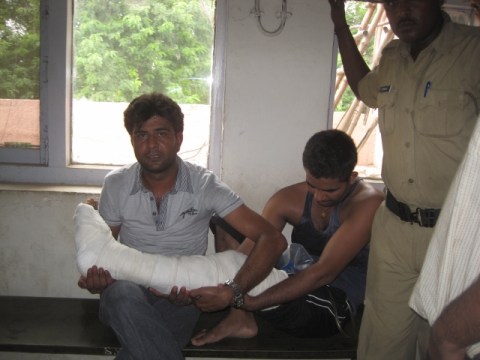
Satbir, a 28 year old worker, was among four workers from Maruti’s Manesar plant produced by Haryana police at the district court in Gurgaon on Wednesday afternoon. Satbir has multiple fractures in his left leg and was taken to the civil hospital from the court room. “I fell while trying to flee the plant. I was in the morning Shift A; we had stayed back because we heard the union leaders were meeting the management to negotiate the reinstatement of a worker,” he recounts. “The violence began after 7 pm, I don’t know why it started. Gate 1 was closed. I feared that I may get attacked in the rioting and the confusion. I and two of my colleagues tried to jump off the back wall but I fell,” he says. Continue reading Maruti workers produced in district court: Anumeha Yadav

A blow to reproductive rights in Pakistan: Ayesha Asghar

Guest post by AYESHA ASGHAR

Early in July, Kashmala Tariq, Member of the National Assembly (MNA) of Pakistan, whom Wikipedia describes as “actively involved in women’s rights”, opposed the tabling of the Reproductive Health Bill 2012, saying that it was not in conformity with Islamic laws. The Bill was introduced by another MNA, Atiya Inayatullah, with the purpose of providing reproductive health services, including legal access to abortion,  to women in Pakistan.

Tariq accused the Bill of following the agenda of foreign NGO’s and stated that such proposals that might be in contravention of Islamic injunctions should be sent to the Council of Islamic Ideology and every party’s opinion should be sought. The Bill has been sent to the Cabinet Division for further deliberations.

Does this mean that our women representatives don’t know what reproductive rights include? The responsibility of women parliamentary representatives in Pakistan is more challenging than that of men, as women are more often made victims of oppression either in the name of culture or religion.

Continue reading A blow to reproductive rights in Pakistan: Ayesha Asghar

CPI(M)’s ‘July Crisis’ and Challenges for Rebuilding the Left

In an unprecedented move ,  the JNU unit of the SFI (SFI-JNU) has been dissolved by the ‘Delhi State Committee of the Students’ Federation of India’ [SFI is the CPI(M) student wing]. What is interesting about the press statement issued by the ‘Delhi State Committee’ following this momentous decision, is that it is signed by the Acting President and the Acting Secretary. The state secretary Robert Rahman Raman has since resigned in protest against the decision and the state president, according to him happens to be among those expelled. The state secretary in his statement has protested against the SFI Delhi state committee’s decision, ‘taken with just 12 members present and without adequate consultation or effort to retain the unit.’  The matter then, is far bigger than that of an errant SFI unit.

Clearly, leading state functionaries of the organization too are involved in the heresy that has called forth this action by the high priests of the CPI(M). Anyone who knows the command structure of the CPI(M) and how it works, can see immediately that a decision as important and unprecedented as this cannot have been taken by something as inconsequential as the Delhi state committee of the SFI. Indeed, even the Delhi state committee of the CPI(M) could not have taken this decision without the concurrence of the highest leadership – in this case Prakash Karat, the general secretary, himself. Continue reading CPI(M)’s ‘July Crisis’ and Challenges for Rebuilding the Left

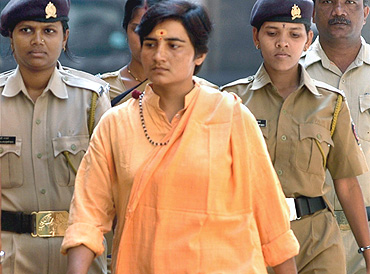
Once There Was Hindutva Terror ..?

Bomb blasts have taken place near the Delhi High Court, in Bombay, Bangalore etc. Within a few hours of such bomb blasts many T V channels started showing news item that Indian Mujahidin or Jaish-e-Mohammed or Harkatul-jihad-e-islam have sent e-mails or SMS claiming responsibility. The names of such alleged organizations will always be Muslim names. Now an e-mail can be sent by any mischievous person, but by showing this on TV channels and next day in the newspapers the tendency is to brand all Muslims in the country as terrorists and bomb throwers…Should the media, wittingly or unwittingly, become part of this policy of divide and rule?

(Justice (retired) Markandey Katju, Chairman of the Press Council of India, October 10, 2011 at a get-together with mediapersons)

1.
Introduction

What is common between the murder of the leader of a private army of landlords at the hands of his own gang members in faraway Bihar over distribution of booty, the felicitation of a terrorist lodged in jail as ‘living martyr’ (zinda Shaheed) in Punjab or the anointment of a hatemonger as the poster boy of the main opposition party ? Formally speaking there are no connections but if one tries to dig further few subterranean linkages become clear. Whether one agrees or not they exhibit the growing legitimacy of authoritarian, fanatic, exclucivist politics in this part of the subcontinent . Continue reading Once There Was Hindutva Terror ..?

Swami Sahajanand Saraswati – A Contested Legacy: Manish Thakur and Nabanipa Bhattacharjee

Guest post by MANISH THAKUR and NABANIPA BHATTACHARJEE

Observers of the political scene in Bihar would have hardly failed to notice a renewed interest in the life and works of Swami Sahajanand Saraswati (1889-1950), the founder president of the All India Kisan Sabha, and arguably the most influential peasant leader of Bihar in the 1930s and 1940s. Over the last decade or so, his birth (22 February, 1889) and death (26 June, 1950) anniversaries have been celebrated with great pomp and show with full attendance of political luminaries of the state including Nitish Kumar, its present Chief Minister. Not only have glowing tributes been paid to his legacy but there has also been a spurt of writings on his life and times.

Swami Sahajanand Saraswati

New biographiesi have been released, and his collected works been published in six volumesii. In fact, there is a Swami Sahajanand Saraswati Foundation based in New Delhi as well as a Swami Sahajanand Saraswati Forum on the internet. Curiously enough, Swami Sahajanand Saraswati figures prominently on the internet in the caste-specific web-portals such as www.bhumihar.com; www.bhumiharmahasangh.com and www.bhumihar.net where his name appears along with Bhagwan Parashuram, Chanakya, Mangal Pande, Sri Babu, Ramdhari Singh Dinkar, C.P Thakur, and so forth in the long list of supposedly Bhumihar icons. Indeed, Saraswati’s legacy has always been the bone of contention between the Bhumihars and the communists. What needs explanation is the BJP’s concerted efforts in appropriating this iconic peasant leader as ‘samajik samrasta ke sant’.

Continue reading Swami Sahajanand Saraswati – A Contested Legacy: Manish Thakur and Nabanipa Bhattacharjee

The Myth of the Muslim Vote Bank

The recently concluded assembly elections in U.P were marked once again by an intensified debate on ‘Vote Bank Politics’. The debate was not provoked by the emergence of any new trends in political mobilization but was the standard fare that is dished out by so called commentators, experts, political analysts and people who not only think that they have inside information about how entire communities think and react, they also claim that there are agencies capable of engineering conditions that programme these communities to go and vote for this or that party.

The essential argument behind this discourse hinges on two presuppositions, one that particular religion or caste based communities can be mobilised and made to move in one pre-determined direction and two that this becomes possible because such communities react and behave as one individual and therefore all that is required is to catch hold of a handful of community leaders and you can as good as have the entire community in your pocket. Continue reading The Myth of the Muslim Vote Bank

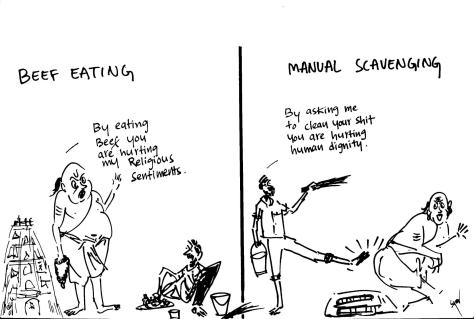
I have a beef with you: Unnamati Syama Sundar

This guest post by UNNAMATI SYAMA SUNDAR is a cartoon

From Kafila archives:


Dalits in Hindurashtra – Time for another sadbhavna fast Modiji!

…27 of the 30 complaints that were addressed to the commission spoke of indifference of police officials towards dalits.These issues were raised immediately after NHRC chairman KG Balakrishnan praised status of scheduled castes (SC) in Gujarat. He said the state’s schemes for development of the marginalised are working well and penetration of education among scheduled caste and scheduled tribes has reached 70%.Almost all dalits and their leaders present in the audience were not in agreement with this statement. [DNA]

 I

Justice Balakrishnan, retired Chief Justice of the Supreme Court of India, and at present Chairman of the National Human Rights Commission (NHRC), – who has remained in news since his retirement altogether for wrong reasons – provided further ammunition to his critics with his recent visit to Gujarat. The manner in which he lauded the state government for its ‘innovative schemes for the upliftment of dalits’ and claims that ‘..[f]uture of the SC community seems to be fairly good in Gujarat as compared to many other states’ is being seen as an attempt to clean chit and whitewash acts of ommission and commission.of a government which is still mired in the controversies surrounding the carnage in 2002

The said two day visit (14-15 th March) was part of the plan envisaged by the Commission to hold “open hearing” sessions on issues related to dalit atrocities in different parts of the country. According to media inputs, this was one of the important recommendattion by the K.B. Saxena committee which had done a painstaking job and brought out a report on dalit atrocities in the country few years back.for the commission itself. Not some time ago the commission had held its first such hearing in the state of Orissa.

Continue reading Dalits in Hindurashtra – Time for another sadbhavna fast Modiji!

The Anti-Politics of Murder

No, this post is not mainly about the ghastly murder of the rebel communist leader T P Chandrasekharan at Vatakara in Kerala early this month. It appears clear now that irrespective of whether the CPM leadership was directly involved or not, local CPM cadre were involved in the conspiracy. Certainly, it is an act gruesome enough to feed nightmares through many nights. And the way the gory details of the planning and execution of the murder continue to appear in the print and visual media, the Malayalee public is almost on its knees, holding on to their stomachs, racked by seemingly never-ending bouts of nausea. But I have my reasons for not wanting to focus on this incident here, reasons more than the sheer irritation felt with sections of the media that demand shrilly that ‘cultural leaders’ have not condemned the murder sufficiently. Continue reading The Anti-Politics of Murder

Resisting Culinary Fascism: Nabanipa Bhattacharjee

 Guest post by NABANIPA BHATTACHARJEE

At the end of last month (March 2012) students of Jawaharlal Nehru University (JNU), New Delhi under the banner of a recently formed group called the New Materialists (NM) organized a public meeting to debate the issue of (dis)allowing certain kinds of food – beef and pork in particular – on the campus. The group, as one of its members Suraj Beri said, intended to petition the university administration to allow the sale of beef and pork in the canteen(s), and fight for inclusion of the same in the hostels’ menus; it was a struggle, as the NM declared, against the Brahmanical dietary impositions on Dalits and other minority community students of JNU. In fact, Francis (JNU students of the 1990’s would remember the man from Kerala) who ran a canteen at the basement of the School of Social Sciences II did serve beef curry on Saturdays, and it would not be an exaggeration to say that there would be more than a mad rush for that. However, he was pressurised – by Hindu right wing groups and other similar forces – to stop the sale of the “forbidden” food, and the canteen was eventually closed down.

Continue reading Resisting Culinary Fascism: Nabanipa Bhattacharjee

NWMI Condemns The Violent Abuse Of Meena Kandasamy

[We at Kafila are absolutely horrified at the abuse directed at poet and activist Meena Kandasamy for expressing her views on twitter regarding the beef-eating festival at Osmania University. That supposedly ‘neutral’ educational institutions replicate upper-caste Hindu dietary taboos, is no surprise, nor that the ABVP reacted with its customary violence to that questions upper caste privilege. What is shocking is the attitude of the Vice Chancellor and the sexist, misogynist, violent speech directed at her on the web. It is telling that those who take such umbrage at the eating of cows, think nothing of advocating the public rape of women. Below is a statement issued by the The Network of Women in Media condemning the hate speech directed at her. We stand in solidarity with Meena Kandasamy.]

The Network of Women in Media, India (NWMI), strongly condemns the violent and sexist abuse unleashed on poet, writer, activist and translator Meena Kandasamy, presumably in response to her posts on Twitter about the beef-eating festival at Osmania University, Hyderabad, on 15 April 2012 and the ensuing clashes between groups of students. Continue reading NWMI Condemns The Violent Abuse Of Meena Kandasamy