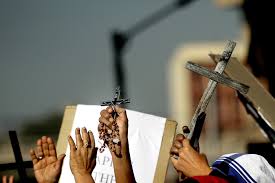
An old RC ruminates on his ‘Pseudo-Secularist’ roots: Hartman de Souza

Guest post by HARTMAN DE SOUZA

The background and context to this not-so-enigmatic title is very simple. By today’s standards, I am old – I get a hefty discount travelling by train which I am still hooked on, and I am still counting the years and sniffing my coffee. The ‘RC’ is a lot simpler:

Travelling by train from Mumbai to Delhi many, many moons ago, a man in the compartment, in his thirties, got into conversation with me. After I had answered his opening bullet shot questions – You are from? You are doing what? Your father is doing what? – he told me I spoke English like a ‘foreigner’.

I was still fresh from Kenya those days, where I was born, so I got a lot of grief from having a different accent that no one could place.

This was of course much, much before you could study for an undergraduate degree in India (where you were born) and then, if you had the means and the SATs, go and study in the US for a few years. There, in the land of beef and honey, as we now note with pride, many Indians also discovered the ‘free market’ and their ‘authentic’ Hindu roots – then came back to spew communal venom with a makeshift American accent and the dollars to back it.

As if it was stamped on my bloody forehead, he then asked: “You are Christian?” He pronounced this as “Kir-tchin’.

I pretended I hadn’t heard. So he repeated the question. I nodded, hoping he would disappear and let me get on reading my book.  He did not. Instead had a broad grin on his face, like he knew in which bag he could drop me in.  “You are RC!” he said, almost triumphantly.

For a few seconds, he almost had me stumped. I raised my eyebrows.

Ro-maan Catholic,” he offered.

I shook my head and smiled back. “No,” I replied “Retired Catholic…”

He didn’t get the joke. Guys like that still can’t. Continue reading An old RC ruminates on his ‘Pseudo-Secularist’ roots: Hartman de Souza

ചുംബനസമരവിരോധികളുടെ സംശയങ്ങളും അവയ്ക്കുള്ള സമാധാനങ്ങളും: ആലപ്പുഴയിലെ ചുംബനസമരത്തിന് അഭിവാദ്യങ്ങൾ

[പല വേദികളിൽ പല തവണ ഉത്തരം പറഞ്ഞുവെങ്കിലും ചുംബനസമരക്കാർ നിരന്തരം നേരിടുന്ന ചോദ്യങ്ങളാണിവ.  ഈ ചോദ്യങ്ങളും മറുപടികളും പല സുഹൃത്തുക്കളോടും സഹപോരാളികളോടുമുള്ള സംഭാഷണങ്ങളിൽ നിന്നുണ്ടായവയാണെങ്കിലും അവയുടെ പൂർണ്ണ ഉത്തരവാദിത്വം എനിക്കു തന്നെ.]

ചുംബനസമരങ്ങളിൽ പങ്കെടുക്കുന്നവർ കേവലം പബ്ളിസിറ്റിക്കു പിന്നാലെ നടക്കുന്നവരല്ലേ?

Continue reading ചുംബനസമരവിരോധികളുടെ സംശയങ്ങളും അവയ്ക്കുള്ള സമാധാനങ്ങളും: ആലപ്പുഴയിലെ ചുംബനസമരത്തിന് അഭിവാദ്യങ്ങൾ

Pondicherry Ashram Suicides and The Spiritual Surrender: Bobby Kunhu

Guest post by BOBBY KUNHU

On 17th December there was a dramatic sequence where, the youngest of a family of aged parents and five sisters who were inmates of Sri Aurobindo Ashram, Pondicherry attempted suicide by jumping off a water tank. The police rescued the woman, booked her and her sisters for attempt to suicide and released them on bail. This was following a Supreme Court order evicting them from the ashram at the end of a decade long struggle against the ashram. Their demand was simple that the management of the Ashram be taken over by the State to contain the corruption within. On the morning of 18th December, the family of seven decided to walk into the sea. Three died, four were rescued. Amongst the four who were rescued, one was allegedly raped by two men in her state of unconsciousness.

The South Asian spiritual landscape perhaps is the most diverse – ranging all hues and shades of spirituality cutting across religions and castes and has attracted followers internationally including celebrities like the Beatles, Isaac Tigrett (the founder of Hard Rock Café) and many others. Without exception, all of these spiritual groups ask for “total” surrender, though the terms of this surrender would differ from group to group. And many have willingly surrendered! For a non-believer it might be difficult to understand this leap of faith. But, for the believer this becomes the single most important event in her/his life. Even more important than birth marriage, love or death! And, when the terms of surrender is breached – though all hell breaks loose, people cling on to their faith. Despite “Sexy Sadie”, Paul McCartney held that Transcendental Meditation was a gift The Beatles had received from the Maharishi at a time when they were looking for something to stabilise them. In the BBC documentary The Secret Swami Tigrett stated that he believed that there was truth to the rumors of Sai Baba’s actions of pedophilia and sexual abuse towards some of his young male followers, but also such rumours would not change his belief in the Baba. Continue reading Pondicherry Ashram Suicides and The Spiritual Surrender: Bobby Kunhu

On “Scandalmongering of the Senile” – Ruminations on Tapan Raychaudhuri, Historian: Ahona Panda

Guest Post by Ahona Panda

[ One of the great losses of this year was the passing of the historian Tapan Raychauduri in November, who is remembered not just for the acuity of his scholarship, but also for his warmth, his humour and his embodiment of a certain cosmopolitan, worldly elan. In this tribute, Ahona Panda, a young scholar at the University of Chicago, remembers what it means for all those committed to the life of ideas to have shared the world with Tapan Raychaudhuri and to have lived through the years in which he sojourned through time. We thought it would be fitting to offer these reflections across generations to our readers as another turbulent year draws to a close. ]

In November 2014, the world lost an astonishing historian called Tapan Raychaudhuri. Professor Raychaudhuri’s laurels and accolades and many publications, along with his students, span the entirety of the globe. I write this obituary as a young graduate student who knew him in some personal capacity, a personal capacity that is difficult to define—my parents were his graduate students in the 1980s—thus making me a recipient of his affection (personal, intellectual) and something akin to a grandchild, no perhaps not quite that, but more what he called a (jokingly) “grand-student”.

It was when I stepped into the murky world of South Asian studies, and dabbled and read material pertaining to India in general and Bengal in particular, that I understood the great contribution that Tapan Raychaudhuri has had in the field of not only South Asian history, but also the cultural history of Bengal. This latter Bengal is not that limited, parochial and steadily shrinking ideological/geographical entity that today stands the risk of being run by a Hindu right wing party. Tapan Raychaudhuri, a tremendous celebrity in Calcutta, was not guilty of belonging to West Bengal. In fact, he was perhaps never guilty of “belonging”.

Continue reading On “Scandalmongering of the Senile” – Ruminations on Tapan Raychaudhuri, Historian: Ahona Panda

Anti-Conversion and Ghar Wapsi, Or Hindutva’s Doublespeak: Charu Gupta

Guest post by CHARU GUPTA

The synchronised vocabulary of anti-conversion by the BJP and that of reconversion by the VHP and Dharm Jagran Samiti, an RSS affiliate, reveals the intimate relationship between the two. Anti-conversion and reconversion are two sides of the same coin. Even though the Dharm Jagran Samiti dropped its plan to ‘reconvert’ 4000 Christians and 1000 Muslim families in Aligarh on 25 December, due to pressures from a parliament in session as well as other protests, the day has had strategic significance. Christmas Day has been given a different meaning by the Hindutva brigade — the birth anniversaries of Madan Mohan Malaviya, one of the stalwarts of the Hindu Mahasabha, and Atal Bihari Vajpayee, the eminent BJP leader. Equally critically, on 23 December 1926 Swami Shraddhanand, the leading ideologue of the shuddhi movement (purification; Hindu movement in the late nineteenth and twentieth centuries to reclaim those who had converted from Hinduism to other religions) was assassinated by a Muslim fanatic, and on 25 December, a condolence motion was moved at the Guawhati session of the Congress.

The twin strategies of anti-conversion and ghar wapsi have a long history and past, which saw its efflorescence in the shuddhi movement, but have become much more aggressive in the present context. As part of their community and nation making rhetoric, the Arya Samaj and the Hindu Mahasabha had launched the programme of shuddhi on a large scale in Uttar Pradesh in 1923. Though Arya Samaj had stronger roots in Punjab, shuddhi movement was more effective in UP. Various scholars have pointed to the communal character of the movement. A note prepared by the criminal investigation department at that time stated that though the movement had older origins, ‘its application to mass rather than individual conversion gave it a special prominence’ in 1923. Shuddhi came to be touted as a movement to reclaim the ‘victims’ and protect the ‘faithful’. Reconversion attempts have since been a part of agenda of various Hindutva outfits, and the present assertions should be seen in that context. Today, organisations like the VHP and Dharm Jagran Samiti have acquired a new importance and are emboldened to not only challenge conversions in an organised manner, but also to simultaneously aggressively campaign for reconversion. Just as shuddhi became an instrument for Hindu communal mobilization in early twentieth century, ghar wapsi is fulfilling the same role today. Continue reading Anti-Conversion and Ghar Wapsi, Or Hindutva’s Doublespeak: Charu Gupta

Harvest of Innocent Blood – The Democracy Deficit in Bodoland, Assam: New Socialist Initiative

Statement by New Socialist Initiative

Photo courtesy: PTI
Photo courtesy: PTI

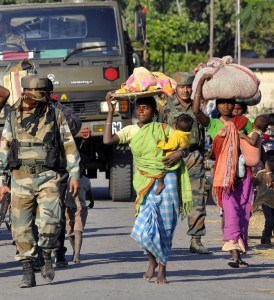
Once again, and very soon after the last instance of mass killings and displacement, another series of bloodshed and violence has rocked Bodoland Territorial Autonomous Districts (BTAD) – Assam. On 21st December 2014, two suspected militants of the National Democratic Front of Bodoland- Songbijit Faction (NDFB-S) were killed by the security forces in an alleged cold blooded encounter in the Chirang district of BTAD-Assam. In retaliation, on 23rd December, armed militants of NDFB-S attacked Adivasi villages in Kokrajhar, Chirang and Sonitpur districts. Since then it has resulted in the death of 81 people – 73 Adivasis including many women and children as well as 3 Adivasis killed in police firing on protestors.  As a mode of retaliation Adivasi mobs killed at least 8 Bodo civilians.  Since 23rd December, the entire BTAD and adjoining areas like Sonitpur district have been extremely volatile and under curfew. On 25th December, the Home Minister Mr. Rajnath Singh, in a meeting with the top security top brass, which was also attended by the Assam chief minister Mr Tarun Gogoi, declared Government of India’s resolve to fight terrorism and reportedly asked the security and intelligence apparati to ensure the elimination of the top leadership of NDFB-S within the next six months. Around 50 additional companies of paramilitary forces are being sent to Assam. The Army has also reportedly launched major operations in the Assam-Arunachal border region, in search of the NDFB-S militants.

 The NDFB-S massacre of Adivasi civilians is not a pre-modern tribal savagery. In fact such violence is justified by notions of exclusive ethnic-homelands and nations, and their corollaries like aspiration for spatial homogenization and monopolization of resources by particular communities. The Northeast of the country is home to many armed mobilisations against the domination of Indian state that are driven by an ethnic conception of political community in a contiguous territory. The Bodos of the Assam valley started an armed movement for Bodoland in 1980s against their marginalisation by the dominant non-tribal Assamese. Following the time tested carrot and stick policy, the Government of India managed to win over a faction of the armed groups in exchange for internal autonomy under the Sixth Schedule of the Constitution. The BTAD was formed in 2003. Curiously, even while the majority of citizens under the BTAD area identify themselves as non-Bodos the distribution of seats under the BTAD agreement is so designed that Bodos enjoy majority in the elected body.  While a faction of the Bodo leadership settled to run the BTAD, the seeds were sown for inter-ethnic clashes and violence. Continue reading Harvest of Innocent Blood – The Democracy Deficit in Bodoland, Assam: New Socialist Initiative

“Welcome to the Land of Enlightenment”: Kaveri Gill

Guest post by KAVERI GILL

Bihar Tourism’s Neglected Treasures

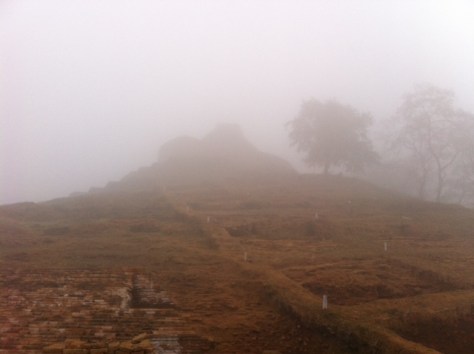
Kesariya Stupa East Champaran

A recent work trip took me to the north-east of Bihar, the poorest region of a state with ‘critical’ poverty incidence by any measure. For instance, within the state, on NSS 2004-05 data, West Champaran is the worst-performing district on headcount ratios (76.9) in rural India (Chaudhuri and Gupta, Economic and Political Weekly, 2009). Such destitution was on ample evidence amongst the segregated group of mahadalit and minority women members of a self-help group we spoke to, in a tola with no electricity and only candles to dispel an eerie fog settled over the village at dusk. Of 13 of them, 11 had repeat experience (up to three times per woman) of losing a child in the last trimester of pregnancy, just after giving birth or of a child under 5 years of age.  It was from Champaran that Gandhi first led landless labour and tenants or ryots, in his first satyagraha against the British, protesting the coerced cultivation of the cash crop, indigo. Almost a century later, not much has changed in tangible terms for the population of this part of the democratic Republic of India. Continue reading “Welcome to the Land of Enlightenment”: Kaveri Gill

Real Estate of Religion:Satya Sagar

Guest Post by SATYA SAGAR


Several years ago a friend of mine filed a petition in the Indian Supreme Court against – believe it or not- the tenth incarnation of the Hindu God Vishnu! Or at least, against a fellow who claimed to be ‘Kalki Bhagwan’ and has in the past two decades drummed up a significant following in the southern part of India.

Blasphemous as the claim of this fake avatar was the court battle itself was not really about the finer details of Hindu mythology or theological doctrine.Based on several years of painstaking investigation and research it was my friend’s claim that ‘Kalki Bhagwan’, had taken money from the public for ‘rural development activities’ and fraudulently diverted it to his personal bank accounts as well as that of his close relatives.

From being an ordinary clerk working for the Life Insurance Corporation in Chennai thirty years ago today the ‘Tenth Incarnation of Vishnu’ is allegedly worth many million dollars and owns vast properties in many parts of South India. It is a trajectory that is tragically very common everywhere, with spurious spirituality – ironically also a form of ‘insurance’-being the fastest way to material wealth and power since ancient times. Continue reading Real Estate of Religion:Satya Sagar

Celebrating ‘Good Governance’ : Mary E John and Satish Deshpande

Guest post by MARY E. JOHN AND SATISH DESHPANDE

It seems odd to associate words like ‘mean’ and ‘petty’ with entities like states.  But it is hard to avoid them when confronted by the despicable attempt of the Modi regime to cancel or restrict the holiday for Christmas.  On the other hand, these words are far too mild to capture the poisonous malice behind this small-minded act that, despite its clumsiness, is clearly part of a systematic campaign to cultivate a culture of vicious aggression towards select “minorities”.

How should one respond to such pettiness, knowing that it is only the surface of a deep reservoir of violent hatred?  One could light heartedly point to the irony that 25th December happens to be the birthday of not only Madan Mohan Malviya (1861) and Atal Bihari Vajpayee (1924), but also a certain Mohammad Ali Jinnah (1876).

Alternatively, one could argue, in a spirit of liberal reasonableness, that Christmas has for long been much more than a holy day for Christians.  The secularisation of Christmas is apparent not only in its relentless commercialisation (much like Deepavali), but also in its longstanding status as a broader symbol of festive good cheer marked by giving and sharing.   Continue reading Celebrating ‘Good Governance’ : Mary E John and Satish Deshpande

Peace on Earth and Social Justice – Christmas greetings!

images

Protest at Delhi Police Headquarters after the burning of St Sebastian’s Church in Dilshad Gardens/ Image from The Indian Express

We observe Christmas today under the ominous cloud of Hindutvavaadi violence against minorities, which began on the very day of the BJP electoral victory seven months ago, and their determined attempt to obliterate all religious identities other than their own narrow version of Hinduism, a Hinduism that brutally excludes even large numbers of people who would consider themselves Hindu. From burning churches to physically attacking ‘Muslim-looking’ men, to trying to erase Christmas under the banal bureaucratese of Good Governance Day – Hindutvavaad has never had it so safe, never has it been so arrogant, as under the protective gaze of Modi, a Prime Minister who produces reams of flowery prose in his speeches, but through his public silence on these atrocities, satisfies both Hindutvavaad and his neo-liberal supporters – the one recognizing his benign encouragement, the other fooling itself that his silence shows displeasure. Continue reading Peace on Earth and Social Justice – Christmas greetings!

The Secular Stake- A Burden, or a Democratic Imperative? Sanjay Kumar

Guest Post by Sanjay Kumar

Mr Asaduddin Owaisi, the leader of MIM recently remarked in a media conclave that ‘Muslims are not coolies of secularism’. The statement made perfect sense for his politics. He is the leader a party that aims to mobilise voters on the basis of them being Muslim. The unprecedented success of Hindutva under Mr Modi in recent elections has upset many old electoral calculations, and opened new opportunities. Mr Owaisi is smelling a chance for the MIM to expand beyond its turf in Hyderabad, to regions where non-BJP parties have been getting the major chunk of Muslim votes with the slogan of secularism, seen principally as the promise of protection from riots. For Mr Owaisi, the remark serves multiple purposes. Average Muslim citizens are deeply disillusioned with a political process that has resulted in the utter marginalisation of their community.  For such voters, the statement is intended to clearly distinguish his party from the so-called secular non-BJP parties. It is calibrated to raise a doubt in their mind, why should only Muslims be expected to vote for such parties, when significant sections of the Hindus have sided with the communal BJP? It is also a preemptive answer to his political competitors and ideological critics, who are likely to accuse him of being communal.

Otherwise too, the secular discourse in India has largely become a minorities’ affair. It is said to be under threat when minorities are attacked. It is claimed to be flourishing when minorities rights are protected. A corollary belief among major sections of the so called majority community is that India  could have as well been non-secular if there were no minorities in the country, or if they are put in their place as the RSS political programme demands. Continue reading The Secular Stake- A Burden, or a Democratic Imperative? Sanjay Kumar

Converting Religion, Converting law: Rajshree Chandra

Guest Post by RAJSHREE CHANDRA

The right to freedom of religion  (Art. 25 of the Indian Constitution) in a country like India has a burden so extensive and a content so capacious that the same right functions both as an instrument of individual liberty As well as a mode through which the state intervenes to discipline and curtail religious freedom. It has a history so diverse and conflicted that the right often become a mode of settling quid pro quo battles between religious publics, and law often becomes hostage to the principle of ‘historical correction’.

There have been various modes of historical corrections. If the demolition of Babri Masjid was one, ghar wapasi – a return home to one’s religion – is another. The recent ghar wapasi episode in Agra, where RSS affiliate Bajrang Dal converted 57 Muslims to Hinduism; the proposed and then withdrawn conversion of Muslims and Christians in Aligarh on 25th December 2014 by the RSS’s Dharm Jagran Samiti; and the scheduled holy dip of an expected 50,000 “reconverts” (of the last five years) in the Godavari during the Kumbh at Nashik next August are instances and signs of the “re-conversion” rhetoric steadily mainstreaming itself. The question is how does the state and law respond to this?

‘Re-conversions’ are not new in Indian history. Katju & Sikand document instances of mass conversions of Muslims into Hinduism from 1947 onwards, and more forcefully and openly from the 1990s onwards, as part of the Shuddhi (purification) movement. The VHP, an adjunct of the Sangh, extols the practice of ghar wapasi and had claimed that over 200,000 Christians had been converted to Hinduism. The re-conversion argument – of shuddhi and ghar wapasi – is invoked by the various factions of the Sangh Parivar as a modus that aims to correct the history of conversions away from Hinduism.  Continue reading Converting Religion, Converting law: Rajshree Chandra

Impossible Lessons: Ravi Sinha

Guest Post by RAVI SINHA

Far away from Peshawar five men and a woman sat in a physician’s waiting room in Lucknow. The television screen that ordinarily shows some Bollywood film or a cricket match had a news channel on. It was day after the slaughter of children. The assistant who maintains the waiting list of patients and collects the doctor’s fee said something very predictable, even if heart-felt, expressing his horror and revulsion. The matter would have passed as unremarkably as most things do most of the times, except for what an elderly gentleman waiting to see the doctor had to say in response.

In a feeble yet firm voice whose conviction and sincerity was unmistakable, he said – dhaarmikata ko badhaava doge to kattarta badhegi; kattarta badhegi to aatank upajega, haivaaniyat saamne aayegi. (If you will promote religiosity, fundamentalism will grow, and from that will emerge terror and barbarism.) After a pause he added – hamaare desh mein bhee yahee ho rahaa hai, haalaan ki abhee hum pehle daur mein hain, dhaarmikata badhaane ke daur mein. (Same thing is happening in our country too, although we are in the first phase so far – that of promoting religiosity.) Continue reading Impossible Lessons: Ravi Sinha

A Massacre is a Massacre and There is no Good Taliban: S. Akbar Zaidi

Guest post by S. AKBAR ZAIDI [This post was sent to us by our friend S. Akbar Zaidi. Though published earlier in The International News of Pakistan, we are reproducing it here because it represents a position that is felt by many inside Pakistan but which right-wingers in India would love not to see. Like right-wingers and Talibanis in Pakistan, our very own Hindutvavadis too thrive on presenting a monolithic picture of something called ‘Pakistan’.]

This was a massacre, nothing less. We should call it that, nothing less. We may want to call the children ‘shaheed’, but they were not engaged in any war against anyone. They were too innocent and blameless for this. They were victims. Let us call them that. They were victims of our politics, of our opportunism, of hiding in the dark, and especially of protecting the murderers. Do we simply pray for innocent victims, and absolve ourselves of the crimes that we have allowed to persist which resulted in this massacre? As Mohammad Hanif has so eloquently argued, Pakistan’s civil and military leadership needs to examine their own bloodstained hands when they raise their hands in prayer. It was the bloody Taliban butchers who killed these children, not militants or some obscure, unspecific category called ‘terrorists’. Let us name them for who they are. We cannot hide away from this reality and unless we name names, we will not alter our political economy, our direction. If we are waiting for the good Taliban to emerge and denounce this massacre, we need to stop hoping. We must stop differentiating between different types of killers. There is no good Taliban, just one ideology represented and manifest in different groups and forms. Continue reading A Massacre is a Massacre and There is no Good Taliban: S. Akbar Zaidi

The Success of Nilppu Samaram: The Victory of Democracy

This is a guest post by ASWATHY SENAN
The Nilppu Samaram (Standing Strike) by the Adivasis demanding their land rights started on 9-7-12 under the leadership of Adivasi Gothra Maha Sabha (AGMS). The protesters stood for 162 days in front of the Secretariat, Thiruvananthapuram. This protest saw the support and intervention of people from all age group from various caste and religious communities (not under the banner of any particular political party or religious organisation) most of whom came to the protest space and stood with them to mark their solidarity. The government had to budge at the end under the pressure of the non-violent democratic protest of the adivasis backed by the civil society and on the 163rd day the ended their standing after the Government of Kerala agreed to all their demands on paper.

Continue reading The Success of Nilppu Samaram: The Victory of Democracy

Make in India – A critical examination of an economic strategy: Leila Gautham

This is a guest post by LEILA GAUTHAM

‘Make in India’ is now an all-pervasive catchphrase – every newspaper and television channel trumpeting the Modi’s ‘clarion call’ to investors – but surprisingly empty in terms of substance. The website is flashy and vastly different from the run-of-the-mill government-of-India websites one is used to – but one has a hard time imagining the ‘captains of industry’ who attended the Make in India launch on September 25th finding any use for it. One begins to wonder, who exactly is the campaign aimed at? Is it the Indian public? An impressive farce, an ad campaign, the neoliberal dream of the efficient state come true – Make in India is not some brilliant brainwave of Modi’s: it is the culmination of very intensive campaign of worldwide propaganda that has been launched by global corporate capital.

I tried to probe deeper, to tease out concrete details if any – and the following article reflects my understanding, incomplete though it may be.

Continue reading Make in India – A critical examination of an economic strategy: Leila Gautham

Statement on Peshawar Massacre: People’s Alliance for Democracy and Secularism, Delhi

People’s Alliance for Democracy and Secularism, Delhi, condemns the ghastly attack on school children in Peshawar (Pakistan) by Tehreek-e-Taliban in which over 140  innocent lives were lost. It is a plain case of murders by the people spewing venom in the name of religion and ideology with no regard for human life. PADS demands that such fundamentalist violence be dealt with firmly by the authorities in Pakistan and expresses its solidarity with the parents of the children whose lives were snatched away by the murderous gang which, only to hoodwink the people, claims to be fighting imperialism. By their act they have shown how dangerous they are for the common citizens of Pakistan.

It is also important to note that people in general in Pakistan have to stand up against all kinds of violence. There is no acceptable violence and unacceptable violence. Violence, under the illegitimate legal cover of Blasphemy Laws is being perpetrated, and celebrated in the name of religion in the country. Condoning any kind of violence against the innocent people in the name of religion, provides raison d’etre to the forces like TTP. The ghastly murders in Peshawar is a signal for the Pakistani society  to look inward and work in unison to keep religion away from State to avail the benefits of the democratic rule.

The Indian school children and Parliament have shown solidarity with people of Pakistan by keeping a two minutes silence, on the suggestion of Prime Minister Modi. Such solidarity, however, should be expressed not only at the moment of grave tragedies, but should become a normal state of affairs between the two countries. The political and military leadership of the two countries should avoid aggressive rhetoric and militarisation and peacefully settle all outstanding issues.

PADS notes with the sense of urgency that the Taliban-like Hindutva forces have grown in size, influence, and impact in India orchestrating killings and triggering mass displacement of the people. PADS would like to forewarn the people of India that communalists of any religion have the same traits and ultimately, it is the members of the same community, whose interests such groups claim to espouse, become their targets. This is the time for the peoples of India and Pakistan to unite against the use of religion for committing murders of the innocent.

18.12.2014

Remembering 1992: School of Media and Cultural Studies, TISS Mumbai

Dislocation

Hardening Divides

Remembering 1992 is a site that seeks to revisit and remember the violence that the city of Bombay/Mumbai experienced in December 1992 and January 1993. This site includes 6 films, video interviews and transcripts, news clippings, reports and other resources. The project started with the films that were made by students (Class of 2013) and faculty and used as a part of the campaign Bombay ki Kahani Mumbai ki Zubaani, held between December 2012 and January 2013.

In a political and social context where the memory of this violence has been rewritten and all but erased, it is crucial to remember, to explore the contours of normalised prejudice and to understand how the survivors have struggled with the denial of justice. It is also necessary to think about how and why the memory of such a watershed event gets erased and who benefits from this erasure.

The website explores different kinds of memory, organised around themes and uses a timeline and map to list the events of the 1992-93 riots,based on the Justice Srikrishna report.

Taliban Attack – the Limits of Savagery: Akhlaq Ahan

Guest post by AKHLAQ AHAN

Every sane person is aghast to see what has happened in Peshawar, where Taliban’s attack on a school has crossed all limits of savagery and senselessness. They killed over 140 innocents mostly children, after taking them hostage, burned a teacher with gasoline and made the students watch the ghastly act.

Historically the area is part of the region known as ‘Khorasan e Buzurg’ or the greater Khorasan spanning over the so called North West Frontier, Afghanistan, North East Iran and erstwhile Emirate of Bukhara. The area, for thousands of years, has been the heart and mind of Asia; as this was the region where Gathas of Avesta and Vedas were compiled, Buddhist teachings flourished and survived, Persian traditions were revived, the seekers of truth flocked around Sufi masters to be enlightened. This is the land that produced personalities like Zarathustra, Panini, Alberuni, Khwaja Ansari, Data Ganj Bakhsh, Khwaja Gharib Nawaz, Rumi, Jami, Rahman Baba and hundreds of others. Scores travelled to the region to seek knowledge and training like Faxian, Xuanzang, Yijing, Shams Taprez (Tabrez), Amir Khusraw, Guru Nanak, Jamali and countless others. Though the region has seen occasional strife in the past too but the traditions of inclusion had continued to prevail till about a couple of centuries ago, when these values began to face systematic attacks. A few like Bacha Khan, in his autobiography, gauged the extent of the spread of these exclusionist ideas and warned against them. Continue reading Taliban Attack – the Limits of Savagery: Akhlaq Ahan

Why Should Adivasis Bear the Burden of ‘National Development’? Deba Ranjan

Guest post by DEBA RANJAN

On 25th August 2014 large number of armed police including CRPF with magisterial power reached at the top of the Baphlihill, where Utkal Alumina of Aditya Birla – Hindalco is continuously transporting bauxite through trucks to its Doraguda Alumina Plant. They started beating the villagers of Paikakupakhal. “They were in 25 four wheelers and one bus” Padman Nayak of the same village said. Many got the injured and three dalit villagers namely Mangaldan Nayak (30 years), Kalendra Nayak (30) and Ms Kiyabati Nayak got seriously injured. Kalendra got treatment outside but again was lifted from the Medical by the police so that he may not speak about such action of police to the outside world. Both print media and TV channels (except one newspaper) did not cover the incident. The local journalist of that newspaper later on was harassed by the goons not to write more on it.

I had been to Siju Mali few days before and went to the top of the Hill. It falls in Kashipur area of Odisha just behind the Niyamgiri hill. For last few months this Siju Mali and its adjacent Kutru Mali, two bauxite hill ranges, have been in news because the Vedanta International Limited (VIL) has kept its eyes on it.

After the Lok Sabha election, between April and November 2014, Anil Agrawal, director of VIL has met Odisha Chief Minister Naveen Patnaik thrice and every time he comes out with fully glowing remarks that the latter assured him of transferring the bauxite hills to the Company. It is quite possible too. Election experts have highlighted corporate funding behind Biju Janata Dal’s election campaign and the State Election Commission is unmoved on such complaints. Continue reading Why Should Adivasis Bear the Burden of ‘National Development’? Deba Ranjan

Human Rights Commission of Pakistan Condemns Killing of Children in Taliban Attack

The HUMAN RIGHTS COMMISSION OF PAKISTAN has issued the following statement on the Taliban attack on school children in Peshawar

December 16, 2014

Lahore, December 16: The Human Rights Commission of Pakistan (HRCP) has called the killing of more than 120 children in a Taliban attack on an army-run school in Peshawar a national tragedy which it said must open the eyes of anyone still harbouring any doubts that Taliban and Pakistan could coexist.

In a statement issued on Tuesday, the Commission said: “HRCP is deeply saddened by the large number of children killed in the Taliban attack on ArmyPublic School in Peshawar. This is a national tragedy of immense proportions, and an extremely sad day for Pakistan. Our heart goes out to the families of the children whose lives have been cut short by this abhorrent act of terrorism.

“The target was an army-run school, but it was a school nonetheless. It is not children who fight against the Taliban. And yet the choice of the target and the heavy casualties among the children leave no doubt that the massacre was aimed at killing as many children as possible.

“Nothing, including religion, norms of armed conflict or even common decency, justifies such brutal targeting of children. But it is no secret that the killers and those who dispatched them to attack the school have respect neither for religious commandments nor notions of civilised or decent behaviour. The targeting of children made sense to them because they stand for blood-letting and not much else.

“HRCP reiterates its firm belief that Taliban and Pakistan cannot coexist and anyone still harbouring any notions to the contrary is naive beyond belief.

“It had already been established, much before Tuesday’s massacre of children in Peshawar, where the Taliban stood in terms of education or value of children’s lives. Their actions today have shown once again that Pakistan will not know peace until this madness is taken on in all its manifestations and defeated. Continue reading Human Rights Commission of Pakistan Condemns Killing of Children in Taliban Attack

DISSENT, DEBATE, CREATE