Statement on David Bergman Case in Bangladesh: Concerned South Asian Journalists and Others

Guest Post. Statement by Concerned South Asian Journalists, Writers, Historians and Activists

We, the undersigned journalists, writers, historians and activists from South Asia,  are deeply concerned about the use of ‘contempt of court’ law to curb freedom of expression. The conviction and sentencing on December 2, 2014, of Dhaka-based journalist David Bergman by the International Crimes Tribunal 2 on charges of “contempt of court” for citing published research on killings during the Bangladesh Liberation War of 1971, is a serious set-back to Bangladesh’s commitment to free speech and independent scholarship.

At the outset, we reiterate our belief that those responsible for genocide and international crimes during the Liberation War must be prosecuted and punished through an open and transparent process.

Continue reading Statement on David Bergman Case in Bangladesh: Concerned South Asian Journalists and Others

നിലനില്പിനു വേണ്ടിത്തന്നെയുള്ള സമരം : ഫാസിസ്റ്റ് വിരുദ്ധ ചുംബനസമരം തിരുവനന്തപുരത്ത്

നിങ്ങൾക്ക് സദാചാരപ്പോലീസിനെതിരെയുള്ള സമരം ഓപ്ഷണൽ ആയിരിക്കും. ഞങ്ങൾക്ക് അത് ജീവൻമരണപോരാട്ടമാണ്.


അടക്കാൻ ഞങ്ങൾ ശവങ്ങളല്ല.

ഒതുക്കാൻ ഞങ്ങൾ വീട്ടുസാമാനങ്ങളല്ല.

ഫോട്ടോ എടുത്തുകളിക്കാൻ ഞങ്ങൾ

കടമുന്നിൽ തുണി ഉടുത്തും ഉടുക്കാതെയും

ചിരിച്ചു കൈകൂപ്പുന്ന പാവകളല്ല. Continue reading നിലനില്പിനു വേണ്ടിത്തന്നെയുള്ള സമരം : ഫാസിസ്റ്റ് വിരുദ്ധ ചുംബനസമരം തിരുവനന്തപുരത്ത്

Claiming the Right to Life: Kiss Against Fascism at IFFK

Maybe fighting moral policing is optional for you. But for us women, it is life and death.

We do not need swaddling clothes of modesty

For we are not corpses yet.

We are not lifeless chattels

To be put away in good order.

Nor are we  shop-front mannequins 

with  folded palms and plastic smiles,

Saree-clad, or stripped naked.

Continue reading Claiming the Right to Life: Kiss Against Fascism at IFFK

Wave after Wave, We Refuse to Die Down: Kiss Protest Against Fascism at IFFK

If you are in Thiruvananthapuram, please do join us at one o’clock at noon in front of the Kairali-Sree theatre complex at Thampanoor, the main venue of IFFK.

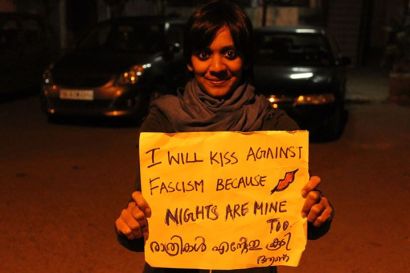
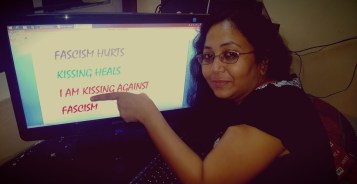
We do believe that the rising tide of fascism in Kerala, the creeping fear of the sheer violence of fascist goons, can be combated only through love, humor, and moral courage. The victory of Hindutva right wing forces in the national scene seems to have emboldened them in Kerala. They are attempting to import here the instruments of terror that they brazenly unleash on people in the states which have become laboratories of their hate-politics. We will not let their evil grow; we will fight it with love.

We will use as an instrument of self-defense precisely all that which fascist forces deny us in this society. We will reclaim that ultimate symbol of tender and intimate human contact, the Kiss; we will kiss against fascism.

And each of us has different, but interconnected reasons, for kissing against fascism.

sunilKissable boymikek edited 3aswatyrenuedited 2nisaaratrikasinghabipshaKAF solidarity


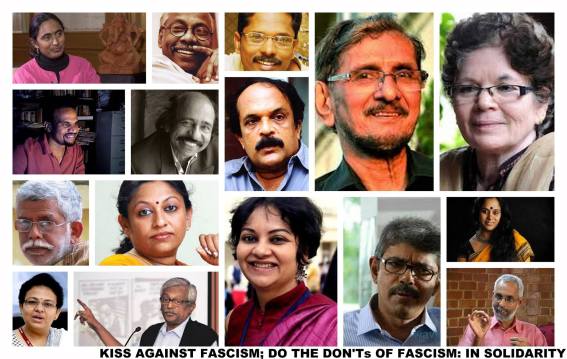
ഫാസിസത്തിനെതിരെ സമരചുംബനം; ചെയ്യുക, ഫാസിസം അനുശാസിക്കുന്ന അരുതായ്മകളെ


Kiss against Fascism

Continue reading ഫാസിസത്തിനെതിരെ സമരചുംബനം; ചെയ്യുക, ഫാസിസം അനുശാസിക്കുന്ന അരുതായ്മകളെ

Before the Killing, the End of Honour: Rina Ramdev and Debaditya Bhattacharya

Guest Post by RINA RAMDEV AND DEBADITYA BHATTACHARYA

For daring to elope and marry outside the dictates of caste-community honour codes, a young Delhi University undergraduate came to a brutal death at the hands of her family. The incident since then has become part of public discourse, thanks to our newspaper-educated sensibilities. But the ‘popular’ set of responses that this event has generated from our newsreaderly selves is worth some reviewing. While there has been a large-scale condemnation of this incident from ‘civilized’ quarters of the media-enlightened, the most commonly employed terms of this debate have veered around an imagination of a ‘civilizational modernity’ versus an ‘aggressive-savage primitivism’. Are we still in the Dark Ages, most have asked. Is not ‘love marriage’ a civilizational mandate of the age of the modern, others have comfortably posed and then gone on to conclude that the fact that we – as a ‘society’, metropolitan-converts in this case – have not yet made our peace with a civil code of morality relegates us to a ‘rustic-primitive mindset’. The muse of Indian judicial processes and imaginations of penal justice – ah! the “collective conscience” – has spoken thus and gone back to catching up on Ramzaadas and terror attacks on national ‘honour’. And just while we were conveniently conceding to the relative insignificance of an undergraduate girl’s ‘honour’ compared to the prime-time rhetorical spectres of ‘national honour’ in Jammu & Kashmir, a leading English daily attempted to bring back a few ‘dark’ images from Bhawna Yadav’s past.  Continue reading Before the Killing, the End of Honour: Rina Ramdev and Debaditya Bhattacharya

Stop Manual Scavenging in JNU: Forum Against Manual Scavenging

Authors’ Note:

The Chennai based Forum Against Manual Scavenging, (FAMS) can be contacted at famschennai@gmail.com. We have tried to create some awareness on this issue especially among student community (with the assistance of some of the Professors/Faculty based in Chennai) in which we were guided by Safai Karamchari Andolan, Rashtriya Garima Abhiyan, Tamil Nadu Untouchability Eradication Front, Janodayam Social Education CentreRepublic Trade Union of IndiaRed Flag Union of Tamil Nadu and other similar organizations (in and outside Chennai) struggling on this issue which are led primarily by the Dalit Women from the community itself.  

A documentary, ‘Sahar se Pehle’ (Before the Dawn) on sanitation workers in Jawaharlal Nehru University (JNU) campus in Delhi was made by some students of the university. The JNUSU has been consistently raising the issue of abysmally bad condition of sanitation workers in JNU for quite some years now. Earlier in 2012, JNUSU had also participated in a signature campaign against manual scavenging (signed by the then JNUSU President). The documentary shows the manual scavenging is still prevalent in the premier university even after the ban on manual scavenging by the Delhi government (sanitation is a State subject according to the Constitution of India) and after the enactment of “The Prohibition of Employment as Manual Scavengers and their Rehabilitation Act, 2013.”

This documentary was also selected for the Canadian Labour International Film Festival, 2014, and was available online on YouTube and other sites from February 2014, but was not widely circulated on mainstream media or social media. We also came to know about it only a fortnight ago because the write-up attached to it does not explicitly mention manual scavenging.

The JNU student community has started a campaign called Stop Manual Scavenging in JNU, with the message “Use hashtag #StopMSinJNU to SPEAK OUT against the inhuman practices of manual scavenging and hazardous cleaning in #JNU.”  Continue reading Stop Manual Scavenging in JNU: Forum Against Manual Scavenging

Demolition Drive in Vadodara, 2014: Kathyayini Dash, Rushabh Vishawakarma, Hussain Sabu, Bhagwati Prasad Suryavanshi

Guest post by KATHYAYINI DASH, RUSHABH VISHAWAKARMA, HUSSAIN SABU & BHAGWATI PRASAD SURYAVANSHI

Untitled

In Tarsali, 10 kilometers from Vadodara

Note from authors:

We are a group of friends and students from MS University, Baroda. One of us, Rushabh, lives in Kalyannagar which has partly been demolished and this house too is slated for demolition. We have written this to bring to the surface what demolition and displacement means, from the perspective of those who live in places like Kalyannagar, which cannot even be called a ‘slum’. We could see first hand what happened during the demolition because our friend lived there.  We all have spent happy times at Kalyannagar, Rushabh’s home. We felt we owe it to these memories to at least record these events. You can visit us at BarodaBeat.

Development they say…

They say by 2015, not one jhopdi will be seen…Vadodara’s landscape would be studded with flyovers, high rise buildings, malls, clean pothole-free roads. There will be no stench of garbage, leave alone the sight of it.

The recent floods in Vadodara set off an alarm, urging the quick setting up of “river-front projects” which included the demolition and re-location of slum dwellings near the river which were so awfully affected during the floods.

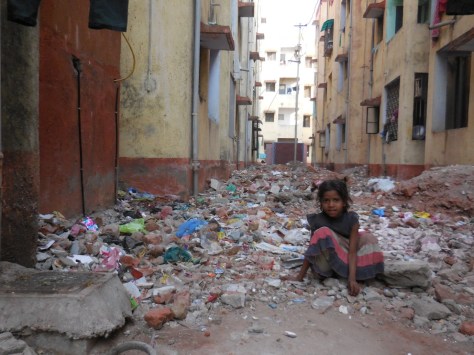
They say, “this is not fair. They sure need help; first priority in fact. They have to be the first to be taken into consideration before going on to people who have it all: a raised plinth level, a well cemented house, resources to recover the losses incurred in the floods. The jhopdiwaale, well, they have nothing at all, don’t they? Already low on the economic scale, they have no resources to recover the losses incurred during the floods, they don’t even have pakka houses to resist the floods. And on top of it all, they have houses built along the river itself. Poor things, where else would they build their houses. But then, these houses shouldn’t be there in the first place isn’t it? Because this is government land, and they don’t have the right to live there. What good is it anyway?” they say. “It is near the river, there is always a dangerous risk of the river flooding and them and their houses drowning,” they say. Continue reading Demolition Drive in Vadodara, 2014: Kathyayini Dash, Rushabh Vishawakarma, Hussain Sabu, Bhagwati Prasad Suryavanshi

സെക്യുലറും ഭരണകൂടസെക്യുലറിസവും തമ്മിലുള്ള ദൂരം – ടി. മുഹമ്മദ് വേളത്തിന് ഒരു തുറന്ന കത്ത്

പ്രിയ മുഹമ്മദ്

ചുംബനസമരങ്ങളുടെ പശ്ചാത്തലത്തിൽ ഉയർന്നുവന്നിരുക്കുന്ന ധർമ്മസങ്കടങ്ങളും ആശയസംഘട്ടനങ്ങളുമാണ് എന്നെ ഈ കത്തെഴുകാൻ പ്രേരിപ്പിക്കുന്നത്. Continue reading സെക്യുലറും ഭരണകൂടസെക്യുലറിസവും തമ്മിലുള്ള ദൂരം – ടി. മുഹമ്മദ് വേളത്തിന് ഒരു തുറന്ന കത്ത്

Is Standing with Young People Yet Another Fad? Reflections on the Young and Kiss Protests in Kerala

My arguments supporting young people in some recent debates, notably, the ones around the International Film Festival of Kerala and the ongoing Kiss protests, have apparently irritated a number of people, especially friends who belong to my own generation. From more than one source (hardly ever directly, though) I hear that they grumble that I am biased towards the young. That, apparently, is the latest fad. And Devika, it appears to them, has a tendency to support fads. Continue reading Is Standing with Young People Yet Another Fad? Reflections on the Young and Kiss Protests in Kerala

From Ferguson to Pune—The Minority Report: Archit Guha

This is a guest post by ARCHIT GUHA

Prima facie, the grand jury decision in the United States to not indict a white police officer, Darren Wilson, in the murder of a black teenager, Michael Brown, and the flurry of protests that have occurred since the incident in August are distinctly symptomatic of the structural racism that continues to plague the settler colonial nation that institutionalized slavery nearly 500 years ago, but claims to be post-racial today. Continue reading From Ferguson to Pune—The Minority Report: Archit Guha

A Women’s Charter for Delhi Elections: Women against Sexual Violence and State Repression

Guest Post by Women Against Sexual Violence and State Repression

The elections in Delhi are approaching.

Violence, as well as discrimination against women, and sheer denial of women’s dignity and rights, has been a huge concern for Delhi’s citizens.

This is the time when women are looking towards the political parties, to see what place women’s rights and freedoms have on their agenda.

We are disturbed to see that while most parties pay lip service to the cause of women’s rights, they blithely field candidates accused of violence against women, and they play to the patriarchal gallery on a range of issues, ignoring the voices of the women’s movement.

We, the undersigned would like to put the following concerns on the agenda of the Delhi elections, and we ask the political parties contesting Delhi elections to respond to them with urgency and seriousness. We appeal to all women voters to place this charter before every candidate and every party campaigner, and ask them for a clear position on each of its points.

1. We are alarmed at the spiralling of communal violence towards the Delhi elections. We are shocked that, instead of nabbing those who are fuelling the violence in a planned way, the Delhi Police has instead beaten up and brutalised innocent women in Trilokpuri. Above all, we are appalled at the attempts to justify communal, caste, racial or homophobic/transphobic violence in the name of ‘protecting women’. We assert that women are invariably rendered most unsafe by such violence. We seek a commitment that no party will promote leaders – either as candidates or as campaigners – who are accused of stoking violence against women, as well as communal, caste, racial or homophobic/transphobic violence. Specifically, we do not want the notorious 1984 duo Jagdish Tytler and Sajjan Kumar, we do not want to see Gugan Singh (who made communal speeches in Bawana) or Sunil Vaidya (who incited riots at Trilokpuri), or Somnath Bharti (charge-sheeted for racist and anti-women violence at Khirki) to be candidates or campaigners. Continue reading A Women’s Charter for Delhi Elections: Women against Sexual Violence and State Repression

Appeal to Stay the Execution of Surinder Koli: Concerned Women, Individuals and Groups

Guest Post by Concerned Women, Womens’ Groups and Others against the Death Penalty Awarded to Surinder Koli

To,

The President of India

Rashtrapati Bhavan, New Delhi, India.

2 December 2014

Subject:  Execution of Surinder Koli Would be a Travesty of Justice:
Plea for Mercy from Women’s Groups, Lawyers, Academics, Students and Activists

As women who have been engaged in the struggles for women’s rights and justice, (and their allies) we appeal to you to commute Koli’s death sentence or at least to stay his execution till the completion of the other cases involving other Nithari victims in which he is an accused. 

Continue reading Appeal to Stay the Execution of Surinder Koli: Concerned Women, Individuals and Groups

Days and Nights in Manesar – Reflecting on the ASTI Workers’ Struggle: Anshita & Arya

Guest Post by Anshita & Arya (Krantikari Naujawan Sabha)

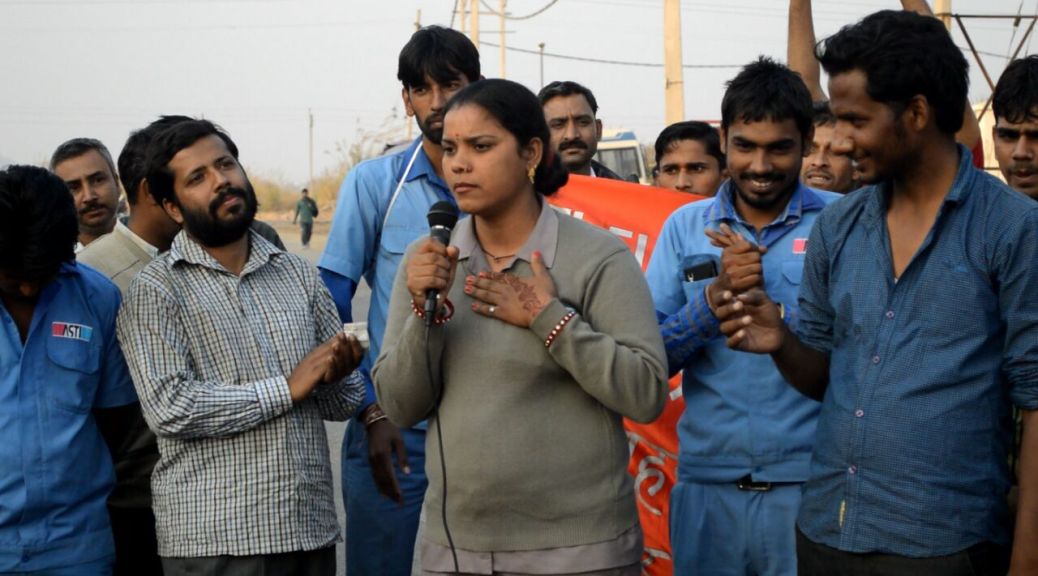
All 310 contract workers in ASTI Electronics factory in IMT Manesar in Gurgaon, Haryana have been on dharna since 3rd November 2014 after they were laid-off on 1st November 2014 citing low work demand. Seven of them are on fast-unto-death from 24th November, while ten workers and pro-worker activists each everyday sit on relay hunger strike.

 In a context where contract workers, increasing exponentially as a demand of the capitalists gleefully forced down by the government through labour law reforms, are finding it ever harder to organize/unite and sustain spontaneous outburts of discontent, due to the precarious nature of their life and work conditions, workers at ASTI Electronics (as a continuation of the 60-70 strikes in various factories in the industrial belt of Gurgaon-Manesar-Dharuhera-Bawal in the last few months) are fighting back and keeping the flame of new emergent struggles alive.

These workers are raising important questions on contractualisation and informalisation within the organized sector which even Central Trade Unions have constantly avoided. Over 250 of these 310 workers are women whose militancy in struggle and leadership is redefining the overall struggle and changing the gender relations within the workers movement.

This struggle for work-livelihood-life is unmasking the heart of the developmental model on DMIC (see current projects in makeinindia.com) which Mr Modi under the supervision of the capitalist class is proposing as the solution to all ills before so-called ‘progress of the country.What follows is a short reflection from the factory gate on the ongoing struggle. Continue reading Days and Nights in Manesar – Reflecting on the ASTI Workers’ Struggle: Anshita & Arya

അഴിക്കാനും ആടാനും തുനിഞ്ഞിറങ്ങിയവർ തന്നെ നാം : തെരുവിൽചുംബനസമരക്കാർക്ക് ഒരു സന്ദേശം

സുഹൃത്തുക്കളെ,


കിസ് ഒഫ് ലൌ സമരങ്ങളുടെ രാഷ്ട്രീയത്തെക്കുറിച്ച് പലതരം ആശങ്കകൾ കേട്ടുതുടങ്ങിയിരിക്കുന്നു.

അത് ആഗോളീകരണ അഴിഞ്ഞാട്ടമാണെന്നും,

അതല്ല, മദ്ധ്യവർഗ്ഗ സന്തതികളുടെ എടുത്തുചാട്ടമാണെന്നും,

അതുമല്ല, അതിനു രാഷ്ട്രീയമേ ഇല്ലെന്നു വരെയും, കേരളത്തിലെ ബദൽരാഷ്ട്രീയങ്ങളിലെ പ്രമുഖവ്യക്തിത്വങ്ങൾ അടക്കമുള്ള പലരും മുറുമുറുക്കുന്നു.

Continue reading അഴിക്കാനും ആടാനും തുനിഞ്ഞിറങ്ങിയവർ തന്നെ നാം : തെരുവിൽചുംബനസമരക്കാർക്ക് ഒരു സന്ദേശം

3 lakh bogus voters found in Modi’s Varanasi seat?

It appears that the Election Commission has so far traced 3,11,057 fake voters who cast their votes in Varanasi in the Lok Sabha election earlier this year. The district administration is expecting the number of fake voters to reach around 6,47,085 by the end of the examination process.

Remember – Narendra Modi ‘won’ this seat by 3 lakh 71 thousand 784 votes.

This news was first reported in Navbharat Times on November 25, 2014:

जिस वाराणासी संसदीय सीट से नरेंद्र मोदी ने 371784 वोटों से जीत हासिल की है, वहां 311057 फर्जी वोटर मिले हैं। अभी गिनती जारी है और जिला प्रशासन का अनुमान है कि फर्जी वोटरों की संख्या 647085 जा सकती है। इतनी बड़ी संख्या में फर्जी वोटर पहली बार वाराणसी में सामने आए हैं। लाखों की तादाद में मिले फर्जी वोटरों का खुलासा तब हुआ जब भारत निर्वाचन आयोग के निर्देश पर जिला प्रशासन ने मतदाता सूची का पुनरीक्षण अभियान शुरू किया। जिले के सभी पोलिंग सेंटर पर तैनात बूथ लेवल ऑफिसर से घर-घर जाकर मतदाताओं का सत्यापन करवाने के बाद इन बोगस वोटरों का खुलासा हुआ है।

Aaj Tak reported it on November 26, 2014:

प्रधानमंत्री नरेंद्र मोदी और उनकी पार्टी बीजेपी के लिए मुश्किलें बढ़ाने वाली खबर है. खबरों के मुताबिक, नरेंद्र मोदी के संसदीय क्षेत्र वाराणसी में 3 लाख 11 हजार 57 फर्जी वोटर मिले हैं. याद रहे कि यहां मोदी ने 3,71,784 वोटों से आम आदमी पार्टी के अरविंद केजरीवाल को हराया था.

बताया जा रहा है कि फर्जी वोटरों की गिनती अभी जारी है और जिला प्रशासन का अनुमान है कि फर्जी वोटरों की संख्या 6 लाख 47 हजार से ज्यादा जा सकती है. इतनी बड़ी संख्या में फर्जी वोटर वाराणसी में पहली बार सामने आए हैं. ये वे लोग हैं जिन्होंने दो या उससे ज्यादा विधानसभा क्षेत्र की मतदाता सूची में अपना नाम लिखवा रखा है. इसी के साथ सोशल मीडिया पर AAP समर्थक नरेंद्र मोदी पर फर्जी मतों से जीत हासिल करने का आरोप लगाने लगे हैं. गौरतलब है कि आम आदमी पार्टी पहले भी बीजेपी पर फर्जी वोट डलवाने का आरोप लगाती रही है.

According to Shubhanshu Sharma:
If we go by district administration’s claims, they are expecting to find around 1,12,160 bogus voters in Pindra, 1,01,456 in Ajgara, 87,140 in Shivpur, 84,757 in Rohania, 65,989 in Cantt, and 90,942 in Sewapuri regions. 
Kohram News had claimed soon after results were declared in May 2014 that the calculation of votes in the Varanasi seat was anomalous:
Kohram News had also publicized the news of the EVM found in the home of Ankit Gaurav Srivastava, an engineer in Varanasi, the night before the elections.  This news had circulated widely, including on Kafila.
If this is true, what next? As I understand it, according to Article 329 of the Constituion of India, for an election to be set aside, an election petition must be presented “to such authority and in such manner as may be provided for by or under any law made by the appropriate Legislature.”

The Election Commission later recommended that trial of election petitions should be entrusted to the High Courts instead of election tribunals. Parliament thus enacted Section 80-A of the Representation of the People Act, 1951 providing that the High Court shall be the authority for presentment of election petitions under Article 329 (b) of the Constitution. This was incorporated by an amendment in the year 1966 (Act 47 of 1966).

The last time the election of a sitting Prime Minister was set aside for corrupt electoral practices, on June 12, 1975, Indira Gandhi (for it was she), declared a state of emergency.

We can expect no less from a Prime Minister who watches benignly over the continuous and growing humiliation of minorities and murderous attacks  on them; and who carefully supervises the wholesale handing over of the country to the biggest and most corrupt corporate bidders.

There is a lot at stake for Modi and his corporate bosses. And now they have the full backing of state power.

Nevertheless, if the news of bogus voters in Varanasi is true, Modi’s election should be set aside through due process.


The deadly land policies planned by Modi’s advisers and the links to Ukraine and Honduras: Aditya Velivelli

This is a guest post by ADITYA VELIVELLI

One year after the Land Acquisition Act was passed in Parliament with bipartisan support, commerce minister Nirmala Sitharaman stated that changes will be made to the Act during the upcoming Winter Session of Parliament.

The earliest indication that this would happen, came from of all people, a first-time MP and microfinance lobbyist Jayant Sinha. Sinha had mentioned in a CNBC interview right after BJP’s win that land acquisition policy was the first priority. For those wondering why CNBC interviewed Sinha and allowed Sinha to lay out the new Government’s priorities, and why Sinha has been appointed junior finance minister, they should refer – Who is guiding Modi’s economic thinking and what is their background? Continue reading The deadly land policies planned by Modi’s advisers and the links to Ukraine and Honduras: Aditya Velivelli

‘Law of the land’ on Kissing in Public: Sanjay Palshikar

SANJAY PALSHIKAR, Professor, Political Science department, University of Hyderabad, clarifies the ‘law of the land’ on kissing in public, to the Committee set up by the Vice-Chancellor to ‘look into the matter of the incident of November 2, 2014.’

Respected Members,

At the centre of the incidents of November 2, 2014, is the alleged act by some students to display demonstratively mutual affection in the form of kissing. Without going into the factual correctness of the charge, let me share with you what I have learnt from legal scholars and activists. I do so in the hope that this will help the Committee “ascertain” “the position of the law of the land” regarding kissing in public.

  1. Indian judiciary at the higher levels has not universally treated kissing in public as illegal. In appropriate context, spelt out variously by the relevant judgments, it has been seen as an expression of love, expression of love and compassion, and its artistic representation as defensible. Absent in all theses cases is the tendency to presume that every kiss is an act of sexual expression and that indulging in this act in public is always obscene. (A & B vs State Thr. N.C.T. of Delhi 2009; Friday vs K.J. Sebastian 2001).
  1. The Supreme Court has observed that the Indian Penal Code “does not define the word obscene and this delicate task has to be performed by courts….” If the Apex Court considers it a delicate task, how much more challenging it would be for university teachers and police officers to say if an act is obscene! (Udeshi vs State of Maharashtra 1965).

Continue reading ‘Law of the land’ on Kissing in Public: Sanjay Palshikar

Statement by Forum for Democratic Rights in EFLU on the present state of affairs

We, concerned citizens and members of women’s organizations, civil rights, students and minority rights forums, have come together to form the “Forum for Democratic Rights in EFL University” to  demand an immediate and thorough enquiry into the incident of gang rape and the suppression of democratic rights in EFL University. We wish to bring the following matter to your notice.

A recent horrific incident of the gang rape of a girl student took place in the EFLU men’s (Basheer) hostel on the night of 31st October 2014. The victim contacted the University authorities and was directed to the police who then arrested two accused on 2nd November 2014.  While this case of sexual assault on the university campus has deeply shocked the campus community, students, faculty and staff, even more shocking and worrying has been the attitude adopted by the university administration in its aftermath. Instead of seeking to undertake measures to make the campus free of violence and assault and promoting gender-sensitivity, the administration has resorted to several measures that are nothing short of severe repression of all democratic rights of the campus community as a whole.

Immediately after the incident, there were some reports with speculations about the victim’s presence in the men’s hostel. Aided by selective leaks by the University and the police, these reports amounted to character assassination and victim blaming, and divulged crucial information regarding the complainant’s identity. This pernicious reasoning amounts to nothing but a justification of the crime. From the well-known case of Rameeza Bee to the recent Nirbhaya Act, it has been repeatedly asserted that the act of sexual assault or gang rape cannot be justified citing the previous history of the victim.  We strongly condemn the propaganda to malign the victim and underplay the gravity of the rape. The complainant must be provided with adequate and competent legal counsel, her psychological and emotional well-being must be taken care of, and her safety must be ensured.   Continue reading Statement by Forum for Democratic Rights in EFLU on the present state of affairs

‘Sant Rampal’ – Farmer’s Son Challenges Hegemony of Arya Samaj, RSS Ally In Haryana : Jaspal Singh Sidhu

Jaspal Singh Sidhu looks at the genesis of Sant Rampal and ‘Satlok Ashram’ the religious centre he established.

The arrest of former public servant -turned-godman 63-year-old Rampal from his Barwala (Hissar) ashram seems to have ended the two-week long much publicized drama enacted by the Haryana police, but it has, rather, widened social and religious gulf among the people of the area . The police operation took life of five women and a child, injuring of many others including two dozen media persons covering the event. Technically, Rampal’s arrest was sought by the Punjab and Haryana high court in a case of ‘criminal contempt of court’ following his persistent in refusal to appear before the court.

The Barwala event signals much more than what one gathers from the media. Rampal’s abortive defiance appears to be (consciously or unconsciously) challenging the hegemony of the Sangh Privar ideology based on Aryans and non- Aryans divide which uses the Vedic literature as manifestation of the Aryan race. The media story, invariably, only covers the present happenings. And, it is meant for the consumption of general public only interested in the day-to-day developments. For obvious reasons, such reporting suits both the government of the day and the media outlets. By and large, the media (newspapers and TV channels) reels out largely that information (official version) which police and official machinery serves them with punctuation of a little-bit material on the root cause of the controversy which has climaxed to the dramatic custody of Rampal by the police.

Read the rest of the article here.

We, or our Nationhood, Redefined.

A couple of weeks ago, filmmaker Anand Patwardhan was invited by the Editors’ Guild to deliver its annual lecture. Patwardhan’s speech, titled We or our Nationhood Redefined, was marked by his characteristically cool tone, systematically reassembling facts that have a tricky habit of leaking from national memory. Facts like the twentieth century’s worst genocidal dictator Adolf Hitler and his programme of racial cleansing has a respectable and massive following in India in the form of the Rashtriya Swayamsewak Sangh. That the RSS has at least 50,000 branches across the country with over 40 million members, and runs a network of 18,000 schools across India. That one such child, recruited from the age of 8 from a relatively poor family, is Prime Minister Modi; and another is Party Chief Amit Shah. That just before the recent reshuffle, 5 Chief Ministers and 17 of the 23 Cabinet-level senior ministers were current or former RSS members. That the assassins of Gandhi are really the RSS, not the lone lunatic Godse who merely carried out what others dreamed about. That RSS’s poisonous communal agenda was roundly condemned by Sardar Patel, of whom PM Modi has promised to build the world’s tallest statue. Or more obscure but equally revealing facts, like the letter written by RSS chief Balasaheb Deoras from jail during Emergency, praising Indira Gandhi and especially her programme of sterilisation of Muslims. And those truly mind-boggling-in-their-irony facts, like the widespread involvement of the RSS in the 1984 anti-Sikh pogrom, when the BJP cynically says “1984” every time somebody says “2002”.

On a day when the Nanavati Commission has termed the 2002 anti-Muslim pogrom in Gujarat as a purely communal reaction to Godhra, and cleared then Chief Minister Modi’s government of any wrongdoing, or even inaction, it is critical we re-read Patwardhan’s speech, to remind ourselves exactly what we are up against if we believe in a non-communal, non-divided, heterogenous India. As Patwardhan put it, given the history of the RSS in this subcontinent, if a Modi didn’t exist, he would have to be invented. Read more.

DISSENT, DEBATE, CREATE