Guest post by ASWATHY SENAN
[The astoundingly misogynist representation of Aswathy Senan’s appointment as the Liaison Officer in Calicut University by the Deshabhimani newspaper was discussed earlier on Kafila in a guest post by APARNA ESWARAN]
Just as issues of gender and ethical journalism have been raised with regard to the Deshabhimani report on 30.04.2012 by C. Prajosh Kumar, a legal and ethical concern bothers any interested reader, who is beginning to feel involved. The reporter while correcting himself as a response to my letter stated it thus: “For a post that was advertised on 21-12-11, a bio-data was sent more than a month back, and a recommendation by VC was made on it: it is this irregularity in the procedure that the report tried to bring forth. And thus, the reporter has done the duty of an ideal journalist.” Continue reading “Ideal Journalists” and a Woman’s Right to Dignity: Aswathy Senan
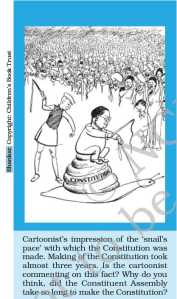 The uproar over what is being referred to as the ‘Ambedkar cartoon’ in the class XI textbook prepared by NCERT first began over a month ago, that is to say, almost six years after the books have been in circulation, been taught and received high praise for their lively style and a critical pedagogical approach (more on this below). It was a political party – one of the factions of the Republican Party of India – that decided to kick up a ruckus over ‘the issue’ – that is, the ‘affront’ to Dr Ambedkar that the cartoon in question supposedly constitutes, and the resultant ‘hurt sentiments’ that it has caused. Very soon everyone began to fall in line, and practically every member of our august Parliament was vying with one other to prove that they were indeed more hurt than their colleagues. One of them, Shri Ram Vilas Paswan has even demanded that the
 The writings of Ismat Chughtai and Saadat Hasan Manto, perhaps two of the finest writers of the short story in any language, have begun to attract a much larger audience thanks to the many translations in English and other languages and transliterations in Hindi that have become available in recent years. All the translations are not as good as they should be but Asaduddin’s work is top-of-the-shelf stuff.
 Not that we needed any evidence of the prevalence of caste in India – even amongst the elites who like to pretend caste doesn’t exists when it comes to the reservation debate. The Times of India reports from Mumbai: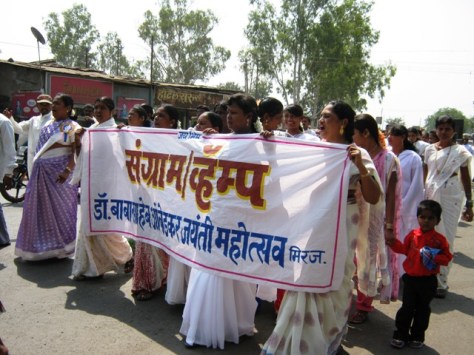
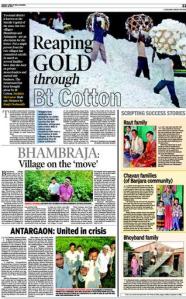 The Times of India did not hear of any dead people because Monsanto paid for the taxi from the city to the village for its reporter. Or is that all that Monsanto paid for? P Sainath in The Hindu:
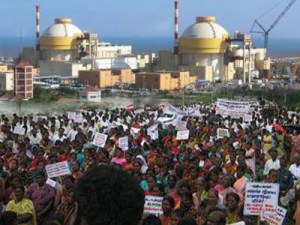
 As Japan shut down its last reactor, the Koodankulam project is to go critical in ten days. Because Japan depends on local consensus for its nuclear decisions, unlike the World’s Largest Democracy, the views of Japanese people counts for something. Thousands of Japanese marched in celebrations to celebrate the switching off of the last of Japan’s 50 nuclear reactors on Saturday May 5th.