Everything you wanted to know about the great Kingfisher Airlines scam but didn’t know who to ask

This slideshow requires JavaScript.

All your queries will be answered here.

On Josh Malihabadi’s death anniversary

On Josh Malihabadi’s 30th death anniversary, doing the rounds is this recently uploaded interview of the Urdu poet, amongst a rich archive uploaded on YouTube by Radio Pakistan.

Josh migrated to Pakistan only in 1958. About the loss of Lucknow, he says it was like losing the world. He says in this interview about a visit to Lucknow, where he asked a taxi driver, how is it going with all these Sikhs and Punjabis who have come to Lucknow. The taxi driver replies, we have taught them (Lakhnavi) etiquette!

Delhi Police Special Cell – Encounters, Frame-ups, Impunity: Manisha Sethi

Guest post by MANISHA SETHI

An RTI enquiry has revealed that Delhi Police Special Cell’s conviction rate is a paltry 30 per cent. Nearly 70 per cent of the accused it charge-sheeted over the past five years were acquitted for want of credible evidence. Do these figures tell us something? A news story in a leading English daily bemoans this trifling record and quotes a senior police officerattributing this to the fact that “police sometimes get tangled in cross evidences and it becomes tough when you rely more on circumstantial evidences”. [i] This evokes the image of a bumbling policeman, reminiscent almost of Jacques Clouseau, tripping over reams and strings of evidences, in an impossible attempt to build a watertight case against the villains. But Special Cell couldn’t be farther from this sort of cute sloppiness. Continue reading Delhi Police Special Cell – Encounters, Frame-ups, Impunity: Manisha Sethi

Understanding Indian human rights movements through the lives of two human rights defenders: Jinee Lokaneeta

Guest post by JINEE LOKANEETA

Watching Advocate alongside Democracy Dialogues: a Tribute to Balagopal, both by Deepa Dhanraj, made for a powerful experience for its remarkable documentation of human rights movements in Andhra through the lives of these two human rights defenders and the collectives that they were a part of whether it was Andhra Pradesh Civil Liberties Committee, Human Rights Forum or People’s Union for Civil Liberties. There is of course a sharp sense of loss, since in the last few years we have lost both these incredible people but one was grateful for this effort to record and document their inspirational lives in such a beautiful manner. It also points to a further need for us to understand the connections of human rights groups to law, the relationship of human rights defenders to the courts, and their role in pushing for the realization of some of substantive aspects of the Indian Constitution in the process. Continue reading Understanding Indian human rights movements through the lives of two human rights defenders: Jinee Lokaneeta

Mass media and the Indian national project: Raza Rumi

Guest post by RAZA RUMI

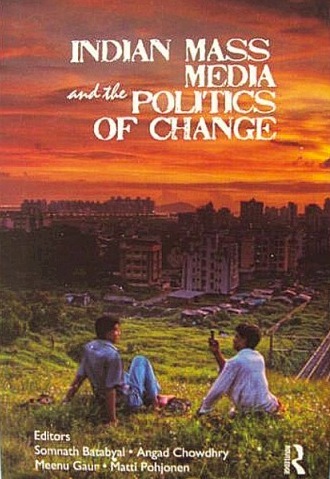
Indian Mass Media and the Politics of Change; Edited by Somnath Batabyal, Angad Chowdhry, Meenu Gaur and Matti Pohjoen; Routledge, UK; 230pp. £65

It has taken me some time to finish reading the assemblage book entitled Indian Mass Media and the Politics of Change. An overly long reading list has been haunting me for the past few months, but I was slow and self-indulgent as I read and re-read many sections of this insightful book which is path breaking in many ways. First, it is a unique collection which emanated from intense thinking and collaborative action; and second, given the fairly recent rise of Indian mass media (also applicable to South Asia in general) this is quite a seminal work of its kind. Continue reading Mass media and the Indian national project: Raza Rumi

Library.nu R.I.P

Amongst the competing visions of heaven offered by the various prophets and saints, my favourite remains the one conjured by St. Alberto Manguel. For him, heaven is a place where you can read all the books that you did not finish. It would be difficult for me – proud member of the tribe of bibliophiles- to imagine a better idea of paradise than this. I would even hazard a bet that many of you fellow tribe members would probably imagine yourself in this other world (with enough time) curled up in a  comfortable sofa, opening a copy of Joyce’s Ulysses for the 28th time – saying finally this time.

But even within the order of the saints, one must respect the subtle rules of hierarchy and pecking order, and by that count St. Manguel would have to make way for the highest ordained of them all- the blind seer who saw everything- Jorge Luis Borges, who had much earlier been granted a vision of paradise and he declared that it was shaped like a library.

Continue reading Library.nu R.I.P

Anatomy of an allegedly thwarted coup: Anwar Dayal

Prime Minister Sheikh Hasina

Guest post by ANWAR DAYAL

Bangladesh has seen more coups than Pakistan. It probably came close to one recently, by alleged Islamists in the army. I say probably because when it comes to military intervention in Bangladesh, who-what-why-when have often been unclear. For example, a few majors seized the country’s tanks and killed the founding president and his family in August 1975. Was it a few disgruntled officers with personal disputes, as was claimed by the contemporaneous foreign media? Or was it part of the complicated and brutal Cold War geopolitics, with the involvement of senior officers and politicians, as many believe? Even though the perpetrators of the massacre have been convicted, and a few hanged, Bangladeshis still debate these questions.

It’s been like that for all military interventions over the years. What may have happened in recent weeks is unlikely to be the exception. As such, one should not necessarily conclude that Saleem Samad’s officially sanctioned account in India Today is the full story.

Samad’s narrative goes something like this. Continue reading Anatomy of an allegedly thwarted coup: Anwar Dayal

What the Wall Street Journal Can’t See in India’s Forests: Aruna Chandrashekhar

 Guest post by ARUNA CHANDRASEKHAR

If we cut the entire forest down, where will we live?’- Muria adivasi, Warangal, Andhra Pradesh 

I don’t even know how to begin addressing a story as blindly biased in its premise as this one in the Wall Street Journal, which draws an obtuse line between loss of forest cover and land usage by adivasis, when it is land grab by industrialization that is endangering all we have left.

So I’m going to do this paragraph by paragraph.

India’s forest cover decreased by 367 square kilometers between 2007 and 2009, and it was primarily tribal and hilly regions that were to blame.

The tribal and hilly regions are the last vestiges of India’s forests.  How can you blame entire regions, without casting any aspersions on institutions or practices responsible? Continue reading What the Wall Street Journal Can’t See in India’s Forests: Aruna Chandrashekhar

Caste and Exploitation in Indian History: Bharat Patankar

Guest post by BHARAT PATANKAR translated by GAIL OMVEDT

Introduction: The Process of Exploitation

Exploitation arising from the caste hierarchy is a particular feature of the South Asian subcontinent. There was no such exploitative system in other continents or in countries outside of South Asia. But since caste exploitation has been a reality for 1500-2000 years this shakes the belief that only class can be the basis of exploitation. And because of this we have to transcend the attempt to find a way only pragmatically and deal with the issue on a philosophical and theoretical level. Class has been theorized extensively in terms of exploitation; to some extent gender also, but not caste. Exploitation as women in various forms has also been a reality for thousands of years; this also is not through “class”. This reality from throughout the world gives a blow to the idea that exploitation can only be class exploitation. This can also be said of exploitation arising on the basis of racial and communal factors. Continue reading Caste and Exploitation in Indian History: Bharat Patankar

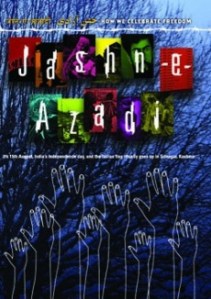
Jashn-e-Azadi successfully screened at Delhi University despite right-wing threats & police pressure: AISA

Guest post by ALL INDIA STUDENTS’ ASSOCIATION (AISA)

AISA and Students of Sociology Department (DU) Successfully Screen Jashn-e-Azaadi in DU, Braving Attacks and Threats by ABVP and ‘Bhagat Singh Kranti Sena’! Hundreds of Delhi University Students Participate in Film Screening and Discussion with Sanjay Kak, Director of Jashn-e-Azadi!!

Today hundreds of DU students and teachers participated the screening of the documentary film  Jashn-e-Azaadi organized by AISA and students of sociology in the Department of Sociology, Delhi University. “Predictably this screening had to held in the teeth of opposition from right-wing fascist forces like ABVP and the Bhagat Singh Kranti Sena, who tried their level best to stall the screening. Moreover, the DU administration and the Delhi Police also shamefully sided with these forces and tried to pressurize the Sociology department to stop the screening”, said Harshvardhan Tripathi Secretary DU, AISA.

Continue reading Jashn-e-Azadi successfully screened at Delhi University despite right-wing threats & police pressure: AISA

Fuel Prices and Protesting Voices in Sri Lanka: Mahendran Thiruvarangan

Guest post by MAHENDRAN THIRUVARANGAN

The United People’s Freedom Alliance government’s inability to put forward economic policies that address the grievances of the downtrodden sections of the Sri Lankan polity, outside the frameworks of neo-liberalism, has led to chaos in the country. The government’s move to privatize the higher education sector created a major uproar in the country last year. The academic staff attached to Sri Lanka’s universities began a trade union action demanding higher wages in 2011. In the Katunayake Free Trade Zone, garment sector workers took to the streets against a pension scheme introduced by the government much against the interest of the workers. These protests have brought to light the government’s ill-conceived economic policies, and its indifference to the concerns of the working people. Financial mismanagement, corruption at the various levels of the state, the escalating expenditure on the militarization of the North and East provinces, and the government’s sheer disregard for the fundamental needs of the people have created an atmosphere of economic instability. This situation might lead to political unrest in the future, if the Sri Lankan government continues to lack the will to salvage the economy from neo-liberalism and mismanagement. The government’s move to increase the prices of fuels has aggravated this situation.

Continue reading Fuel Prices and Protesting Voices in Sri Lanka: Mahendran Thiruvarangan

My Abu Talha Moment: Sanjay Kak

Guest post by SANJAY KAK

Last week was my Abu Talha moment. That’s when dubious honours rain on you, unsolicited, undeserved. There I was, charged with wrecking a literary festival in Kashmir; links to the Parliament attack case; racism against Kashmiri pandits; scuttling a film screening in a women’s college in Delhi… And if that doesn’t create a frisson, I was also said to be on the radar of Mumbai’s Anti Terrorist Squad.

Unable to make the Abu Talha connection? Many in Kashmir know the name as a talisman, the kind that security forces brandish when they periodically feel its time to square their books. It doesn’t take much; they just have to produce a fresh corpse before a pliant media, although one with long hair and a beard, fatigues and an AK47, does make things easier. As Abu Talha, this all-purpose corpse can then be held responsible for fidayeen attacks, the murder of innocent civilians, the assassination of political workers, massacres, and explosions, whatever. Crucially, even as Abu Talha is lowered into the ground, all further investigations into those events can be safely laid to rest.

End of story: tamam shudh? Well, only sort of. Because Abu Talha will be called upon to perform again, dusted up and presented afresh to the world. Again. He’s not alone, for with so much happening in Kashmir, Abu Talha is part of a frequent fighters club: Abu Hamza, Abu Shakir, Abu Waqas, Ghazi Baba… The other day a friend from Kashmir invented one to cheer me up: Abu Tamam, he offered, Father of it All.

Continue reading My Abu Talha Moment: Sanjay Kak

Flashreads for Free Speech: Readings for 14 February

Let this 14 February be Free Speech Day – the text below comes to us via NILANJANA S. ROY; for more, see Akhond of Swat or follow #flashreads on Twitter. Flashreads are being organised across India – see Facebook event page.

Poster by Sanjay Sipahimalani


THE IDEA: To celebrate free speech and to protest book bans, censorship in the arts and curbs on free expression

WHY FEBRUARY 14? For two reasons. In 1989, the Ayatollah Khomeini issued a fatwa ordering the death of Salman Rushdie for writing the Satanic Verses. In GB Shaw’’s words: “Assassination is the extreme form of censorship.” Continue reading Flashreads for Free Speech: Readings for 14 February

Screening Jashn-e-Azadi at Presidency University, Kolkata: Waled Aadnan

Guest post by Waled Aadnan

It can be said that 86/1 College Street, Calcutta, has seen a microcosm of the history of modern India unfold within its walls. Since 1874 when the already fifty-nine year old Presidency College shifted to its current address, future Presidents and Prime Ministers of  India, Pakistan and Bangladesh; Nobel Laureates, freedom fighters, an Academy Award winner, Bharat Ratnas; the leadership of the Naxalite movement of the 60s and 70s; and eminent judges, writers, journalists, scientists and actors, have spent their student days at 86/1.

Two years ago, soon after I joined the institution, the Left Front government upgraded Presidency College to the status of a state University in a last-gasp bid to hold on to the votes of the bhadralok intellectuals. 2012 dawned with no Student Union elections having been held the previous year, and it is in this backdrop that the following events unfold.

Salman Rushdie’s well-publicised ostracism from the Jaipur Literature Festival was met not with outrage in Presi’s canteen addas, but with the absence of even a poster put up in protest. News filtered in of a seminar in Symbiosis University being “threatened.” But little awareness existed among students who were more inclined to read tabloid-like, unputdownable newspapers than their relatively austere counterparts, including The Hindu which broke the story.

Continue reading Screening Jashn-e-Azadi at Presidency University, Kolkata: Waled Aadnan

Caste Discrimination in Cyclone Thane in Tamil Nadu and Pondicherry: NDW-NCDHR

A preliminary report of an investigation into caste discrinimation with regard to Cyclone Thane by National Dalit WatchNational Campaign for Dalit Rights  conducted on 18, 19 January 2012

Cyclone Thane

Cyclonic Storm Thane was the strongest tropical cyclone of 2011 within the North Indian Ocean. Thane initially developed as a tropical disturbance within the monsoon trough to the west of Indonesia. Over the next couple of days the disturbance gradually developed further while moving towards the northwest, and was declared a Depression during December 25, before being declared Cyclonic Storm Thane during the next day. As it was named, Thane started to turn towards the west under the influence of a subtropical ridge of high pressure before its development slowed down during December 27, as a strong outflow and marginally favourable sea surface temperatures fought with persistent vertical wind shear. After its development had slowed down during December 27, Thane became a Very Severe Cyclonic Storm during December 28, before as it approached the Indian states of Tamil Nadu and Andhra Pradesh, it weakened slightly. Thane then made landfall early on December 30, on the north Tamil Nadu coast between Cuddalore and Pondicherry and rapidly weakened into a depression.

Cuddalore and Vilipuram Districts in Tamil Nadu and Pondicherry were the worst affected due to Cyclone Thane. All roads in these three districts are line by wreckage of fallen trees including large tracts of Casuarina plantations completely wiped out. The only trees that seem to have withstood the fury of the cyclone seems to be the Borassus flabellifer or the Palmyra Palm. According to government estimates at least 39 people have been killed by this cyclone in Tamil Nadu and 7 in Pondicherry. Apart from the loss of life, the Cyclone left huge destruction in terms of livelihood, particularly agricultural livelihood and ripped apart the green cover in these already arid districts.

Continue reading Caste Discrimination in Cyclone Thane in Tamil Nadu and Pondicherry: NDW-NCDHR

Some pictures from Occupy the World

Continue reading Some pictures from Occupy the World

Rethinking Urdu Nationalism in Pakistan: Raza Rumi

Guest post by RAZA RUMI

Urdu has been a controversial language in Pakistan despite its official and holy status. The Bengalis rejected it way back in the 1940s when Jinnah, advised by a bureaucracy, with imperial moorings declared in that it would be the official language. Subsequently, Sindhis, Baloch and Pashtuns have also resisted the one-size-fits-all Urdu formula. Yet, Urdu has emerged as the functional lingua franca that connects Pakistan’s federating units, and its conflation with Islam and Muslim ‘nationhood’ remains the paramount narrative in Pakistan.

It takes arduous scholarship and infinite courage to author a book like From Hindi to Urdu: A Social and Political History (Oxford University Press, 2011). Dr Tariq Rahman, ironically, has worked as the Director of the National Institute of Pakistan Studies at the Quaid-i-Azam University and therefore his challenge to the mythical dimensions of ‘Pakistan Studies’ comes from within and not as an outsider. Sixty-four years after the creation of Pakistan, we have not arrived at any conclusion about our ‘national’ or cultural identity. Dr Rahman’s book if anything shatters the myths that we have built around Urdu; and therefore presents a valid alternative to Goebbelsian tone of our official history. Continue reading Rethinking Urdu Nationalism in Pakistan: Raza Rumi

Compounding the Error – Marks inflation at Delhi University: Shobhit Mahajan

Guest post by SHOBHIT MAHAJAN

In politics, policy making or indeed any interaction with the larger world, one notices a distinct characteristic – one makes a decision, then facts or circumstances make it obvious that it was a wrong or bad one.  And what does one do? In most cases, one continues to take further decisions to bolster the impression that the original decision taken was correct and in the process, makes matters worse. This is relatively innocuous in normal social interaction but disastrous in the public sphere as we have witnessed in mishandling of the events related to the Lokpal movement. A very similar situation has recently emerged in the University of Delhi. Continue reading Compounding the Error – Marks inflation at Delhi University: Shobhit Mahajan

At the Bend

Continue reading At the Bend

Beyond the Four Corners of the Law and the Diggy Palace: Faiz Ullah

Guest post by FAIZ ULLAH

I.

Highstreet Phoenix, an upscale shopping mall, rose from the ashes of Lower Parel’s semi-functional Phoenix Mills in the late nineties’ Bombay. It has since successfully emerged as one of the most popular shopping and leisure destinations for the city’s affluent set. Highstreet Phoenix is just one of the many mills in the South-Central Bombay’s Girangaon that have been leased, sold or redeveloped in contravention of industrial and land-use policies and court judgements especially in the last two decades. These large swathes of urban land, two thirds of which was meant for low-cost housing, civic amenities and open spaces, are being fast converted into exclusive housing societies, office complexes and recreation zones that only a few can access and afford. Such tensions, some like McKinsey & Company (of Vision Mumbai report fame) would say, are inevitable, even necessary, for the cities that aspire to be world class.

Continue reading Beyond the Four Corners of the Law and the Diggy Palace: Faiz Ullah

मायावती जी के मुख्यमंत्रित्व काल का एक संक्षिप्त विवरण: राम कुमार

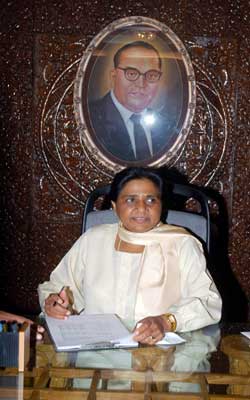
This guest post by RAM KUMAR is a review of five years of Mayawati’s administration in Uttar Pradesh. An English translation has appeared in Fountain Ink magazine, here.

मुख्यमंत्री मायावती जी को 2007 में मिला स्पष्ट जनादेश  महज मुलायम सिंह यादव के खिलाफ एन्टी-इनकमवंसी फैक्टर ही नहीं था, बलिक अराजकता और गुंडागर्दी के खिलाफ भी जनादेश  था। सरकार का खुले रूप से एन्टी-दलित चरित्र और प्रदेश  के अन्दर सरकार  के एन्टी ब्राहम्ण टोन के चलते प्रदेश  में मुलायम सिंह की सरकार के खिलाफ दलित अति पिछड़े हो गये थे। मुलायम सिंह के  कल्याण सिंह प्रेम की वजह से माइनारिटी (अल्पसंख्यक) भी  मुलायम से नाराज हो  गए। बहन जी ने सर्वजन समाज का नारा देकर   विक्षुब्द तबकों को समेटा। सभी को समेटने में रणनीति के तहत अपना नारा बदल “हाथी नहीं गणेष है ब्रम्हा, विष्णु, महेष है” का नारा लगाया। सर्वजन  फार्मूला और मुलायम के खिलाफ गुस्सा बहन जी को पूर्ण बहुमत से सत्ता में लेकर के आया।

बहन जी एक  सशक्त शासनकर्ता के रूप में जानी जाती थीं। इस बार भी बहन जी सत्ता में आयींऔर  सत्ता में आते ही तुरन्त उन्होनें  घोषणा की कि अराजकता और गुडागर्दी नहीं चलेगी, कानून का राज्य चलेगा। इसको  सिद्ध करने के लिये उन्होंने सबसे पहले जो राजनेता अपने साथ बहुत सारे शस्त्रधारियों को लेकर चलते थे,  उन पर प्रतिबंध  लगाया और एलान किया कि  कोई भी नेता सार्वजनिक स्थल पर तीन हथियार से  ज्यादा में दिखे तो उनके खिलाफ कार्यवाही की जायेगी। यही नहीं अपनी पार्टी के एम. पी. रमाकान्त यादव जो आजमगढ़ से हैं, एक गरीब मुसिलम के मकान पर जमीन कबजाने के चक्कर में जबरदस्ती बुलडोजर चलवाया इसकी खबर जब बहन जी को लगी उन्होंने रमाकान्त यादव को अपने मुख्यमंत्री आवास पर मिलने के लिये बुलाया और वहीं से उनको गिरफ्तार करवाया। यह संदेश  देने की कोशिशकी  कि सत्ताधारी दल के हों या विपक्षी पाटी के हों, कानून सबके लिये समान है। अपनी ही सरकार के खाधमंत्री और विधायक आनन्द सेन को एक महिला के अपहरण केस  में बर्खास्त कर जेल भिजवाया और अभी तक 26 प्रभावशाली नेता एवं मंत्रियों को पार्टी के बाहर का रास्ता दिखा चुकी हैं। पिछली सरकार में हुयी 17,868 पुलिस जवानों की भर्ती में हुयी धांधली के चलते भर्ती  प्रक्रिया को निरस्त किया और 25 आई .पी.एस. अधिकारियों को भी सस्पेन्ड किया।

Continue reading मायावती जी के मुख्यमंत्रित्व काल का एक संक्षिप्त विवरण: राम कुमार

DISSENT, DEBATE, CREATE