I Singe The Body Electric

Meena Kandasamy is the author of two compilations of poetry: Touch and Ms. Militancy. The following is an incredibly brave and extremely disturbing piece she published in Outlook last week. Her writing, and the violence this account describes, makes commentary shallow and inadequate. I was particularly shaken by the thought of a woman waking up, sipping coffee, watching television, participating the quotidian banalities of companionship with a man who could at any instant, for any reason, turn into a violent monster. This is the world we’ve built: rapists prowl the cities, abusive teachers stalk schools and universities; at home, violence breaks in waves.

As a bored housewife, I colour-code the domestic violence: fresh red welts on my skin, the black hue of blood clots, the fading violet of healed bruises. It appears that there is no escape from this unending cycle of abuse, remorse-filled apology and more abuse. One day, when I am whipped with a belt and cannot take it anymore, I threaten him with police action. He retorts that no man in uniform will respect me after reading a line of my verse. He challenges me to go to anyone anywhere. I have no friends in that small world—only his colleagues who think the world of him and his students who worship the earth on which he walks. I do not know whom to trust, even our neighbours could hand me back to him. In the middle of the night, I want to rush to a nearby convent, seek shelter. Would I be understood? Would it work out? How far can I run away in a city that does not speak my tongue, a city where young women in bars are beaten up?

Read the rest of Meena’s piece here,

Why Geneva and not Matara, Jaffna or Batti?: Kusal Perera

Guest post by KUSAL PERERA

English: Photo of Mahinda Rajapaksa, president...
Mahinda Rajapaksa, President of Sri Lanka

Thousands of Tamils from across Europe protested in front of UN headquarters in Geneva Monday demanding the creation of an international tribunal to try “war crimes” committed in Sri Lanka…. [AFP report, 6 March 2012]

The battle is raging. It will go on till about the 23rd of March, 2012. In Geneva. The battle is against the Rajapaksa regime in Sri Lanka and not against Sri Lanka itself. It’s a battle over “war crimes and accountability” during the Sri Lankan war, in particular its final stages. Delhi’s vacillating position of “not right to interfere on a country basis” as regards the US Resolution to the United Nations Human Rights Council’s Session 19, is being challenged firmly in Chennai by the two major political parties in Tamil Nadu, the DMK and the AIDMK firm. Beijing and Moscow are clear about the issue. They will vote against the US Resolution, and also muster up support amongst other countries to vote with them. If they could collect 24 votes in total, they will have had their say and the Sri Lankan regime will not have to worry about Geneva anymore. Continue reading Why Geneva and not Matara, Jaffna or Batti?: Kusal Perera →

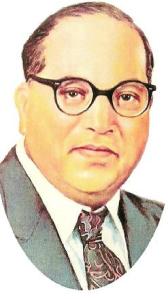
Ambedkar – A poem by Ravikumar

Guest post by RAVIKUMAR

Under the scorching Sun
in the shadow of a tamarind tree
there assembled a small crowd
children, women and men
words about Ambedkar,
Dalit rights and Women’s rights
breezed over
sweating faces

When we sow
Some seeds fall in bushes
Some on rocks
Some on dry land
Some in ponds
Some on wet land
Who knows–
who is the wet land

(Ravikumar is a well-known activist and theoretician of the Dalit movement in Tamil Nadu. A former legislator in the Tamil Nadu legislature, he is general secretary of Viduthalai Ciruthaikal Katchi.)

Previously by Ravikumar in Kafila:

A Hundred Years of Manto

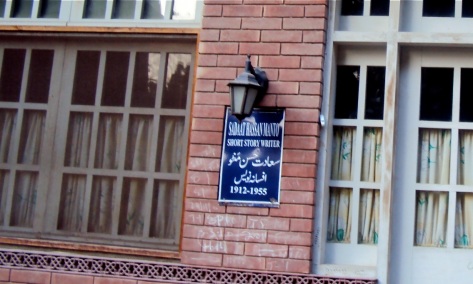
31, Laxmi Mansions, Hall Road, Lahore

“Here lies buried Saadat Hasan Manto in whose bosom are enshrined all the secrets and art of short story writing. Buried under mounds of earth, even now he is contemplating whether he is a greater short story writer or God.”

May 2012 will mark the hundredth birth anniversary of the man who wrote that epitaph for himself, Saadat Hasan Manto (1912-1955). One cannot help but compare Manto’s centennial to Faiz Ahmed Faiz’s last year, preparations for which had begun much in advance. There seems to be an odd silence about Manto. Continue reading A Hundred Years of Manto →

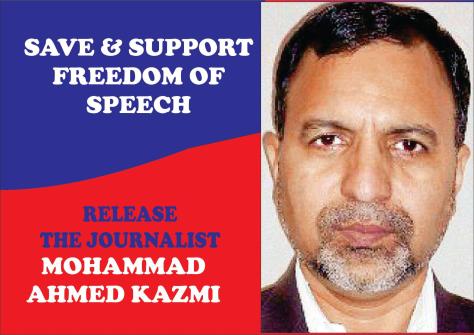
On the arrest of Mohammad Ahmad Kazmi

On 7 March, Delhi Police arrested Delhi-based journalist Mohammad Ahmad Kazmi on charges of being part of the plot to kill an Israeli diplomat’s wife in Delhi on 13 February. Many have expressed concern that Kazmi is being falsely implicated. Give below is the text of a letter to the Delhi Police Commissioner by the DELHI UNION OF JOURNALISTS, followed by a statement from the INTERNATIONAL FEDERATION OF JOURNALISTS, and thereafter by a statement issued by a group of citizens.

    9 March 2012 

The Commissioner of Police,
Delhi Police,
New Delhi

Sir: Continue reading On the arrest of Mohammad Ahmad Kazmi →

Modesty of Dress and Indian Culture: Suchi Govindarajan

Widely circulating just about everywhere, but for the unfortunate few who may have missed it…

I for one want to kiss the hem of her salwar/sari/jeans/other modest outfit.

Sir/Madam,
I write to complain about the abysmal standards of modesty I am noticing in Indian society. All bad things – sensationalist TV, obscene movies, diabetes among elders, pickpocketing, dilution of coconut chutney in Saravana Bhavan – are a result of Evil Western Influences. However, to my surprise, in this issue of modesty, even the Great Indian Culture (we had invented Maths and pineapple rasam when westerners were still cavemen) seems to encourage this.

The problem, sir/madam, is that revealing attire is being worn. Deep-neck and sleeveless tops, exposed legs–and these are just the middle-aged priests! Some priests are even (Shiva Shiva!) doing away with the upper garment. And I am told some temple managements even encourage this.

Read the rest of this brilliant and biting piece here.

75 Years of Bhonsala Military School: Militarising Minds, Hindutvaising the Nation

Image

..to bring about military regeneration of the Hindus and to fit Hindu youths for undertaking the entire responsibility for the defence of their motherland.

to educate them in the ‘Sanatan Dharma’, and to train them “in the science and art of personal and national defence”

– From the aims of ‘Central Hindu Military Education Society,’ NMML, Munje Papers, subject files, n 24, 1932-36)

This training is meant for qualifying and fitting our boys for the game of killing masses of men with the ambition of winning victory with the best possible causalities (sic) of dead and wounded while causing the utmost possible to the adversary.

– Preface to the scheme of the Central Hindu Military Society and Its Military School’NMML, Munje Papers, subject files, n 25, 1935

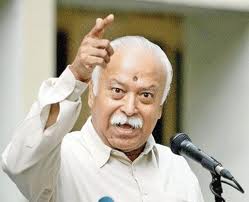
Nashik: Expressing concern over the dominance of ‘rich and powerful people’ in politics, besides the soaring inflation rate, Rashtriya Swayamsewak Sangh (RSS) chief Mohan Bhagwat said that India’s situation was better during the British rule…Speaking at a function organized by Bhonsala Military School (BMS) to celebrate its platinum jubilee year in Nashik on Monday, Bhagwat …laid stress on the need for imparting military education to students, citing rising threat to the nation.

– ‘India was better off under British rule: Mohan Bhagwat’, Times of India, Feb 22, 2012

Continue reading 75 Years of Bhonsala Military School: Militarising Minds, Hindutvaising the Nation →

All you need is Visa power

The great thing about the free movement of peoples and cultures is that it is so easy to prevent.

From the newspapers these last few months:

The government has revoked the visa of Japanese Maya Kobayashi, who was scheduled to visit India to share her experiences as a resident of Fukushima, the site of the nuclear disaster caused by an earthquake and tsunami last March…

“Your application for Business Visa does not match with the stated purpose of your proposed visit and is tantamount to factual misrepresentation,” said the letter from Sanjay Panda, Deputy Chief of Mission at the Indian Embassy in Tokyo. Continue reading All you need is Visa power →

Feminism and the Family – Thoughts on International Women’s Day

Excerpts from my forthcoming book Seeing Like a Feminist (Penguin India/Zubaan Books).

Have you heard of ‘nude make-up’?

This is what it is:

‘Nude makeup looks are all about your skin looking fresh and dewy, without looking like you’re even wearing any makeup. All you need is eyeliner, mascara, nude lipstick, and a highlighting blush that will give your skin a natural-looking glow.’[1]

The whole point of nude makeup clearly, is to spend hours painting your face in order to make it look like you never touched it at all.

The maintaining of social order is rather like that. It requires the faithful performance of prescribed rituals over and over again throughout one’s lifetime. Complex networks of cultural reproduction are dedicated to this sole purpose. But the ultimate goal of all this unceasing activity is to produce the effect of untouched naturalness.

When one ‘sees’ the world like a feminist though, with the gaze of a feminist, it’s rather like activating the ‘Reveal Formating’ function in Microsoft Word (what an earlier generation of WordPerfect users knew as ‘Reveal Codes’). The feminist gaze reveals the strenuous, complex formatting that goes on below the surface of what looked smooth and complete. Continue reading Feminism and the Family – Thoughts on International Women’s Day →

Why Mayawati’s defeat is the BSP’s victory

Satish Chandra Mishra with Mayawati at a rally near Delhi during the Lok Sabha elections in 2009, amongst the last such appearances together

Even before the results came out, the Mayawati cabinet passed a resolution to dissolve the assembly. Never before has an incumbent shown such confidence about losing. Mayawati’s body language during the campaign was proof of the same lack of confidence. Mayawati was going to lose, the Samajwadi Party was in the air. And yet, Mayawati must be relieved right now. She knows that this defeat of hers is, ironically, a victory of the Bahujan Samaj Party and what it stands for. Here’s how.

Continue reading Why Mayawati’s defeat is the BSP’s victory →

Some thoughts on the “hawa” in Indian elections

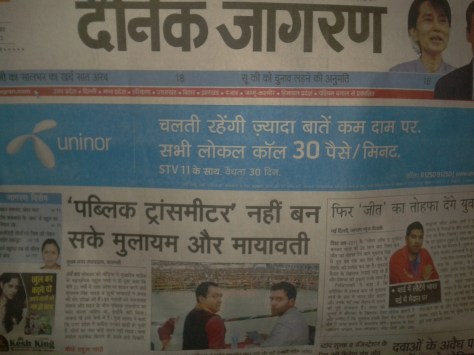
‘Public transmitter’ nahi ban sakey Mulayam aur Mayawati. (Mulayam and Mayawati could not become public transmitters.)

In the Hindi original of that line, the phrase public transmitter is in single quotes only because they are English words in a Hindi paper. The entire sentence is not in quotes. A sentence like this, if it were the title of a text, would count as an expression of opinion. And yet, it was a news headline in the Varanasi edition of UP’s largest selling daily, Dainik Jagran. In case you could not guess who it was trying to help, there was the photo of Rahul Gandhi below the headline. This was the lead story. Continue reading Some thoughts on the “hawa” in Indian elections →

Why Rahul Gandhi’s Congress flopped in Uttar Pradesh

In 2008 if you had said the Congress could revive in Uttar Pradesh you would have been laughed at. No party structure or caste base, you would have been told. In 2009, Rahul Gandhi earned perhaps the first laurel of his political career by proving critics wrong. He beat conventional wisdom by saying no to allying with the Samajwadi Party and the Congress won just 22 of 406 seats. Since then, Congress revival in UP has been taken for granted in many corners. Some pundits were predicting as many as 100 seats for the Congress this election. This speculation had a good basis: Rahul Gandhi always left crowds happy. And he flew on a helicopter addressing as many as 4 rallies a day. If you spoke to the people who attended his rallies, you’d be surprised by the amount of goodwill he created for himself. The rise in vote share despite the poor seat performance is proof for the rising appreciation of the Congress’ efforts to regain relevance in state politics. But then, what went wrong? Continue reading Why Rahul Gandhi’s Congress flopped in Uttar Pradesh →

Joint Statement on police atrocities and state repression on anti-POSCO struggle

See names of signatories below; please send your endorsement to asit1917 at gmail dot com

We strongly condemn the attack on and illegal abduction by the Odisha police of Umakanta Biswal, a famer belonging to Dhinkia village of Odisha, and an active member of POSCO Pratirodh Sangram Samiti (PPSS), that has been engaged over the last six years in resisting the forcible acquisition of their land by the Odisha government for handing over to the South Korean multinational corporation POSCO. This incident, which occurred on 2nd March 2012, is the latest in the series of atrocities inflicted by the Odisha government and by hired goons associated with the government and the POSCO company, on the people of these villages. Umakanta Biswal, who was engaged in agricultural activity in his paddy field at the time of his abduction, was pursued by a group of armed plainclothes policemen on a motorbike, and shot at when he tried to escape. He has reportedly been kept in Paradip prison, and has not been produced in front of a magistrate within 24 hours of his arrest, as is required under law. We have cause to fear that he is being tortured in police custody, and are gravely concerned about his safety. Continue reading Joint Statement on police atrocities and state repression on anti-POSCO struggle →

Romancing War

Guest post by NEERJA DASANI

Can 611 people represent a country of a billion? According to the recent Gillette ‘Salutes the Soldier in You’ campaign, they certainly can, especially if two out the 611 are Bollywood stars. Here’s another question – if a national news channel dedicates several half-hour segments to this campaign, lending their own in-house anchor for credibility, discussing how every woman in India wants a military man for a life partner, should it still be called a news channel? So much for self-regulation.

While the compromised nature of the programme, left no more than the now-customary bitter aftertaste, what lingered on was the implicit coding at work. We were being told that courage, confidence, camaraderie, grooming and integrity are copyrighted ‘soldier values’, that clean-shaven men are ‘manlier’, ergo soldiers are ‘manlier’ and that men with ‘soldier values’ have a better chance of being chosen as a ‘groom for your daughter/sister’. These people took themselves so seriously that they wanted to petition the President to ‘rededicate’ the Gateway of India to soldiers – presumably because India Gate isn’t visible from Bollywood. All this to sell a razor.

Continue reading Romancing War →

The Unique Identity of a Standing Committee – The UID in Parliament: Taha Mehmood

This long guest post by TAHA MEHMOOD, who has been independently  researching surveillence, biometrics and identification techonologies for a long time dissects the discussion and discourse around the Unique Identification Database scheme of the Government of India

  1.   The Discreet Charm of UID

The January 2012 issue of The Economist, a magazine published from London, has an article on India’s national ID card scheme, titled, The Magic Number. The article focuses on how UID is progressing. The  brave hero of the story is of course Nandan Nilekani and villain is ‘India’s stubborn home minister, P. Chidambaram,’ who ‘is now blocking a cabinet decision to extend the UID’s mandate, which is needed for the roll-out to continue’. According to the unnamed author of the article, ‘Indian politics hinge on patronage—the doling out of opportunities to rob one’s countrymen. UID would make this harder. That is why it faces such fierce opposition, and why it could transform India.’ This article appeared in The Economist days after the report of Standing Committee of Finance was released. What went on in the deliberations of this standing committee?

Continue reading The Unique Identity of a Standing Committee – The UID in Parliament: Taha Mehmood →

Seeing UP from Phulpur

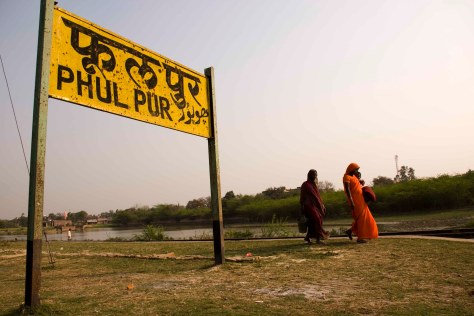
Photograph by Akif Ahmad for Fountain Ink magazine

In which I go to Phulpur, once famous as Nehru’s seat, and do walk-the-talk with village-level workers of the four main political parties in Uttar Pradesh. Here. Continue reading Seeing UP from Phulpur →

Stop the Cycle of Revenge and Violence in West Bengal

This public statement is for immediate release. Please see the names of the signatories at the end. 

The news of continuous violence on a daily basis coming from West Bengal is deeply disturbing. Journalists have been attacked by the members of the ruling party, school teachers are being asked to prove their loyalty to the new ruling dispensation failing which they are being barred from doing their duty and are made target of systematic physical violence.

People suspected of affiliation with the CPM  are facing extortion threats and cases have been reported where they have been denied access to the means of their livelihood. Legitimate oppositional politics is not tolerated. Not only are ordinary members of the CPM  being attacked, even senior leaders are not spared . Recently an ex-MLA of the CPM along with another leader was killed in a mob-violence led by the members of the ruling  Trinamul Congress. Processions are not allowed. There have been incidents of intimidation by the ruling party to the supporters of the recent bandh call given by different trade unions. Continue reading Stop the Cycle of Revenge and Violence in West Bengal →

Three Stories of Resilience from Gujarat: Ayesha Khan

Guest post by AYESHA KHAN, Baroda-based journalist

Bilkis Bano. Photo via a grab from a recent NDTV report

To mine the detritus of the Gujarat pogrom for positive stories may seem like sacrilege. But when memories are dredged up to mark a decade of the horrors of 2002, a little blasphemy could help balance the account books.

Mostly what we recount of Gujarat 2002 is deaths. Yet, more than the murder and mayhem, the pogrom stood out for an unprecedented scale of sexual violence that Muslim women were subjected to. George Fernandese in his capacity as the Union defence minister had explained to the Parliament after a quick tour of Gujarat that women raped or molested during riots was not surprising or exceptional. I will not go here into the polemics of why violating women’s sexuality is considered a means of dishonouring a community,

There’s an untold story about how the community handled sexual violence. If the dominant community legitimised rape driven by its insecurities and politics that stemmed from history and identity issues, it was perhaps for the first time that the persecuted community reacted to rape in a progressive way.

Rape is double-edged sword, first leading to physical violation and second to social ostracisation in most societies. Which is common to mask the identity of rape victims for fear of social stigma. Strangely, during the 2002 riots, Muslim women, some of them burqa clad and most of them from tightly-knit rural communities never betrayed the kind of shame or guilt that rape victims are expected to show. What was their fault? Why should the victim feel shame and guilt? And so it was that many of them did not cloak their identities, and instead chose to come out publicly to demand justice. Continue reading Three Stories of Resilience from Gujarat: Ayesha Khan →

Defending Narendra Modi: An Exercise in Obfuscation

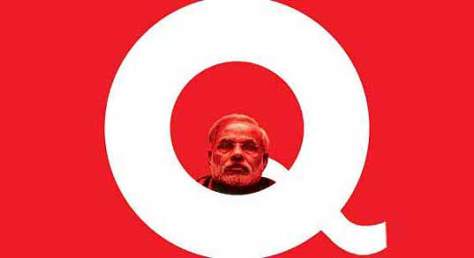
In Outlook magazine last week, its web editor Sundeep Dougal asked 25 questions of Narendra Modi about the 2002 Gujarat pogrom and the subversion of justice since then. Predictably, the army of Narendra Modi Defenders began to spill outrage at such blatant compilation of true charges against Mr Modi. Doing the rounds of the internet is a point by point rebuttal to Dougal’s questions by a blogger, Shashi Shekhar, who goes by the name Offstumped, and is a known online Modi defender. Offstumped’s answers have been responded to by Dougal, and yet Offstumped’s rejoinder is being circulated all over the internet by Modi defenders in the hope of persuading public opinion that Mr Modi is a spotlessly clean man whose actions and inactions did not result in any loss of life, property or dignity of anyone in 2002 and later. The rather large army of Narendra Modi Fans on the internet hopes that by repeating their standard lies again and again, they will one day become accepted truth. Continue reading Defending Narendra Modi: An Exercise in Obfuscation →

UGC’s point system – Why should we care? Pratiksha Baxi and Umesh O

Guest post by PRATIKSHA BAXI and UMESH O

Is it really surprising that Jawaharlal Nehru University has implemented the controversial UGC guidelines on the Career Advancement Scheme (CAS) with effect from its date of announcement in 2008 (rather than date of notification in 2010, thereby benefiting Associate Professors rather than Assistant Professors? Is it really shocking that JNU did not register protest with the UGC about the case of CAS, dubbed by some as the Comic and Sad Guidelines? Perhaps not?

This scheme does not merely impact all academics already hired, especially at the rank of lecturers/assistant professors, but will also impact all those who will apply for the many vacancies now advertised, especially senior doctoral students, now looking for teaching jobs.

However there has been little concern about how does a scheme, which prolongs promotions for Assistant Professors from 5 years to 12 years (9 odd years in JNU), impact junior academics?

Continue reading UGC’s point system – Why should we care? Pratiksha Baxi and Umesh O →

DISSENT, DEBATE, CREATE