BJP without RSS?

Right since the controversy over L K Advani’s remarks on Jinnah, there is a section of the ‘liberal’ Indian media which has argued that all the BJP needs to do is divorce/separate/delink itself from the RSS. It would then turn into a ‘normal’ right wing party. I remember this was a line taken up strongly by the Indian Express. The subtext of their editorial position was that there is a strong left tilt in Indian polity; Nehruvian socialist rhetoric remains ingrained; and a ‘non-communal’ BJP can provide the right balance. (Where they see the left tilt when few of us can or how much further right they still want to push India is an altogether different debate). In a chat with CNN IBN website readers, Ramchandra Guha takes up a similar position arguing what India needs is BJP without RSS. (and ‘a Congress without the dynasty and a modern and unified left’).

I do not understand Indian politics too well, nor have covered the BJP. There are others who have written about the relationship between the two in great depth. But from the little I have seen of them while reporting in a few Indian states, here is a simple thought – the BJP will not be BJP if it is detached from the RSS. To assume that BJP can remain a party without the RSS structure to back it or BJP can separate itself from the larger ‘parivaar’ seems to be based on a limited understanding of both the BJP and RSS. Continue reading BJP without RSS?

Dignifying Jade Goody, or, What Jade Goody actually connotes: D. Parthasarthy

guest post by D. PARTHASARTHY

When newspaper columnists become self-righteous, it is usually because they see a good way of capturing reader interest by moralizing about an issue. After all, tabloids around the world regularly make fortunes by generating a false sense of moral outrage and indignation through stories of the indiscretions and ineptitudes, sufferings and misfortunes of celebrities and of not so famous people. It is a sign of irony as well as an indication of the way in which neo-liberal capitalist media works, that the consequences of alienation engendered by an individualist ideology is fodder for sensationalist reporting, but also a tool for mobilizing collective conscience against alienated individuals, and for preventing communities from understanding the real reasons for alienation.

Continue reading Dignifying Jade Goody, or, What Jade Goody actually connotes: D. Parthasarthy

Apocalyse Now: A Swamp Rises to Swallow the Rock of the Faith

From the outside it is hard to tell. The glory of Kerala’s mighty Catholic Church, it appears, has weathered many a tsunami. The communists tried in 1958; they tried in 2006-07 too. Each time, the Church brushed off the challenge, transmogrifying itself, almost miraculously, into a murderous majoritarian tsunami in defense of theism that swept away the Unbelievers into the depths of hell. Again, the Church proved that the malicious schemes of Syrian Christian dissenters, puny individuals, Education Ministers in communist-led ministries — Joseph Mundassery then, M.A.Baby now — shall be foiled by the hand of God. Thus in 2006-07 too, the power of Faith burgeoned, once again, into a tremendous cyclone which swept the Unbelievers’ dastardly designs off the face of our Fair and Promised Land,  Kerala. Continue reading Apocalyse Now: A Swamp Rises to Swallow the Rock of the Faith

Who Is Responsible For The Slaughter Of Civilians In The Vanni?: Rohini Hensman

guest post by ROHINI HENSMAN

With the military defeat of the LTTE imminent, the terrible plight of civilians in the Vanni has attracted worldwide concern and sympathy, and rightly so. While the circumstances are completely different, the civilian death toll in the Vanni over the past few months (over 2700) is already triple the number of civilians killed in the Gaza massacre of December-January, and is still mounting. The thousands who suffer serious injuries are further victimised by the delay or lack of medical attention, which means, for example, that injuries to limbs which could have been saved with prompt treatment, instead result in gangrene and amputations. Even those who have not lost lives, limbs or loved ones, have lost their homes and livelihoods, and live in appalling conditions which could well claim more lives through disease or even starvation.

Meanwhile, the LTTE and Government of Sri Lanka (GOSL) trade charges, each accusing the other of being responsible for the slaughter. What truth is there in their respective allegations? Continue reading Who Is Responsible For The Slaughter Of Civilians In The Vanni?: Rohini Hensman

Cultural Policing in Dakshina Kannada: Vigilante Attacks on Women and Minorities

[This summary comes to us from ARVIND NARRAIN (ALF) of a report brought out by the People’s Union for Civil Liberties, Karnataka (PUCL-K) in the wake of the attacks on women in Mangalore by cadres of the Hindu right-wing Sri Ram Sene.]

It was only after the continuous telecast of the images of the women who were subjected to an horrific assault by cadres of the Sri Ram Sene in a pub in Mangalore on January 24, 2009, that public attention gravitated towards what was happening in Mangalore. Self styled vigilante groups in Dakshina Kannada have begun to police social interactions between members of different religious communities such as boys and girls drinking juice together or sitting together on a bus merely because they come from different religious communities. Cultural policing also targets women in particular and lays down norms with respect to public spaces they can occupy and the clothes which they can wear. Cultural policing has as its primary target, young people. From Shefantunde (16) who was attacked for talking to a Hindu girl to a college student Shruti and Shabeeb for talking on a bus to Anishwita (23), Akeel Mohammmad (24) and Pramilla(22) for drinking a juice together, its the young which has come under vicious attack. Perhaps we also need to think of the young not just as victims but indeed as agents of social transformation who through their everyday acts of fraternal living are fulfilling the promise of the Indian Constitution and thereby imperiling the ideological agenda of those who see India differently. Cultural policing aims to punish all those who try to live out the meaning of the Preamble’s promise of ‘fraternity’ and is a fundamental attack on the very Constitutional order. The promise of fraternity held out in the Preamble is what is contested at its very roots by cultural policing. What cultural policing wants to produce are monolithic self-enclosed communities with no form of social interaction between them. It is antithetical to the idea of ‘We, the people of India’ and insists that India is no more one nation, but rather a collection of separate peoples. This Report documents how sixty years after independence, the vision of the framers of the Constitution is sought to be so completely repudiated by organizations which are bent on ripping out the heart of Indian Constitutionalism.

The full report is available on the Alternative Law Forum website and can be accessed here.

Report on the Batla House ‘encounter’

The Jamia Teachers’ Solidarity Group has released a report on the Batla House ‘encounter’ which they have requested Kafila to put up.

You can read the report below, and also download it from here.

You can find all of Kafila’s posts on the Batla House incident here.

Synopsis:
This report is based on police statements, press reports, testimonies of families and friends of the accused and other documentary evidence. It highlights the numerous contradictions in the police version(s) about the ‘encounter’ and the accusations.

Continue reading Report on the Batla House ‘encounter’

The Great House Hunt

A rather fierce debate has been raging at Kafila, the instigator is Zainab, a “Muslim” married to a “Telugu Brahmin” who discovered how deep is the hold of antediluvian ideas and practices in a city that has for sometime been touted as the hub of 21st century India.

She wrote a simple account of her experiences while searching for a house on rent in Bangalore. The piece also touched upon issues like communal profiling, stereotyping entire communities and such like. Some of those commentating on the piece have made ‘clever’ attempts at obfuscation by raising issues like loan quotas for Muslims and such other totally extraneous arguments. Never having studied economics, banking and/or commerce, never having had the resources to apply for a bank loan and not having my life enriched by the immensely educational experience of house hunting in Bombay and Bangalore, I will not try to take on Ipsita or comment on the secular practice of discrimination against all house hunters if they do not belong to the caste, religion, region, gender or economic status of the landlord. Continue reading The Great House Hunt

Fighter for a Great Yesterday

Brand Advani: Perils of Rebranding

[It is for the first time in his nearly five year old tenure as PM that Prime Minister Manmohan Singh made a stinging attack on L. K. Advani – PM in waiting as far as the Sangh Parivar is concerned. Prime Minister was candid enough to remind about the “prominent role” played by Mr Advani in the Babri Masjid demolition, or how he presided over Gujarat riots and failed to prevent terror attacks on Parliament and Red Fort as Home Minister.]

1.

L.K. Advani, the ‘Swayamsevak’ from across the border, the hawk of the nineties or the rediscoverer of Jinnah wants to do a makeover. Not a day passes when we are presented with a new look of the old man who has already crossed eighties. Sudheendra Kulkarni, his speechwriter shared the understanding behind LKA’s rebranding mission. ‘Man of Eighties, Vision of Twenties’. If one day he is presented as an emotional patriarch who has no qualms in shading tears after seeing a movie the next day he is packaged as the man in his energetic twenties and shown raising dumbells at a gymnasium or the next day he is with a family in hospital which tried to committ suicide because of financial problems. Continue reading Fighter for a Great Yesterday

Tens of Thousands Protest G20 Summit

‘They hoped for ten thousand, but in the end more than three times that number turned out on London’s streets today for the biggest mass demonstration since the beginning of the economic crisis’, writes a report in the Guardian.
London march, courtesy Associated Press

According to another report: Tens of thousands of people marched across central London Saturday to demand jobs, economic justice and environmental accountability, kicking off six days of protest and action planned in the run-up to the G20 summit next week.

More than 150 groups threw their backing behind the “Put People First” march. Police said around 35,000 attended the demonstration, but there were large gaps in the line of protesters snaking its way across the city toward Speaker’s Corner in Hyde Park.

Read the full report here.

What is significant about the protests this time round, is that ordinary people are not ready any more to be the sacrifiical lambs while the big corporations are bailed out. ‘Capitalists, you are the crisis’ and ‘We won’t pay for their crisis’ are in fact some of the important and key slogans of the current round of protests.

Where have they disappeared?

Aman Kachroo is not the first teen to die of ragging. But there is one curious first: this time the death has not led to any ‘public debate’.

This time the defenders of ragging are silent. Who knows, maybe some of them have changed their views and are now lighting candles at Jantar Mantar. There are no TV debates calling ragging fun. This time no one is arguing that a murder case should not be used to defame the socially productive ‘tradition’ of ragging. This time nobody is asking how boys will become men unless they are ragged, and nobody is calling the victims sissies.

What has changed? Continue reading Where have they disappeared?

The Rise of the Underground – A New Discovery?

Believe it or not, experts at the World Bank and the IMF are disovering the virtues of something we at Kafila have been, off and on, debating: the so-called ‘underground economy’, the ‘informal sector’ or what has also been called the sphere of ‘noncorporate capital’.

“Economists have long thought the underground economy — the vast, unregulated market encompassing everything from street vendors to unlicensed cab drivers — was bad news for the world economy. Now it’s taking on a new role as one of the last safe havens in a darkening financial climate, forcing analysts to rethink their views”, states a recent Wall Street Journal report from Ahmedabad. Continue reading The Rise of the Underground – A New Discovery?

The Shame of A Name

This has never happened to me before. But then, there is always a first time for everything in life.

My name is Zainab Bawa.

“Are you Punjabi?”

“Are you Parsi?”

“What are you?” Arjun bhai, the hawker outside VT station had once asked me. “Muslim,” I had replied. And then, very bashfully, he said to me, “Just asking. Could not make out. You speak such good Marathi. And then, after all, we are all of the humanity kind – you cut my finger, the blood that oozes out will be the same as yours.” Continue reading The Shame of A Name

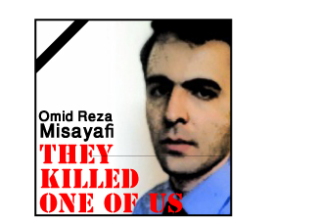
Omid Reza Misayafi

omid

Omid Reza Misayafi was a blogger.

That is not why he has lost his life in prison.

It’s because of what he wrote.

In the Supreme Court of the Indian Blogosphere

(I had written this article after the Supreme Court’s refusal to quash a defamation case in a Thane court against a student-blogger in Kerala, Ajith D. A shorter version was offered to a newspaper which refused to publish it. So finally I’m posting it here. For a better context, please see Lawrence Liang‘s posts on the subject. Whatever is written below is without prejudice against any of the parties named. For the history of the Shiv Sena encounter with Orkut, I am graetful to Gaurav Mishra for this excellent article.)

If you search “Shiv Sena” on just the communities section of the social networking site Orkut, you get 244 results. There are love-Shiv Sena and hate-Shiva Sena communities (essentially discussion boards), but my favourite is one called “Shiv Sena v/s Anti SS” which seeks to sort out differences between “sainiks and anti-sainkis”. It further states, “If anyone posts hurting a fellow member, that post will be deleted. There must be some amount of respect towards fellow members. The owner being Anti shiv sena will debate for Anti SS.” The community was started by “Madhushree It takes courage to be true.” and has 111 members at the time of writing. Continue reading In the Supreme Court of the Indian Blogosphere

The Discreet Poison of Aamir

Aaamir the film

Aamir, a film about a man on the run, was released in June 2008, it was one of those rare films that was praised by critics and liked by viewers. I did not like the film, I was in fact very upset and disturbed about the film and thought about giving expression to my angst in writing, but this outpouring of powerful emotions never materialised, I would probably have never gotten down to writing this piece had Delhi 6 not arrived on the scene. Continue reading The Discreet Poison of Aamir

How to know if (when) your bank is insolvent

Analysing a bank’s financial statements is a bit like suing your family lawyer for malpractice; the jury may be on your side but the evidence is invariably circumstantial.  However, in times such as these  when even charities are screwed by their bankers – it is best not to trust anyone. Worry not, we at Kafila are not just concerned with playing theory-theory and pseudo-secular Hindu-bashing, we are also deeply concerned about the financial crisis – it has a direct impact on the bonuses taken home by our CEO and board-members. Accordingly, I offer you a simple step by step way to figure out when your bank will go under.Written in an easy conversational style, this post is an invaluable tool pedagogic for Kafila readers both young and old. Stay with me guys, this is going to be fun.

First a bit of background: In May 2008, Vikram Pandit finally stamped his authority on the behemoth company that he had been chosen to lead. Signalling a bold break from the past, he replaced Citigroup’s 2007 slogan “Let’s get it done” by reviving Citigroup’s 1970s slogan “The Citi Never Sleeps”.   While the new/old ad campaign is sure to bring back memories of more profitable times, the firm’s precarious financial situation suggests that The Citi apart, Pandit won’t be getting much rest either. Mystery Question: What will it take to wipe Citi out?

Continue reading How to know if (when) your bank is insolvent

‘Lahoris woke up and joined their son’

What a moment it is, what a moment it must be. Ordinary people on the streets of Lahore on Sunday, countless thousands of them, have forced the Pakistani government to re-instate the deposed Chief Justice of the Supreme Court. What a moment of hope in a country the rest of the world believes is about to ‘implode’. What a resurrection of yourself, Mian Sa’ab, who will now remember how unpopular you were when Mush had ousted you!

Here’s an extremely illuminating account of what happened in Lahore, an anonymous account circulating on some mailing lists. This is apart from some excellent citizen reportage on Twitter by Pakistanis.

The Army, the Presidency, the Americans and the Prime Minister, were all ready to throw peanuts at Nawaz Sharif. The assessment was that 500 will reach constitution avenue (read Salman Taseer). In Pindi, we had halwa puri at a friends house today. A PPP friend who knew my passion for the CJ, at 11-00 am said, looking at me, “Yar Imran, there is a bigger long march in my house than in Lahore.” A PML N friend told me from Lahore, “Punjabis dont get out in the face of danda. The long march will fail.” Continue reading ‘Lahoris woke up and joined their son’

Evangelist Zizek and the End of Philosophy – II

Idea of communism? Courtesy Oscar's global blog
Idea of communism? Courtesy Oscar’s global blog

Today was the third and final day of the ‘Idea of Communism’ conference and it was the truly most bizarre experience – bizarre philosophical experience, I should say – of my life. Let me start backwards today.

The preacher from Ljubliana was in full form and he closed his own hour-long (or was it 55 minutes) presentation ‘To Begin from the Beginning, Over and Over Again’ with the following: “If the rumour that Gilles Deleuze was writing a book on Marx before he died, is true then this should be seen as a sign that after having spent a life time away from the Church he wanted to come back to its fold…We welcome all those anti-communist Leftists who have spent their lifetimes attacking us to come and join us.” Continue reading Evangelist Zizek and the End of Philosophy – II

Re-booting Communism Or Slavoj Zizek and the End of Philosophy – I

Zizek - the postmodern Lenin?

Today, 13 March, a whole galaxy of philosophers and theorists got together for a three-day conference “On The Idea of Communism” under the auspices of the Birkbeck Institute for the Humanities, London University. The Conference opened to a jam-packed hall where all tickets had sold out (no jokes, this was a ticketed show where the likes of Alain Badiou, Slavoj Zizek, Jean Luc-Nancy, Toni Negri, Jacques Ranciere, Terry Eagleton and many many others are to perform on the ‘idea of communism’). The huge Logan hall with a capacity of about 800-900 was so packed that the organizers had made arrangements for video streaming in another neighbouring hall – and that too was half full! Very encouraging in these bleak days.

The conference began in the afternoon with brief opening remarks by Alain Badiou and Slavoj Zizek. Badiou made his general point (see below) about the continuing relevance of the ‘communist hypothesis’. Staid and philosopherly. Continue reading Re-booting Communism Or Slavoj Zizek and the End of Philosophy – I

Israel(i Man) seduces India(n Woman)

Here’s how a state-owned Israeli defence firm tries to get business from India’s Defence Ministry:

The Danger Room blog said the text implied that the “Indian military is somehow like a helpless woman who needs to feel safe and sheltered.”

Rafael dismissed the criticism of its film and said that it made movies with a local theme for every international defense expo. A movie, one company source said, made for a defense expo in Brazil focused on soccer and weapons. Another movie, for a US audience, focused on football.

“We try to make the movies about the place where the defense expo is located,” the company source said, adding that in previous years Rafael had won prizes for its pavilions and marketing techniques. [The Jerusalem Post]

Save the left from left scholars

I have just returned from an atrocious talk delivered by a famous Nepal expert, David Seddon, who claims to belong to the ‘old British Marxist tradition of Eric Hobsbawm and E P Thompson’.

So this Mr Seddon is well known in Nepal for a book he wrote three decades back – Nepal in Crisis. More recently, he got along with a local activist to edit a book on the People’s War.

Now, Seddon sahib comes here. He tells a Nepali audience how he is worried about the rising violence and the ‘law and order’ problem. He links the violence with identity – “people feel they have a legitimate basis to pick arms and throw stones because they belong to a caste and ethnic group.” He tells the audience, many of whom have struggled for long to bring some change in the exclusionary Nepali state structure, that ‘identity politics is profoundly undemocratic and federalism is not necessary.” And here is the clincher, “When your constituent assembly members adopted a federal democratic republic, I am sure they were thinking only about the republic part. No one really thought about the federal part.” Continue reading Save the left from left scholars

DISSENT, DEBATE, CREATE