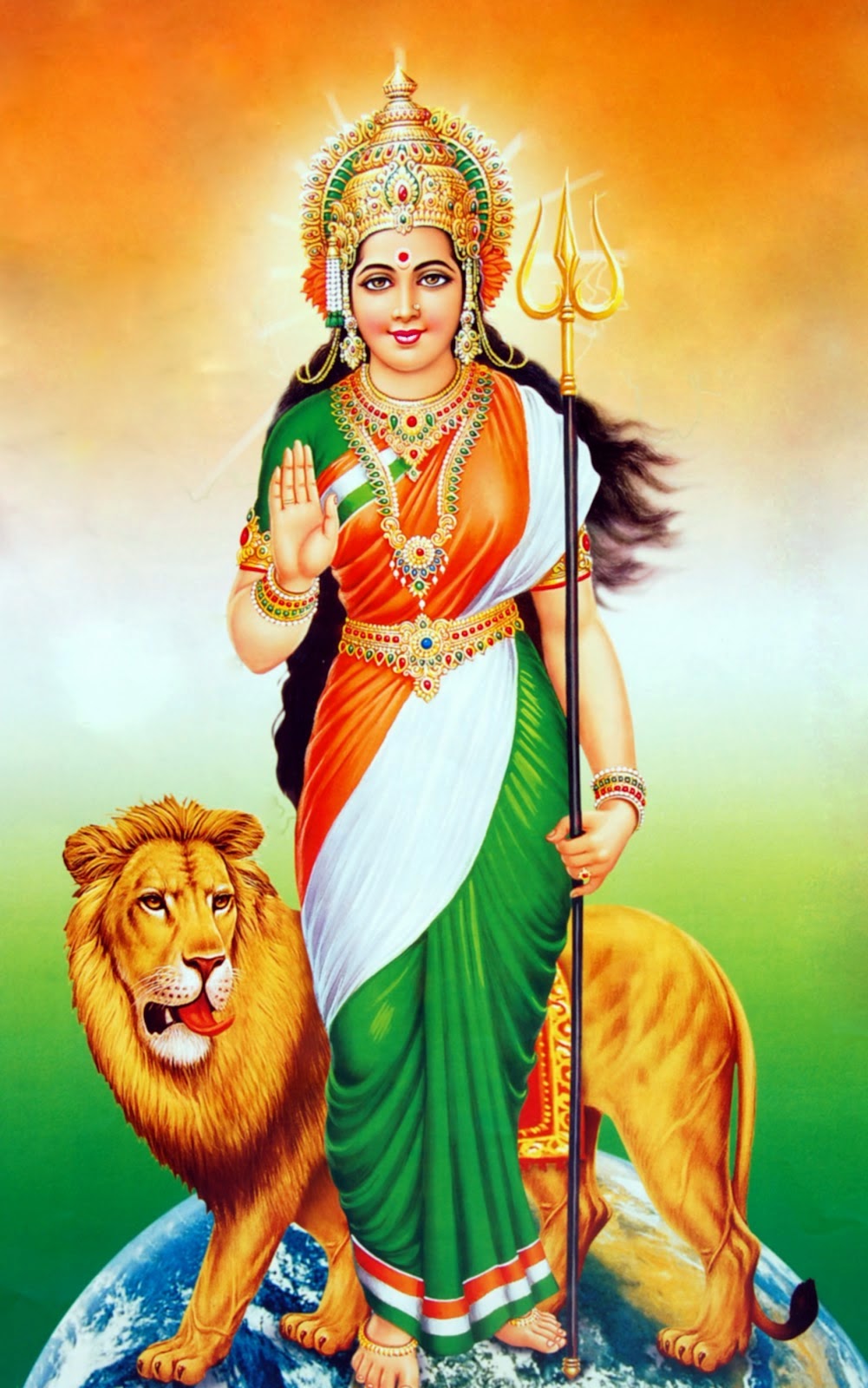
राष्ट्रवाद या यूं कहें कि ऑफिशियल राष्ट्रवाद इन दिनों सुर्खियों में है. एक तरफ ‘भारत माता की जय’ का नारा लगाते हुए और दूसरे ही सुर में मां-बहनों के नाम अपशब्दों की बौछार करते हुए लंपटों के गिरोह हर स्वतंत्रमना व्यक्ति को लातों-मुक्कों से, या जैसा कि बीते दिनों इलाहाबाद की कचहरी में देखने को मिला, लोग लाठियों की मार से राष्ट्रवाद का असली मतलब समझा रहे हैं. शांतिपूर्ण प्रदर्शनकारियों पर टूट पड़ते दिख रहे इन निक्करधारी गिरोहों के साथ जगह-जगह खाकी वर्दीधारियों की भी मौन सहमति नजर आ रही है. और दिख रहा है कि आप अगर किसी को मार भी डालें और सफाई में यह कह दें कि वह पाकिस्तान जिंदाबाद कह रहा था तो उसे माफ कर दिया जाएगा.
विडंबना ही है कि इन दिनों देश की किस्मत के आका कहे जाने वाले लोग नकली ट्वीट की बैसाखी के सहारे ऐसे तमाम उत्पातों, उपद्रवों और उद्दंडता को वैधता का जामा पहनाते नजर आ रहे हैं. आए दिन हो रही संविधान की इस खुल्लमखुल्ला अनदेखी को लेकर संविधान को सबसे पवित्र किताब का दर्जा देने वाले वजीर-ए-आजम मोदी भी अपना मौन बनाए हुए हैं. अंधराष्ट्रवाद की आंधी चलाने की तेज होती कोशिशों को देखते हुए बरबस राजेश जोशी की बहुचर्चित कविता की पंक्तियां साकार होती दिख रही हैं कि ‘जो इस कोलाहल में शामिल नहीं होंगे मारे जाएंगे.’
(Read the rest of the article here : http://tehelkahindi.com/who-is-not-anti-national-among-us-opinion-by-social-scientist-subhash-gatade/?singlepage=1)
I am fifteen years old, and I’m not an anti-nationalist, but I believe that having an opinion that differs from that of the state isn’t a crime.
I’m not an anti-nationalist, but I believe that physical and verbal abuse by lawyers against the accused in a courtroom in the presence of the police is a defamation of our legal system and violation of the Right to Fair Trial as stated in the Article 10 of the Universal Declaration of Human Rights.
I’m not an anti-nationalist, but I believe that verbal harassment of an accused on National Television in the name of Media Trial is unjustified. I don’t know journalism or media better than those running the news provision system of our country but what I do know is that each journalist or media personnel or any human being for the matter of fact is subjected to converse or debate with another human being with a certain decency and a sense of respect towards other’s opinion. Defamation of an accused by a journalist by labelling him/her as an anti-nationalist and calling them a shame to the nation is a violation of the article 41 of the Norms of Journalism Conduct published by the Press Council of India in 2010 and a threat to one’s dignity and public image. Continue reading Open Letter to the Prime Minister of India: Simar Singh→
January, 26th, 2016, the 66th year of celebrating the declaration of India as a ‘Republic’ and the passage of the Indian Constitution, witnessed an unusual gathering at an auditorium at Challakere town (Chitradurga District, Karnataka). Local residents, farmers, shepherds and a number of environmentalists, academics, reporters, and students from various towns and cities of Karnataka participated at a public hearing on the appropriation by the governments of India and Karnataka of more than ten thousand acres of a common grazing land called the Amrut Mahal Kaval which had been allocated to various public and private sectors for the construction of a futuristic ‘science city’. Organised by Amrit Mahal Kaval Hitarakshana Haagu Horata Samithi [Amrit Mahal Kaval Conservation and Struggle Committee] the public hearing was to assess the pros and cons of such land allocation. Local shepherds and farmers from the surrounding villages highlighted the impact of the loss of their grasslands (kavals). In their eloquent and well-thought-out statements, the local residents sought to retain their rights to the grassland (a collectively maintained resource) and to the livelihoods and life that it enabled. They questioned the undemocratic process by which their land had been appropriated and commented on the nature of the nation’s institutions. Although they had all been invited, none of the representatives of the government departments and the organisations which had received land deemed it worthy to attend this public hearing. This meet and the visit to the Kavals (now cordoned off with a double boundary; an outer wire fence and an inner stone, concrete and steel meshed 15 feet high fence, reminiscent of high-security prisons) were testimony to the unusual trajectory of the Indian Republic where the voices of common people are increasingly silenced and the state, and its institutions of the military, the science establishment, and some private players have gained ascendency.
I was an average student in JNU with not much political involvement. There are a large number of students in JNU who do not participate in protests and marches. Still it is said that ‘once in JNU always an activist’. It is because politics in JNU is more about applying your knowledge to society rather than losing our academic track. This comes to happen as a part of academic process that we go through at JNU. The readings that we do are about social structures, political happenings, historical events and economical arrangements. These readings are about things outside the campus. When we do these readings we take them seriously. We start questioning the existing realities, including the reading themselves. Unlike most of the other universities we are encouraged to do that.
I came to JNU as a small town girl from a religious background from eastern UP. Like most of the girls from my region, I had a baggage of being a ‘good girl’ which reflected in my conduct and thought. I underwent a little bit of culture-shock but thanks to the upbringing of a ‘good girl’ ready for uncertain future, acceptance came naturally. I was in a marriage which my parents had arranged for me and later had a child. Obviously with all the rigorous academic requirements and a child to look after, singlehandedly, I always had some personal responsibility to look after. Goes without saying that since I got a campus accommodation and a 24 hours open library, despite struggling with my personal life, I could do a piece of research which was later conferred with a national award. And yes, I got all these facilities for almost free. JNU allowed me to go out of my residence during nights so that I could study when time allowed me to. We could meet our teachers anytime, as they were on campus, available for us. All this happened mostly because of the taxpayers money that JNU enjoys. Continue reading How JNU Taught Me To Celebrate My Womanhood: Shalini Dixit→
International Women’s Day greetings to feminists of all genders struggling against all forms of injustice!
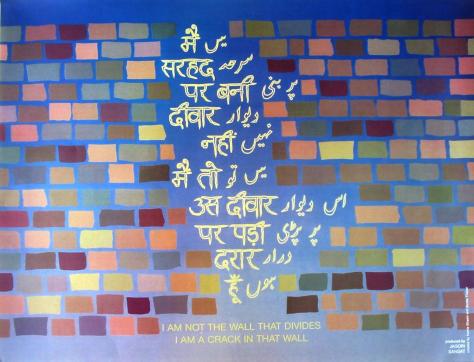
Poster: Words by Kamla Bhasin, poster design by Jagori
We Sinful Women
Kishwar Naheed
It is we sinful women
who are not awed by the grandeur of those who wear gowns
who don’t sell our lives
who don’t bow our heads
who don’t fold our hands together.
It is we sinful women
while those who sell the harvests of our bodies
become exalted
become distinguished
become the just princes of the material world.
It is we sinful women
who come out raising the banner of truth
up against barricades of lies on the highways
who find stories of persecution piled on each threshold
who find that tongues which could speak have been severed.
It is we sinful women.
Now, even if the night gives chase
these eyes shall not be put out.
For the wall which has been razed
don’t insist now on raising it again.
It is we sinful women
who are not awed by the grandeur of those who wear gowns
who don’t sell our bodies
who don’t bow our heads
who don’t fold our hands together.
[Translated from Urdu to English by Rukhsana Ahmed]
Kishwar Naheed is a feminist Urdu poet from Pakistan
The Supreme Court has time and again emphasized the significance of adducing reasons while rendering administrative and judicial orders. Indeed, a reasoned opinion is arguably the fullest expression of the principle of audialterampartem and is a sine quo non in the dispensation of justice. It appears, one might argue, that the Delhi High Court (hereinafter ‘Court’) in its order granting interim bail to Kanhaiya seems to have taken the dictate of the Supreme Court rather earnestly in what was, needless to say, a very ‘detailed’ and ‘incisive’ analysis of the bail application.
While poetic prose is neither repugnant nor unknown to our Court’s jurisprudence, and the present order is yet another captivating addition to that, it is when prose and poesy subsumes legal reasoning, one begins to wonder whether the rule of law would be better served without it. It is more worrisome however, when the judiciary sidesteps its role from enforcing a strict interpretation of criminal law in an attempt at articulating its own perceived sense of nationalism, loyalty and allegiance, wholly divorced from the Constitution and the laws.
[ Here are five joyous excerpts of recordings from a recent night on the JNU campus – after Kanhaiya Kumar came back – recorded by a young person called Veer Vikram. We do not know who Veer Vikram is, but came across his Youtube Channel, and were struck by the raw freshness of the voices and of the footage. So we are sharing them with you, saluting the generosity of Veer Vikram, who recorded these and uploaded them on to Youtube for everyone to enjoy. May there be many long nights of joy, music, dancing and poetry – in campuses, factories and neighborhoods – everywhere Think so what a beautiful sight a ‘vishaal jan jagaran’ (as distinct from a ‘bhagawati’ jagaran) can make in different corners of Delhi, and in every city and town where young people can no longer take the rubbish offered by TV channels and the Modi regime. The revolution will be danced, sang, dreamt, recorded, uploaded, downloaded, shared and enjoyed. No more words necessary ]
In response to JNUSU’s call for observing 2nd March as International Day of Protest and to demand justice for Rohith Vemula and the release of the then three arrested students, numerous organisations decided to gather outside Dadar station (E) and carry out a peaceful protest. Among them were All India Students’ Association (AISA), All India Students’ Federation (AISF), Students’ Federation of India (SFI), Democratic Youth Federation of India (DYFI), All India Youth Federation (AIYF), University Committee for Democracy and Equality (UCDE) and others. The protest was supposed to begin at 5pm. Continue reading Encounters With the State and Other Comedies: Asmit Pathare→
Kanhaiya Kumar, the president of the Jawaharlal Nehru University Student Union (JNUSU) in New Delhi, India, was arrested on Feb 10 on charges of sedition and criminal conspiracy. Kanhaiya was present at a meeting on the evening of Feb 9, where incendiary slogans were allegedly raised. Seven other students were also charged. Mr. Kumar is not accused of raising the slogans; indeed the identity of the person(s) who raised the slogans remains a mystery. Charging a student leader for sedition for another’s mere sloganeering is prima facie absurd. Further, the assault of Mr. Kumar, other students and faculty, and even journalists, in court premises by lawyers and others sympathetic to the government, do not inspire confidence in a fair judicial process. Continue reading St Louis Universities Stand With JNU: A Statement→
Freedom at midnight put some people in a spot – those Muslims who chose to stay back in India and did not opt for Pakistan. Pakistan was always conceived as a nation that would be created in areas where Muslims were in a majority in undivided India i.e., the north-western portion and a part of the eastern portion. It was difficult to visualize how all of India’s Muslims would be accommodated there because the reality was that Muslims were and are found in every nook and corner in this country. How then was Pakistan going to fulfill its purpose? It clearly could not. Recognizing this and recognizing the danger to those Muslims who could not go to the ‘promised land’, many Muslim leaders opposed the creation of Pakistan. Muslims against Partition by Shamsul Islam (Pharos Media, 2015) is their story. It details how such leaders were in effect betrayed after having striving unreservedly for a united India. Continue reading Betrayal at Midnight – Review of ‘Muslims against Partition’ : Guest Post by Karthik Venkatesh→
The weeks following the February 9th incident within the JNU campus have been nothing but eventful in India’s social and political discourse. At least, this is something most of us will agree on, no matter which side of this increasingly impermeable “fence” we sit on. There have been arguments, counter arguments thrown from each side to the other, names have been dug up and hurled across, evidence in favour of what purportedly happened or did not happen have been put up by each side for the other to see. Videos have been made, unmade; cartoons have been drawn, redrawn; political figures have been idolised, lampooned; students have been demonized and idolized; dangers of the increasing menace of nationalism and anti-nationalism have been stuffed down one’s throat through the so called idiot box or the smart net.
In the midst of this deluge of opinions and ideas, information and misinformation, the question that some have raised is, are both sides losing the plot a bit? What exactly are we discussing or debating so vociferously? Are we really listening to the other sides’ arguments, or are we just hearing a few words we want to hear and voicing our own opinions in pre-designed responses? These are some of issues we are highlighting in this piece, hopefully in a slightly different format than what we are used to elsewhere.
What follows is a conversation between two intelligent people from opposite sides of the fence. The conversation is based on some real ones, which the authors of this piece had actually engaged in with different individuals over the last few weeks. We have attempted to distil the central ideas of both sides and present it to the readers. We cannot and have not included every aspect of the ideas and opinions of both sides, and we will not include the abuse. But what we have attempted to capture, is a reasoned and rational attempt at understanding the real problem(s), as understood by each side. Continue reading Conversations on Sedition: Ritanjan Das and Abhijit Sengupta→
The dominant narrative around the recent JNU incident has been that the unwarranted police action and the concerted acts of violence, incitement and misinformation that followed are all part of a determined push by the saffron brigade. After love jihad and beef, the story has it, it is “sedition” and “Pakistani agent” this time—we are living in a state of undeclared emergency. A sense of disbelief and apocalyptic doom seem to underpin these sentiments, along with a nostalgic optimism for a quick return to harmony and normalcy. But such things have happened far too many times, and far too often for us to harbour such illusions. For what we are going through is in effect a recalibration of that normalcy.
To read political slogans literally is an absurdity. But in the hands of the present government, it is a calculated absurdity that reads “Bharat ki barbadi…” as armed conspiracy against the state. The variables are many—arrests, fake tweets, rampaging lawyers, patriotic house-owners and now, open calls for murder. But the calculus resolves itself into the same formula every time: national/anti-national.
At the outset, the opposition to the attack on the university campus seems to have coalesced around two points—first, maintaining a safe distance from the “anti-India” slogans raised at the meeting; and second, showing themselves as the real nationalists, standing against the saffron thugs in patriot’s disguise. Partly in response to a vicious media campaign, videos of “real nationalist” speeches at the protest venue are being posted on social media everyday. We are told at length about the “real” Indian behind the deshdrohi, his credentials, and how he wants his India to be. Things reached a disturbing pitch when spokespersons of the traditional Left went on record to express their displeasure at the real culprits not being caught. Without doubt, the saffron brigade cannot be allowed the prerogative of deciding what “the nation” means. But why do so from the flimsy ramparts of sedition? Continue reading Sedition is a Shade of Grey or, Bharat Mata’s Smothering Embrace: Ankur Tamuliphukan and Gaurav Rajkhowa→
Muslims were equated to “demons” and “descendants of Ravana”, and warned of a “final battle”, as the Sangh Parivar held a condolence meeting here for VHP worker Arun Mahaur, who was killed last week allegedly by some Muslim youths. Among those present on the dais were Union Minister of State, HRD, and BJP Agra MP Ram Shankar Katheria as well as the BJP’s Fatehpur Sikri MP Babu Lal, apart from other party local leaders, who joined in the threats to Muslims. Speaker after speaker urged Hindus to “corner Muslims and destroy the demons (rakshas)”, while declaring that “all preparations” had been made to effect “badla (revenge)” before the 13th-day death rituals for Mahaur.
What does someone do in the winter of one’s own life when you discover that the values you cherished, the principles for which you fought for have suddenly lost their meaning and the world before you is turning upside down ?
Perhaps you express your anguish to your near and dear ones or write a letter about the deteriorating situation around you in your favourite newspaper or as a last resort appeal to the custodians of the constitution that how you are ‘forced to hang your head in shame’.
Perhaps this is the infection, the gangrene, that Justice Pratibha Rani fears: a slogan, chanted in the streets of Srinagar as a matter of routine, finds an opening at a university campus in New Delhi. Freed from the usual suspects, unmoored from the routine skirmishes, deaths, and encounters, along the Line of Control, the slogan floats through a university corridor – distracting rows of disciplined students from their academic pursuits.
A slogan’s explosive power, it seems, is not just about what is shouted – but rather where it appears, and who takes up the call. This realisation offers us an opportunity, long sought, to think through this troubling question of “Freedom of Expression.” Read the rest of this piece here
students who often raise anti-national slogans and stage protests. It will also help us in preventing clashes among students belonging to different ideologies – the Left, the far-Left and the ABVP.
Remember, dear citizens, the police were actually present at the event at JNU on February 9th. We will return to this point, but they don’t really need CCTV surveillance, they are physically present on JNU campus in civilian clothes, and with JNU ID.
This, also recollect, is the very same police force that stood by while a mob attacked JNU students and faculty and assaulted Kanhaiya at Patiala House; the same police who cannot arrest the man who publicly, with name and phone number, offered a reward for killing Kanhaiya – they “booked him for defacing property”, and will “analyse the poster carefully” before deciding whether other provisions of the IPC apply.
When all the evidence is available – the name, picture and phone number of a man who issues a death threat, he cannot be booked for anything more serious than the actual pasting of the poster on walls, because “the posters have to be analysed”.
Violence unfolds before their very eyes, and the Delhi Police cannot act.
These guys need CCTV surveillance?
This entirely compliant police force, now acting as the private army of the BJP, is concerned about preventing clashes in JNU, which has never ever had violent clashes, when it cannot carry out the normal functions of a police force anywhere else in the city.
So what will a CCTV system establish that the Delhi Police don’t already know?
आजकल दर रोज़ हमें बताया जा रहा है कि हम देश से प्रेम करें, राष्ट्र से भक्ति. बड़े परेशान हैं आज के शासक हमं जैसों की करतूतों से. जोश में आ कर कुछ भी बड़बड़ा देते हैं : कभी आज़ादी की बात करते हैं, कभी काशमीर की. कभी जातिवाद से छुटकारा चाहीए, तो कभी पूँजीवाद से. ऐसा लगता है हम न भक्ति जानते हैं, ना प्रेम. तो चलीए, भक्ति ओर प्यार, राष्ट्र ओर देश: इन चारों संज्ञाओं का विश्लेषण कीया जाए.
पहला प्रस्ताव: भक्ति में मिला हुआ है डर; प्यार के साथ चलती है रज़ामंदी.
प्यार मासूम नहीं होता. बच्चे प्यार ज़रूर करते हैं, पर प्यार बड़ों का खेल है. प्यार करना जोखिम भरा काम है दोस्त. ख़तरे की खाई है प्यार. क्योंकि डर लगता है कि जिससे हम प्यार करते हैं, वह हम से फ़क़त दोस्ती जताना चाहता है. “Let’s just be friends.”है इस वाक्य से बड़कर कोई अनर्थ? किसी नौजवान से पूछिए जिसने काँपते हाँथों से Valentine’s card दीया, ओर वापस मिला,”Thanks.” हँसी तो फँसी नहीं, हँसी तो भंग आशाओं की शिखंडी कलेजी में घुसी. पर होता है दोस्त. होता है. क़बूल करना पड़ता है. रो कर, हस कर, दोस्तों के साथ मदहोश शाम में पुरानी फ़िल्मों के गाने बेसुरी आवाज़ में रेंक कर, सुन कर, सुना कर. जब बैंड बजती है तो गाना गाओ दोस्त. गोली मार कर प्यार तो करवाया नहीं जा सकता. Continue reading क्या यही प्यार है? कहो, कहो ना…→
कन्हैया ‘देशद्रोही’ से देश का दुलारा बन गया है.कल तक जो उसकी जान लेने को आमादा थे, आज उसे अपने भविष्य का नेता मान रहे हैं.ऐसा क्यों हुआ और कैसे?
ऐसा हुआ तो इसलिए कि इस बार कन्हैया को ध्यान से, गौर से सुना जा सका है. पहले कन्हैया की आवाज़ नारों के शोर में दब गई थी.आज हम टेलीविज़न चैनलों की आपाधापी में,उनके शोर शराबे में कन्हैया को सिर्फ देख नहीं रहे, सुन रहे हैं,सुनने की कोशिश कर रहे हैं.
सुनना एक सचेत क्रिया है. ‘सुनो, सुनो’, आप फुसफुसाते हुए गाँधी को सुनते हैं, जब वे उत्तेजित भीड़ को शांत करने की कोशिश कर रहे होते हैं. सुनने के लिए पहले उत्तेजना का शमन आवश्यक है.उत्तेजित अवस्था में हम वह सुनते हैं, जो हमारे भीतर पहले से बज रहा होता है, हमारे अपने पूर्वग्रहों के कारण या कामनाओं के कारण. Continue reading सुनो, सुनो: सुनने में श्रम है→
Justice Pratibha Rani began her bail order on Kanhaiya Kumar with the patriotic song “Mere desh ki dharti”, an upbeat celebration of the beautiful land that yields gold and pearls. Her judgement was emotional about the soldiers who give their lives so that the rest of us can be safe.
Here is another sort of patriotic song from another Hindi film, which Justice Pratibha Rani might connect to. This haunting song about the futility of war also goes out to all those who say it is insulting to the armed forces to raise our voices against widespread militarization of the Indian subcontinent.
The refrain of the song is – “Ask the departing solider, where do you go?” It talks about death and destruction, of weeping women and hungry children. The poet is Makhdoom Mohiuddin (a communist and a Muslim – anti-national on two counts). Whose wars do these men fight?
Would we all be safer, including our soldiers, if the elites of neighbouring countries and a global military industrial complex did not have immense stakes in keeping tensions running high?
There has been a lot of talk about what exactly ‘Azadi’ (freedom) means, especially in the wake of Kanhaiya Kumar’s post release midnight speech at JNU on the 4th of March. So lets talk some more. No harm talking. If there is noise, there must also be a signal, somewhere.
Kanhaiya Kumar clarified in his electrifying, riveting speech that his evocation of Azadi was a call for freedom ‘in’ India, not a demand, or even an endorsement of a demand for freedom ‘from’ India.
This may come as a sigh of relief to some, – Kanhaiya , the man of the moment, proves his ‘good’ patriotic credentials, leading to an airing of the by now familiar ‘good nationalist vs. bad nationalist’ trope. And everyone on television loves a nationalist, some love a good nationalist even more.
[ P.S. : Since writing this last night, a more careful reading of the bail order has suggested to me that the actual terms of bail are not so bad after all. Bail is in fact granted, as far as I can see, fairly unconditionally. Kanhaiya is not asked, for instance, to step down from his position in the students’ union, nor are restrictions placed on his movement and activity. So in technically legal sense, the bail provisions need not be interpreted in a tightly restricted manner. The egregious political hortations, the references to infection, antibiotics, amputation and gangrene, which are over and above the legal instructions, are indeed terrible, but operationally, they have no executive authority backing them.]
But to say just that the text of the bail order is what shaped Kanhaiya’s midnight speech would be ungenerous, and miserly, especially in response to the palpably real passion that someone like Kanhaiya has for a better world, and for a better future for the country he lives and believes in. I have no doubt about the fact that coming as he does from the most moderate section of the Indian Left (the CPI – well known for their long term affection for the ‘national bourgeoisie’ despite the national bourgeouisie’s long term indifference/indulgence towards them), Kanhaiya is a genuine populist nationalist patriot [I have corrected ‘nationalist’ to ‘patriot’ here in response to the criticism and suggestion held out by Virat Mehta’s comment – see below in the comments section] and a democrat moulded as he says, equally by Bhagat Singh and Dr. Ambedkar. There is a lot to admire in that vision, even in partial disagreement. And while some may not necessarily share his nationalism, this does not mean that one has to treat it with contempt either. I certainly don’t.
Salute! Jai Bhim! Laal salam! We will win this war against sedition! March 3rd, International Sex Workers Rights Day, Zindabad!
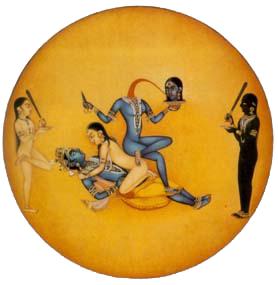
We write from the sex worker’s rights movement to hail your struggle and to add to the discourse you have sparked. We would like to discuss why using the term sex worker in the alleged pamphlet in JNU on Mahishasura Martydom Day is a concept fraught with the Whore Stigma. The use of the politically correct sex worker instead of the commonly used `prostitute’ does not take away from the fact that it is used to depict an insalubrious deed. The use of this term has only led to more misunderstandings of the term itself.
Sex worker is the term used by the sex worker’s rights movement in order to claim dignity to the work adults do consensually by providing sexual services for money. The sex workers use this term to give dignity to those that exchange sexual services for money but the use here is to supposedly strip the `goddess’ in this instance, of any dignity. The term since then has taken a life of its own. From a politically correct term it is now being used to describe anti-nationals, anti-goddesses even anti- patriarchy! But the thinly veiled contempt for the sex worker is huge in every utterance, from the Hindu Goddess Durga to the `anti-national’ women students in JNU.Continue reading Sex workers demand Azadi from ‘Goddess’ Durga: Veshya Anyay Mutki Parishad, Muskan and Sangram→
A petition, signed by 132 “academics” asking Rohan Murty and Narayan Murthy to dismiss Prof Sheldon Pollock from his role as Editor of the Murty Classical Library Series, is receiving attention that the signatories did not anticipate. I put the word “academics” in quotes because the commitment of the signatories to an academic evaluation of Sheldon Pollock’s intellectual leadership is nowhere in evidence, since a quotation from Pollock was changed mid-way through the signature campaign. Nor does it seem as if the signatories have ever held any one of the hot- pink, beautifully produced volumes in their hands, where as much attention has been paid to looks and fonts, as to the quality of translations.
Had they done so, they too would have appreciated the significance of this effort, in bringing to the wider reading public the oceans of literary texts and traditions, in a mind-boggling array of languages, from a period covering two and a half millenia. The individual translators and editors are among the best in the field. Thanks to this series, so many more Indians and others will learn of the sheer beauty and anguish of Punna, a Therigatha poet (translated from Pali, 3rd century BCE). People of the south will hear the voice of Bulle Shah, translated from Punjabi, and those from other parts of India will read Allasani Peddanna, translated from Telugu. True we will miss the mellifluous chanting, or the energetic sounds of performance: for now, we will have to make do with the books on hand. Continue reading A historian’s response to the petition against Sheldon Pollock: Janaki Nair→