Tag Archives: Ambedkar

Your Honour, the Rot Runs Really Deep !

The Karnataka HC episode is a wake-up call for the judiciary, as the battle to save it from interference by the executive could have long-term consequences for democracy.
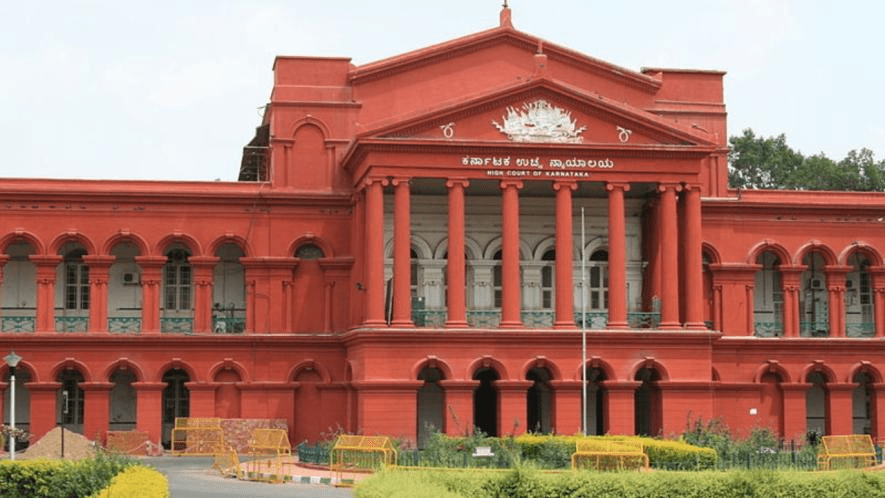
High Court of Karnataka. Image Courtesy: Wikimedia Commons

Justice Srishananda of the Karnataka High Court is in the news for wrong reasons.

What has caused tremendous unease is the way he openly referred to a Muslim-majority area in Bengaluru as “Pakistan” during a hearing and even made a misogynistic comment involving a woman lawyer.

The open display of prejudice toward a community and gender — by someone who is supposed to uphold the Constitution — infuriated a wide cross-section of people. A five-judge bench of the Supreme Court led by Chief Justice Chandrachud also lost no time in condemning these highly irresponsible remarks and asked the Karnataka HC to submit a report in this connection.

..The SC’s quick intervention in the Karnataka case is definitely a welcome development.

The question arises whether establishing such clear guidelines would really prove a dampener to such utterances in courts in future? Would it really put a stop on judges who have had no qualms in declaring that ”based on religion, India should have been declared Hindu nation after independence.’ or declaring ‘Modi a model and a Hero’. ( Read the full article here : https://www.newsclick.in/your-honour-rot-runs-really-deep)
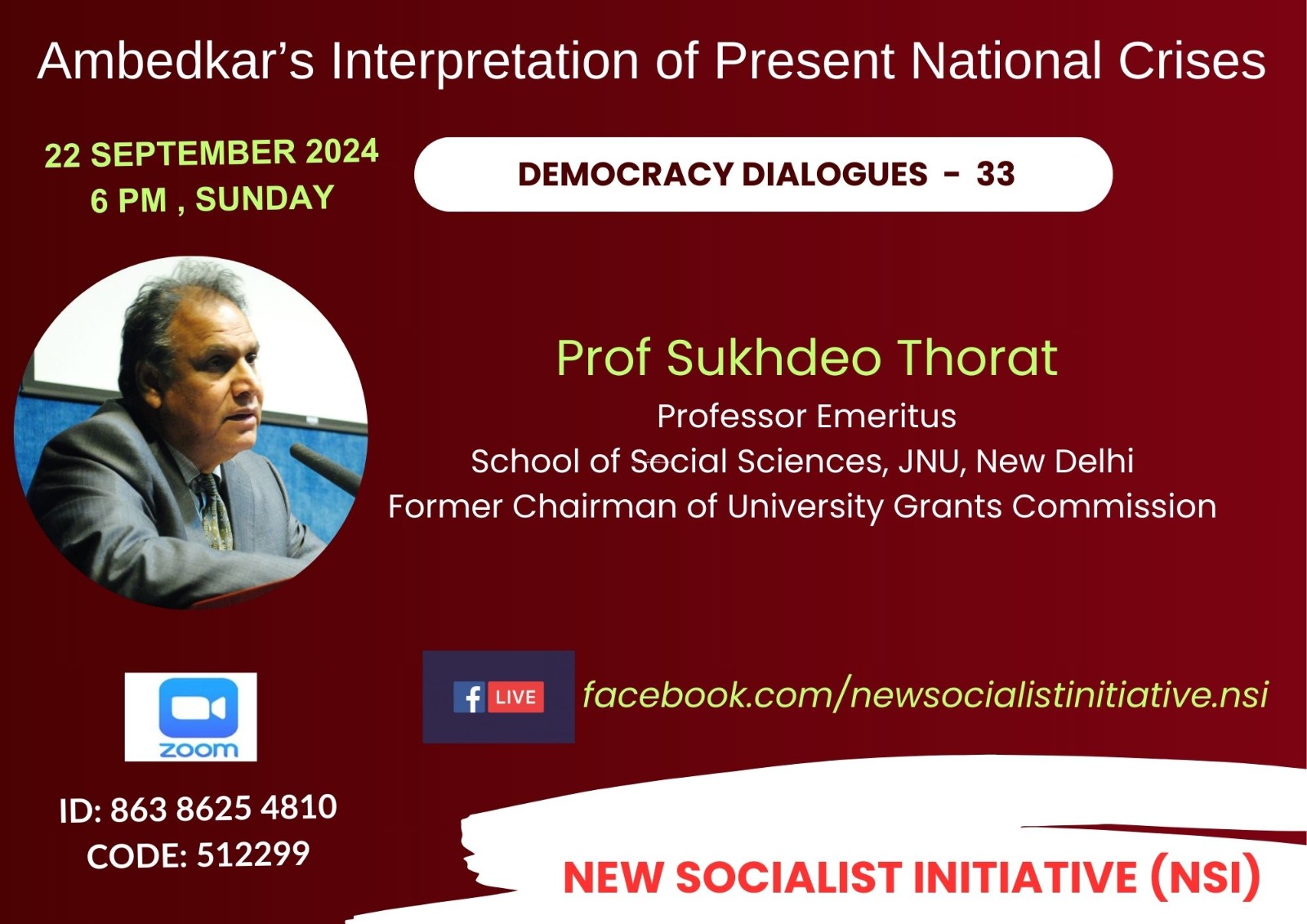
Dr. Ambedkar’s  Interpretation of Present  National Crises

Prof Sukhdeo Thorat

Professor Emeritus, School of Social Sciences, Jawaharlal Nehru University, New Delhi 

Theme :Dr. Ambedkar’s  Interpretation of Present  National Crises

Number of scholars have tried to explain the present crisis by drawing insights from  the experience of Fascism of Hitler in Germany 1930’s and/or  similar viewpoints . Without undermining these attempts, I feel that  Ambedkar’s  theoretical perspective on Indian history presumably helps us more to grapple with the  present crisis .In Ambedkar’s view it is continuation of the non-stop efforts from ancient times to bring back Brahmanism . Ambedkar observes that “that there was in ancient India, a great struggle between Buddhism and Brahmanism. It is not even a struggle but a quarrel over some creed ,The Buddhism  was revolutionary and while Brahminsm  was  counter-revolutionary. It was a revolution and counter revolution in doctrine by a revolution in political and social philosophy”. The present attempt is an on-going legacy of the ancient Indian where it began , and carried through the medieval to British and to the present time with tenacity and stubbornness to maintain the privileges that the Brahmanical ideology bestowed on  those who coined this ideology .The lecture will try to bring insights on Ambedkar’s perspective .

About the Speaker
Prof Sukhdeo Thorat, Professor Emeritus, School of Social Sciences, Jawaharlal Nehru University, New Delhi ; former Chairman of University Grants Commission and former Chairman of ICSSR (Indian Council of Social Science Research) is a leading economist, educationist and writer.
A renowned Ambedkar scholar Prof Thorat graduated with a B.A. from Milind College of Arts, Aurangabad, Maharashtra and has done PhD in Economics from Jawaharlal Nehru University. He was a  Faculty Member at Jawaharlal Nehru University, New Delhi and visiting faculty at Department of Economics, Iowa State University, Ames, USA and has been associated with various national-international institutes and organisations.
Recipient of many awards including Dr Ambedkar National Award (2011) and Padmashree ( 2008), he has authored and edited many books and monographs. Here is a list of his major publications :
– Ambedkar on Social Exclusion and Inclusive Policy
– Dalits in India? Social and Economic Profile (Sage)
– Ambedkar in Retrospect: Essays in Economics, Society, and Politics (edited) with Aryama & Negi. (Rawat Publication)
– Social Science Research in India : Status, Issue and Policies ( co-authored with Samar Varma) – Oxford University Press ( 2016)
– Politics of Representation : Historically Disadvantaged Groups in India’s Democracy ( co edited with Prof Sudha Pai) Palgrave Macmillan ( 2012)
– Untouchability in Rural India Sage, 2006 (with G. Shah, Harsh Mander, Satish Deshpande & Amrita)
– Caste, Race, and Discrimination – Discourse in International Context (edited) (with Umakant), Rawat Publication, Jaipur (2004)

Towards a ‘Suitable’ Ambedkar and a ‘New’ Dalit ! 

How Ten Years of Modi Regime Has Undermined Constitutional Rights to Dalits

Image courtesy: Wikimedia commons

If the fundamental rights are opposed by the community, no Law, no Parliament, no Judiciary can guarantee them in the real sense of the word”,..“What is the use of fundamental rights to the Negro in America, to the Jews in Germany and to the untouchables in India. As Burke said there is no method found for punishing the multitude’

– Ambedkar

Introduction

Within less than a fortnight we will have a new government in power.

Indian people normally make a judicious choice while electing their representatives, their government and this year won’t be different.

One can recall their wisdom when their united resistance helped unseat Indira Gandhi regime after the emergency (1977) or their concerted action could overthrow the Vajpayi government ( 2004) despite the much hyped ‘India Shining’ rhetoric pushed by it.

Today also ground currents definitely suggest change is in the air.

People’s desire to defeat the Republic of Hate which is pushed before them and regain their Republic of Hope seems overwhelming. 

As already expressed by scholars, political activists, concerned citizens, if the elections remain free and fair, if the various guardrails of democracy can remain true to their mandate , we will have real ‘Acche Din‘ waiting for us.

It is an opportune time to look back and see how this much trumpeted regime fared in the last decade in various aspects of India’s society and state.

It is opportune to see how the ‘New India’ – which we have supposedly ushered in – has fared via-v-vis Dalits. What follows is not an exhaustive picture of the last decade of Modi rule but a cursory glance at the issue at hand.

Perhaps it would be opportune to begin with RSS Supremo Mohan Bhagwat’s interview in the wee hours of Modi’s reign as PM. ( Read the full article here : https://countercurrents.org/2024/05/towards-a-suitable-ambedkar-and-a-new-dalit-how-ten-years-of-modi-regime-has-undermined-constitutional-rights-to-dalits/

No It Is Not Hegde’s ‘Mann Ki Baat’ It is BJP’s ‘Dil ki Baat ‘:  Goodbye Constitution, Enter ManuCracy !

How BJP dreams to Usher In Hindu Rashtra Democratically ?

Representative image. Credit: iStock Photo( courtesy Deccan Herald)

Anantkumar Hegde, BJP MP from Uttari Karnataka, is again in the news.

Close on the heels of his controversial statement about demolition of a mosque and his invoking of Hindu community who would not rest ‘until more mosques are reclaimed ‘ (1) he has delivered another explosive statement.

This time the whole edifice of Constitution is under his attack, which according to him has ‘distortions introduced by the Congress to suppress Hindu society’. (2) ..

..Critics have rightly said how this suggestion exhibits real intentions of the saffron regime which wants to usher us into Hindu Rashtra, end reservation for scheduled and backward communities, reinforce caste system and also replace Constitution drafted by Dr Ambedkar with a worldview inspired by Manusmriti. The main opposition party Congress has expressed fear that all such statements, steps just go to vindicate how a ‘cloud of dictatorship’ now hovers over India. (3)

It is a different matter that neither BJP top guns nor PM Modi – who had famously declared way back in 2014 that for him ‘Constitution is the most sacred book’ deemed it important to condemn Hegde’s statements or ordered him to seek apology for his claim.

One learns that it has merely distanced itself from Hegde’s controversial statement to convey an impression that what he said was his ‘Mann ki Baat’ and not BJP’s Dil ki Baat’ .

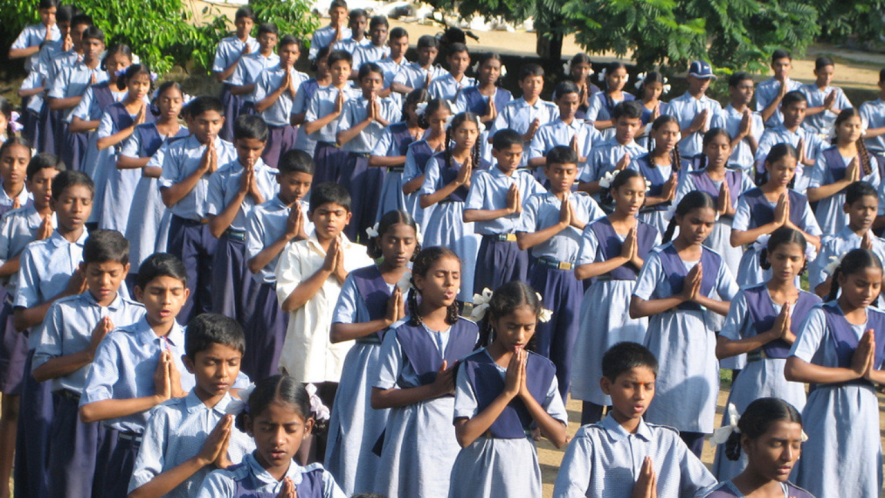
Can a Teacher be Compelled to Offer Prayers in School Premises ?

An atheist school teacher’s case in Nashik before the Bombay HC resonates with the recent case of a Dalit teacher’s suspension in Rajasthan.

Representational Image. Image Courtesy: Flickr

Can anyone compel a teacher to offer prayers inside a school?

This was a little vexed question before the Bombay High Court when a case came up before a two-judge bench led by Justice Abhay Oka and Justice Revethi Mohiti-Dhere. Sudhir Salve, an atheist teacher from a school in Nashik — who otherwise had an excellent record in his profession — had approached it for relief, because the school management where he worked had denied increment to him for ‘indiscipline’.

The teacher’s refusal to fold hands at the time of school prayer or even at the time of taking oath of the Constitution was construed as such an act. As it happens in most such cases, Salve’s case had lingered on for more than six years in the lower courts.

But it did not take much time for the two-judge bench to decide the case, which declared that any such compulsion to fold hands will be a ‘[v]iolation of the fundamental rights conferred on an individual under the Constitution’.

One was reminded of Salve’s case when the suspension of Hemlata Bairwa, a Dalit lady teacher from an upper primary school in Rajasthan’s Baran district, made headlines recently.

To recapitulate the turn of events, it was Republic Day (January 26, 2024) and Bairwa had garlanded the portraits of B.R. Ambedkar, Savitribai Phule and Mahatma Gandhi before the assembly of students in her school. Two of her fellow teachers interrupted the programme and asked her to put a photograph of Saraswati, goddess of knowledge as per Hindu mythology, which she plainly refused. Despite pressure by them, who even allegedly made casteist slurs against her and were even helped by the local head of the panchayat, Bairwa refused to relent.

When the video of the whole incident went viral, the state education minister Madan Dilawar announced her suspension in a public programme — an act that evoked a strong reaction within the Dalit community. Demonstrations were held in different parts of the state opposing this action by the education minister, demanding revocation of the suspension order and removal of the minister from the post.

The question arises: Will Bairwa similarly have to wait for a long period like Salve for justice? Or whether the Bombay High Court’s intervention would impel the Rajasthan High Court to take up her case suo motu.

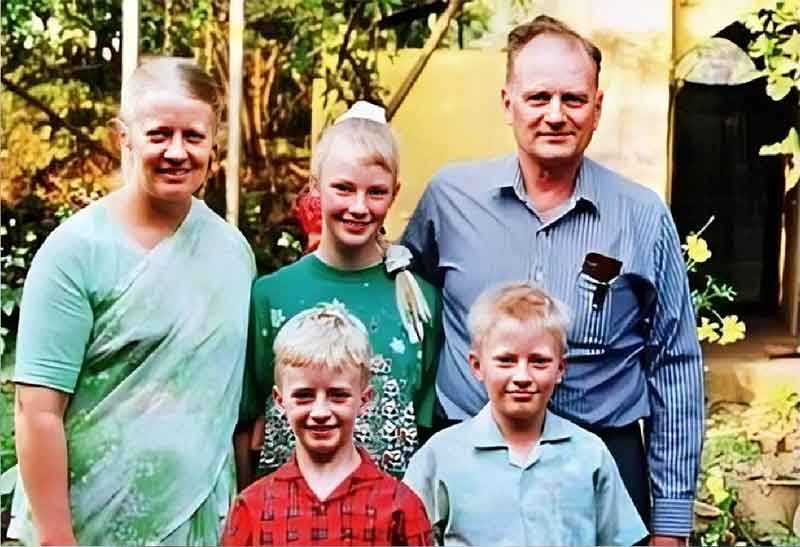
Thinking Graham Staines and his Children in times of Jubilation over Ram Temple

The life of the dead is placed in the memory of the living.

– Marcus Tullius Cicero

Politics is nothing but theology in action

– Ambedkar


Right-wing politics suffers from a common syndrome everywhere.

It never feels confident to project its own icons for the rest of the humanity, whatever might be their claims about their worldview,  it knows that its own icons are detested by a wide spectrum of people.

The easiest way it finds to overcome this lacunae is to appropriate already established icons – who  were even opposed to their world view as well  and claim them their own. In fact, it does not have any qualms in utilising dates – bearing special significance for exploited and oppressed and marginalised of the world – to put their stamp on it.

The project of Hindutva Supremacism – which yearns / strives to transform a Secular, Socialist, Democratic and Sovereign Republic into a Hindu Rashtra has perhaps achieved near perfection in this kind of politics.

Debating Hindutva

Background :
A close friend of decades prodding you to read / listen to something and ask for your views is such a great moral incentive which nobody would refuse.
The following note is an end product of similar undertaking which this pen pusher rather reluctantly took initially when one received a YouTube link of a conversation / debate between Congress M. P Shashi Tharoor and Supreme Court lawyer and commentator J Sai Deepak, held sometime back, where the focus of the programme was on  Congress M.P. Shashi Tharoor’s book ‘Why I am a Hindu ?’

 The book deals with how Mr Tharoor understands Hinduism, looks at its Great Souls, unpacks political Hinduism and dwells also at the violence committed by its followers and differentiates his Hinduism from that Hinduism practised by who can be called as ‘Bhakts’.

J Sai Deepak, a very popular commentator who has written a few books and also shared his views, dealt with Tharoor’s arguments.


As an aside it needs to be added that J Sai Deepak is one among the new crop of commentators , writers whose interventions very much resonate with what can be termed as ‘rightwing’ . There are few other names  like Vikram Sampath, Sanjeev Sanyal, Anand Ranganathan etc of the same stream, whose arrival on the scene has been a moment of celebration among a section of the media  (https://www.firstpost.com/politics/why-is-left-academia-so-rattled-by-vikram-sampath-sai-deepak-or-sanjeev-sanyal-10433791.html) which is critical of the left and its towering intellectuals.


Here follows the communication with the friend 
 ]

Why ensuring dalit human rights is still a tough task in the 21 st century

‘Sunped in Haryana and Natham in Tamil Nadu, separated from each other by hundreds of kilometers, populated by communities speaking different languages and cultures, find themselves connected because of this ‘Unity in Diversity’ of a different kind; being witness to atrocities on Dalits in very many ways.’

Representational image. | Image Courtesy: Wall Street Journal

“The Smallest Coffins are the Heaviest”.

Sunped, a small village in Faridabad, Haryana, hit the national headlines recently once again, when a CBI court gave its verdict in case of the deaths of two Dalit children.

If memory does not fail you, one would recall that this village had witnessed the deaths of two children – two and a half year-old Vaibhav and ten-month-old Divya – who were burned alive and their parents Rekha and Jitender suffering burn injuries half a decade ago. 

These deaths in a village which had a background of simmering conflict between dominant castes and Dalits, despite police protection provided to the ill-fated family, had caused  tremendous uproar at the national level. Rallies and marches were held in different parts of the state and in the rest of India as well, demanding justice for the family. A callous statement by a Union Cabinet Minister about the incident where he argued that the government cannot be held responsible if “someone throws stones at a dog” had then added further fuel to the fire.

Perhaps to douse popular anger, the state government led by Manohar Lal Khattar had ordered a CBI enquiry into the case. It also took into custody eleven members of the dominant caste (namely Rajputs) from Sunped for their alleged involvement in these killings, based on a complaint by the victims.  

The verdict by the CBI court in the case has landed the struggle for justice in this particular case into a black hole. 

( Read the full article here)

Understanding the Rise of the BJP

Guest Post by PARVIN SULTANA

(Review of HINDUTVA: EXPLORING THE IDEA OF HINDU; NATIONALISM, Jyotirmaya Sharma ( Context 2019); M.S. GOLWALKAR, THE RSS AND INDIA, Jyotirmaya Sharma (Context, 2019) ; DECODING THE RSS: ITS TRADITIONS AND POLITICS Raosaheb Kasbe (Leftword Books, 2019) , RAJIV GANDHI TO NARENDRA MODI: BROKEN POLITY, FLICKERING REFORMS Parsa Venkateshwar Rao Jr. (Sage Select, 2019) ; MODINAMA: ISSUES THAT DID NOT MATTER Subhash Gatade (Leftword Books, 2019) 

The 2014 general elections which saw the Bharatiya Janata Party return to power with an absolute majority is believed to have brought an important paradigmatic shift to Indian politics. Scholars commenting have termed it as a majoritarian shift. Post elections, there have been discussions which tried to understand the reasons behind this massive mandate that the Right Wing political party managed to get. This Right Wing shift in India’s electoral politics was further proven by the 2019 Parliament election results which gave the BJP a larger mandate. Scholars have written trying to understand the rise of BJP—is it an isolated event or a continuation of past developments? This becomes important because even at the international level, there is a shift towards conservative politics.
Indian academia has also taken an objective look at this shift. A number of books have been written on various aspects of present-day politics, the ideologies and icons that paved the way for this rise and continue to provide intellectual fodder for this politics, the liberal economic policies which have been taken to their logical conclusion by the present government, etc. And these books have provided us with important insights to make sense of the present-day political situation of the country.

( Read the full text here : https://thebookreviewindia.org/understanding-the-rise-of-the-bjp/)

Lessons from Ambedkar and Gandhi to take forward

They represented two foundational but antagonistic visions of “what we as a society, what we as a state should embody”

( Review of ‘Radical Equality: Ambedkar, Gandhi, and The Risk of Democracy’ By Aishwary Kumar Navayana, Rs 599)

The book, Radical Equality: Ambedkar, Gandhi, and the Risk of Democracy by Aishwary Kumar, takes forward the conversation around the two “most formidable non-Western thinkers of the twentieth century, whose visions of moral and political life have left the deepest imprints”.

In the early 1990s D.R. Nagaraj published The Flaming Feet, a compilation of his essays in which he admired both Gandhi and Ambedkar. Coming close on the heels of the phenomenon of Dalit assertion, it argued that “there is a compelling necessity to achieve a synthesis of the two”. But that has not been the only attempt to examine how the ideas of these two leaders interacted, challenged each other, and how they extended or revisited the meanings of different concepts.

The book, Radical Equality: Ambedkar, Gandhi, and the Risk of Democracy by Aishwary Kumar, takes forward the conversation around the two “most formidable non-Western thinkers of the twentieth century, whose visions of moral and political life have left the deepest imprints”. For the author they “exemplified two incommensurable ways of forging a relationship between sovereignty and justice, force and disobedience”, or represented two foundational but antagonistic visions of “what we as a society, what we as a state should embody”.

Focusing mainly on Hind Swaraj — a monograph written by Gandhi on a ship to South Africa from London (1909) — and Annihilation of Caste, which happens to be the undelivered speech by Dr Ambedkar when he was invited by the Jat Pat Todak Mandal, Lahore (1936) — the organization rescinded the invite when it came across the ‘radical’ proposals he had put forward in the draft — this around 400-page book discerns “an insurrectionary element at the limit of politics” in the works of these two stalwarts. It is “an insurrection that sought to extract the political itself — and the social question — from the doctrinal prescriptions and certitude of its European past”

( Read the full text here : https://www.telegraphindia.com/culture/books/lessons-from-ambedkar-and-gandhi-to-take-forward/cid/1747042?ref=books_culture-books-page)

Gandhi and the Hindutva Right

From Nehru to Patel and Ambedkar, the saffron party has appropriated freedom-fighters or tarnished legacies. Gandhi, however, poses a different problem.

Why BJP’s Subjugation of Gandhi

Death ends all enmity’ (Marnanti Vairani) goes a maxim in Hinduism.

The story also goes that when Ravana was on death bed, Ram had even asked Laxman to go to him and learn something which no other person except a great scholar like him could teach him, declaring that though he has been forced to punish him for his terrible crime, ‘you are no more my enemy’.

It is a different matter that Hindutva supremacists — who are keen ‘to transform Hinduism from a variety of religious practices into a consolidated ethnic identity’ — are believers in the exact opposite.

For them, once the enemy is dead, the enmity flares up without any limits. They have no qualms that their adversary is no more to defend himself/ herself.

It has been more than five and half years that they are in power at the Centre and we have been witness to complete vilification, demonisation and obfuscation of many of their adversaries, all great leaders of the anti-colonial struggle. Of course, few were found to be ‘lucky’ enough that were promptly co-opted/appropriated by them, of course, in a sanitised form.

( Read the full article here : https://www.newsclick.in/BJP-Subjugation-Gandhi-Legacy-Roadblock-Shaheen-Bagh

A Crime of ‘Pure’Indifference

The ethic that dehumanises dalits continues 72 years after the country’s Independence.

A Crime of ‘Pure’

What, to the American slave, is your Fourth of July? I answer: a day that reveals to him, more than all other days in the year, the gross injustice and cruelty to which he is the constant victim. To him, your celebration is a sham; your boasted liberty, an unholy license; your national greatness, swelling vanity; your sounds of rejoicing are empty and heartless… There is not a nation on the earth guilty of practices more shocking and bloody than are the people of the United States, at this very hour.

These fiery lines from a speech delivered on July 4, 1852 in New York by Frederick Douglass, a former slave who had become a national leader of the abolitionists, rattled a predominantly White audience. The speech was delivered 10 years before slavery in the Southern states was abolished.

More than 80 years later, on August 14, 1931, Dr Bhimrao Ambedkar, a Columbia University and London School of Economics graduate, who was then leading a movement of the oppressed and exploited in India, met Mahatma Gandhi for the first time. “Gandhiji, I have no homeland,” Ambedkar told Gandhi, according to a transcript of that meeting. “No untouchable worth the name will be proud of this land.” As expected, the Varna (caste) mindset that dominated India then did not take kindly to Ambedkar’s charge.

( Read the full article here : https://www.newsclick.in/A-Crime-Pure-Indifference-Dehumanises-Dalits)

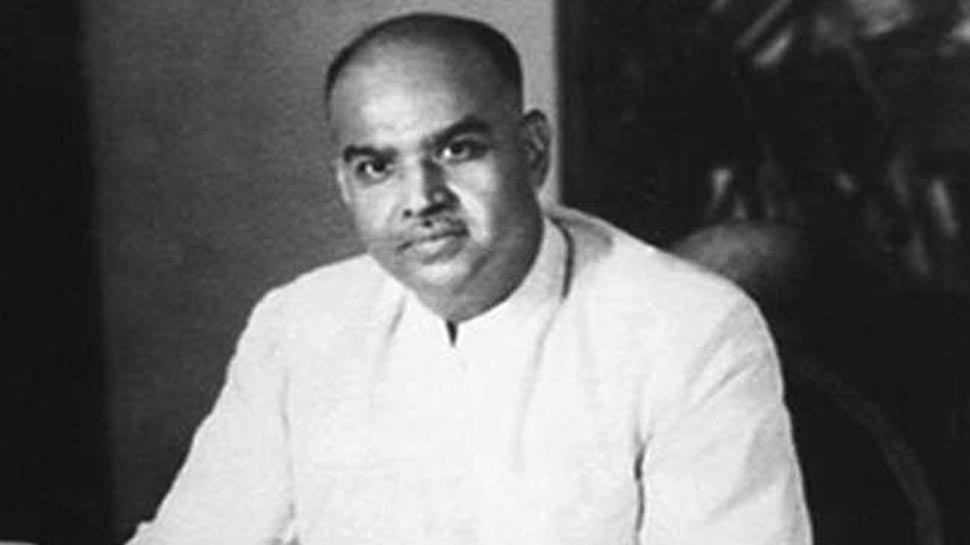
Shyama Prasad Mukherjee’s Role: Official Myths on J&K Busted

Dear Prime Minister, nothing about Jammu & Kashmir is as your party sees it

Syama Prasad

Economist and activist Jean Dreze, who has co-authored books with Nobel laureates, such as Amartya Sen and Angus Deaton, was in the headlines for a placard he carried to a protest rally in Delhi earlier this week. His placard challenged the government’s most critical justification for its controversial move to scrap Article 35A and read down Article 370 in Jammu and Kashmir (J&K). The placard displayed statistics that compare J&K with Gujarat, which is Prime Minister Narendra Modi and Home Minister Amit Shah’s home state. Dreze clearly showed how Gujarat lags behind J&K on a raft of development indices.

Although Dreze’s data beautifully punctures the government’s claim that J&K’s special status was a hindrance to its progress, Modi in his address to the nation on Wednesday night repeated the same argument, based on dubious claims. For instance, his claim that J&K lags behind other Indian states in matters of health services, education and so on, is patently incorrect.

Figures recorded in the National Family Health Survey (NFHS) has extended the debate further and shown that J&K already excels many other Indian states on several human development counts. Once again, this underlines that all talk about how “development” will reach J&K after Article 370 is made redundant is sheer humbug.

The propagation of false information brings home the fact that the government has gone very far to generate legitimacy for its decisions in J&K. In his address to the nation, Modi also said that his government had “fulfilled the dreams of [BR] Ambedkar as well as [the then Home Minister Vallabhbahi] Patel”.

( Read the full article here : https://www.newsclick.in/index.php/shyama-prasad-mukherjees-role-official-myths-jk-busted)

Towards a ‘Suitable’ Ambedkar

Is tweaking of Babasaheb’s iconic slogan — Educate, Organise, Agitate — by the Gujarat government part of a pan-India phenomenon in the saffron camp?

Towards a ‘Suitable’ Ambedkar

Does anyone still remember the ‘re-editing’ of Collected Works of Mahatma Gandhi during National Democratic Alliance (NDA)-I period when demands were raised that it should to be scrapped and the original collected works should to be reinstated so that readers/scholars are made available the ‘most authentic version of writings and utterances of Gandhi’. Noted Gandhians had underlined then how the revised Collected Works and adjoining CDs (compact discs) issued during 2001 had ‘five hundred entries missing’ from the original one.

Thanks to the exit of the Bharatiya Janata Party-led NDA government in 2004, the original Collected Works could be restored and even published online so that henceforth no government — deliberately or inadvertently — is able to make any changes in the works.

Well, while the project to ‘re-edit’ Gandhi was undertaken in a big way, which could be exposed in time, what one observes that surreptitiously or not so surreptitiously, the project to edit other icons of the anti-colonial or social emancipation movement is on in very many ways. It has been quite a long time since both Gandhi as well as Ambedkar — who were once anathema to the Hindutva project — have been included as ‘Pratahsmaraniya‘ (worth remembering in the morning) in the RSS shakhas. The emphasis seems to be on to present a more sanitised image of them which is more acceptable to the ruling dispensation.

A recent example of this has come from Gujarat.

(Read the full article here : https://www.newsclick.in/index.php/Towards-Suitable-Ambedkar)

Return of Hindutva: A Challenge for Secularism

Guest Post by Gargi Chakravartty

BOOK REVIEW

Hindutva’s Second Coming by Subhash Gatade; published by Media House, Delhi; 2019; pages: 272; Rs 395 (US $ 18).

The return of Modi to power with a huge margin in this 2019 election is a clear verdict for the Hindutva plank. Why and how it happened leave us, the secular billions, to ponder about the reality and its aftermath. And at that juncture Subhas Gatade’s 272-page analysis titled ‘Hindutva’s Second Coming’ gives us something concrete to think over once again. This in-depth study with rich academic perception is a commendable work, bereft of jargons and convoluted expressions, often found in books written from a high pedestal which goes beyond the mental reach of lay readers. Precisely for this reason the author needs to be specially acclaimed for bringing out facts at one place based on notes and references which are so far scattered in divergent historical materials. It serves as a Reader for millions who are combating communalism and distortion of history at the grassroot level.

( Read the full text here : http://www.mainstreamweekly.net/article8847.html)

Cyclone Fani: Prejudice in Times of Natural Disasters

Caste discrimination, even while faced with a calamity, is a clear outcome of the brahminical ideology of purity and pollution that has permeated deep into Indian society.

Cyclone Fani: Prejudice in Times of Natural Disasters

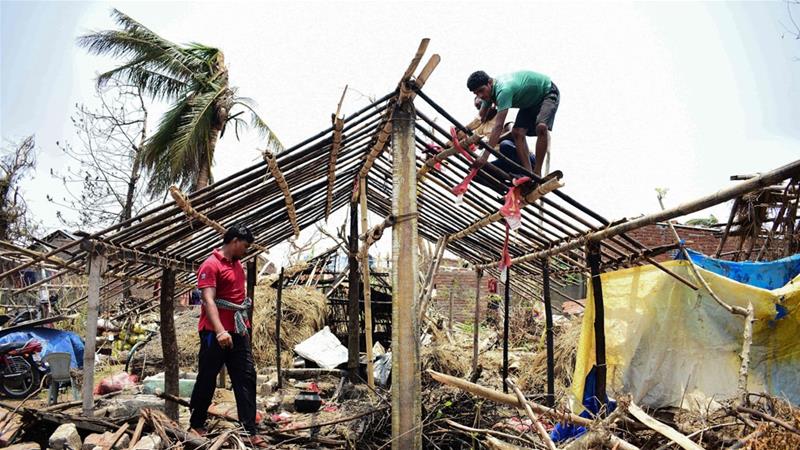
Image Courtesy: Al Jazeera

“[U]ntouchability, is a kind of disease of the Hindus…it is a mental twist…. I do not know how my friend is going to untwist the twist which the Hindus have got for thousands of years unless they are all sent to some kind of hospital.’ Dr B.R.Ambedkar , 1954

Cyclone Fani is over.

Despite being one of the strongest cyclones to hit India in last two decades the manner in which the state most affected by it — Odisha — was successful in keeping loss of life and numbers of affected people to a minimum has earned it kudos even from its critics.

People are slowly trying to pick up threads to restart their lives

It is rather difficult to say whether it will be easy for dalit villagers of Baripada village — part of Patali panchayat — to do so, who had to endure callous and inhuman behaviour from their own village brethren, during the stormy winds. Around 85 of them from 25 families were denied entry to three shelters located within a radius of approximately four km by ‘upper caste’ people. Nandini (name changed) belonging to the Dom caste narrated how they had to ultimately take shelter beside an uprooted banyan tree, while it was raining heavily.

( Read the full text here : https://www.newsclick.in/cyclone-fani-prejudice-times-natural-disasters)

Celebrating Dalit Achievements: C. K. Raju

Guest post by C.K. RAJU

It was B. R. Ambedkar who first publicised the 22 Mahar names inscribed on the pillar commemorating the battle of Bhima-Koregaon.  Ambedkar, a Mahar himself, had experienced great indignities, and everyone appreciates his quest for a symbol of dalit achievement. Much has been written since on Bhima-Koregaon, but one question has not been asked:  is there really such a paucity of symbols of dalit achievement?

Not actually. There is no dearth of dalit and ‘lower caste’ achievers. Sages from such backgrounds range from Valmiki, author of the Ramayana, to Tukaram, Kabir, and Sri Narayana Guru. Dalit warriors and kings range from the Nanda dynasty, mere reports of whose mighty army so frightened Alexander’s troops (according to Plutarch), to the Chalukyas (who were dalits according to Bilhan), the Bhils, the Gonds, and to Udham Singh who avenged Jallianwallah Bagh.

Continue reading Celebrating Dalit Achievements: C. K. Raju

Statement on Atrocities on Dalits : New Socialist Initiative

Guest Post by New Socialist Initiative

New Socialist Initiative Condemns Hindutva Engineered and Inspired Atrocities on Dalits

Hardly a day passes without headline news of some or another atrocity on Dalits. On 24 May, a Dalit man in the Ahmedabad district was beaten and his house attacked by a gang of socalled ‘upper’ caste men after he had attached Sinh to his name on his facebook post.  On 21 May a dalit ragpicker was beaten to death in a Rajkot factory. Atrocities on Dalits are occurring in the midst of a public ideological environment against them. On 26 May news came of a private school in Delhi asking 8th class students to write a note on how reservations help undeserving and unqualified people for their summer vacation homework.  According to National Crime Record Bureau reports for recent years, between 10 to 15 thousand cases of crimes are reported under the Prevention of Atrocities act every year; an average of 35 crimes per day. Many times more crimes actually go unreported. In 2016 Indian courts had over 45 thousand cases under this act. Out of the 4048 cases decided, conviction occurred in 659 cases only. That is, five out of six cases of atrocity against Dalits did not result in any punishment. The number of attacks against one of the weakest and the poorest sections of the society, and the abysmal rate of conviction would put any civilized society to shame, but India chugs along. Continue reading Statement on Atrocities on Dalits : New Socialist Initiative

Nehru, Ambedkar and Challenge of Majoritarianism

Image result for nehru ambedkar

( Photo courtesy : The hoot)

(To be published in the special issue of ‘Janata’)


The spectacle of what is called religion, or at any rate organised religion, in India and elsewhere, has filled me with horror and I have frequently condemned it and wished to make a clean sweep of it. Almost always it seemed to stand for blind belief and reaction, dogma and bigotry, superstition, exploitation and the preservation of vested interests.

– Toward Freedom: The Autobiography of Jawaharlal Nehru (1936), pp. 240–241.

If Hindu Raj does become a fact, it will no doubt, be the greatest calamity for this country. No matter what the Hindus say, Hinduism is a menace to liberty, equality and fraternity. On that account it is incompatible with democracy. Hindu Raj must be prevented at any cost.

– Ambedkar, ‘Pakistan or Partition of India’, p. 358.

Introduction

India’s slow ushering into a majoritarian democracy is a matter of concern for every such individual who still believes in pluralism, democracy, equality and a clear separation of religion and politics. The way people are being hounded for raising dissenting opinions, for eating food of their choice or entering into relationships of their own liking or celebrating festivals according to their own faith is unprecedented. The situation has reached such extremes that one can even be publicly lynched for belonging to one of the minority religions or for engaging in an activity which is considered to be ‘suspicious’ by the majority community.

No doubt there is no direct harm to the basic structure of the Constitution, its formal structure remains intact, de jure India does remain a democracy as well as a republic, but de facto democracy has slowly metamorphosed into majoritarianism and the sine qua non of a republic—that its citizens are supreme—is being watered down fast. It does not need underlining that this process has received tremendous boost with the ascent of Hindutva supremacist forces at the centrestage of Indian politics. Continue reading Nehru, Ambedkar and Challenge of Majoritarianism

Talk Bhima or Bhim, Walk Manu

bhima bhoi के लिए चित्र परिणाम

( Photo Courtesy : http://www.bhubaneswarbuzz.com)

Bhima Bhoi, saint, poet and social reformer, who lived in later part of the 19 th century and who wielded his pen against the prevailing social injustice, religious bigotry and caste discrimination, would not have imagined in his wildest dreams that in the second decade of the 21 st century there would arrive such new claimants to his legacy who stood against everything for which he stood for. A populariser of Mahima movement or Mahima Dharma which ‘draws elements from Islam, Buddhism, Jainism, Vaishnavism and Tantra Yoga,’ the movement Bhima  led was a ‘deeply felt protest against caste system and feudal practices of western and central Orissa.’ and goal of his mission was “Jagata Uddhara” ( liberation of entire world). ((http://roundtableindia.co.in/lit-blogs/?tag=bhima-bhoi))  Continue reading Talk Bhima or Bhim, Walk Manu

For A New Rendezvous With Dr Ambedkar – Focus on Last Decade of his Life

Image result for education of dr babasaheb ambedkar

..Everybody would agree that it is a challenging task to encapsulate a great wo/man’s vision in a few words- who as a public figure has impacted not only her/his generation but future generations, initiated or channelised debates in the society, led struggles, mobilised people, wrote thousands of pages and left a legacy for all of us to carry forward. …

To save time one can focus more on the last decade of his life – the most tumultuous period in his as well as the newly independent nation’s life – to know the important concerns which bothered his mind and how he envisioned the future trajectory of the movement he led and how he tried to chart a roadmap for the nascent nation with due support/cooperation and at times resistance from leading stalwarts of his time… Continue reading For A New Rendezvous With Dr Ambedkar – Focus on Last Decade of his Life