Tag Archives: India

How not to handle online hate speech in India

The first amendment to the Indian Constitution, passed in 1951, allows the government to impose “reasonable restrictions” on a citizen’s right to freedom of speech and expression, in order to protect “the interests of the sovereignty and integrity of India, the security of the State, friendly relations with foreign States, public order, decency or morality or in relation to contempt of court, defamation or incitement to an offence”.

The means to impose these “reasonable restrictions” are described in several sections of the Indian Penal Code (IPC) and the Code of Criminal Procedure (CrPc). Section 298 of the IPC makes punishable words uttered “with the deliberate intent of wounding religious feelings”; section 504 addresses “intentional insult with intent to provoke breach of peace”; section 153 makes punishable speech acts that lead or could have led to rioting; section 295A could land you in jail for three years over “deliberate and malicious acts, intended to outrage religious feelings”; section 153B permits the punishment of speech acts that question any social, religious or linguistic group’s allegiance to the Constitution of India or that such a group be denied Constitutional rights. Read more…
Ten Reasons Why You Should Sign the Petition at RepealSeditionLaw.in

  1. Section 124(A) of IPC criminalizes the ‘disaffection’ towards the government by words, either spoken or written, or by signs or by visible representations
  2. This 1860 draconian colonial law was created to stifle dissent during colonial rule.
  3. Tilak, Gandhi, Maulana Azad and Annie Besant were convicted under this law
  4. Today, the law is used to suppress legitimate criticisms of the government
  5. Journalists, Human rights activists, political dissenters, public intellectuals, and even farmers and tribals are targetted by this law
  6. The law goes against the inalienable fundamental right to expression enshrined in our Constitution
  7. The law goes against the very nature of democratic process which relies on active consent and dissent/opposition
  8. The law goes against the Universal Declaration of Human Rights, which guarantees freedom of speech and expression
  9. All major world democracies have either repealed this law or discontinued prosecutions
  10. The existence of sedition laws in India’s statute books and the resulting criminalization of ‘disaffection’ towards the state is unacceptable in a democratic society.

To sign the petition, go to RepealSeditionLaw.in

See also:

When the pseudo-sentiments of the pseudo-religious are pseudo-hurt

In neighbouring Pakistan, an Islamic cleric recently accused a young Christian girl, Rimsha Masih, of blasphemy, a charge punishable by life imprisonment. He said she had burnt some pages that contained verses from the Quran. The 14 year old girl hails from a poor family and suffers from Down’s Syndrome. An eyewitness to the event showed courage and told a magistrate the truth: it was the Muslim cleric who had put those burnt pages in Rimsha’s bag. The cleric has been arrested and is set, in turn, to be charged with blasphemy.

I have been thinking about the incident. Insulting somebody’s religion is bad. It may cause offence. Often it is intended to cause offence. If somebody insults Islam, by doing things like burning pages containing verses from the Quran, it is bound to outrage a Muslim. Continue reading When the pseudo-sentiments of the pseudo-religious are pseudo-hurt

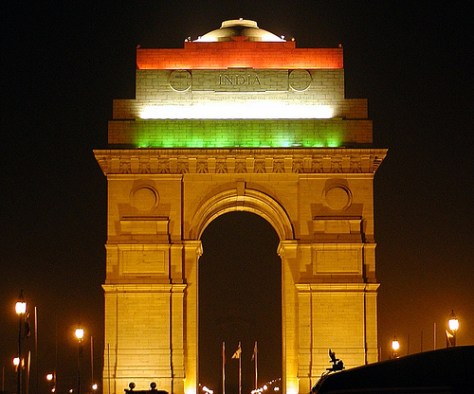
India Gate vs. India

August 15 marked the 65 anniversary of India’s Independence from foreign rule and colonialism. September 21 will mark the 155 anniversary of the recapture of Delhi by the British and the end of the first valiant rebellion against foreign rule.

Between May 11, 1857 and May 21, 1857, Delhi was free of the British. The rebel soldiers had chosen Bahadur Shah Zafar as their leader and since the Red Fort was where he lived, the Lal Qila came to be seen as the centre of the First War of Independence. Delhi was seen as the heart of India and Lal Qila was the heart of Delhi and that is why once the British recaptured Delhi they wasted no time in arresting Bahadur Shah Zafar and quickly moving into the fort. Continue reading India Gate vs. India

Trials, errors and the art of compromise

This morning The Hindu carries a long piece I wrote on one of Jaipur’s more sensational trials. The idea of “samjhauta” or “compromise” has informed a lot of my work over years, and this instance is particularly heart breaking. Court documents and chargesheets are always interesting things to read; in this instance, it was intriguing how the police accorded one woman – Pushpa – infinite agency when she creates a cycle of repression and exploitation; while the other – Shweta – has zero agency and is thoroughly incapable of independent action.

One dawn in January last year, a young woman slipped out of her house, walked down to the Gandhi Nagar station and stepped into the path of an oncoming train.

She survived, but lost her left leg and all sensation below her waist. Last Wednesday, the woman, Pushpa*, was brought before the Special Judge for Women Atrocities and Dowry Cases to identify the three policemen who, she alleged, had sexually tortured her to the point of suicide. Also in court was Shweta*, a 20-year-old known to Pushpa, who claimed that Pushpa and her cohorts had drugged, raped and blackmailed her in December 2010.

The two women had been friends, meeting occasionally in Pushpa’s room to gossip, experiment with cigarettes and alcohol and on one occasion photographed themselves kissing. In many ways, their twin trials document the contradictory impulses of the small Indian town grown big, where tech-savvy youth shun the contractual new economy for the security of the bureaucracy, the government school, and the government bank, and the sheher’s liberatory promise is tempered by the lingering claustrophobia of the samaj.

Read on

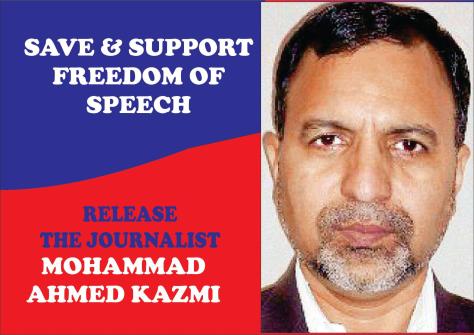
On the arrest of Mohammad Ahmad Kazmi

On 7 March, Delhi Police arrested Delhi-based journalist Mohammad Ahmad Kazmi on charges of being part of the plot to kill an Israeli diplomat’s wife in Delhi on 13 February. Many have expressed concern that Kazmi is being falsely implicated. Give below is the text of a letter to the Delhi Police Commissioner by the DELHI UNION OF JOURNALISTS, followed by a statement from the INTERNATIONAL FEDERATION OF JOURNALISTS, and thereafter by a statement issued by a group of citizens.

    9 March 2012 

The Commissioner of Police,
Delhi Police,
New Delhi

Sir: Continue reading On the arrest of Mohammad Ahmad Kazmi

Mass media and the Indian national project: Raza Rumi

Guest post by RAZA RUMI

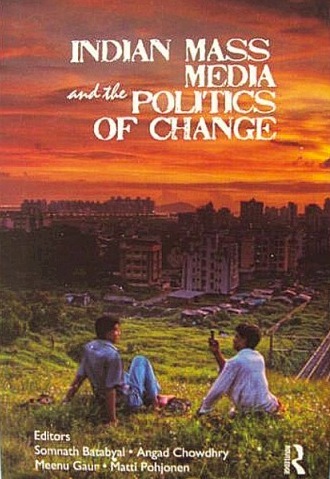
Indian Mass Media and the Politics of Change; Edited by Somnath Batabyal, Angad Chowdhry, Meenu Gaur and Matti Pohjoen; Routledge, UK; 230pp. £65

It has taken me some time to finish reading the assemblage book entitled Indian Mass Media and the Politics of Change. An overly long reading list has been haunting me for the past few months, but I was slow and self-indulgent as I read and re-read many sections of this insightful book which is path breaking in many ways. First, it is a unique collection which emanated from intense thinking and collaborative action; and second, given the fairly recent rise of Indian mass media (also applicable to South Asia in general) this is quite a seminal work of its kind. Continue reading Mass media and the Indian national project: Raza Rumi

Happy 100 Years of the Delhi Durbar

The Delhi media celebrated on 11 December the above event, which took place on 11 December 1911. The Delhi media will celebrate anything that is worth celebrating, and everything that is not worth celebrating. Someone just has to set the alarm bells and hours of programming, reams of newsprint will be dedicated to an orgy of unthinking celebration. The only thing other than Celebration that sells is Outrage.

Sohail Hashmi has written on Kafila about why 11 December could not be the centennial of “New Delhi” but only the Delhi Durbar. That was only one problem with the Celebrations; here are some more.

Five Years of Kafila

It was this day five years ago that Kafila published its first post.

The number of people who have joined this caravan in five years has been way more than we expected. Our less than 1,500 posts have been read nearly 1.8 million times, and have received more than 13 thousand comments.

Talking about numbers…

Thank you!

What the Indian media will not tell you about Kingfisher Red

So Kingfisher has decided to ground its low-cost airline, Kingfisher Red. Here’s what the Indian media will not tell you. Continue reading What the Indian media will not tell you about Kingfisher Red

Letter from Ladakh

13th August 2011

Dear Chintan,

Some days ago, I was at Pangong Tso. Pangong is a lake, a large saltwater lake. I heard some days ago that the lake is not very deep. The waters were blue, green and clear at different spots, reminding me of my first visit to Robben Islands in Cape Town in 1999 where I was awed at the different colours that the sea assumed in the course of its course. There is no fish in Pangong lake, as I was also told some days later. We only saw a mother duck swimming with her babies and a few insect-like fish. Also, there is no boating permitted on the lake. This is because Pangong Tso is a border area where India border with China and for security reasons, no activity is permitted on the lake.  Continue reading Letter from Ladakh

I dont love India but I love cricket: Sudipto Mondal

Guest post by SUDIPTO MONDAL

They don’t love the deftness of a late cut
or the terror of a snorter;
the authority of a cover drive
or the seduction of a flighted one.

They don’t love the smell of spit on leather.
They don’t love one eased through long leg
unless its Deepika Padukone we’re talking about.

They don’t love cricket but they say they love India.

They don’t love Inzamam’s hulking sixes.
They don’t love Hayden’s muscular heaves
or Ponting’s nervous shuffle.

They don’t love Lara because he was
as good as Sachin.
And Kambli was after all just an urchin

They don’t love cricket but they say they love India.

They don’t love the man who cleans their shit.
They don’t love the colleague that eats meat.
They don’t love the ‘backdoor entrant’ who shares their seat.

They don’t love the hungry protestors
who block their path at the height of summer’s heat.
They don’t love the vendor on the street.

They don’t love cricket but they say they love India.

They don’t love the lesbians, gays, bisexuals and transgenders either.
They don’t love the man who puts food on their plate
because he asks for food in turn.

They don’t love them jungle boys
because they wouldn’t give them their hill.

They don’t love the dark ones.
They don’t love the short ones.

They don’t love a nose that lacks precision.
They don’t love circumcision.

They don’t love cricket but they say they love India.

National Alliance of People’s Movements: Resolution on LGBTQ issues

We oppose persecution and discrimination on the basis of sexuality and gender orientation in all formsand strive towards full social and political equality of all individuals who identify as Lesbian, Gay, Bisexual,Transgendered, Intersex and Queer (LGBTQ).

While welcoming the July 2nd 2009 judgment of the Delhi high court to decriminalize homosexuality NAPM recognizes that the LGBTQ community continues to be discriminated against in schools, colleges, workspaces,homes, the streets and before the law. We affirm that sexual orientation and gender identity are innate andcannot be consciously changed and we oppose attempts to convert LGBTQ individuals into heterosexuals orforce them to conform to dominant notions of masculinity or femininity on the grounds of morality, religion ornature. Continue reading National Alliance of People’s Movements: Resolution on LGBTQ issues

The absurd theatre of Sri Lanka, applauded by India

Every time I go to Sri Lanka, my historical sensibility gets heightened. I still remember this huge hoarding of Mahinda Rajapaksa ‘lovingly’ holding an old woman, obviously Tamil as she was wearing a pottu. That woman could be one of the 2.5 lakh people who have lost their homes, belonging and land in the war. She could be part of the other lakhs who have lost all of this in the more than twenty-five years of war.

The day before yesterday, 26th January, was the first ‘free’ election ‘after the war’. During the months before the election, 700 incidents of violence were reported, leading to the death and injury of many. Yesterday, as the results rolled out, chaos hit the streets of Colombo. We don’t even have enough information about what happened in the rest of the country yesterday. Rumours were floating about. I shall not dwell on the rumours and provide them legitimacy, although I am tempted to, as some of them are shocking and could be true. Ethics come in the way. Continue reading The absurd theatre of Sri Lanka, applauded by India

The resignation aftermath

This entire crisis complicates politics for the simple reason that no side feels that it has lost. Don’t mistake this for a win-win situation. It is a situation where all sides are smug, their ambitions are stoked, and they are even more unwilling to make any concessions.

This has actually been a problem right since the 12 point deal. The king got dumped. But besides that, no actor has had to relent on their fundamental interests and give concessions.

The army, after a temporary cooling-off period, was rehabilitated and its privileges were protected. For GP Koirala, April 2006 was a moment to take over the state apparatus and keep the seat warm for his daughter, while protecting the interests of the NC class base. The Maoists saw the entire process, and the polls, as a tactical victory on way to state control.

In the last fortnight, this tenuous situation has only got more retrenched. The NA’s political role and links and divisions within may have got totally exposed. But the top brass feels they have won a huge victory and will be even less amenable to civilian control. The Maoists may not have succeeded in throwing out Katawal, but they feel they have won a moral victory by resigning and are complacent that the political stalemate cannot be resolved without them. UML and MJF think this is their chance to lead the government. And NC is already thrilled at the money that will come with the ministries. Continue reading The resignation aftermath

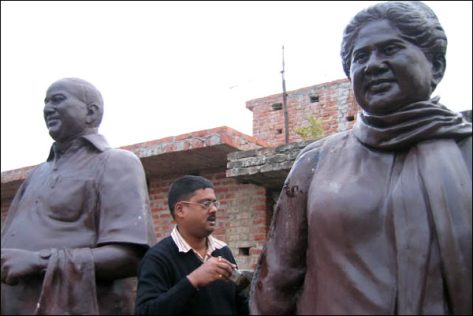
Mayawati’s India

1
(Largely ignored by the media, the BSP recently released a tract that says what the BSP’s India would be like should Mayawati become prime minister. Considering that there is such wide interest and curiosity about the BSP and its politics these days, I am posting the full text of this “appeal”. Disclaimer: I am posting this here for information, debate and discussion and the act of posting this here should not be construed as my endorsement or otherwise of this manifesto-but-not-manifesto. – Shivam Vij)

Jai Bhim !                                                                               Jai Bharat !!

Bahujan Samaj Party

” APPEAL”

For

Lok Sabha General Elections -2009


Brothers and Sisters,  Continue reading Mayawati’s India

Israel(i Man) seduces India(n Woman)

Here’s how a state-owned Israeli defence firm tries to get business from India’s Defence Ministry:

The Danger Room blog said the text implied that the “Indian military is somehow like a helpless woman who needs to feel safe and sheltered.”

Rafael dismissed the criticism of its film and said that it made movies with a local theme for every international defense expo. A movie, one company source said, made for a defense expo in Brazil focused on soccer and weapons. Another movie, for a US audience, focused on football.

“We try to make the movies about the place where the defense expo is located,” the company source said, adding that in previous years Rafael had won prizes for its pavilions and marketing techniques. [The Jerusalem Post]

When it’s not defamation

In the context of the ongoing discussion on defamation and the Indian internet space, it may be useful to point out that an act of criticism has ten defences before it can be called defamation and the speaker/writer be sentenced to simple imprisonment for two years. Continue reading When it’s not defamation

Truly important questions

On another first day, with its inevitable attempts to divide things into new and old at the end of all the “rapid change” that the world apparently is going through at every second of every news channel’s life, a [to me, lovely] reminder that times have not changed all that much:

Google reports that urban Indians top “how to” search in 2008 was “how to lose weight.” But, at number two, shyly sneaking in was: “how to kiss.”

now there is something worth learning in 2009.

Looking Kabul, talking Rawalpindi?

Strategically speaking, that is. It is important to think this question through.

For one, there’s hardly anybody disputing that the Lashkar-e-Tayebba was behind the attack. Pakistan wants evidence, but doesn’t deny the LeT could be it. 

Parvez Hoodbhoy says in an interview:

LeT, one of the largest militant groups in Pakistan, was established over 15 years ago. It was supported by the Pakistani military and the ISI because it focussed upon fighting Indian rule in Muslim Kashmir. Today it is one of the very few extremist groups left that do not attack the military and the ISI; Continue reading Looking Kabul, talking Rawalpindi?

The monster in the mirror

Arundhati Roy wants you to choose:

There is a fierce, unforgiving fault-line that runs through the contemporary discourse on terrorism. On one side (let’s call it Side A) are those who see terrorism, especially “Islamist” terrorism, as a hateful, insane scourge that spins on its own axis, in its own orbit and has nothing to do with the world around it, nothing to do with history, geography or economics. Therefore, Side A says, to try and place it in a political context, or even try to understand it, amounts to justifying it and is a crime in itself.

Side B believes that though nothing can ever excuse or justify terrorism, it exists in a particular time, place and political context, and to refuse to see that will only aggravate the problem and put more and more people in harm’s way. Which is a crime in itself. [The Guardian, Saturday, 13 December 2008]