Tag Archives: Narendra Modi

Local Leader, National Ambitions: The Curious Case of Mr Narendra Modi

Mr Prithviraj Chavan, the present incumbent to the chief minister’s seat in Maharashtra, recently received praise from an unlikely quarter. Shiv Sena president Uddhav Thakreay in the party mouthpiece “Saamana” heaped praise on Chavan for ‘adopting a broad minded approach ..for his role in the ongoing rescue operations in disaster hit Uttarakhand.’ According to him while dispatching the relief material and a large team of officials, Mr Chavan instructed them that although ‘it is meant for people from the state stranded there, other victims should not be ignored.’

It has been reported that Maharashtra has placed two helicopters at the disposal of the Uttarakhand government and extended aid of Rs. 10 crore, and it was among the first states in the country to react quickly to the disaster. It is true that many other states have also rushed forces and material to assist people who are stranded at various places and such an hour of national calamity is normally not considered a moment of exhibiting political one-upmanship. Continue reading Local Leader, National Ambitions: The Curious Case of Mr Narendra Modi

मोदी: तिलिस्म और हक़ीकत

– सुभाष गाताडे

जुल्म

तशद्दुद

झूठ

बग़ावत

आगजनी

खूं

कर्फ्यू

फायर ….

हमने इन्हें बिरसे में दिए हैं

ये बच्चे

क्या देंगे हमको ???

(कविता: बच्चे – मुसाफि़र पालनपुरी,

‘कुछ तो कहो यारों!’ सम्पादन: आयशा खान)

1

नूरा कुश्ती की समाप्ति के बाद


सियासत में आपसी सत्ता-संघर्ष अक्सर व्यक्तियों के इर्दगिर्द सिमटते दिखते हैं। Continue reading मोदी: तिलिस्म और हक़ीकत

Public Appeal by R.B. Sreekumar , Former DGP, Gujarat

Image


1. For enfeebling the validity and credibility of evidence presented by me to Judicial & Investigating bodies and to denigrate my image, the publicity managers of the Chief Minister of Gujarat State, Shri Narendra Modi and the Sangh Parivar, are widely propagating many lies about the motive and time frame of submission of evidence by me against authors of 2002 anti-minority bloodbath. A totally blatant falsehood spread about me is that I had brought out incriminating material against those responsible for 2002 carnage and subsequent subversion of the Criminal Justice System (CJS) ONLY after my super-cession in promotion to the rank of Director General of Police (DGP) in February, 2005. This contention is utterly baseless, false, malicious and misleading.

2. The real truth in this matter is given below:-
http://dilipsimeon.blogspot.in/2013/06/public-appeal-by-rb-sreekumar-former.html

‘Who Killed my daughter Ishrat Jehan ?’ – Statement by Shamima Kauser mother of deceased Ishrat Jehan

Image

18th June, 2013

My daughter Ishrat Jehan was abducted, illegally confined and killed in cold blood by officers and men of the Gujarat police, in June 2004. She was killed as part of a larger conspiracy which had a political agenda. Ishrat’s murder was projected as an ‘encounter’ and justified by branding her a terrorist who had come with 3 other men to attack the Gujarat Chief Minister Narendra Modi. This was not the first fake encounter in Gujarat, other Muslims too had been executed in similar staged encounters, committed in the name of protecting the Chief Minster of Gujarat. Some of these other fake encounters, which are nothing but pre meditated extra judicial killings, are already under investigation and prosecution. Continue reading ‘Who Killed my daughter Ishrat Jehan ?’ – Statement by Shamima Kauser mother of deceased Ishrat Jehan

Madhu Mausi, Namo Mamu and the Ghost of Uncle Pepper

I’ve been thinking a lot about magic lately. The kind of magic that gets pulled at fairgrounds and birthday parties, or on stage, where the impossible is made to appear possible, where material objects dematerialize and specters appear, tantalizing us into suspending our disbelief. Some magicians, including those I would like to think of as friends, do what they can with consummate skill, so that we attain a state of wonder while they effect transformations using ordinary things for extraordinary purposes. They make us inhabit parallel universes on a table top. There is a kind of poetry and grace in that kind of magic. That is the kind of magic that makes men out of god-men, and re-affirms even a non-patriot’s faith in the ‘waters of India’.

There is another kind of magic, a bag of tricks that relies on the cheapening of our impulses, on our addictions to false premises, on our giving in to our basest instincts. And because sometimes old cliches are useful, we could call this kind black magic. The greatest practitioner of this art, at this moment, seems to me to  be none other than the man who is setting himself up as the caudillo of the future, the chief minister of Gujarat, our prime-minister in waiting, Narendrabhai Damodardas Modi. We,a stunned would be electorate, are the rabbit he is aiming to pull out of his hat.
Continue reading Madhu Mausi, Namo Mamu and the Ghost of Uncle Pepper

Three questions for Madhu Kishwar: Dilip D’Souza

Guest post by DILIP D’SOUZA

Dear Madhu,

20+ years ago, I picked you up at the airport in Austin and you stayed at my home there for a few days. You had come there to deliver a lecture, as I’m sure you remember. We developed a friendship based on a degree of mutual respect and liking. I think you’ll agree? Several years after that I remember a stimulating afternoon sitting with you in Panchgani, catching up on many things and discussing various issues threadbare.

We haven’t met in some years now, but I’m going to call on the privilege of our 20+ years of friendship as I write these lines.

I have no problem at all with your desire to learn about Gujarat and Narendra Modi for yourself. Nor with your desire to see beyond what you’ve called the “targeting” of Modi. Nor with your speaking in support of Modi: if there are people who criticize Modi, I understand and accept that there are those who support him — it’s a democracy we live in after all. Nor with your speaking your mind: you have always done so and it’s the least I expect from you. (In turn, it’s the least you should expect from me). Continue reading Three questions for Madhu Kishwar: Dilip D’Souza

Gujarat and the Illusion of Development: Shipra Nigam

This Guest post by SHIPRA NIGAM is a review of a volume of essays edited by Atul Sood Poverty Amidst Prosperity: Essays on the Trajectory of Development in Gujarat (Aakar Books 2013).

gujarat-farmers_507544e

Thousands of farmers protested in March this year in Ahmedabad against the state’s industrialization policies

This volume of essays is the outcome of a detailed study by a team of contributing research scholars led by Atul Sood. This timely evaluation provides an insight into many crucial questions: What are the constituent elements of Gujarat’s growth story? To what extent can the successful features of Gujarat’s growth story be attributed to the political regime fashioned by Narendra Modi? Is it possible to replicate even this limited success story at the national level – as Modi’s starry eyed upper and middle class following would like to believe? More significantly: what are the implications of Gujarat’s Development Model in terms of its sustainability and its desirability? What happens when we assess this development through a set of comprehensive   measures, judge its implication for the average citizen’s material wellbeing, and see what it means for the political and economic rights of citizens?  Continue reading Gujarat and the Illusion of Development: Shipra Nigam

Same Difference? The Politics of Development in Rajapakse’s Sri Lanka and Modi’s Gujarat: Anonymous

This is a  guest post by ANONYMOUS

President Mahinda Rajapakse in Sri Lanka and Gujarat’s Chief Minister Narendra Modi in India have positioned themselves as champions of development and good governance. Hardly a day passes without a media comment in the two countries on their respective development achievements. By and large, claims and counter-claims regarding development in Gujarat and Sri Lanka have tended to focus on mobilising data and ‘facts’ pertaining to a range of vital indicators—economic growth, levels of foreign investment, per capita income, employment, industrial or agricultural output, housing, rural infrastructure, roads, electrification, social welfare allocations, etc.

While working with development data is useful and necessary, an approach that relies too heavily on them tells us little about why development matters to the two regimes and how and to what ends it is actually deployed and leveraged by them at this point in time—the focus of this commentary. The question is not just what Modi and Rajapakse are doing for development but also what development is doing for them. Notwithstanding the significant differences between Gujarat and Sri Lanka, as argued herein, there are many striking similarities with respect to how and why Modi and Rajapakse are constructing, invoking and championing the cause of development. Continue reading Same Difference? The Politics of Development in Rajapakse’s Sri Lanka and Modi’s Gujarat: Anonymous

On the social fabric in Narendra Modi’s Gujarat: Nilanjan Mukhopadhyay

This is an excerpt from the chapter, ‘The Enemy Within’ in NIIANJAN MUKHOPADHYAY’s book, Narendra Modi: The Man, The Times.

20130420-121828.jpg
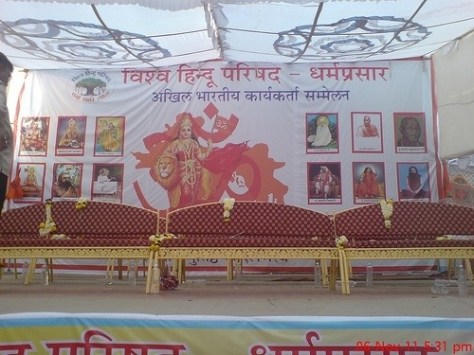
Stage set for a Vishwa Hindu Parishad function next to the Pirana shrine in Ahmedabad, 2011. Photo via twocircles.net

From the label of “Master Divider” in India Today in January 2003 to the tag of “The Great Polariser” in the Outlook in July 2012 — Narendra Modi’s image remained static: self-declared champion of one community of people. But the strain Gujarat faced in the course of his tenure has increased manifold. Wherever I travelled in Gujarat, there was a clear distinction between “us” and “them”. This difference was articulated by several Hindus every time the conversation veered in this direction. In contrast, counterparts among Muslims denied this. The disagreement with the hypothesis stemmed not from a belief and perception that they faced no discrimination but because of a “fear” that accepting such a viewpoint could be interpreted as levelling an allegation that they were being targeted — a risk no Muslim is willing to take after the post-Godhra violence.

Continue reading On the social fabric in Narendra Modi’s Gujarat: Nilanjan Mukhopadhyay

Spin Doctors, Propagandists and the Modi Make-over

Elsewhere on Kafila, we have published a 7000 word long response by Madhu Kishwar to Zahir Janmohamad’s open letter to her which appeared on 15 January, followed by Zahir Janmohamad’s response. Perhaps a few things need to be stated here clearly with respect to her ‘response’. It seems to me to violate every tenet of reasoned debate and argument and is replete with name calling and stereo-typing of not just the secularist ‘other’ [who is her real other, not the Muslim] but even of the adversary she is arguing with. So if Zahir is a  Muslim, he has to be X, Y, Z and has to be believing in A, B, C. Everything starts and ends in bad faith. But then that is what distinguishes Madhu Kishwar from others. She is in her element especially in relation to those whom she disagrees with. With her there can be no disagreement – you have to be sneered and jeered at, irrespective of whether you are a Medha Patkar or an Aruna Roy. I suppose these are matters of personal style and I shall not dwell on them further.

Let me rather, turn to some of the more substantive issues raised in Madhu’s response. Zahir has answered most of them but it seems to me that a couple of vital questions still remain. Even here, though, a caveat is necessary. I have great admiration for Madhu Kishwar’s battle in defense of the rikshaw pullers in Delhi and have often said so openly to her as well as others. However, I do know that it is possible to talk to her when only we agree, which is very rare. On matters that we disagree about, I have decided that I do not want to enter into any kind of an argument with her. In any case, large parts of her ‘response’ are like Modi’s PR handouts, served to us without any sense of critical examination. Therefore, what follows below is not my reply to her but my reactions to a set of allegations she has raised about whosoever is opposed to Narendra Modi – all lumped together in a breathtaking move of reductio ad absurdum, first as secularists , who are reduced to Leftists/ NGO activists and finally to Congress-supporters (because, she says in her Modinama1, the Congress has been equally responsible for all the riots till date). I therefore, lay my cards on the table at the outset: I am an inveterate Modi-hater (and a Congress-hater as well, if that makes sense to anyone in her dichotomized universe) and Kafila is a forum with a certain, if very broad, politics that, at the minimum rules out being pro-Modi. Continue reading Spin Doctors, Propagandists and the Modi Make-over

The urban-rural divide in Modi’s Gujarat

Christophe Jaffrelot gives us perspective on why Gujarat’s development numbers don’t look as impressive as Gujarat’s economic growth – it’s about Modi’s neglect of the rural:

Modi’s policy, over the last 10 years, has benefited the urban middle class more than anybody else. If Gujarat ranks only 11th out of 23 states in terms of the human development index, it’s because groups in rural Gujarat continue to lag behind. Indeed, Gujarat is a case of social polarisation with the new rich in the cities and most of the groups that are at the receiving end concentrated in the villages. There, the number of families below the poverty line has jumped from 23.39 lakh in 2000 to 30.49 lakh in July 2012, according to the rural development commissioner. Unsurprisingly, 9 lakh of the 11 lakh houses without electricity, according to the Gujarat 2011 census, are in rural areas. In terms of education, the excellent report of the NGO, Pratham, shows that rural Gujarat was lagging behind states like Haryana.

Dalits and Adivasis (11.3 and 16.5 per cent of the state population, respectively) are particularly affected. For instance, the percentage of tribal underweight children (0-5 years old) is much higher in Gujarat than the tribal average at the national level (64.5 per cent compared to 54.5 per cent). The under-five mortality rate of tribal children is also much higher. Similarly, the percentage of Dalit participation in the NREGA programme is three times less in Gujarat (7.83 per cent) than in India at large (22.67 per cent). In fact, development has meant socio-economic polarisation, because Gujarat is a typical case of growth without development for all. The Gujarat chapter of the India Human Development Report of 2011 concluded that “the high growth rate achieved by the state over the years has not percolated to the marginalised sections of society, particularly STs and SCs, to help improve their human development outcomes”. [Full article here]

More on Gujarat from Kafila archives: Continue reading The urban-rural divide in Modi’s Gujarat

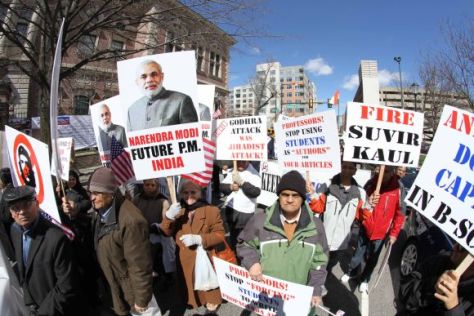
Melbourne Academics in Solidarity with UPenn Professors

Statement from Melbourne Academics in Solidarity with Ania Loomba, Suvir Kaul, Toorjo Ghosh and others at the University of Pennsylvania.

24wharton1

The statement follows the brief background to the issue below:

Ashley L Cohen in The Daily Pennsylvanian

In the pages of The Daily Pennsylvanian and elsewhere, supporters of Narendra Modi have framed the issue of Modi’s disinvitation from the Wharton India Economic Forum as one of free speech. The framing is a clever one. Narendra Modi is a rather unsavory figure, and he is difficult to defend on any other terms. Continue reading Melbourne Academics in Solidarity with UPenn Professors

The Silence of the Protector: Anonymous

This is a guest post by Anonymous

It is over two months since policemen and others allegedly molested women students of Delhi University as they protested against Narendra Modi’s presence at a college event within the University Campus. Not a word of support or concern has emerged from the Vice Chancellor. Instead, cases have been filed by the police against students and teachers who participated in the protest. The Vice Chancellor’s silence is probably among the less hypocritical responses that he could have had. At least students don’t have to hear assurances about their safety once more, and that lie has been laid to rest.

Sometime last year I happened to be present at an interaction between the local Delhi police and women hostel residents of Delhi University. The police had informed three hostels of a ‘meet the public’ programme at which we were required to be present and urge students to attend as well.  The students, who were preparing for exams at the time, attended the event somewhat reluctantly, but in the course of the evening, provided the feedback that was asked for with unexpected vigour. A woman DCP and other police representatives who had been called to address us, chose to assure us that the city was in fact safe despite a lot of media noise to the contrary, and that the reliability of the police could be counted on in all instants. This did not go down well. Various students asked what they should do when the police leered at them, exposed themselves to the women, urinated deliberately in front of them, lolled in their chairs chatting with security guards while cars slowed down threateningly in front of the hostel gates. The DCP, flummoxed by this flood of complaints, finally said that the police were after all a part of society and would reproduce its problems. This rare if honest admission should be taken seriously as a sign of how women should regard the question of their own safety.

Continue reading The Silence of the Protector: Anonymous

When an April Fool’s Day joke is not funny: Zahir Janmohamed

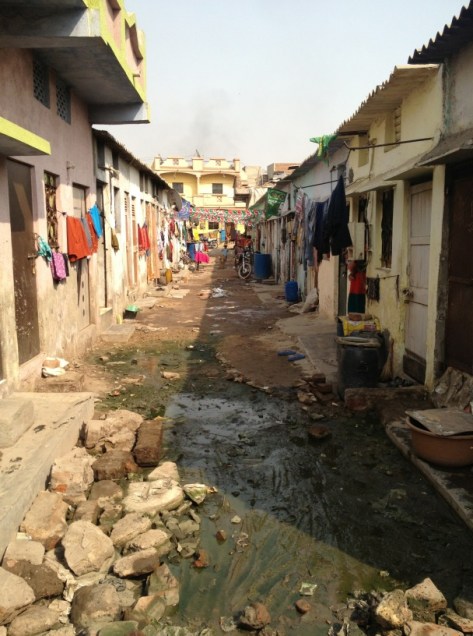
A colony of 2002 riot affected families in Ahmedabad. Photo by Zahir Janmohamed

This is a guest post by ZAHIR JANMOHAMED: This morning, April 1, Google announced its latest product: Gmail blue. It is email except for one critical difference—everything is blue.

 “I can’t believe I waited so long for this,” a hilarious Google video says.

It works because it is funny and so obviously absurd—you would have to be, well, a fool to believe this April fool’s day joke. But the Google prank is also something else: harmless. It does not hurt anyone nor it does not trigger painful memories.

When does an April fool’s day cross the line? Continue reading When an April Fool’s Day joke is not funny: Zahir Janmohamed

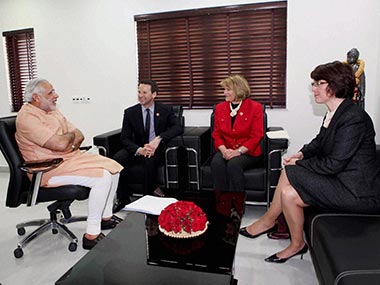
On Narendra Modi’s strange bedfellows in Washington DC: Zahir Janmohamed

Guest post by ZAHIR JANMOHAMED

PTI photo
PTI photo

The headline on Zee News at 5:09pm today read: “America opens its gates for ‘very dynamic’ Narendra Modi.”

The Business Standard in an article posted a few minutes earlier, at 4:57pm, wrote: “After UK, now US softens stand on Modi.”
Indeed three members of the US Congress, along with a few US business leaders, did meet with the Gujarat Chief Minister today in Gujarat. But should we infer any shift in US policy towards Narendra Modi?

In short, no.
Continue reading On Narendra Modi’s strange bedfellows in Washington DC: Zahir Janmohamed

Modi and me: Sharad Mathur

This is a guest post by SHARAD MATHUR

1999

In the summer of 1999, practising our family tradition, we were availing a government LTC that my father was entitled to, being a senior central government officer.  Since we could travel by air, we decided to take a trip to Darjeeling, while halting at Allahabad, Varanasi, Lucknow, and Calcutta for some sight-seeing. Those were the days when flying was an experience for most Indians; yet the emotional memory of this trip did not record much of the excitement induced by flying, but took vivid account of disappointment – with a chance conversation and of missing another.

It was on our flight from Lucknow to Calcutta, I was sitting with my younger brother while my parents were sitting together in a row behind us. I was on the window seat and was too occupied with the process of luggage sliding inside the plane, to notice two gentlemen who came and sat next to my parents and my brother respectively. My gawking was however interrupted by my father excitedly introducing me to one Devi Singh ji, who I was told happened to be Personal Assistant to Shri Bhairon Singh Shekhawat. Being a big BJP enthusiast, partly because of their mesmerizingly bright coloured flags, I looked up to this BJP heavyweight and was elated to meet his personal assistant. My excitement was doubled when Devi Singh ji introduced us to a gentleman sitting next to my brother, on the aisle seat, as Modi ji who was accompanying Bhairon Singh ji to the Bihar convention of BJP. However, this excitement remained short lived.

Continue reading Modi and me: Sharad Mathur

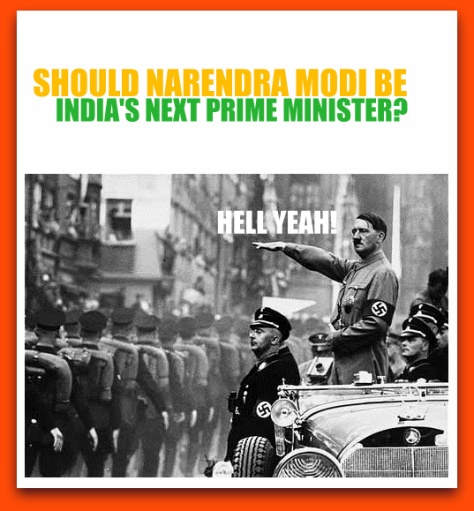
Should Narendra Modi be India’s next Prime Minister?

MODI-HITLER

Sheela Bhatt writes: Continue reading Should Narendra Modi be India’s next Prime Minister?

Modi’s Social Engineering

The system of untouchability has been a goldmine for the Hindus. This system affords 60 millions of untouchables to do the dirty work of scavenging and sweeping to the 240 million Hindus who are debarred by their religion to do such dirty work. But the work must be done for the Hindus and who else than the untouchables?

– Dr. B. R. Ambedkar

 Whether Shit Collection or cleaning of gutters – which has condemned lakhs of people to a life of indignity since ages – could be considered a ‘Spiritual Experience.’ Definitely not. Everybody would yell. Well, Mr Narendra Modi, chief minister of Gujarat, has a different take on this, which he mentions in the book ‘Karmayog’ (Publication year 2007). Continue reading Modi’s Social Engineering

The Great Right-Wing Convergence – Towards 2014: Ruchi Gupta

Guest post by RUCHI GUPTA

For those of us, whom the well organized Right on the internet describes as “sickular”, the prospect of Modi as Prime Minister is unthinkable. Congress is then a reflexive default – not a party of choice. Its secular credentials too are tarnished with 1984, but its communal capitulations are opportunistic (and thus contained) unlike the BJP with its official Hindutva party plank. Moreover with all its corruption and contradictions, the Congress has always had a strong left-liberal strand, providing some space for engagement to further progressive agenda, enacting for instance the landmark Right to Information Act, NREGA and FRA. However faced with a Rahul Gandhi versus Modi contest – the former a reluctant prince leading a dithering party, the latter the decisive machismo king of no-nonsense governance – it appears that Congress has decided to move so far to the Right that 2014 looks set to become a Modi versus ‘sickular’ Modi contest.

Continue reading The Great Right-Wing Convergence – Towards 2014: Ruchi Gupta

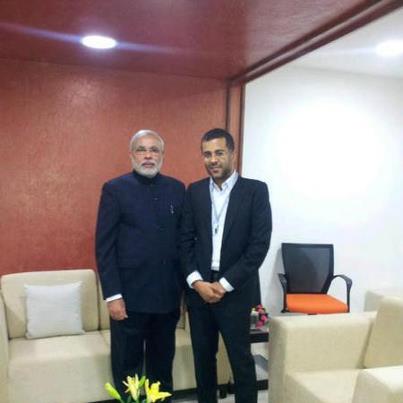
The sickening political opportunism of Chetan Bhagat

modi-chetan-bhagat

Snigdha Poonam watches Kai Po Che, whose script was written by Chetan Bhagat, based on his book The Three Mistakes of My Life:

In the film adaptation, Mr. Bhagat has also added what seems like justification for some Hindus to turn violent, like the death by burning of both of the parents of one of the three protagonists in the Sabarmati Express; in the novel, it was his nephew. We all know the level of vengeance with which Bollywood heroes respond to the targeting of their mothers: “Teri maa mari hai kya (Is it your mother who has died?),” the bereaved son explodes at a sensible friend trying to stop him from losing control of himself.

In his book, Mr. Bhagat clearly showed the 2002 riots as a state-sanctioned exercise (“Whatever it takes to quench the hurt feelings,” says a “senior Hindu Party leader”). But he excised that from the film completely. [Read]

That image above is via DeshGujarat.com, where an article quotes Bhagat as saying in a TV debate:

“It has been discussed much that Modi ji has done well in Gujarat, but what I believe is that he is a very good politician. A politician has to change with public mood. When communal issue mood was there in the country, that was Modi version 1, when he elected for the first time. And when he won the election for second time, he won it on development agenda.”

Clearly, Mr Chetan Bhagat is also a good politician.

तार्किकता, भावुकता और फासिज्म

 28 फरवरी को याद करने पर अब कहा जाने लगा है कि यह नकारात्मक स्मृति है और इंसानी फितरत के मुताबिक़ हमें आगे बढ़ना  चाहिए. हिन्दुओं को, खासकर गुजराती हिन्दुओं, यह नागवार गुजरता है कि उन्हें  बार-बार 28 फरवरी , 2002 की याद दिलाई जाए. आखिर गुजरात में 2002 के बाद पूरा अमन है और वह विकास के मार्ग पर एक दृढसंकल्प मुख्यमंत्री के नेतृत्व में संकल्पपूर्वक बढ़ा जा रहा है और वहां के मुसलमान भी अब कुछ और बात करना चाहते हैं.

दरअसल भुलाने और आगे बढ़ जाने की शुरुआत 2002 में ही हो गई थी. 28 फ़रवरी से राज्य-संरक्षण में शुरू हुए मुसलमानों के कत्लेआम ने भारत के उद्योगपतियों के एक हिस्से को भी झकझोर दिया था. लेकिन कुछ समय बाद ही पूंजीवाद के तर्क ने मानवीयता की कमजोरी पर विजय पा ली और उन्होने नाराज़ मुख्यमंत्री से क्षमायाचना करके गुजरात की प्रगति में उन्हें हिस्सा लेने की इजाजत माँग ली  थी. सार्वजनिक रूप से उन्हें गांधी और पटेल से तुलनीय बताया जाना अब अटपटा भी नहीं लगता, बल्कि उलट कर कहा जा सकता है कि गांधी और पटेल में  ऐसे कई गुण नहीं थे जो गुजरात के ह्रदय-सम्राट में पाए जाते हैं , इसलिए यह तुलना वस्तुतः इन दोनों के प्रति पक्षपात है. पूंजीवाद के मूल अंतर्राष्ट्रीय चरित्र ने अंततः युरोपियन यूनियन को अपनी मानवीय हिचक को किनारे करके गुजराती यथार्थ को कबूल करते हुए कारोबारी नज़रिया अपनाने को प्रेरित किया. यह संभव नहीं था कि आर्थिक निवेश के ठोस आकर्षक आमंत्रण को   न्याय के अमूर्त आग्रह  के चलते ठुकरा दिया जाए. Continue reading तार्किकता, भावुकता और फासिज्म