New India  – New Father of Nation?

Image result for mahatma gandhi

Ms. Amruta Fadanavis – wife of Maharashtra Chief Minister Devendra Fadanavis – found herself at the centre of controversy two weeks back. Her birthday greetings to PM Modi – whom she wished ‘Father of Our Country @narendramodiji a very Happy Birthday -…’ – on her twitter evoked reaction from twitterati. Her ‘height of ignorance’,  was pointed out and her attempt was called ‘sycophancy at its top’ (https://twitter.com/fadnavis_amruta/status/1173877700290678785)

Anyway, as one hoped that this chapter around ‘discovery of a new Father of Nation’ was over and one was attempting to turn a new leaf what one witnessed was rather unusual.

The debate around ‘Father of Nation” came back with a vengeance. Continue reading New India  – New Father of Nation?

Women Of The World Stand With Kashmir

Statement issued on 27 September 2019.
NEW DELHI. NEW YORK
 

On 30 August 2019,the United Nations’ International Day of the Victims of Enforced Disappearances, Parveena Ahangar, mother of Javaid, a 16 year old who was ‘disappeared’by paramilitary forces in Kashmir in 1990 mourned again.

Every year, the families of APDP (Association of Parents of Disappeared Persons) come together on 30 August. This is our way of reassuring each other that we are not alone in our grief. Yet this year we have been strangled, and there was no coming together because through its siege, India has denied us even the right to mourn.

Kashmir under siege. Kashmir caged. Kashmir imprisoned. Analogies abound for of the Indian Government‘s actions of August 5, 2019 when it unilaterally terminated the semi-autonomous Constitutional status granted to the region as a condition of its accession to India, and bifurcated it into two directly ruled Union Territories. This action was preceded in the previous week by a military blockade, a state of undeclared emergency, and an unprecedented media and communications clampdown. An estimated 4,000 Kashmiris have been arbitrarily detained including politicians, business leaders, lawyers, human rights defenders, chartered accountants, journalists, teachers, and students. Some are being held without charges or trial, under administrative detention laws such as the Public Safety Act, 1978 while the grounds of detention and whereabouts of a large number, including children as young as ten, remain unknown. An unknown number of people have been moved to prisons outside the state of Jammu & Kashmir.The Indian government continues to declare that all is ‘normal’ in the face of credible and mounting evidence of a healthcare and humanitarian crisis, civilian deaths and blindings and other injuries in pellet gun attacks by Indian security forces, torture, molestations, and the severe curtailment of freedom of opinion, expression, and information; assembly and movement; and religious freedoms. Continue reading Women Of The World Stand With Kashmir

Education on Education – Reclamation, and Other Mediations: Sasheej Hegde

Guest Post by SASHEEJ HEGDE

A thought is a tremendous form of excitement. [Alfred N. Whitehead]

We are concerned with the imagination, and the vaguely functionalist remarks we noticed before are not the sketch of an explanation, but an aid to the imagination, to make a different practice a more familiar idea to us, and hence to make us more conscious of the practice we have.  Seen in this light, … [t]he imagined alternatives are not alternatives to us; they are alternatives for us, markers of how far we might go and still remain, within our world – a world leaving which would not mean that we saw something different, but just that we ceased to see. [Bernard Williams]

This is an extended essay working off two official documents, and public ones at that: one, the voluminous draft of the National Education Policy 2019 (henceforth Draft NEP) authored by the K. Kasturirangan-led Committee appointed by the Ministry of Human Resource Development, (MHRD) Government of India and, second, the brief report on ‘Promoting and Improving the Quality of Research in Indian Universities/Colleges’ headed by P. Balaram under the auspices of the University Grants Commission (UGC) [accordingly, UGC-Balaram report].  My interest is as much with the former as with the latter; and, although they can be commented upon independent of each other, it is the combined resonance of these two policy suggestions that I am interested to examine (especially as they bear on the higher education [HE] space in India).

Continue reading Education on Education – Reclamation, and Other Mediations: Sasheej Hegde

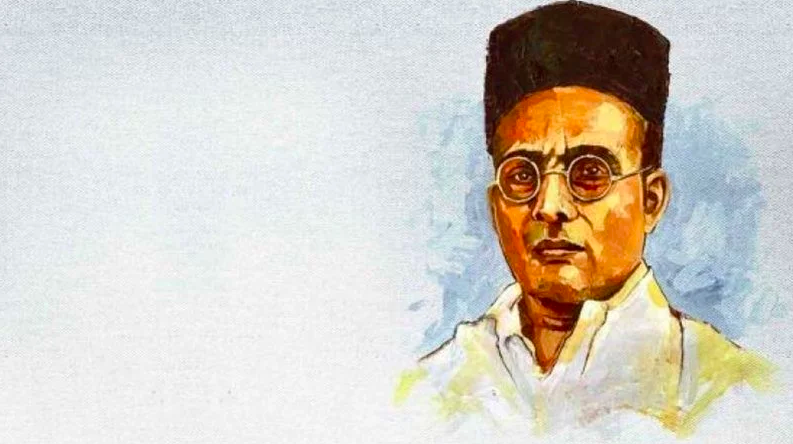
Humko Savarkarich Mangta

Jinnah propounded his two-nation theory in 1939—exactly two years after Savarkar presented it.

Savarkar

Who could have been the best prime minister of independent India? 

Nehru or (Vallabhbhai) Patel?

For more than last five years, we have been a witness to this manufactured debate—courtesy Bharatiya Janata Party (BJP), which has tried all the tricks in its kitty to create a false binary between these leading stalwarts of independence movement, who called themselves ‘Gandhi’s sipahis’.

Anyway, thanks to the differences of perception within the saffron fraternity, a new competitor to Sardar Patel seems to have emerged from within the Hindutva Brigade who is being projected as someone who would have been a “better PM”.

Uddhav Thackreay, chief of Shiv Sena and at present, a junior ally of the BJP in Maharashtra, recently made his choice clear by stating that if Veer Savarkar would have become the prime minister, “Pakistan would not have come into existence”. At a book release event, he even refused to call Nehru a Veer (courageous), making a rather provocative statement: ‘I would have called Nehru brave if he would have survived jail for 14 minutes against Savarkar who stayed in the prison for 14 long years.’

Definitely, the fact that Nehru spent more than nine years in different jails of the colonialists without ever compromising his basic principles—whereas, the 14 years spent by Savarkar were interspersed with mercy petitions sent by him to the British, wherein he had even expressed his readiness to ‘serve the government in any capacity they like’—did not bother him at all.

( Read the full article here : https://www.newsclick.in/humko-savarkarich-mangta

‘ईश्वर नहीं है’ कहने का अधिकार

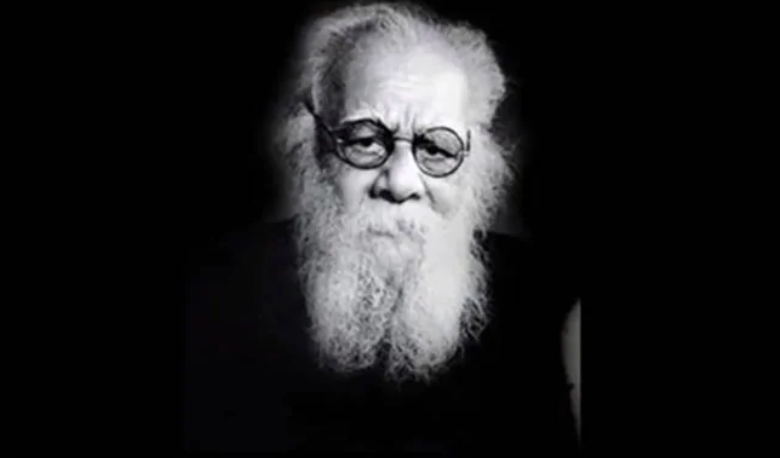
Image result for periyar
Periyar : Image – Courtesy velivada.com

क्या अभिव्यक्ति की स्वतंत्रता का अधिकार महज आस्थावानों के लिए ही लागू होता है ?

कभी कभी साधारण से प्रश्न का उत्तर पाने के लिए भी अदालती हस्तक्षेप की जरूरत पड़ती है।

मद्रास उच्च न्यायालय की – न्यायमूर्ति एस मनिकुमार और सुब्रहमण्यम प्रसाद की – द्विसदस्यीय डिवीजन बेंच को पिछले दिनो ंयह दोहराना पड़ा कि अभिव्यक्ति का अधिकार – जो भारत के संविधान के तहत मिले बुनियादी अधिकारों में शुमार है – सार्वभौमिक है और इसे समयविशेष के बहुमत के आंकड़ों के आधार पर तय नहीं किया जा सकता।

मालूम हो कि किन्ही दैवानायागम ने न्यायालय में यह जनहितयाचिका दाखिल की थी और कहा था कि तमिलनाडु के त्रिची में पेरियार की मूर्ति पर जो नास्तिकता के उद्वरण दिए गए हैं, वह ‘सार्विक ईश्वर’ को माननेवालों के लिए आपत्तिजनक हैं और उन्हें हटा दिया जाए। याद रहे रामस्वामी नायक / 17 सितम्बर 1879-24 दिसम्बर 1973/ जिन्हें ‘पेरियार’ नाम से जाना जाता है, वह आत्मसम्मान आन्दोलन के अग्रणी थे, द्रविड कझगम के संस्थापक पेरियार एक जुझारू किस्म के समाज सुधारक भी थे। याचिकाकर्ता ने मूर्ति पर लिखे उद्धरण के बारे में ‘‘कोई ईश्वर नहीं है, ईश्वर नहीं है और वाकई ईश्वर नहीं है..’ के पेरियार द्वारा कहे जाने पर भी सवाल खड़े किए थे। Continue reading ‘ईश्वर नहीं है’ कहने का अधिकार

Statement by Teachers and Academics in Support of Dr. Hany Babu

The following is a statement issues by teachers and academics in support of Dr Hany Babu, whose residence was raided early morning non 10 September by Pune Police

We, teachers and members of the academic community from across universities, are shocked to know of the illegal raid at the residence of Dr. Hany Babu, Associate Professor in the Department of English, University of Delhi on the morning of 10 September 2019. While the horrifying overreach of a search conducted without a warrant has become routine harassment for dissenting citizens, the attempt made by the Pune Police to forcefully detain Babu’s family for six hours and deprive them of any communication with lawyers or friends amounts to extreme duress. Finally, forcing Babu to change passwords and forfeit access to his email account and other personal online media clearly makes way for a possible planting of evidence, to concoct a case against an assumed ‘suspect’

Continue reading Statement by Teachers and Academics in Support of Dr. Hany Babu

There is no God And You Can Say so

Academics focus on secularism when secularisation can save the day.

There is no God And You Can Say so

Image Courtesy : NDTV

A simple query sometimes occasions judicial intervention: Does the right to freedom of expression apply merely to believers? On September 6, the Madras High Court dismissed a Public Interest Litigation filed by M Deivanayagam raising such a question. The petitioner wanted the atheistic inscriptions placed under the statue of Periyar, father of the Dravidian movement, installed in Tiruchirappalli, to be removed. He argued that the inscriptions are offensive to those who believe in a “universal god”.

The court upheld the right to freedom of expression—which is a part of the fundamental rights under India’s Constitution. It has reiterated that this right is universal and cannot be altered by numerical majority at any point of time.

Deivanayagam had also challenged the authenticity of the inscriptions attributed to Periyar. It reads as follows: “There is no god, no god, there really is no god/ He who created god is a fool/ He who preaches god is a scoundrel/ He who prays to god is uncivilised.”

The division bench of Justices S Manikumar and Subramonium Prasad dismissed the petition, emphasising that if a believer has the constitutional right under Article 19 to express her or his views on the existence of god and religion, then a non-believer has equal right to disagree and claim that there is no god.

Ramasamy Naicker, who is known as Periyar, pioneered the self-respect movement which sought equal status for the backward sections of in Tamil Nadu. He also founded the Dravida Kazhagham anti-caste movement and was a militant social reformer who died in 1978.

( Read the full text here :https://www.newsclick.in/There-no-God-You-Can-Say-so)

Everyday Tips for Surviving Tyranny: Anonymous

Guest Post by ANONYMOUS

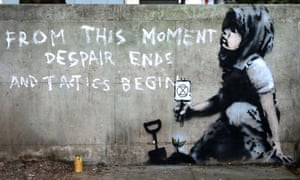
Suspected Banksy mural in London in support of environmentalist protest. 

As authoritarian right-wing populist leaders across the world unleash a reign of tyranny and hate, there is a need to think together about everyday strategies of survival. As an individual, it can get a bit overwhelming. Everything could look pointless. Many friends talk about how they find it impossible to write or work in an atmosphere of hate and violence. However, it is important to remember that what might look invincible today may not last for even half a decade. But while it lasts, how does one live under tyranny and what are the ways of building non-violent resistance? Continue reading Everyday Tips for Surviving Tyranny: Anonymous

Lynchistan

Southern trees bear a strange fruit,

Blood on the leaves and blood at the root,

Black bodies swinging in the southern breeze,

Strange fruit hanging from the poplar trees.

The word lynching conjures up images of a dark period in the history of the United States of America. Between 1877 and 1950, white supremacist gangs murdered 4,000 African Americans, while the government and the police looked the other way. James Baldwin, whose essays Dark Days captures the unfolding violence, wrote, ‘A mob is not autonomous. It executes the real will of the people who rule the State’. In 1888, white supremacists lynched seven African American men for drinking from a well – which they had said was for ‘white’s only’. Baldwin recounts that story and writes, ‘The blood is on the hands of the state of Alabama which sent those mobs into the street to execute the will of the State’.

The lyrics quoted above are from the iconic song – Strange Fruit – written by the communist artist Abel Meeropol and sung by Billie Holiday. Continue reading Lynchistan

Against Aachaaram: When is Your Cloth Clean/Pure/ Both?

This is the third in the series titled Against Aachaaram: A Dossier from Malayalam on Kafila. Both excerpts have been chosen and translated by HARIKRISHNAN S. The prefatory note below is by J Devika. They are about the notions of purity of clothing harboured by the traditional caste elite in Kerala, which were revised by the neo-savarna of twentieth century Kerala.

The neo-savarna refers to a twentieth-century social formation that comprises of the upper-caste elite of traditional Kerala – the sudras (nair and ambalavasi), the samanthas and kshathriyas (the members of erstwhile ruling houses, minor and major), and the brahmins. The richer sections of the ex-untouchable Ezhava caste-community who have in effect abandoned the teachings of their chosen Guru, Sree Narayana, now actively seek membership in the neo-savarna, but are yet to be accepted fully.

Continue reading Against Aachaaram: When is Your Cloth Clean/Pure/ Both?

A War For Scientists to Join

Scientists have barely offered resistance to pseudoscience. This must change—IIT students show how.

Ramesh Pokhriyal

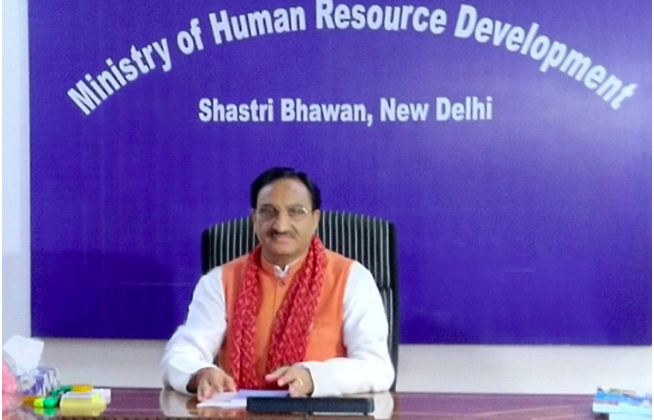
Surely India’s scientific community must be waking up to the realisation that their silence is detrimental to scientific development and allows many varieties of mischief to breed. In a rare show of gumption, students of the elite engineering institute, IIT Bombay, have slammed the recent decision to invite the Human Resources Development (HRD) Minister Ramesh Pokhriyal ‘Nishank’ to chair their graduation ceremony.

For too long India’s scientists have remained silent—even the credulous claims by Prime Minister Narendra Modi in a speech at the Ambani hospital in November 2014 was not challenged by them for a long time. A key role has to be played by the scientific community in the ongoing battle of ideas. Perhaps students of IIT Bombay show the way.

They have said in their in-house publicationInsight IIT Bombay, that a guest who “recognised, embodied and endorsed the scientific and moral values” of their institute should have been invited instead of the minister. Their problem is with Pokhriyal’s speech, pervaded by unscientific claims and “twisted facts”. They are under no illusion the speech tried to stoke “patriotic feelings”. To the IIT students, the speech was a “mild form of scientific blasphemy”.

( Read the full article here : https://www.newsclick.in/war-scientists-join)

Protest Prime Minister Modi’s visit to the United Nations: Coalition Against Fascism in India

Statement by the US-based COALITION AGAINST FASCISM IN INDIA

cafiusa2019@gmail.com Twitter @Hum_CAFI_hai)

Protest on Friday, September 27th at 10:30 am

United Nations Plaza, New York City

India’s Prime Minister Narendra Modi will visit the United States at the end of September. He will attend the United Nations General Assembly Session on September 28.  Please join us to protest Modi’s visit. Modi’s government has been orchestrating a pogrom of hate and violence against Muslims and Dalits in India. His government has been cracking down on all forms of dissent and all those who question its politics of hate. Its economic policies have resulted in escalating poverty and thehighest unemployment rate in half a century. We call upon all anti-fascist, anti-racist,secular, and environmentalist groups in the United States to join us in protesting his visit and exposing the retrograde, near-fascist politics of Modi’s government.

Continue reading Protest Prime Minister Modi’s visit to the United Nations: Coalition Against Fascism in India

Wisdom of Ganesh Gaitonde: Satya Sagar

Guest Post by SATYA SAGAR

Note: Ganesh Gaitonde is a fictional character from the Netflix series Sacred Games, but that does not make him any less real than anyone else on the planet.

Warning: Profanity ahead. Get parental advice before proceeding.

Somewhere on a yacht in choppy waters off the western Indian coast I met Ganesh Gaitonde, noted[1]political analyst, role model for the youth and public intellectual for a free-wheeling interview.

We discussed a wide range of extremely important issues confronting Indian society today from the celebration of Ganesh Chaturthi at the Ambani household to what PC (not Chidambaram) said when NJ farted in her dreams. Some trivial themes like climate change, nuclear war and crisis of Indian spirituality were also touched upon – but you can skip those portions if they bore you to death.

Ganesh Gaitonde (GG): Stop calling me ‘Gaitondeji’, you #^^$%&&&. You guys kept chanting ‘Gandhiji’ for seven decades while screwing everything he stood for. So, cut this ‘ji’ crap. I am just Ganesh – nothing more, nothing less.

Me: Gaitondeji…

Me: Ok, I apologize Ganesh. Now, even before we get into important national and social issues, can you explain why every other word you utter is always an obscenity? Continue reading Wisdom of Ganesh Gaitonde: Satya Sagar

Wishful visions, dishonest tales and bitter fruit

Review of ‘Malevolent Republic : A Short History of New India’ by K. S. Komireddi

Image result for malevolent republic

‘The idea of a peace-loving, nonviolent India exists, persists, as part of a selectively constructed and assiduously cultivated national self-image in the midst of a society pervaded by social and political violence…’ argued Prof Upinder Singh, in her well-researched voluminous book ‘ Political Violence in Ancient India’ which had appeared around two years back. She had also added that pioneers of independence struggle were instrumental in creating this ‘[m]yth of non-violence in ancient India which obscures a troubled, complex heritage.’

‘Malevolent Republic’ – A Short Hisotry of New India’ by K. S. Komireddi – a commentator, critic and journalist who has written for leading western publications, reminds one of this debate. The book tries to chronicle the trajectory of post-independence India from Nehru to Modi – and does not shy away from raising uncomfortable questions which demand broader contemplation as well as deep soul searching.

( Read the full story here : https://epaper.telegraphindia.com/calcutta/2019-09-06/71/Page-11.html)

Kashmir: The Violence in Silence

Guest Post By Maknoon Wani

“I need a toy and a new dress for Eid.”

Requests and tantrums like these are heard around Eid in every Kashmiri household but not this time. It was the 8th day of the government imposed military siege. On 5 August, 2019 the central government unilaterally scrapped the special status(autonomy, imagine that being called special status) of the only Muslim majority state in the union. Thousands were arrested to muzzle any dissent coming out of the agitated population. But seven year old Aairah was worried about her Eid shopping, which was never going to happen. 

How does it happen in the 21st century? How are millions of people house arrested and excommunicated within a few hours? Why are people celebrating a siege? How does this sell as normalcy? I spent many sleepless nights contemplating or rather trying to absorb the sheer cruelty of this situation. A group of students from my college invited me to a cake cutting ceremony which was organized to celebrate this decision. Maybe, their intentions were not so bad but did social convention dictate that a person be invited for the celebration of his misery? The shameless chest-thumping is a spectacle but an indifferent people is a tragedy. 

While I was suffering from this sense of loss and fear, people were celebrating and opining about Kashmir like they knew everything. I was told how good this decision is and how I should be happy. Kashmir, which went incommunicado days ago, was said to be normal. Reports from the foreign press regarding protests in Kashmir were refuted and labelled as western propaganda. Saner voices went more anti-national and pro-government channels got busy in peddling more lies. I, for one, went silent for a few days. Everyone was high on something. Some were planning to buy a plot in Kashmir while others were fantasying about white-skinned Kashmiri girls. History was forgotten, conveniently twisted and occasionally ignored to justify this daylight betrayal. A radicalized population is dangerous but trying to reason with an intoxicated population is foolishness. After all these days, I thought this silence must not be interpreted as normalcy and more importantly-peace.

What is happening in Kashmir and to Kashmiris is violence. Why aren’t the children going to schools and why are their playgrounds surrounded with barbed wires? Why aren’t mobile phones working? What is forcing Kashmiris to be silent? Is the mere presence of half a million armed forces not a form of violence? I have to ask these questions because no one else is. As I try to imagine the green meadows of my hometown, I am not able to block that intruding fear of not seeing my family again. The meadows might turn red forever. I see people celebrating this decision like an act of revenge; humanity might be dead forever. The claims of ushering in development and peace have fallen flat but then who wants the truth? A country which cheers the suspension of civil liberties can not be expected to be empathetic towards anyone. The silent mourners will lose fear one day, and this gloom will spread. It is only a matter of time when the monster reaches every door. 

It has been more than 20 days of this extraordinary blackout. We have seen only a few Kashmiri voices in the Indian media. A population needs to be amnesic to forget traumas like this. How can they tire us so much to make us forget our identity. We have survived three mass uprisings. Seven million Kashmiris right now are silently shouldering the coffin of the Indian democracy. The rot has started to reek, but the masks of ignorance have kept people safe. A few hundred landlines have been made operational, and this has been projected as normalcy. Senior anchors are posting videos and pictures(of normalcy) which can put North Korean propaganda to shame. When no one is being allowed to visit Kashmir, not even the Indian opposition leaders, then how can the situation be called normal. 

Recently, JK Governor, Satyapal Malik said, “If there’s no phone for ten days, so be it.” Surprisingly, he could only count ten days on the 20th day of the communication blackout. This is symbolic of the systematic dehumanization of the Kashmiris by the Indian administration. I wish to tell every Indian politician that your collective failure and greed for votes has assured Kashmiris that nothing good can be expected of this country. Our land has once again been prioritized over our lives. This is naked oppression and it is out in the open. However, this silence is not peace. It is the harbinger of burning resentment. We aren’t so small to be devoured by anyone. Our silence is deafening but not to the dead ears.  

( Maknoon Wani is a student of journalism and is in Delhi presently)

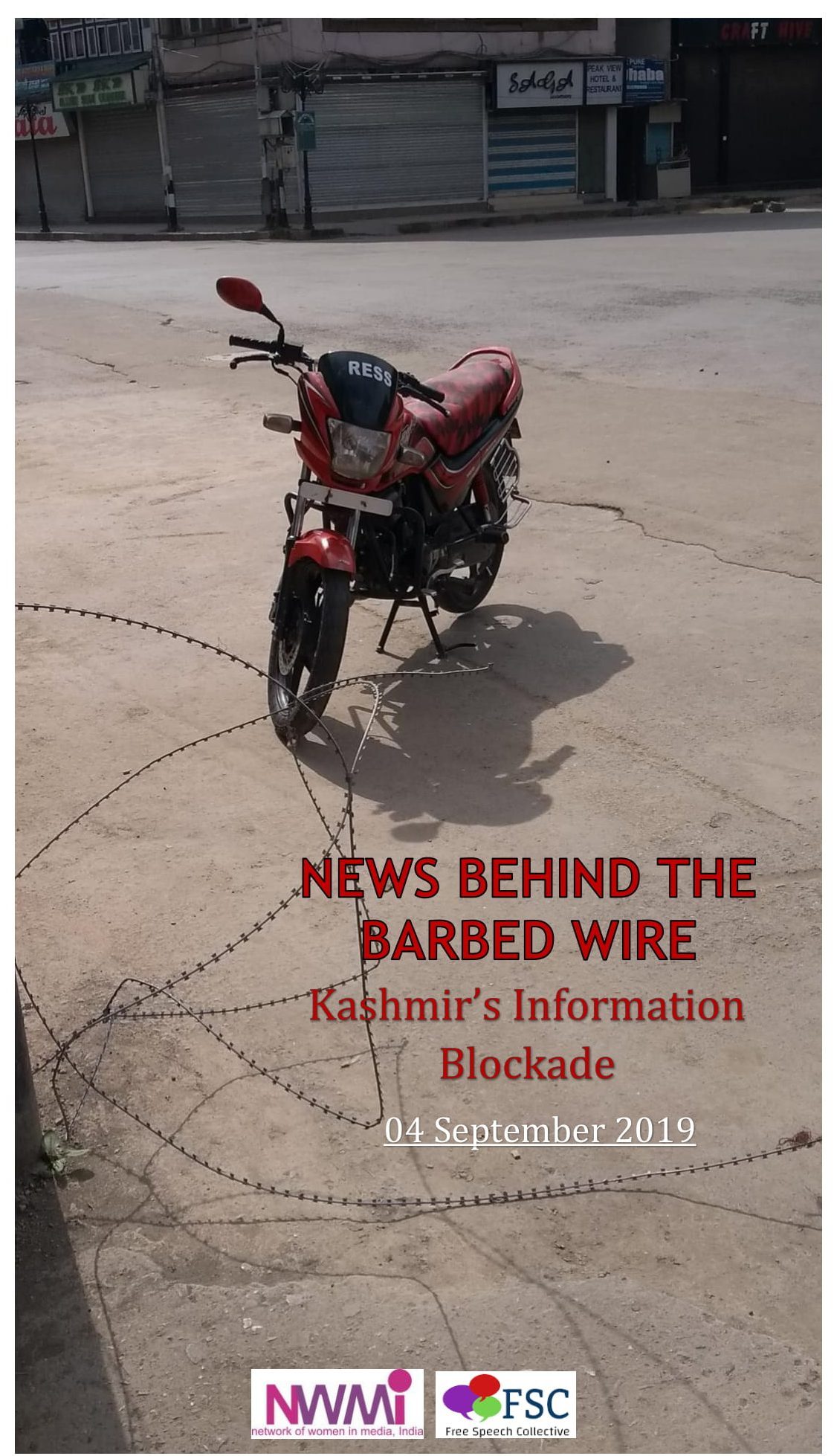
Kashmir’s information bloackade: The Network of Women in Media, India and The Free Speech Collective

Report from Kashmir by a team from the Network of Women in Media, India (NWMI) and the Free Speech Collective (FSC) .

A month after the 5 August abrogation of Article 370 of the Constitution of India, which granted special status to Jammu and Kashmir, the continuing shutdown of communication in the Kashmir valley has resulted in the throttling of independent media. As journalists continue to face severe restrictions in all the processes of news-gathering, verification and dissemination, the free flow of information has been blocked, leaving in its wake a troubled silence that bodes ill for freedom of expression and media freedom.

In this, the latest and most intense phase in the ongoing conflict on Kashmir, the government of India has pulled out all the stops – political, legislative, militaristic and punitive. It has detained and arrested scores of people, including leaders of mainstream political parties. No other democratic government has attempted a communication blockade of this scale in Kashmir.

In an effort to determine the impact of the severe crackdown on communication on the media in Kashmir, a two-member team from the Network of Women in Media, India (NWMI) and the Free Speech Collective (FSC) spent five days in the Valley between 30 August and 3 September. The team spoke* to more than 70 journalists, correspondents and editors of newspapers and news-sites in Srinagar and South Kashmir, members of the local administration and citizens.

Key findings : Curbs on the media and its implications

Who Needs Romila Thapar’s CV?

Thapar questioned imperialist versions of Indian history, which the Hindutva Brigade still goes by.

Romila Thapar

..an historian who is indefatigable in the pursuit of knowledge and prolific in its publication, and who is above all a devoted partisan of the truth. … The early history of the country has been illuminated by Professor Thapar, whom I now present, more than by almost any other scholar. An historian of that period who seriously wishes to refute accepted fictions and dispel the general darkness will need several high qualities. (From a citation presented by Oxford University to Romila Thapar while conferring on her an honorary Doctorate of Letters in 2002.)

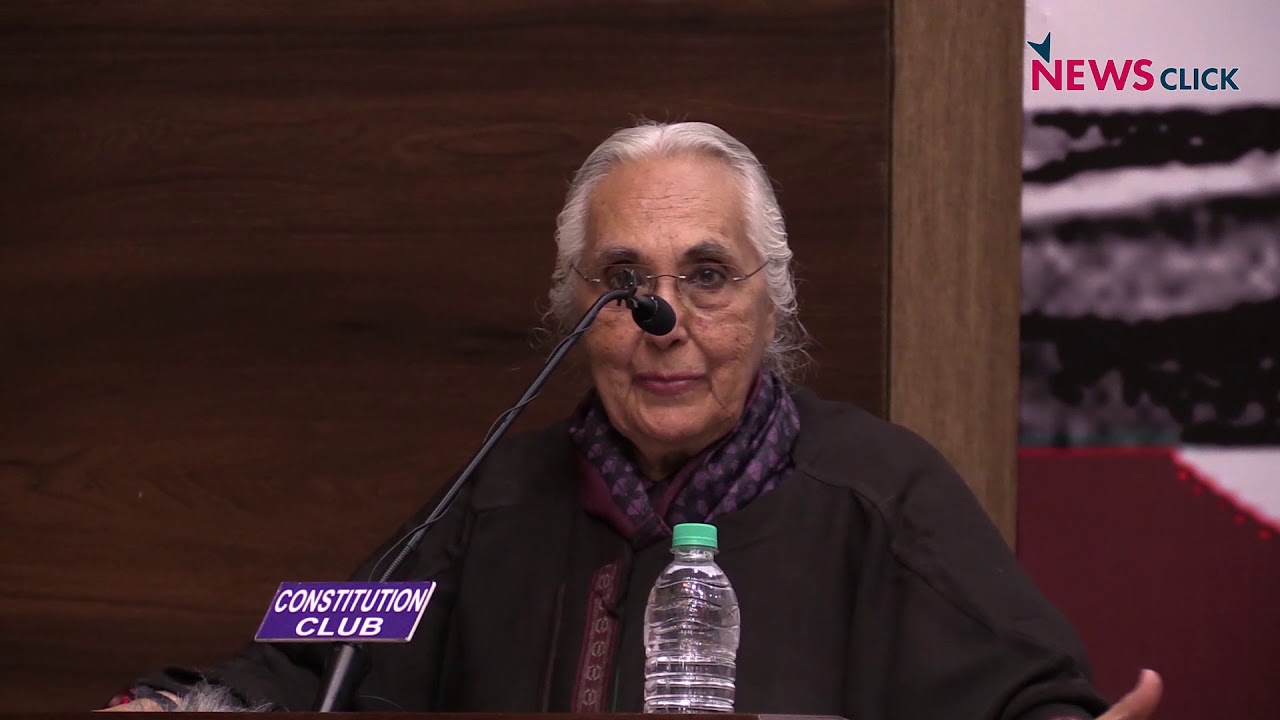
It was 1960, when Romila Thapar, a young historian at the time, wrote a 400 plus-page monograph on Asoka and the Decline of the Mauryas. According to Oxford University Press, which published it in 2017, it tried to “trace virtually the entire span of Indian history.” The monograph is considered a classic today.

Thapar’s scholarly journey continues unabated at the age of 88. She is among the world’s foremost intellectuals, known for path-breaking work on Indian ancient history, as this interview acknowledges. Undoubtedly, her work has informed and inspired at least three generations of history students.

It hardly needs mention that Thapar has prestigious prizes to her credit for the scores of books and academic papers she has published. Twice, she declined the Padma Bhushan, the third highest civilian award granted by the government.

Now Thapar is in the news because of a strange query from the Jawaharlal Nehru University (JNU) administration, where she has held teaching and administrative positions for roughly three decades.

( Read the full article here : https://www.newsclick.in/Romila-Thapar-CV-JNU-Historian-Hindutva-Brigade-Indian-History)