All posts by Sohail Hashmi

Supporter of Causes no longer fashionable in these days of globalisation, script writer on documentaries on above causes and a chronic optimist

यहाँ से शहर को देखो…

(नई दिल्ली का सौवां साल शुरू होने पर हिंदी साप्ताहिक आऊटलुक  में यह लेख पहली बार प्रकाशित हुआ था.)
अब जबके हर तरफ यह एलान हो चुका है के दिल्ली १०० बरस की हो गयी है और चारों ओर नई दिल्ली के कुछ पुराने होने का ज़िक्र भी होने लगा है, इन दावों के साथ साथ के दिल्ली तो सदा जवान रहती है और देखिये ना अभी कामन वेल्थ खेलों के दौरान यह एक बार फिर दुल्हन बनी थी वगेरह वगेरह तो हमने सोचा के क्यों न इन सभी एलान नामों की सत्यता पर एक नजर डाल ली जाए, और इसी बहाने उस दिल्ली वाले से भी मिल लिया जाए जो इस अति प्राचीन/ मध्य कालीन/ आधनिक नगरी का नागरिक होते हुए भी वैशवीकरण के झांसे में इतना आ चुका है के वो अपने आप को २१वीं शताब्दी के पूर्वार्द्ध में आने वाले आर्थिक संकट को पछाड देने वाले चमचमाते भारत देश की राजधानी का शहरी  होने का भरम पाले हुए है. Continue reading यहाँ से शहर को देखो…

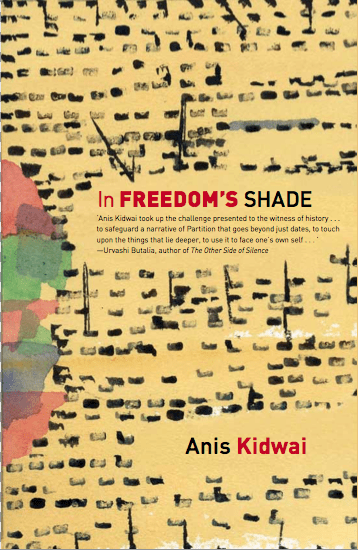
The unspeakable horrors of Delhi, 1947

In Freedom’s Shade, by Anis Kidwai; translated from Urdu by Ayesha Kidwai; Penguin Books India 2011, Pp 382, price Rs. 450

Anis Kidwai belonged to the illustrious Kidwai family of Barabanki. The family has made more than a signal contribution to the making of India. Not only in politics and governance but also in diverse fields of creative endeavour. This short piece, though, is not about her or about her family but her most remarkable record of the unfolding tragedy in the Capital of India and in its surroundings in the aftermath of independence and partition.

Anis Kidwai, though extremely politically aware with sharp and clear views on what she saw happening, was not a political activist and would have probably continued to lead a well settled, almost sedentary life in Mussoorie, had the unthinkable not happened. Her husband, Shafi Ahmad Kidwai, the administrator of the Municipality, who had almost single handedly tried to keep peace in Mussoorie when everyone else had either given up or joined the rioters, was murdered.

Continue reading The unspeakable horrors of Delhi, 1947

Fast Backward: Aijaz Zaka Syed

Guest post by AIJAZ ZAKA SYED

What a farce! What a farce of a fast! One doesn’t quite know whether to laugh or cry over this state of affairs in the world’s largest democracy. It is a sad day in a nation’s history when someone who presided over a state-sanctioned genocide goes on fast in the name of “peace and harmony” and media vultures and assorted politicians rush to canonize him as the apostle of peace. When it comes to political theatre, few can beat our politicians. They have no qualms in mimicking their more successful fellow travelers if it can get them a few more votes or push them a couple of notches up the popularity ladder.

Continue reading Fast Backward: Aijaz Zaka Syed

Where have the pilgrims gone?

The Journey is an integral part of any pilgrimage, the manner in which it is conducted is crucial to the successful conclusion of the endeavour. An edited version of this article first appeared in the travel and culture magazine Terrascape, published from Delhi. Photos: Himanshu Joshi/Curun Singh

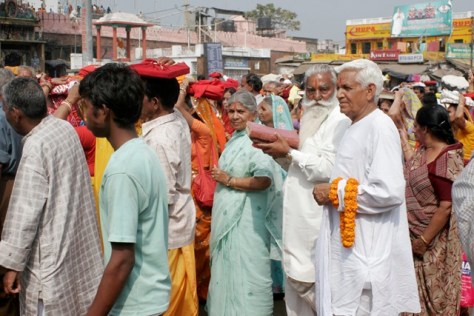
Pilgrims at Puri, outside Jagannath Temple

There is a scene in Mughal-e-Azam, the early 1960s blockbuster of a movie by K Asif, where Akbar and his queen, the mother of his first son Jahangir (wrongly identified by K Asif and also by Ashutosh Gowarikar as Jodha Bai) stumble through the hot sands of Rajasthan under the mid-summer day sun that seemed intent on drying up and burning everything in sight. The two are on a pilgrimage. The pilgrimage was to fulfill a vow that Akbar had taken.

What I have to say in this piece can best be prefaced by narrating the story of that vow. Continue reading Where have the pilgrims gone?

Of Seven Cities and New Delhi

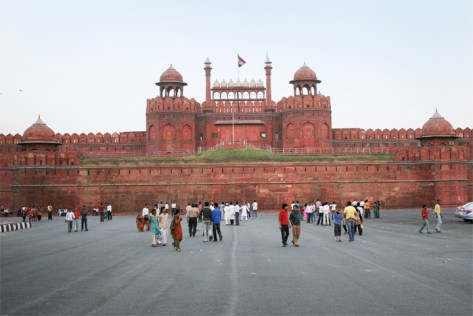
Historically, Delhi was a place that all its conquerors made their home, but for the British it was a city that only glorified the power of Imperialism. Photos: Sohail Hashmi/Himanshu Joshi

Red Fort

Continue reading Of Seven Cities and New Delhi

Ten lessons of the fortnight that was: Jay Mazoomdar

Guest post by JAY MAZOOMDAAR

The 13-day blockbuster— peddled as the second freedom struggle, panned as irresponsible blackmailing, and a lot in between — is over. Anna Hazare accepted honeyed coconut water from two little girls, introduced to the crowd as a dalit and a Muslim, and went on to recuperate in one of India’s most expensive hospitals, one branded after Hindu spiritual literature at that.

News TV is still fighting the vacuum by flogging the debate – so much so that seasoned correspondents are chasing a rather dismissive Dr Naresh Trehan to unravel the mystery of Anna’s endurance. Biker gangs have gone into a sulk and roads at India Gate are looking safer for traffic and women (which is not saying much in Delhi). What is more, India has started taking note that too many Indians have meanwhile drowned in floods. Continue reading Ten lessons of the fortnight that was: Jay Mazoomdar

यहाँ से शहर को देखो …..

[यह लेख “बस्ती तो बसते बसती है” शीर्षक से आउटलुक हिंदी  के  स्वाधीनता विशेषांक में छपा है.]

अब जबके हर तरफ यह एलान हो चुका है के दिल्ली १०० बरस की हो गयी है और चारों ओर नई दिल्ली के कुछ पुराने होने का ज़िक्र भी होने लगा है, इन दावों के साथ साथ कि “दिल्ली तो सदा जवान रहती” है और “देखिये ना अभी कामनवेल्थ खेलों के दौरान यह एक बार फिर दुल्हन बनी थी”, वगेरह वगेरह, तो हमने सोचा के क्यों न इन सभी एलाननामों की सत्यता पर एक नजर डाल ली जाए, और इसी बहाने उस दिल्लीवाले से भी मिल लिया जाए जो इस अति प्राचीन/ मध्यकालीन/ आधुनिक नगरी का नागरिक होते हुए भी वैशवीकरण के झांसे में इतना आ चुका है के वो अपने आप को २१वीं शताब्दी के पूर्वार्द्ध में आने वाले आर्थिक संकट को पछाड देने वाले चमचमाते भारत देश की राजधानी का शहरी  होने का भरम पाले हुए है.

अब सब से पहले तो यह फैसला कर लिया जाए के नई दिल्ली है किस चिड़िया का नाम? पाकिस्तान के मशहूर व्यंग कार इब्न-ए–इंशा ने अपनी विख्यात पुस्तक उर्दू की आखरी किताब में एक अध्याय लाहौर के बारे में लिखा है.  इस अध्याय में इंशा कहते हैं “ किसी ज़माने में लाहौर का एक हुदूद-ए–अरबा (विस्तार) हुआ करता था अब तो लाहौर के चारों तरफ लाहौर ही लाहौर वाके (स्थित) है और हर दिन वाके-तर  हो रहा है”

एक फर्क है, इब्न-ए-इंशा के लाहौर में पुराना लाहौर और नया लाहौर दो अलग अलग चीज़ें नहीं हैं मगर दिल्ली के मामले में ऐसा नहीं है, एक समय था के नई दिल्ली में बाबू बसा करते थे और नई दिल्ली के पास शाहजहानाबाद था जो शहर था, अब नई दिल्ली वालों के हिसाब से पुराना शहर सिर्फ शादी के कार्ड, आचार मुरब्बे और हार्डवेअर खरीदने की जगह है, या उसे इस लिए बनाया गया है के उनकी पार्टियों के लिए बिरयानी, चाट, कुल्फी वगेरह मुहैया करवाए और जब उनके विदेशी मित्र या एन आर आई सम्बन्धी यहाँ आयें तो उन्हें इस जीते जागते संघ्राल्य के दर्शन करवा सकें. मुसलमान और सिख वहाँ धार्मिक कारणों से भी जाते हैं, मगर उनकी बात अलग है वो तो अल्प संख्यक हैं हम तो आम लोगों की बात कर रहे हैं.

Continue reading यहाँ से शहर को देखो …..

Five Long Weekends

Recently a whole lot of noise was made and reams of paper were covered in fine print to make us realize how unique this July 2011 has been. We have been told that this phenomenon of a month having 5 Fridays, 5 Saturdays and 5 Sundays is a rare occurrence. Someone said that this has happened after 823 years and then someone else came along and disputed this figure. Newspapers not normally inclined to accept their mistakes did so with alacrity, and they had good reason to do so it was someone else’s mistake that they were foregrounding.
The 24X7 purveyors of nonsense have as usual gone to town, breaking all kinds of news and inviting all manner of soothsayers, numerologists, tarot-card readers, palmists, astrologists and other purveyors of superstition to respond to the breathless inanities of the perpetually excited anchors about the cataclysmic significance of these five long weekends coalescing at the peak of the Monsoon Season. Continue reading Five Long Weekends

Speaking of Synthesis

This slideshow requires JavaScript.

Ask any first time visitor to Kashmir about their impressions and you will, in all likelihood, be inundated with superlatives about the landscape, the mountains, the greenery, the hospitality, the gardens, the lakes and what not, but there is one thing that both the first timer and the old Kashmir hand rarely talk about and that is the historical monuments of the valley. The mosques, shrines and ancient temples of the valley are rarely mentioned in all this recounting. I am as much guilty of this neglect as all the others that I have met, perhaps more guilty because I have been to Kashmir scores of times.

This piece is an attempt to make amends. The sites are far too many to cover in one article so I have decided to confine myself to a handful of structures and monuments that lie scattered in and around Srinagar. Hopefully there will be more occasions to write about the others soon. Before we commence this sight-seeing tour of Srinagar, let us start with a few words about the history of Srinagar and of Kashmir.

Continue reading Speaking of Synthesis

लखनऊ और फैज़: अतुल तिवारी

Guest posy by ATUL TIWARI

(प्रगतिशील लेखन के आंदोलन से जुडे हुए प्रसिद्ध पटकथा लेखक
अतुल तिवारी ने यह लेख लाहौर में आयोजित फैज़ शताबदी समारोह में प्रस्तुत किया था और फिर दिल्ली में थिंक इंडिया मैगज़ीन के फैज़ नम्बर की रिलीज के समय होने वाले कार्यक्रम में भी उन्होंने यह लेख प्रस्तुत किया । काफिला के लिए लेखक की अनुमति से प्रकाशितThe English translation is given below the Urdu original. – SH)

“हज़रात!

ये जलसा हमारी अदब की तारीख़ में एक यादगार वाक़या है।  हमारे सम्मेलनों,अंजुमनों में – अब तक, आम तौर पर – ज़ुबान और उसकी अशात अत से बहस की जाती रही है। यहाँ तक कि उर्दू और हिंदी का इब्तेदाई लिटरेचर – जो मौजूद है – उसका मंशा ख़यालात और जज़्बात पर असर डालना नहीं, बल्कि बाज़ ज़ुबान की तामीर था।…लेकिन ज़ुबान ज़रिया है मंजिल नहीं ।

…अदब की बहुत सी तारीफें की गयीं हैं।  लेकिन मेरे ख़याल से इसकी बेहतरीन तारीफ़ “तनक़ीद-ए-हयात” है – चाहे वो मकालों की शक्ल में हो। या अफसानों की। या शेर की। इससे हमारी हयात का तब्सिरा कहना चाहिए। Continue reading लखनऊ और फैज़: अतुल तिवारी

निनाद: कुलदीप कुमार

Guest post by KULDEEP KUMAR

जिन लोगों को यह ग़लतफ़हमी थी कि भारतीय जनता पार्टी हिन्दू धर्म और हिन्दुओं की बहुत बड़ी हितैषी है और व्यक्तिगत एवं सार्वजनिक जीवन में शुचिता की हिमायती है, उनकी यह ग़लतफ़हमी अब तो दूर हो जानी चाहिए. उसके शासन वाले राज्य उत्तराखंड में एक संन्यासी गंगा को स्वच्छ किये जाने और अवैध खनन को रोके जाने की मांग को लेकर अनशन करता रहा लेकिन पार्टी और सरकार के कान पर जूँ तक न रेंगी. गंगा का सभी भारतवासियों, विशेष रूप से हिन्दुओं, के लिए भावनात्मक महत्व है. अनशन भी शासन के विरोध में नहीं बल्कि एक सकारात्मक मांग को उठाने के लिए किया गया था. लेकिन स्वामी निगमानंद न तो राज्य सरकार का ध्यान अपनी ओर खींच पाए और न ही मीडिया का. जब उनकी ओर ध्यान गया तब तक बहुत देर हो चुकी थी.पंजाबी सूबे की मांग को लेकर अनशन करने वाले दर्शन सिंह फेरुमान की मृत्यु के बाद शायद यह पहला अवसर है जब किसी ने अनशन के कारण प्राण त्यागे हैं. Continue reading निनाद: कुलदीप कुमार

Of Mosques and Minars

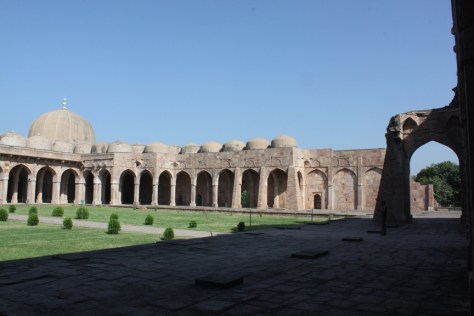
The Jama Masjid at Mandu. Photo credit: Himanshu Joshi

I can’t really say when I first heard the Aazan  (the call for prayers given by the Muezzin, five times a day) it must have been in the early 50s when I was a little child and lived in Chabi Ganj, next to the Faseel (City wall) near Kashmiri Gate.

The sound of the Azan would have drifted in from one of the nearby Mosques, there were a few not too far away. The practice of using loudspeakers was not in vogue those days and yet the muezzin’s call for prayers travelled quite some distance, primarily because the horrible ambient sounds that assail our auditory nerves were almost non-existent at the time, in place of this cacophony there used to be other ambient sounds, the rustling of leaves, the chirping of birds and others, that have, it would seem, now been lost forever.  Continue reading Of Mosques and Minars

On the passing away of MF Husain: SAHMAT

Photo credit: Jay Mandal

This statement has been put out by the SAFDAR HASHMI MEMORIAL TRUST (SAHMAT)

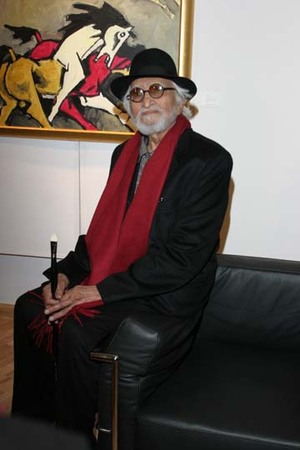
M. F. Husain

Easily the most iconic artist of modern India, Maqbool Fida Husain passed away in London on 9 June 2011. M. F. Husain was born in 1915 in Pandharpur, the famous temple town in Maharashtra. Bereft of his mother’s presence since childhood, Husain grew up in the multi-cultural milieu of Indore where his father migrated around 1919.

Indian civilization, in all its diversity, had been Husain’s basic inspirational project. Since the year of Independence, through the Nehruvian decades and thereon, cognizant of all the challenges involved in nation-building, Husain had been steadfast in maintaining a most affirmative relationship with the Indian peoples’ consciousness of their national identity. Through him, we have learned to address a whole gamut of issues pertaining to the interactive dynamic of modernity with the country’s many-layered art and culture. Continue reading On the passing away of MF Husain: SAHMAT

The Poet of Romance and Revolution

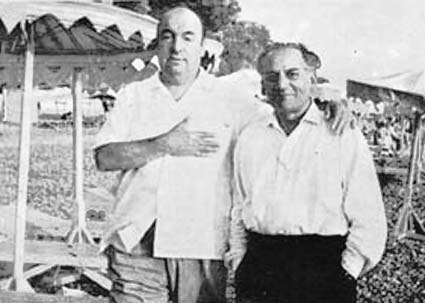
Pablo Neruda with Faiz Ahmed 'Faiz'

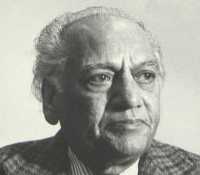
If you met him on the street you would never imagine that he was a poet, and not your run of the mill poet, but  among the most important poets of the 20th century, not only in Urdu, not only in  the subcontinent but in the entire world of the 20th century. I have always wondered how could someone who invariably dressed in rather unimpressively stitched, unromantic terry-cot Safari suits, someone who could at best pass off as a joint secretary in the ministry of shipping or something similar, be such a wizard with words and not only with words but with content and with form?

Continue reading The Poet of Romance and Revolution

पीर पराई जानै कौन?: कुलदीप कुमार

Guest post by KULDEEP KUMAR

अज्ञेय की प्रसिद्द कविता-पंक्तियाँ हैं:

“दुःख सबको मांजता है/
स्वयं चाहे मुक्ति देना वह न जाने/
किन्तु जिनको मांजता है/
उन्हें यह सीख देता है/
कि सबको मुक्त रखें.”
लेकिन दुःख की इस सीख पर क्या कोई अमल भी करता है? पुराना या आज का इतिहास तो इसकी गवाही नहीं देता. बल्कि देखने में तो यह आता है कि दुःख के भी खाने बन जाते हैं. हमें केवल अपना या अपनों का दुःख ही दुःख लगता है. पराई पीर जानने वाले वैष्णव हम नहीं हैं.

जबसे सुना है कि ओसामा बिन लादेन की ह्त्या उसकी दस-बारह साल की बेटी की आँखों के सामने हुई, तभी से विचलित हूँ. मुझे मालूम है कि आज जिस तरह की फिजा बन गयी है, उसमें यह कहना भी जोखिम से खाली नहीं है. मुझे ओसामा बिन लादेन के प्रति सहानुभूति रखने वाला घोषित किया जा सकता है. उसकी बेटी को तो पता भी नहीं होगा कि उसका बाप वाकई में क्या था. क्या उस बच्ची का दुःख इसलिए कम हो जाता है क्योंकि वह ओसामा की बेटी है? हम लोगों ने अपने लिए जिस तरह के तर्क गढ़ लिए हैं, उनके अनुसार तो इस बच्ची के दुःख के बारे में सोचना और बात करना भी आतंकवाद के प्रति सहानुभूति दिखाना होगा.

Continue reading पीर पराई जानै कौन?: कुलदीप कुमार

Corruption has its Caste in the Judiciary: All India Confederation of SC/ST Organisations

This press release come from the ALL INDIA CONFEDERATION OF SC/ST ORGANISATIONS

New Delhi, April 4, 2011.

Dr. Udit Raj, National Chairman of All India Confederation of SC/ST Organisations, said that corruption has its caste. The way the former Chief Justice of India, K. G. Balakrishnan and former Chief Justice of Karnataka, P.D. Dinakaran, are being treated, there is no doubt that corruption knows the caste. Here argument is not to absolve these people but to expose hypocrisy and double speak. The Supreme Court hastened to admit petition against K.G. Balakrishnan but why not in other cases? Continue reading Corruption has its Caste in the Judiciary: All India Confederation of SC/ST Organisations

The Hindu, WikiLeaks and Me: Malarvizhi Jayanth

Guest post by MALARVIZHI JAYANTH

Once upon an election, the ruling party was bullying and booth-capturing recklessly. I was there. I saw it. Outside one booth, three Tata Sumos drove away at mad speeds, their screeching, spinning wheels blowing dust into my eyes in a scene straight out of the Tamil movies. I walked into the booth to find it had been ransacked minutes earlier. I saw weeping government officials and ballots with the stamp over the rising sun scattered everywhere. Other reporters saw similar scenes. Reporters received complaints of cash and biriyani(!) being distributed to voters.The management of the newspaper I worked for chose to run the Election Commission’s claims that the elections had been without incident, rather than accounts from several reporters who had seen the captured booths and heard from voters who had been offered bribes. Two days later, when almost all other media (barring the usual suspects) had run outraged stories about the brazenness of the booth capturing, hesitantly, The Hindu followed suit. Today, they announce to us that cash for votes is a way of political life in Tamil Nadu. Yeah, thanks, we know that already. Too bad you couldn’t believe your lowly brown-skinned reporters who told you all about it. A white man sends off a cable about it to his masters and then it becomes news? Really? Continue reading The Hindu, WikiLeaks and Me: Malarvizhi Jayanth

Emboldening Khap Panchayats?

Teaching Harmony, Practicing Disharmony

This was presented as a paper at a symposium on Peace Education organised as part of National Conference on Indian Psychology, on 6 February 2011 at the India International Centre.

This piece seeks to underscore the cleavages that exist in our society, explore the foundations upon which the edifice of intolerance has risen and to look at the tools, like education for peace and harmony, with which we try to dismantle this citadel of intolerance.

Peace education, you would agree, cannot be confined merely to teaching the message of Love and brotherhood, our text books have been teaching this message for as long as I remember and my memories of our text books go back, at least to my senior school days in the mid sixties, almost 45 years ago.

If telling students in their classes that we should all love each other because we are all Indians and that we are all equal was enough then we would not have many of the problems that we are confronting today. Continue reading Teaching Harmony, Practicing Disharmony

Blasphemy, Sedition, Democracy

Have you ever wondered?

Why does our media get so worked up when someone in Pakistan is accused of or convicted for blasphemy but is not overly perturbed when someone is charged with or convicted for Sedition in India?

Is this differentiated response occasioned by the belief that a modern state should overlook things like blasphemy but give no quarter to sedition?

Do anti-Blasphemy laws encroach upon Individual freedom while anti-sedition laws protect national interests? Is convicting someone for blasphemy essentially undemocratic but doing the same for sedition not so?

Let’s for the time being leave these major issues aside and engage ourselves with more mundane issues. Continue reading Blasphemy, Sedition, Democracy

Death of a River

This was first presented as a paper in a seminar on “The River” organised by the Max Muller Bhawan on 11 and 12 December 2010. Photo credits: Gigi Mon Scaria, Himanshu Joshi and Sohail Hashmi. Maps: The coloured map of Delhi is the restored version of an 1850 map; restoration is by E Ehlers and T Krafft. The black and white map is based on an 1807 map of the draingage of Delhi, made by a British cartographer. The three current three maps have been drawn by Shela Hashmi Grewal. You can stop at any image in the silde show above, by using the controls that you will discover once you hover the cursor over the slideshow.

This slideshow requires JavaScript.

The Final scene in the epic tragedy of the Jamna is being enacted at these very moments and the agencies that have wrought this havoc continue to initiate decisions that will permanently erase all signs of the river that has sustained the city that you and I call Hamari Dilli.

Before coming to my understanding of what needs to be done to save the Jamna, instead of what is being done to destroy it. I would like to draw your attention to certain geographical features of the land around Delhi, in order to better understand the factors that contributed to the location of the several Delhis and their relationship to the river. Continue reading Death of a River