
While the media has reported most families of those who died in 26/11 as hailing the execution of Ajmal Kasab, Bollywood actor Ashish Chowdhry refuses to be one of them. His sister Monica and her husband were amongst those who were killed at the Oberoi trident hotel. Given below are screenshots of Chowdhary’s tweets. Read from the last tweet upwards. Continue reading A 26/11 victim who refuses to celebrate Kasab’s execution
All posts by Shivam Vij
The Power of Mercy: Yug Mohit Chaudhry on the execution of Ajmal Kasab
Guest post by YUG MOHIT CHAUDHRY
Under Article 72 of the Constitution of India, the President’s power to grant mercy comes into play only after the judicial system has confirmed the death sentence. Therefore, the confirmation of the death sentence by the highest court is a condition precedent to the grant of mercy. Judicial confirmation of the death sentence does not put the convict beyond the pale or disqualifies him from mercy; in fact it renders him eligible for mercy. Arguments that Kasab deserved no mercy once the Supreme Court confirmed his death sentence are misconceived.
It is only the rarest of rare crimes that shock the collective conscience of society and are truly unpardonable that are given the death sentence. In our constitutional scheme, it is therefore only persons committing such crimes that are eligible for mercy and pardon. If they are to be excluded from the ambit of mercy by the mere fact of having committed truly unpardonable crimes, the President’s power of mercy has no meaning. Paradoxically, the very fact that Kasab had indeed committed an unpardonable crime is what renders him eligible for mercy. Continue reading The Power of Mercy: Yug Mohit Chaudhry on the execution of Ajmal Kasab
A dangerous idea
Social Media Regulation vs. Suppression of Freedom of Speech: Pranesh Prakash
Guest post by PRANESH PRAKASH
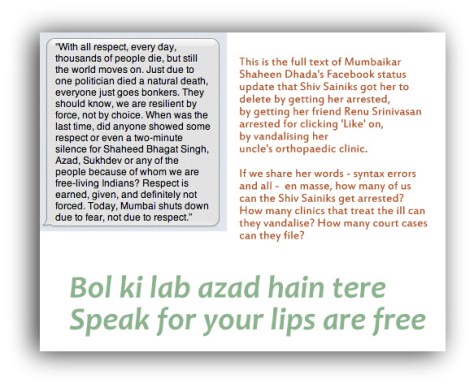
This morning, there was a short report in the Mumbai Mirror about two girls having been arrested for comments one of them made, and the other ‘liked’, on Facebook about Bal Thackeray:
Police on Sunday arrested a 21-year-old girl for questioning the total shutdown in the city for Bal Thackeray’s funeral on her Facebook account. Another girl who ‘liked’ the comment was also arrested.
The duo were booked under Section 295 (a) of the IPC (for hurting religious sentiments) and Section 64 (a) of the Information Technology Act, 2000. Though the girl withdrew her comment and apologised, a mob of some 2,000 Shiv Sena workers attacked and ransacked her uncle’s orthopaedic clinic at Palghar.
“Her comment said people like Thackeray are born and die daily and one should not observe a bandh for that,” said PI Uttam Sonawane.
What provisions of law were used?
There’s a small mistake in Mumbai Mirror‘s reportage as there is no section “64(a)”1 in the Information Technology (IT) Act, nor a section “295(a)” in the Indian Penal Code (IPC). They must have meant section 295A of the IPC (“outraging religious feelings of any class”) and section 66A of the IT Act (“sending offensive messages through communication service, etc.”). The Wall Street Journal’s Shreya Shah has confirmed that the second provision was section 66A of the IT Act.
Section 295A of the IPC is cognizable and non-bailable, and hence the police have the powers to arrest a person accused of this without a warrant.2 Section 66A of the IT Act is cognizable and bailable. Some news sources claim that section 505(2) of the IPC (“Statements creating or promoting enmity, hatred or ill-will between classes”) has also been invoked.
This is clearly a case of misapplication of s.295A of the IPC.3 This provision has been frivolously used numerous times in Maharashtra. Even the banning of James Laine’s book Shivaji: Hindu King in Islamic India happened under s.295A, and the ban was subsequently held to have been unlawful by both the Bombay High Court as well as the Supreme Court. Indeed, s.295A has not been applied in cases where it is more apparent, making this seem like a parody news report. Continue reading Social Media Regulation vs. Suppression of Freedom of Speech: Pranesh Prakash
Why Manmohan Singh should not visit Pakistan
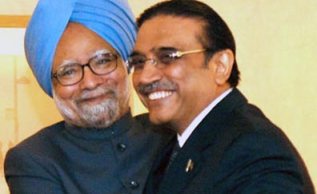
Dr Manmohan Singh is the longest serving Indian prime minister since Jawaharlal Nehru, but history will perhaps note more pertinently that he was the most discredited and unpopular prime minister since Chandra Shekhar Singh, who was in office for a mere eight months. So spectacularly disastrous has his second term in power been that the speed of political crises he battles is now more than one a week. Few will be able to count a single achievement of UPA-2.
And yet there is one achievement, and that is his handling of Pakistan.
The Indian home secretary was returning from a very positive visit to Pakistan when 26/11 happened. The 2008 terrorist attacks in Mumbai shocked not just India but the world. They were not like the bomb blasts we have become accustomed to; their impact was much more than 166 lives. They held India’s commercial capital hostage. They were an act of war and few even in Pakistan pretend that those attacks did not originate from Pakistani soil, across the Arabian Sea. Few in India buy the theory that state actors in Pakistan were not involved. Continue reading Why Manmohan Singh should not visit Pakistan
The Uttar Pradesh administration has a prominent role in the burning of Bhadarsa: Rihai Manch
This release was put out by the RIHAI MANCH on 9 November
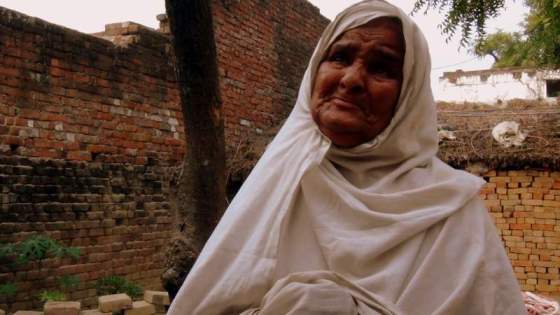
- Jannatunisa, a victim of violence in Bhadarsa
Faizabad 9 November 2012: An investigation team of Rihai Manch visited the Bhadarsa village which was affected by communal violence during Dussehra celebrations. The team found out that the violence was well planned and was executed by communal elements in connivance with the administration. The role of the media in this incident is also suspicious. The team also found that the administration is forcing the affected families to erase any evidence of the incident and they have not even been compensated. No FIR has yet been registered yet. The team has also requested the Sheetla Singh Investigation Commission (constituted by the Press Council of India) to visit the area. Continue reading The Uttar Pradesh administration has a prominent role in the burning of Bhadarsa: Rihai Manch
A Journey in the Punjab: Sohail Abid
Guest post by SOHAIL ABID
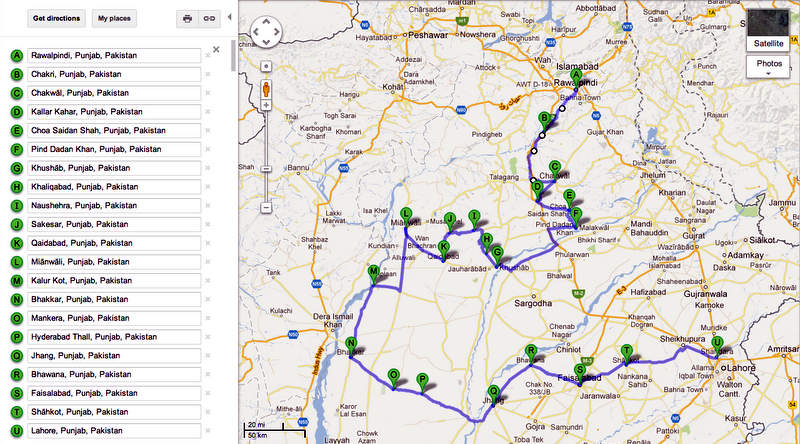
In 2010, I embarked on an ambitious bike trip of Punjab, visiting 30 cities in 30 days, covering 5,000km. That was a wonder experience but limited to big cities and towns. This time I want to see the rural side of Punjab. The idea is to avoid highways and travel through the roads connecting villages and small towns of Punjab. The following photographs are from the first phase of this trip, from Rawalpindi to Lahore through the towns and villages in west Punjab, away from the G.T. Road. I quit my day-job a few months ago. The 9-6 life wasn’t meant for me, I guess. Folklore and Punjab are the two things that fascinate me the most. That’s the reason I founded folkpunjab.com. These travels will one day provide me the base for writing something substantial on the folklore of Punjab. Continue reading A Journey in the Punjab: Sohail Abid
भदरसा के जलने में प्रशासन की अहम भूमिका: रिहाई मंच
This release in Hindi about recent communal violence in the Bhadarsa area of Faizabad district of Uttar Pradesh comes to us from the RIHAI MANCH. Please help us translate this into English by translating just one paragraph in the comments
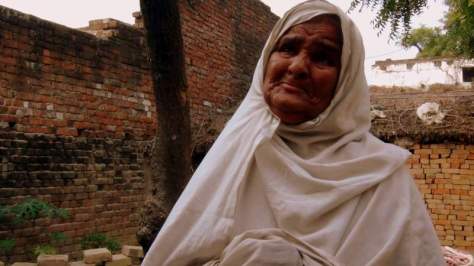
- Jannatunisa
फैजाबाद, 9 नवम्बर 2012। रिहाई मंच के जांचदल ने दशहरा के दौरान हुयी साम्प्रदायिक हिंसा से प्रभावित भदरसा गांव का दौरा किया। जांच दल ने पाया कि भदरसा में हुयी हिंसा पूरी तरह सुनियोजित थी जिसे साम्प्रदायिक तत्वों और प्रशासन की मिलीभगत से अंजाम दिया गया जिसमें मीडिया की भूमिका भी संदिग्ध थी। जांच दल ने यह भी पाया कि प्रशासन की तरफ से आगजनी से पीडित परिवारों से घटना के साक्ष्य जबरन मिटवाए जा रहे हैं जबकि पीडि़तों को न तो उचित मुआवजा मिला है और ना ही एफआईआर दर्ज किये गये हैं। जांच दल ने प्रेस काउंसिल द्वारा गठित शीतला सिंह जांच आयोग से भी भदरसा जाने की मांग की है। Continue reading भदरसा के जलने में प्रशासन की अहम भूमिका: रिहाई मंच
Gujarat vs. Himachal Pradesh: Rahul Verma
Guest post by RAHUL VERMA
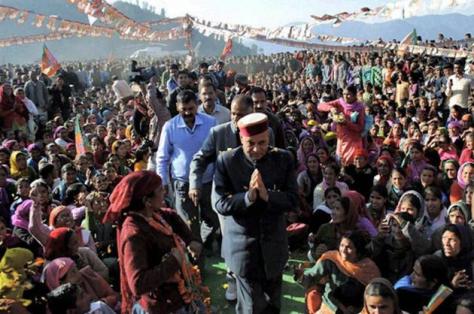
Even though Hiamchal Pradesh voted on November 4, Gujarat has been hogging all the limelight. The election in Gujarat is only in the third week of December. Gujarat captures our political imagination as a ‘role model state’ whereas Hiamchal Pradesh is just in our tourism agenda as a top holiday destination. It is hard for anyone to notice Himachal as a political entity among the big brothers like Uttar Pradesh, West Bengal, Bihar, Andhra Pradesh, Tamil Nadu, and Maharashtra. The irony is that some smaller states like Manipur and Nagaland still manage to get some attention because of violent manifestations of political choices in these states. Himachal Pradesh is absent from our discourses as the state is just ‘small’ and ‘beautiful’. However, the great turn around in Himachal over last two decades demands that India at least recognizes the “Himachal Pradesh model of development”. Continue reading Gujarat vs. Himachal Pradesh: Rahul Verma
Why is Naipaul Being Honoured?: Girish Karnad
This is the text of GIRISH KARNAD‘s speech at the Mumbai Literature Festival, as compiled by Outlookindia.com from various sources.
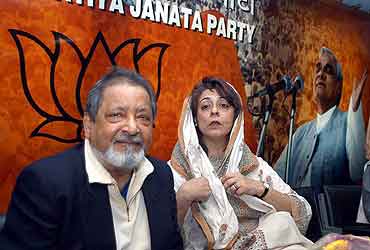
On Friday afternoon at the Tata Literature Live! festival in Mumbai, playwright Girish Karnad surprised audiences with an unexpected and spirited critique of Nobel laureate Vidia Naipaul. Naipaul was awarded the Landmark and Literature Alive’s Lifetime Achievement Award on October 31. Karnad was originally supposed to talk about “his life in theatre” in his session, but instead launched into a scathing critique of Naipaul and the conferral of the award to him
This is what he said at the festival:
At the Mumbai Literature Festival this year, Landmark and Literature Alive have jointly given the Lifetime’s Achievement Award to Sir Vidia Naipaul.
The award ceremony held on the 31st of October at the National Centre of the Performing Arts coyly failed to mention that Naipaul was not an Indian and has never claimed to be one. But at no point was the question raised. Continue reading Why is Naipaul Being Honoured?: Girish Karnad
Gurgaon Glossaries: Prasad Shetty, Rupali Gupte and Prasad Khandolkar
This guest post by PRASAD SHETTY, RUPALI GUPTE and PRASAD KHANDOLKAR is research work in progress for Sarai Reader 09 @ Devi Arts Foundation, Gurgaon
When a new city settles, new systems are made, new vocabularies get invented, new relations are formed, new methods are devised, new networks are forged, new enterprises are produced, and new life is led to settle the ruffles. This work is a compilation of such systems, vocabularies, relations, methods, enterprises and networks that get formed to shape and settle the city.
CLU:
‘Change of Land Use’ is a town planning provision that is generally a part of town planning acts of various states across India. This provision allows land use changes in the statutory plan. This provision is made to allow governments to respond to unforeseen requirements of the future, where some lands need to be used differently from the planned use. Continue reading Gurgaon Glossaries: Prasad Shetty, Rupali Gupte and Prasad Khandolkar
Chai, Autos and Sher Shah Suri: Shoaib Danyal
Guest post SHOAIB DANIYAL

Nothing good comes of having your status as capital snatched from you by Delhi. As a Calcuttan I know the pain. Of course, my city’s had it relatively easy when you consider the fate of Sasaram in Bihar. That’s where Afghan warlord (what a useful phrase: right from Bihar in the 16th century to the US invasion in the 21st) Sher Shah Suri had his capital, as ruler of Bengal and Bihar, before he overthrew Humayun and moved shop to the Purani Qila in Delhi. Unlike the Afghan warlords of today though, Sher Shah was a pretty impressive ruler. He introduced the rupiya. which was the predecessor of the modern rupee. More interestingly, he introduced a small denomination coin called the dam which probably gave rise to the English phrase “I don’t give a damn”. The administrative set-up introduced by him was so impressive that Akbar copied liberally from it and Sher Shah’s ideas therefore ruled India for centuries after the man’s death. Continue reading Chai, Autos and Sher Shah Suri: Shoaib Danyal
Allah Baksh, a people’s obituary: JKCCS
This release was put out yesterday by the
JAMMU & KASHMIR COALITION OF CIVIL SOCIETY
On 24 October 2012, the news of the death of former Deputy Inspector General [DIG] Allah Baksh broke out. Politicians, government officials, business groups, and certain elite sections of the Kashmir valley shamelessly competed with each other in offering condolences.
It is a shocking phenomenon which JKCCS condemns as Allah Baksh was notoriously known for his involvement in the 21 January 1990 Gaw Kadal massacre when he was the Deputy Superintendent of Police [DSP]. The Gaw Kadal massacre was one of the first massacres in the post-1990 armed conflict in which reportedly more than 50 civilians were killed. For this massacre an FIR was registered against the dead and surviving civilians [3/1990 Police Station Kralkhud] but no one was held accountable for the massacre itself.
What Development Means: Dilip D’Souza
This guest post by DILIP D’SOUZA is an excerpt from his book, The Curious Case of Binayak Sen
On a recent trip to the central Indian state of Chhattisgarh, I visited a village called Bamhni. The Jan Swasthya Sahyog (JSS; People’s Health Collective, a rural hospital) of Ganiyari runs an outreach clinic there. Every Tuesday, one or two JSS doctors and a small team of health workers get into a Mahindra Bolero SUV in Ganiyari and drive an hour-and-a-half to reach Bamhni.
I spent much of the day with an even smaller JSS team that reaches out even beyond this outreach clinic. The area we were in is part of the Achanakmar Wildlife Sanctuary, which has existed since the mid-70s. As happens with several Indian wildlife reserves, this one has several villages located inside its boundaries. In 2009, Achanakmar was declared part of Project Tiger, the more stringent Indian effort to save that splendid animal. More stringent, that is, in the conditions it spells out for villages in designated sanctuaries. When Achanakmar joined Project Tiger, the residents of Bamhni and several other villages were told they would have to move out of the “core zone” of the sanctuary, so as to leave the tigers an area where they would be undisturbed. Continue reading What Development Means: Dilip D’Souza
Why is the media not asking hard questions on the deportation of Fasih Mehmood?: JTSA
This statement comes from the JAMIA TEACHERS’ SOLIDARITY ASSOCIATION
In September, we brought out a report, Framed, Damned, Acquitted documenting 16 cases where trials of terror accused had resulted in acquittals for not only lack of evidence but obviously concocted evidence. Each of these cases was accompanied by a section on how media had publicly tried and ‘executed’ these unfortunate men when they were first arrested—to abandon them or bury their stories in the inside pages when they were later acquitted. The release of the report had generated a genuine interest in the media—and one may dare say, an introspection of the media’s own role as the handmaiden of the investigative agencies. Continue reading Why is the media not asking hard questions on the deportation of Fasih Mehmood?: JTSA
The Beginning of the Middle of the End: Haseeb Asif
Guest post by HASEEB ASIF
One day as I walked to the market to buy some eggs, I noticed strange graffiti on a wall. Emblazoned in red paint was an invitation to join the fight against zionist subversion, western imperialism and painful hemorrhoids; the end having been muddled with a physician’s note.
It was an open call to Jihad by a militant Islamic organization. Jihad! The camaraderie, the righteousness, the third degree burns; it’s all I’d ever wanted. I was tired of being oppressed. There I was, in the prime of my youth, jobless, eggless, with subnormal visual acuity and four strands of the dengue virus, and who was to blame? I could imagine the conversation with my therapist.
“Doctor, I’m moody, I can’t sleep and I never seem to have enough energy to do anything.”
“Why, I believe you’re suffering from oppression”
I called their toll free number and signed myself up. They sent me a brochure and a medical plan; both had pictures of the same mutilated bodies.
‘Jihad summer camp, three months, graduating candidates get a certificate of martyrculation and up to 72 virgins in heaven (note: amount varies according to stock), HEC accredited, facial hair mandatory’.
I consulted with my parents, my mother was thrilled; she’d always wanted a martyr in the family. Father just grunted and made a time honoured gesture with his middle finger.
Two days later a brother Mehsud showed up at my door, he’d been sent by the organization to escort me back to their base.
“It’s a great thing you’re about to do, brother.” I was only packing my clothes. Continue reading The Beginning of the Middle of the End: Haseeb Asif
The Iron Lady of Jharkhand: Mahtab Alam on Dayamani Barla
Guest post by MAHTAB ALAM
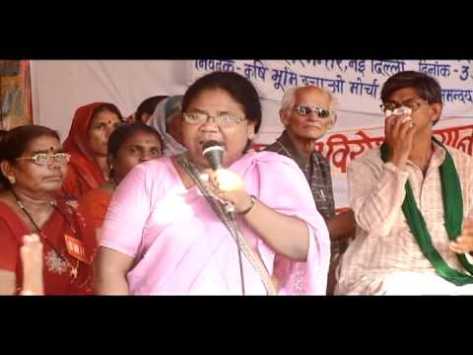
The journalist turned anti-displacement, tribal, woman activist from Jharkhand Dayamani Barla, better known as the Iron lady of Jharkhand amongst people’s movements and activists, or simply as Dayamani Di was granted bail by a local court in Ranchi on Thursday afternoon. She was sent to Jail on Tuesday in fourteen days judicial custody, after she surrendered before the court in a matter of 25 April 2006. Six years ago, she was charged under various sections of the Indian Penal Code (IPC), including Section 148 (rioting, armed with deadly weapons), for participating in a protest demonstration, which blocked the road, demanding job cards for rural laborers under the celebrated National Rural Employment Guarantee Act (NREGA). She had availed bail at that time from the concerned police station and the matter was almost closed one. Continue reading The Iron Lady of Jharkhand: Mahtab Alam on Dayamani Barla
Kazmi Solidarity Committee welcomes SC order to grant bail to Syed Kazmi
This release comes from the KAZMI SOLIDARITY COMMITTEE
The Kazmi Solidarity Committee welcomes the Supreme Court order granting bail to Syed Mohammad Ahmad Kazmi after seven months in custody on charges of involvement in the bomb attack on an Israeli diplomatic vehicle.
The committee deplores the obstructive attitude of the prosecution and the Special Cell of the Delhi Police, which have been perversely attempting to keep Mr. Kazmi in prison despite their inability to file a chargesheet within the extended time granted under the Unlawful Activities Prevention Act. Not only did the prosecution seek an extension of 90 days after the mandated period of judicial custody was over, it also used its inefficiency as an alibi, pleading that it needed more time to send out letters rogatory seeking international judicial assistance. While Mr. Kazmi was in custody, the Special Cell left no stone unturned in orchestrating a media trial to establish his guilt, planting malicious stories of his “confession” (while disavowing responsibility for these in court hearings).
Continue reading Kazmi Solidarity Committee welcomes SC order to grant bail to Syed Kazmi
An open letter to the jury of The Economic Times Awards for Global Excellence: G. Ananthapadmanabhan
This open letter has been put out by G. ANANTHAPADMANABHAN of Amnesty International (India)
Dear Mr Deepak Parekh, Mr Kumara Mangalam Birla, Mr K V Kamath, Mr Kris Gopalakrishnan, Mr A M Naik, Ms Chanda Kocchar and Mr Cyril Shroff,
We at Amnesty International India are deeply disappointed by your decision to give the Economic Times Business Leader of the Year 2012 award to Mr Anil Agarwal, Chairman of Vedanta plc.
The Business Leader award is given to individuals who have demonstrated “a strategic direction for success, and pursued a vision”. But Vedanta, in its efforts to have a bauxite mine opened at the Niyamgiri hills in Orissa and expand an aluminium refinery near Lanjigarh, has demonstrated an utter lack of both leadership and vision. What it has shown instead is a brazen disregard for Indian law and an utter lack of respect for the rights of local communities. Continue reading An open letter to the jury of The Economic Times Awards for Global Excellence: G. Ananthapadmanabhan
To Build A Bridge in Kashmir: A fable by Abhijit Dutta
Guest post by ABHIJIT DUTTA
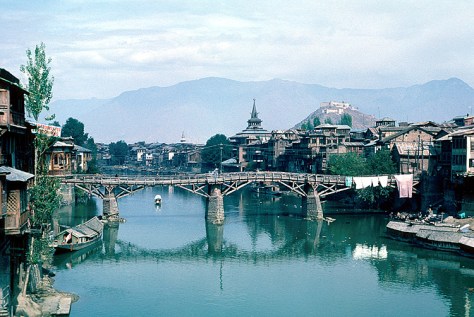
Once upon a time, a young politician – young enough to have a ‘baba’ appended to his name – came to Kashmir to build a bridge in Srinagar. Now as anyone who knows Srinagar knows, the city is filled with bridges. Some are famous, like Gawkadal, some are pretty, like Zero Bridge, and some are simply without charm, like the Abdullah Bridge that goes from fountain square to Rajbagh. There are several others too, each with their own unique character, their own unique relation to the Jhelum.
When he was told about the many bridges in Srinagar, the politician shouted, “I want to build a bridge.”
“But we don’t need a bridge,” said a man softly to him, wanting not to embarrass this well-meaning man who had come to Kashmir from aafar. In response, the young politician turned around and shouted once again: “I want to build a bridge.” Continue reading To Build A Bridge in Kashmir: A fable by Abhijit Dutta
Fifty villages
This report was released in Srinagar today by THE CITIZENS’ COUNCIL FOR JUSTICE. It is a statistical study of violence in north Kashmir between 1990 and 2011
 KAFILA - COLLECTIVE EXPLORATIONS SINCE 2006