All posts by Shivam Vij

Shivam Vij is a writer and journalist based in New Delhi.

Healthy Debate

Our disclaimer page reads:

1. Personal attacks are not okay! Passionate, even angry critiques are great, but you want to hold off on the invective. This is an online forum, not a prize contest on the bad words we are sure everyone knows.

2. We want Kafila to be a forum in which we can explore complex ideas together. Polarised for/against debates or WWF-type slanging matches help nobody.

3. All of us who write here have an investment in the issues posed in Kafila. So for us these exchanges are not merely academic or for point-scoring.

In line with that, a public service message about trolls, as much for ourselves as anyone else!

please_do_not_feed_the_troll

From here.

Pharmaceutical ad

PeppersprayProductions.org

Somebody make an Indian version please?

Caste/gender in a poem by Varavara Rao

I’m posting below a poem by Varavara Rao and a response to it by Rochelle Pinto. Comments and debate welcome, but trolls will strictly not be allowed regardless of caste and gender! Comments are regulated here by a disclaimer to maintain sanity. Not repeating your position ad nauseum helps, unless you desperately want to have the last word.

Merit

by VARAVARA RAO

Lucky
You are born rich
To say in your language
“Born with silver spoon in the mouth”

Your agitation sounds creative
Our agony looks violent
Continue reading Caste/gender in a poem by Varavara Rao

Kashmir Tribunal Memorandum to CM Omar Abdullah

To: Mr. Omar Abdullah
Chief Minister
Jammu and Kashmir

From: The International People’s Tribunal on Human Rights and Justice in Kashmir Continue reading Kashmir Tribunal Memorandum to CM Omar Abdullah

On moral policing

Some people are trying to organise creative protests against moral policing on Valentine’s Day. You may want to join them. Continue reading On moral policing

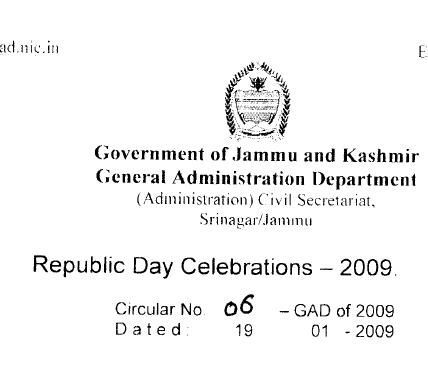
Republic Day in Srinagar

rdayorder1

By the way, belated Happy Republic Day! Say it loud and clear brother, lest you also get an order like this one of these days!

(Thanks, Chandni Parekh.) Continue reading Republic Day in Srinagar

Are you an Al Badr militant?

CBI irked by special cell for framing 2 informers as terrorists

Fresh probe needed against two suspected terrorists: Delhi Police

CBI, Special Cell in row over terror suspects

CBI for discharge of two alleged Al-Badar terrorists

Police official hampering probe, CBI tells court

Special Cell threatening officer: CBI

Court to hear two probe agencies in framing youths as terrorists

One small question about Scam Satyam

Everyone’s blaming everyone for Scam Satyam.

What were the auditors (the hallowed PwC) doing?

What was SEBI doing?

What was India Inc doing?

What were Satyam’s ‘independent’ directors doing?   

Not surprisingly, politicians are also being blamed.

Even the ‘greedy investors‘ are being blamed.

But is it only me or are there others asking: what was the Continue reading One small question about Scam Satyam

UAPA: Legalising the police state

Guest post by ANUJ BHUWANIA

Recently the clamour for a draconian terror bill came to fruition with rare alacrity. The Unlawful Activities (Prevention) Amendment (UAPA) Bill was introduced and passed within two days by both houses of Parliament – quite a contrast to, say, the Women’s Reservation Bill, gathering dust now for more than a decade. Coming from a government that repealed POTA soon after it assumed power, the Bill unimaginatively mimics POTA almost entirely, revealing that little has been learnt from the recent history of TADA and POTA and the problems leading to their removal. While such statutes giving extraordinary powers to the police are introduced to cater to ‘exceptional’ situations, they can easily be deployed in ‘ordinary cases’ and indeed routinely are. The bleeding of one category into the other is inevitable, when the police alone decide which is which.

Continue reading UAPA: Legalising the police state

Army wanted Abdullah, who’s surprised?

Ashish Sinha in Mail Today:

Any political decision on Kashmir — especially when the ball is in the Congress’s court — cannot afford to ignore the sentiments of lakhs of troops stationed here because, at least for now, they appear to be a more permanent fixture than any party, even the National Conference (NC). [Full text]

I told you so…

And Siddharth Varadarajan asks the right question:

But if these motives propelled the ISI to either mount or at best turn a blind eye to the Mumbai plot, why did the same agency — which essentially manages Rawalpindi’s links with militant groups active in Jammu and Kashmir — not seek to disrupt the assembly elections? [Here]

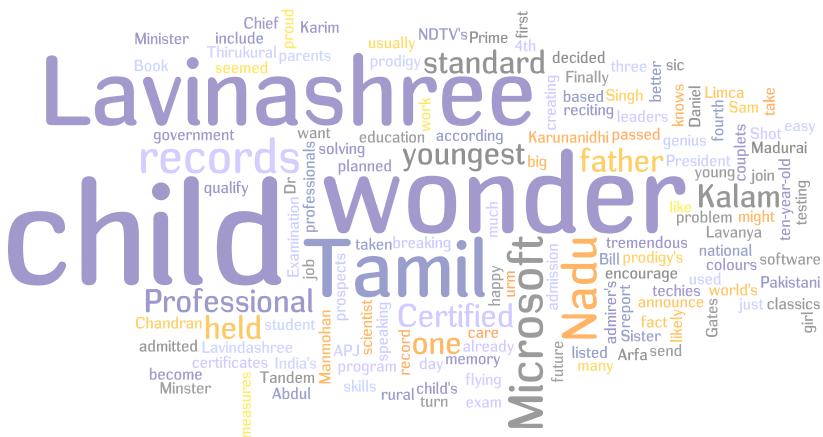
Child prodigies and television news scripts… aaaw!

Guest post by KISHORE BUDHA

Continue reading Child prodigies and television news scripts… aaaw!

Oranges in Kashmir

Guest post by K

In the summer of 2008, something impossible happened. To a number of Indians, Kashmir was no longer an atoot ung, an inseparable part of the Indian body politic. That image of Kashmir treacherously manufactured by the Indian state through lies, deceit and the media, was wearing down.

The atoot ung no longer seemed atoot to many voices in India and against all odds the people of Kashmir were changing many hearts and minds in India. The loss of soldiers does not worry India as much as the change in its public opinion on Kashmir. This had to be undone, and undone fast before it spread its tentacles. The evil image of Kashmiris had to emphasized and the  non-violent protests discredited. What better than an election to do the task?

So the results will be out tomorrow, but do they matter? Continue reading Oranges in Kashmir

“I wish I’d had a gun, not a camera. Armed police would not fire back!”

Alas, the video has been removed fromYouTube.

A cruel joke called elections in Kashmir

The Indian media has been expressing surprise about the high voter turnouts in the Kashmir elections. The expression of surprise sounds genuine. I am not sure how genuine it is. Is patriotism coming in the way of truth? How can we not see what a Wall Street Journal reporter can?

In the village of Samboora, residents said that Indian Army troops went from house to house on Saturday morning, rounding up families and taking them to a polling station. As a reporter drove into the village Saturday afternoon, an army vehicle with several soldiers stopped by the walled compound of Ghulam Mohammad, pulling the 59-year-old retiree onto the road. Seeing a foreign reporter, the soldiers jumped into their vehicle and quickly drove off. “They asked me why I’m not voting, and I said that’s because I don’t like any of the candidates,” Mr. Mohammad said moments later. “They said, if I don’t vote, I’ll be sorry later.” [Must Read]

And wasn’t this predicted anyway? Didn’t we tell you about Gentle Persuasion? Oh, and they already know who the CM is going to be.

Looking Kabul, talking Rawalpindi?

Strategically speaking, that is. It is important to think this question through.

For one, there’s hardly anybody disputing that the Lashkar-e-Tayebba was behind the attack. Pakistan wants evidence, but doesn’t deny the LeT could be it. 

Parvez Hoodbhoy says in an interview:

LeT, one of the largest militant groups in Pakistan, was established over 15 years ago. It was supported by the Pakistani military and the ISI because it focussed upon fighting Indian rule in Muslim Kashmir. Today it is one of the very few extremist groups left that do not attack the military and the ISI; Continue reading Looking Kabul, talking Rawalpindi?

The press freedom bogey

…is raised every time there’s talk of a law “regulating” TV News channels in India. A rajya Sabha committee now says self-regulation is not enough, the media needs a set of rules from the government. I think that one shoudn’t necessarily view the idea of a law, or regulation, with suspicion. After the despicable 26/11 coverage and even before, many channels have lost the right to hide their TRP-driven sensationalism behind the free speech bogey. 

That may sound self-contradictory, but see what the committee has concluded on the subject:

Continue reading The press freedom bogey

The monster in the mirror

Arundhati Roy wants you to choose:

There is a fierce, unforgiving fault-line that runs through the contemporary discourse on terrorism. On one side (let’s call it Side A) are those who see terrorism, especially “Islamist” terrorism, as a hateful, insane scourge that spins on its own axis, in its own orbit and has nothing to do with the world around it, nothing to do with history, geography or economics. Therefore, Side A says, to try and place it in a political context, or even try to understand it, amounts to justifying it and is a crime in itself.

Side B believes that though nothing can ever excuse or justify terrorism, it exists in a particular time, place and political context, and to refuse to see that will only aggravate the problem and put more and more people in harm’s way. Which is a crime in itself. [The Guardian, Saturday, 13 December 2008]

India’s fault lines, explored in a film about a Delhi thief – Trisha Gupta

Guest post by TRISHA GUPTA

Fifteen minutes into Dibakar Banerjee’s new film, a bunch of lower middle class Delhi boys are beating up a private school kid whose one refrain is a pleading “Jaan de bhai, extra class hai“. They don’t stop. But at one point, the gangly teenaged sardar pauses in his pummelling to make the padhaaku kid answer a crucial question, “Yeh greeting card mein likha kya hota hai?Continue reading India’s fault lines, explored in a film about a Delhi thief – Trisha Gupta

“Mindless,” “Muslims”

Those two M’s recur, on this blog and elsewhere, in the heated discussions around the tragic, provocatove events that have unfolded this past week. I am reminded of this point Martha Nussbaum wrote after Obama won: Continue reading “Mindless,” “Muslims”

An SMS and an online signature

An SMS doing the rounds: Continue reading An SMS and an online signature

Bihar, Bombay, Boston: Dilip D’Souza

Guest post by DILIP D’SOUZA

What’s the real issue in the whole Raj Thackeray-fueled mess?

Well, according to someone who left a comment on my blog, it is “migration”. With some elaboration, here’s how our back and forth went, after that.

While this person was opposed to the violence, he also thought migration is indeed the issue, and with the agitation, Raj T “has brought out the failure of the UP & Bihar governments to create jobs for the last 50 years.” Continue reading Bihar, Bombay, Boston: Dilip D’Souza