Category Archives: Bad ideas

Two statements on the Environment Ministry’s ‘forest clearance’ to POSCO

In response to the Union Environment Ministry’s decision, given below are two press releases, from POSCO Pratirodh Sangram Samiti and Campaign for Survival and Dignity

POSCO PRATIRODH SANGRAM SAMITI

(based out of villages Gadkujang, Nuagaon and Dhinkia in Erasama block of Jagatsinghpur district, Odisha. )

A Mercenary Minister and a Lying Government Cannot Crush Our People
Money Worth More to Government than Truth, Law and Justice; but the Corrupt and the Criminal Will Not Triumph

2 MAY 2011: Today, in a sanctimonious order riddled with lies and distortions, the Environment Ministry allowed thePOSCO project to proceed. The livelihoods of 4000 families (over 20000 people) and the laws of the land have been sold to the highest bidder. Certain facts should be brought to the notice of the public: Continue reading Two statements on the Environment Ministry’s ‘forest clearance’ to POSCO
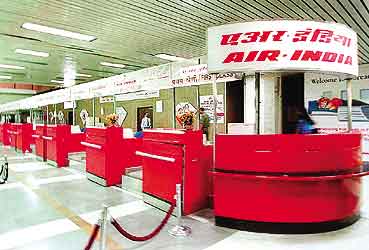
A government that wants to destroy its own airline?: Susmita Dasgupta

Guest post by SUSMITA DASGUPTA

Many moons ago, when our sweet little dupleix in Dover Lane was enlarged into a three storey house to make space for a tenant, our first tenant was an Indian Airline pilot. Similarly, many modern condominiums in our locality were being rented out to pilots and air hostesses. This was a mark of Dover Lane having arrived as a respectable colony in Ballygunje from its rather modest middle class veneer. The airlines are always looked upon as a creamy layer of the middle class; offering prospects and possibilities that are matched only by the IT, bureaucracy and the army. It has the class of being high salaried, élan of professional excellence and the allure of a closed group cadre. In other words, it has the best of all worlds notwithstanding the attraction of international travel with sops like free tickets for dependent members of the family. The pilots, who are the core of this sector, are on strike in India’s only public sector in the aviation sector, namely Air India. Continue reading A government that wants to destroy its own airline?: Susmita Dasgupta

The Fragility of Oppositional Civil Social Ecology and the Impact of V S

Now that most of us Malayalees are basking in the warmth of the global ban on Endosulfan,even enjoying a brief spell of ‘unity’ (yes, even the UDF folk have joined, if more warily), what I’m about to write will probably make me quite unpopular. Well, here goes —  I have been watching the unfolding of events since last month’s elections to the Kerala State Assembly right up to the gathering of protest and the CPM-led charge against Endosulfan and it all looked like the ultimate festival of depoliticized mediatized dramatics. The dramatics during candidate-selection, the emotional performances of candidates, pretenders, leaders etc etc of various sorts for TV, the weepy complaints combined with nimble hopping across the LDF-UDF boundary by seekers of candidature, the lack of attention to manifestoes and the general attrition of discussion, all of this seemed to taper endlessly — exactly like the long-drawn-out daytime temple rituals during the Pooram at Thrissur. It was indeed a festival, consumed heavily and enjoyed immensely by the people — perhaps not in the sense of being a ‘festival of the people’.

Continue reading The Fragility of Oppositional Civil Social Ecology and the Impact of V S

Brilliant Tutorials: Trisha Gupta reviews Siddharth Chowdhury’s “Day Scholar”

Guest post by TRISHA GUPTA

On the face of it, Siddharth Chowdhury’s Day Scholar, is a coming of age novel. The book’s own inside cover actually describes it as a “crazed and profane coming of age tale”, whose plot is ostensibly about how Patna boy Hriday Thakur (“who hopes to be a writer some day”) is first “trapped… by a series of misjudgements” and later “saved from a terrible end”. But much like Chowdhury’s previous offering, Patna Roughcut (also billed as “a story of love, idealism and sexual awakening” that takes us to “the heart of an aching, throbbing youth”), Day Scholar – despite a self-referential moment when its protagonist is asked by his father about how his Bildugsroman is coming along – is not a book that seems containable within the neat boundaries of the coming-of-age genre. Continue reading Brilliant Tutorials: Trisha Gupta reviews Siddharth Chowdhury’s “Day Scholar”

Modest? Sexy? Or just an athlete?

By goddess, it’s that spot again – at once familiar and deeply uncomfortable. Us feminists in the same rage as the patriarchs and religious right, over the same damn thing. For very different reasons, we bellow (cutely), but is anybody listening?

The  Badminton World Federation has announced its new dress code that requires women players to wear skirts  “to ensure attractive presentation of badminton.” Almost every Indian woman player has objected, saying that dress should be one’s personal preference.

Of course most workplaces have dress codes.  So this is about more than simply an infringement of individual tastes. This is about the utter blatant sexism of this particular requirement. Basically, what’s the BWF saying quite shamelessly? That they expect more people to come to the sport if they can see suggestively flying skirts (on women). Even if there are shorts beneath, which they have grudgingly permitted. It’s not enough to show legs, skirts have to fly. Continue reading Modest? Sexy? Or just an athlete?

वामपंथ, माकपा और जनवादी क्रांति बकौल प्रभात पटनायक

[This post is a response to Prabhat Patnaik’s article ‘Why the Left Matters’ which appeared in the Indian Express on 17 March. A version has appeared in two parts in Jansatta]

पांच राज्यों में विधान सभा चुनाव हो रहे हैं. इनमें से दो, बंगाल और केरल वाममोर्चा शासित प्रदेश हैं. केरल में तो भारत के अन्य राज्यों की तरह  चुनावों के परिणामस्वरूप सरकारें बदलती रही हैं , बंगाल ने पिछले  चौंतीस  साल से वाम मोर्चे के अलावा किसी और सरकार का तजुर्बा करना ज़रूरी नहीं समझा है. इसे अक्सर बंगाल की जनता की राजनीतिक परिपक्वता के तौर पर व्याख्यायित किया गया है. बौद्धिक जगत में साम्यवादी विचार की वैधता के लिए भी जनता द्वारा दिए गए इस स्थायित्व का इस्तेमाल वैसे ही किया जाता रहा है जैसे कभी सोवियत संघ और अन्य पूर्वी युरोपीय देशों या अभी भी चीन में  साम्यवादी दल के  सत्ता के अबाधित रहने से उसे प्राप्त था.  बल्कि कई बार इसे अन्य  राज्यों की जनता के राजनीतिक दृष्टि से पिछ्ड़े होने के प्रमाण के रूप में भी पेश किया जाता रहा है . इस बार स्थिति कुछ बदली हुई लग रही है. अगर बंगाल में अनेक स्तरों के स्थानीय निकायों के चुनाव कुछ इशारा कर रहे हैं तो वह सत्ता परिवर्तन का है.

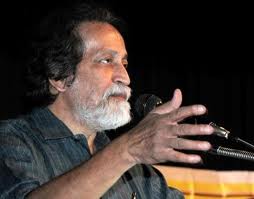
Prabhat Patnaik, leading CPI-M aligned intellectual

संसदीय प्रणाली पर आधारित लोकतांत्रिक व्यवस्था में इस प्रकार का परिवर्तन जीवन का नियम माना जाता है, बल्कि इस अस्थिरता में ही उसकी जीवंतता का स्रोत भी देखा जा सकता है. लेकिन बंगाल की जनता द्वारा मत-परिवर्तन की संभावना एक विशेष बौद्धिक संवर्ग के लिए चिंता का विषय बन गई है. प्रख्यात अर्थशास्त्री प्रभात पटनायक ने कुछ पहले इस संकेत की असाधारणता की ओर ध्यान दिलाते हुए एक टिप्पणी लिखी है. बल्कि यह जनता और विशेषकर भारत के शिक्षित समुदाय से एक अपील ही है – भारत की लोकतांत्रिक क्रांति की रक्षा की अपील. उनके कहने का सार यह है कि भारत की सतत वर्धमान लोकतांत्रिक क्रांति पर प्रतिक्रांतिकारी शक्तियों के बादल मंडरा रहे हैं और इस बार यह खतरा वास्तविक और आसन्न है. इस खतरे का सामना करने के लिए प्रभात आवश्यक मानते हैं कि वामपंथ को चुनाव में प्रतिकूल परिणाम न झेलना पड़ॆ.  उनके अनुसार वामपंथ को कोई भी चुनावी धक्का दरअसल लोकतांत्रिक क्रांति के लिए मरणांतक आघात साबित हो सकता है.

Continue reading वामपंथ, माकपा और जनवादी क्रांति बकौल प्रभात पटनायक

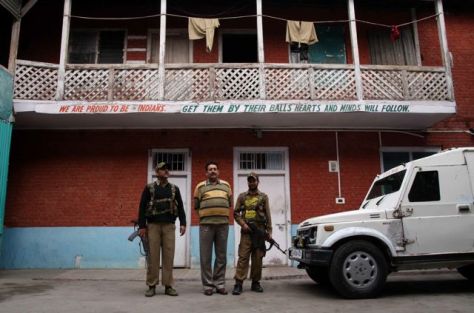
India’s Kashmir policy described in one photograph by Javed Dar

This photograph of an Ikhwani camp in south Kashmir was taken by JAVED DAR in 2008. Standing in the middle is a well-known ‘government gunman’, Jehangir Khan. Photo courtesy Conveyor.

The ‘Whore of Babylon’ – Or, Misogyny, Sexism, CPM Style

It has to be seen and heard to be believed! Former Arambagh CPM(M) MP Anil Basu , addressing an election rally in his home turf likened Mamata Banerjee to a ‘whore of Sonagachi’, who is now getting rich clients from the US to give money for her election campaign! I draw attention to this with the greatest of respect for the women  he is referring to, sex workers who work hard to make a living. When Basu refers to them, however, it nothing but a statement of  misogynist contempt for women in public and reveals, once again the mindset of the Left leadership that rules West Bengal.

Some extracts from today’s Indian Express report:

 “Addressing a rally yesterday, Basu made references to Sonagachi — Kolkata’s red-light area. “Where is she getting the money from?” he asked. “From which bhatar (Bengali derogatory slang for a woman’s “illicit male partner”) did she get Rs 24 crore to fund the Trinamool Congress’s poll expenses?”

Saying that prostitutes in Sonagachi “do not even look at smaller clients” when they get a “big client”, Basu said now that the Trinamool has got a “big client” — the USA — to fund its poll expenses, it is not interested in the “smaller clients” from Chennai, Andhra Pradesh and other places in the country.”

Continue reading The ‘Whore of Babylon’ – Or, Misogyny, Sexism, CPM Style

The Paradoxical Figure of Mamata: Monobina Gupta

Guest post by MONOBINA GUPTA

With the coming assembly elections, West Bengal seems to be poised on the edge of a historic upheaval that will, in all probability, enter the collective memory of its people, much like the momentous 1977 elections. The most palpable moment of this churning will manifest in what looks like an unbelievable denouement – that of the thirty-four year old monolithic rule of the Left Front. Equally stunning might be the image of Mamata Banerjee, bringing the red fortress down – a politician, almost bludgeoned to death by CPI-M cadres on 16th August 1990, now transformed into the emblematic face of this extraordinary hour. The 2011 polls may be billed as the great unraveling of West Bengal, its politics and culture – but also, I think, of gender relations. Banerjee is on the verge of acquiring a unique status, becoming the first woman head of a state well known for its misogynist culture, notwithstanding many claims to the contrary.

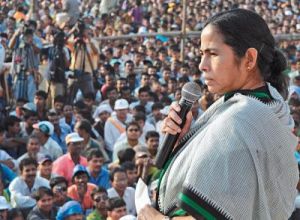
mamata banerjee
Mamata Banerjee. Courtesy The Hindu, Arunangsu Roy Chowdhury

An important aspect of Banerjee’s ascendancy may be lost if we fail to locate her persona within this grid of power and gender relations; if we do not contextualize her in Bengal’s thriving culture of male chauvinism. The association of West Bengal and its ruling Marxists with the autonomy and radicalization of women – who are supposedly respected in Bengal unlike in other parts of the country – is a well preserved myth. Bengal respects its women, but only if they belong to the hallowed league of ‘Mothers and Sisters’. Like elsewhere, ‘deviant’ women have little place in the land of the Renaissance.

Continue reading The Paradoxical Figure of Mamata: Monobina Gupta

Is It Nineteen Eighty Four Already?

On 9 April 2011, 11 members of the English Department of Delhi University (almost the entire Department) resigned from various (non-statutory) work committees within the Department. They carried on all their other duties, including teaching, regardless. This mass resignation followed repeated requests from them to their Head of Department to call a meeting of the Department Council of the English Department. By resigning (only from the non-statutory committees), the members of the Department were hoping to bring largely symbolic and moral pressure to bear on the Head, to perform his duties!!

You know something is seriously wrong with a workplace when members of Department have to bring pressure to bear on a Head to perform his or her regular, statutory duties. You should really smell a rat when it’s not the minions and juniors but the bosses at the highest levels that are bending and twisting rules to their advantage; publicly ignoring long-standing statutes and conventions; inventing new ones almost overnight; and practising selective amnesia about procedures.

Continue reading Is It Nineteen Eighty Four Already?

Free Dr Khaleel Chishty: Amna Chishty

Update: A hopeful note from Kavita Srivastava

An appeal by AMNA CHISHTY

16th April 2011

My father is almost 80 years old. He received his PhD from University of Edinburgh, Scotland in 1968 in Public Health Virology. He had an illustrious career as a professor and head of department of virology and microbiology at Karachi University. In the late 80’s he retired from his last job as the Director of Public Health at King Abdul Aziz Airport in Jeddah Saudi Arabia. He is a principled man who is well‐read, well bred and well traveled. He worked hard to raise a family of six children – one son (oldest, with engineering diploma), five daughters (one is a doctor, one is a Pharmacologist, two are graduates and myself an MBA in marketing). He educated us and built a house for us in Karachi and supported his younger brother in India as well. After retirement he wanted to live in that house in Karachi and enjoy his retirement with his family and his grandchildren.

The following events led to his current plight: In 1992 my father went to Ajmer to visit his ailing mother at his brother’s house near Dargah Sharif.  Continue reading Free Dr Khaleel Chishty: Amna Chishty

Free Murtaza Manzoor

This release comes from AMNESTY INTERNATIONAL

Urgent Action: Child Detained Without Charge or Trial

UA: 115/11 Index: ASA 20/015/2011 India Date: 14 April 2011

Murtaza Manzoor has been held in administrative detention since 8 February by police in Jammu and Kashmir, India. His official birth certificate states that he is only 17 years old.

Murtaza Manzoor was arrested on 21 January by police in Srinagar, the capital of Jammu and Kashmir. He was arrested in relation to a case from June 2010 on allegations of attempted murder, assault and rioting. According to the police, he is an “incorrigible antisocial element” who was leading a protest march that resulted in protestors pelting police with stones. Continue reading Free Murtaza Manzoor

‘Justice on Trial’ in the Times of Tilism: The Absence of Binayak Sen and the Presence of Anna Hazare on Television in April 2011

Sometime today, the Supreme Court bench of the honorable Justices H. S. Bedi and C.K. Prasad will hear arguments for and against the petition asking that  Dr. Binayak Sen, currently sentenced to life imprisonment by the Chhattisgarh High Court on charges of sedition and several other sections of the Indian Penal Code,  be given bail. Continue reading ‘Justice on Trial’ in the Times of Tilism: The Absence of Binayak Sen and the Presence of Anna Hazare on Television in April 2011

लोकतंत्र की आत्मसमीक्षा का क्षण

अण्णा हजारे के ‘नेतृत्व’ मे शुरू हुए भ्रष्टाचार विरोधी आन्दोलन का पहला चरण सफलतापूर्वक समाप्त हो गया है. अनेक लोगों को सरकार को हिला देने का सुख और संतोष इस आंदोलन ने दिया है. हजारे ने खुद यह कहा कि एक बार तो भगत सिंह ने अंग्रेजों को भगाया था, इस बार ‘काले’ अंग्रेजों को भगा दिया गया है. इसे दूसरी आज़ादी की लड़ाई भी कहा जा रहा है. इसके पहले एक और ‘दूसरी आज़ादी’ की लड़ाई लड़ी गई थी लेकिन शायद वह असली नहीं रही होगी तभी तो इसे तीसरी नहीं दूसरी आज़ादी की जंग कहा जा रहा है. यह सोचने का विषय है कि इस देश में हर प्रकार के संघर्ष को अपना औचित्य सिद्ध करने के लिए क्यों खुद को स्वतंत्रता संग्राम के रूप में प्रचारित करना पड़ता  है. कहा जा सकता है कि यह तो भाषा का रूपकात्मक प्रयोग है, इसे आगे खींचने की ज़रूरत नहीं. इस रूपक को गढ़ने  को मजबूर दिमाग जिस ग्रंथि से जूझता है , वह शायद यह है कि हममें से अधिकतर को यह रंज और गम है कि हम 1947 के पहले पैदा नहीं हो सके थे और इस देश को आज़ाद कराने में हमारा कोई हिस्सा नहीं.दूसरे, उस आन्दोलन के अंतिम क्षण के शत्रु रक्त से रंजित न होने के कारण नवीन राष्ट्रीय शिशु के जन्म की वास्तविक अनुभूति से हम वंचित रह गए. इसके कारण हम सबको एक स्तर पर अपना राष्ट्रीय अस्तित्व ही अप्रामाणिक प्रतीत होता है.   हर पीढ़ी को इस कुंठा से मुक्ति के लिए कभी न कभी एक स्वतंत्रता संग्राम की आवश्यकता पड़ती  है. गोरे अंग्रेजों और काले अंग्रेजों को ‘भगाने’ के जिस  विकृत सुख लाभ की आकांक्षा इस तरह के वक्तव्यों में झलक पड़ती है, उसके पीछे छिपी हिंसा को पहचानना भी आसान नहीं होता. क्या यह इसलिए करना होता है कि ऐसे आन्दोलन एक ‘राष्ट्रीय’ कल्पना को उत्तेजित करना चाहते हैं और इस लिए राष्ट्रीय संदर्भों के सहारे अपनी वैधता हासिल करते हैं? जंतर मंतर के अनशन मंच की पृष्ठभूमि में भारत के मानचित्र को आवृत्त किए हुए, बल्कि उसकी सीमा से बाहर राष्ट्रीय ध्वज को लहराते हुए  गौर वर्णा भारत माता की छवि के विह्वल  आह्वान को जो अनसुना करे क्या उसे दुखियारी माता का पुत्र कहलाने का अधिकार रह जाएगा?  क्या उसके उद्धार के लिए, महिषासुर का दलन करने के लिए पुन: अपने अस्त्र-शस्त्र को शाणित न किया जाएगा? Continue reading लोकतंत्र की आत्मसमीक्षा का क्षण

At the Risk of Heresy: Why I am not Celebrating with Anna Hazare

At the risk of heresy, let me express my profound unease at the crescendo of euphoria surrounding the ‘Anna Hazare + Jan Lokpal Bill’ phenomenon as it has unfolded on Jantar Mantar in New Delhi and across several hysterical TV stations over the last few days.

This time around, I have to say that the print media has acted (upto now) with a degree of restraint that I think is commendable. Partly, this has to do with the different natures of the two media. If you have to write even five hundred words about the Jan Lokpal bill, you run out of platitudes against corruption in the first sentence (and who can speak ‘for’ corruption anyway?) and after that you have to begin thinking about what the bill actually says, and the moment you do that, you cannot but help consider the actual provisions and their implications. On television on the other hand, you never have to speak for more than a sound-byte, (and the anchor can just keep repeating himself or herself, because that is the anchor’s job) and the accumulation of pious vox-pop sound bytes ‘against corruption’ leads to a tsunami of ‘sentiment’ that brooks no dissent. Continue reading At the Risk of Heresy: Why I am not Celebrating with Anna Hazare

I dont love India but I love cricket: Sudipto Mondal

Guest post by SUDIPTO MONDAL

They don’t love the deftness of a late cut
or the terror of a snorter;
the authority of a cover drive
or the seduction of a flighted one.

They don’t love the smell of spit on leather.
They don’t love one eased through long leg
unless its Deepika Padukone we’re talking about.

They don’t love cricket but they say they love India.

They don’t love Inzamam’s hulking sixes.
They don’t love Hayden’s muscular heaves
or Ponting’s nervous shuffle.

They don’t love Lara because he was
as good as Sachin.
And Kambli was after all just an urchin

They don’t love cricket but they say they love India.

They don’t love the man who cleans their shit.
They don’t love the colleague that eats meat.
They don’t love the ‘backdoor entrant’ who shares their seat.

They don’t love the hungry protestors
who block their path at the height of summer’s heat.
They don’t love the vendor on the street.

They don’t love cricket but they say they love India.

They don’t love the lesbians, gays, bisexuals and transgenders either.
They don’t love the man who puts food on their plate
because he asks for food in turn.

They don’t love them jungle boys
because they wouldn’t give them their hill.

They don’t love the dark ones.
They don’t love the short ones.

They don’t love a nose that lacks precision.
They don’t love circumcision.

They don’t love cricket but they say they love India.

Four Months the Kashmir Valley Will Never Forget: A Fact Finding Report

A fact-finding team of VRINDA GROVER, RAVI HEMADRI, BELA BHATIA and SUKUMAR MURALIDHARAN will release their report, Four Months the Kashmir Valley Will Never Forget at a press conference in the Committee Room of the Constitution Club in Delhi, today, 4 pm. You can download the report (.pdf) here. Given below is the text of the introduction.

The mass uprising of mid-2010 in Kashmir sent shock waves across all of India. It caught most experts on Kashmir thoroughly unawares, after they had managed to persuade themselves that the situation in the valley – routinely referred to as “troubled” – had rapidly changed for the better. Continue reading Four Months the Kashmir Valley Will Never Forget: A Fact Finding Report

Hundreds of lives reduced to rubble in Delhi: Paul Divakar

Guest post by PAUL DIVAKAR

This slideshow requires JavaScript.

This was written yesterday, 24 March 2011: Today we witnessed most humiliating, fascist nature of pulverising already vulnerable communities – most of whom are Dalits and backward castes in Gayatri colony near Faridpur of Baljit Nagar. Continue reading Hundreds of lives reduced to rubble in Delhi: Paul Divakar

The Hindu, WikiLeaks and Me: Malarvizhi Jayanth

Guest post by MALARVIZHI JAYANTH

Once upon an election, the ruling party was bullying and booth-capturing recklessly. I was there. I saw it. Outside one booth, three Tata Sumos drove away at mad speeds, their screeching, spinning wheels blowing dust into my eyes in a scene straight out of the Tamil movies. I walked into the booth to find it had been ransacked minutes earlier. I saw weeping government officials and ballots with the stamp over the rising sun scattered everywhere. Other reporters saw similar scenes. Reporters received complaints of cash and biriyani(!) being distributed to voters.The management of the newspaper I worked for chose to run the Election Commission’s claims that the elections had been without incident, rather than accounts from several reporters who had seen the captured booths and heard from voters who had been offered bribes. Two days later, when almost all other media (barring the usual suspects) had run outraged stories about the brazenness of the booth capturing, hesitantly, The Hindu followed suit. Today, they announce to us that cash for votes is a way of political life in Tamil Nadu. Yeah, thanks, we know that already. Too bad you couldn’t believe your lowly brown-skinned reporters who told you all about it. A white man sends off a cable about it to his masters and then it becomes news? Really? Continue reading The Hindu, WikiLeaks and Me: Malarvizhi Jayanth

Emboldening Khap Panchayats?

It’s Here, The Privatisation of Higher Education In India

I do not exaggerate. I am not being hasty. The writing is on the wall. What started as a glimmer in the eyes of the IIC-frequenting bureaucrat, the industrialist with profit-making dreams and the politician with an obscenely large government house in Lutyens’ Delhi is now a raging reality. Pick up any newspaper or magazine and check out the number of advertisements for private universities. Do a google search for the latest news reports on committees on higher education. If you have the time and patience, go through all the government documents on higher education in the past five years, almost neatly coinciding with the exit of Arjun Singh as Human Resources Minister and the entry of Kapil Sibal. Speaking of Mr. Sibal, if his cheerfully unapologetic blundering on the 2G scam is anything to go by, we should have an idea of the kind of subtle and layered approach he has in mind when he speaks of ‘reforming the education system.’

Continue reading It’s Here, The Privatisation of Higher Education In India