Guest post by PRAVEEN VERMA
Continue reading बहुजन राजनीति की नयी करवट की अलामत है भीम आर्मी : प्रवीण वर्मा
Guest post by PRAVEEN VERMA
Continue reading बहुजन राजनीति की नयी करवट की अलामत है भीम आर्मी : प्रवीण वर्मा
Guest Post by Sucheta De
CPI-ML- AISA Team’s Visit to Saharanpur – A Report
“Sarkar Hamari Hai, Police-Prashashan Bhi Hamara Hai”- Yogi Government Boosts Up Morale of Casteist Feudal Goons Who Burnt Dalit Village in Shabbirpur!
Casteist Goons from Dominant Rajput Community Enjoy Complete Impunity while Bhim Army Activists Continue to Face Witch-Hunt!
CPI-ML-AISA Appeal Everyone to Join Hands with the Dalits of Saharanpur in their Struggle for Justice!
Saharanpur Carnage: Teaching a Lesson to Politically Assertive, Self-Reliant Dalits Who Refuse to be Foot Soldiers of Hindutva’s Hate Politics
When BJP gains electoral majority, Saharanpur happens.
For last several years the belt of western Uttar Pradesh has been made the laboratory of the RSS-BJP’s sinister design of communal polarization and violence against Muslims. The 2013 Muzaffarnagar riots was a planned design by the RSS-BJP to polarize the belt on communal lines and reap electoral benefits. And now, after that design had delivered ‘electoral success’ for the RSS and BJP, upper caste feudal forces have started celebration of their ‘victory’ by unleashing attack on Dalits.
Guest Post by Prasanta Chakravarty
Pitr-paksh/ पितृ-पक्ष (also pitru-paksh) is the 16 day lunar period in the Hindu diurnal calendar when believers pay homage to their ancestors, through specific food offerings. Most years, the autumnal equinox falls within this period, that is, the Sun transitions from the northern to the southern hemisphere during this time. In Northern and Eastern India and Nepal, among the cultures following the purnimanta or the solar calendar, this period usually corresponds with the waning fortnight of the month Ashwin. The souls of three preceding generations of one’s ancestor reside in Pitr-loka, a realm between heaven and earth. Continue reading Linger Like Moisture Within – On Viren Dangwal’s Pitr-Paksh: Prasanta Chakravarty

This May Day comes at a very crucial juncture in our history. Crucial, not simply because there is a belligerent Hindu Right government in power but also because it comes in the wake of the most unprecedented belligerence of the upper castes and their all-round violence, especially on the Dalit communities across the land. Last year we had witnessed the most shameful incident of violence in the flogging of four Dalit youth by the cow gangs of Hindutva, which was followed by massive protests by Dalits and joined in by other sections of people, including some of the Left forces, as well. The attack had to do with the very specific form/s of labour that Dalit communities have been made to traditionally perform in Hindu society, in this case, the work of disposing of carcasses of dead animals, skinning them and so on. Continue reading Thinking Labour in Contemporary India – For a Different May Day Agenda
Guest post by RAJ KAITHWAR
As I began to type this review, I struggled to begin with the beginning: how do I present this lively work on ‘talaab’ which does justice to its contents. It was not an easy task. Finally, I decided to begin with the end: the thoughts which clouded over me as I ended reading the book ‘Aaj Bhi Khare Hai Talaab’. How do we see a ‘talaab’ or do we even see it? Why are the modern ways of water conservation failing or are the modern ways even inclined at conserving? Who will protect the societies and ecologies from the rising dangers or is protection even a concern? As I describe some of the accounts from ‘Aaj Bhi Khaare Hai Talaab’ I hope it arouses a curiosity strong enough in the reader to pick up the book and scan through its pages. Continue reading Recalling ‘Aaj Bhi Khare Hain Talaab’: Raj Kaithwar
This is a guest post by PRAKASH GUPTA
Health has been the most neglected policy domain in India.The fact that India made it first National policy on Health in 1983, 36 years after independence itself reflects the level of priority for the state. India’s health policy, health financing in particular, suffers from ‘shifting goal posts’ phenomenon. Continue reading India’s Health Policy: A long tale of underachievement – Prakash Gupta

Guest Post by Kavita Krishnan
It’s been twenty years since the assassin’s bullets took Chandu away from us, at 4 pm on 31 March 1997.
I still recall my sheer disbelief when a phone call from my party office at my hostel that evening informed me ‘Chandu has been killed.’ Chandrashekhar as well as youth leader Shyam Narayan Yadav had been shot dead while addressing a street corner meeting in Siwan – ironically at a Chowk named after JP – Jaiprakash Narayan, icon of the movement for democracy against the Emergency. A rickshaw puller Bhuteli Mian also fell to a stray bullet fired by the assassins – all known to be henchmen of the RJD MP and mafia don Mohd. Shahabuddin.
In the spring of 1997, as JNU began to burst into the riotous colours of amaltas and bougainvillea, Chandu bid us goodbye. He had served two terms as JNUSU President (I was Joint Secretary during his second stint) and had decided to return to his hometown Siwan, as a whole-time activist of the CPI(ML) Liberation. He had made the decision to be a whole-time activist a long time ago. Chandu’s friends know that for him, the decision to be an activist rather than pursue a salaried career was no ‘sacrifice.’ It was a decision to do what he loved doing and felt he owed to society.
Continue reading Remembering Chandu, Friend and Comrade: Kavita Krishnan
[ This is a letter addressed to Raman Singh, the Chief Minister of Chhattisgarh by several concerned individuals and organizations regarding the impunity with which medical guidelines are put aside by professionals who enjoy the patronage and protection of the state government.]
We, the 138 undersigned individuals and organizations working across the country on health and women’s rights are shocked and dismayed that the case against surgeon Dr. R. K. Gupta has been dismissed by the Hon’ble High Court on grounds that “the alleged act committed by the petitioner was while acting in discharge of his official duty and admittedly no previous sanction was obtained before initiating prosecution case against him”.
The Anita Jha Judicial Enquiry Commission report has clearly pointed out that “It is evident from the facts that in the camps organized on 8.11.2014 and 10.11.2014 there was a breach in the important necessities hence the standard operating procedure were not followed. As a result of which the symptoms of infections were found in post operative female beneficiaries“. It further states that “On the background of deliberation of investigation point number 1 to 3, investigation committee has found following persons Guilty/responsible, functionary, during 08 and 10 November, 2014:- 4.1 For not following standard procedures and for medical negligence by immediate functionary Block Medical Officer, Takhatpur…………….and surgeon who conducted surgery in tubectomy camp at Sakri and Gaurella ( Surgeries were completed by the same surgeon in the both camps)”.
Guest Post by CONCERNED STUDENTS OF TATA INSTITUTE OF SOCIAL SCIENCES, MUMBAI
We, the concerned students of Tata Institute of Social Sciences (TISS), Mumbai condemn the continuing state repression of adivasis and recent attack on human rights activist Bela Bhatia in Bastar, Chhattisgarh.
On the 23rd of January, 2017, a group of 30-odd men attacked Bela where they barged into her house in Parpa, near Jagdalpur violently and threatened to burn the building down if she did not leave immediately. The mob also attacked her landlords and their children, threatening them with dire consequences if Bela was not evicted immediately. Despite Bela’s assurances that she would leave, the mob continued to be belligerent, in the presence of the police, and the Sarpanch. The mob has been identified with the right-wing vigilante group Action Group for National Integrity (AGNI). Continue reading In Solidarity with Adivasis in Bastar, Human Rights Defenders and Bela Bhatia in Bastar: Concerned Students in TISS, Mumbai
On New Year’s Eve, the Prime Minister in his much-anticipated speech amongst other commitments made a vague announcement of a “nation-wide” scheme for maternity entitlements for pregnant women.
But the PM has not spelled out any specifics – neither the timeframe;budget nor its universal coverage as obligated in the National Food Security Act (NFSA) since2013. Clause 4B of the law already promises all pregnant and lactating women maternity entitlements of atleastRs 6000 for each child. But for three years, the central government didn’t honour this legal obligation. Though better late than never, re-packaging this legal right as the PM’s New Year gift is disingenuous.
Further media reports, from December indicate that the Finance Ministry may hike the budget by a mere 20 percent (instead of the sevenfold increase necessary for universalisation) and that too restrict the benefit to only women Below the Poverty Line (BPL). This would be in complete violation of the NFSA.
But there seems to bearecurring trend to subvert the law. For the last three years, this government continued with the pilot Indira Gandhi MatritvaSahyogYojana (IGMSY) in just 53 districts of the country despite repeated demands by civil society activists and women from across the country. This year, Right to Food Campaign activists from across India even sent postcards to the PM to remind him of the state’s obligation.
In September 2015, even the Supreme Court issued notices to the Centre on the non-implementation of maternity entitlements under the NFSA.
While the government did initially enhance the IGMSY allocations from Rs 4000 to Rs. 6000 to be in tune with the NFSA, neither the coverage nor the budget was enhanced which languishes at Rs. 400 crores. Instead to ensure that all eligible women are covered as per the NFSA, Rs 16,000 crores is necessary. A real test of the Prime Minister’s announcement will be in the fine print of the allocations in next month’s budget.
This October, a colleague and I tracked a group of young Dalits fighting caste atrocities in Uttar Pradesh. The documentary posted above is one part of an extended multimedia project. See the entire project here: https://www.thequint.com/quintlab/ambedkar-dalit-army-fights-caste-atrocities-in-uttar-pradesh/
Guest post by KAMAL NAYAN CHOUBEY
In the last few weeks there were at least three gruesome incidents of killing of tribals or forest dwelling persons in different parts of the country. In the first incident two persons from Muslim community were killed in police firing near Kaziranga National Park (KNP) of Assam on 19 September 2016. These people were peacefully protesting against their eviction drive carried out by local administration, which was implementing the judgment of Gauhati High Court related to evictions. In the second incident two young boys were killed by police in the Bastar area of the Chhattisgarh, and following the long tradition of all such killings, the police claimed that they were Maoists. The third incident occurred on the 1st October in the Hazaribagh, Jharkhand where the police used its brutal power and killed four persons in an open firing. These people were peacefully protesting against land acquisition for a Thermal Power Plant, which would cause their displacement. It is should be asked that why the State used its brutal power against one of the most marginalized sections of the society? Was firing on these unarmed and, at least in two cases, peacefully protesting tribal and forest dwelling people necessary? Could it be claimed by the State authorities that they fulfilled all constitutional obligations in the context of the demands of these people, in other words, could it be claimed by authorities that their demands were absurd and unconstitutional? Or would it be more correct to underline that tribals represent the marginal voices of the Indian nation-state, and mainstream notions of ‘national interest’, ‘internal security’ and ‘development’ have meager or no space for their claims or rights?
The 125th birth anniversary of Ambedkar was celebrated in April 2016 all around, so much so that the United Nations, for the first time, observed this day with a focus on achieving Sustainable Development Goals (SDGs). As we know, the 17 goals along with 169 targets and 304 indicators, adopted in September 2015, aspire to transform our world by balancing the three dimensions of sustainable development: economic, social and environmental. The ‘plan of action for people, planet and prosperity’ has environment at its core, along with poverty and inequality: to ‘protect planet’, create ‘healthy environment’, and ensure equality, dignity and development ‘in harmony with nature’. And Ambedkar is found in this regard to be an apt and inspiring leader.
The world can see traces of Ambedkar’s vision in the SDGs and can find his views relevant for environmental sustainability, but not the Indian environmentalists! Indian environmental movements marginalize Ambedkar. From a historical past, environmental scholars have placed Gandhi at the apex of their inspiration. Recently, Nehru and Indira Gandhi too have been constructed through an ecological lens. However, Ambedkar’s engagement with the environmental question has been relatively unexplored, even when his thoughts and interventions on nature, village, land, agriculture, water, community, industry, technology and science are some of the enduring issues of India’s environmental and political traditions. In comparison with Gandhi, credited with having an intuitive critique of modern civilization, Ambedkar has often been criticized for his modernization vision, which it is argued, drew heavily on the west for inspiration (Nagaraj 2010: 56-7)
This here is a 360 video of Friday namaaz at the Rangrezi masjid in Lisad, a village where 13 Muslims were killed in the Muzaffarnagar Riots of 2013.
Play the video, and tilt your phone left, right, up or down to explore the mosque. If you are watching this on your computer, click on the screen and drag your mouse to look around this space.
I shot this video last week in Muzaffarnagar as part of “Everybody Loves A Good Riot” – an immersive multimedia project detailing western Uttar Pradesh’s “riot economy”. The story features 2 more 360 videos like the one above, as well as a text story to mark the 3rd anniversary of the Muzaffarnagar riots. Experience the full story here
The Supreme Court verdict on Singur land acquisition that eventually signaled the beginning of the end of CPI(M)-led Left Front’s 34 year long rule in West Bengal, has come as a breath of fresh air. It is especially so, because the advent of the Modi government at the Centre had succeeded in reinstating the logic of corporate development, brushing aside all concerns regarding environmental clearances to land acquisition, despite its attempts to undo the provisions of the Land Acquisition Act 2013 (LARR 2013), being effectively rebuffed. The implications of the Singur judgement go far beyond West Bengal, for the argument made by Justices V. Gopala Gowda and Arun Mishra underlines one thing starkly: the “brunt of development” should not be borne by the “weakest sections of the society, more so, poor agricultural workers who have no means of raising a voice against the action of the mighty State government.” While the 204 page still waits to be read more closely, it is clear that the break that the Singur-Nandigram moment had already initiated in the neoliberal consensus among the political and state elite in 2006-7, continues to acquire legitimacy. Even the 2013 Act was a consequence of that break. The SC verdict recognizes that ‘growth’ and industrialization’ do not come without costs and who pays for those costs remains a key question at the end of the day.
Continue reading The Singur Judgement, End of Neoliberalism and the CPI(M) Comedy Show
Guest post by ANKIT JHA
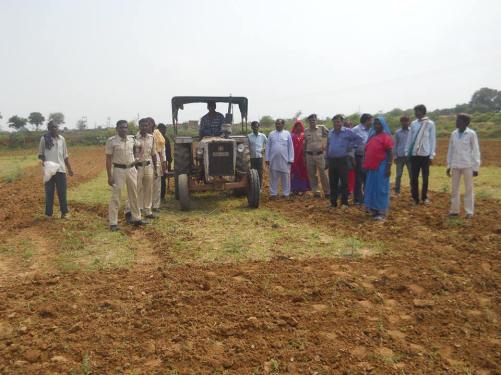
आज़ादी किसे पसंद नहीं है? सभी मनुष्यों कीआत्मा में निहित एक अधिकार आज़ादी. सभी बंधनों से मुक्ति, ना कोई शासक ना कोई शासन. स्वयं का स्वयं पर अधिकार. एक आज़ादी की लड़ाई चम्बल से.जाति संघर्ष के परे,वर्ग संघर्ष के परे. परन्तु सब को समाहित किये एक अनोखा संघर्ष. मध्य प्रदेश के चम्बल संभाग में स्थित जिला श्योपुर.और सतत चला आ रहा ज़मीन संघर्ष. इस देश में किसी गरीब व वंचित वर्ग के लिए ज़मीन का अधिकार पाना कभी आसान नहीं रहा.हालाँकि समय-समय पर सरकार, समाजसेवी संगठन तथा कुछ आन्दोलनों द्वारा इसका भरसक प्रयास किया गया है कि समाज में सभी के पास सामान रूप से ज़मीन हो. लेकिन हर बार यह प्रयास किसी न किसी कारण से असफल रहा.इन असफलताओं का कारण अधिकाँश समय उच्च वर्ग का अपनी ज़मीन से मोह तथा वंचित वर्ग का निरंतर शोषण रहा है.सरकार हो या अधिकांश समाजसेवी संस्थाएं, इसी ख़ास वर्ग की नुमाइंदगी करते रहे हैं. ना ही संघर्ष को सफलता मिली और ना ही कोई रास्ता. अब जिस व्यक्ति को अपनी जीविका हेतु संघर्ष करना पड़ता हो, उसके अन्दर ऐसी संघर्ष की चाह पैदा करना पाना मुश्किल कार्य है. फिर यदि शोषित वर्ग वनों में रहने वाले आदिवासी वर्ग हो तो कार्य नामुमकिन सा प्रतीत होता है.यह नामुमकिन ही है, जबतक इच्छा शक्ति एकता परिषद सी ना हो.

विगत 10 वर्षों से भी अधिक से श्योपुर में ज़मीन माफियाओं ने जबरन आदिवासियों की ज़मीन पर कब्ज़ा कर रखा था और कईयों ने तो इन ज़मीनों को हरियाणा, पंजाब तथा उत्तरी राजस्थान से आये बड़े किसानों को बेच दिया था. इन बाहरी किसानों ने आदिवासियों को उनकी ही ज़मीन पर मजदूर की नौकरी प्रदत्त करवा के उनपे शोषण का नया तरीका अपनाया.यह कतई किवदंती नहीं है कि खेत में कार्य कर रहा मजदूर उन बड़े किसानों के गुलाम से भी बदहाल स्थिति में कार्य करते हैं. ये दिहाड़ी मजदूर किसी संघर्ष की लालसा में अपने एक दिन के आय को नहीं खो सकते. ऐसे समय में एकता परिषद् ने संघर्ष को नया नाम दिया.उन्होंने इसे आज़ादी के लिए किये जाने वाला संघर्ष कहा. अपनी ज़मीन वापस पाने की आज़ादी. अपना अधिकार वापस लेने की आज़ादी.एकता परिषद् एक गांधीवादी संस्था है जो वंचित वर्ग के जल, जंगल व ज़मीन के लिए संघर्ष करती है. विगत 2 दशकों से भी अधिक समय से शोषित व वंचित वर्ग की सेवा तथा उनके सशक्तिकरण के लिए संस्था कार्यरत है.संस्था ने सबसे पहले ज़मीनी हकीकत पता किया तथा सभी जानकारी लेने के पश्चात सभी आदिवासी जिनकी ज़मीन पर कब्ज़ा था उन्हें आगे आने के लिए प्रेरित किया. जब आदिवासी तैयार हुए तो उन्होंने जिला कलेक्टर को तुरंत कार्रवाई तथा अपने स्वामित्व को पुनः प्राप्त करने हेतु ज्ञापन सौंपा. इस ज्ञापन का असर यह हुआ कि प्रशासन तुरंत हरकत में आया.
Continue reading आज़ादी की एक लड़ाई चम्बल की घाटी में : अंकित झा
This is a guest post by ASHOK SWAIN
Since the death of a young and charismatic separatist named Burhan Wani, Kashmir has erupted into violence and chaos. Weeks of violent protests in the Valley have resulted in the deaths of at least 50 people and over 5,000 injuries. Kashmir is not new to violent protests and civilian deaths, but this time the intensity of the protest and the passion of the protesters is unprecedented. Continue reading Not Pakistan, but Modi has pushed Kashmir on the Brink : Ashok Swain
Guest Post by ASHWIN V.S
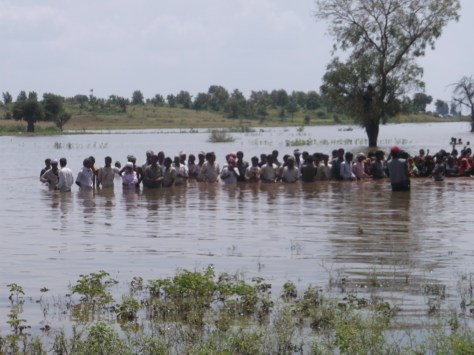
Jal Satyagraha in Narmada valley 2013
The years following the Second World War were characterized by a renewed focus on the ‘Modernization’ of nation-states. While the constant feature of the post-war years was the high-stakes rivalry and arms race between the USA and the USSR; both tread a common ground as regards high-modernization and ‘development’. ‘Development’ fuelled growth was considered a panacea to all ills and soon became dominant across the post-colonial world. WW Rostow’s The Stages of Economic Growth was a significant work which argued for five stages of growth in which “traditional societies” could transform themselves into the “age of high mass-consumption”. It was no wonder therefore as to which nation-states were characterized as ‘traditional’ under this rubric and pushed towards ‘development’.
A standard feature of ‘development’ in India has been the showcasing of large scale industrial and apparently ‘public purpose’ projects; an instance of this is seen in the construction of large dams. As much as ‘modernization’ or ‘development’ can be witnessed through the industrial or ‘public’ projects themselves; the ambition of the ‘developmental state’ and its vision can certainly be understood through the one-constant feature of the bureaucratic machinery – paperwork.
Therefore, for the purposes of this essay, I attempt to evaluate the ambition of the post-colonial ‘developmental state’ in India by analyzing the language of a few planning documents. In this case, I consider the Narmada Valley Development Authority’s (NVDAs) Action Plans prepared in the years 1991, 1993, 1995 and 2000 for the Resettlement and Rehabilitation (R&R) of Sardar Sarovar Project ‘oustees’ in Madhya Pradesh. These Documents are revealing in aspects of the modern state’s enterprise and it’s most significant undertaking, planning.
The State’s gaze and legibility:
James Scott’s magnificent work Seeing Like a State characterizes a crucial difference between the pre-modern state and the modern state: while the former “was in many crucial respects, partially blind” and “knew precious little about its subjects”, the modern state is consumed by a desire to know. Armed with statistics and other tools of ‘accuracy’, the modern state stakes its claim to the accurate depiction of the social world, which it then tries to alter in accordance to its designs of ‘development’. Continue reading The Gaze of the Developmental State and the Narmada Action Plans: Ashwin V.S
This is a guest post by SAUNVEDAN APARANTI
[Based on Gujarat Dalit flogging. It chronicles the fictionalised life of one of the victims.]
What comes to your mind when you think of India? If you’ve been seduced by films, books, pictures and anglophile Indians over the last century then you will no doubt paint a happy picture. You might romanticise the poor yet happy people, the colours, the cuisine, the attire, the mystics, the music, the dance, the cacophony, the heat and the sensory overload of this one country. The only colour missing in your picture will be any shade of black because black is a colour that India hides.Black is a colour that India detests whether it be the colour of your skin or the colour of the sewer that you’re lowered in. A bottomless pit is where you will find the true colour of India. Continue reading Black and Blue: A Short Story by Saunvedan Aparanti
This is a guest post by MEGHA ANWER

The recent spate of vigilante attacks in India has lent a new, nearly domestic familiarity to the word “lynching”. This, though, is more than just a shift in language: the nation’s visual archive itself seems be shifting, towards instatement of a new normal. Inside just a year the “lynching photograph” has moved center-stage, filling mainstream news reportage and social media newsfeeds. The imagistic vocabulary of lynching has thus taken on a touch of mundane inevitability in caste and communal violence.
It began in March 2015, with the lynching of Syed Arif Khan in Dimapur, Nagaland. A couple of months later two teenage Dalit girls were raped, strangled and left hanging from a mango tree in Katra village in Uttar Pradesh. Then, on 28 September 2015, Mohammad Akhlaq was bludgeoned to death by a mob in his home near Dadri in what went on to gain spurious notoriety as a “beef-eating incident”. The following March, continuing with the logical rhythm of a scheduled sequel, the cattle herder Mazlum Ansari and his 14-year-old nephew Imteyaz Khan were lynched and hanged from a tree in Jharkhand. Most recently (on May 22) M. T. Oliva, a Congolese citizen, was beaten to death in the national capital of Delhi. This is an incomplete list: it includes only those incidents that resulted in fatalities. In the same timeframe there have been at least a dozen other cases in which the victims somehow survived the end-stage public shaming, torment and lurid physical violence, in short the ordeal of a completed lynching.
There is no lynching without its spectators. Continue reading Three Photographs, Six Bodies: The Politics of Lynching in Twos: Megha Anwer