How they have become arsenal for the majoritarian Hindutva forces to convert the sovereign, independent, secular, socialist republic into a Hindu Rashtra.
25 th June 2025 happened to be the fiftieth year of the internal emergency imposed by the then Indira Gandhi regime. Much has changed during all these years but till date we are still far away from a balanced review of that period.
What really prompted Indira Gandhi to declare emergency , whether drive for personal power was the key factor, as has been reiterated multiple times…..
On the other hand, whether it could be said that she correctly perceived how sinister forces in the subcontinent were hell bent on sabotaging the democratic experiment at the behest of imperialist powers , who were even found to be provoking police and security forces to pursue their dubious agenda.
No doubt such a holistic review is a need of the hour but one thing cannot be denied that the biggest beneficiary of this whole exercise has been the Hindutva rightwing forces who are keen to transform India into a Hindu Rashtra
What image does one conjure up when Haryana finds mention anywhere ! It is the image of the millenium city Gurgaon – with offices of leading MNCs or neighbouring Nuh – the Muslim majority district with one of the lowest literacy rates in India or the dominant Jat peasantry, the growing gender imbalance in the society which even gets reflected in the phenomenon of purchasing of brides from Bihar or other areas, etc
Various cases of dalit oppression add another gloomy layer to the not so bright picture.
Rarely does one find voices of the ’other Haryana’ getting reflected in the public discourse.
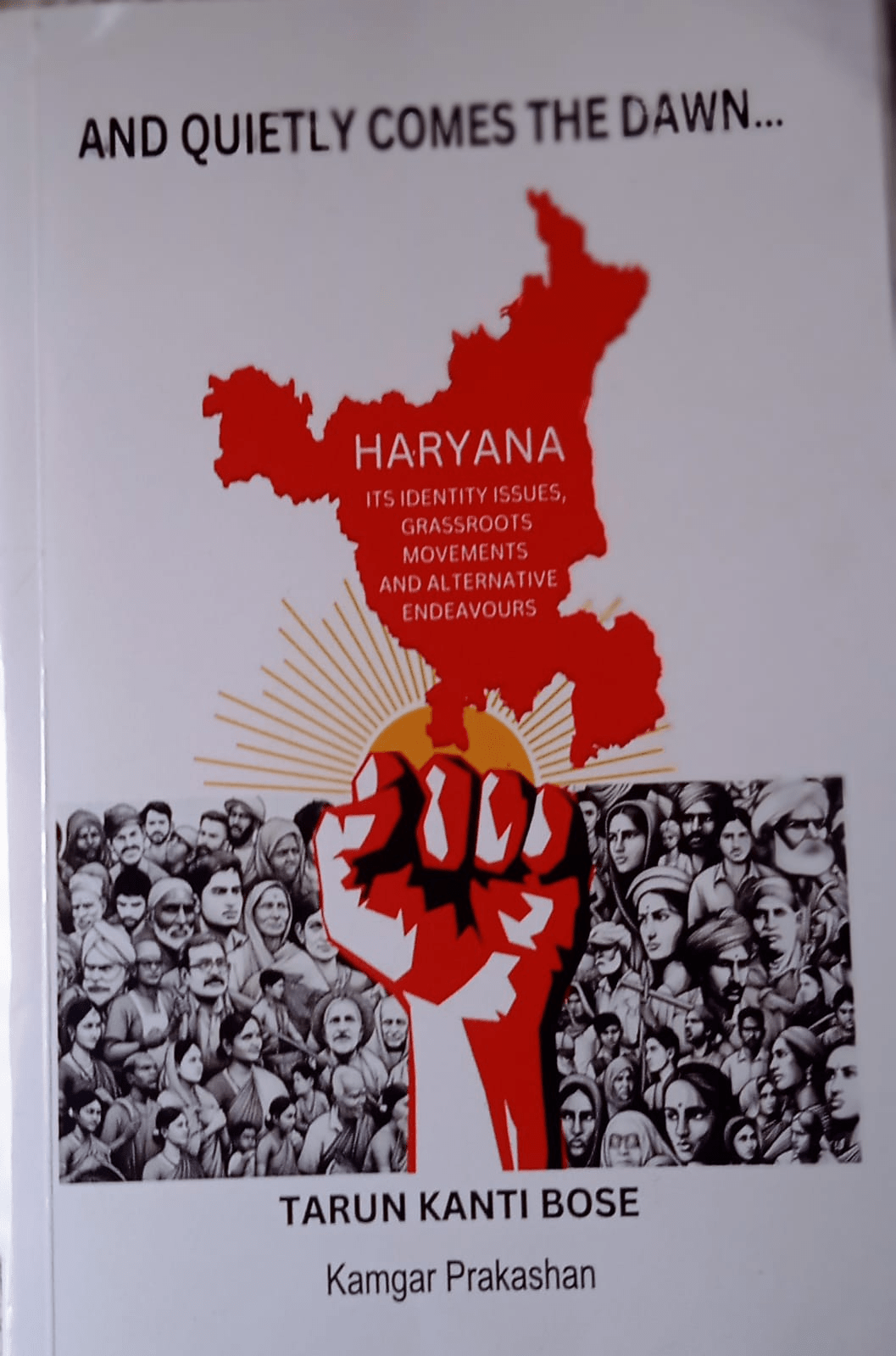
….Writer, journalist, left activist Tarun Kanti Bose’s new book, ’ And Quietly Flows the Dawn : Haryana— Its Identity Issues, Grassroots Movements and Alternative Endeavours breaks a new ground in this dominant discourse and brings before us many such unheard voices.
‘मैंने जापान में जनता को अपनी स्वतंत्रता की सीमाएं अपनी सरकार द्वारा स्वेच्छा से स्वीकार करते हुए देखा है…लोग इस सर्वव्यापी मानसिक दासता को प्रसन्नता और गर्व के साथ स्वीकार करते हैं क्योंकि वे अपने आपको शक्ति की एक मशीन, जिसे राष्ट्र कहा जाता है, में बदलने की तीव्र इच्छा रखते हैं…’
-रवीन्द्रनाथ ठाकुर, ‘नेशनलिज्म’
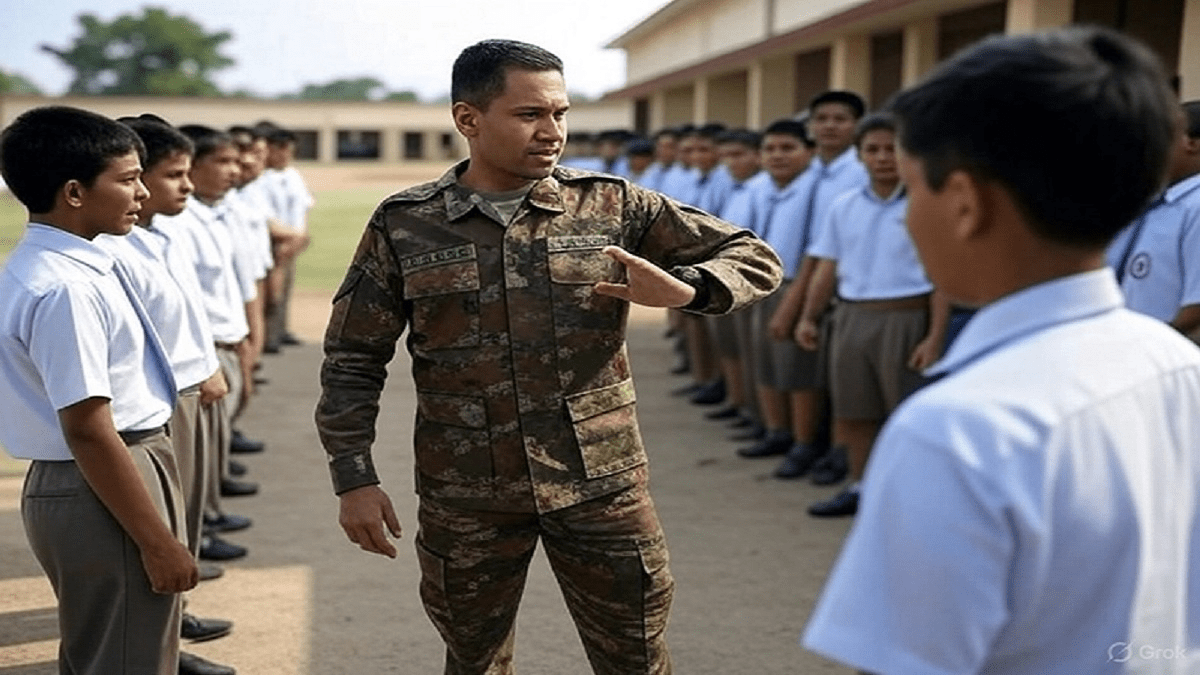
बच्चों के लिए फौजी तालीम !
भारतीय संघ के सबसे समृद्ध सूबा कहलाने वाले महाराष्ट्र ने स्कूली शिक्षा के क्षेत्र में एक नयी पहल हाथ में ली है। वह स्कूली छात्रों के लिए कक्षा 1 से ही बुनियादी फौजी प्रशिक्षण देना शुरू करेगा ताकि बच्चों में ‘देशभक्ति, अनुशासन और बेहतर शारीरिक स्वास्थ्य की नींव डाली जा सके।’ एक स्थूल अनुमान के हिसाब से चरणबद्ध तरीके से लागू की जाने वाली इस योजना में लगभग ढाई लाख सेवानिवृत्त सैनिकों को तैनात किया जाएगा। …..
यह प्रस्ताव कई स्तरों पर चिन्तित करने वाला है:
एक, जैसा कि जानकारों एवं शिक्षा शास्त्रियों ने बताया है कि राज्य का शिक्षा जगत एक जटिल संकट से गुजर रहा है, जिसका प्रतिबिम्बन कमजोर होती अवरचना / इन्फ्रास्टक्चर /infrastructure, अध्यापकों की कमी और नीतियों को लागू करने के रास्ते में आने वाली प्रचंड बाधाओं में उजागर होता है। ..अगर सरकार की तरफ से कक्षा एक से आगे फौजी प्रशिक्षण प्रदान करने की योजना को लागू किया गया तो उसका असर स्कूली शिक्षा के लिए आवंटित किए जा रहे संसाधनों में अधिक कटौती में दिखाई देगा।
Why this latest move by the state government is a worrying development.
“I have seen in Japan the voluntary submission of the whole people to the trimming of their minds and clipping of their freedom by their government, which through various educational agencies regulates their thoughts, manufactures their feelings, becomes suspiciously watchful when they show signs of inclining toward the spiritual, leading them through a narrow path not toward what is true but what is necessary for the complete welding of them into one uniform mass according to its own recipe. The people accept this all-pervading mental slavery with cheerfulness and pride because of their nervous desire to turn themselves into a machine of power, called the Nation, and emulate other machines in their collective worldliness.”
-Rabindranath Tagore, Nationalism
The richest state in the Indian union, Maharashtra, has embarked on a new initiative in the field of school education. It would provide basic military training to school students starting from Class 1, to promote “patriotism, discipline, and physical fitness among young learners from an early age”. Around 2.5 lakh ex-servicemen would be involved to deliver this training which will be introduced in a phased manner.
Undoubtedly, in the aftermath of Operation Sindoor, this proposal will be able to gather enough eyeballs in the rest of the country and it would not be surprise that few other Bharatiya Janata Party-ruled states would implement similar schemes in education.
“Our dead are never dead to us until we have forgotten them”
– George Elliot (English Novelist and Poet, 1819-1880)
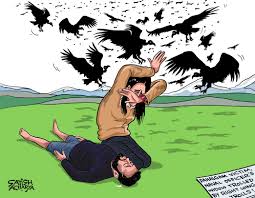
Firdaus Alam alias Asjad Babu – age 24 years – is dead.
Details of this cold blooded killing have appeared in a section of the media and make chilling reading. (1)
Asjad – a native of a village in Kishenganj district of Bihar, married hardly 7 months back, worked as a tailor in Panipat, Haryana.That tragic evening, he was sitting with his friends including his brother Asad Raza in a playground when the accused approached him and started mocking him for wearing a skullcap.
None of the friends had any personal enmity with the accused Narendra alias “Susu Lala”.When confronted, he felt further agitated and attacked Asjad with a knife, inflicting serious fatal injuries.
Death of Asjad is no ordinary death.
It appears to be a hate crime.
Hate crime is a special crime where a person is targeted just because of hostility or prejudice towards that person’s colour, look, dress, which reveals the person’s community, religion or belief etc. One does not know whether the police or the law-and-order machinery would be ready to acknowledge this brutal murder as a hate crime (2) because that would entail stricter charges, which may be followed by stricter punishment.
Why the Yogi Adityanath-led BJP government’s move of using public funds for imparting religious instruction violates Article 28 of the Constitution.
Representational Image. Image Courtesy: Pexels
“No religious instruction shall be provided in any educational institution wholly maintained out of State Funds” unless “established under any endowment or trust which requires that religious instruction shall be imparted in such institution”. (Article 28 of the Indian Constitution)
It has been more than 75 years since the founding fathers (and mothers) of the Constitution took this bold stand when they were shaping the guidelines around which the newly independent country would move forward. ..
…..Much water has flown down the Ganges, the Jamuna and all rivers of the country and it appears that slowly, but not so silently, attempts are on to water down the provisions of this Article and facilitating religious instruction in government schools through the back door.
The manner in which Yogi Adityanath-led Bharatiya Janata Party (BJP) government in Uttar Pradesh has suddenly decided to hold summer workshops on the Ramayana and the Vedas in government schools across the state, without any broader consultation with the stakeholders involved in this endeavour, is symptomatic of the brazen attitude of the government. We are told that these workshops will be organised under the aegis of the International Ramayana and Vedic Research Institute, Ayodhya, and will include activities, like Ramlila, Ramcharitmanas recitation, Vedic chanting, painting, and mask-making.
Life in Latur, a city in Maharashtra, known for its historical monuments is normal again. There was little commotion more than ten days back in one part of the city following the suicide of a senior executive with a telecom company who had resorted to this extreme step a day after a road rage incident when he allegedly faced communal slurs. Looking back what followed on that day was nothing unusual by Indian standards. ( Read the rest of the article here : https://countercurrents.org/2025/05/two-minute-silence-for-amir-pathan/)
Given its organizational form and nourishment, it is difficult to imagine that the troll machine can genuinely feel. But it has been trained in demonstrations of outrage. One section of the online machine felt betrayed by the declaration of a ceasefire between India and Pakistan. Shocked by the ‘premature’ end of what was desired as a ‘decisive’ war, it lamented that the background conditions of an avenging solidarity and armed forces’ bravery were left under-utilised as Pakistan remained one nation, unlike its split during Indira Gandhi’s time in 1971.
Keeping aside disagreement about customs like ‘Santhara’, one can at least agree that only an adult can make a decision to opt for death voluntarily in times of sickness.
Men never do evil so completely and cheerfully as when they do it from religious conviction.
Blaise Pascal (1623–1662)
French mathematician, physicist, inventor, philosopher, and Catholic writer
Namrata (name changed), the three-year-old daughter of IT professionals from Indore, is dead.
She had brain tumour which was successfully operated upon in January in Mumbai but it relapsed in March, and within less than a week, she breathed her last.
Apropos nothing seems amiss in her story.
The child got the best treatment available, and for her parents, belonging to Jain community, money was never a problem.
Despite all these relevant details, it is rather difficult to forget or disremember the past few hours of her life when she was still alive, when she must have been in tremendous pain and the way she was made to undergo some ritual to ‘improve her next birth’ — as impressed upon her parents by their spiritual leader.
We learnt that instead of hospital bed, where she should have been given palliative care, the child was shifted to the ashram of one Maharaj, a Jain monk, who had convinced his gullible disciples – her parents – to opt for Santhara“to decrease her suffering and improve her next birth”.
And these young IT professionals, barely in their 30s, had no qualms in shifting their dying daughter to the ashram, despite knowing full well that she was in tremendous pain and any sudden change would exacerbate her death. [ Read the full article here : https://www.newsclick.in/why-3-year-old-childs-death-will-haunt-us-long-time]
The following is a statement issued by AXOM NAGARIK SAMAJ
Axom Nagarik Samaj condemns the banning of independent media platforms
Guwahati, 10 May: The terrorist attack at Pahalgam was an act of cowardice. To retaliate this the Indian armed forces conducted the ‘Operation Sindoor’ and destroyed several terrorist establishments inside Pakistan. Indian public and political parties irrespective of their ideological affiliation stood solidly behind our armed forces. It goes without saying that the national security of the country is of paramount importance. There shouldn’t be any let up in it. However, on the pretext of escalation of tensions between India and Pakistan there shouldn’t be any curtailment of freedom of expression which is a fundamental right. But unfortunately government of India has done exactly that by banning and blocking ‘4pm’ News Network, the YouTube channel of Punya Prasun Bajpai and ‘The Wire’. These are all truth speaking, independent and trust worthy media platforms. In the time of war mongering, spreading of fake news and falsehood by most of the mainstream electronic media, they tried to report and inform public objectively and truthfully. These platforms are manned by best of professional journalists in the country. What government has done is nothing but gagging of the independent media which is utterly harmful for a democracy. We condemn this and demand that the banning and blocking of all the three media platforms are withdrawn immediately.
[ YouTube links of Ravi Sinha’s Informal talk in Lucknow in April 2025 on “Indianity and Modernity”. Credits to Kumar Sauvir for recording, editing and posting. The title and intro are also by him ]
[ Ravi Sinha is an activist-scholar who has been associated with progressive movements for around five decades. Trained as a theoretical physicist, Dr. Ravi has a doctoral degree from MIT, Cambridge, USA. He worked as a physicist at University of Maryland, College Park, USA, at Physical Research Laboratory, Ahmedabad and at Gujarat University, Ahmedabad before resigning from the job to devote himself full time to organizing and theorizing. He is the principal author of the book, Globalization of Capital, published in 1997, co-founder of the Hindi journal, Sandhan, and one of the founders and a leading member of New Socialist Initiative.]
David Headley remains inaccessible in the US, and so do the masterminds in Pakistan.
The extradition of Tahawwur Rana to India to face trial for his role in the 26/11 terror attack is big news in the media. One can sincerely hope that with the arrest of only the second suspect to face trial for the 26/11 attacks – the first one was Ajmal Kasab – we can unearth other critical links in the conspiracy, role played by the terrorist groups and the support the whole operation received from the Pakistani establishment or its deep state.
Of course, it will be rather premature to assume that this arrest can bring a closure to the dastardly 26 /11 terror attacks. We are yet far away from the possibility of the mastermind of the attack – Hafeez Saeed and his accomplices – facing trial in Pakistan or being extradited to India.
There is no clue yet whether David Headley, a close friend of Tahawwur Rana, who is called the main conspirator of the operation would ever face trial in India. In fact, it is still a mystery how and why the US entered into a plea deal with him – promising him that he will not be extradited to India.
Kshama Sawant honoured in absentia by Canadian Radio station for standing up against caste-based oppression. Former Seattle City Councillor was presented with the annual Hands Against Racism award by Spice Radio at a well-attended event in Surrey on Sunday, March 30. Born and raised in India, Kshama Sawant was instrumental behind the historic anti-caste ordinance brought by the City of Seattle in 2023. Since then, she has been under attack from supporters of the right-wing Hindu nationalist Modi government in New Delhi. For doing that she had to pay a heavy price, as the Indian government denied her visa and an opportunity to go and see her ailing mother in Bengaluru. Sawant couldn’t make it to the event organized at Surrey City Hall, due to the current tensions between Canada and US caused by the trade war. Spice Radio broadcaster and her vocal supporter Gurpreet Singh accepted the award on her behalf. He earlier introduced her before her video message was played. In her greetings, Sawant revealed that because of the hostile political environment, including ongoing arrests of pro-Palestine activists in the US, especially those who are naturalized American citizens like her, she had been advised not to travel outside the country. However, she pulled no punches in criticising the Liberals and Democrats on either side of the border for their complacency and opportunism, enabling the extreme right wing forces to grow powerful. Her speech received a huge applause from the audience. Spice Radio CEO Shushma Datt started the campaign in 2015, on the birth anniversary of Martin Luther King Jr. It coincides with Holi, a Hindu festival of colours, and encourages participants to colour their hands and leave a palm print on a white sheet of paper with a message against racism. A practicing Hindu herself, she believes in diversity and inclusion and greeted everyone Happy Eid at the Sunday program. Every year, individuals are also shortlisted and awarded for their anti-racism work as part of this initiative. This year Sawant and Bob Rennie were honoured. Rennie is a famous art collector and a strong advocate against xenophobia and homophobia, besides gender discrimination. The very first recipient of the award, Senator Baltej Singh Dhillon, who served as the first turbaned Sikh Royal Canadian Police officer and faced racism from within the force, was also present and addressed the gathering. Other past recipients also spoke on the occasion, including Attorney General Niki Sharma, anti-racism educator Annie Ohana and prominent journalist Charlie Smith.
Indian federalism is on the verge of breakdown for multiple reasons. A crucial contributor is the collapse of the system of revenue sharing between the Centre and the States and the weaponization of vertical transfers as an instrument for political contestation.
The conflict over resources in India’s quasi-federal political structure is by no means new. Framers of the Constitution, who recognised that the division of taxation rights and spending responsibilities between the two principal tiers of government in India was asymmetrical, sought to partially resolve this problem by providing for a share for the States in a defined set of tax revenues garnered by the Centre, with the principles governing the share devolved and distributed to individual States recommended by successive Finance Commissions. But State governments have been increasingly disappointed with the actual experience with devolution, because of the concentration of resources mobilised in the hands of the Centre.
The issue, however, is not one of mere competition for resources between the Centre and the states. Having gained control over the Lok Sabha, the BJP has made it clear that it is keen on establishing an opposition-free political space. To realise this objective, it has not only sought to undermine the legitimacy of individual opposition politicians with charges of corruption or “anti-national” activity, but of opposition-ruled State governments by eroding their ability to adopt economic policy measures and initiatives that could win them political legitimacy. Expenditures on building State infrastructure or social expenditures on subsidised food provision, a modicum of social protection, and employment guarantee schemes, do contribute to winning a party in power in a State a degree of political legitimacy. The attack on the fiscal capacity of the State governments helps limit such expenditures, even while Central claims on expanding infrastructural investments and social sector spending are advanced, with an increase in ‘central’ schemes, especially those attributed to the patronage of the highest authority, the Prime Minister.
Speaker :
Prof C P Chandrasekhar
Prof C. P. Chandrasekhar is emeritus professor at the Centre for Economic Studies and Planning, Jawaharlal Nehru University (JNU), New Delhi. He has published widely in academic journals and is the coauthor of Crisis as Conquest: Learning from East Asia (2021, Orient Longman), When Governments Fail – A Pandemic and Its Aftermath (with Jayati Ghosh et al) , 2021 ; Interpreting the World to Change It – Essays for Prabhat Patnaik (with Jayati Ghosh), 2018 ; After Crisis : Adjustment, Recovery and Fragility in East Asia ( with Jayati Ghosh) 2009 ; The Market that Failed: Neo-Liberal Economic Reforms in India (2002, Leftword Books), and
He received his MA and Ph.D (economics) from Jawaharlal Nehru University, where he served as a professor from 1997 until his retirement. He is a member of the executive committee at International Development Economics Associates (IDEAs) and the World Economics Association, as well as a contributor to Frontline, Economic and Political Weekly, and Businessline.
Chandrasekhar received the Malcolm Adiseshaiah Award for 2009 for contributions to economics and development studies.
As the debate on the three-language policy has intensified, what was originally an exchange between ministers of the union government and the government of Tamil Nadu, or between leaders of the Bharatiya Janata Party (BJP) and the Dravida Munnetra Kazhakam (DMK), has become a subject of commentaries and criticisms coming from observers, intellectuals and activists. The union government says that no state could be exempted from the implementation of the three-language formula as envisioned in the New Education Policy (NEP) 2020 and adds that Hindi is not made mandatory under the present formula. The condition is that two of the three languages must be native Indian languages. The DMK leadership argues in response that the three-language policy can still be an indirect route to push Hindi into the state. The latter has appeared firm in its argument that it is the state’s prerogative under the federal system to determine its language and education policy (though during emergency education was shifted to the concurrent list of the union government). It also opposes the measure adopted by the union government, that is, to link the funding under the Samagra Shiksha Abhiyan to the implementation of NEP 2020 and the language formula it includes. The parties which are not in alliance with the DMK in the state allege that the DMK has staged this conflict in order to ignite sub-national/regional sentiment to strengthen its position before the elections.
The Kerala government’s mulish refusal to negotiate with the striking ASHA workers is baffling no matter what angle you may think of it. The promise of raising the ASHA workers’ daily pay to Rs 700 was an LDF election promise, part of the election manifesto — how can they call it unreasonable now? Raising the pay of ASHA workers would bring back to the well-feeling of twenty six thousand grassroots workers who are well-respected in their communities, but the CPM leadership does not bother, and the CITU studs seem determined to piss them off. In the legislative assembly, Veena George reels off breathtakingly false information, when anyone with access to the official website of the Sikkim government can read government orders that expose her.
But civil society now sees the hubris and expressions of support and anguish at the government’s apparent lack of grace and respect for life -saving labour are pouring in. I am posting here a particularly striking one, a poem by the well-known poet in Malayalam, Desamangalam Ramakrishnan. Aasha in Malayalam means a fervent wish; it also means hope. In this short poem, the poet uses the word to evoke a feeling for the crisis we Malayalis face — of hope in a system, that once swore by the values of care and social justice, intertwining it with the government’s deliberate cruelty to the striking workers. The poem is titled Aashaikku vakayundo?
Any chance of aasha?
Desamangalam Ramakrishnan
Any aasha? – is there any hope left, ask the mothers who wait with handfuls to line the pockets outside the hospital’s operation theatre.
Harassed travellers, waiting endlessly till the middle of the night ask: Any aasha left? Any hope that a bus, any bus, might come?
Any aasha, hope?
Caring-women, bringers of food, water, comfort, tell those who wait in terror, locked down at home: do not abandon hope, do not give up your aasha even if an elephant pins you on its tusk…
Any hope? Through steep and narrow paths the caring-women run, to knock on the door of a piteous scream and drive away the sickness with love. They say: abandon not your aasha; be not bereft of aasha, let the humble shoots of hope sprout.
Is there hope, is there aasha? Though it’s just a few paltry coins, when will it fill the waist-folds of one’s dignity and pride?
When it writhes its last writhing on the door step of the king of the land who tied its tongue and left it to beg, our pottan theyyams, oracles, leveller-spirits, will break their chains, swarm out of cellars, surely.
Or, has Power turned the one who once sprinted through these paths holding aloft the flag woven from the threads of our blood, into a mad brute?
How Hindutva Supremacists are engaged in ‘rewriting history’.
‘There are times when madness reigns
And then it is the best who hang’
– Albrecht Haushoffer
[January 7, 1903 – April 23, 1945, German geographer, diplomat, author, who faced martyrdom for his resistance to Nazism]
Uday Bhembre, the 87-year-old widely respected Konkani writer, son of legendary freedom fighter Laxmikant Bhembre, who has been a Sahitya Akademi awardee, is a worried man these days.
He has discovered to his dismay that his courage to speak the truth and challenge a narrative being peddled by the ruling dispensation in Goa, .. regarding well established facts of Goa’s own history, would lead to protests, led by Right-wing formations and many among them trespassing his house at night and pressuring him to issue an public apology.
Not very many people outside Goa know how this great writer – he was even a MLA (1984-89) — had neglected his literary career to fight for rights of Konkani language and has been against attempts to merge Goa into Maharashtra, to preserve its culture.
Thanks to the existence of powerful voices of resistance and a vibrant civil society in Goa, a significant number of people have publicly condemned these attempts to intimidate Bhembre and demanded strict action against the perpetrators and exposed the collusion of the Right-wing formations with people in power. Many even went to meet the noted writer to express solidarity with him. ( Read the full article here :https://www.newsclick.in/goa-who-fears-truth)
आस्था और गंदगी सहयात्री रहते आए हैं। आस्था के तमाम जाने-माने केन्द्रों पर या अपनी आस्था को सेलिब्रेट करने के नाम पर मनाए जाने वाले समारोहों में-प्रचंड ध्वनि प्रदूषण और रौशनी का प्रदूषण आदि के माध्यम से-इसकी मिसाल अक्सर देखने को मिलती है। प्लास्टर ऑफ पेरिस की मूर्तियों से भरे गंदे जलाशय-जिनकी मौजूदगी पानी के ऑक्सीजन की मात्रा पर विपरीत असर डालती है, पानी में ही फेंकी गयी सूखे फूलों की मालाएं आदि आदि से महानगर भी अछूते नहीं रहते हैं।
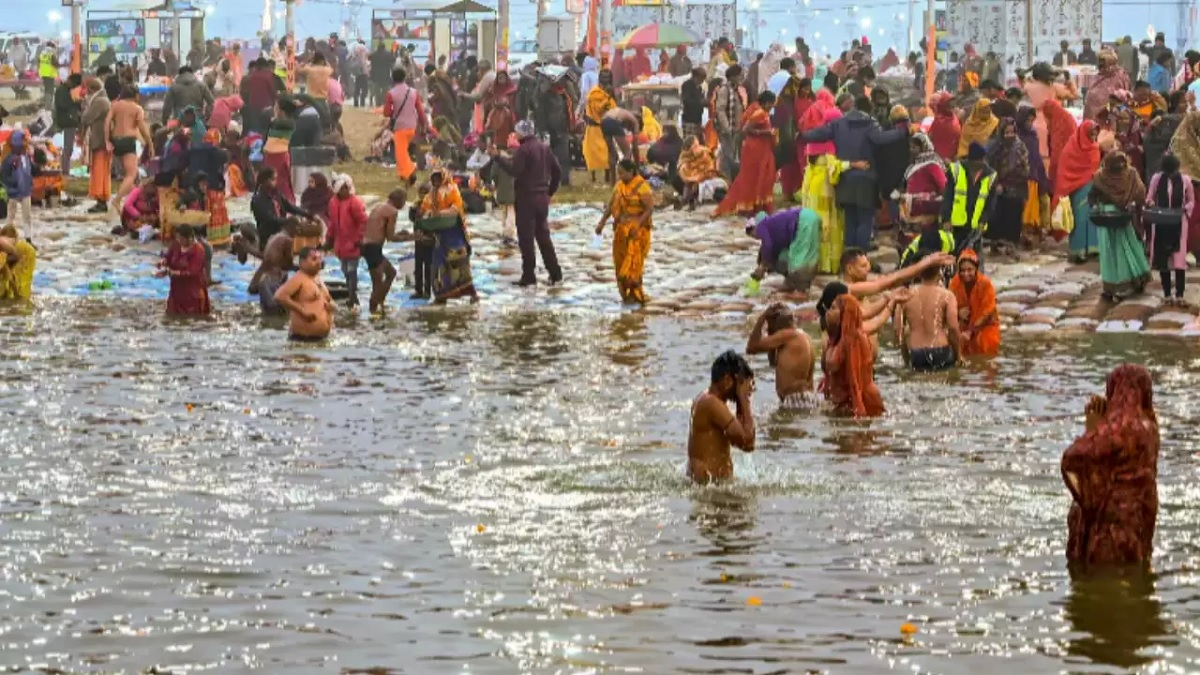
इस सम्बन्ध में ताज़ी मिसाल महाकुंभ के बहाने से उजागर हुई है, जब केन्द्रीय प्रदूषण नियंत्रण बोर्ड (CPCB) की रिपोर्ट ने इस बात को उजागर किया कि किस तरह प्रयागराज के पानी में उन्हें उच्च स्तर पर मल के जीवाणु मिले हैं, जो किसी भी सूरत में नहाने योग्य नही है। इस सिलसिले में नेशनल ग्रीन टिब्यूनल ने उत्तर प्रदेश प्रदूषण नियंत्रण बोर्ड (UPPCB) के अधिकारियों को तलब भी किया है कि ‘प्रयागराज/इलाहाबाद में गंगा, यमुना के पानी की गुणवत्ता के उल्लंघन को लेकर-उन्होंने जो दिशानिर्दश जारी किए थे उस पर उन्होंने अमल नहीं किया है।
गौरतलब है कि राष्ट्रीय ग्रीन टिब्यूनल (NGT) ने उत्तर प्रदेश प्रदूषण नियंत्रण बोर्ड की इस बात के लिए भी आलोचना की है कि अपनी जो रिपोर्ट उन्होंने प्रस्तुत की है, उसके सैम्पल पुराने है और सभी 12 जनवरी के पहले के-अर्थात कुंभ मेला शुरू होने के पहले के है। ….
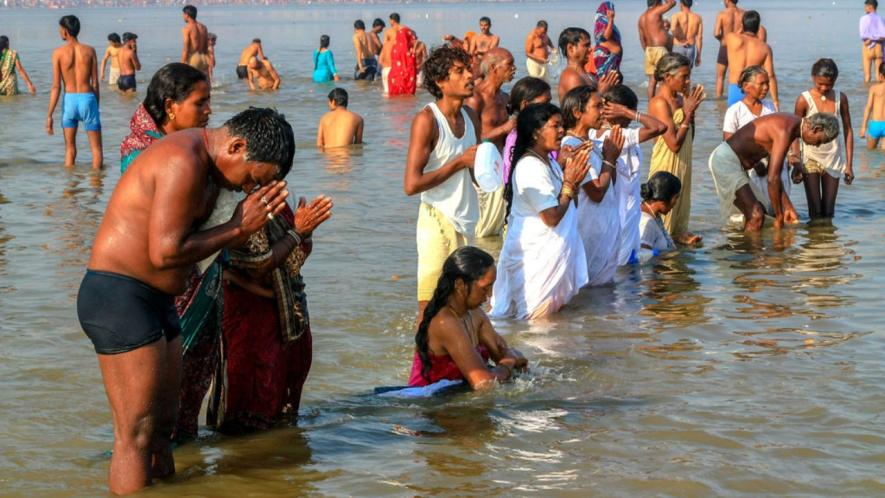
…निस्संदेह महाकुंभ के अवसर सीवेज युक्त पानी को लेकर उठे सवाल अब दबना मुश्किल है। सरकार जो भी प्रचार करे, अधिक से अधिक लोग अब इस बात का अनुभव करेंगे कि गंगा किनारे उन्होंने जो ‘पवित्र स्नान’ किया उस वक्त वह पानी कत्तई शुद्ध नहीं था। यात्रियों का एक छोटा सा हिस्सा अब यह कहने का साहस भी जुटाएगा कि किस तरह सत्ताधारी समूह ने उनकी धार्मिक आस्था का दोहन किया है। [ Read the full article here :https://janchowk.com/beech-bahas/the-other-aspect-of-the-holy-bath/]
Did Hindutva supremacists make devotees bathe in polluted sewage water during the Mahakumbh?
Faith and filth have an uncanny existence together
The latest in series happens to be the report by the Central Pollution Control Board (CPCB) underlining how they have found high faecal bacteria levels in Prayagraj river water, which fails bathing standards and the summoning of the Uttar Pradesh PCB (UPPCB) authorities by National Green Tribunal (NGT) over non-compliance of directives regarding ‘serious water quality violation in Ganga, Yamuna at Prayagraj’
The fact is that NGT has repeated itself when it said that high levels of faecal and total coliform were found at various locations at the Maha Kumbh, during a hearing on allegations that untreated sewage has been discharged into Rivers Ganga and Yamuna in Prayagraj.
Will the UP Chief Minister Yogi Adityanath’s rejection of this report on the floor of the House and underlining that the water at the Sangam was fit for ‘drinking’ serve any purpose when NGT grills the UPPCB authorities over non-compliance of their directives issued earlier over the quality of water?
Any sane person would know the answer.
May be in a bid to appear uncompromising or cover his own nervousness over the developments, Adityanath tried to question the veracity of this report – in an indirect way – by condemning people who spread misinformation against “Sanatan Dharma, Maa Ganga, and India” and warning them that they were attacking the “faith of those 56 crore people who had taken a bath there.”
[मध्ययुग में पश्चिमी जगत में आधुनिकता के आगमन ने धर्म के वर्चस्व को जो चुनौती दी थी, भारत में अंग्रेजों के आगमन के बाद पैदा हुई परिस्थितियों और राजनीतिक आजादी ने यहां धर्म के प्रभाव को और अधिक सीमित कर दिया। रूढ़िवादी, प्रतिक्रियावादी ताकतों ने समय-समय पर इस बदलाव को बाधित करने की कोशिश की। संविधान निर्माण से लेकर स्त्रियों को अधिकार-संपन्न करने के लिए ‘हिन्दू कोड बिल’ को सूत्रबद्ध एवं लागू किए जाने का हिन्दुत्ववादी ताकतों ने जिस तरह से विरोध किया, ऐसी ही बाधाओं का ही परिणाम रहा कि डॉ. आंबेडकर को नेहरू के मंत्रिमंडल से इस्तीफा देना पड़ा। यह आलेख संविधान-निर्माण के दौरान स्पष्ट तौर पर उजागर हुए राष्ट्रीय स्वयंसेवक संघ के स्त्री-विरोधी विचारों एवं सक्रियताओं की पड़ताल करता है]
वह 1936 का साल था, जब राष्ट्रीय स्वयंसेवक संघ (RSS) के विचारों एवं कार्यों से प्रभावित होकर नागपुर निवासी लक्ष्मीबाई केलकर (1905-1978) ने संघ के संस्थापक सदस्य डॉ. केशव बलिराम हेडगेवार से मुलाकात की और संघ से जुड़ने की इच्छा जाहिर की थी। सुश्री केलकर- जिन्हें बाद में लोग मौसीजी नाम से पुकारने लगे थे- को यह कतई उम्मीद नहीं रही होगी कि संघ सुप्रीमो इस प्रस्ताव को ठुकरा देंगे और उन्हें सिर्फ स्त्रियों का संगठन बनाने की सलाह देंगे। ‘’राष्ट्र सेविका समिति’’ की स्थापना की यही कहानी बताई जाती है, जिसे आरएसएस का पहला आनुषंगिक संगठन भी कहा जा सकता है।
राष्ट्र सेविका समिति की जब स्थापना हुई, तब RSS का निर्माण हुए 11 साल का वक्फा गुजर चुका था। वह दौर औपनिवेशिक शासन के खिलाफ तथा सामाजिक उत्पीड़न से मुक्ति के लिए उठी हलचलों का था, जिसमें स्त्रियों ने बढ़-चढ़ कर हिस्सा लिया था। भारतीय राजनीतिक-सामाजिक जीवन में जबरदस्त सरगर्मियों के इस दौर में संघ संस्थापक महानुभावों में से किसी को भी यह खयाल तक नहीं आया था कि आबादी का आधा हिस्सा स्त्रियां उनके नक्शे से गायब हैं। वैसे, उन्हें इस बात का एहसास होता भी कैसे क्योंकि इन दोनों किस्म की हलचलों से उन्होंने दूरी बना कर रखी थी और अपने बेहद संकीर्ण व असमावेशी नजरिये के तहत संगठन बनाने में जुटे थे। धर्म आदि के आधार पर जिन्हें वह ‘अन्य’ समझते थे, उनको लेकर अपनी एकांगी सोच के प्रचार-प्रसार में सक्रिय थे। ( Read the full article here : :https://followupstories.com/politics/women-in-hindutva-ideological-realm-and-historical-blunder-of-rss/)






 KAFILA - COLLECTIVE EXPLORATIONS SINCE 2006