
I wrote this story for children sometime back, improving on a vaguely-remembered story my grandmother told me, and gave it an end. This is my translation of it in memory of all pilgrimages and boat journeys of childhood: Continue reading A Children’s Tale: Fistful-of-Cumin and Fistful-of-Mustard go on a Pilgrimage
Category Archives: Culture
Take back the Poison-Rain: Ambikasutan Mangad’s Swarga
 When I first encountered Enmakaje, it was already much praised in Kerala as the powerful little book that aroused the Malayali’s moral conscience towards the unspeakable tragedy wrought by the unbelievably-callous aerial spraying of the insecticide Endosulphan in north Kerala, over some of the most lush, verdant areas of the State. It was criticised by some for what I thought was a very interesting experiment with form: it begins as fiction, slowly shades into a historical account of the beginnings of the anti-Endosulphan struggle in north Kerala, and then shades back, in the end, to fiction again. For me, Enmakaje was much more than an activist tale. It was a determined effort to renew the Malayali self, through a prayerful weaving and imaginative retelling of the many stories that have shaped us. Reading of Neelakantan’s and Devayani’s stories, one remembers these stories, but differently. For example, what if Raman and Seetha left Ayodhya forever, renouncing its sickening power games? What if Adam and Eve voluntarily renounced Paradise? What if Vararuchi’s wife had rebelled in the origin-story of Kerala, of the Parayi petta panthirukulam?
Juggernaut has just published my translation of this gem of a book, and the title of the English version is Swarga: A Posthuman Tale . Below is an excerpt from the book.
It was past midnight.
Jayarajan started from his sleep and sharpened his ears for sounds from outside.
He shook Neelakantan, who was fast asleep, awake. Neelakantan woke to darkness assailing his open eyes. He was frightened.
‘What is it?’
In a trembling voice, Jayarajan said, ‘Something is happening outside. I can hear noises.’
Neelakantan’s throat was parched. He asked in a loud voice, ‘Who is there outside?’
Jayarajan noticed his fear in the dim light of the lantern.
‘Not human beings. Something like a storm and strong winds . . . I can’t make out much . . .’
Neelakantan’s breath returned.
‘Oh, that! Must be the wind . . . I’ve been scared ever since you came in . . . it’s just that I didn’t show it. You lie down, I’ll see you off tomorrow morning; put you on the first bus back. It is not at all safe for you to come and stay here again.’
Jayarajan got up.
‘Come, let’s go out for a bit.’
Neelakantan yawned. His voice was lazy. ‘The rain and wind will go their own way. You should lie down.’
Jayarajan took his hand and made him get up.
‘I’ve seen quite a bit of rain and wind too . . . but something extraordinary is happening outside.’
Neelakantan began to listen, alert now. There was a whole symphony of unpleasant sounds rising outside.
Taking care not to wake Devayani, they opened the door and stepped out.
They saw the most unbelievable sights on top of the Jadadhari Hill.
The huge trees were shaking hard, writhing, in the wind. From the clouds above, golden-coloured lightning-snakes descended, falling on the tops of the massive trees and enveloping them. As if from the impact of the lightning, the tall trees bowed as low as the ground, seeking to shake off the golden serpents . . .
In the next moment, the wind came hurtling like a demon’s hand, swooping up the trees. The branches clung and cleaved to each other as if in a paroxysm of desire, and shivered as though in the throes of an orgasm. And then, the lightning-serpents returned, and the whole cycle began again.
Startled, Jayarajan asked, ‘What is happening up there?’
For a few moments, Neelakantan had no words. He kept watching the hill’s frenzied dance and then said, ‘Terrible thunder and lightning. And the wind and rain besides. All of it together, that’s all.’
But even as he said those words, he knew how inadequate they were. Human language was too limited to describe this miraculous phenomenon. It was too vast to be comprehended by puny human consciousness.
‘Look, it is raining on top of the hill,’ Jayarajan pointed out. ‘Some of it is falling here too. But just see – there is not even a sign of rain or wind anywhere near here. Here the trees are still as if they have stopped breathing. It is a miracle . . . let me call chechi.’
‘No, she will be scared.’
Jayarajan remembered Devappa’s words. ‘On the night of the Kozhikkettu in Bhagyathimaarkandam, no one goes out!’
‘Two years ago, on a night like this, I heard the jungle sway like this around midnight. I thought it was a storm and did not go out.’
‘I think,’ Jayarajan said and stopped.
‘What?’
‘Is this really Siva’s dance of destruction, the thandava? Isn’t this the Jadadhari Hill?’
Neelakantan asked, ‘Are you a believer?’
‘No. What about you?’
‘I haven’t been to temples or shrines after I began to see things differently . . . In my view, Siva is Nature itself. Siva exists in every leaf, every flower. The thandava that you mentioned–’
‘The dance of destruction of Siva, who swallowed the divine serpent Vasuki’s deadly venom! This is it! Is this thandava- Jadadhari Hill’s, Nature’s – that means Siva’s – own attempt to shake off the terrible chemical poison, so like Vasuki’s venom, the Kalakoota?’
‘You tie up everything to your consciousness of the environment!’
Jayarajan pointed out: ‘See, the wind’s grasping fist now eases. The lightning retreats. The rain and thunder depart. The trees stand up straight once again.’
Neelakantan nodded, his eyes wide open and filled with the magic in the air. Yes, the dance of destruction was now ebbing.
Excerpted with permission of Juggernaut Books from Swarga by Ambikasutan Mangad, translated by J Devika available in bookstores and on Juggernaut.
Reclaiming Punjab University-Student Protests Erupt in Chandigarh: Prerna Trehan
Guest Post by Prerna Trehan
While walking through the lawns between the Library and the Chemistry Department , one is confronted with the sudden and scary sight of policemen brandishing canes.
One of the policemen says, threateningly : “Go inside, before we start shooting bombs” (of tear gas). Behind him two policemen leap at a bewildered group of boys raining lathis and choicest of abuses.
This scene could be right out of the woeful alleys of Palestine, Syria or even Kashmir. However, the events that it describes took place yesterday in Panjab University, nestled in India’s first planned city, Nehru’s vision of modernity-Chandigarh.
Continue reading Reclaiming Punjab University-Student Protests Erupt in Chandigarh: Prerna Trehan
Remembering M. Rasheed – A Grandchild’s Political Farewell: Bobby Kunhu
Guest post by BOBBY KUNHU
Rasheed, a political activist, award winning journalist and activist was one of the founders of the Trotskyite movement in India and the RSP in Kerala. He passed away on the 6th of January, 2017

It is very unusual for a grandchild to write public obituaries for grandparents – but Comrade M. Rasheed was a person of unusual politics and his death definitely warrants an unusual response requiring the obituary also to be unusual. Given that the significance of Comrade Rasheed’s life was his unwavering integrity to ideals that he fell into the bad books of his father and walked out of the political party he co-founded, given that he never shied from expressing his opinion on anyone – it would only be right in writing this as a critique of the human being he was – and I am sure he would not have expected anything less from me. Continue reading Remembering M. Rasheed – A Grandchild’s Political Farewell: Bobby Kunhu
Remembering Chandu, Friend and Comrade: Kavita Krishnan
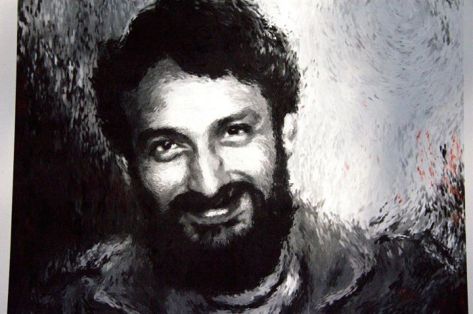
Guest Post by Kavita Krishnan
It’s been twenty years since the assassin’s bullets took Chandu away from us, at 4 pm on 31 March 1997.
I still recall my sheer disbelief when a phone call from my party office at my hostel that evening informed me ‘Chandu has been killed.’ Chandrashekhar as well as youth leader Shyam Narayan Yadav had been shot dead while addressing a street corner meeting in Siwan – ironically at a Chowk named after JP – Jaiprakash Narayan, icon of the movement for democracy against the Emergency. A rickshaw puller Bhuteli Mian also fell to a stray bullet fired by the assassins – all known to be henchmen of the RJD MP and mafia don Mohd. Shahabuddin.
In the spring of 1997, as JNU began to burst into the riotous colours of amaltas and bougainvillea, Chandu bid us goodbye. He had served two terms as JNUSU President (I was Joint Secretary during his second stint) and had decided to return to his hometown Siwan, as a whole-time activist of the CPI(ML) Liberation. He had made the decision to be a whole-time activist a long time ago. Chandu’s friends know that for him, the decision to be an activist rather than pursue a salaried career was no ‘sacrifice.’ It was a decision to do what he loved doing and felt he owed to society.
Continue reading Remembering Chandu, Friend and Comrade: Kavita Krishnan
Deendayal in Government Schools : Neglecting Education, Indoctrinating Exclusion

(Photo courtesy : livehindustan.com, From left to right – Golwalkar, Deendayal Upadhyay and Atal Bihari Vajpayee, . Photo taken in Mathura during Goraksha/Cow Protection movement, 1965)
“DEENDAYAL UPADHYAYA is to the BJP [Bharatiya Janata Party] what Mohandas Karamchand Gandhi was to Congress” opined R. Balashankar, former editor of the Rashtriya Swayamsewak Sangh’s (RSS) organ Organiser and now a member of the BJP’s central committee, on Prasikhshan Maha Abhiyan
(The Indian Express,; September 24, 2016).
Cows inhale, exhale oxygen, says Rajasthan education minister Vasudev Devnani
Rajaram (name changed) Principal of a school near Jaipur, Rajasthan is a worried man.
An honest teacher all his life, is not able to comprehend the rationale behind the recent order by the state education ministry asking every secondary and senior secondary school to purchase collected works of Deendayal Upadhyay Continue reading Deendayal in Government Schools : Neglecting Education, Indoctrinating Exclusion
Radhika Vemula on Bhim Auto

(Photo Courtesy : indiatoday.intoday.in, Photo Illustration by Saurabh Singh)
..The value of a man was reduced to his immediate identity and nearest possibility. To a vote. To a number. To a thing. Never was a man treated as a mind. As a glorious thing made up of star dust. In every field, in studies, in streets, in politics, and in dying and living.
..My birth is my fatal accident. I can never recover from my childhood loneliness. The unappreciated child from my past.
(Excerpts from Rohith Vemula’s suicide note)
The middle of this month would witness a different type of Yatra on the streets of Telangana and Andhra Pradesh. Neither it would be led by high profile leaders – who have the aura of Z plus security with them – nor it would be undertaken in an ultramodern bus – fitted with latest facilities and which could even be used as podium for a public meeting.
It would be taken out on a blue pickup truck renamed Bhim Auto and would be led by a fifty year old woman Radhika Vemula along with her son Raja demanding justice for her elder son Rohith. During this Yatra Radhika intends to visit one Velivada ( Dalit hamlet) after other in these two states to tell people how castiest forces are hell bent upon denying dalits their due rights and how justice is still being denied to her son who committed suicide because of the machinations of such people. (http://nsi-delhi.blogspot.in/search/?q=rohith+vemula). She would also communicate to them that not only the ruling dispensation at the centre led by BJP but the state governments in Andhra Pradesh and Telangana have been callous towards the plight of the Dalits and have joined hands to deny justice to her son. Not some time ago the government of Andhra Pradesh had made outrageous statements about Rohith not being dalit and earlier in February had demanded that Radhika ‘prove’ that she is Dalit in 15 days. Continue reading Radhika Vemula on Bhim Auto
“Karenge politics, karenge pyar” – New slogan and new politics: Baidik Bhattacharya
Guest post by BAIDIK BHATTACHARYA
[While the media worked overtime to present the developments in Ramjas College and Delhi University as a clash between two student organizations and two political formations, Baidik Bhattacharya here reflects on the new kinds of politics, rooted in the everyday and in love, that found expression in the University.- AN]
On 28 February, 2017, thousands of students and teachers of Delhi University and other academic institutions of the NCR region marched across the North Campus, protesting against the recent acts of vandalism and violence at Ramjas College. As the march progressed through the winding roads, touching various colleges and departments of the university, feisty students raised several slogans to oppose the perpetrators of such violence, the student organization of the RSS—the Akhil Bharatiya Vidyarthi Parishad or ABVP. Some of these slogans were well-known, some predictable, but some were really creative. I want to briefly discuss one such creative slogan, and its implications: “Karenge politics karenge pyar, ABVP hoshiyar.” Chanted primarily by groups of women and queer activists, this innovative rendering of one’s rights across the university campuses captured some of the pressing issues that have surfaced in the last couple of years in student politics.
Continue reading “Karenge politics, karenge pyar” – New slogan and new politics: Baidik Bhattacharya
Longing for the Future – Two Days with Penkoottu and AMTU at Kozhikode, Kerala
Kozhikode, Hotel Alakapuri, 4-5 March, 2017.
Kozhikode has always upturned my feelings about the male gaze. It is of course a cheerful, bustling, place, full of fabulously good-looking people of all genders. The cheeriness has a certain effortlessly defiant quality – already evident when you look out of the window as the train from the south pulls into the railway station, and see bright, healthy, merrily-swaying wild flowers raise their heads undefeated by the ferocious summer sun– wild sunflowers in hundreds, magnificent vines of kulamariyan flowers ( literally, ‘over-the-top’ flowers, but known here also, interestingly enough, as Antigone vines), creepers happily, constantly, and untiringly winding over little piles of rubbish and covering them with short-lived if emphatic trumpets of mauve, lavender, red, yellow, and white. You pass this eternal artwork-in-progress of the flowers and vines and city trash and enter Kozhikode, but realise that it actually tells you a bit about the men there only when you meet them. Continue reading Longing for the Future – Two Days with Penkoottu and AMTU at Kozhikode, Kerala
A Tale of Two and a Half Marches – Two for Azadi and a Half for Ghulami.
[Videos of song by Shehla Rashid and of speeches by Nivedita Menon, Kavita Krishnan, Umar Khalid and Jignesh Mevani, courtesy, Samim Asgor Ali]
February gives way to March and spring returns to Delhi. And what a spring it is. The right wing thugs of the ABVP choose the wrong time to attack, once again. They must really get themselves a better astrologer, or at least a better class of charlatan who can tell them if there ever is a right time to stage their goon show. I suspect there isn’t.

Continue reading A Tale of Two and a Half Marches – Two for Azadi and a Half for Ghulami.
Hard Ways of Lucidity – Thinking About the Crisis in the University: Prasanta Chakravarty
Guest Post by Prasanta Chakravarty
As I see it, university spaces are being assaulted at least from two sides; though it seems as if the two sides are antagonistic to each other, in practice they come dangerously close to each other. How and why is this happening, and what can be done about it?
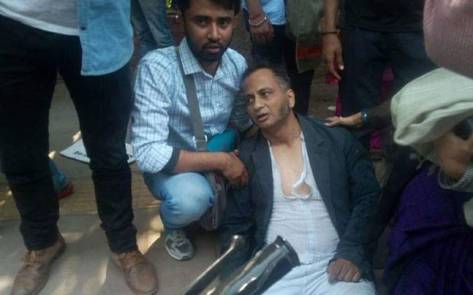
Arrey ABVP, Kaahey so Creepy?
असहमतियाँ इस दौर में – प्रसंग जोधपुर विश्वविद्यालय : हिमांशु पंड्या
Guest post by HIMANSHU PANDYA
1-2 फरवरी को अंग्रेज़ी विभाग द्वारा आयोजित संगोष्ठी में प्रो. निवेदिता मेनन के व्याख्यान के बाद जयनारायण व्यास विश्वविद्यालय सुर्ख़ियों में है. विश्वविद्यालय में घट रहे विवाद को देखकर लग रहा है कि एक साल पहले की सारी कहानी ज्यों की त्यों दोहराई जा रही है. एक साल पहले उदयपुर में सुखाडिया विश्वविद्यालय में हुए व्याख्यान के बाद भी यही सब हुआ था. अफवाहें, तथ्यों का गलत सलत प्रस्तुतीकरण, मनगढ़ंत आरोप और तत्काल सजा. फ़र्क यह है कि इस बार हमले की तीव्रता और फैसले की हड़बड़ी ज्यादा है.
सबसे पहले उन बिन्दुओं पर चर्चा कर लें, जो आरोप की शक्ल में जोर जोर से दोहराए जा रहे हैं.
प्रो. मेनन के व्याख्यान पर मुख्य आरोप यह है कि उन्होंने देश का नक्शा ‘उल्टा’ दिखाकर राष्ट्र का अपमान किया. जिस बात को इतना बड़ा हौव्वा बनाकर पेश किया जा रहा है, वह एक सामान्य सा अकादमिक अभ्यास है, जो दुनिया भर में मान्य है. दुनिया गोल है और नक़्शे में उत्तर-दक्षिण-पूर्व-पश्चिम सिर्फ हमारी संकल्पनाएँ हैं. उत्तर आधुनिक विचारकों द्वारा पूर्व पश्चिम के द्वैत को बरसों पहले खारिज किया जा चुका है. उत्तर औपनिवेशिक इतिहास लेखन की एक सम्पूर्ण धारा है जो यूरोकेंद्रित इतिहास दृष्टि को खारिज करके नई सोच के साथ इतिहास को देखने की कोशिश करती आयी है. (और इस धारा में गैर मार्क्सवादी ही नहीं, दक्षिणपंथी रुझान वाले इतिहासकार भी शामिल हैं) इसी क्रम में नक्शों के यूरोकेंद्रित होने को चिह्नित करते हुए न मालूम कितने प्रयोग हुए हैं. आप एक लेख से इसकी झलक पा सकते हैं. (1) और तो और, आप चाहें तो उल्टा नक्शा अमेज़न पर जाकर खरीद भी सकते हैं. (2) सिर्फ उल्टा ही नहीं, ग्रीनविच रेखा की केन्द्रीय स्थिति (यानी यूरोप की केन्द्रीय स्थिति) को बदलकर या ध्रुवों के परिप्रेक्ष्य से दुनिया को देखकर या और भी अनेक तरीकों से भूगोलवेत्ता नक़्शे को बनाते और प्रदर्शित करते रहे हैं. उदाहरण के लिए यूनाइटेड नेशंस का लोगो जिस पद्धति का अनुसरण करता है वह सरल भाषा में ‘पोलर मैप’ कहा जा सकता है.

यू एन का लोगो
वैसे आपका नक्शा जैसा भी हो, जो चाहे उसे आयताकार फैला दे पर दुनिया गोल ही है और भारत के विश्वविद्यालय, मध्ययुगीन चर्च नहीं हैं.
सबसे मजेदार बात यह है कि जो विवादित चित्र प्रो. मेनन ने अपने व्याख्यान के दौरान दिखाया, वह NCERT की कक्षा 12 की किताब में एक दशक से है, अभी भी है और उसे देश भर के लाखों शिक्षक और विद्यार्थी रोज देखते हैं. और तो और एक साल पहले तक यही किताब हमारे अपने राजस्थान पाठ्य पुस्तक मंडल की किताब भी थी और इस तरह हमारे राज्य में भी लाखों शिक्षक-विद्यार्थी इस नक़्शे को देखते आये हैं. अंग्रेज़ी-हिन्दी दोनों पुस्तकों का पेज नं 150 देख लीजिये. अंग्रेज़ी वाला हमारे दोस्त ने उपलब्ध करवा दिया है. Continue reading असहमतियाँ इस दौर में – प्रसंग जोधपुर विश्वविद्यालय : हिमांशु पंड्या
University Administration Trying to Precipitate Crisis: JNUTA
We are reproducing a statement issued by JNUTA on 19 February 2017, on the situation in the university and the administration’s attempts to create a crisis where there is none.
The Jawaharlal Nehru University Teachers Association is deeply distressed at the continuing impasse in the University. Pursuant to its appeal on 13 February to the Vice-Chancellor to initiate a dialogue with the students, JNUTA has through the last week requested a meeting with him to discuss the situation on campus, but has not even received the courtesy of a reply. It has also spoken daily to the students worried about their future and that of the university about the concerns that the teachers, staff, and officers have at restoring the smooth functioning of the University administration building. Continue reading University Administration Trying to Precipitate Crisis: JNUTA
Rain and Revulsion: Prasanta Chakravarty
This is a GUEST POST by Prasanta Chakravarty
“Slime is the agony of water.”
~ Jean Paul Sartre, Being and Nothingness


The Birth of Revulsion – Pranabendu Dasgupta
No certainty where each would go —
Suddenly the descent of a cloudburst, rain.
We stood, each where we were,
And stared at one another.
It is not good to be so close
“Revulsion is born” – someone had said
“Revulsion, revulsion, revulsion.”
Then, lighting a cigarette, some man
Muttered abuse at another next to him.
Like an abstract painting, spiralling like a gyre,
In a wee space
We slowly fragmented, dispersed.
Had it not rained, though,
We would have stepped out together.
Perhaps to the cinema, tasting a woman’s
Half-exposed breast with the eye,
Then laughing out loud,
We could head for the maidan!
Someone maybe would sing; someone
Would say, “I am alive”.
But it rained.
(Krittibas, Sharad Sankhya, 1386)
ঘৃণার জন্ম
প্রনবেন্দু দাশগুপ্ত
কোথায় কে যাবে ঠিক নেই —
হঠাৎ দুদ্দাড় ক ‘রে বৃষ্টি নেমে এলো।
যেখানে ছিলাম, ঠিক সেইখানে থেকে
আমরা পরস্পরের দিকে তাকিয়ে রইলাম।
এত কাছাকাছি থাকা খুব ভালো নয়।
” ঘৃণার জন্ম হয় ” –কে যেন বললো
” ঘৃণা, ঘৃণা, ঘৃণা। ”
তারপর সিগ্রেট ধরিয়ে, আরো একজন
খুব ফিশফিশ ক ‘রে
পাশের লোককে গাল দিলো।
বিমূর্ত ছবির মতো তালগোল পাকিয়ে পাকিয়ে
ছোট্ট জায়গা জূড়ে
আমরা ক্রমশ ভেঙে, ছড়িয়ে পড়লাম।
বৃষ্টি না নামলে কিন্তু
আমরা একসঙ্গে বেরিয়ে পড়তাম।
হয়তো সিনেমা গিয়ে,রমণীর আধ -খোলা স্তন
চোখ দিয়ে চেখে
তারপর, হো হো ক ‘রে হেসে
ময়দানের দিক যাওয়া যেতো !
কেউ হয়তো গান গাইতো ; কেউ হয়তো
বলতো “বেঁচে আছি “।
কিন্তু বৃষ্টি নেমেছিলো।।
(কৃত্তিবাস, শারদ সংখ্যা ১৩৮৬)
‘नफरत के गुरूजी’
गोलवलकर के महिमामंडन से उठते प्रश्न

संघ के सुप्रीमो जनाब मोहन भागवत की सूबा मध्य प्रदेश की बैतुल की यात्रा पिछले दिनों सूर्खियों में रही, जहां वह हिन्दू सम्मेलन को संबोधित करने पहुंचे थे। सूर्खियों की असली वजह रही बैतुल जेल की उनकी भेंट जहां वह उस बैरक में विशेष तौर पर गए, जहां संघ के सुप्रीमो गोलवलकर कुछ माह तक बन्द रहे। इस यात्रा की चन्द तस्वीरें भी शाया हुई हैं। इसमें वह दीवार पर टंगी गोलवलकर की तस्वीर का अभिवादन करते दिखे हैं। फोटो यह भी उजागर करता है कि भागवत के अगल बगल जेल के अधिकारी बैठै हैं।
विपक्षी पार्टियों ने – खासकर कांग्रेस ने – इस बात पर भी सवाल उठाया था कि आखिर किस हैसियत से उन्हें जेल के अन्दर जाने दिया गया। उनके मुताबिक यह उस गोलवलकर को महिमामंडित करने का प्रयास है, जिसे ‘एक प्रतिबंधित संगठन के सदस्य होने के नाते गिरफ्तार किया गया था। यह जेल मैनुअल का उल्लंघन भी है। केवल कैदी के ही परिजन एवं दोस्त ही जेल परिसर में जा सकते हैं और वह भी वहां जाने से पहले जेल प्रबंधन की अनुमति लेने जरूरी है।’
गौरतलब है कि संघ के तत्कालीन सुप्रीमो गोलवलकर की यह पहली तथा अंतिम गिरफतारी आज़ाद हिन्दोस्तां में गांधी हत्या के बाद हुई थी, जब संघ पर पाबन्दी लगायी गयी थी। प्रश्न उठता है कि आखिर गोलवलकर के इस कारावास प्रवास को महिमामंडित करके जनाब भागवत ने क्या संदेश देना चाहा।
( For full text of the article click here :https://hindi.sabrangindia.in/article/nafrat-ke-guruji-subhash-gathade
Longing for the World: A Memoir of Two Days at the Kochi Biennale
[Disclaimer: I am not an art critic, artist, or travelled in the world of art. This is just a memoir]
(I)
Fort Kochi, 9 Feb. 2017
Though I had already been to the biennale in January and had a roaring time, something kept urging me to go there again. That something, I believe, is my insatiable imagination – which has always had a life of its own as long as I can remember, needs to be fed all the time, and actually drives me crazy. But maybe I should be thankful: if I survive this loveless existence that is my life, it is because my imagination has always spirited me away even from the midst of the worst emotional violence and uproar. Social theorists who use trickster figures or such characters as Daedalus who give power the slip, or manipulate it to their own ends, are probably saying the same thing.
The only ‘Moral Science’ lesson I remember from school was from the fourth standard, about the invisible guardian angel who supposedly protected us from evil. What intrigued me was the suggestion that each of us had a special angel-companion of our own who was ever-present though invisible – quite a lovely idea to a lonely child who found it hard to blend and settle into her playmates’ world. For me that was the unseen power which transformed a boring class into a musical concert by playing music inside my head; wove words and images into tales there; scared me sometimes, but equally let me exorcise the fear; and led me to all sorts of nooks and corners in the house and the yard and showed me all sorts of things, almost a world that I, but no one else, could see.
I pulled myself out of the world of research that employed, that did not satisfy, my imagination, and went again to the biennale. Two golden days! No words exist to reveal how my heart sang at the prospect. And besides, I was going to stay with dear, beloved friends, people who lived steeped in imagination – unlike me, whose current existence involved the use of the imagination (though it can never be mastered fully for sure) in a self-conscious way. My friends who run a little homestay near Fort Kochi reach out to others with extraordinary warmth mainly because, I think, their world is so incredibly diverse – populated by not just all sorts of diverse human beings, (rich, poor, high, low, of different faiths and castes, related by marriage, friendship, acquaintance, country-cousinship, common humanity, vague feelings of familiarity and so on), but also by spirits, saints, gods, all of who are felt and reached. Continue reading Longing for the World: A Memoir of Two Days at the Kochi Biennale
CPM in Kerala = Caste-Gender Elitism Minus Cow
This is my Malayalam opinion piece for iemalayalam, on something despite the outcry against the CPM in the mess around Kerala Law Academy. The public discussion has been, not unexpectedly, on the line of Kerala’s well-entrenched scandal journalism, which has a history of a hundred years, at least. This is a form of journalism that highlights the sexual lives – proper or improper – of powerful male politicians which accompanies the attack on their public failings directly or indirectly- a very highly successful tactic, hitherto, to undermine even the seemingly unassailable. When women began to figure in this kind of journalism as something more than just passive sexual objects, as active agents of corruption and manipulation – most markedly, in the controversy over the businesswoman Sarita Nair – scandal journalism worked by highlighting the huge contrast between their ‘feminine-respectable’ names, sartorial styles, behaviour, and so on, and the despicable manipulations they indulged in. This is the case also with much media discussion of the principal of the Kerala Law Academy, Lekshmi Nair.
However, this tactic is not only misogynist, it also lets the elite-femininity that she represents escape critique. This is a very contemporary form of respectable femininity that presents itself as essentially domestic, but wields delegated masculine power to vicious ends, and it is almost all-pervasive in disciplinary institutions in Kerala now. Not surprisingly perhaps, the CPM’s mishandling of the issue has not just shown how poorly committed the party is to women’s rights, but also how soft it is on this elite-feminine power.
The full essay, in Malayalam:
https://www.iemalayalam.com/opinion/cpm-j-devika-law-academy-lekshmi-nair-gender-caste-women/
Hindutva Fascists Ransack Janchetna Book Shop in Ludhiana
We are publishing below a statement issued by Anand Singh on behalf of Janchetna, Ludhiana
A group of Hindutva goons ransacked Janchetna — an institution dedicated to promote and propagate progressive literature — in Ludhiana on 2 January 2017. They also abused and misbehaved with the book shop manager Binny and manhandled other activists who came to her rescue. They even threatened to put the books on fire. More disturbing, however, was the fact that all this happened in the presence of police which remained a mute spectator to this fascist attack which lasted for two hours. Later, instead of arresting the goons, the police took the activists present there — Binny, Janchetna book shop manager, Lakhwinder , President of Textiles Hosiery Kamgar Union, Gurjeet (Samar), an activist of karkhana Mazdoor Union and Satbir Naujawan Bharat Sabha activists — into custody and sealed the shop. However, due to people’s pressure the activists were soon released and a demonstration of various mass organisations and trade unions compelled the police to let the book shop reopen.
Continue reading Hindutva Fascists Ransack Janchetna Book Shop in Ludhiana
Didi, I Want to Learn the Harmonium and Roam Around Freely: Samhita Barooah
Guest post by SAMHITA BAROOAH
During a visit to the Kishori Mandal at Apne Aap Women Worldwide’s Uttari Rampur Centre in Forbesganj I met some lovely girls. They stayed in the community near the red light area. They were eager to learn new things. They asked me my story of life, “Didi aapki kahani sunao? Aapne kaise yaha tak sangharsh kiya?” I was again very surprised to encounter the subversion of queries. I should have been the one to ask those questions to the girls, but they wanted to know more about me. Perceptual understanding is a perspective rooted in feminist standpoint theory which could apply to any context from the onlooker’s context. For the young girls from the Red Light Area in Forbesganj, I was trapped in some realities which connected me to them. That was why she asked me to share my story of struggle. When I said education enabled me to survive the world around me, they laughed and said that was not their story. They said, “For us we have to get married as soon as we are 18 years old but sometimes even earlier. We just want to enjoy our freedom now in this centre till we get married. After that we do not know what holds true for us.” As women whether we are in the Nat community of Bihar or we are in the liberated spaces of North East India, our identities get defined by our marriage, cultural practices and socialisation. Unbound freedom for women seems to be a misnomer which should be forbidden for women as the evolved souls say.
Continue reading Didi, I Want to Learn the Harmonium and Roam Around Freely: Samhita Barooah
Dangal and the Phogat Sisters – A Tale of Many Struggles: Praveen Verma
Guest post by PRAVEEN VERMA
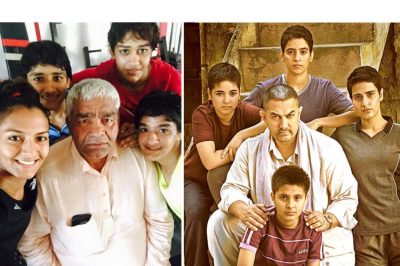
Dangal literally means the Indian style wrestling competition for male pahalwans (wrestlers). Dangal has been an important form of entertainment for ages, especially in rural (north and west) India. Dangals act in many ways. It works to settle the personal score between different Akharas and pahalwans. It’s a place where honour, reputation and social status are on stakes and personal and political rivalries are fought out, or settled. For example, one of the most important dangals used to happen every Sunday at Eidgahi Maidan, Jama Masjid in Delhi, till very recently. Itwari dangal, as it was fondly called, was the place where pahalwan like Gama, Imam Baksh, Chandgiram used to come and show their talent in front of thousands of wrestling lovers. I remember whenever I used to come to Delhi, I always wanted to win the bout at Eidgahi Maidan, as it meant a lot to win at Eidgahi maidan rather than any other place!
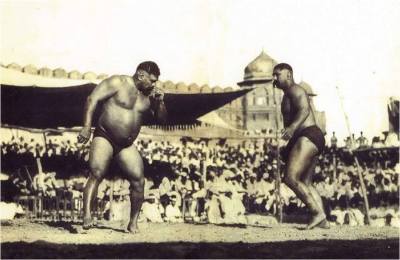
As it was strictly meant for male pahalwans, women were not even allowed to watch them fighting, let alone participating. Something similar to Khap Panchayats, where women still are not welcome. Women are the fairly latecomers in wrestling arena and yet not so welcome. In this context to make a film on the emergence and development of women wrestling in India itself is a fascinating idea.
Dangal, the movie is based on a true story of Mahavir and his firebrand daughters and their ‘quietly’ active mother. It is an important movie to watch for many reasons. Firstly, it portrays a father who wanted his daughters to pursue something (wrestling) which was un-imaginable in those days. It reveals what it took for the first generation of women wrestlers to break those masculine stereotypes and depicts the overall impression of wrestling in the realm of sports culture in India. There are so many moments in the film to cheer about, to get goosebumps (at least I got many). Writing review is an unknown territory for me but there is a personal reason to taking to this venture of writing. The release of this film forced me to say something which, as a former wrestler for almost ten years, is still left with me. Continue reading Dangal and the Phogat Sisters – A Tale of Many Struggles: Praveen Verma
 KAFILA - COLLECTIVE EXPLORATIONS SINCE 2006