Category Archives: Culture

चायवाला: गौहर रज़ा

Guest post – a poem by GAUHAR RAZA

चायवाला

बहुत फ़र्क़ है यह चायवाला
उन से
जो अपनी ज़िंदगी
दूसरों को चाय पिलाते गुज़ार देते हैं
बहुत फ़र्क़ है यह चायवाला
रामदीन, मैकल या ज्ञानी जी से
जो भूखे पेट रहते हैं दिन भर
और टूटे छप्पर, या पेड़ की जड़ के सहारे
चाय के एक प्याले से किसी के माथे की
थकन मिटाते हैं
फ़ैक्टरी के गेट के बाहर,
उस नौजवान का ग़म दूर करते हैं
जिसे अभी अभी नौकरी से निकाला गया है
या किसी राहगीर को सही रास्ता बताते हैं
बहुत फ़र्क़ है यह चाएवाला
उन से जो
देर गए, रात को अपने घर लौटते हैं
चंद सिक्के समेटे, उन गुंडों की गालियों के साथ,
जो रोज़ ज़बरदस्ती चाए पीते हैं,
और बदले में धमकियाँ देते हैं Continue reading चायवाला: गौहर रज़ा

डेमॉगॉग का वक्त

कुछ महीने पहले प्रतापभानु मेहता ने पूछा,’डेमॉगॉग को हिंदी में क्या कहेंगे?’ इतनी बार इस शब्द का प्रयोग किया है लेकिन इसका हिंदी प्रतिरूप खोजना सूझा नहीं। डेमॉगॉग कौन है बताया जा सकता है लेकिन क्या है,बताना इतना सरल नहीं।  तुरत दिमाग में लफ्फाज कौंधा लेकिन उसका रिश्ता वाचालता से अधिक है। फिर एक और शब्द की ओर ध्यान दिलाया मित्र  अरशद अजमल ने,शोलाबयानी। लगा कि यह अंगेज़ी के ‘रैबल राउज़र’ के काम के लिए अधिक उपयुक्त प्रतिरूप  है। फादर कामिल बुल्के के  और दूसरे शब्दकोशों में देखा तो पाया कि यह शब्द है ही नहीं। तो क्या फादर का कभी किसी डेमॉगॉग से पाला नहीं पड़ा था? Continue reading डेमॉगॉग का वक्त

Time For a Code of Conduct for Media

Let us make no mistake, the Big Media in India does not merely report; it is a player in Indian politics in general and elections in particular.

Now that the debate is out in public it is time to insist on a code of conduct for the media as well. After Arvind Kejriwal’s recent allegations against four television channels that have been blown out of proportion and misrepresented, there has been an uproar. A burst of righteous anger, not only from those accused by Kejriwal of having been bought out by a particular party, but also by professional bodies like the News Broadcasters Association (NBA), the Editor’s Guild, the Broadcast Editors Association (BEA) and other senior journalists.

The NBA, which is a private association, threatened to black out Kejriwal and AAP news and then went on to assert its objectivity and fairness against the “unsubstantiated and unverified allegations” against the news channels.

The BEA said in its statement:

“BEA condemns Arvind Kejriwal’s irresponsible statement on media. BEA believes that electronic media is discharging its responsibility in a fair and objective manner. It is wrong to say that TV channels are pursuing a biased agenda in favour of any person or party. BEA believes that such statements are a conspiracy to dilute the credibility of media. We have strong faith in the self regulatory institutions that electronic media has developed…”

Let us concede for the sake of argument that Arvind Kejriwal went overboard and his statement about ‘jailing mediapersons’ was uncalled for. But does the claim of the BEA, NBA and other bodies really stand up to scrutiny? Is the electronic media really dïscharging its  responsibility in a fair and objective manner”? What precisely, may we ask, are the “self regulatory institutions that electronic media has developed” and what have they done by way of reigning in the Indian media that have sunk to new lows in recent years with “paid news”and “advertorials” – not to mention private treaties with big corporations ? We ask the BEA and the NBA and 0ther defenders of the media, is this the ethical behavior they talk of? Is this self-regulation? Maybe Kejriwal’s allegations are “unsubstantiated” in the sense that there is no “proof”, but there is little doubt from the instructions that journalists have been receiving from their bosses, that a lot more than mere reporting is at stake. And just for the record, the the Chairman of one of media houses accused by Kejriwal, Subhash Chandra of Zee News, is currently facing a case of extortion – using his channel’s news-gathering for blackmail. We would love to hear how this qualifies as ‘fair and objective’in the eyes of the BEA and other luminaries. Continue reading Time For a Code of Conduct for Media

Crafting the Modi Mask – India Inc and the Big Media

AAP Rally in Gujarat. Courtesy Mukul Sinha

Two things stand out for their sublime quality in the current round of pre-election campaigning. First, the danger to Indian democracy has assumed unprecedented proportions, and there is a clear sense of desperation in the air. The threat emanates, you guessed right, from a group of anarchists who are poised to take over Indian democracy.  This is perhaps the dirtiest and most dangerous election that India has ever seen – what with the bunch of anarchists ‘fixing the media‘, ‘spreading anarchy‘, ‘hijacking democracy‘, ‘taking foreign funds‘ for their election campaign (while the others, the impeccable democrats of the BJP and the Congress have to make do with ‘local’ capitalists like  Mukesh Ambani). What’s more, these people are ‘political mercenaries‘,  urban Maoists in disguise and they want to wreck the neatly and painstakingly built edifice of our hallowed democracy. This widespread love of democracy is touching. For someone like me who has closely watched (and participated in) politics from the mid 1970s, the panic evident in the tone of those attacking AAP is as unprecedented as it is revealing. It is revealing of the fact that the political class is thrown into disarray by this new way of doing politics that AAP represents. In BJP’s case, in particular, one can discern complete befuddlement – neither its hope to reap the benefit of the mass anger against the Congress, nor its tried and tested polarizing communal vocabulary seem to have any meaning any more.

Thus, during the days of AAP rule in Delhi, the official BJP state executive resolution came up with this claim:

“Delhi is currently being ruled by a bunch of political mercenaries hired, supported and controlled by Congress party. The words and action of AAP leaders expose the fact that it is a Maoist outfit.”

Of course, the Maoists are “hired, supported and controlled by the Congress”!

Continue reading Crafting the Modi Mask – India Inc and the Big Media

No Country for Cricket: Umang Kumar

Guest post by UMANG KUMAR
I have to confess that there are many times that I too have wanted to stop supporting the Indian cricket team and root for some other team. And this is not just with the current lineup and their losses in South Africa and New Zealand. Why, even when Gundappa Viswanath failed in inning after inning, when, in the pre-Kapil days, Indian pacers (“fast medium”) like Karsan Ghavri and Mohinder Amarnath huffed and puffed, there were times I just wanted to say good riddance. Thank you India, I think I’ll switch allegiance – I’ll go support Clive Lloyds’ West Indies or Asif Iqbal’s Pakistan. Much better teams, so much more exciting to watch!

The Indian cricketers could neither bowl well nor defend modest totals with the bat. And they were lackluster on the field save that one saving grace, Eknath Solkar.
Continue reading No Country for Cricket: Umang Kumar

Fundamentalism, Liberalism and Muslims – Review of Hasan Suroor’s ‘India’s Muslim Spring’: Abhay Kumar

ABHAY KUMAR reviews Hasan Suroor’s India’s Muslim Spring: Why is Nobody Talking about It?, Rupa Publications, New Delhi, 2014.

Hasan Suroor is a London-based veteran journalist. He began his career with The Statesman and later he worked as The Hindu’s UK correspondent for over a decade. He continues to write in newspapers on important issues such as Muslim identity, secularism, communalism and Islam. He was brought up and educated in Delhi after his family left Lucknow for the national capital post-Partition. Their new destination, at least in the beginning, did not receive its guests warmly as his parents’ identity as Muslim worked as a hurdle for them to rent a flat in New Delhi. Eventually they had to seek refuge in the Muslim-majority Ballimaran of the Walled City where his mother worked as a Communist Party activist. Suroor, who is regarded as one of the “progressive” and “liberal” voices among Muslims, has recently been in news for an interesting thesis which he offers in his new book, India’s Muslim Spring: Why is Nobody Talking about It?

He argues that for the first time since Independence a “seismic” and “tectonic” shift has taken place in Indian Muslim community with an emergence of “liberal spring” among new generations Muslims, who were born after the late 1970s. For Suroor, the elder generations of Muslim were “fundamentalist” and “emotional”, “intolerant” of freedom of speech, prioritized “cultural” and “identity” issues over substantive ones, had “contempt” for women and blamed others for the plight of Muslim community while the young Muslims are just the opposite of their elders; they, are  “tolerant”, “pragmatic”, “moderates”, “secular”, “cosmopolitan”, “optimistic” and “confident” and “forward-looking” as well as “nationalistic”. In short, he creates a binary between fundamentalist old Muslims versus liberal young Muslims. Continue reading Fundamentalism, Liberalism and Muslims – Review of Hasan Suroor’s ‘India’s Muslim Spring’: Abhay Kumar

Despatch from Ayodhya: Monobina Gupta

Guest post by MONOBINA GUPTA

Ayodhya, Faizabad: As our taxi approaches the site of the controversial Ram temple, two young men on motorcycle ride alongside our car. “ We will be your guides. Want to see the temple? Only hundred rupees,” they shout. My unofficial ‘guide’ Vineet Maurya, a fierce crusader against representing the site as the birthplace of Ram, rolls down the window and snaps back,” We are not here to see the temple.” Further down the lane, more young men run behind the car with similar offers. Temple sightseeing has turned into a veritable industry at Ayodhya.

From the narrow alley, the disputed plot, closely barricaded with high yellow railings and watched 24/7 by men from the Central Reserve Police Force (CRPF) and Provincial Armed Constabulary(PAC), images a heavily guarded fortress: one that is in danger of imminent attack. This is the holy site over whose ownership Hindus, led by the Bharatiya Janata Party (BJP), had waged such a fierce battle and spilled so much of blood. The manifestations of that unholy battle are overwhelmingly present in the form of deployment of countless security forces guarding Ram Lalla. What is lost in this murky stand-off is the sanctity of a holy place.  Ayodhya ranks among the top holy sites of India. Continue reading Despatch from Ayodhya: Monobina Gupta

राष्ट्रवाद का मौसम

मेरठ के एक निजी विश्वविद्यालय में भारत-पाकिस्तान के बीच हुए क्रिकेट मैच में पाकिस्तान की जीत पर कश्मीरी छात्रों की खुशी जाहिर करने पर स्थानीय छात्रों द्वारा उनकी पिटाई और तोड़-फोड़ के बाद तीन दिनों के लिए छियासठ छात्रों के  निलंबन (निष्कासन नहीं) और फिर ‘उनकी हिफाजत के लिए’ उन्हें उनके घर भेजने के विश्वविद्यालय के फैसले के बाद उन छात्रों पर राष्ट्रद्रोह की धाराएं लगाने से लेकर उन्हें वापस लेने तक और उसके बाद भी जो प्रतिक्रियाएं हुई हैं,वे राष्ट्रवादी नज़रिए मात्र की उपयोगिता को समझने के लिहाज से काफी शिक्षाप्रद हैं.आज यह खबर आई है कि ग्रेटर नॉएडा के शारदा विश्विद्यालय में भी छह छात्रों को छात्रावास से ऐसी ही घटना के बाद निकाल दिया गया है जिनमें चार कश्मीरी हैं. मामला इतना ठंडा क्यों है, ऐसी निराशा जाहिर करते हुए फेसबुक पर टिप्पणी की गयी है और उसके बाद तनाव बढ़ गया है.

रोशोमन नियम के अनुसार घटना के एकाधिक वर्णन आ गए हैं और तय करना मुश्किल है कि इनमें से कौन सा तथ्यपरक है. स्थानीय (राष्ट्रीय या राष्ट्रवादी?) तथ्य यह है कि पाकिस्तानी खिलाड़ियों के प्रदर्शन और फिर उस टीम की जीत पर कश्मीरी छात्रों ने पाकिस्तान जिंदाबाद के नारे लगाए जिससे  भारतीय टीम की हार से पहले से ही दुखी स्थानीय छात्रों में रोष फैल गया. निलंबित कश्मीरी छात्रों का कहना है कि वे हर उस खिलाड़ी के प्रदर्शन पर ताली बजा रहे थे जो अच्छा खेल रहा था. बेहतर टीम पकिस्तान के जीतने पर उनका खुशी जाहिर करना कहीं से राष्ट्रविरोधी नहीं कहा जा सकता. उनके मुताबिक  इसके बाद उन्हें पीटा गया और तोड़-फोड़ की गई. Continue reading राष्ट्रवाद का मौसम

The Embarrassed Modern Hindu (Upper Caste Man)

Perhaps the clearest statement on what exactly it is in Wendy Doniger’s work that bothers some people – and who these people are – is outlined in Jakob De Roover’s empathetic account of the imagined ‘Hindu boy with intellectual inclinations’ born in the 1950’s.  This boy grows up going to the temple, hearing stories about Bhima’s strength, Krishna’s appetite, Durvasa’s temper. If you were this boy,

Perhaps you rejoice when Rama rescues Sita, feel afraid when Kali fights demons, or cry when Drona demands Ekalavya’s thumb as gurudakshina.

The boy goes to school and learns about caste discrimination in Hinduism (that he had to go to school to learn about caste discrimination establishes his own caste position very clearly).  This makes

You feel bad about your “backward religion” and ashamed about “the massive injustice of caste.”

But

You sense that it misrepresents you and your traditions—it distorts your practices, your people, and your experience…Everywhere you turn, people just reproduce the same story about Hinduism and caste as the worst thing that ever happened to humanity: politicians, activists, teachers, professors, newspapers, television shows… Continue reading The Embarrassed Modern Hindu (Upper Caste Man)

Terrorized By The Past: Janaki Nair

Kafila normally does not carry guest posts that have appeared elsewhere, but I think JANAKI NAIR’s article from The Telegraph needs to be read widely – a scholarly, lively, feminist take on sexuality in Hindu traditions.

It is our good fortune that our knowledge of Hinduism does not come from the authorized versions that Dina Nath Batra and his Shiksha Bachao Andolan wish to propagate. Neither does our collective imagination remain reined in by his fantasies about the Indian past. This large and luxuriantly complex society, even when all else has been brutally taken from its wretched millions, has its imagination intact. And, we fervently hope, for some time to come. Therein lies the challenge to our desperately needed “historical temper”.

As an 18-year-old, I had read the sexually frank passages of the Rig Veda with wonder and amazement. In a small village called Sanehalli, Karnataka, where the performing arts have been vigorously patronized by Swami Panditaradhya, I recently watched, along with the people from surrounding villages, the Kathakali performance at the annual theatre festival, in which Shakuntala incrementally raised the decibel level and shouted “Anarya!” at Dushyanta, violating all norms of womanly behaviour and appropriate performance voice. There was thunderous appreciative clapping at the end. I have filed past, with lots of ardent devotees of Krishna, the brilliant murals at the Cochin Palace at Mattancherry, where Krishna does not waste a single digital extremity of his eight hands and two feet in pleasing his gopis (his two flute playing hands excepted). Ditto the Guruvayur Temple, whose sexually explicit murals are now, alas, being modestly covered in (NRI-sponsored) gold plate. The erotic sculptures at the Nellaiappar Temple at Tirunelveli, the great Chalukyan temples at Aihole Pattadakkal and Badami, all visited daily by hundreds of chattering and irreverent school children, continue to stand as testimony to what our illustrious forebears were also preoccupied with. One could go onad nauseum, about the little and great traditions of Indian mythology which are not only sexually explicit but bloodstained to boot. It is Wendy Doniger’s triumph that she brings us these complexities in just one book. Continue reading Terrorized By The Past: Janaki Nair

CHS, JNU Statement on the Wendy Doniger Issue

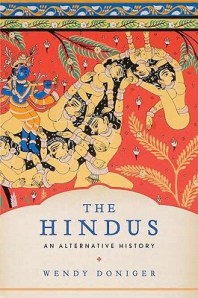
The following is the text of a statement issued by the Faculty of the CENTRE FOR HISTORICAL STUDIES, Jawaharlal Nehru University, protesting against the recent decision by Penguin India to withdraw and pulp all remaining copies of Wendy Doniger’s Hinduism. An Alternative History

We are outraged by the news that Penguin India has agreed to withdraw Wendy Doniger’s much acclaimed book The Hindus: An Alternative History and pulp all existing copies of the book in stock. Professor Doniger is one of the most respected Indologists in the world. She has spent a lifetime exploring the richness of India’s religious pasts, showcasing the creative interplay between multiple traditions — the Puranic and the Vedantic, the folkloric and the Brahmanic. Innovatively drawing on many disciplines, she has investigated the variegated world of Hindu mythology and theology, to explore what they say about order and chaos, morality and ethics, the good and the evil, the erotic and the non-erotic. Her reading of Hinduism has inevitably disturbed those who wish to sanitize and straitjacket Hinduism, and repress the multiplicity of traditions that constitute it. While welcoming all critical engagements with the book, the faculty of the CHS condemns any attempt to curtail the circulation of this book in any form.

The decision of Penguin India to sign an out-of-court settlement to withdraw Professor Doniger’s book is therefore an act of abandoning the basic ethics of publishing. What is most disturbing is the fact that Penguin Books — which had in the past a sturdy reputation of defending freedom of expression — has agreed to a settlement even without the Indian state or the Indian judiciary taking a position against the book. This decision will affirm the power of the forces of religious intolerance, encourage further attacks on authors who question the fundamentalist interpretation of the past, and subvert the right to freedom of expression. It will undermine further the rapidly eroding public space wherein critical debates and discussions can take place. This is a space that all who believe in democratic values — publishers included — need to preserve and defend.

Please note that individual names are not being listed in this statement as this is emanating from the entire faculty.

Thank you,

Professor Rajat Datta

Statement by Scholars in North American Universities on Withdrawal of Wendy Doniger’s book

This statement expresses the views of the individuals listed below and does not represent the views of the University of Chicago or any of its departments.

We, the undersigned, as students of South Asia, strongly condemn the withdrawal by Penguin Press India of Wendy Doniger’s The Hindus: An Alternative History from distribution in India. We believe that this work has been attacked because it presents a threat to orthodox Brahminical interpretations of Hinduism. We believe that this attack is part of ongoing attempts by upper-caste extremist Hindu forces to stifle any alternative understandings of Hinduism. As students in the United States, we are acutely aware that North American organizations of the Hindu right initiated the protests against Wendy Doniger’s scholarship. Hindu right wing organisations in India have worked in tandem with their North American counterparts to suppress alternative voices in India and too often violently. We are deeply concerned about the alarming increase in attacks on any academic study of Hinduism that does not fit these groups’ narrow and exclusionary vision of Hinduism which is part of their desire to create a Hindu India that excludes the religious minorities of Indian Muslims and Indian Christians. Continue reading Statement by Scholars in North American Universities on Withdrawal of Wendy Doniger’s book

Of Khap and AAP: Eight Myths about Culture and Caste : N. Balmurli

Guest Post by N. Balmurli

Delhi chief minister Mr. Kejriwal’s claim that “khaps serve a cultural purpose” reproduces some popular myths about culture and caste. These myths predate AAP and have been put into place over the last few years by official and expert statements in public discourse such that they are now part of a “commonsense” of worldviews about caste and culture.

Consider two other statements made by political figures whose parties are at pains to show how retrograde AAP’s statements are.

Continue reading Of Khap and AAP: Eight Myths about Culture and Caste : N. Balmurli

Demand to Reconsider and Revise Sections 153a and 295a of the Indian Penal Code to Protect Freedom of Expression in India: Concerned Academics and Public Intellectuals

Statement by Concerned Academics and Public Intellectuals: Ananya Vajpeyi, Sheldon Pollock, Partha Chatterjee, Laurie Patton, Romila Thapar, David Shulman and many others

We the undersigned are appalled by the recent settlement reached between Dina Nath Batra for the Shiksha Bachao Andolan and Penguin Books India, to cease the publication of Wendy Doniger’s The Hindus: An Alternative History (Penguin USA 2009; Penguin India 2010), and to withdraw and destroy remaining copies of the book on Indian territory. Continue reading Demand to Reconsider and Revise Sections 153a and 295a of the Indian Penal Code to Protect Freedom of Expression in India: Concerned Academics and Public Intellectuals

Legal notice to Penguin Books India for violation of rights of readers

Advocate LAWRENCE LIANG  has served this legal notice to Penguin Books, India, on behalf of Shuddhabrata Sengupta and Aarti Sethi. 

Under instructions from, for and on behalf of my clients Sh. Shuddhabrata Sengupta and Ms. Aarti Sethi, both residing at New Delhi, I serve upon you this legal notice for the following reasons and purposes:

  1. My client, Mr. Sengupta, is an artist and writer based in New Delhi with a longstanding interest in the comparative history of religions. Ms. Sethi is an anthropologist with a deep interest in Hindu philosophy. Both Mr. Sengupta and Ms. Sethi are avid bibliophiles, ardent supporters of freedom of speech and expression and have in the past been admirers of Penguin Books.
  2. My clients were delighted when YOU NOTICEE published Wendy Doniger’s  “The Hindus: An Alternative History” and as people who have closely followed the scholarly contributions of the said author they regard this book to be a significant contribution to the study of Hinduism. They consider Ms. Doniger’s translations of Indian classical texts and her work on various facets of Hinduism from morality in the Mahabarata to the erotic history of Hinduism as an inspiration for their own intellectual pursuits.
  3.  It has come to the notice of my clients that YOU NOTICEE have withdrawn publication of the book “The Hindus: An Alternative history” pursuant to an agreement entered between YOU NOTICEE and Shri. Dinanath Batra; O.P.Gupta, Sharvan Kumar and a few other busybody etcetera’s on the 4th of February 2014. YOU NOTICEE have further agreed not to sell, publish or distribute the book and also to pulp all unsold copies of the book. Continue reading Legal notice to Penguin Books India for violation of rights of readers

Adivasi-yagna, The Great Sacrifice – Tribal Communities for ‘Greater’ Hyderabad? R Uma Maheshwari

This is a guest post by R UMA MAHESHWARI

The Andhra Pradesh ministers are fighting like the hooligans they show in Telugu films (one is reminded, in particular, of an old Telugu film aptly named Assembly Rowdy). The fight is all over, and about, investments in Hyderabad and elsewhere. As it is about money. The Parliament fight is with pepper sprays and knives. Back there, on the ground, in tribal villages in AP (yet to be declared as either Seemandhra or Telangana), absolutely unarmed Koyas, Kondareddis, and a few other tribal communities are opposing the construction of the Polavaram dam. And have been marking their protests with dharnas, rasta rooks and burning of effigies of leaders of all political parties. The former have some plum real estate and business interests to protect; the latter have their everything to fight for – homes, land and histories. Not for a while, in the entire debate and fighting over the state of either unification or creation of Telangana have any of these picketers in the Parliament have sought the opinions of the tribal people whose land is today a battleground for investment. One has no qualms of using the peculiar Sanskritic terminology, in the Vedic sense of sacrificial rituals, conducted by the wealthy and upper castes for their benefits, in the name of the ‘common good’. A Former Chief Minister of the state of Andhra Pradesh, YSR, too, used the same Sanskritic term (in spite of his being a Christian) for the irrigation projects (or contractor businesses) he initiated (86 nos.) under jalayagam.  Today the sacrificial ritual continues, and it is a human sacrifice, of more than three hundred thousand tribal people (as it is the sacrifice of animals and birds and every visible or invisible organism), in return for the illusory real-estate-driven world called ‘Greater’ Hyderabad; what if it is going to be a “joint capital for ten years” (and who has seen what the world will look like after ten years, any way? Or what shape it will assume? But these are matters of philosophy and metaphysics, I guess, talking of who knows where we will be, what will be…). Continue reading Adivasi-yagna, The Great Sacrifice – Tribal Communities for ‘Greater’ Hyderabad? R Uma Maheshwari

This is not Wendy Doniger’s The Hindus – An Alternative History

download

“This is not a pipe” (Rene Magritte)

5263037

This is not Wendy Doniger’s The Hindus. An Alternative History

None of the following are, either. They are links from which you can download the entire text:

Epub version
pdf version 


 WENDY DONIGER: Finally, I am glad that, in the age of the Internet, it is no longer possible to suppress a book. The Hindus is available on Kindle; and if legal means of publication fail, the Internet has other ways of keeping books in circulation.

People in India will always be able to read books of all sorts, including some that may offend some Hindus.

And no, this is not a penguin, a notoriously brave bird!
chicken

Racism and the NE – Exclusion and prejudice: Arjun Rajkhowa

Guest Post by Arjun Rajkhowa

I read with interest Lawrence Liang and Golan Nauluk’s piece in The Hindu (4 February 2014, ‘Cultural ignorance and prejudice’). They rightly point out the various gaps and fissures in our understanding of racism and its impact on those whose identities are often placed outside the “rubric of Indian nationhood”. They also suggest, insightfully, that the “complicated history of the northeast with its various self-determination movements and armed struggles requires a slightly different imagination of multicultural citizenship”.

Using this as a point of departure, I’d like to discuss another dimension of the “cultural difference” they foreground in their piece – the manner in which Indian nationhood is constructed in the northeast. Manifold exclusionary tendencies manifest themselves in northeastern politics and, for someone who is from the region, it is impossible to disentangle these from current discussions on racism. While it is important to interrogate the existence of prejudicial attitudes towards northeasterners in a city like Delhi, such questioning cannot be extricated from the larger context of the conceptualization of nationhood and identity within the northeast, for the two are closely imbricated issues.

Continue reading Racism and the NE – Exclusion and prejudice: Arjun Rajkhowa

An Ice Age for Indian scholarship

These are lonely times for scholarship in India.Shiksha Bachao Andolan Samiti( SBAS) has claimed yet another scalp in the form of the withdrawal of Wendy Doniger’s book ‘The Hindus:An alternative history’ by its publishers Penguin,India. The author, while ‘angry and disappointed’ by this decision has said that she can understand the plight of her publishers who were fighting a criminal case and not a civil suit. It had serious implications for their physical safety. Fellow scholars and academics are upset and angry that the publishers have caved in.

The question we need to ask ourselves, however is about our own role in this whole affair. There were not too many voices of protest  when the same SBAS forced the Calicut University to remove a poem by an unknown poet from an English language textbook alleging that the poet was a ‘terrorist’. Its editors felt compelled to apologize as they were threatened with a probe into their possible involvement in a conspiracy network to jeopardize national security. Continue reading An Ice Age for Indian scholarship

Open Letter to AAP and the Public on Continuing Racism in Khirkee Village: Aastha Chauhan, Malini Kochupillai & Friends

Guest Post by AASTHA CHAUHAN, MALINI KOCHUPILLAI, and several AFRICAN RESIDENTS OF DELHI

Dear Mr. Arvind Kejriwal, Mr.Yogendra Yadav and Aatishi Marlena,

Being witness to the events occuring in Khirkee this past month, we, a group of artists, architects, activists and local residents have felt  the need to frame an open letter addressed to your party, the AAP & the public. The media-frenzy associated with these events has been accompanied by the usual kind of misinformation and hyperbole. However, in the ensuing noise, the real stories of the underlying racism that afflicts our society and the negative repercussions of the raid on the African residents of the neighborhood, have been lost.  We hope this letter will clarify some facts and put across a few of our concerns.

Our intention is not to encourage confrontation, it is to propose solutions. Delhi is a tough place for all immigrants alike, how will we make this a more inclusive compassionate city? These are the larger questions. These were the issues we were hoping to tackle. Continue reading Open Letter to AAP and the Public on Continuing Racism in Khirkee Village: Aastha Chauhan, Malini Kochupillai & Friends

Pulping Doniger Can Put Penguin in Peril

It was with great anger and sadness that many readers in India heard yesterday of Penguin Books India’s decision to enter into an out-of-court settlement with a group of busy-bodies led by one Dina Nath Batra of the so called ‘Shiksha Bachao Andolan’ (Save Education Movement) – one of the many poisonous heads of the RSS hydra – to recall and pulp all extant copies of Wendy Doniger’s “The Hindus: An Alternative History” (Penguin India, 2009).

Dina Nath Batra (infamous for leading the campaign that led to the withdrawal of A.K. Ramanujan’s essay on the Ramayana from the Delhi University syllabus) and others, through their advocate, one Monika Arora, had filed a suit in a Saket, New Delhi against Wendy Doniger (whom they address, as ‘You, Noticee’) and Penguin Books on the grounds that Doniger’s book offends their religious sentiments. Continue reading Pulping Doniger Can Put Penguin in Peril