यह पोस्ट सोशल मीडिया पर कई लोगों ने साझा की थी । बताया जा रहा था कि इसके लेखक सरोज मिश्र हैं। इस बीच इसके असल लेखक से हमारा संपर्क हुआ है जिनका नाम विवेक कुमार उर्फ़ विवेक असरी है। मूल लेख 2010 में छपा था जिसे यहाँ पढ़ा का सकता है।
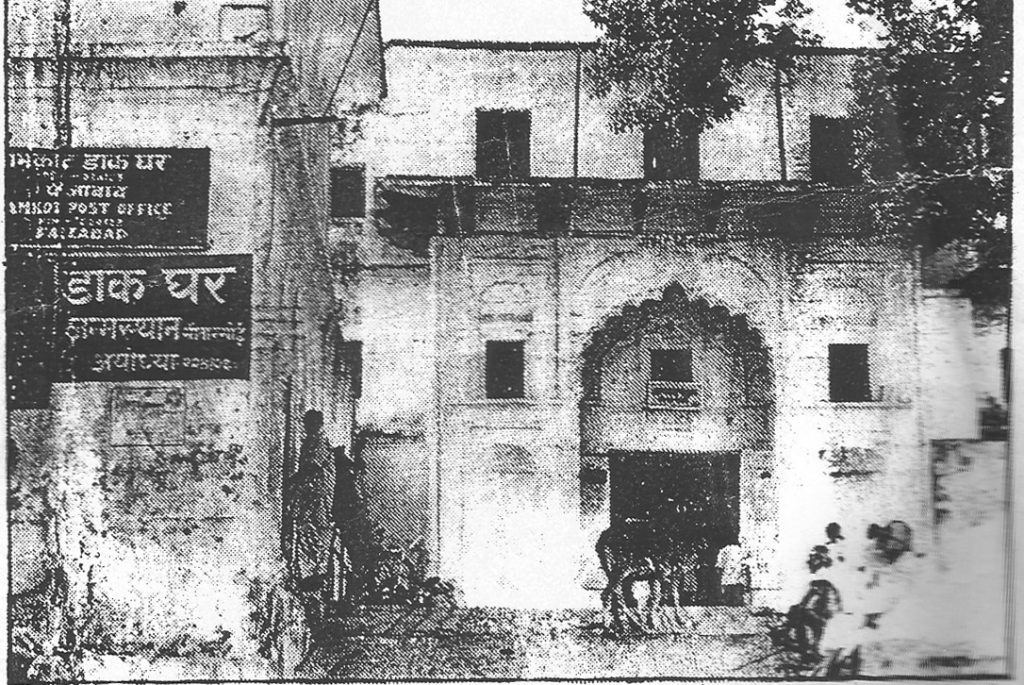
अयोध्या का यह 300 साल पुराना जन्मस्थान मंदिर था जिसके लिए ज़मीन एक मुसलमान ज़मींदार के दान की थी। नए राम मंदिर के विस्तार के लिए अगस्त 2020 में इसे ढहा दिया गया। (छवि साभार द वायर)
कहते हैं अयोध्या में राम जन्मे, वहीं खेले-कूदे, बड़े हुए, बनवास भेजे गये, लौटकर आये तो वहाँ राज भी किया। उनकी ज़िंदगी के हर पल को याद करने के लिए एक मंदिर बनाया गया। जहाँ खेले, वहाँ गुलेला मंदिर है। जहाँ पढ़ाई की, वहाँ वशिष्ठ मंदिर हैं। जहाँ बैठकर राज किया, वहाँ मंदिर है। जहाँ खाना खाया, वहाँ सीता रसोई है। जहाँ भरत रहे, वहाँ मंदिर है। हनुमान मंदिर है, कोप भवन है। सुमित्रा मंदिर है, दशरथ भवन है। ऐसे बीसियों मंदिर हैं, और इन सबकी उम्र 400-500 साल है। यानी ये मंदिर तब बने, जब हिंदुस्तान पर मुगल या मुसलमानों का राज रहा।
(Translated by Nivedita Menon from a widely circulating post earlier attributed to Saroj Mishra, on social media, originally in Hindi.
UPDATE: We have since heard from the author himself. This post was written in 2010 by VIVEK KUMAR (Vivek Asri) and so we have made the necessary changes. Here is the link to VIVEK KUMAR’s original post.
This 300 year old Janmasthan temple in Ayodhya, built on land donated by a Muslim zamindar, was demolished in August 2020 to accommodate an expanded vision of the new Ram Mandir. Image courtesy The Wire
They say Ram was born in Ayodhya; in Ayodhya he played and roamed around as a youth, grew into adulthood, was sent from there into exile in the forest, and then returned to rule there. There are temples in Ayodhya to commemorate every moment of his life. Where he played, there is Gulela Mandir. Where he studied there is Vashishta Mandir. Where he sat and ruled, there is a mandir. Where he ate his meals, there is Sita Rasoi. Where Bharat stayed, there is a mandir. There’s Hanuman Mandir, Kop Bhavan. There’s Sumitra Mandir, Dashrath Bhavan. There are many many such temples and all of them are about 400 to 500 years old. That is to say, these temples were built when Hindustan was ruled by the Mughals, by Muslims.
Jorg Haider, a far-right Austrian politician who died in 2008, is largely forgotten. It is also forgotten that merely two decades ago, he was considered a very dangerous man in Europe, whose ascent to power had prompted rare European Union unity aimed to thwart his ambitions.
Twice elected as governor of the southern state of Carinthia, Haider—who opposed immigration and was critical of Islam and Muslims—once praised the Nazi regime’s “employment policies”.
His Freedom Party of Austria allied with another party, the OVP, which allowed Haider to become the country’s chancellor. But the possibility of a ‘right-wing extremist’ ruling a European Union member country prompted the other 14 members to join hands punitively against Australia, putting Haider out of the chancellorship race.
The European Union stuck by the 1997 Treaty of Amsterdam principles and emphasised that nobody would be allowed to “breach them”.
Many European countries threatened to recall envoys from Austria, and some said that Austria could be shunted out of the union if the need arose. The Belgian foreign minister at the time said, “Europe can very well do without Austria. We don’t need it.
After much water has flown down the Thames, the Rheins, the Danubes and all other rivers of Europe, the world has Geert Wilders in the Netherlands, a “political earthquake”, whom some consider more extreme and fanatical than Haider. But Wilders’ views on immigration and Islam cause no similar outrage in European capitals today.
Wilders’s party, which promised to ban mosques and compared the Quran with the infamous Mein Kampf, has won 37 seats in a 150-member Parliament. It is now the number one party in the country’s parliament.
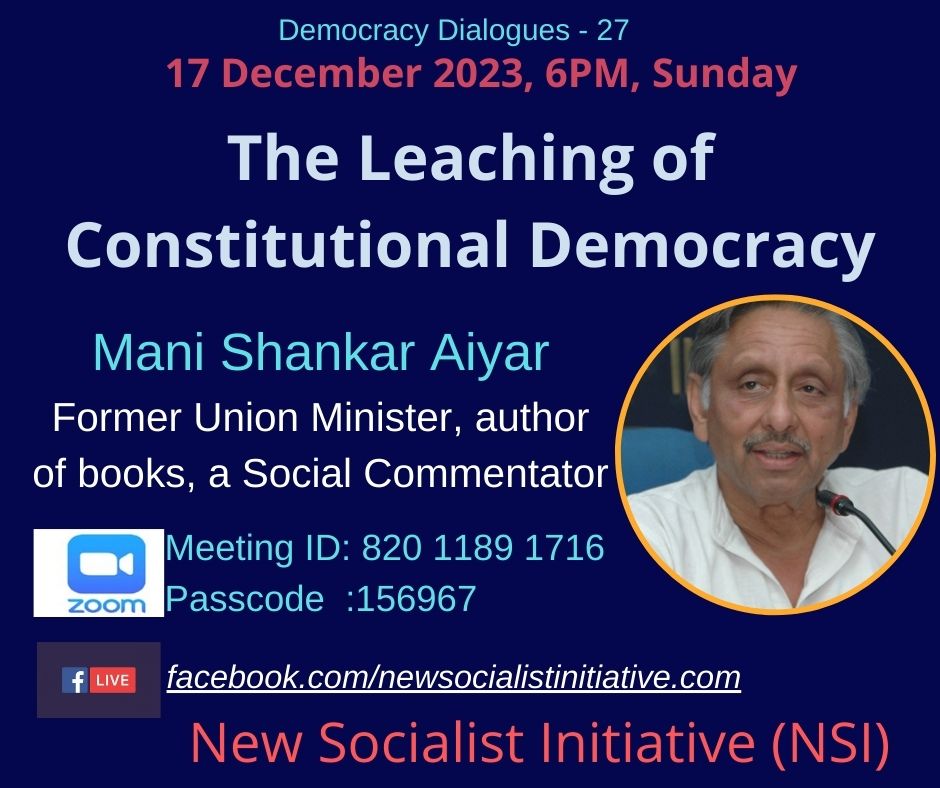
On the face of it, we are an on-going democracy. We have a Constitution which has been honoured by the present government declaring 26 November as Constitution Day. We have regular elections at national, State and panchayat levels. We have the various institutions of democracy in place: an elected Parliament; an independent judiciary; an accountable executive; and a functioning, non-governmental media. Yet, there is fear all around. a new fear, a fear not seen since the Emergency, that has been spreading over the past decade. Why? Is it perhaps because the “spirit of constitutionalism”, as Fali Nariman has put it in his latest work, missing? Can we continue to be the nation envisaged by Gurudev Rabindranath Tagore: “Where the mind is without fear/And the head is held high”? Are we progressing towards or in retreat from that “Heaven of Freedom” of which Tagore sang?. Are the institutions of democracy functioning? Is the Preamble being venerated or violated? Are our civil servants really free? Is our civil society being muzzled? Is the media glowing in the light of freedom of expression? Is the investigative and judicial process being made the punishment? Is the economy in any meaningful sense “socialist” as enjoined by the Preamble? Is the Constitution being reduced in practice to a non-justiciable set of Directive Principles of State Policy? Above all, are we as a nation still ‘secular” – again as enjoined by the Preamble? Is Hindutva compatible with the basics and parameters of the Constitution? Is our ‘unity in diversity” threatened or is it being revered?What are the challenges ahead that need to be addressed before we cease being the world’s largest democracy?
Speaker :
Mani Shankar Aiyar
Author of many books and a regular social commentator, Mani Shankar Aiyar, has had a distinguished foreign service career , he was Union Ministers during Congress led government (2004 till 2009) and has handled different ministries. Ministry of Petroleum and Natural Gas, ( 2004-06) Youth Affairs and Sports (2006-08), and Development of North Eastern Region ( 2008-09).
Here is a list of few of his publications :Memoirs of a Maverick Juggernaut, 2023 ; A Time of Transition: Rajiv Gandhi to the 21st Century, Penguin, 2009 ; Confessions of a Secular Fundamentalist, Penguin, 2004; Rajiv Gandhi’s India, 4 vols. (General Editor), UBSPD New Delhi, 1997, Knickerwallahs, Silly-Billies and Other Curious Creatures, UBS Publishers, 1995 . Pakistan Papers, UBSPD, New Delhi, 1994 ; One Year in Parliament, Konark, New Delhi, 1993 ; Remembering Rajiv, Rupa & Co., New Delhi, 1992 ; Rajiv Gandhi: The Great Computer Scientist of India, Mughal Publishers, New Delhi, 1991 ; How To Be A Sycophant, NBS, New Delhi, 1990
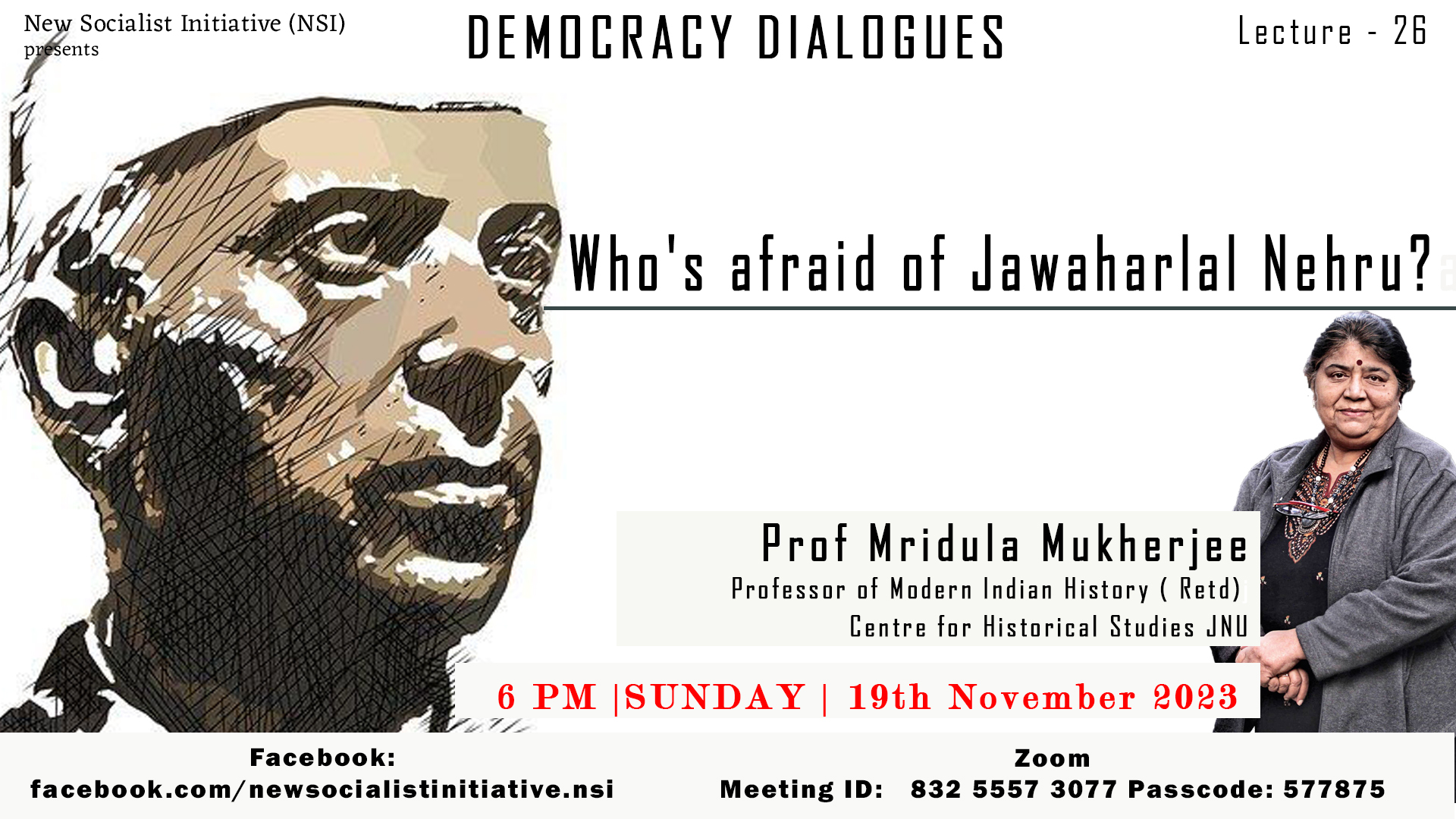
Professor Mridula Mukherjee, Professor of Modern Indian History ( Retd), Centre for Historical Studies, JNU, will be delivering the 26 th Democracy Dialogues Series lecture on Sunday, 19 th November 2023 at 6 PM (IST).
Theme : Who’s Afraid of Jawaharlal Nehru? Time: Nov 19, 2023 06:00 PM India
Summary : In his lifetime, Jawaharlal Nehru was recognized the world over as a statesman and an Indian leader second only to Gandhiji. A foremost leader of the freedom struggle, who gave it a decided socialist orientation, he remained unrivaled as Prime Minister after independence and built the solid foundations of a sovereign, secular, democratic, and egalitarian republic. He evolved the concept of non-alignment which enabled many ex-colonial countries to avoid becoming a part of the two power blocs engaged in the Cold War.
However, he is today the favourite whipping boy of the establishment. We are told he was responsible for the partition, for the mess in Kashmir, for the death of Subhash Bose, for delaying the integration of Hyderabad, and of Goa, for the defeat at the hands of China in 1962, for neglecting agriculture, and primary education, and much else. The reason for the defamation is of course that he stood for the exact opposite of what is valued today. His life and work present a continuous question mark to the regressive trends in fashion.
This will become evident as we focus in the talk especially on two areas of great relevance today in which we are facing a grave crisis: Democracy and Civil liberties, and Communalism/Secularism. We will also focus attention on Nehru’s evolving understanding of Mahatma Gandhi’s vision and method of non-violent struggle, of which he became the most ardent advocate after his death.
Speaker :
Author of many books, Prof Mukherjee has been a visiting Scholar at Duke University, USA, and at the Institute of Oriental Culture, University of Tokyo and was also Director of Nehru Memorial Museum and Library, ( NMML), New Delhi. She has published widely in the areas of agrarian history, peasant movements, social movements and the Indian national movement.
Here is a list of a few of her publications : Colonializing Agriculture, The Myth of Punjab Exceptionalism Sage (2005) ; Peasants in India’s Non Violent Revolution : Practice and Theory (Sage 2004).
This list also includes India’s Struggle for Independence (1999) and India After Independence 1947–2000 (2000), RSS, School Texts and the Murder of Mahatma Gandhi The Hindu Communal Project (2008) co-authored with Prof Bipan Chandra and others.
Diwali, or Deepavali as it is called in the south, is a joyous occasion but this time it has brought only tears. What a bizarre Deepavali it is this year, with the awful blazing fires in the sky and the earth, with ear-splitting sound from non-stop bombing. I may not be in Gaza, but my mind refuses to leave the place and my very soul shudders each moment.
At a media interaction on 26 October, the Malayali actor-turned-politician tried to turn his reel-life into real life. Once known mainly for his cine-avatar as the perpetually-angry, elite-justice hungry, thoroughly-misogynist ‘hero’ characters (yes, despite some better roles), Mr Gopi behaved with unbelievable condescension towards a woman journalist who asked him a question. Instead of answering her in a meaningful and civil manner, he turned into one of his obnoxious on-screen avatars. He put his hand on her shoulder and addressed her as ‘mole’ (daughter, literally, but also a condescending reference used by male lovers/husbands to refer to their loves/wives). She was clearly unhappy with the gesture, and backed away. Probably because the man has now become actually indistinguishable from the rotten, stinking masculinity he represents on-screen — knowingly or otherwise — he put his hand right back on her shoulder.
This evening I walked in the gaudily-lit main streets of Thiruvananthapuram among the crowds gaping at the show that is on, under the name of Keraleeyam or the Essence of Kerala.
Democracy Dialogues Lecture Series (Online ) Organised by New Socialist Initiative
25th Lecture ( Sunday, 15 th October 2023)
Theme:India’s Democratic Longevity and its Hugely Troubled Trajectory
Speaker: Professor Ashutosh Varshney ( Sol Goldman Professor of International Studies and the Social Sciences at Brown University )
Theme :India’s Democratic Longevity and its Hugely Troubled Trajectory
Summary
India celebrated 75 years of its independence last year with a lot of enthusiasm.
Celebrations did not hide the fact it is also one of the leading countries which is passing through what is popularly known as ‘democratic backsliding’.
A country which, like many others, is using democratic processes to secure undemocratic outcomes, where freely contested elections are being deployed for the purpose of expressing, cultivating, or enhancing majoritarian prejudices—to target minorities and turn them into lesser citizens.
In this scenario, there is an urgent need to unpack this journey of democratic India further , there is a need to make a distinction between India as an electoral democracy and India as a liberal democracy.
Background Reading for the talk :
# India’s Democratic Longevity and its Hugely Troubled Trajectory ( Attached with this mail)
#. How India’s Ruling Party Erodes Democracy
Ashutosh Varshney
Journal of Democracy, Volume 33, Number 4, October 2022, pp. 104-118 (Article)
Prof Ashutosh Varshney is Sol Goldman Professor of International Studies and the Social Sciences and Professor of Political Science at Brown University, where he also directs the Center for Contemporary South Asia. Previously, he taught at Harvard (1989-98) and the University of Michigan, Ann Arbor (2001-2008).
His books include Battles Half Won: India’s Improbable Democracy (2013), Collective Violence in Indonesia (2009), Ethnic Conflict and Civic Life: Hindus and Muslims in India (Yale 2002), India in the Era of Economic Reforms (1999), and Democracy, Development and the Countryside: Urban-Rural Struggles in India (Cambridge 1995)
[Democracy Dialogues Lecture by Professor Ashutosh Varshney scheduled for coming Sunday has to be rescheduled. New dates will be announced as soon as Professor Varshney is in a position to deliver the lecture. Apologies.]
Topic : India’s Democratic Longevity and its Hugely Troubled Trajectory
Speaker : Professor Ashutosh Varshney,
Theme :India’s Democratic Longevity and its Hugely Troubled Trajectory
An unlikely phantom seemed to hover over me as I hung around the Government Women’s College at Thiruvananthapuram where this year’s Annual Conference of Indian Association of Women’s Studies was on last week. ‘Unlikely’, because the conference is usually a platform in which this spectre is thoroughly examined, counted, listened upon, critiqued, reimagined etc etc — and therefore one would imagine that it would not dare to tread in in such spaces.
क्या बुद्धिजीवी वर्ग को पालतू बनाए रखने की सरकार की कोशिश या विश्वविद्यालयों में इंटेलिजेंस ब्यूरो को भेजने की उनकी हिमाक़त उसकी बढ़ती बदहवासी का सबूत है, या उसे यह एहसास हो गया है कि भारत एक व्यापक जनांदोलन की दहलीज़ पर बैठा है.
So you are the little woman who wrote the book that made this great (American) civil war’
( ‘‘‘तुम हो वह महिला जिसने उस किताब को रचा जिसने इस महान /अमेरिकी/ गृह युद्ध को मुमकिन बनाया)
[गुलामी प्रथा की समाप्ति के लिए छेड़े गए गृह युद्ध के खात्मे के बाद तत्कालीन अमेरिकी राष्टपति अब्राहम लिंकन द्वारा गुलामी प्रथा के खिलाफ लिखे गए उपन्यास ‘अंकल टाॅम्स केबिन’ / 1852/ की लेखिका हैरियट बीचर स्टोव Harriet Beecher Stowe से मिलने पर प्रगट उदगार]
लेखक, कलाकार, विद्वान आदि से हुक्मरान हमेशा ही चिंतित रहे हैं।
मिसाल के तौर पर क्रांतिपूर्व फ्रांस के बारे में यह बात मशहूर है कि वहां की राजशाही ने अपने पुलिस महकमे को अपने दौर के अहम लेखकों, कलाकारों की जासूसी करते रहने के निर्देश दिए थे। हम अठारहवीं सदी के पुलिस महकमे की मुलाजिमों की मुश्किलों को समझ सकते हैं जिन्हें ‘खंूखार अपराधियों और राजनीतिक व्यक्तियों’ के अलावा लेखकों, कलाकारों पर अपनी फाइल रखनी पड़ती थी। (द स्टेटसमैन, हिन्दुस्तान टाईम्स, नई दिल्ली, 26 सितम्बर 2006)
एक क्षेपक के तौर पर बता दें कि इस जासूसी का विधिवत विवरण जनाब ब्रूनो फुल्गिनी की किताब में मिलता है जिसका शीर्षक है ‘राइटर्स पुलिस’ – दरअसल फ्रेंच संसद के इस कर्मचारी को यह जिम्मेदारी मिली कि वह पार्लियामेंट लाइब्रेरी के पुराने दस्तावेजों को खंगाले और इस बेहद उबाउ काम के दौरान उसे यह ‘खजाना’ मिल गया था।
अगर हम अपने यहां निगाह दौड़ाएं तो मौजूदा हुक्मरानों का रूख इस मामले में कोई अलग नहीं दिखता, बल्कि वह ढाई सौ सदी पहले के फ्रांसिसी सम्राटों से कभी कभी एक कदम आगे ही दिखते हैं। ( Read the full text here)
Writers, scholars, artists have always worried the powers that be.
There was a time when the Parisian police had been given the onerous task of keeping the greatest writers of late 18 th Century who were living in Paris at that time under their watch. Poor fellows, one can imagine their difficulty in maintaining files on writers and artists and scholars ‘beyond criminals and political figures.’
The present dispensation at the centre is no different.
It could be said that it may be a step ahead.
The French Monarchs – who within few decades witnessed a mass upheaval which finally overthrew them – were wise enough to ask their minions to be rather discreet in their activities, not to offend the writers, scholars directly ; the harbingers of today’s ‘New India’ have even abandoned that discreetness for good.
How India is Slowly Emerging as a ‘World Teacher’ albeit of a different kind
( Illustration : coutesy CJP, Citizens for Justice and Peace)
France has moved towards normalcy some time back.
The anger and anguish of the still marginalised in the society, which spilled over into the streets, over the killing of a 17 year old Nahel – son of an Algerian single woman of Muslim origin – by the trigger happy traffic police, recorded on a camera, has long subsided.
No doubt the questions raised by it are not going to go away so easily.1
Experiences of two countries cannot be compared easily but perhaps one could easily see in the uproar shades of the ‘black lives matter moment’ for the French society. Not only in terms of the brutality of the police as witnessed in American society after the killing of George Floyd but the soul searching of sorts which seems to have begun afresh there, a churning has accelerated within the French people after this killing.
Prof Pranab Bardhan, Professor Emeritus, UC Berkeley, delivred the 24th Democracy Dialogues Lecture on August 27, 2023, Sunday at 10 AM India Standard Time.
Theme : The Erosion Of Liberal Democracy in India: An Analysis
Speaker : Prof Pranab Bardhan
Professor Emeritus of Economics at the University of California, Berkeley
Topic : The Erosion Of Liberal Democracy in India: An Analysis
A Brief Outline of the theme shared by Prof Bardhan
I’ll start with the global context of the turn of politics to right-wing extremism in much of the world.
One of the major factors behind this is the weakening of trade unions and of labour movements in general, which in earlier days used to act as a major force of resistance.
I shall then look into the weakening of labour movements in India and the pathetic failure of the Left political organizations. I shall analyze the deficiencies in their economic policies, mobilization strategies and governance failures even in areas where they used to be influential. Just blaming the semi-fascist Right is not good enough.
I shall end with a general discussion of how in prevailing Indian ideologies (including that of the Left) liberal democracy has often been under-valued.
Speaker :
Pranab Bardhan is Distinguished Professor Emeritus of Economics at the Department of Economics at the University of California, Berkeley.
He was educated at Presidency College, Kolkata and Cambridge University, England. He had been at the faculty of MIT, Indian Statistical Institute and Delhi School of Economics before joining Berkeley.
He has done theoretical and field studies research on rural institutions in poor countries, on political economy of development policies, and on international trade.
He was Chief Editor of the Journal of Development Economics for 1985-2003.
He is the author of 17 books and editor of 14 other books, and author of more than 150 journal articles including in leading Economics journals
His latest book titled A World of Insecurity: Democratic Disenchantment in Rich and Poor Countries was published by Harvard University Press in late 2022.
His memoir titled Charaiveti: An Academic’s Global Journey is being published by Harper Collins India in late 2023.
His memoir in Bengali (titled Smriti-kanduyan, ‘Memory-Sratching’) has been serialized in Kolkata’s leading literary magazine, Desh, and the book came out in January 2014.
He has also contributed essays to popular outlets and some of these popular pieces have now been collected in his latest books, Globalization, Democracy and Corruption and Indian Polity and Economy:A Mirror to Difficult Times (Frontpage Publications). A collection of his Bengali essays has been published by Ananda Publishers in Kolkata in 2020.
Background : A close friend of decades prodding you to read / listen to something and ask for your views is such a great moral incentive which nobody would refuse. The following note is an end product of similar undertaking which this pen pusher rather reluctantly took initially when one received a YouTube link of a conversation / debate between Congress M. P Shashi Tharoor and Supreme Court lawyer and commentator J Sai Deepak, held sometime back, where the focus of the programme was on Congress M.P. Shashi Tharoor’s book ‘Why I am a Hindu ?’
The book deals with how Mr Tharoor understands Hinduism, looks at its Great Souls, unpacks political Hinduism and dwells also at the violence committed by its followers and differentiates his Hinduism from that Hinduism practised by who can be called as ‘Bhakts’.
J Sai Deepak, a very popular commentator who has written a few books and also shared his views, dealt with Tharoor’s arguments.
As an aside it needs to be added that J Sai Deepak is one among the new crop of commentators , writers whose interventions very much resonate with what can be termed as ‘rightwing’ . There are few other names like Vikram Sampath, Sanjeev Sanyal, Anand Ranganathan etc of the same stream, whose arrival on the scene has been a moment of celebration among a section of the media (https://www.firstpost.com/politics/why-is-left-academia-so-rattled-by-vikram-sampath-sai-deepak-or-sanjeev-sanyal-10433791.html) which is critical of the left and its towering intellectuals.
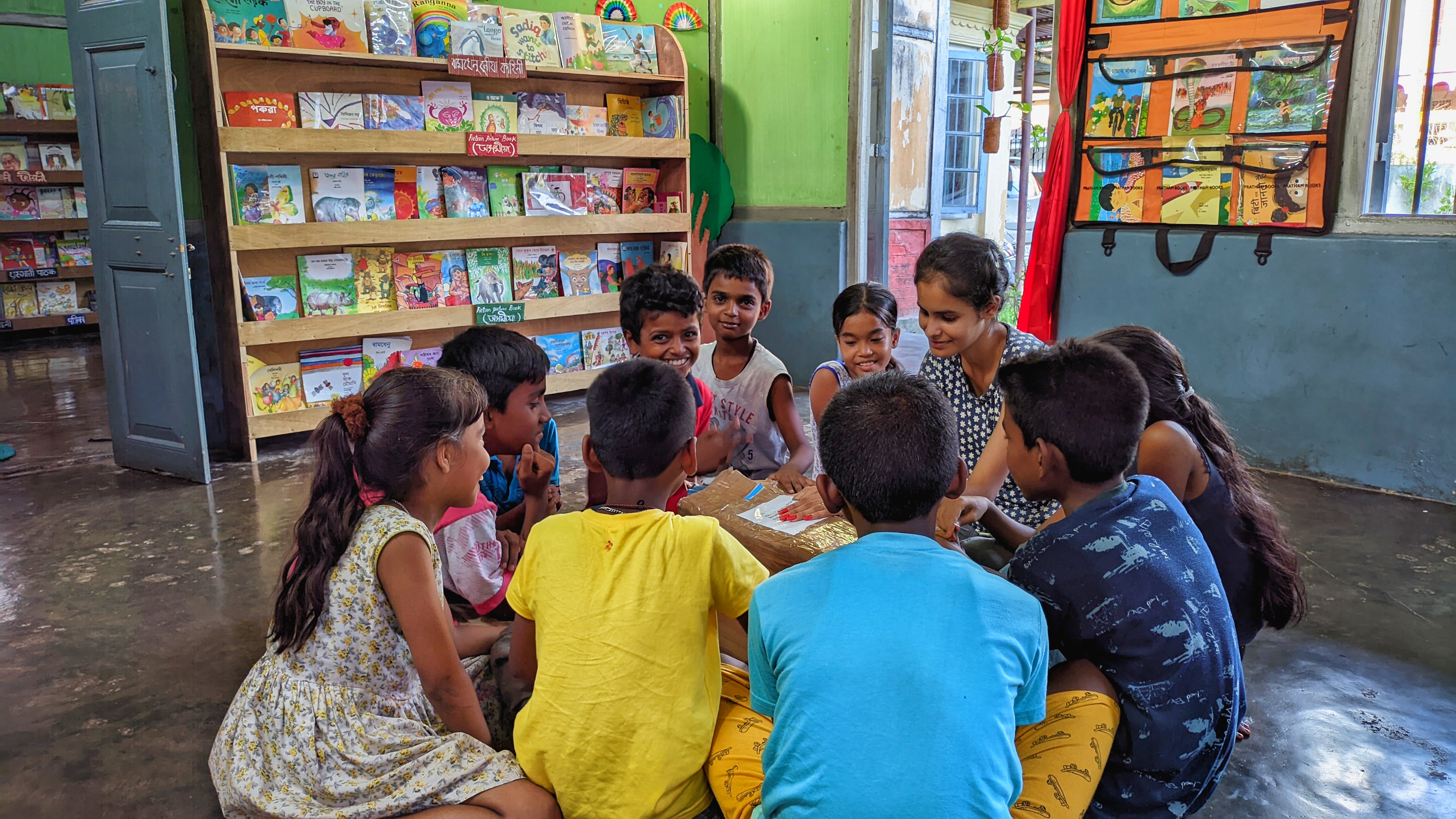
The “Rome Declaration of the G20 Culture Ministers” (2021) inserted culture in the G20 process, recognising it for its social and economic value, and stating a commitment to the protection of cultural heritage and expressions at risk. This Declaration recognises the need for strengthening and developing effective, sustainable, inclusive and coordinated management models and tools for protecting cultural heritage at risk. The International Federation of Library Associations and Institutions (IFLA) has recognised this as an opportunity for libraries and documentary cultural heritage experts to play a vital role in developing these models and tools, as well as benefiting from them. As a result the upcoming G20 meeting in India will showcase libraries. This statement is by the Free Library Network, a member of IFLA, drawing attention to the imperative need for India to have a free library policy.
The Free Libraries Network (FLN), is a coalition of free libraries and librarians advocating for free library access and the right to read in India and South Asia. FLN believes in universal access to reading materials and information. FLN offers a platform for sharing resources, best practices, and insights about free libraries in India. Although it does not own or operate libraries, FLN plays an integral role in coordinating and acting on policy issues related to access to knowledge resources.
The FLN Statement
The Free Libraries Network (FLN) will participate in the Festival of Libraries by the Ministry of Culture, Government of India at Pragati Maidan, New Delhi on August 5 and 6, 2023. This conference, focused on the library landscape in India, is an opportunity for library advocates across the country to discuss the need for a public library system that offers free access to books and information to all people.
During the conference, FLN members will be contributing to three panels, aimed at sharing insights on free libraries’ potential in promoting reading, thinking and community discussions, as well as in such libraries’ potential to undo the historic exclusion of the vast majority of people from reading and to promote the Constitution’s vision of equality. Additionally, FLN members will engage in various advocacy activities both inside and outside the conference venue, appealing for a policy that guarantees free library access to all. Continue reading Public Libraries Must Be Free! Free Libraries Network (FLN) at the G20→
In response to the LCI ‘s invitation to “stakeholders, including public and recognised religious organisations” to share their views on the Uniform Civil Code, some feminist groups and individuals came together in Delhi on July 4-5 2023 to draft a considered response. The UCC has been debated in feminist circles for decades, and a broad consensus has gradually emerged since the 1990s that gender justice and not uniformity should be the focus of reforms of laws pertaining to family, whether governed by Personal Laws (religious communities) or customary laws (Scheduled Tribes). The following response emerged on the basis of these discussions, which in turn drew on the long history of serious engagement with the issue in feminist circles for decades.
To,
The Hon’ble Chairperson and members,
Law Commission of India
14 July 2023
Sub: Response of feminist, queer and women’s rights groups and individual feministsto Public Notice of the Law Commission of India dated 14/06/2023, soliciting views on the Uniform Civil Code (UCC).
Respected Chairperson and members of the Law Commission of India,
We, the undersigned, write to you as representatives of feminist, queer and women’s rights groups, as well as concerned citizens, who have been working on issues related to gender justice and equality for women from diverse communities across the country. We draw upon our collective experience over many decades, as we respond to the current discussion on the proposed Uniform Civil Code.
Our submission is in three parts:
Concerns related to the procedure adopted to initiate these discussions by the Law Commission of India (LCI).
Comments on substantive issues of uniformity, equality and non-discrimination vis à vis gender justice.
Governing principles for any efforts towards gender justice for all
This statement has been issued by concerned individuals in support of Sandip K Luis. We are publishing it here on Kafila in solidarity and to amplify the call, as we routinely do with many such statements. Those who issued the statement have nothing to do with Kafila, although some individuals associated with Kafila have also endorsed the statement. We feel this clarification is necessary as some reports say that the group that issued this statement runs Kafila. This is incorrect.
Link to endorse this statement at the end.
We the undersigned, artists, academics and other concerned individuals, have come to know that Dr Sandip K. Luis, Manager, Curatorial Research & Publications at the Kiran Nadar Museum of Art (KNMA), has arbitrarily been terminated from work. The action was taken for a Facebook post he made on 15th May 2023 which was critical of the chairperson of the museum Ms. Kiran Nadar in her individual capacity, for supporting and publicly endorsing a series of propaganda events of the current government of India being showcased at the National Gallery of Modern Art (NGMA) in Delhi.
We strongly condemn Sandip’s termination from employment and demand his immediate reinstatement by KNMA.
Subsequent to the inauguration of an exhibition in May 2023, titled Jana Shakti (a celebration of the Prime Minister’s monthly radio propaganda Mann ki baat) curated by Alka Pande, supported by Ms. Nadar as the Advisor, a number of articles appeared in the press and on social media that called out art world luminaries, for participating in what was obviously a self-aggrandizing exercise of the government of India. Continue reading Statement against the arbitrary termination of KNMA employee Dr Sandip K. Luis→




 KAFILA - COLLECTIVE EXPLORATIONS SINCE 2006