
In the recent controversy over the arrest of the travel vloggers Ebin and Libin who rode high on popularity with lakhs of subscribers through their Youtube channel E Bull Jet, it is very hard not to side with the two young men. The flamboyant pair whose hugely popular travel — or ‘van life’ — videos have a massive following especially among male adolescents and youth — are school drop-outs and have a history of rising from severe social disadvantage — literally, of pulling themselves up by their own bootstraps. The two young men, despite their excesses, pull at your heartstrings. Their smile, their slang, their sense of excitement on the road, the innocent gawking — all of it looks disarmingly innocent. It is also true that the crime they committed was not major; nor is justice handed out evenly. That is, such crimes around vehicles and driving are not new and it is not at all clear if the powerful who commit such crimes are tackled in the same way. Therefore the video which showed the brothers being hauled into the police van was painful for many of us (including me) — Ebin wept aloud, “adikkalle saare! Njaan onnum cheithilla … kolapaathakiyeppole enne kondupokunnu….” (don’t beat me please, sir. I didn’t do anything wrong . … I am being taken away like a murderer). That despondent wail somehow refuses to get out of my head; that is why I need to write this.
Continue reading resisting the papa state? E Bull jet brothers or hadiya?Category Archives: Debates
When public good faces a faith hurdle
Moderation and acceptance are parts of a continuous struggle to ensure that democracy does not get subsumed by majoritarianism.
‘The sublime and the ridiculous are often so nearly related that it is difficult to class them separately. One step above the sublime makes the ridiculous,
and one step above the ridiculous makes the sublime again.’ –Thomas Paine, The Age of Reason.
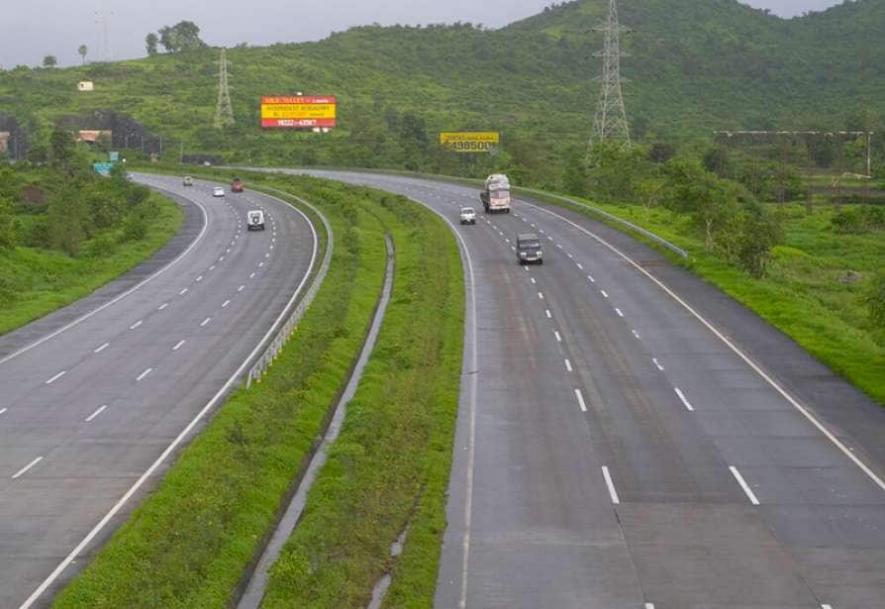
The idea of public good faced a faith hurdle in Kerala recently. The issue was the widening of National Highway 66 on a stretch in Umayanalloor village, Thazhuthala, and adjacent towns of the Kollam district. A batch of petitions challenged the highway because two temples and mosques were in its alignment. It was a tricky situation, and a hasty decision may well have had consequences.
Without wavering on constitutional principles, the Kerala High Court handled the case skilfully. A single-judge bench of Justice PV Kunhikrishnan rejected petitions that opposed the land acquisition and asked citizens to rise above difficulties for better highways for all citizens. It emphasised that courts could not intervene in acquisition proceedings unless there is patent illegality or malafide action.
( Read the full text here)
Some Remarks about Movements
Guest Post by Ravi Sinha
Accountability is foundational to democracy and, ultimately, people are supposed to take those in power to account through democratic processes and mechanisms. But, then, we also know what often happens in democracy. Electoral competition gives rise to ‘technologies’ (often religious, cultural and identity-based) which turn citizens into “Bhakts” (devotees) and storm-troopers (remember Hitler’s “Brownshirts”). The dark side of democracy comes on top more often than the other side. India is witnessing that disaster. Trump was a testimony to the same phenomenon in the United States.
But what about movements? Are they also supposed to be accountable to someone or something? One would presume that movements are accountable to their own missions, values, objectives, arguments and strategies. Is anyone taking the movements to account on that score?
One would imagine that the left movement has been taken sufficiently to account all over the world. So much so that, for most people, there is no longer any need to take it to account. In many eyes, it is finished. Why waste time on something that is finished? And yet, the most curious thing is that the left remains the favourite whipping boy of most other movements and their intellectual luminaries. Here in India a favourite pre-occupation of Dalit intellectuals is to expose the Savarna (upper caste) hegemony over the left movement and many feminists focus on the misogyny of leftists. As if in a survey of the Indian society, leftists have come on top as the most likely and most numerous perpetrators of oppression and violence against Dalits and women! There is no denying that left must be taken to task for all its ills and all its failings. But, should a movement that is often pronounced dead be the prime example when it comes to evaluating movements?
The Bahujan Samaj Party (BSP) in Uttar Pradesh has declared that it would be the party that would actually build the Ram temple. This party is openly and loudly appealing to Brahmins as a caste to come into its fold. Babasaheb Ambedkar famously talked about annihilation of caste and declared that there is no scope of Dalit liberation under Hinduism. This irony is not confined to BSP. A Dalit is submissively the President under the current dispensation and an ex-Dalit Panther is a minister. All this can be explained away as pragmatic responses to the demands and rigours of democracy. But what about the movement itself? What about Ambedkar’s mission?
The question goes far deeper. Why is it the case that Hindutva has been able to make such inroads into Dalit communities? In what ways and to what degrees the ‘Hindu civilizational mind’ sits within the ‘Dalit cultural mind’? Why is it the case that in Gujarat carnage and elsewhere Dalits have been as much and as willing a part of the Hindutva “Brownshirts” as any other community? Why is it the case that an occasional Dalit leader who emerges as a fiery meteorite in the aftermath of a gruesome atrocity disappears as fast from the social and political horizon and the masters of the electoral machinations remain as much in control of the actual political arena?
One hopes that the theorists of social movements – from Columbia and Harvard Universities to JNU and Osmania – are earnestly grappling with this puzzle. We all know the simple and common-sense answers, but they do not suffice. The puzzle needs a deeper explanation. How long the intellectual prophets of the social movements remain content with celebrating the history and the survival of these movements? How long will Dalit writers remain content with asking the caste lineage of other (Savarna) writers and denouncing them for the surnames they use? How long will they be content with demanding monopoly over literary depiction and theoretical explanation of Dalit life and experience? Real questions and real challenges remain unattended.
(https://www.facebook.com/newsocialistinitiative.nsi/posts/2635781250063345)
Untimely Explorations in a ‘Field’ Called ‘Marxism’

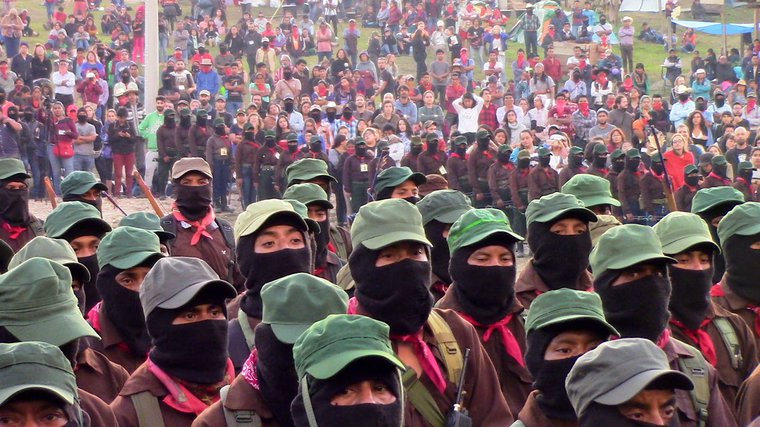
I am interested in ‘Marxism’ as a field or a force-field in the sense in which we think of electromagnetic or gravitational fields, where objects and bodies impact on other bodies and objects, and have effects, without necessarily coming into contact.
Ever since the 2008 financial crisis and the beginning of the end of the neoliberal order, when sales of Marx’s writings, of Capital in particular, went up dramatically, there have been prognostications of the ‘return of Marx’. Indeed, there has also been an attempt, for a much longer time now, especially after the collapse of Soviet-bloc socialism, of a ‘return to Marx’. Both the millennial expectation of Marx’s Second Coming and that of a ‘return to’, display a distinct theological orientation – insisting on a return to the pristine source, uncontaminated by the ‘deviations’ wrought by Leninist or Maoist-inspired practice in the underdeveloped regions of the world.
Continue reading Untimely Explorations in a ‘Field’ Called ‘Marxism’Concerned Historians Respond to Parliamentary Standing Committee on Education On History Textbooks
[We are publishing below the full response of Concerned Historians to the Parliamentary Standing Committee on Education, regarding certain proposed changes.]
RESPONSE OF CONCERNED HISTORIANS On the
CALL FOR REVISIONS IN SCHOOL HISTORY BOOKS IN INDIA
To be shared with the Parliamentary Standing Committee on Education pertaining to school history books.
Date: 15th July 2021
We have recently learnt of representations being collected by the Department-related Parliamentary Standing Committee on Education, Women, Children, Youth and Sports with respect to:
a. Removing references to un-historical facts and distortions about our national heroes from the text books.
b. Ensuring equal or proportionate references to all periods of Indian history.
c. Highlighting the role of great historic women heroes, including Gargi, Maitreyi, or rulers like Rani of Jhansi, Rani Channamma, Chand Bibi, Zhalkari Bai etc. in school history books in India.
We place before the Committee certain observations and points of caution.
Textbook revisions: certain cautionary notes
It appears from the notification of the Parliamentary Standing Committee’s proceedings inviting responses that a consensus presumably exists on the presence of “distortions” in existing history school textbooks such as of the NCERT. On this point itself, we wish to draw the attention of the Hon’ble members to the fact that while scholarship grows and propels the corresponding need for periodic revision of textbooks; the use of the word “distortion”, as in this context, appears to be an unsubstantiated allegation that creates roadblocks for the initiation of a serious scholarly exercise. Opinions are being sought regarding “unhistorical facts and distortions about our national heroes” in the existing history textbooks without substantiation, which is unfortunate and also objectionable.
Continue reading Concerned Historians Respond to Parliamentary Standing Committee on Education On History TextbooksGovernments Must Implement the Constitution, Not Religious Texts
Several courts have tried to reign in states bent on holding religious events during the pandemic. Judiciary must more proactively prevent them as the third wave approaches.
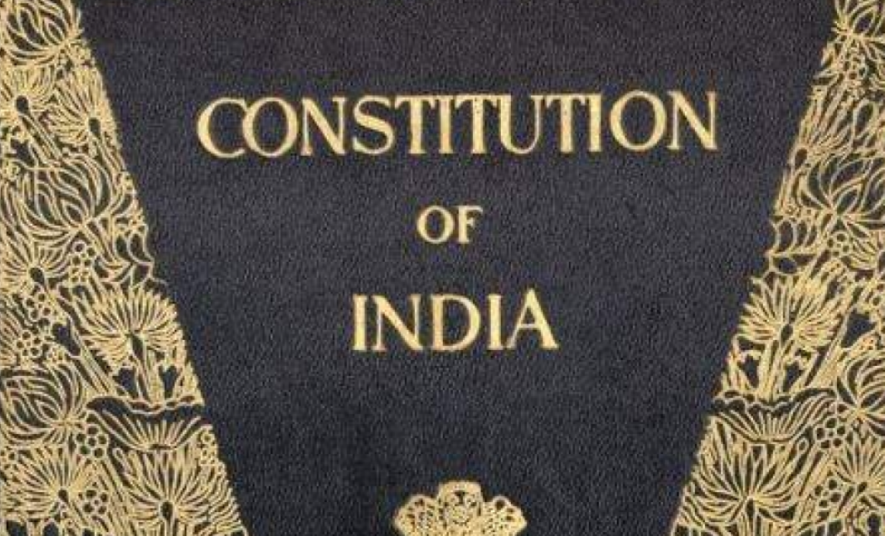
Simple things need retelling when society is in a state of flux. The fact that India is a republic—has been one for more than 70 years—where sovereignty rests with the people and not with scriptures is one fact. That India runs by its Constitution and laws under it is another fact.
The Uttarakhand High Court reminded the state government of these facts when it objected to proposals to live-stream the historic Char Dham Yatra on the plea that the scriptures do not sanction it. The court rejected the petition, saying India is a democracy where the rule of law, not religious texts, govern.
( Read the full text here)
How Might a Feminist Respond to a Collegial Mansplaining of Feminism? Anannya Dasgupta
Guest post by ANANNYA DASGUPTA
Scroll had recently featured the Foreword to a book, with the heading ‘What do allies write about when they write (poetry) about feminism?’ The descriptive tag read – Saikat Majumdar surveys a unique anthology in his Foreword to ‘Collegiality and Other Ballads’. What makes this anthology unique? Sometime in 2020, Shamayita Sen had circulated a call ‘seeking poems on feminist ideology’ from ‘non-women’. I remember thinking, surely the call will be revised; feminist allies must know that there is a problem with excluding women from a space meant to check the pulse of contemporary feminisms. Besides, who is non-woman enough to want to be a part of such a man-book? While the premise of the book was not revised, the category ‘non-woman’ has been. The title page of the anthology now reads: Collegiality and Other Ballads with a tag – feminist poetry by males and non-binary allies. The opening line of Majumdar’s Foreword adds to the uniqueness of this mostly male-only feminist anthology by attributing uniqueness to feminism itself: ‘Feminism is the name of a unique battle.’
Continue reading How Might a Feminist Respond to a Collegial Mansplaining of Feminism? Anannya DasguptaThe Call of ’21 (একুশের ডাক) – A Novel Campaign and a Nucleus of the New
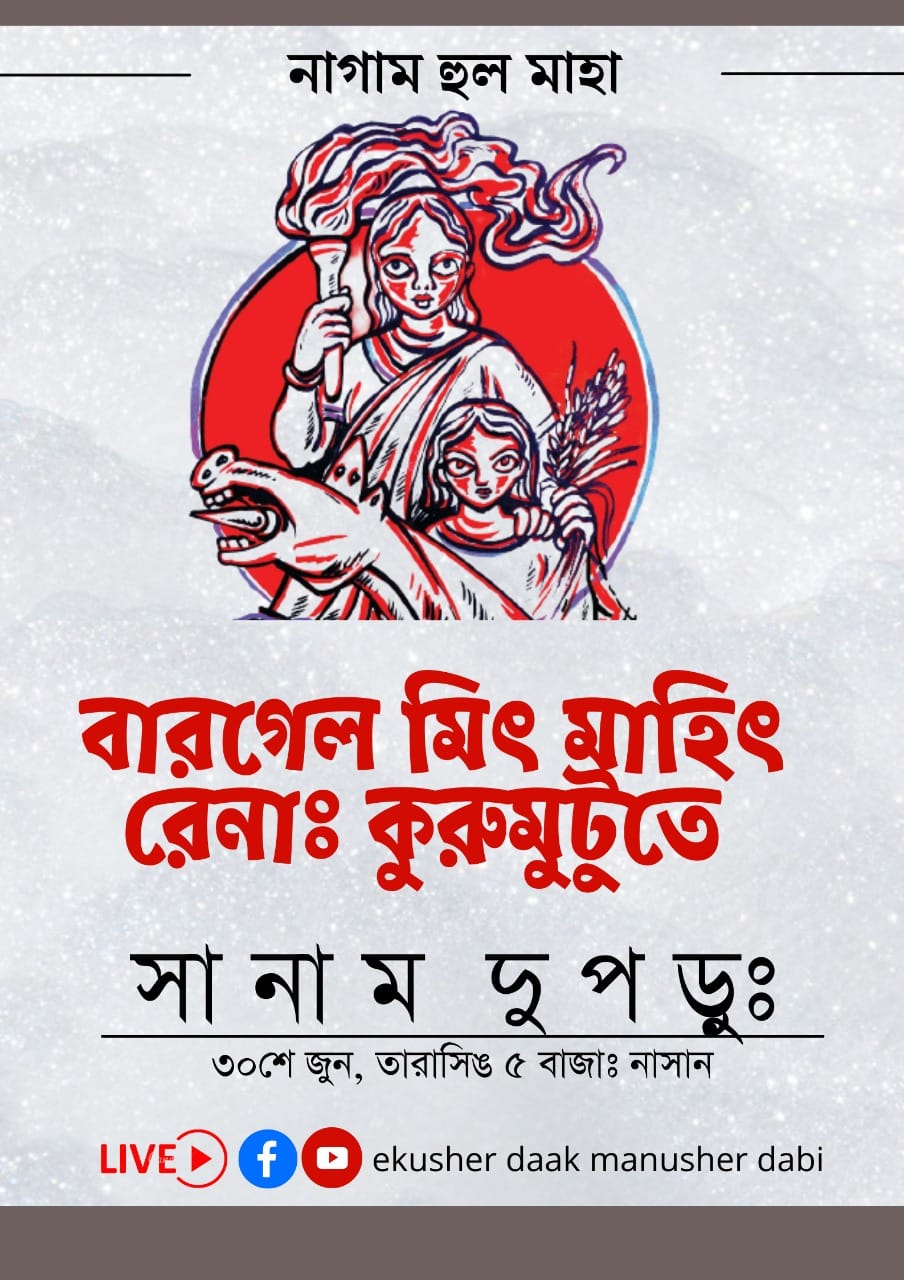
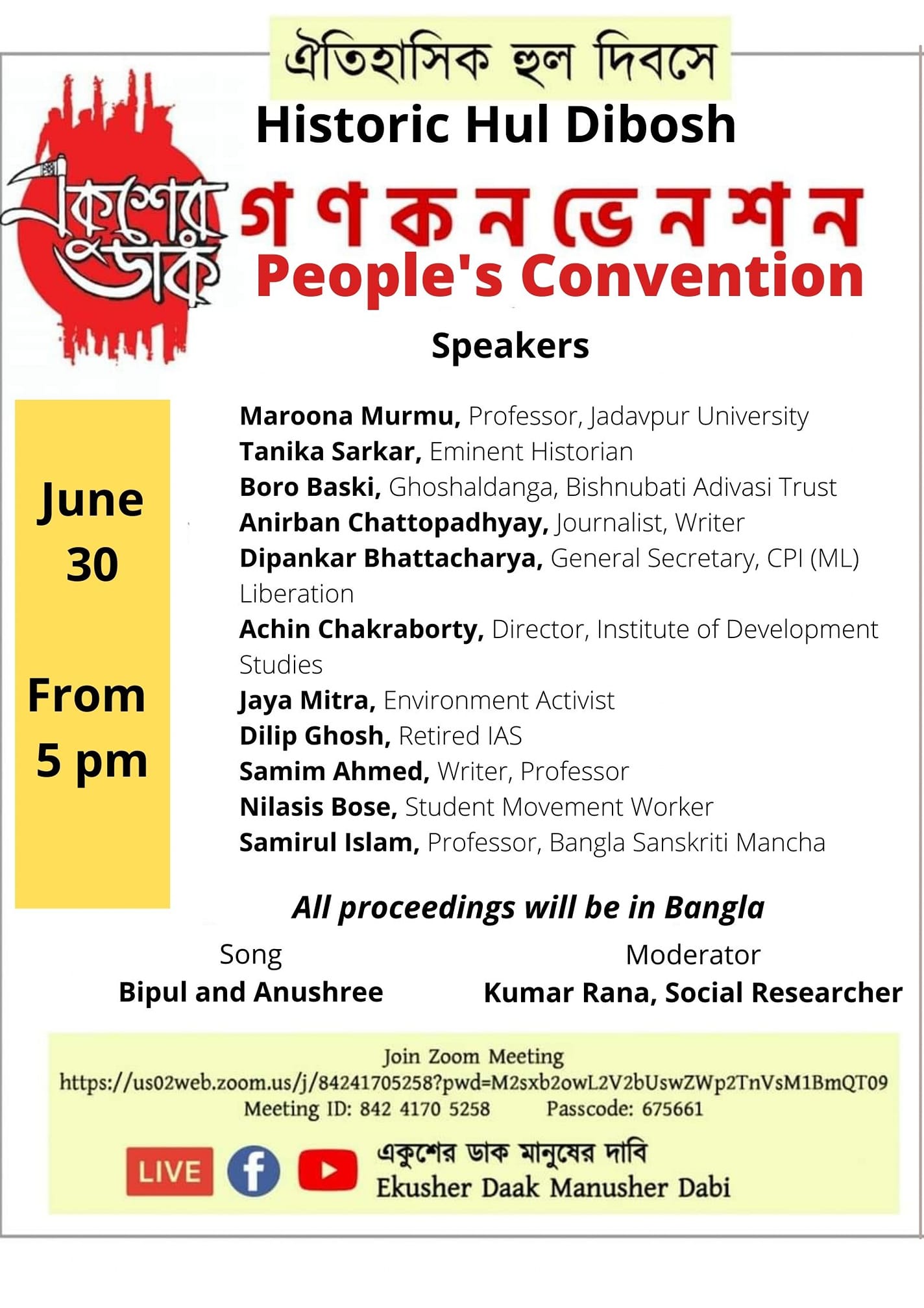
We publish a document ‘Demands of the People’ adopted by a novel campaign Ekusher Dak in West Bengal that has the potential to emerge as the nucleus of a new Left formation in the state. The draft document in Bangla is appended at the end of this post. Tomorrow, 30 June, Ekusher Dak or the Call of 21 will be organizing a programme, recalling the great Santhal Hool or the revolt of 30 June 1855.
‘Joblessness’ In The Post-Employment World – Urgent Need for Paradigm Change

The ‘unemployment’ question, let us put it bluntly, is not just an innocent and neutral question today but a key arena of class war – the war of Capital on society at large. Capital has its plans but does “society” have one?
Enter the Post-Employment World
It was reported last week that top IT sector companies like TCS, Infosys, Wipro, HCL, Tech Mahindra and Cognizant are likely to slash 3 million jobs by next year. With large-scale resort to Artificial Intelligence (AI) based “robot process automation” (RPA), these companies, by shedding these jobs are expecting to “save a whopping USD 100 billion, mostly in salaries, annually” says the Indian Express report linked above. Citing NASSCOM (National Association of Software and Service Companies) the report tells us that the domestic IT sector employs around 16 million, of whom “around 9 million are employed in low-skill and BPO roles.”
“Of these 9 million low-skilled services and BPO roles, 30 per cent or around 3 million will be lost by 2022, principally driven by the impact of robot process automation or RPA. Roughly 0.7 million roles are expected to be replaced by RPA alone and the rest due to other technological upgrades and upskilling by the domestic IT players, while it the RPA will have the worst impact in the US with a loss of almost 1 million jobs, according to a Bank of America report on Wednesday.”
Continue reading ‘Joblessness’ In The Post-Employment World – Urgent Need for Paradigm ChangeSushant Singh Rajput, Hindu Rashtra and Bollywood
A slightly longer version of this post was published under a different title in Southasia Multidisciplinary Academic Journal (Issue 24/25, 2020)
A young, successful, Hindi film actor died in tragic circumstances. What followed was a sensational real life movie, scripted in the headquarters of Hindu Rashtra, as part of its larger campaign to control the cultural arena.
Sushant Singh Rajput was found hanging in his bedroom in a Mumbai flat in June 2020, and it was initially declared as suicide by the Mumbai police. Within days however, the hashtag Justice for SSR started trending, and suddenly thousands of devoted and inconsolable fans had sprung up all over social media, all attacking “Bollywood” (the Bombay film industry) for its “nepotism” which had deprived a talented actor of work, driving him to suicide. “Boycott Bollywood” was a key theme in this frenzied outpouring of apparent grief. From here it escalated to claims that Rajput had been murdered, and that a drug cartel linked to Bollywood stars was involved in the crime. Soon these claims were all that one could see on social media, and on some Hindi, Marathi and English television channels, specially Republic and Times Now, which specialize in sensationalist and blatantly pro-Hindutva political reportage, including fake news (for one instance see Bajpai 2020). Continue reading Sushant Singh Rajput, Hindu Rashtra and Bollywood
‘No More Poor People In a Rich Country’ – What Will Peru’s Left Victory Mean?
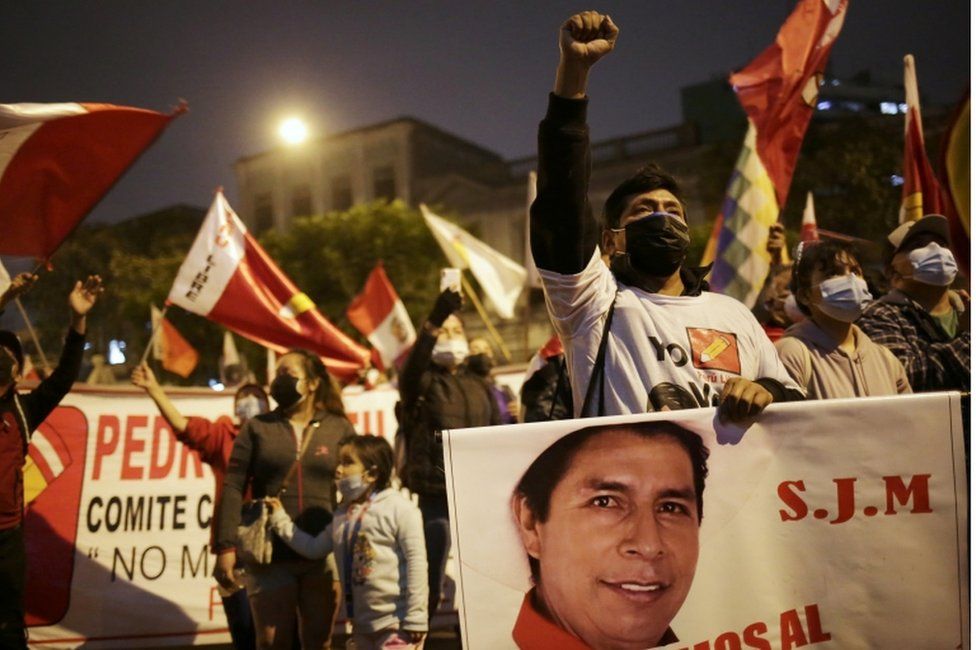
Supporters of Left Presidential candidate Pedro Castillo take to the streets, image courtesy BBC and Reuters
It seems quite clear from the latest reports coming in from Peru that the Left-wing candidate Pedro Castillo is all set to win in what has been described as the most polarized election till date. With over 99 percent of the ballots counted, Castillo had taken a lead of approximately 80, 000 votes (50. 2 of the total) over his Right-wing rival Keiko Fujimori. The counting process, reports say, has already been considerably slowed down as ballots seem to be still arriving from abroad as well as from the remote rural areas. Votes of expatriates arriving from abroad are mostly right wing votes for Fujimori whereas the ones from the rural areas are likely to be overwhelmingly for Castillo. There also seem to be a huge number of contested votes that might need to be recounted, further slowing down the process.
Continue reading ‘No More Poor People In a Rich Country’ – What Will Peru’s Left Victory Mean?Who Feels the Pain of the Injured?
India’s most prominent sports and entertainment figures have to traverse a long distance to achieve true greatness.
Representational Image. Image Courtesy: Freepik
The racial bias in the American education system came under the scanner recently from an unexpected quarter. The occasion was a series of events to mark the 100th anniversary of an organised massacre of Blacks in Tulsa, Oklahoma, in 1921. Mobs of violent white supremacists had destroyed the prosperous black Greenwood neighbourhood in a well-planned and predetermined manner, many aided and abetted by city officials, who provided arsonists with weapons. Actor-filmmaker Tom Hanks, regarded as an American cultural icon, underlined the conspiracy of silence in the school curriculum around this tragic race massacre in which 300 Black people died, and 10,000 became destitute or homeless.
In his essay, “You Should Learn the Truth about Tulsa Race Massacre”, published this month in the New York Times, Hanks unpacks the systematic cover-up of the massacre and other instances of racial bias and discrimination that the school education system papers over. He writes that white teachers and school administrators prioritise white feelings over Black experiences, which helps them omit “volatile” topics and preserve the status quo. Hanks has not limited his focus to the racial bias in the American education system but admits the role of Bollywood in shaping “what is history and what is forgotten”.
Have the icons of entertainment in India ever taken a leaf out of Hank’s book and searched their soul about the exclusions, discriminations and humiliations rampant in Indian society and their “industry”? For example, forty-two people, most of them Dalit women and children, were killed in the Thanjavur district of Tamil Nadu in 1969 by local landlords. The Kilvenmani massacre took place more than a half-century ago. On its fiftieth anniversary, a series of remembrance events were held across the country, not unlike the events that marked the Tulsa race violence. The Thanjavur killings are said to be the first massacre of their kind in independent India. No perpetrator of this attack ever got punished. The court held that since the alleged attackers belonged to the upper strata of society, it was difficult to believe that they had walked into the village…(Read the full text here))
CPI (M)’s History of Moving Away from Committed Leftism from its Birth: Sankar Ray
Guest post by SANKAR RAY
History apparently allows freaks, whims and hypocrisy, but only temporarily. After all, Hegel as very succinctly stated, ‘History is a slaughter house’. It spares none, not excluding India’s once most powerful Leftist party in the parliamentary arena, Communist Party of India (Marxist) that once had 44 MPs in the lower house of Indian parliament, Lok Sabha. It now faces a crisis of identity and existence. Hypocrisy and falsehood in politics and ideological positions have been two main reasons for the vertical decline of party’s influence and image.
Ten years ago, Indranil Chakraborty in his Master’s thesis –“The Market Odyssey: Why and How Was ‘The Market’ Discourse Incorporated in the Party Program of the Communist Party of India (Marxist) During the Days of the Communist Party of China’s ‘Market Socialism’?” referred to CPI(M)’s open criticism of ‘the development of the personality cult of Mao( Tse Tung) , and the problem of left adventurism during the Cultural Revolution. He pointed out that the criticism evaded ‘the question of the relationship between socialism and democracy, and the role of the Chinese people in deciding policy matters of the state’. He quoted Harkishan Singh Surjeet’s article in the party’s theoretical monthly, The Marxist in 1993 commemorating Mao’s birth centenary – ‘We cannot make a subjective analysis of a personality in cases where errors have been committed in the application of the theory to practice.’
Continue reading CPI (M)’s History of Moving Away from Committed Leftism from its Birth: Sankar Ray
Six Months of the Farmers’ Struggle – Looking Ahead
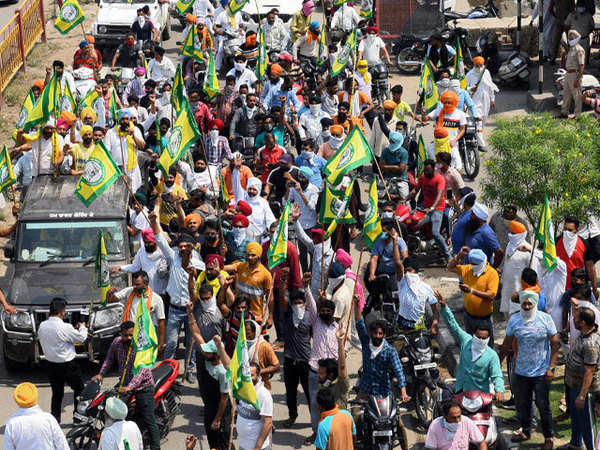
The farmers’ struggle at the Delhi borders completed six months yesterday, the 26th of May. The day was observed as a Black Day all over the country, at the call of the Samyukta Kisan Morcha (SKM).
Braving unprecedented cold, followed by rains and storm, the struggle has now moved into the cruelest part of Delhi’s summer. In the process, it has lost 470 of its people, thanks to the obstinacy of the government. If one dates the beginning of the struggle from June, when it began in Punjab, soon after the farm laws were stealthily, under cover of the pandemic, promulgated as ordinances by the Central government, the struggle has been on for ten months now. In other words, it is incorrect to go on referring to it as a protest – which we routinely do for many lost causes – for it is now a ‘do or die’ struggle. It became so from the time it shifted its venue to lay siege to Delhi.
Periodically, the government, its police and its minions in the media try and zero in on this epic struggle of the farmers for its ignoring, if not violating of Covid19 protocols. All this even as they look the other way while lakhs of people are thrown into the jaws of death, brought about by the mass murderers who have pushed populations in four states into prolonged election campaigns, played cynical games with precious oxygen and vaccine supplies and allowed all kinds of mass religious gatherings of the Hindus to take place in complete disregard of any protocol whatsoever.
Continue reading Six Months of the Farmers’ Struggle – Looking AheadMissing footsoldiers seek positivity amid raging pandemic
While Rome never burned, Nero never played the fiddle…
Pragya Singh Thakur, the Lok Sabha Member of Parliament from Bhopal, would never have imagined that the leading Hindi daily Dainik Bhaskar would mark her return to her constituency after a 70-day gap with a sarcastic article published on its front page. The headline read, “He Digvijayi Sadhvi Pragya! Shukriya, Aap Ko Bhopal ki Yaad to Aayi—O World Conqueror, Many Thanks, You Remembered Bhopal at Last.”
The daily was giving vent to the feelings of the lakhs of citizens of the capital of Madhya Pradesh. Some had even organised a social media campaign revolving around their “missing” MP.
The last time Thakur was in the city was 2 March, to participate in a condolence meeting for a BJP leader. Thereafter, she was away from the city. The intervening period had proved extremely harsh for residents due to the deadly second wave of the Covid-19 pandemic, which has already claimed hundreds of lives.
The anger of citizens was palpable. That is why the daily asked her, “When Bhopal was sick and desperate for help, you were not to be seen. When the city needed oxygen and Remdesivir, you were still not here.”
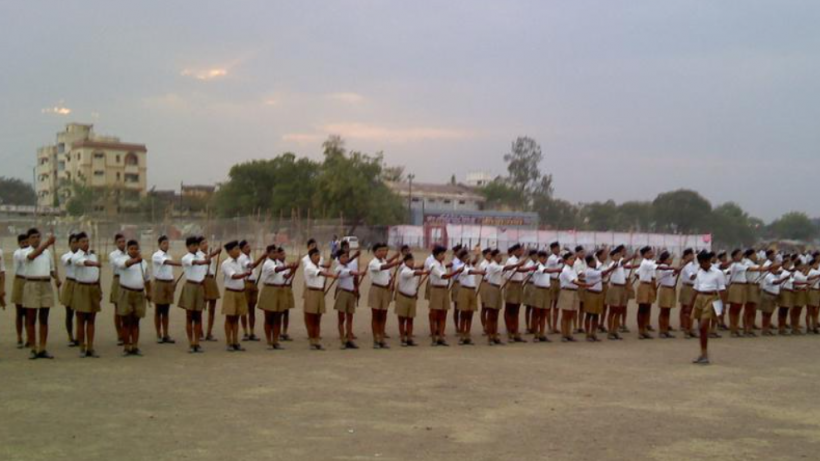
The absence of an elected leader belonging to the ruling dispensation when people need her the most raises a pertinent question. Was this an exception? Forget the fact that the BJP-Sangh Parivar repeatedly claim they are “disciplined soldiers”, a number of those associated with right-wing organisations have gone missing in action.
( Read the full article here)
Why no one is talking about indo-british trade deal ?
Guest Post : New Socialist Initiative NSI Facebook Page
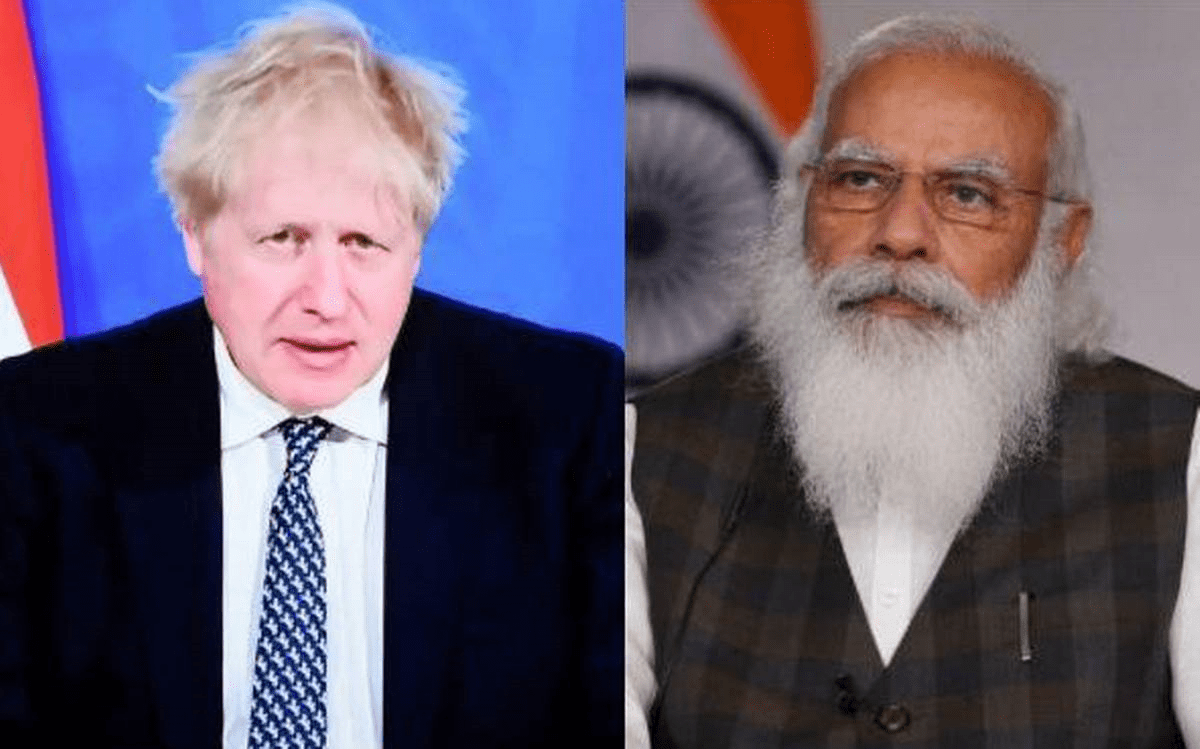
Samuel Johnson famously said, “Patriotism is the last refuge of the scoundrel.” The two prime ministers in the photograph below would claim to be patriots both. The scoundrel part should be left to your judgment, but it is obvious that both of them cannot claim to be patriots at the same time.
These two prime ministers came up with a deal a couple of days ago that no one in India is talking about. Even the Indian government, uncharacteristically, is not trumpeting about it. The UK government announced the day before yesterday that it sealed a deal with India in which Indians will make a one billion pound ($1.39 billion) investment in the UK creating 6500 British jobs. In addition India will open its market doors wider by reducing tariffs not only on British cars and British whisky but also on British apples and pears.
It looks curiouser than Alice’s Wonderland. India lost 7.25 million jobs in April alone. Actually tens of millions of Indian jobs have been lost during the pandemic and during the Modi misrule. And Indian moneybags facilitated by the Modi government are going to invest more than Rs 10 thousand crores in the UK creating highly paid British jobs! On top of that India will also hurt the interests of Indian producers of apples and pears (also of cars and whiskeys) by lowering tariffs on British goods. What is India gaining out of it?
But if you think about it, it is not so surprising. This is a government that spends tens of thousands of crores on a new central vista, a new parliament and a new house for the Prime Minister at a time when thousands are dying due to shortage of oxygen and of hospital beds. This is also a regime under which its favourite corporate houses have registered fattest profits ever during the worst humanitarian crisis that India is groaning under.
This Prime Minister not only helps corporate houses to amass mountains of wealth in an India where people are losing jobs, facing unimaginable hardships – many are on the verge of starvation; where cremations pyres are spilling on to the roads and burning 24×7. He also helps them take that money to safe houses on foreign shores – invest in rich countries and create jobs there. Can he qualify to be a patriot, even if one ignores Samuel Johnson’s reference to being a scoundrel?
How anti-national this government and this Prime Minister can become? And why is this Indo-British deal not being talked about here in India?
covid-19 mismanagement : Can india ‘do’ a brazil ?
Brazil’s Parliamentary Enquiry is probing the way the Bolsonaro-led government handled the pandemic leading to the deaths of 4,00,000 Brazilians.
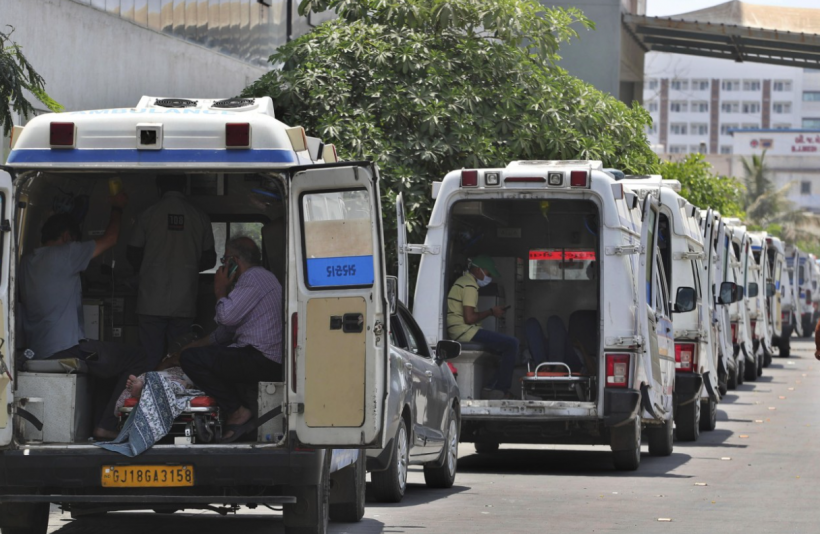
Jail Bolsonaro, the far right President of Brazil, is a worried man these days. The next round of elections for the post of President is merely a year away and there is a strong possibility that his bete noire Lula – former President of Brazil between 2003 and 2011 – can be in the ring to challenge him. The Supreme Court of Brazil has annulled Lula’s two bribery convictions, and if he plans the 75 year old charismatic Lula can give him a tough challenge.
The worrisome aspect is the unfolding Parliamentary Enquiry, which seeks to focus on the way the Brazil government handled the pandemic, what his critics call ‘disastrous and potentially criminal response to Covid that has killed 4,00,000 Brazilians and the nightmare still continues.
An indication of the fact that this enquiry is not going to be a formality can be gauged from the way one of its key members, Sen Humberto Costa, who was a former health minister, put it; he said, “It is a true health, economic, and political tragedy, and the main responsibility lies with the president,” and he believes there is enough evidence to conclude that Bolsonaro committed “crimes against humanity”. Costa is not alone in his assessment of Bolsonaro, many other analysts have also used similar label for him.
( Read the full text here)
Why ensuring dalit human rights is still a tough task in the 21 st century
‘Sunped in Haryana and Natham in Tamil Nadu, separated from each other by hundreds of kilometers, populated by communities speaking different languages and cultures, find themselves connected because of this ‘Unity in Diversity’ of a different kind; being witness to atrocities on Dalits in very many ways.’
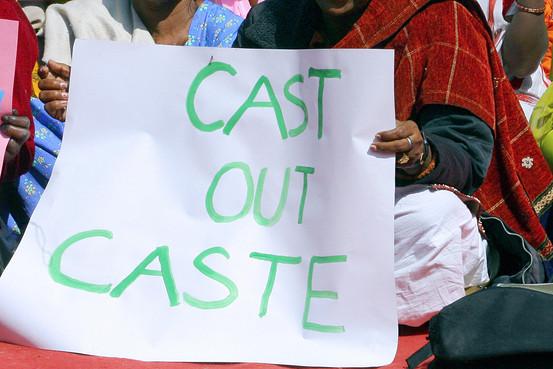
“The Smallest Coffins are the Heaviest”.
Sunped, a small village in Faridabad, Haryana, hit the national headlines recently once again, when a CBI court gave its verdict in case of the deaths of two Dalit children.
If memory does not fail you, one would recall that this village had witnessed the deaths of two children – two and a half year-old Vaibhav and ten-month-old Divya – who were burned alive and their parents Rekha and Jitender suffering burn injuries half a decade ago.
These deaths in a village which had a background of simmering conflict between dominant castes and Dalits, despite police protection provided to the ill-fated family, had caused tremendous uproar at the national level. Rallies and marches were held in different parts of the state and in the rest of India as well, demanding justice for the family. A callous statement by a Union Cabinet Minister about the incident where he argued that the government cannot be held responsible if “someone throws stones at a dog” had then added further fuel to the fire.
Perhaps to douse popular anger, the state government led by Manohar Lal Khattar had ordered a CBI enquiry into the case. It also took into custody eleven members of the dominant caste (namely Rajputs) from Sunped for their alleged involvement in these killings, based on a complaint by the victims.
The verdict by the CBI court in the case has landed the struggle for justice in this particular case into a black hole.
( Read the full article here)
What happens when faith overrides sense ?
The severity of the second wave and the government’s unpreparedness demonstrate the limits of ‘strong’ leadership and religion-based politics.
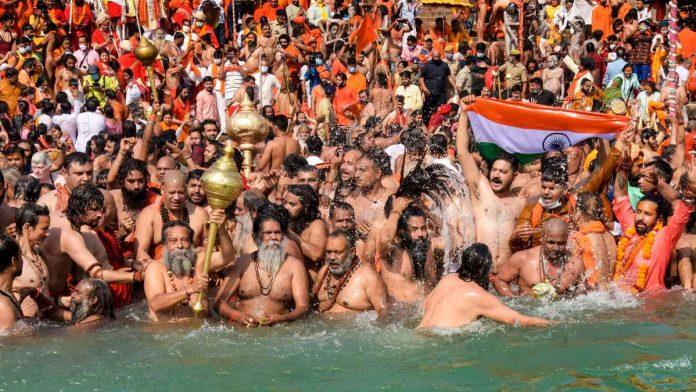
It was 1527, and Martin Luther, leader of the Protestant Reformation, wrote a letter advising a Lutheran leader what a believer should do during an epidemic. Europe was in the deadly grip of the bubonic plague at the time. It had killed thousands of people.
Extracts of his letter are relevant even today, especially the parts where Luther talks about what to do during an epidemic: “…Then I shall fumigate, help purify the air, administer medicine, and take it. I shall avoid places and persons where my presence is not needed in order not to become contaminated and thus perchance infect and pollute others, and so cause their death as a result of my negligence.”
Tirath Singh Rawat, the Chief Minister of Uttarakhand, perhaps does not know of this letter or its contents. Surprisingly, he does not even seem to recall the experiences from last year. In fact, much of what happened during the Covid epidemic seems lost on him. In 2020, public places of worship and religious gatherings became super-spreaders of the virus. That is why, for the first time, religious congregations were banned everywhere from Mecca to the Vatican to arrest the spread of the pandemic.
So, it is strange that Rawat cannot recall how believers took the back seat and ceded space to science during the first wave. Indeed, he has made a specious claim that faith in God will overcome the fear of the virus, in the context of the Kumbh Mela, a gathering where tens of lakhs of people gathered earlier this month.
( Read the full text here )
Sitalkuchi And After – A Flashback to CPI-M Rule in West Bengal
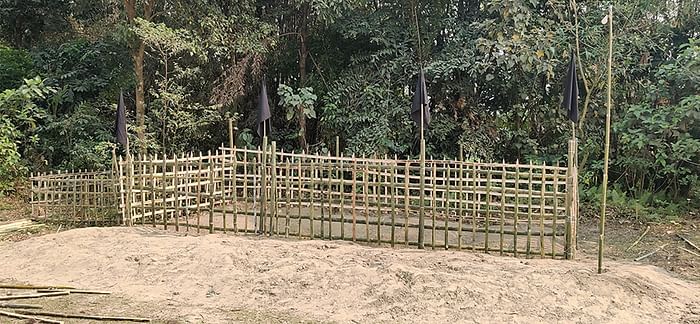
As the news of the killings of four youth in Sitalkuchi in Cooch Behar district by the Central Industrial Security Force (CISF) came in on 10 April, reactions of horror and anger became evident all around. This reaction among politically informed sections was only natural, for anybody with a little bit of common intelligence will tell you that the BJP is making an all out bid to capture power in the state. And anyone who has watched the Modi-Shah duo in action over the past few years, does not need to be told what this means. It is always ‘Heads I win; Tails you lose’ with them. It doesn’t matter what dirty trick you have to play, all is fair in this game of capturing power with them. They will form the government, no matter who wins but first, every effort has to be made to ‘win’ by any means. And that means by ANY means, ranging from killing people by engineering violent communal incidents to buying off opposition parties’ winning legislators. Despite the full battery of BJP’s star campaigners ranging from Narendra Modi and Shah to Yogi Adityanath making repeated visits to the state, their rallies have seen very low turnout and in some instances meetings had to be cancelled. So the desperation is growing. The first four of the unprecedented eight rounds in the state’s elections were to be in the areas where TMC is relatively weak. But even in these areas the reports were not very encouraging for the BJP. Thus, every child in Bengal could see what these killings meant. Except the CPI-M that is.
Soon the story of the killings was being given a typically BJP IT Cell spin: a mob of Muslim TMC people surrounded the CISF and tried to snatch their rifles. This was followed by identical tweets by a range of people describing how they could not sleep all night because of the sounds of the explosion of bombs, suggesting that things had been going on all night – and the CISF action in the morning was therefore, only justified.
Seasoned CPI-M stalwarts on Twitter apparently neither saw those tweets or more likely, jumped at them to immediately amplify the BJP narrative of provocation by TMC (Muslim mob is often implied). It is certainly not possible that anybody with a little bit of common sense would not have immediately seen this copy paste job for what it was – a BJP IT Cell operation. The CPI-M leaders and their social media warriors went on, willfully, to reinforce the ‘provocation’ narrative that was being circulated by the BJP.
Meanwhile, many people including poll analysts and former bureaucrats started asking that if there really was an irate mob attacking the CISF party, where was the footage? Was there any video evidence? No such question crossed the CPI-M leaders’ minds and from all appearances, from Biman Bose to Mohd Salim (and the pathetic Sujan Chakrabarty) pushed ahead with not-so-subtle ways of relaying the BJP narrative and indeed, it was not difficult to discern that they were in fact, gloating.
Continue reading Sitalkuchi And After – A Flashback to CPI-M Rule in West Bengalक्या हो बच्चे का धर्म ?
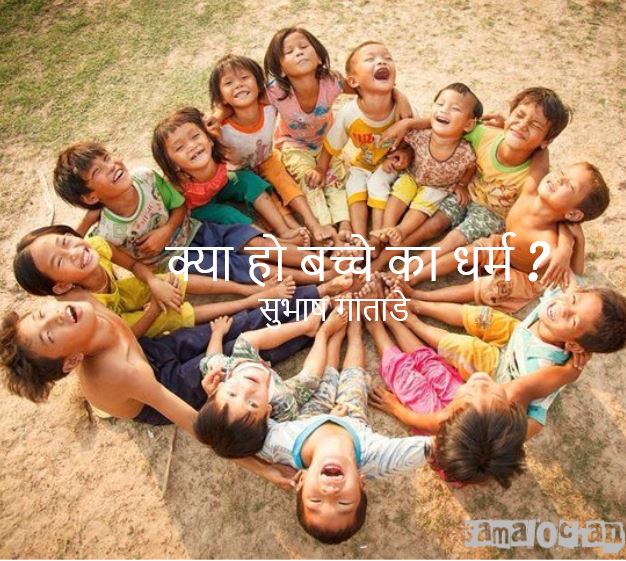
“Five minutes after your birth, they decide your name, nationality, religion, and sect, and you spend the rest of your life defending something you did not even choose.”
: Quote, unnamed
1.
आप कह सकते हैं कि पहली दफा मैं इस पहेली से तब रूबरू हुआ था या कह सकते हैं कि अधिक गंभीरता से सोचने लगा जब बंबई की इस ख़बर ने ध्यान खींचा था.
किस्सा थोड़ा पुराना लग सकता है अलबत्ता आज भी मौजूं.
मराठी परिवार में जनमी एक युवती और गुजराती परिवार में पले युवक ने- जिन्होंने अन्तरधर्मीय विवाह किया है और बम्बई में बसे थे- दरअसल यह तय किया कि वह अपनी नवजन्मी सन्तान के साथ किसी धर्म को चस्पां नहीं करेंगे. उनका मानना था कि बड़े होकर उनकी सन्तान जो चाहे वह फैसला कर ले, आस्तिकता का वरण कर ले, अज्ञेयवादी बन जाए या धर्म को मानने से इनकार कर दे, लेकिन उसकी अबोध उम्र में उस पर ऐसे किसी निर्णय को लादना गैरवाजिब होगा.
निश्चित ही अपने इस फैसले पर अमल करने में उनके सामने काफी बाधाएं आयीं. सन्तान का जन्म प्रमाणपत्र तैयार करने में अलग-अलग दफ्तरों के चक्कर काटने पड़े, एक अफसर ने तो युवती से पूछ लिया कि क्या तुम्हें अपने धर्म पर गर्व नहीं है ? युवती ने तपाक से जवाब दिया कि भले ही वह धर्म को मानने वाले परिवार में जन्मी हो, लेकिन किसी भी रीति रिवाज को नहीं मानती और अहम बात यह है कि क्या एक जनतांत्रिक धर्मनिरपेक्ष देश में मां बाप यह फैसला नहीं ले सकते कि वह अपनी संतान को किसी धर्म से नत्थी नहीं करेंगे.
( Read the full text here)
 KAFILA - COLLECTIVE EXPLORATIONS SINCE 2006