Category Archives: Debates

1984 and Punjab’s Transformation to a Hindutva Laboratory: Gurpreet Singh

Guest post by GURPREET SINGH

It was summer of 1985 when we were visiting New Delhi, the national capital of India to attend a wedding in the family. I had a long hair back then and was aged 15. Both me and my uncle who were wearing turbans like other Sikh men were waiting at a bus stand for the next bus to go to our relatives. As soon as the bus arrived and we were about to climb in after other waiting passengers, the door was slammed on us.  When my uncle protested, the conductor shouted that there is no seat inside. Even as we pointed out at some empty seats, the answer was – “we have told you there is no seat.” Before we could argue the bus sped away.

The incident left me shocked but I wasn’t surprised.  Continue reading 1984 and Punjab’s Transformation to a Hindutva Laboratory: Gurpreet Singh

A Day Against Kalluri at IIMC, Delhi: Bastar Solidarity Network Delhi Chapter

Guest Post by Bastar Solidarity Network Delhi Chapter

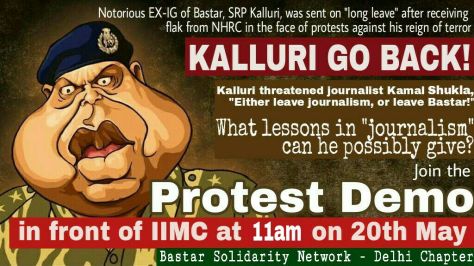
The democratic forces, organizations and the thinking minds of IIMC took part in a spirited protest today against the invitation extended to notorious ex-IG Kalluri by the IIMC administration to take part in a seminar. To start with, since last two days, there were several attempts on the part of the organizers to confuse/conceal Kalluri’s invitation. Immediately after the declaration of the protest, Kalluri’s name was dropped from the poster. There were also threats of counter-mobilisation by the BJP goons. But undeterred, as we reached the gates of IIMC at 11am, the site echoed with slogans of “Killer Kalluri Go Back”!

Continue reading A Day Against Kalluri at IIMC, Delhi: Bastar Solidarity Network Delhi Chapter

Violence against Dalits in Saharanpur, UP : A Report by CPI-ML (Liberation) & AISA Team that Visited Saharanpur

Guest Post by Sucheta De

CPI-ML- AISA Team’s Visit to Saharanpur – A Report

“Sarkar Hamari Hai, Police-Prashashan Bhi Hamara Hai”- Yogi Government Boosts Up Morale of Casteist Feudal Goons Who Burnt Dalit Village in Shabbirpur!

Casteist Goons from Dominant Rajput Community Enjoy Complete Impunity while Bhim Army Activists Continue to Face Witch-Hunt!

CPI-ML-AISA Appeal Everyone to Join Hands with the Dalits of Saharanpur in their Struggle for Justice!

Saharanpur Carnage: Teaching a Lesson to Politically Assertive, Self-Reliant Dalits Who Refuse to be Foot Soldiers of Hindutva’s Hate Politics

When BJP gains electoral majority, Saharanpur happens.

For last several years the belt of western Uttar Pradesh has been made the laboratory of the RSS-BJP’s sinister design of communal polarization and violence against Muslims. The 2013 Muzaffarnagar riots was a planned design by the RSS-BJP to polarize the belt on communal lines and reap electoral benefits. And now, after that design had delivered ‘electoral success’ for the RSS and BJP, upper caste feudal forces have started celebration of their ‘victory’ by unleashing attack on Dalits.

Continue reading Violence against Dalits in Saharanpur, UP : A Report by CPI-ML (Liberation) & AISA Team that Visited Saharanpur

कट्टरता के खिलाफ अज्ञेय: वैभव सिंह

Guest post by VAIBHAV SINGH

सच्चिदानंद हीरानंद वात्स्यायन अज्ञेय हिंदी के ही नहीं वरन समूचे भारतीय साहित्य में निरंतर जिज्ञासा और पाठकीय आकर्षण पैदा करने वाले रचनाकार के रूप में देखे जाते हैं। विभिन्न किस्म की दासता-वृत्तियों, परजीवीपन और क्षुद्र खुशामद से भरे मुल्क में उनका स्वाधीनता बोध जितना गरिमावान लगता है, उतना ही चौंकाने वाला भी। इसी स्वाधीनता बोध ने अज्ञेय की दृष्टि को भारत के लोकतांत्रिक मिजाज के अनुसार ज्यादा खुला व अपने रचना संसार को स्वेच्छा से निर्मित करने लायक बनाया। उनके इस स्वाधीनता बोध का प्रभाव व्यापक रूप से सृजन के बहुत सारे आयामों पर पड़ा है।

अज्ञेय के साहित्य पर लिखने वाले कई आलोचकों ने इस प्रभाव के मूल्यांकन का प्रयास किया है। जैसे कि निर्मल वर्मा ने स्वाधीनता बोध से उत्पन्न उनकी इसी खुली, व्यापक दृष्टि को उनके संपादन कर्म से जोड़कर देखा था। अपने द्वारा संपादित पत्र प्रतीक व दिनमान  में उन्होंने मुक्तिबोध, शमशेर बहादुर सिंह व सज्जाद जहीर को जोड़ा तो तार सप्तक के विविध खंडों में अपने से पूर्णतया भिन्न दृष्टिकोण वाले कवियों को। स्वाधीनता के प्रति तीव्र संवेदनशीलता को व्यक्तिवाद के दायरे में रखकर समझने की सरल चिंतन-प्रक्रिया साहित्य में बहुतायत से मौजूद रही है। ऐसा मानने वालों की सीमा प्रकट करते हुए निर्मल वर्मा ने कहा है कि स्वाधीनता के प्रति अत्यंत सचेत अज्ञेय के प्रति लोगों को झुंझलाहट उस समाज में स्वाभाविक थी जहां लोगों को हर समय किसी ‘ऊपर वाले’ का मुंह जोहना पड़ता है। इन ऊपर वालों में परिवार, जाति, रूढ़ि, पार्टी, विचारधारा, संगठन आदि सभी कुछ शामिल रहा है। यहां तक कि गांव में जातिवाद-परिवार की गुलामी करने वाले लोग जब शहर आए तो उन्होंने विभिन्न पार्टियों, संगठनों व विचारधाराओं की गुलामी को बिना किसी आलोचना के स्वीकार कर लिया। जिन्होंने नहीं स्वीकारा उन्हें कुलद्रोही, जनविरोधी, परंपराद्वेषी, धर्मविरोधी, व्यक्तिवादी आदि आरोपों का सामना करना पड़ा।

Continue reading कट्टरता के खिलाफ अज्ञेय: वैभव सिंह

The Elephant in the Room – Silence on Class Issues in Indian Politics : Sanjay Kumar

Guest Post by SANJAY KUMAR

Ramesh has been working as a daily wager in a Government of India office in Delhi for ten years. He is one of the army of peons, office assistants, security guards, gardeners, and cleaning staff which government offices, city municipalities, hospitals, schools and colleges of the metropolis employ regularly. He is a graduate, but gets the wage of an unskilled worker. He is among the fortunate ones who at least get government mandated minimum wage. Most private employers in the city violate the minimum wage act; either they pay less than the mandated amount, or make daily wagers work more than eight hours without any overtime.

Ramesh was pleasantly surprised this April when he noted a more than 30% increase in his wages. His daily wage that stood at Rs 360/ earlier was now Rs 513/. This was due to a Government of Delhi notification issued on 3rd March, 2017. The news was covered in the inner pages of some newspapers. Most TV news channels ignored it. Hence, it is not surprising that employees like Ramesh who are not associated with any organsiation of workers were not aware of this increase. Continue reading The Elephant in the Room – Silence on Class Issues in Indian Politics : Sanjay Kumar

LBJ, Kashmir, and Indian Liberals: Rajive Kumar

Guest Post by RAJIVE KUMAR

Towards the end of his presidency, Lyndon B Johnson, the 36th President of the United States of America, had been reduced to a figure of universal scorn and derision. His escalation of the Vietnam War to a point from which it became impossible to extricate the US ended up  in becoming one of the defining human tragedies of twentieth century. This was war fought on the basis of pretexts that did not actually exist.  The slur “Hey, hey, LBJ, how many kids did you kill today?” which became an anthem of sorts for protestors eventually compelled him to forgo running for a second term in office in 1968.  Those protesting against the war, those who eventually forced Lyndon Johnson to leave the political arena were Americans who were overcome with images of atrocities and the rising count of civilian deaths in a mindless war.

Continue reading LBJ, Kashmir, and Indian Liberals: Rajive Kumar

Linger Like Moisture Within – On Viren Dangwal’s Pitr-Paksh: Prasanta Chakravarty

Guest Post by Prasanta Chakravarty

Pitr-paksh/ पितृ-पक्ष (also pitru-paksh) is the 16 day lunar period in the Hindu diurnal calendar when believers pay homage to their ancestors, through specific food offerings. Most years, the autumnal equinox falls within this period, that is, the Sun transitions from the northern to the southern hemisphere during this time. In Northern and Eastern India and Nepal, among the cultures following the purnimanta or the solar calendar, this period usually corresponds with the waning fortnight of the month Ashwin. The souls of three preceding generations of one’s ancestor reside in Pitr-loka, a realm between heaven and earth. Continue reading Linger Like Moisture Within – On Viren Dangwal’s Pitr-Paksh: Prasanta Chakravarty

Karl Marx in the Times of Climate Change

The Communist Manifesto had, as its object, the proclamation of the inevitable impending dissolution of modern bourgeois property. But in Russia we find, face-to-face with the rapidly flowering capitalist swindle and bourgeois property, just beginning to develop, more than half the land owned in common by the peasants. Now the question is: can the Russian obshchina, though greatly undermined, yet a form of primeval common ownership of land, pass directly to the higher form of Communist common ownership? Or, on the contrary, must it first pass through the same process of dissolution such as constitutes the historical evolution of the West?

The only answer to that possible today is this: If the Russian Revolution becomes the signal for a proletarian revolution in the West, so that both complement each other, the present Russian common ownership of land may serve as the starting point for a communist development. [Marx and Engels, ‘Preface’ to the 1882 Russian Edition of The Communist Manifesto; all emphasis added]

The above passage, jointly signed by Marx and Engels, appears at the end of the 1882 ‘Preface’ to the Russian edition of The Communist Manifesto. It also appears, towards the end of a decade-long engagement with the Russian social formation and the social formation of many Eastern societies like India’s. The detailed notes, excerpts and commentaries compiled by Marx, published later as The Ethnological Notebooks of Karl Marx, belong precisely to the end of this period, the years 1880-1882. Marx passed away the following year, in 1983. Continue reading Karl Marx in the Times of Climate Change

A Non-believing Muslim’s Experience of Islamophobia

Guest post by SARAH ATHER

My life has revolved around the concept of God. I have been a Muslim, a theist, an agnostic and an atheist in all types of phases of my life. I am sure, I am still just growing and my perceptions will mature as I grow. My Muslim identity slowly faded when I picked Dawkins and Ayaan Hirsi Ali in my late teens. To put it simply I was a perpetually angry Muslim. Angry at Islam, angry at Wahabism, angry at imposed patriarchy in Islam. I believed religion was so bad for the world, so unscientific. And so I wrote and I discussed with my fellow Hindu friends. They opened their hearts out. A lot of them told me how Muslims were always cruel and misogynistic. And they told me how I was different to see the truth. I felt a sense of moral superiority, I felt I was so unbiased and rational that I could see faults in my own religion. Continue reading A Non-believing Muslim’s Experience of Islamophobia

Thinking Labour in Contemporary India – For a Different May Day Agenda

Massive Chalo Una rally, image courtesy, thenewsminute.com

This May Day comes at a very crucial juncture in our history. Crucial, not simply because there is a belligerent Hindu Right government in power but also because it comes in the wake of the most unprecedented belligerence of the upper castes and their all-round violence, especially on the Dalit communities across the land. Last year we had witnessed the most shameful incident of violence in the flogging of four Dalit youth by the cow gangs of Hindutva, which was followed by massive protests by Dalits and joined in by other sections of people, including some of the Left forces, as well. The attack had to do with the very specific form/s of labour that Dalit communities have been made to traditionally perform in Hindu society, in this case, the work of disposing of carcasses of dead animals, skinning them and so on.  Continue reading Thinking Labour in Contemporary India – For a Different May Day Agenda

Erdogan Gets A Degree from Jamia Millia Islamia and Everyone Else’s Father is in Prison in Istanbul

Everyone else’s father is in prison in Istanbul,
they want to hang everyone else’s son
in the middle of the road, in broad daylight
People there are willing to risk the gallows
so that everyone else’s son won’t be hanged
so that everyone else’s father won’t die
and bring home a loaf of bread and a kite.
People, good people,
Call out from the four corners of the world,
say stop it,
Don’t let the executioner tighten the rope
[ Nazim Hikmet, 1954 ]

Its best to stay as far aways as possible when two mafia dons meet to talk business. Especially when their deep state security detail has a disturbing tendency to shoot first and ask questions after. Today, Delhi’s roads are emptier than usual, even on a Sunday. And I am reading Nazim Hikmet, because a thug is coming to town.

Continue reading Erdogan Gets A Degree from Jamia Millia Islamia and Everyone Else’s Father is in Prison in Istanbul

It could have been me: Rajamathangi S

Guest Post by RAJAMATHANGI S

I am one of the fortunate PhD scholars lucky enough to study in JNU. I am a Dalit woman.  My mother is my family’s main breadwinner and my father struggles as a daily wager. I have two siblings who are younger than me. My mother is a low paid private school teacher today because of the education, which her single mother provided to her. My maternal grandmother who became a widow at a young age, didn’t sit inside the house after her husband passed away, she works as a sanitation worker even today, a profession that is considered a taboo by her community people. It is the hard work of these two women that has helped me reach this position.

Because of my family situation my school education was scattered all over Tamil Nadu and Pondicherry. I never studied in one school for more than two years. So one can understand how many types of schools and people I have experienced with. I started my schooling in a convent in Pondicherry. Then I went to three matriculation schools before I completed my 6th standard; after that because of my family’s economic condition I was put in Government and aided schools from class 7 till the completion of class 12. Irrespective of changing schools every alternate year I was good at my studies, I was always encouraged and motivated by my friends and by my teachers. I was always fortunate when it came to teachers: teachers stood by me in all my obstacles throughout my education wherever I went and JNU has been no exception to this.

Continue reading It could have been me: Rajamathangi S

The Unapologetic Indian Muslim: Sabiha Farhat

Guest Post by SABIHA FARHAT

These are tough times for muslims in India.  But now that I look back and shed my ‘liberal’ prejudices – muslims were never acceptable as ‘who they were’ in Indian society.  I had always blamed my mother for not giving me proper lunch box to carry to school.  But the truth is that even in class 5, no student ate from my tiffin and gradually I started going to the play field in recess rather than enjoying a meal under the big Peepal tree.  After that I took tiffin only when I prepared it myself, that was class 11 & 12.  But even then the girls would hardly eat from my lunch box.  We did sit together but no one touched my food.  Was I the Untouchable?

Continue reading The Unapologetic Indian Muslim: Sabiha Farhat

New Politics of Our Times and Post-Capitalist Futures

An earlier version of this essay was published in Outlook magazine

“The young students are not interested in establishing that neoliberalism works – they’re trying to understand where markets fail and what to do about it, with an understanding that the failures are pervasive. That’s true of both micro and macroeconomics. I wouldn’t say it’s everywhere, but I’d say that it’s dominant.
“In policymaking circles I think it’s the same thing. Of course, there are people, say on the right in the United States who don’t recognise this. But even many of the people on the right would say markets don’t work very well, but their problem is governments are unable to correct it.”
Stiglitz went on to argue that one of the central tenets of the neoliberal ideology – the idea that markets function best when left alone and that an unregulated market is the best way to increase economic growth – has now been pretty much disproved. Read the full report by Will Martin here

One often hears over-zealous warriors of neoliberalism say of Leftists that they live in a time- warp; that the world has long changed and that the disappearance of state-socialism has finally proved that all their beliefs were little more than pipe-dreams. They talk as though history came to an end with the collapse of actually existing socialisms and the global ascendance of neoliberalism in the early 1990s. As though all thought came to an end; as if the distilled essence of everything that could ever be thought, or need be thought, was already encapsulated in the neoliberal dogma.

Continue reading New Politics of Our Times and Post-Capitalist Futures

Who will get the hot roti in the Delhi assembly elections?

My friend Guddi has a great story about a Gujjar wedding she attended recently in Ghaziabad. It was a typically chaotic event, marked accurately by the swirling crowds around the dinner stalls. If Gujjar weddings are chaotic and the dinner doubly so, the scene around the tandoor is triply compounded chaos. Barely concealed competition amongst overmuscled Gujjar men in overtight pants for that precious hot roti ensures that none but the most Hobbesian men remain, circling the tandoor like hungry wolves, periodically thrusting their plate forward like fencing champions and shouting obscenities at the harried servers. In such a heart-stopping scenario, a young server had as Guddi recounts, figured out the formula to keep everybody from killing each other (or him). As soon as the roti would be pulled out of the tandoor, seductively golden brown and sizzling, this man would hold it high up with his tongs so everybody could see, then in an elaborate dance-like ritual, touch each of the empty extended plates in front of him with the roti, and finally, in a mysterious but authoritative decision, place it respectfully on a randomly selected plate. Repeat with every single roti that emerged from the tandoor. A hushed silence followed by nervous laughter followed every such flourish.

Continue reading Who will get the hot roti in the Delhi assembly elections?

Ban self-styled vigilante groups in India – Petition

PETITION ON CHANGE.ORG

Parts of the petition are reproduced below. Follow the link given at the end to sign the petition.

Incidents of mob violence by vigilante groups have become alarmingly common in many parts of India. These groups have frequently committed serious crimes, including harassment, assault and murder…

In spite of these groups repeatedly committing atrocities against minorities, nothing substantial has been done to stop them. The Central and several State Governments have remained silent. In addition, the authorities have extended no support to the victims, predominantly Muslims and Dalits, who have lost their lives and livelihoods.

The recent debates in the Rajya Sabha and the intervention of the Supreme Court are a step towards improvement. An earlier criticism by the Prime Minister proved to be inefficient as the vigilantes continued to operate as before.

Clearly, greater social awareness and resistance is needed to combat vigilante groups. Through this petition, we express our support for the decision of the Supreme Court and demand

1. An immediate ban on vigilante groups irrespective of any cause that has brought them into existence.

2. Unconditional and unequivocal condemnation of vigilantism from the National and State Governments.

3. Social support and compensation for victims.

SIGN THE PETITION HERE.

Individuality and a Liberal Error – A Response to Pratap Mehta: Huzaifa Omair Siddiqi

Guest post by HUZAIFA OMAIR SIDDIQI

It has often been broadcast that we live in a post-truth age. In fact we live in an age better envisioned as one of post-certainty, where everything and every fact is liable to be pronounced uncertain and doubtful. The problem with the mainstream liberal discourse is its inability to catch up to the inevitable demise of certainty in the political sphere. What was most certain, according to Descartes, was the being of one’s own ego. In this age of post-certainty, this is the last certainty which the liberal discourse still seems to stick to, in the name of ‘individual rights’, without ever understanding the real essence of the question of individuality.

Muhammad Iqbal was the public intellectual of the last century who made this question of individuality his very own guiding question. This guiding question, how does individuation happen, was part of his desire to formulate his basic question, how does the community of individuals come into being? Pratap Bhanu Mehta, in his opinion piece in The Indian Express has sought to diagnose the tragedy of Iqbal as one which in its sacrifice of the rights of the individual, attempted to pursue the consolidation of the truly spiritual community. Mehta, one of India’s finest public intellectuals, cannot be questioned within this paradigm of liberal thinking.

Continue reading Individuality and a Liberal Error – A Response to Pratap Mehta: Huzaifa Omair Siddiqi

Thinking Past the BJP Victory in UP – Response to Biju Mathew: C.P. Geevan

Guest post by CP GEEVAN

The following is a response to the piece by Biju Mathew on Kafila, underlining the need for single-minded focus and keep the feet firmly on political realities

Given the exuberant optimism that Biju Mathew evokes in these dark days, many of us afflicted by malignant pessimism should not have many reasons to complain or pick holes in this view of looking back and foreseeing the way forward. On the face of it, this article does gladden one’s heart and spirit! However, imagining larger than life attributes to struggles and spells of resistance can be very misleading. In a way, with a rather benevolent interpretation, one cannot quarrel with Biju’s contention that nobody needs to wait for some political party to lead the resistances against the far-right takeover or start the process of breaking the ‘wave’. There is no hesitation in agreeing with the proposition that instead of waiting, which carries the risk of waiting indefinitely, it is imperative that each individual who is appalled at the turn of events must contribute urgently to building ‘innovative and locally responsive actions’. Well, inaction is certainly not an option. Act we must – in the face of the frightening likelihood of the saffron brigade unleashing a horrific civil war and engineering mass killings. There are no quarrels as to the primary intent of the article – that it is a call to shed excessive pessimism, end despondency, and take steps towards politically meaningful actions. Nevertheless, it will be a big mistake to imply that the process of banishing the gloom need not extend to the political rivals of the Hindutva nationalist parties. Continue reading Thinking Past the BJP Victory in UP – Response to Biju Mathew: C.P. Geevan

Stepping Back/Stepping Forward – Thinking Past the BJP Victory in UP: Biju Mathew

Guest post by BIJU MATHEW

The BJP’s appointment of Adityanath to the post of UP CM once electoral victory was secured has left many angry, sad and frightened. Already the ominous signs of inhuman mass violence are accelerating across UP. A more brazen Sangh will pivot off UP to spread terror and hatred across the country.  And yet, we must guard against an excessive pessimism and guide the anger and the sadness in productive directions.  The 2014 Lok Sabha, 2015 Delhi and Bihar and 2017 UP elections together are indicative of an evolving structural logic in Indian politics and show telltale signs of irresolvable contradictions that the Sangh is faced with. Modi and the BJP are riding a wave that is not entirely of their own making – a wave that will necessarily crest, break and crash in the not too distant future. How soon this wave can be interrupted, and what happens after that, does not depend on them, but on the rest of us.

So here then is the puzzle: Why do so many people support what is both an absurd and an unrealizable ideology? Absurd, because poverty, caste discrimination, corruption and government failures are not due to “enemies” or “enemy communities”- Muslims or Leftists, LoveJihadis or Beef eaters; and unrealizable because with over 400 million minorities and oppressed castes who will not fit into Hindu Rashtra, the saffron brigade can only deliver a horrific civil war. Does UP mean that, despite all this absurdity, this ideology has nevertheless triumphed in the Indian mind? Continue reading Stepping Back/Stepping Forward – Thinking Past the BJP Victory in UP: Biju Mathew

मारूति-सुजुकि मज़दूरों को उम्र कैद व अन्य नाजायज सजाओं के खिलाफ़ पंजाब में उठी जोरदार आवाज़: लखविन्दर

अतिथि post: लखविन्दर

मारूति-सुजुकि मज़दूरों को उम्र कैद व अन्य नाजायज सजाओं के गुड़गांव अदालत के फैसले को घोर पूँजीपरस्त, पूरे मज़दूर वर्ग व मेहनतकश जनता पर बड़ा हमला मानते हुए पंजाब के मज़दूरों, किसानों, नौजवानों, छात्रों, सरकारी मुलाजिमों, जनवादी अधिकारों के पक्ष में आवाज उठाने वाले बुद्धिजीवियों व अन्य नागरिकों के संगठनों ने व्यापक स्तर पर आवाज़ बुलन्द की है। 4 और 5 अप्रैल को देश व्यापी प्रदर्शनों में पंजाब के जनसंगठनों ने भी व्यापक शमूलियत की है। विभिन्न संगठनों ने व्यापक स्तर पर पर्चा वितरण किया, फेसबुक, वट्सएप पर प्रचार मुहिम चलाई। अखबारों, सोशल मीडिया आदि से इन गतिविधियों की कुछ जानकारी प्राप्त हुई है।

​5 अप्रैल को लुधियाना में लघु सचिवालय पर डीसी कार्यालय पर टेक्सटाईल-हौजऱी कामगार यूनियन, मोल्डर एण्ड स्टील वर्कर्ज यूनियनें, मज़दूर अधिकार संघर्ष अभियान, नौजवान भारत सभा, पी.एस.यू., एटक, सीटू, एस.एस.ए.-रमसा यूनियन, पेंडू मज़दूर यूनियन, डी.टी.एफ., रेलवे पेन्शनर्ज वेल्फेयर ऐसोसिएशन, जमहूरी अधिकार सभा, आँगनवाड़ी मिड डे मील आशा वर्कर्ज यूनियन, कामागाटा मारू यादगारी कमेटी, स्त्री मज़दूर संगठन, कारखाना मज़दूर यूनियन, पेंडू मज़दूर यूनियन (मशाल), कुल हिन्द निर्माण मज़दूर यूनियन आदि संगठनों के नेतृत्व में जोरदार प्रदर्शन हुआ और राष्ट्रपति के नाम माँग पत्र सौंपा गया जिसमें माँग की गई कि सभी मारूति-सुजुकि के सभी मज़दूरों को बिना शर्त रिहा किया जाए. उनपर नाजायज-झूठे मुकद्दमे रद्द हो, काम से निकाले गए सभी मज़दूरों को कम्पनी में वापिस लिया जाए।


​लुधियाना में 5 अप्रैल के प्रदर्शन की तैयारी के लिए हिन्दी और पंजाबी पर्चा वितरण भी किया गया जिसके जरिए लोगों को मारूति-सुजुकि मज़दूरों के संघर्ष, उनके साथ हुए अन्याय, न्यायपालिका-सरकार-पुलिस के पूँजीपरस्त और मज़दूर विरोधी-जनविरोधी चरित्र से परिचित कराया गया और प्रदर्शन में पहुँचने की अपील की गई। लुधियाना में 16 मार्च को भी बिगुल मज़ूदर दस्ता, मोल्डर एण्ड स्टील वर्कर्ज यूनियनों, मज़दूर अधिकार संघर्ष अभियान, आदि संगठनों द्वारा रोषपूर्ण प्रदर्शन किया गया था।

​जमहूरी अधिकार सभा, पंजाब द्वारा बठिण्डा व संगरूर में 4 अप्रैल, बरनाला में 8 अप्रैल को, लुधियाना में 1 अप्रैल को पिछले दिनों देश की अदालतों द्वारा हुए तीन जनविरोधी फैसलों मारूति-सुजुकि के मज़दूरों को उम्र कैद व अन्य सजाएँ, जनवादी अधिकारों के लिए आवाज उठाने वाले दिल्ली विश्वविद्यालय के प्रो. साईबाबा सहित अन्य बेगुनाह लोगों को उम्र कैद की सजाओं, और हिन्दुत्वी आतन्कवादी असीमानन्द को बरी करने के मुद्दों पर कन्वेंशनें, सेमिनार, प्रदर्शन, मीटिंगें आदि आयोजित किए गए जिनमें अन्य जनसंगठनों नें भी भागीदारी की। जमहूरी अधिकार सभा ने इन मुद्दों पर एक पर्चा भी प्रकाशित किया जो बड़े स्तर पर पंजाब में बाँटा गया।

 पटियाला में 4 अप्रैल को मज़दूरों, छात्रों, किसानों के विभिन्न संगठनों द्वारा रोष प्रदर्शन किया गया। बिजली मुलाजिमों ने भी टेक्नीकल सर्विसज़ यूनियन के नेतृत्व में 4 अप्रैल को अनेकों जगहों पर प्रदर्शन किए। लहरा थरमल पलांट के ठेका मज़दूरों ने 4 अप्रैल को रोष रैली के जरिए मारूति-सुजुकि मज़दूरों के साथ एकजुटता जाहिर करते हुए उनके समर्थन में आवाज़ उठाई। मारूति-सुजुकि मज़दूरों के समर्थन में पंजाब में उठी आवाज़ की कड़ी में लोक मोर्चा पंजाब ने 8 अप्रैल को लम्बी (जिला बठिण्डा) में रैली और रोष प्रदर्शन किया। लम्बी में आर.एम.पी. चिकित्सकों द्वारा भी प्रदर्शन किया गया। अनेकों गाँवों में मज़दूर-किसान-नौजवान संगठनों ने अर्थी फूँक प्रदर्शन भी किए हैं। आप्रेशन ग्रीन हण्ट विरोधी जमहूरी फ्रण्ट, पंजाब ने मोगा में 12 अप्रैल को कान्फ्रेंस और प्रदर्शन आयोजित किया।

मारूति-सुजुकि मज़दूरों का जिस स्तर पर कम्पनी में शोषण हो रहा था और इसके खिलाफ़ उठी आवाज़ को जिस घृणित बर्बर ढंग से कुचलने की कोशिश की गई है उसके खिलाफ़ आवाज़ उठनी स्वाभाविक और लाजिमी थी। पंजाब के इंसाफपसंद लोगों का हक, सच, इंसाफ के लिए जुझारू संघर्षों का पुराना और शानदार इतिहास रहा है। अधिकारों के जूझ रहे मारूति-सुजुकि मज़दूरों का साथ वे हमेशा निभाते रहेंगे।

पूरे देश में मज़दूरों का देशी-विदेशी पूँजीपतियों द्वारा भयानक शोषण हो रहा है। जब मज़दूर आवाज़ उठाते हैं तो पूँजीपति और उनका सेवादार पूरा सरकारी तंत्र दमन के लिए टूट पड़ता है। ऐसा ही मारूति-सुजुकी, मानेसर (जिला गुडग़ांव, हरियाणा) के संघर्षरत

 मज़दूरों के साथ हुआ है। एक बहुत बड़ी साजिश के तहत कत्ल, इरादा कत्ल जैसे पूरी तरह झूठे केसों में फँसाकर पहले तो 148 मज़दूरों को चार वर्ष से अधिक समय तक, बिना जमानत दिए, जेल में बन्द रखा गया और अब गुडग़ाँव की अदालत ने नाज़ायज ढंग से 13 मज़दूरों को उम्र कैद और चार को 5-5 वर्ष की कैद की कठोर सजा सुनाई है। 14 अन्य मज़दूरों को चार-चार साल की सजा सुनाई गई है लेकिन क्योंकि वे पहले ही लगभग साढे वर्ष जेल में रह चुके हैं इसलिए उन्हें रिहा कर दिया गया है। 117 मज़दूरों को, जिन्हें बाकी मज़दूरों के साथ इतने सालों तक जेलों में ठूँस कर रखा गया उन्हें बरी करना पड़ा है। सबूत तो बाकी मज़दूरों के खिलाफ़ भी नहीं है लेकिन फिर भी उन्हें जेल में बन्द रखने का बर्बर हुक्म सुनाया गया है।

​जापानी कम्पनी मारूति-सुजुकि के खिलाफ़ मज़दूरों ने श्रम अधिकारों के उलण्घन, कमरतोड़ मेहनत करवाने, कम वेतन, लंच, चाय, आदि की ब्रेक के बाद एक मिनट के देरी के लिए भी आधे दिन का वेतन काटने, छुट्टी करने के लिए हजारों रूपए वेतन से काटने जैसे भारी जुर्माने लगाने, आदि के खिलाफ़ कुछ वर्ष पहले संघर्ष का बिगुल बजाया था। कम्पनी की दलाल तथाकथित मज़दूर यूनियन की जगह उन्होंने अपनी यूनियन बनाई। नई यूनियन के पंजीकरण में कम्पनी ने ढेरों रूकावटें खड़ी कीं। उस समय हरियाणा में कांग्रेस की सरकार के मुख्यमंत्री भूपेन्द्र हुड्डा ने सरेआम पूँजीपतियों की दलाली का प्रदर्शन करते हुए कहा था कि कारखाने में नई यूनियन नहीं बनने दी जाएगी। मज़दूरों ने लम्बी-लम्बी हड़तालें लड़ीं, अपने अथक संघर्ष से यूनियन का पंजीकरण कराके जीत हासिल की। मज़दूर संघर्ष कम्पनी और समूचे सरकारी तंत्र की आँख की किरकरी बना हुआ था। संघर्ष कुचलने के लिए साजिश रची गई। 18 जुलाई 2012 को कारखाने के भीतर पुलीस की हाजिरी में सैंकड़ों हथियारबन्द गुण्डों से मज़दूरों पर हमला करवाया गया। बड़ी संख्या मज़दूर जख्मी हुए। कारखाने में आग लगवा दी गई। एक मज़दूर पक्षधर मैनेजर की इस दौरान मौत हो गई। साजिश के तहत इसका दोष मज़दूरों पर मढ़ दिया गया। बड़े स्तर पर गिरफतारियाँ की गईं, यातनाएँ दी गईं। ढाई हज़ार मज़दूरों को गैरकानूनी रूप से नौकरी से निकाल दिया गया। 148 मज़दूरों को जेल में ठूँस दिया गया। जमानत की अर्जी पर पंजाब-हरियाणा हाईकोर्ट ने टिप्पणी की कि अगर जमानत दी गई तो भारत में विदेशी पूँजी का निवेश रुकेगा। जिन 13 मज़दूरों को उम्र कैद की सजा सुनाई गई है उनमें 12 लोग यूनियन नेतृत्व का हिस्सा थे। इससे इस झूठे मुकद्दमे का मकसद समझना मुश्किल नहीं है।

अदालत का फैसला कितना अन्यायपूर्ण है इसका अन्दाजा लगाने के लिए सिर्फ कुछ तथ्य ही काफ़ी हैं। कम्पनी में चप्पे-चप्पे पर कैमरे लगे हुए हैं लेकिन अदालत में कहा कि उसके पास 18 जुलाई काण्ड की कोई वीडियो है ही नहीं! कम्पनी के गवाहों के ब्यानों से साफ पता चल रहा था कि झूठ बोल रहे हैं। वो तो मज़दूरों को पहचान तक न सके। गुण्डों व उनका साथ देने वाले मैनेजरों व अन्य स्टाफ के मैंबरों से कहीं अधिक संख्या में मज़दूर जख्मी हुए थे। पोस्ट मार्टम में पाया गया कि मैनेजर अवनीश कुमार की मौत दम घुटने से हुई है न कि जलाए जाने से जिससे साफ़ है कि यह हत्या का मामला है ही नहीं। और भी बहुत सारे तथ्य स्पष्ट तौर मज़दूरों का बेगुनाह होना साबित कर रहे थे लेकिन इन्हें अदालत ने नजरान्दाज कर मज़दूरों को ही दोषी करार दे दिया क्योंकि पूँजी निवेश को बढ़ावा जो देना है! वास्तव में मारूति-सुजुकी घटनाक्रम के जरिए लुटेरे हुक्मरानों ने ऐलान किया है कि अगर कोई लूट-शोषण के खिलाफ़ बोलेगा वो कुचला जाएगा।

ये फैसला तब आया है जब असीमानन्द और अन्य संघी आतन्कवादियों के खिलाफ ठोस सबूत होने, असीमानन्द द्वारा जुर्म कबूल कर लेने के बावजूद भी बरी कर दिया जाता है। दंगे भड़काने वाले, बेगुनाहों का कत्लेआम करने वाले न सिर्फ आज़ाद घूम रहे हैं बल्कि मुख्य मंत्री, प्रधान मंत्री जैसे पदों पर पहुँच रहे हैं !

आज देशी-विदेशी कम्पनियों, लुटेरे धन्नासेठों को खुश करने के लिए सरकारें मज़दूरों से सारे श्रम अधिकार छीन रही हैं। न्यूनतम वेतन, फण्ड, बोनस, हादसों से सुरक्षा के इंतजाम तक लागू न करने वाले पूँजीपतियों पर कोई कार्रवाई नहीं होती, उन्हें कभी जेल में नहीं ठूँसा जाता। उलटा भाजपा, कांग्रेस से लेकर तमाम पार्टियों की सरकारें कानूनी श्रम अधिकारों में मज़दूर विरोधी बदलाव करके पूँजीपतियों को मज़दूरों की बर्बर लूट की और भी खुली छूट दे रही हैं। किसानों, छात्रों, नौजवानों, आदिवासियों, सरकारी कर्मचारियों के अधिकार कुचले जा रहे हैं। भोजन, स्वास्थ्य, शिक्षा, बिजली, पानी, आदि तमाम सरकारी सहूलतें छीनी जा रही हैं। इसके खिलाफ़ उठी हर आवाज को दबाने के लिए पूरा राज्य तंत्र अत्याधिक हमलावर हो चुका है। काले कानून बनाकर एकजुट संघर्ष के जनवादी अधिकार छीने जा रहे हैं। जनपक्षधर बुद्धिजीवियों, पत्रकारों, कलाकारों तक का दमन हो रहा है, जेलों में ठूँसा जा रहा है। जन एकजुटता को तोडऩे के लिए धर्म, जाति, क्षेत्र के नाम पर बाँटने की साजिशें पहले किसी भी समय से कहीं अधिक तेज़ हो चुकी हैं। जहाँ जनता को बाँटा न सके, जहाँ लोगों का ध्यान असल मुद्दों से भटकाया न जा सके, वहाँ जेल, लाठी, गोली से कुचला जा रहा है। यही मारूति-सुजुकी मज़दूरों के साथ हुआ है। लेकिन बर्बर हुक्मरानों को दीवार पर लिखा पढ़ लेना चाहिए। इतिसाह गवाह है- जेल, लाठी, गोली, बर्बर दमन जनता की अवाज़ न कभी दबी है न कभी देबेगी।

For A New Rendezvous With Dr Ambedkar – Focus on Last Decade of his Life

Image result for education of dr babasaheb ambedkar

..Everybody would agree that it is a challenging task to encapsulate a great wo/man’s vision in a few words- who as a public figure has impacted not only her/his generation but future generations, initiated or channelised debates in the society, led struggles, mobilised people, wrote thousands of pages and left a legacy for all of us to carry forward. …

To save time one can focus more on the last decade of his life – the most tumultuous period in his as well as the newly independent nation’s life – to know the important concerns which bothered his mind and how he envisioned the future trajectory of the movement he led and how he tried to chart a roadmap for the nascent nation with due support/cooperation and at times resistance from leading stalwarts of his time… Continue reading For A New Rendezvous With Dr Ambedkar – Focus on Last Decade of his Life