Category Archives: Debates

Are Students at their Work? Prashant Kumar

Guest Post by PRASHANT KUMAR

Students who are protesting across the country are being charged that they are not doing what they are supposed to do. What I understand this charge say is that they are not doing their “duties” or fulfilling their “responsibilities” as a student. I seriously doubt thislimited understanding of being a “student”. To say this, I feel an intellectual burden to explicate what it means to be a student. I will argue that these students are also the one who, contrary to the charge, does their “duties” and carries out their “responsibilities”.

Generally speaking, anyone who tries to learn and reflect upon what he learnt can be considered as a student. However, one becomes a student technically when he does this job within an academic institution. In this sense, studentship is a job to get mature with the help of institutional academic training(s) as well as reflecting back on these. Maturity, as I discern, is nothing but to understand the real meaning of a world, and act according to this apprehension. In this sense, understanding and acting go together. Lack of one will categorically destruct the purpose of a student.

There is one more aspect of this maturity with relation to, what Kant terms, enlightenment. Continue reading Are Students at their Work? Prashant Kumar

A Small Matter of Security – Holding the Guilty Accountable for What Happened in Ramjas College on the 22nd of February: Shafey Danish

This is a guest post by SHAFEY DANISH

imag0406
Ramjas students and faculty held hostage inside campus by ABVP cadre

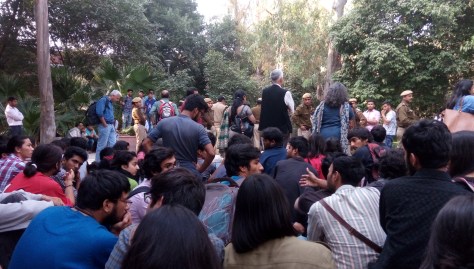
The violence that gripped Ramjas College on the 21st and 22nd of this month is now national news. We heard belligerent slogans by ABVP members of ‘chappal maro saalon ko’ (beat them with slippers), we saw students being chased on the campus, and we saw students being beaten up. All this culminated in a situation where students and teachers were held captive for over five hours within the campus premises. Let me emphasize that this violence was completely unprovoked.

On the 22nd of February, some of the students who were simply sitting with their friends were attacked. The police came and formed a cordon around them. Others joined the students in a gesture of solidarity. Teachers joined them to ensure that the students were not assaulted. The police cordon became their prison for the next five hours. And even then they were not safe.

They were repeatedly assaulted, threatened, and abused. All of this happened in front of their teachers and, more importantly, in front of the police, who, as is well known by now, did not do anything substantial. They could have maintained the cordon around the protesters, arrested those who were repeatedly carrying out the assaults, or – at the very least – prevented the attackers from coming back in (they had left for some time to attack the protest going on outside). But they did not. Whether this was because they were under pressure or because they were complicit is besides the point. The point is that students and teachers remained at the mercy of their attackers for over five hours.

But on the same day something far more ominous was also going on.

Continue reading A Small Matter of Security – Holding the Guilty Accountable for What Happened in Ramjas College on the 22nd of February: Shafey Danish

Gender Justice In Naga Society – Naga Feminist Reflections: Dolly Kikon

DOLLY KIKON in raiot.in

Dolly Kikon points out that Article 371 (A) is breached also in the ongoing coal mining operations and the oil exploration negotiations in Nagaland. Naga politicians, landowners, village councils, and business families have all interpreted the provision for their benefit to mine for minerals and not be held accountable for the environmental degradation. But it is only when women may enter the decision-making process (and potentially reverse such policies) that Article 371 suddenly becomes sacrosanct.

What is the meaning of gender? What is the meaning of Justice? Which comes first in Naga society and how do we understand it? Like many nationalist societies around the world, the issue of gender justice and rights have remained marginal for a long time. We were told that issues like women’s rights or gender justice could wait till the Naga people gained their freedom. In that context, what did it mean to bestow any kinds of rights on women in Naga society? When terms like gender ‘rights’ and ‘equality’ remains extremely resentful terms for a larger section of powerful Naga traditional bodies, they become meaningless words. I ask these questions in relation to the opposition against 33% reservation that escalated into a violent protest and brought the entire state of Nagaland to a standstill recently. If Naga customary law is seen as the foundation of justice, the exclusion of women from these powerful decision making-bodies negates the entire notion that these are pillars of justice. The Indian state and the male traditional bodies alike are responsible for excluding the Naga women from all spheres of representative political processes. Article 371 (A) is a prime example of the patriarchal nature of the Indian constitution that bestows the Naga male bodies to have full authority and power to interpret customary affairs covering social, religious, and criminal cases.

असहमतियाँ इस दौर में – प्रसंग जोधपुर विश्वविद्यालय : हिमांशु पंड्या

Guest post by HIMANSHU PANDYA

1-2 फरवरी को अंग्रेज़ी विभाग द्वारा आयोजित संगोष्ठी में प्रो. निवेदिता मेनन के व्याख्यान के बाद जयनारायण व्यास विश्वविद्यालय सुर्ख़ियों में है. विश्वविद्यालय में घट रहे विवाद को देखकर लग रहा है कि एक साल पहले की सारी कहानी ज्यों की त्यों दोहराई जा रही है. एक साल पहले उदयपुर में सुखाडिया विश्वविद्यालय में हुए व्याख्यान के बाद भी यही सब हुआ था. अफवाहें, तथ्यों का गलत सलत प्रस्तुतीकरण, मनगढ़ंत आरोप और तत्काल सजा. फ़र्क यह है कि इस बार हमले की तीव्रता और फैसले की हड़बड़ी ज्यादा है.

सबसे पहले उन बिन्दुओं पर चर्चा कर लें, जो आरोप की शक्ल में जोर जोर से दोहराए जा रहे हैं.

प्रो. मेनन के व्याख्यान पर मुख्य आरोप यह है कि उन्होंने देश का नक्शा ‘उल्टा’ दिखाकर राष्ट्र का अपमान किया. जिस बात को इतना बड़ा हौव्वा बनाकर पेश किया जा रहा है, वह एक सामान्य सा अकादमिक अभ्यास है, जो दुनिया भर में मान्य है. दुनिया गोल है और नक़्शे में उत्तर-दक्षिण-पूर्व-पश्चिम सिर्फ हमारी संकल्पनाएँ हैं. उत्तर आधुनिक विचारकों द्वारा पूर्व पश्चिम के द्वैत को बरसों पहले खारिज किया जा चुका है. उत्तर औपनिवेशिक इतिहास लेखन की एक सम्पूर्ण धारा है जो यूरोकेंद्रित इतिहास दृष्टि को खारिज करके नई सोच के साथ इतिहास को देखने की कोशिश करती आयी है. (और इस धारा में गैर मार्क्सवादी ही नहीं, दक्षिणपंथी रुझान वाले इतिहासकार भी शामिल हैं) इसी क्रम में नक्शों के यूरोकेंद्रित होने को चिह्नित करते हुए न मालूम कितने प्रयोग हुए हैं. आप एक लेख से इसकी झलक पा सकते हैं. (1) और तो और, आप चाहें तो उल्टा नक्शा अमेज़न पर जाकर खरीद भी सकते हैं. (2) सिर्फ उल्टा ही नहीं, ग्रीनविच रेखा की केन्द्रीय स्थिति (यानी यूरोप की केन्द्रीय स्थिति) को बदलकर या ध्रुवों के परिप्रेक्ष्य से दुनिया को देखकर या और भी अनेक तरीकों से भूगोलवेत्ता नक़्शे को बनाते और प्रदर्शित करते रहे हैं. उदाहरण के लिए यूनाइटेड नेशंस का लोगो जिस पद्धति का अनुसरण करता है वह सरल भाषा में ‘पोलर मैप’ कहा जा सकता है.

यू एन का लोगो

यू एन का लोगो

वैसे आपका नक्शा जैसा भी हो, जो चाहे उसे आयताकार फैला दे पर दुनिया गोल ही है और भारत के विश्वविद्यालय, मध्ययुगीन चर्च नहीं हैं.

सबसे मजेदार बात यह है कि जो विवादित चित्र प्रो. मेनन ने अपने व्याख्यान के दौरान दिखाया, वह NCERT की कक्षा 12 की किताब में एक दशक से है, अभी भी है और उसे देश भर के लाखों शिक्षक और विद्यार्थी रोज देखते हैं. और तो और एक साल पहले तक यही किताब हमारे अपने राजस्थान पाठ्य पुस्तक मंडल की किताब भी थी और इस तरह हमारे राज्य में भी लाखों शिक्षक-विद्यार्थी इस नक़्शे को देखते आये हैं. अंग्रेज़ी-हिन्दी दोनों पुस्तकों का पेज नं 150 देख लीजिये. अंग्रेज़ी वाला हमारे दोस्त ने उपलब्ध करवा दिया है. Continue reading असहमतियाँ इस दौर में – प्रसंग जोधपुर विश्वविद्यालय : हिमांशु पंड्या

The story of the Indian budget: Where the camera failed? Muhammed Shafeeque CM

Despite the controversies of demonetization, the central government has again succeeded in deftly hijacking the minds of Indian citizens through a riveting speech made by Finance Minister Arun Jaitley. The budget seemed to be especially important given third quarter statistics which are filled with drawbacks of the demonetization policy. Thus we had a budget speech completely focused on digitalization of a country where the ‘digital divide’ stubbornly persists. As the budget theme (Transform, Energize, and Clean) attempted to glorify existing conditions, there were unsurprisingly no transformations in the overall economic framework except the expected tax reduction. In the zeal for “energizing”, the budget had clean forgotten the needs of the informal sector including agricultural sector. Even though the government provocatively claimed that it had cleaned up black money, it revealed no data regarding the amount of black money actually mopped up from the market.

Continue reading The story of the Indian budget: Where the camera failed? Muhammed Shafeeque CM

ABVP Riots in Delhi University with Police Protection

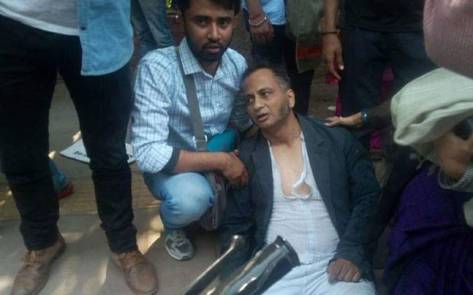
For the second successive day, goons affiliated to the RSS-BJP backed right wing student mafia gang called ABVP (Akhil Bharatiya Vidyarthi Parishad) pelted stones and violently attacked peaceful assemblies of students and teachers in Delhi University. Journalists who were present were also beaten up. Phones and cameras and filming equipment were destroyed. An attempt was made to strangle a professor with his own scarf. He, and some other students who were injured had to be hospitalized. Luckily, they are shaken, but out of immediate danger. The incidents have been characterized as ‘clashes’ between right wing and left wing student groups by some sections of the media. Nothing can be further from the truth. These were not ‘clashes’. They were straight-forward one sided attacks by a mob intent on violence. A riot is not a clash. Continue reading ABVP Riots in Delhi University with Police Protection

An Appeal to the Education Minister of Kerala and the Teachers of the University College, Thiruvananthapuram


We, the undersigned, wish to express our dismay and deep concern about the recent violent events at University College, Thiruvananthapuram, which seem to indicate that the rights of college students, especially women students, are seriously compromised in this venerable institution. As women researchers, academics and teachers of Malayali origin, we are deeply disappointed by the responses of the police, the concerned college authorities, and the teachers there. Continue reading An Appeal to the Education Minister of Kerala and the Teachers of the University College, Thiruvananthapuram

Rain and Revulsion: Prasanta Chakravarty

This is a GUEST POST by Prasanta Chakravarty

“Slime is the agony of water.”

~ Jean Paul Sartre, Being and Nothingness


The Birth of Revulsion – Pranabendu Dasgupta

No certainty where each would go —
Suddenly the descent of a cloudburst, rain.
We stood, each where we were,
And stared at one another.
It is not good to be so close
“Revulsion is born” – someone had said

“Revulsion, revulsion, revulsion.”
Then, lighting a cigarette, some man
Muttered abuse at another next to him.
Like an abstract painting, spiralling like a gyre,
In a wee space
We slowly fragmented, dispersed.
Had it not rained, though,
We would have stepped out together.
Perhaps to the cinema, tasting a woman’s
Half-exposed breast with the eye,
Then laughing out loud,
We could head for the maidan!
Someone maybe would sing; someone
Would say, “I am alive”.

But it rained.

(Krittibas, Sharad Sankhya,  1386)

 ঘৃণার জন্ম

প্রনবেন্দু দাশগুপ্ত

কোথায় কে যাবে ঠিক নেই —
হঠাৎ দুদ্দাড় ক ‘রে বৃষ্টি নেমে এলো।
যেখানে ছিলাম, ঠিক সেইখানে থেকে
আমরা পরস্পরের দিকে তাকিয়ে রইলাম।

এত কাছাকাছি থাকা খুব ভালো নয়।
” ঘৃণার জন্ম হয় ” –কে যেন বললো
” ঘৃণা, ঘৃণা, ঘৃণা। ”
তারপর সিগ্রেট ধরিয়ে, আরো একজন
খুব ফিশফিশ ক ‘রে
পাশের লোককে গাল দিলো।
বিমূর্ত ছবির মতো তালগোল পাকিয়ে পাকিয়ে
ছোট্ট জায়গা জূড়ে
আমরা ক্রমশ ভেঙে, ছড়িয়ে পড়লাম।

বৃষ্টি না নামলে কিন্তু
আমরা একসঙ্গে বেরিয়ে পড়তাম।
হয়তো সিনেমা গিয়ে,রমণীর আধ -খোলা স্তন
চোখ দিয়ে চেখে
তারপর, হো হো ক ‘রে হেসে
ময়দানের দিক যাওয়া যেতো !
কেউ হয়তো গান গাইতো ; কেউ হয়তো
বলতো “বেঁচে আছি “।

কিন্তু বৃষ্টি নেমেছিলো।।

(কৃত্তিবাস, শারদ সংখ্যা ১৩৮৬)

Continue reading Rain and Revulsion: Prasanta Chakravarty

‘नफरत के गुरूजी’

गोलवलकर के महिमामंडन से उठते प्रश्न

pov-bhagwat-in-betul-jail-where-golwalkar-was-imprisoned

संघ के सुप्रीमो जनाब मोहन भागवत की सूबा मध्य प्रदेश की बैतुल की यात्रा पिछले दिनों सूर्खियों में रही, जहां वह हिन्दू सम्मेलन को संबोधित करने पहुंचे थे। सूर्खियों की असली वजह रही बैतुल जेल की उनकी भेंट जहां वह उस बैरक में विशेष तौर पर गए, जहां संघ के सुप्रीमो गोलवलकर कुछ माह तक बन्द रहे।  इस यात्रा की चन्द तस्वीरें भी शाया हुई हैं। इसमें वह दीवार पर टंगी गोलवलकर की तस्वीर का अभिवादन करते दिखे हैं। फोटो यह भी उजागर करता है कि भागवत के अगल बगल जेल के अधिकारी बैठै हैं।

विपक्षी पार्टियों ने – खासकर कांग्रेस ने – इस बात पर भी सवाल उठाया था कि आखिर किस हैसियत से उन्हें जेल के अन्दर जाने दिया गया। उनके मुताबिक यह उस गोलवलकर को महिमामंडित करने का प्रयास  है, जिसे ‘एक प्रतिबंधित संगठन के सदस्य होने के नाते गिरफ्तार किया गया था। यह जेल मैनुअल का उल्लंघन भी है। केवल कैदी के ही परिजन एवं दोस्त ही जेल परिसर में जा सकते हैं और वह भी वहां जाने से पहले जेल प्रबंधन की अनुमति लेने जरूरी है।’

गौरतलब है कि संघ के तत्कालीन सुप्रीमो गोलवलकर की यह पहली तथा अंतिम गिरफतारी आज़ाद हिन्दोस्तां में गांधी हत्या के बाद हुई थी, जब संघ पर पाबन्दी लगायी गयी थी। प्रश्न उठता है कि आखिर गोलवलकर के इस कारावास प्रवास को महिमामंडित करके जनाब भागवत ने क्या संदेश देना चाहा।

( For full text of the article click here :https://hindi.sabrangindia.in/article/nafrat-ke-guruji-subhash-gathade

After a Nuit Debout (night standing up), We Wake Up with a Political Strike: Charles Reeve

Guest post by CHARLES REEVE

[Note from Livia Bocadacce: During 2016, social movements in France and in India have been huge and tough. In both countries, youth, workers, students, oppressed people fought against governments who disregarded their desires of freedom and decent life, and have faced violent repression. But in France, we don’t hear about Indian struggles such as Una Dalits’ movement or Hyderabad and JNU students’ protests. In India, the very strong French movement of last spring, called “Nuits Debout”, has aroused very poor coverage. Because we believe we have to learn from the crossed experiences of fighting, because we refuse a globalization only based on trade and forced migrations, because we hope a globalization that could encourage the circulation of critical thinking and collectiveaction repertoire, we proposed this article on the Nuits debout to Kafila. Hoping it will generate debates and further interests. ]

Nuit Debout, image courtesy gaucherevolutionnaire.fr

After a Nuit debout (night standing up), we wake up with a political strike (1)

Living in a moment is always pleasanter than writing about it— it’s always risky to draw conclusions about situations still evolving or to speculate about what they will become. Going on for now over three months [when this post was written – AN], Nuit debout is a new kind of spontaneous, social movement along the lines of « Occupy » and Spain’s « M15 » movement. It has taken on an unanticipated size and importance, all the while developing characteristic features of French society. I won’t go back over its development or its collective spirit. The two texts already published in the May and June issues of the Brooklyn Rail, the first by Anouk Colombani and the second by Ferdinand Cazalis et Emilien Bernard (CQFD, n°143, mai 2016) have provided sufficient detail and clarity to let us grasp the essence and dynamism of these mobilizations.

Continue reading After a Nuit Debout (night standing up), We Wake Up with a Political Strike: Charles Reeve

Ex-ABVP Activists Reflect on How the ABVP Orchestrated 9th of February in JNU Last Year: Jatin Goraya and Pradeep Narwal

Guest Post by JATIN GORAYA and PRADEEP NARWAL

ABVP ARE THE FOOT-SOLDIERS OF THIS FASCIST GOVERNMENT WHO ORCHESTRATED THE ATTACK ON JNU POST 9TH FEB LAST YEAR!

APPEAL TO EVERYONE TO REJECT AND ISOLATE THE KILLERS OF ROHITH AND THOSE WHO ORCHESTRATED THE #SHUTDOWNJNU CAMPAIGN!

As JNU is still recovering from the aftershocks of last year sangh parivar’s attack on our university post 9th of February we are again facing an unprecedented attack on our university – its democratic space, progressive admission policy, its inclusive character. The latter has been the heart and soul of JNU which the student movement has built over the last four decades. Last year’s attack was an attack on our right to dissent, to curb our democratic spaces and to implement the fascist Hindutva agenda on our universities. This year, in the name of “academic quality” and “excellence”, by reducing the seat intake & closing admission they want to ensure that none is able to access higher education in JNU.

We were members of ABVP previous to the events of Feb 9 last year, and we subsequently resigned because of our differences with this fascist, casteist, Brahmanical and patriarchal organisation. These differences, as we have earlier said, had been long standing ones. But after the orchestrated attack on JNU, we felt a limit had been crossed and we could no longer associate with ABVP. Continue reading Ex-ABVP Activists Reflect on How the ABVP Orchestrated 9th of February in JNU Last Year: Jatin Goraya and Pradeep Narwal

Students In Solidarity With Professor Nivedita Menon and Rajshree Ranawat – A Statement – UPDATED SIGNATORIES.

We, the undersigned, condemn the repeated attacks on Professor Nivedita Menon, the most recent of which being the police complaint lodged against her on the 3rd of February, 2017 (as also against Professor Rajshree Ranawat) for allegedly making ‘anti-national’ remarks during a seminar organised by the Department of English, Jai Narain Vyas University. This incident, we believe, is continuous with the spate of attacks that Professor Menon has had to face for taking an astute stand against the RashtriyaSwayamsevakSangh (RSS), its student-wing the Akhil Bharatiya Vidyarthi Parishad (ABVP), and the nefarious politics of Hindutva in general. We refuse the rationale of dissent against Hindutva as dissent against the nation, because our idea of the nation is not of the Hindu Rashtra but of secularism, democracy, and social justice. Both as a voice of dissent and a formidable scholar of politics, Professor Nivedita Menon is an inspirational figure. She is a consistent articulation of conscience and an abiding commitment to the ideals that our freedom fighters envisioned for our nation. It is our conviction that patriotism is not only love for the abstract entity of the nation but also for its people, regardless of class, caste, religion, gender, sexual orientation, ability, or any other marker that is used to advantage or disadvantage groups. The ‘patriotism’ that the RSS and its henchmen claim to champion is hateful, divisive, and truly anti-national.

It is our concern as students, therefore, that the ABVP claims to speak for the student community. This petition is a rejection of that assertion, and a statement in solidarity with Professor Nivedita Menon. We hope for and demand the cessation of attacks on Professor Nivedita Menon and the protection of her inalienable freedom and right to oppose the politics of division and communalism. Continue reading Students In Solidarity With Professor Nivedita Menon and Rajshree Ranawat – A Statement – UPDATED SIGNATORIES.

In solidarity with all who see the map upside down: Shukla Sawant

Sent by Shukla Sawant, Professor, School of Arts and Aesthetics, JNU.

Joaquín Torres-García,  Upside-down Map (1943). 


88d5504f366713693474d35db3e1b9596f4033a3-1

Read more about this image and about “the essentially fictional status of maps and the power they possess for construing and constructing worlds.”

City as a Site of Trade-Offs

To be truly radical, said Raymond Williams, is to make hope possible rather than despair convincing. Today, his words are both a diagnosis of all that ails the contemporary Indian city as well as the clearest articulation of what we must strive to be in the years to come. Amidst the smart, the inclusive, the global, the world-class, and the sustainable: how does one find the radical city?

This is no easy task. By their nature, cities concentrate both opportunity and risk, hope and despair. If growth rises, so does inequality. If diversity rises, then so does segregation. If infrastructure and built form expand, so do ecological risks. Historically, if cities have held innovation, mobility, and democracy, they have been equally adept at violence, poverty, and inequality. This is then where we must start: to acknowledge the city as a site of trade-offs, not the convenient listing of aspirations where the smart, inclusive or sustainable city can be created at no cost, no price, or without crowding out other visions and alternative futures. As India urbanizes, the only certainty we have is that these trade-offs will become more stark, with the stakes becoming higher for more and more people.

Continue reading City as a Site of Trade-Offs

Demonetization not a “war on black money” unless finances of political parties made accountable: Nishank Varshney

Guest Post by NISHANK VARSHNEY

While the common man is being subjected to infinite scrutiny and daily changing rules, the political parties enjoy to have a free-run at not disclosing a large part of their income, running into thousands of Crores. As long as the political parties continue to enjoy this exemption, the menace of black money cannot be said to have been tackled.

In one of the most unprecedented decisions in the Indian history that was taken on 8th November, 2016, the Prime Minister Shri Narendra Modi, suddenly announced the cancellation of Rs. 500 and Rs. 1000 notes with a view of “eliminating black money”. Over the last seven weeks, the PM has regularly reiterated this stand, and called Demonetization a “war on black money” through his speeches at various election rallies, the survey on his mobile app, and most recently in his “Mann ki Baat” program on Sunday. However, Mr. Nasim Zaidi, the Chief Election Commissioner of India, recently expressed that “many political parties are being used as conduits for siphoning off black money”.

As per the Representation of the People Act, 1951 (RP Act), political parties are not required to report the names of the individuals or organizations from whom they have received donations of amounts less than Rs. 20,000. A study by Association for Democratic Reforms (ADR) has shown that these ‘unaccounted donations’ form a large part of political parties’ income. In the year 2014-15 alone, BJP declared an income of 505.26 Crore from unknown sources, while Congress received a sum of 445.22 Crore from unknown sources during the same time-period. At present, there are over 1700 registered political parties in India, and many political parties may have been misusing this exemption to convert their black money, as voiced by the Chief Election Commissioner. Continue reading Demonetization not a “war on black money” unless finances of political parties made accountable: Nishank Varshney

The Laziest Blog Post Ever Written – Educational reform and Demonetization

Remember the FYUP debacle? Remember (as repeatedly written about on Kafila as elsewhere) that it was the latest in a long series of badly-conceived, mindlessly-borrowed and forcibly-implemented ‘educational reforms’ that practically crippled universities around the country? And remember a certain Rev. Valson Thampu, authoritarian, controversy-soaked Principal of St. Stephens College and eager soldier for the reforms? Well Thampu, now-retired, has thrown his weight against demonetisation these days in a set of articles on The Daily O. Now the thing is, almost everything Thampu finds objectionable about monetary reform, can be said about educational reform.

No, literally, every single thing.

So I simply took his post and replaced some key words, to produce a post about education. I know, I know, it’s not nice to do this, especially when you know, he speaketh the truth on demonetisation and all. But it is too wonderful an opportunity to pass up, to not use Thampu’s own eloquent words to say, yet again, what he has steadfastly refused to listen to in the past. Besides, as I say above, this is the laziest blog post I have ever had to write – that’s always an incentive.

His article in the original can be read here.

POLITICS HIGHER EDUCATION | 5-minute 7-minute read | 22-12-2016 23-12-2006 VALSON THAMPU SUNALINI KUMAR

Continue reading The Laziest Blog Post Ever Written – Educational reform and Demonetization

Buying into Demonetisation- the Popular Ideological Receptors of Creeping Fascism: Sanjay Kumar

Guest Post by SANJAY KUMAR

The withdrawal of eighty six percent of currency notes by the Modi government has been an administrative fiasco. It is clear that little economic thought, and only a political urge has gone into the exercise. Informal sector of the economy, which accounts for 80% of the employment and 40% of the national output, has suffered short to medium term damage. All cash dependent transactions, wages, wholesale and retail trade, agricultural purchase and sale, are at a crawl. Workers are not getting wages, factories are closing, mandis are empty. Crores of young and old working people are spending hours in queues at banks and ATMs to withdraw their own money now gone scarce.  Press reports count more than eighty deaths. Parliament of the country is in a limbo, because the prime minister thinks it below his worth to reply to charges by the opposition party MPs. While ordinary people are suffering, the Nero like rulers are trumpeting the arrival of the nirvana of a cash less economy as the answer to India’s economic ills.

Even while Mr Modi’s government is solely responsible for this needless and widespread suffering, it would be naive to expect an automatic popular backlash against it. The politics of the ruling party does not fit into the patronage or identity driven models of its competitors. Its closest template is fascist politics, which  is a very particular kind of authoritarianism. What distinguishes a fascist regime from other modern authoritarian regimes like military dictatorships is the popular support it is able to garner for its policies and depredations. This is achieved by carefully working upon popular anxieties, prejudices, desires and fears, and refashioning them as grounds for aggression against selected minorities, and a belief in an imminent deliverance under the personalised rule of a leader. Continue reading Buying into Demonetisation- the Popular Ideological Receptors of Creeping Fascism: Sanjay Kumar

A Dog Writes to a Minister: Dear A K Balan …


Dear Mr A K Balan

I am writing to you because I feel that it is my duty to disabuse you of the ideas you seem to harbour of, and in the name of, Indian nationalism (and not just bark at the portentous approach of the peddlers of ‘nationalism’, the Hindutvavaadis). You are a Minister in the CPM-led government of Kerala, which was elected by  Malayali citizens to ward off the monstrous Hindtuva-Nazi-Predatory Capitalist combine that has taken over India nearly, and so my barking should have been enough. But you seem to be totally wrapped up in your ignorance. Continue reading A Dog Writes to a Minister: Dear A K Balan …

Love Can’t Be Forced: Protest Against Sanghi Hubris at IFFK!


 I am hoping to protest at whichever venue of the International Film Festival of Kerala that I can manage to go to, wearing a printed badge saying ‘DEAR SUPREME COURT, NO LOVE CAN BE FORCED’. Yesterday, six people who did not stand up when the national anthem was played were arrested. Sanghi elements and overenthusiatic people who have picked up Modi’s style of projecting instant nationalism on the debris of Indian democracy have been heckling people who refused to comply with the SC’s order and filing complaints. Indeed, they took photos of people who didn’t stand up during the anthem. How come they have not insulted the national anthem according to their own standards since they too were expected to stand in attention?
 

Continue reading Love Can’t Be Forced: Protest Against Sanghi Hubris at IFFK!

Jana Gana Mana and the Danger of Passing Sentiment as Law

This originally appeared in The Wire

This is clearly the winter of Karan Johar’s discontent. Barely had the controversy over the illegal fine imposed on him by the Mahrashtra Navnirman Sena died down when the ghost of a controversy about his earlier film, Kabhi Khushi Kabhi Gham (K3G), has resurfaced in the form of the mind-boggling order from the Supreme Court making it mandatory for the national anthem to played in cinema halls before the screening of a film:

All the cinema halls in India shall play the National Anthem before the feature film starts and all present in the hall are obliged to stand up to show respect to the National Anthem.

Prior to the National Anthem is played or sung in the cinema hall on the screen, the entry and exit doors shall remain closed so that no one can create any kind of disturbance which will amount to disrespect to the National Anthem. After the National Anthem is played or sung, the doors can be opened.

When the National Anthem shall be played in the Cinema Halls, it shall be with the National Flag on the screen.

The national anthem is “the symbol of the Constitutional Patriotism and inherent national quality”, the judgment says. “It does not allow any different notion or the perception of individual rights, that have individually thought of have no space. (sic) The idea is constitutionally impermissible.”

Continue reading Jana Gana Mana and the Danger of Passing Sentiment as Law

बड़े नोटों का रद्दीकरण – छिपकली की पूंछ पकड़ने के लिए विशाल पिंजरा – राजिंदर चौधरी

Guest post by RAJINDER CHUDHARY


1946 और 1978 में भी प्रचलित बड़े नोटों को रद्ध किया गया था। इस लिए 8 नवंबर 2016 को मोदी सरकार द्वारा 500 और 1000 रुपये के प्रचलित नोटों को रद्ध करने का निर्णय आधुनिक काल में तीसरी बार उठाया गया कदम है। तीनों बार मुख्य लक्ष्य कालेधन को खत्म करना रहा है। लेकिन मोदी सरकार ने अपने निर्णय के पीछे एक नया कारण भी जोड़ा हैं। यह है नकली नोटों का बढ़ता चलन और इन के माध्यम से आतंकवाद का फलना-फूलना। रिज़र्व बैंक के नवीनतम आंकड़ों के अनुसार 2015-16 के दौरान 1000 रुपये के नोटों में नकली नोटों का अनुपात 0.002262% था यानी 1000 के एक लाख नोटों में सवा दो नोट नकली पाये गए (इन में पुलिस एवं अन्य द्वारा पकड़े गए नकली नोट शामिल नहीं हैं)। 500 रुपये के नोटों में यह अनुपात 0.00167% था यानी 500 रुपये के 1 लाख नोटों में नकली नोटों की संख्या 2 से कम थी। जाहिर है ये सारे के सारे नकली नोट आंतकवादियों द्वारा जारी नहीं किए गए होंगे। विशुद्ध आर्थिक अपराधियों का भी इस में योगदान होगा। लेकिन अगर यह भी मान लें कि ये सारे के सारे नकली नोट आतंकवादियों द्वारा चलाये गए थे तो भी 2015-16 में रिज़र्व बैंक के आंकड़ों के अनुसार 500 और 1000 के नकली नोटों की कुल कीमत 27.39 करोड़ रुपये बनती है (इन के अलावा 2015 में बीएसएफ़ ने 2.6 करोड़ रुपये के नकली नोट पकड़े थे)। इस से स्पष्ट है कि नकली नोट आतंकवाद की बुनियाद नहीं हो सकते। वैसे भी, इन नकली नोटों पर रोक लगाने के लिए इन नोटों को एकायक रद्ध करना न आवश्यक है और न पर्याप्त। अगर नोटों की छपाई को अधिक सुरक्षित नहीं बनाया गया, तो ‘आतंकवाद के समर्थक’ ताकतों, जो सामान्य अपराधी तो हैं नहीं, द्वारा नए नकली नोट छापना मुश्किल नहीं होगा। इस लिए अधिक सुरक्षित नोट छापना बेहद आवश्यक है।  नए, अधिक सुरक्षित नोट जारी करने के साथ, पुराने ‘असुरक्षित’ नोटों को बदलवाने के लिए एक समय सीमा रखी जा सकती थी। जैसा पहले भी किया गया है। 2005 से पहले के छपे नोटों को, जिन पर छपने का वर्ष अंकित नहीं होता था, उन्हें मई 2013 से पर्याप्त समय दे कर, बैंकों में जमा करा लिया गया है। यही प्रक्रिया दूसरे ‘असुरक्षित’ नोटों के साथ भी दोहराई जा सकती है। इस लिए नकली नोटों पर रोक लगाने के लिए सारे नोटों को रद्ध करना आवश्यक नहीं था। Continue reading बड़े नोटों का रद्दीकरण – छिपकली की पूंछ पकड़ने के लिए विशाल पिंजरा – राजिंदर चौधरी