Category Archives: Everyday Life

Stop Shielding Criminals in the Army and Security Forces in Assam: Bondita and Anjuman

This press release was issued on 23 December by BONDITA and ANJUMAN of WING and WSS, Guwahati

Aggravated sexual violence in Guwahati in July 2012 and gang rape in Delhi this month have led to public outrage and anger, compelling the media and the government to take serious note of the rampant sexual violence against women.  Even as the current attention on sexual violence on women raises several questions over laws, their enforcement and policing, there continues to be absolute silence and complete denial about sexual violence by the Army and the Central Armed Police Forces. It is high time to review and repeal laws and practices that promise complete impunity to the armed forces for sexual assault in counter insurgency conflict areas. Continue reading Stop Shielding Criminals in the Army and Security Forces in Assam: Bondita and Anjuman

Sexual Violence and Sexuality Education – The Missing Link: Ketaki Chowkhani

Guest post by KETAKI CHOWKHANI

Over the last few days there seems to be sudden explosion in talking about sexual violence and other forms of violence on women. A huge discourse is being created around what rape cultures are and how we are part of these cultures which produce and construct these very acts of violence. Sexual violence has been linked to sexist, misogynist attitudes, remarks and behaviour, and ranging from scriptural affirmations to popular songs. The rape cultures are discussed as existing within the spaces of homes, streets, offices, courts, police stations, public transport, universities and so on. Continue reading Sexual Violence and Sexuality Education – The Missing Link: Ketaki Chowkhani

This is to clarify a small misunderstanding: Anusha Rizvi

Guest post by ANUSHA RIZVI

To,
Ms. Shiela Dixit, Chief Minister Delhi NCR
Mr. Sushil Kumar Shinde, Home Minister, India
Mr. Tejendar Khanna, Lt. Governor, Delhi NCR

This is to clarify a small misunderstanding. I know a part of the protests made you believe that women in Delhi are asking to take policemen away from their VIP duties and put them on Delhi streets. This is incorrect. Many of the protestors are too young to understand

Ma’am and Sirs, the roads are unsafe enough. All Delhi women know – when you see a Delhi policeman, you run. This is what our mothers taught us. This is what we teach our children. I sincerely request you to increase VIP duties for all cops in the Delhi National Capital Region. Please don’t waste your time and energy transferring or suspending any of these gentlemen. All you have to do is ensure no cops are given non-VIP duties. Continue reading This is to clarify a small misunderstanding: Anusha Rizvi

How not to think about violence against women: Noopur Tiwari

Guest post by NOOPUR TIWARI

Photo: AFP
Photo: AFP

I woke up in Paris last weekend to the news of the Delhi protests. I felt relieved. People are not just watching or suffering quietly anymore, I thought to myself. I wanted to be there too, out in the streets of Delhi. For all those times I had to suffer sexual harassment in Delhi, I want to be part of this churning for change now.

My Parisian friends asked me what was going on. And I told them about the new “national outrage” and the stories that had been stoking the anger. That’s when I realised I needed to make a list. What was informing my idea of what’s going on? These stories making it to the headlines, do they have something in common?

Yes, they do have one very obvious thing in common. They are all “sensational” news items. They are either:

Continue reading How not to think about violence against women: Noopur Tiwari

Appeal to Dalit Groups for Solidarity with Laxmipet Dalit Victims: Hyderabad Political Economy Group

Statement issued by the HYDERABAD POLITICAL ECONOMY GROUP, received via RAVICHANDRAN BATHRAN

It is necessary for all of us to look beyond whatever we do. The killing of Laxmipet Dalits on 12th June 2012 and subsequent events indicate that divided houses of Andhra Pradesh Dalit Mahasabha must re-examine the nature of political divisions that have long since afflicted it leading to numerous splinter dalit groups and the formation of two major groups, the Mala Mahanadu demanding status-quo and the Madiga Dandora claiming for categorisation in reservation policy. There are three major issues emerging over the last six months after Laxmipet events unfolded which is why we appeal to both political groups of Dalits to show support and solidarity with each other.

First, time has now come for these Dalit organisations to realise how their persistent bickering has divided them and has weakened their struggle for justice.  The Dalit organisations, especially the Mala Mahanadu and the Madiga Dandora, must realise that a full-fledged reservation system in Laxmipet, ensuring representation of  Dalits in administration and politics, have failed to protect  Dalits from atrocities committed by dominant castes over land issues.  Continue reading Appeal to Dalit Groups for Solidarity with Laxmipet Dalit Victims: Hyderabad Political Economy Group

A City’s Pride

This Sunday, Delhi walks in its fifth annual queer pride parade. Each year at this time the question arises again: why a pride parade? Transgender, lesbian, gay, bisexual, hijra, kothi, and intersex people still have too many answers to give. While a decision on the appeals against the 2009 Naz judgment still remains pending, stories of continuing violence on the bodies of those deemed different do not wait for the Supreme Court. Queer people continue to have no legal protections against discrimination in the workplace; to be forcibly dragged to psychologists; to be forced to lie, cheat and conceal their lives; to be victims of familial, domestic and public violence and to feel, in so many ways both in their own minds and in the eyes of many others, like lesser citizens.

What this past year has reminded us is that they are not alone. The fundamental pillars of what enables this violence – fear, prejudice, intolerance – seem to have dug themselves deeper into our cities just as the institutions and democratic safeguards meant to combat them seem to have floundered. The ranks of urban residents who have experienced that deeply queer moment of exclusion and otherness – whether or not it speaks the particular idiom of sexuality – have grown. This year, as people once again take to the streets, they must do so not just for themselves but for the cities they inhabit and, increasingly, must protect.

Continue reading A City’s Pride

Kerala Police arrest one more for hurting some feelings: Sajan Venniyoor

This just in from our Thiruvananthapuram correspondent SAJAN VENNIYOOR

Trivandrum, 21 Nov: An unnamed youth from Thiruvananthapuram was arrested by the Kerala Police cyber-crime squad for allegedly ‘liking’ a Facebook post written by a complete stranger. The Facebook account in the name of ‘Indian Patroit Who Fuking Hates Everybody’ – believed to be an alias – carried a comment that was allegedly critical of something reportedly concerning a recently deceased non-Malayali. The Facebook comment was also withdrawn soon after the arrest of the Thiruvananthapuram native under sections 505 of IPC (“promoting ill-will among groups with different imaginary friends”) and 66A of the IT Act (“causing annoyance while belonging to a minority group”).

It is not known what the offensive post said, but police sources confirm that while the comment “did not actually hurt religious sentiments in the proper sense of the word”, it jolly well hurt the feelings of people who knew someone who had some kind of  sentiments that may well have been hurt had he been alive.

In his defence, the unnamed youth submitted before the Judicial Magistrate First Class, Vanchiyoor, that he had clicked on the Facebook button only because he violently disagreed with the post, thinking it said “Yikes”.

His lawyer confirmed later that the youth, who was let off on bail, was either dyslexic or from Ulloor.

(Clarification: Some Of Us Are Actually Dyslexic and/or From Ulloor. Any offence caused is therefore to us.)

Maruti Suzuki Workers Union Release – Dharna and Strike on 7th and 8th November

Onwards to the Dharna and Hunger Strike of 7th and 8th November !!

The Maruti Suzuki Workers Union (MSWU: Reg. no. 1923) has decided to hold a protest dharna in the form of a two-day hunger strike on 7th and 8th November 2012. Our family members, relatives and well-wishers and organizations have staged regular protests across Haryana and given memorandum to all the ministers in the state but to no avail. We were not allowed to unite and express our side of the story and our indignation atbeing falsely implicated in the unfortunate incident of 18th July 2012.

Continue reading Maruti Suzuki Workers Union Release – Dharna and Strike on 7th and 8th November

Petition – End the Scourge of Manual Scavenging

This statement is based on a Seminar attended by representatives of Safai Karamchari Andolan, Republic Trade Union of India, Centre of Indian Trade Unions, Tamil Nadu Untouchability Eradication Front; Advocates, Doctors and Health Activists; Faculty and Students of MIDS, IIT-M, New College, ACJ, MSE, Madras University among others. The discussion was one among many incidents happening across the country to support the struggle for abolishing manual scavenging and rehabilitation of manual scavengers.

Others who would wish to endorse this statement may please use the link attached along with this post (from change.org) to sign it.  http://www.change.org/en-IN/petitions/end-the-scourge-of-manual-scavenging-now.

More than a million people (mostly Dalit women and children) in India are still being ordained by the caste-ridden social order to clean the refuse of society with their bare hands. They are systemically forced to sell their labour-power, at a minimal price, to perform this inhuman task – what is termed as “Manual Scavenging”. People from particular Dalit communities, cutting across region and religion, are vulnerable to early death due to fatal infections, disease and exposure to toxic gases that manual scavenging entails. Further, age old casteism, continues to stigmatize and humiliate manual scavengers suppressing them to the status of “lesser humans”. Continue reading Petition – End the Scourge of Manual Scavenging

Chai, Autos and Sher Shah Suri: Shoaib Danyal

Guest post SHOAIB DANIYAL

Nothing good comes of having your status as capital snatched from you by Delhi. As a Calcuttan I know the pain. Of course, my city’s had it relatively easy when you consider the fate of Sasaram in Bihar. That’s where Afghan warlord (what a useful phrase: right from Bihar in the 16th century to the US invasion in the 21st) Sher Shah Suri had his capital, as ruler of Bengal and Bihar, before he overthrew Humayun and moved shop to the Purani Qila in Delhi. Unlike the Afghan warlords of today though, Sher Shah was a pretty impressive ruler. He introduced the rupiya. which was the predecessor of the modern rupee. More interestingly, he introduced a small denomination coin called the dam which probably gave rise to the English phrase “I don’t give a damn”. The administrative set-up introduced by him was so impressive that Akbar copied liberally from it and Sher Shah’s ideas therefore ruled India for centuries after the man’s death. Continue reading Chai, Autos and Sher Shah Suri: Shoaib Danyal

How not to handle online hate speech in India

The first amendment to the Indian Constitution, passed in 1951, allows the government to impose “reasonable restrictions” on a citizen’s right to freedom of speech and expression, in order to protect “the interests of the sovereignty and integrity of India, the security of the State, friendly relations with foreign States, public order, decency or morality or in relation to contempt of court, defamation or incitement to an offence”.

The means to impose these “reasonable restrictions” are described in several sections of the Indian Penal Code (IPC) and the Code of Criminal Procedure (CrPc). Section 298 of the IPC makes punishable words uttered “with the deliberate intent of wounding religious feelings”; section 504 addresses “intentional insult with intent to provoke breach of peace”; section 153 makes punishable speech acts that lead or could have led to rioting; section 295A could land you in jail for three years over “deliberate and malicious acts, intended to outrage religious feelings”; section 153B permits the punishment of speech acts that question any social, religious or linguistic group’s allegiance to the Constitution of India or that such a group be denied Constitutional rights. Read more…

The Unsolved Mysteries of the Universe

What came first? Murgi or man?

The murgi is looking at the camera slyly, or so the camera thinks. Why did the man not bat an eyelid? Surely he could not have missed that a camera-phone came out of a pocket, was tilted horizontally, focused on him and on the murgi on his knee, proceeding to click? The camera was impressed at the discovery of this man and his murgi; they were not posing.

Why is the main wearing a red shirt with maroon pyjamas? Why not a maroon shirt with red pyjamas? Did he place the hen on his knee? If all he wanted to do was to ponder over the unsolved mysteries of the universe why would he want to be disturbed by his murgi? Given the terrain, just how much manoeuvrability does the murgi have? Could the murgi be helping the man meditate? Is the murgi a hypnotic tool?Is the murgi disoriented to be looking at the ground beneath from a precarious vantage point?

Is the murgi soon going to be food? Biryani or qorma?

The camera did not want to ask questions lest the man’s meditation be disturbed. The questions remain.

Our search for Charasi Kababs: Saba Dewan

Guest post by SABA DEWAN

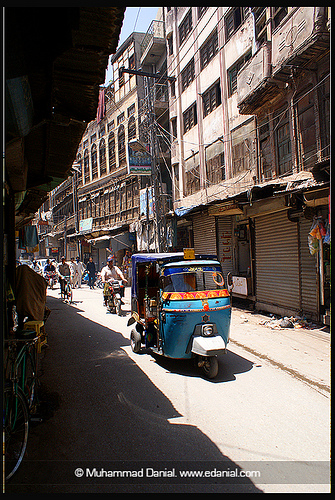
Qissa Khwani bazaar, Peshawar

I was last in Pakistan in 2006 during Ramzan. Rahul had some work in Islamabad, Peshawar and Lahore and I had used that as an excuse to visit my mother’s place of birth. While I had visited my mother’s beloved Lahore a few times earlier this was to be my first trip to Islamabad and Peshawar.

To cut a long story short, on our first evening in Peshawar, post iftaar, we found ourselves in the fabled Qissa Khwani bazaar, the Bazaar of Story tellers. It was here that in 1930 British troops had fired upon an anti-colonial demonstration of non violent, unarmed nationalist Khudai Khidmatgars leaving more than 400 amongst them dead. History has come a long way since then marking contemporary Peshawar as one of the more violence prone cities of Pakistan. Continue reading Our search for Charasi Kababs: Saba Dewan

अपुन का मंटो: पाकदिल, सियाहक़लम, अपूर्व, अप्रतिम, अखंड


मंटो ने रचनात्मक अभिव्यक्ति के लिए कला की कोई भी दिशा चुनी हो, हंगामा किसी न किसी तरह अवश्य हुआ।
– बलराज मेनरा व शरद दत्त


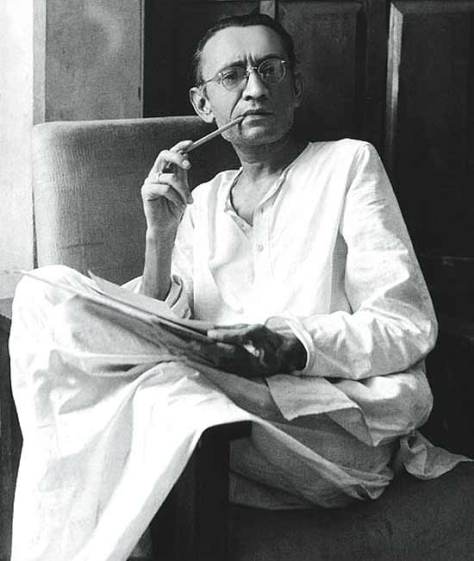
कोई सत्तावन साल पहले महज़ बयालीस की उम्र में तक़सीम-ए-हिन्द और शराबनोशी के मिले-जुले असर से अकालकालकवलित मंटो आज सौ का होने पर भी उतना ही हरदिलअज़ीज़ है, जितना हैरतअंगेज़, उतना ही लुत्फ़अंदोज़ है, जितना तीरेनीमेकश। शा यद आज भी उतना ही मानीख़ेज़। बल्कि यूँ मालूम होता है कि वक़्त के साथ उसके अनपढ़ आलोचकों की तादाद कम होती गई है और पिछले दो-तीन दशकों में मुख़्तलिफ़ विधाओं में पसरे उसके लघु-कथाओं व बड़े अफ़सानों, मज़ामीन, रेडियो नाटकों, मंज़रनामों, ख़तों, फ़िल्मी संस्मरणों और अनुवादों के बारीकतरीन पाठों का सिलसिला थमने की जगह ज़ोर पकड़ने लगा है। और पाठ-पुनर्पाठ की ये धारा सिर्फ़ उर्दू या हिन्दी में ही नहीं, बल्कि अंग्रेज़ी में भी मुसलसल बह निकली है। जिसके बूते दक्षिण एशिया का यह अप्रतिम कहानीकार अब समस्त दुनिया की एक नायाब धरोहर बन गया है। यह वाजिब भी है क्योंकि मंटो के अदब व फ़लसफ़े में पश्चिम व पूर्व का अद्भुत संगम हुआ। मोपासाँ, चेखव व गोर्की वग़ैरह से उसने अगर तुला हुआ, मुख़्तसर अंदाज़े-बयान सीखा तो एशियाई माहिरों से रस बरसाने वाली दास्तानगोई का चमत्कार, और तफ़्सीलात का इज़हार।

Continue reading अपुन का मंटो: पाकदिल, सियाहक़लम, अपूर्व, अप्रतिम, अखंड

The Peaceniks prevail over the Realists: India and Pakistan sign new visa pact

While the new visa pact between India and Pakistan is a landmark achievement, it still leaves a lot to be desired to make easier travel possible for the citizens of the two countries. Some suggestions are given in the Aman ki Asha petition, which you may want to sign here. While the full text of the pact does not seem to be online at this time, the most detailed story about the pact has been put out by the ASSOCIATED PRESS OF PAKISTAN, reproduced below. It is not clear when the new regulations come into force.

ISLAMABAD: Pakistan and India on Saturday signed new liberalised visa regime giving more concessions and simplifying the procedure to grant visa with a view to promote people-to-people contacts and enhance trade and business activities between two neighbours.     Continue reading The Peaceniks prevail over the Realists: India and Pakistan sign new visa pact

A Visa for Mahiwaal: Maheep Singh

Guest post by MAHEEP SINGH

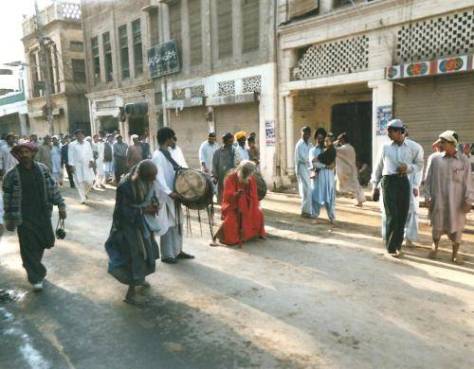
Sufi dervishes join a Sikh Nagar Kirtan parade at the Nankana Saheb shrine near Lahore. Photo credit: S Khalsa

As a child I gave my mother a tough time with all sorts of questions about the world; she would often not have answers. I would ask, for instance, why we couldn’t just go to Nankana Saheb as and when we wanted. Nankana Saheb is the birthplace of Guru Nanak, founder of the Sikh faith. It is in Pakistan, on the outskirts of Lahore.

Sikhism must be the only religion in the world whose official prayers include a plea for visa relaxation. Believe it or not, millions of Sikhs all over the world do that as part of their daily prayer, the Ardas, in which we pray to almighty to grant us free access (“khulle darshan deedaar”) to the birth place of Guru Nanak and other places in present-day Pakistan, considered holy by Sikhs. Continue reading A Visa for Mahiwaal: Maheep Singh

India and Pakistan: Let people meet

This online petition has been put out by AMAN KI ASHA

The people of Pakistan and India, people of Indian and Pakistani origin around the world, and friends of India and Pakistan, are fed up of the visa restrictions that prevent them from visiting families in the other country. There isn’t even a tourist visa protocol between these two biggest neighbours of South Asia. People in the region want the right to travel and to trade, to walk along coastlines and roads that represent their collective past, to seek and spread harmony across a subcontinent not divided by politics and propaganda. In this modern age of interdependence, it is a tragedy that the citizens of India and Pakistan are left peering over a border made indomitable and intimidating. There is little space for the hand of friendship to be extended across this border. This must change.

The governments of India and Pakistan must:  Continue reading India and Pakistan: Let people meet

Coke Studio Pakistan – At a crossroads: Nandini Krishnan

Guest post by NANDINI KRISHNAN

Rohail Hyatt, producer of Coke Studio Pakistan

Khabaram raseedah…imshab
Khabaram raseedah imshab kih nigaar khaahi aamad

The words are beautiful; the voices that sing them mellifluous. And yet, I find that instead of being overwhelmed as I usually am by the qawwali of Fareed Ayaz and Abu Muhammad, enraptured by the transcendental waves of their music, parts of my consciousness are held down, niggled. Perhaps it’s the constant drumming and strumming, perhaps it’s the psychedelic sound waves zipping across giant screens, perhaps it’s the acoustics that throw back bits of the singers’ strains at them. But the Coke Studio version of Khabaram Raseedah doesn’t affect me the way even scratchy recordings of live, open-air concerts do. Continue reading Coke Studio Pakistan – At a crossroads: Nandini Krishnan

Yo, Yo Honey Singh and Other Implied Learnings: Aprajita Sarcar

Guest post by APRAJITA SARCAR

Kudiye ni tere brown rang ne, munde patt te ni saare mere town de…..Hun bach bach ke, tenu rab ne husn ditta rajj rajj ke/Main keha kaali teri Gucci, te Prada tera laal/ Kithe challo oh sohneyo, sajh dajh ke ke/ Tere wargi naar ni honi, mainu munde kehnde si /Hoge ni tere charche Star News to BBC /Ho brown brown skin wali, let me tell you one thing /Rab di saunh you so sexy! Continue reading Yo, Yo Honey Singh and Other Implied Learnings: Aprajita Sarcar

How to start a riot out of Facebook: Yousuf Saeed

Guest post by YOUSUF SAEED

I am utterly shocked and pained to read about the violent rally that many Muslims took out at Azad Maidan in Mumbai on 11 August 2012 in protest against the recent communal carnage in Assam and Burma. More than the accidental death of two men and 50 injured in yesterday’s protest, what alarmed me was the public anger targeted on the media for “not reporting about the violence against Muslims in Assam and Myanmar”. Several vans of TV channels and their equipment were smashed or burnt besides a number of police vehicles destroyed. Of course, the authorities are still probing as to who really began the violence in an otherwise peaceful rally (and we are open to the results of such a probe). But my worst fear came true with this assertion of one of the protesters in a newspaper report: “Why is the media not covering Burma and Assam? We learnt about the incidents from videos posted on the Internet.” This seems to be a very disturbing statement on various accounts. Of course, the media can sometimes be biased, and the Muslims do feel victimised by it all the time. But are the random videos and images posted on the Internet any less biased or misleading? Continue reading How to start a riot out of Facebook: Yousuf Saeed

Gird Your Loins

A new product ’18 Again’ has hit the Indian market. A vaginal tightening gel, the advertisement left us mildly bemused.

With her newly tautened privates, the saree-clad lady seems in remarkably good cheer, given she apparently ‘feels like a virgin’ and ‘it’ (it presumably being sex), ‘feels like the very first time’. Namely awkward, painful, inexperienced fumbling? Ah well! There’s no accounting for tastes, not least the fantasies of the Indian man.

Regardless, we think this is a step in the right direction. Virgins being a scarce commodity these days, a handy at-home converter for any sacrifices you may have planned is a thoughtfully designed product indeed. (The makers of ’18 Again’ are unclear on what to do with those of us who escaped the wastelands of virginity before 18, but there you have it. You can’t please everyone, certainly not those sluts who didn’t even wait till they were legal). The makers of 18 Again are hoping for strong revenues on the back of exponential domestic demand.

As this article details, the Indian vagina now caters to a broad spectrum of consumer taste and preference. Backed by a strong commitment to product diversification, the Indian vagina is set to enter the 21st century  with applications and appliances, room fresheners and Christmas trees. Needless to say, we are delighted; our only grouse being that the products are somewhat limited in scope and vision. And so with an eye to the future we present a small list of potential uses and a plea that we all broaden, rather than tighten, our imagination. Continue reading Gird Your Loins