Category Archives: Excavation

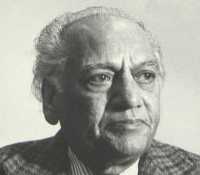
लखनऊ और फैज़: अतुल तिवारी

Guest posy by ATUL TIWARI

(प्रगतिशील लेखन के आंदोलन से जुडे हुए प्रसिद्ध पटकथा लेखक
अतुल तिवारी ने यह लेख लाहौर में आयोजित फैज़ शताबदी समारोह में प्रस्तुत किया था और फिर दिल्ली में थिंक इंडिया मैगज़ीन के फैज़ नम्बर की रिलीज के समय होने वाले कार्यक्रम में भी उन्होंने यह लेख प्रस्तुत किया । काफिला के लिए लेखक की अनुमति से प्रकाशितThe English translation is given below the Urdu original. – SH)

“हज़रात!

ये जलसा हमारी अदब की तारीख़ में एक यादगार वाक़या है।  हमारे सम्मेलनों,अंजुमनों में – अब तक, आम तौर पर – ज़ुबान और उसकी अशात अत से बहस की जाती रही है। यहाँ तक कि उर्दू और हिंदी का इब्तेदाई लिटरेचर – जो मौजूद है – उसका मंशा ख़यालात और जज़्बात पर असर डालना नहीं, बल्कि बाज़ ज़ुबान की तामीर था।…लेकिन ज़ुबान ज़रिया है मंजिल नहीं ।

…अदब की बहुत सी तारीफें की गयीं हैं।  लेकिन मेरे ख़याल से इसकी बेहतरीन तारीफ़ “तनक़ीद-ए-हयात” है – चाहे वो मकालों की शक्ल में हो। या अफसानों की। या शेर की। इससे हमारी हयात का तब्सिरा कहना चाहिए। Continue reading लखनऊ और फैज़: अतुल तिवारी

Birds, tea, ghosts and the Indian National Congress: Sumana Roy

Guest post by SUMANA ROY

A few years ago, I took my students to the cemetery in Darjeeling. I lived in an apartment just above the Happy Valley Tea Estate, from where I saw the prettiest of sunsets, had a colleague point out the ranges of Sandakphu to me quite often, and from whose long narrow balcony I imagined shadows of, as the lingo among Bengalis in Darjeeling went, “Sahib Ghosts”. Apart from the weather, perfect and monstrous in turns, what kept Darjeeling alive to “professors from the plains”, as we were called, was the mythology of “biliti” (“foreign”) ghosts waiting for the appropriate moment to reclaim what they had created – tea-gardens, the schools and colleges, the architecture, the cookies and cakes, the “style”, a word in which we tried to condense the British legacy. We spoke about planchettes, about ghosts we wanted to invite for tea, while history professors debated with political science researchers whether that meeting would be a post-postcolonial one or an anti-postcolonial moment. Continue reading Birds, tea, ghosts and the Indian National Congress: Sumana Roy

The Mountains Are Coming Closer

(This article by me has appeared in the Sunday Guardian, Delhi, and the Friday Times, Lahore.)

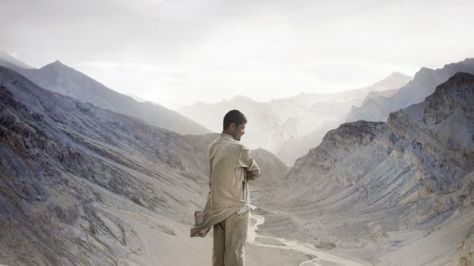
The voices that reverberate in your head after a visit to Kashmir leave you numb, making you sadder the more you think about them. You know that it is going to be worse when you visit next year. The mountains that you see faintly from over the bridges on the Jhelum river in downtown Srinagar, a thousand-year-old settlement, you know they are coming closer.

An old man you see on the road wants your attention. No, not here. Let’s get inside a parked car. You wonder what secrets are to be passed on. From inside his pheran he takes out a bundle of papers. Both his sons were picked up from Kathmandu in Nepal in 2000, where they were eking out a living. Had they been militants why would they have … look, look, this paper, certificate of registration of Indian nationals in Nepal? The last he heard of his sons some years ago was that Indian intelligence had detained him in Delhi. He is coming to Delhi next month. Could you help? All he wants to know is what happened to his sons, which prison are they in, could he see them once? Read more…

Baba Ramdev, Baba Ramdev

‘The situation in Ngaba is getting worse’: An interview with Tsewang Rigzin of the Tibetan Youth Congress

Guest post by T RIYAS BABU

Lobsang Sangay meets Tibetan activists in Delhi

It all started on March 16 this year when a Tibetan monk named Phuntsok set himself ablaze in protest against China marking exactly three years since the bloody crackdown by Chinese troops on the people of Ngaba County of Tibet in 2008. Chinese government tightened security and its stronghold on Ngaba in general and Kirti monastery in particular. Tibetans allege the authorities even blocked food supplies to the monastery in an attempt to starve around 2,500 monks. They say many have been arrested and a large number are missing. Continue reading ‘The situation in Ngaba is getting worse’: An interview with Tsewang Rigzin of the Tibetan Youth Congress

The Poet of Romance and Revolution

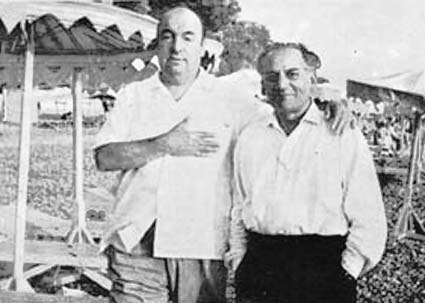
Pablo Neruda with Faiz Ahmed 'Faiz'

If you met him on the street you would never imagine that he was a poet, and not your run of the mill poet, but  among the most important poets of the 20th century, not only in Urdu, not only in  the subcontinent but in the entire world of the 20th century. I have always wondered how could someone who invariably dressed in rather unimpressively stitched, unromantic terry-cot Safari suits, someone who could at best pass off as a joint secretary in the ministry of shipping or something similar, be such a wizard with words and not only with words but with content and with form?

Continue reading The Poet of Romance and Revolution

The Death of Merit: A short film series by the Insight Foundation

From here.

This documentary is first in the series of our efforts to document caste-based discrimination prevalent in Indian higher education system resulting in large number of suicides of Dalit students in Indian campuses.

It is based on the testimonies of parents and family members. In next few days, we are coming up with few more documentaries to expose the kind of caste-based hostility and harassment Dalit and Adivasi students have to suffer from the faculties, fellow students and administration in some of the country’s premier educational institutions. These documentaries are part of our efforts to make Indian educational system inclusive in real sense and free from caste-discrimination.

Here’s more on The Death of Merit.

The Ghosts Will Walk: Sanjay Kak reviews Mirza Waheed’s “The Collaborator”


By SANJAY KAK

Kashmir will haunt India the way Algeria haunts France.

I remember that from ten years ago, on one of those early e-groups, the provocation almost buried in the dense threads that made up conversation there. “It will haunt Indian intellectuals”, the young Kashmiri correspondent had promised darkly, “in the way Algeria continues to haunt the French”. From its first pages, as the eponymous young narrator of The Collaborator walks us into the heart of his terrors, and introduces us to his hell, Mirza Waheed’s novel gives notice that the long overdue time of that haunting may be upon us.

The book is set somewhere in the mountains of Kashmir, but not the unchanging, pastoral idyll of Bollywood cinema, of Gulmarg’s meadow and Pahalgam’s river; nor the ordered beauty of the Mughal imagination, of Shalimar and Nishat bagh. Instead it’s located in the present, in its “militarized wilderness”, in Nowgam, a “new village” settled in the violent aftermath of 1947. The mortal cut of the partition of Kashmir between India and Pakistan put a sudden end to the nomadic life of this community of Gujjar pastoralists, and Nowgam has grown in the way scarred tissue forms over wounds. Almost half a century later, sandwiched between the belligerence of those two nations, in the shadow of Koh-i-gham, the mountain of sorrow, the sound of heavy artillery fire being exchanged across these rugged peaks has become routine.

Read the full review, published in Bibliohere (download .pdf).


A Few Lessons on Marxism and Politics

“At a certain point in their historical lives, social classes become detached from their traditional parties. In other words, the traditional parties in that particular organizational form, with the particular men who constitute, represent and lead them, are no longer recognized by their class (or fraction of a class) as its expression” – Antonio Gramsci, Prison Noteboooks, International Publishers, New York, 1971, p. 210. Emphasis added)

This is how Gramsci, sitting inside Mussolini’s fascist prison, began his now celebrated discussion of the ‘crisis of hegemony’. I cite this here apropos of the discussion that has gone on some of the previous posts by Monobina Gupta, Sankar Ray and myself on the CPM/Left in West Bengal, in the course of which, I have been accused of ‘coming out’ as a supporter of the Trinamool Congress, which some have also termed as a fascist or even ‘super-fascist’ organization! Clearly, these gentlemen neither know the history of fascism nor indeed of Marxism. Fed on pamphlets of a certain marxist catechism, they have learnt only one thing: the division of the world into two camps where ostensibly, battle lines are permanently drawn between parties that apparently have a ‘mandate from heaven’ of bearing a particular class character, either bourgeois or working class. I hope none of those who have learnt their ‘dialectics’ or their ‘historical materialism’ from marxism-made-easy pamphlets of Emile Burns, Maurice Cornforth and Stalin will jump to pronounce Gramsci a postmodernist who denies this supposed ‘class essence’ of parties . (I am told though that these too are passe now; ‘cadres’ these days are not meant to read beyond party resolutions and ‘theoretical’ essays of Prabhat Patnaik, whose own world has stopped with Michal Kalecki).

Continue reading A Few Lessons on Marxism and Politics

वामपंथ, माकपा और जनवादी क्रांति बकौल प्रभात पटनायक

[This post is a response to Prabhat Patnaik’s article ‘Why the Left Matters’ which appeared in the Indian Express on 17 March. A version has appeared in two parts in Jansatta]

पांच राज्यों में विधान सभा चुनाव हो रहे हैं. इनमें से दो, बंगाल और केरल वाममोर्चा शासित प्रदेश हैं. केरल में तो भारत के अन्य राज्यों की तरह  चुनावों के परिणामस्वरूप सरकारें बदलती रही हैं , बंगाल ने पिछले  चौंतीस  साल से वाम मोर्चे के अलावा किसी और सरकार का तजुर्बा करना ज़रूरी नहीं समझा है. इसे अक्सर बंगाल की जनता की राजनीतिक परिपक्वता के तौर पर व्याख्यायित किया गया है. बौद्धिक जगत में साम्यवादी विचार की वैधता के लिए भी जनता द्वारा दिए गए इस स्थायित्व का इस्तेमाल वैसे ही किया जाता रहा है जैसे कभी सोवियत संघ और अन्य पूर्वी युरोपीय देशों या अभी भी चीन में  साम्यवादी दल के  सत्ता के अबाधित रहने से उसे प्राप्त था.  बल्कि कई बार इसे अन्य  राज्यों की जनता के राजनीतिक दृष्टि से पिछ्ड़े होने के प्रमाण के रूप में भी पेश किया जाता रहा है . इस बार स्थिति कुछ बदली हुई लग रही है. अगर बंगाल में अनेक स्तरों के स्थानीय निकायों के चुनाव कुछ इशारा कर रहे हैं तो वह सत्ता परिवर्तन का है.

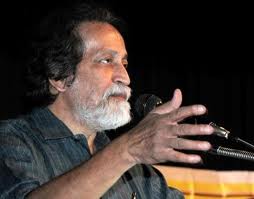
Prabhat Patnaik, leading CPI-M aligned intellectual

संसदीय प्रणाली पर आधारित लोकतांत्रिक व्यवस्था में इस प्रकार का परिवर्तन जीवन का नियम माना जाता है, बल्कि इस अस्थिरता में ही उसकी जीवंतता का स्रोत भी देखा जा सकता है. लेकिन बंगाल की जनता द्वारा मत-परिवर्तन की संभावना एक विशेष बौद्धिक संवर्ग के लिए चिंता का विषय बन गई है. प्रख्यात अर्थशास्त्री प्रभात पटनायक ने कुछ पहले इस संकेत की असाधारणता की ओर ध्यान दिलाते हुए एक टिप्पणी लिखी है. बल्कि यह जनता और विशेषकर भारत के शिक्षित समुदाय से एक अपील ही है – भारत की लोकतांत्रिक क्रांति की रक्षा की अपील. उनके कहने का सार यह है कि भारत की सतत वर्धमान लोकतांत्रिक क्रांति पर प्रतिक्रांतिकारी शक्तियों के बादल मंडरा रहे हैं और इस बार यह खतरा वास्तविक और आसन्न है. इस खतरे का सामना करने के लिए प्रभात आवश्यक मानते हैं कि वामपंथ को चुनाव में प्रतिकूल परिणाम न झेलना पड़ॆ.  उनके अनुसार वामपंथ को कोई भी चुनावी धक्का दरअसल लोकतांत्रिक क्रांति के लिए मरणांतक आघात साबित हो सकता है.

Continue reading वामपंथ, माकपा और जनवादी क्रांति बकौल प्रभात पटनायक

Do I look painDoo?

This post is dedicated to Nadeem F. Paracha.

Photo by 'Life Church Burnley' Flickr: "shoorkot road toba tek sing love this palce.but need much improvement"

[Photo by ‘Life Church Burnley’ on Flickr: “shoorkot road toba tek singh love this place but need much improvement”]

So on Facebook I saw a fellow Punjabi who lives in vilayat has listed his hometown as Toba Tek Singh, Pakistan, which I thought was very cool. Why didn’t I get this idea? Never mind, I thought, like all good ideas this must be stolen. My hometown on Facebook now is also Toba Tek Singh, Pakistan. It was only much after going mad over Manto’s story did I discover that Toba Tek Singh was a real place in west Punjab. Always wondered what its people thought about the story. Continue reading Do I look painDoo?

Cricket, Azadi and Pakistan: Mir Laieeq Ishtiyaq

Guest post by MIR LAIEEQ ISHTIYAQ

As all of India celebrated the well-deserved Indian victory in the cricket world cup finals, the mood in the Kashmir valley was different. Their favourite team was ousted in the semi-final itself. On the eve of the semi-final between India and Pakistan at Mohali, a friend asked on Facebook: “That Kashmiris don’t support the Indian cricket team is well understood, but why is there so much support for Pakistan? Seems INDEPENDENCE IS JUST A MYTH…” There are no simple answers to this question.

This slideshow requires JavaScript.

[Pictures taken in Kashmir during the India-Pakistan Mohali semi-final by ISHAN TANKHA for Open magazine.] Continue reading Cricket, Azadi and Pakistan: Mir Laieeq Ishtiyaq

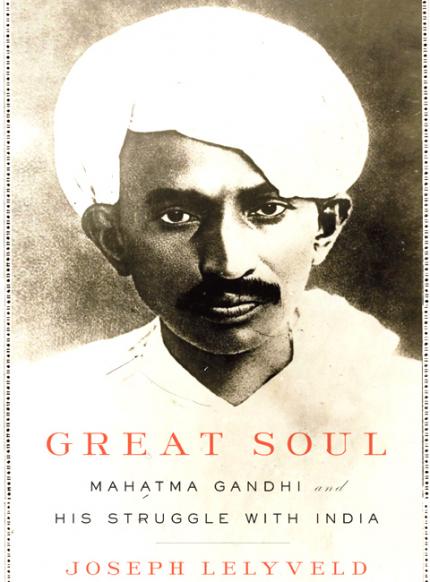
Joseph Lelyveld’s “Great Soul” or How to Damn with Faint Praise: Mridu Rai

Great Soul: Mahatma Gandhi and His Struggle with India by Joseph Lelyveld; Alfred A. Knopf, 425 pp., $28.95

Guest post by MRIDU RAI

Joseph Lelyveld’s book was banned in Mohandas Karamchand Gandhi’s native state of Gujarat a day after its publication in the United States. On 30 March 2011, the Hindu right-wing Bharatiya Janata Party that rules the state, led by its chief minister Narendra Modi, charged Lelyveld with committing “the most reprehensible act by hurting the sentiments of millions of people and demanded that he tender a public apology”. The provocation for this proscription was the mention in some reviews that Lelyveld had suggested Gandhi was bisexual and racist. At the very least, it is surprising that the first public outcry in India against the review — the book has not yet been released in India — should come from the Hindu Right, the political constituency of Nathuram Godse who assassinated Gandhi on 30 January 1948. This must join the many ironies Lelyveld’s book brings out, not least that of latter-day politicians in India (and South Africa) claiming to be his heirs and yet honouring his teaching, if at all, only in their most diluted and least recognizable versions. As Lelyveld writes in his author’s notes, ‘‘[I]t was hard to see what remained of him beyond his nimbus”. Continue reading Joseph Lelyveld’s “Great Soul” or How to Damn with Faint Praise: Mridu Rai

Mecca Masjid police firing report dumped in cold storage: Lateef Mohd. Khan

Guest post by LATEEF MOHD. KHAN

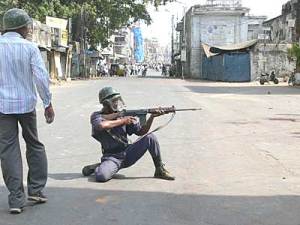
On Friday, 18th May 2007, the RSS terrorists planted bombs at historic Makkah Masjid and immediately after the bomb blast, a group of communal minded policemen started firing on the people who were helping the injured people in the blast. 9 people were killed and hundreds got injured in the blast. The sharp shooter policemen were chosen for firing on the people who came for prayers and who came forward to help the injured and this communal group of policemen was monitored by  the then Additional Commissioner of Police (Crime). Continue reading Mecca Masjid police firing report dumped in cold storage: Lateef Mohd. Khan
The Hindu, WikiLeaks and Me: Malarvizhi Jayanth

Guest post by MALARVIZHI JAYANTH

Once upon an election, the ruling party was bullying and booth-capturing recklessly. I was there. I saw it. Outside one booth, three Tata Sumos drove away at mad speeds, their screeching, spinning wheels blowing dust into my eyes in a scene straight out of the Tamil movies. I walked into the booth to find it had been ransacked minutes earlier. I saw weeping government officials and ballots with the stamp over the rising sun scattered everywhere. Other reporters saw similar scenes. Reporters received complaints of cash and biriyani(!) being distributed to voters.The management of the newspaper I worked for chose to run the Election Commission’s claims that the elections had been without incident, rather than accounts from several reporters who had seen the captured booths and heard from voters who had been offered bribes. Two days later, when almost all other media (barring the usual suspects) had run outraged stories about the brazenness of the booth capturing, hesitantly, The Hindu followed suit. Today, they announce to us that cash for votes is a way of political life in Tamil Nadu. Yeah, thanks, we know that already. Too bad you couldn’t believe your lowly brown-skinned reporters who told you all about it. A white man sends off a cable about it to his masters and then it becomes news? Really? Continue reading The Hindu, WikiLeaks and Me: Malarvizhi Jayanth

What does it mean to be a Muslim in India today?: Mahtab Alam

Guest post by MAHTAB ALAM

Shahina KK

Recently, Shanina K K, a journalist from Kerala, who worked with Tehelka news weekly and now works with Open magazine, received the Chameli Devi Award for being an outstanding woman journalist. While receiving the award she said, “See, I happen to be a Muslim, but I am not a terrorist.” What made her say that and what was she trying to convey or explain? It means, as she explains, “If you belong to the minority community, they will also profile you. It is very difficult to prove that you are not a terrorist. It is equally difficult to prove that you are not a Maoist in our life and times.” Continue reading What does it mean to be a Muslim in India today?: Mahtab Alam

A Million March in Kashmir?: Suvaid Yaseen

Guest post by SUVAID YASEEN

A ‘March of Million’ in Egypt’s Tahrir Square picked up the momentum of the people’s movement in Egypt, and finally led to the ouster of the dictator who had ruled Egypt with an iron fist for thirty years. Hosni Mubarak, the US backed Egyptian President, fled the country on 11th of February.

In Kashmir, 11th of February is an important day. It was on this day in 1984, that Maqbool Bhat, the founding member of the Jammu Kashmir Liberation Front (JKLF), a militant group that started the armed struggle for Independence of Kashmir, was hanged at Delhi’s Tihar Jail. He is remembered every year on his death anniversary, which has been a day of strike and protest since then. His remains still lie in the premises of Tihar jail in Delhi, and Kashmiris every year ask for their return. An empty grave in Srinagar’s Martyrs’ graveyard waits with Maqbool’s name on the plaque. For Kashmiris, the date of the flight of the modern Pharoah of Egypt, with Maqbool’s date of martyrdom brought a melancholic delight to this date. Continue reading A Million March in Kashmir?: Suvaid Yaseen

Impose Immediate Moratorium on All Nuclear Activity in India: CNDP

As the Japanese nuclear disaster stares the world in its face, the unrepentant power elite and the nuclear elite in particular, is attempting to downplay the threats that are in store for us in future. An particularly belligerent representative of the Indian nuclear establishment recently attacked CNDP (Coalition for Nuclear Disarmament and Peace) activist Praful Bidwai on television, calling him a ‘nuclear illiterate’.  While the world watches in horror, predators are active in stepping up their disinformation campaign. Given that India’s record of maintaining minimum safety standards on even the simplest of things is not a patch on the Japanese (leaving aside its world record in corruption!), there is no other way but to demand an immediate moratorium on all further nuclear activity in India. The anti-nuclear movement has raised this demand already in relation to Jaitapur and Haripur in West Bengal.

Meanwhile, here is Praful Bidwai on the Jaitapur project, after his return form a field investigation.

The Day India Will Shut Down the Internet

Sounds alarmist? Perhaps. But under the IT Amnedment Act of 2008, the Government of India gave itself the power to do so. The Economic Times reports: Continue reading The Day India Will Shut Down the Internet

Wikileaks: The India Cables – At Long Last

Mr. [Murli] Deora’s “long-standing connection” to the Reliance industrial group, which includes significant energy equities, was described by the cable as his “only vulnerability.” Besides Mr. Deora, the new entrants with strong pro-U.S. credentials, according to the cable, included Mr. Saifuddin Soz, Mr. Anand Sharma, Mr. Ashwani Kumar, and Mr. Kapil Sibal. [Link]

Gems like the one above should keep readers of The Hindu entertained for days. Congratulations to them on getting the whole set of 5,100 India-related cables from WikiLeaks. They’ve created a sub-site for this. Here’s N. Ram on how they got the cables. Makes you wonder if others tried.

You Fill in the Rest: Dilip D’Souza on the Godhra verdict

Guest post by DILIP D’SOUZA

Here’s a crime: February 27 2002, 59 people killed when a train is set on fire in Godhra. 90+ people are arrested and accused of the slaughter. Bail is denied to them all. The trial takes nine years, the trial verdict acquits 63 of them, finds the other 31 guilty. The judge sentences 11 of those 31 to death, the other 20 to life in prison.

Here’s another crime: February 28 2002 (the next day), 69 people killed when a building called Gulberg Society is set on fire and its residents attacked in Ahmedabad.

You fill in the rest. How many arrested and accused of this slaughter? How many denied bail? How long does the trial take? How many are acquitted? How many are found guilty? How many are sentenced to anything at all? Continue reading You Fill in the Rest: Dilip D’Souza on the Godhra verdict