Category Archives: Identities

Why Pakistan Loves Turkey: Saim Saeed

Guest post by SAIM SAEED

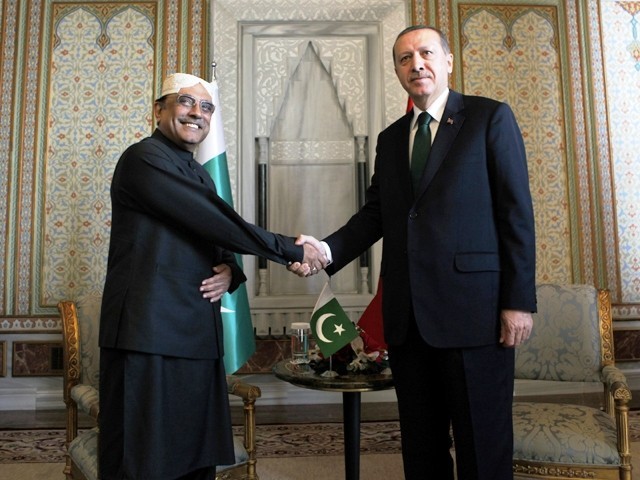
Pakistan's President Asif Ali Zardari with the Turkish Prime Minister Recep Tayyip Erdoğan. Reuters photo
Pakistan’s President Asif Ali Zardari with the Turkish Prime Minister Recep Tayyip Erdoğan. Reuters photo

Everybody loves Turkey. It’s where Pakistani families go for holidays, where students now go for education, where laborers go for work, where clerics go for counsel, and where both civilian and military officials and dignitaries go to find inspiration. Due to Turkey’s momentous economic and political rise, especially in the last decade, it is being held up to the rest of the Muslim world as a country worth emulating, and experts from everywhere have been referring to the “Turkish model” – an Islamic democracy with a robust economy – as the blueprint for a strong and stable (and still Muslim) country. Continue reading Why Pakistan Loves Turkey: Saim Saeed

Can we solve Siachen without solving the Jammu and Kashmir dispute?

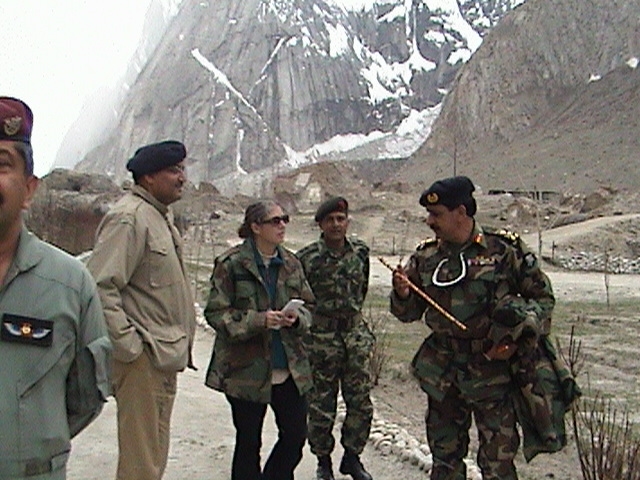
Myra MacDonald with Pakistani Army officers in the Gyari sector in 2004

Myra MacDonald is a London-based journalist with Reuters and a long-time observer of South Asia. She tracks the turning points in Pakistan politics at the Pakistan: Now or Never. MacDonald is best known for her book on the Siachen conflict, Heights of Madness: One Woman’s Journey in Pursuit of a Secret War. Published in 2007, the research for the book took her to both sides of the conflict, on helicopter and on ground. She was bureau chief of Reuters in India in 2000-2003. She then took leave-of-absence to research the Siachen conflict, becoming one of the very few people to visit the war zone on both the Indian and Pakistani sides. She has given presentations on Siachen to the Royal Military Academy Sandhurst and to the International Institute for Strategic Studies in London. Amidst alarmist rumours that track-two parleys between India and Pakistan are urging India to ‘give up Siachen’, MacDonald tells Shivam Vij in an e-mail interview why resolving Siachen without resolving the Jammu and Kashmir dispute may not be easy.

Q1) The idea of demilitarising Siachen is being seen by some in India as a demand to hand Siachen over to Pakistan, or at the very least, to ‘lose’ the territory for which Indian soldiers have made great sacrifices. Do you agree with such an interpretation of demilitarising the glacier? Do you think India has real strategic advantage with its occupation of the glacier? Continue reading Can we solve Siachen without solving the Jammu and Kashmir dispute?

Kurdistan, a Forgotten Nation of 40 Million People: Kamal Chomani

Guest Post by KAMAL CHOMANI

It has been for about 13 months I am living in Bangalore, India. I am here to study masters. India to me, as it is, is incredible. I feel as if I am at home. People here are friendly. My teachers and colleagues are just great. I have to confess that for a student that is his first time to leave his home for such a long time, certainly, will face many difficulties, but no difficulties have hurt me as much as a question of Indian people ‘where are you from?’

I am from Iraq, but Iraq is not my country. I cannot speak Arabic which is the official language the country. Luckily three more Iraqi people are with me who have helped me to manage my Arabic. My culture is different from Arabs. I don’t want to look like a nationalist, because I am telling the truth. I am a Kurd! My mother tongue is Kurdish. My homeland is Kurdistan.

So, who are the Kurds?

Kurdish community in Italy protesting for Ocalan's release. Photo courtesy demotix.com
Kurdish community in Italy protesting for Ocalan’s release. Photo courtesy demotix.com

Kurds are the original inhabitants of Middle East. They are the biggest stateless nation around the world that they are still struggling for freedom and independence. They have been forgotten by the world.

Yes, Kurds are a forgotten nation of 40 million populations. In India, few people know who Kurds are. I am really surprised when some Indians ‘love’ Saddam Hussein, the former Iraqi president. Saddam has killed more than 300,000 Kurds. He used poisoned gas against Kurds and killed 5000 Kurds in only one hour in Halabja, which is known as Hiroshima and Nagasaki’s sister! He mass murdered more than 182,000 Kurds in Anfal (Genocide) operations. The Anfal case is going to be an international case. Sweden Parliament has just decided to recognize it as a genocide act against humanity. In UK, Kurdish people have started a huge campaign to make pressures on UK parliament to recognize as Genocide. Continue reading Kurdistan, a Forgotten Nation of 40 Million People: Kamal Chomani

Imagined Immunities: The Cure of Idinthakarai

The power of imagined communities was never so evident to us as on the other day, when a group of us — Malayalee people of different political affiliations — made our way to Idintakarai in southern Tamil Nadu. In many ways,we were representative of contemporary Malayalee society — we were from districts spanning the length and breadth of Kerala, had very vocally-expressed mutual differences of opinions and interests, and belonged to of different socioeconomic classes, faiths, and castes, were composed of local residents, NRIs, and Malayalees settled elsewhere in the country. Of course, we were also representative of the gender imbalances that characterize even the oppositional civil society here — there were just two women in a group of nearly thirty. We went there to express solidarity with the people of Idinthakarai who have been struggling valiantly against the monstrosity that the government of India is determined to foist on them — the Koodankulam nuclear power plant — and who have been described as traitors to the Nation by the very people who have ripped apart our sense of what a nation should mean to ordinary people. Continue reading Imagined Immunities: The Cure of Idinthakarai

A City’s Pride

This Sunday, Delhi walks in its fifth annual queer pride parade. Each year at this time the question arises again: why a pride parade? Transgender, lesbian, gay, bisexual, hijra, kothi, and intersex people still have too many answers to give. While a decision on the appeals against the 2009 Naz judgment still remains pending, stories of continuing violence on the bodies of those deemed different do not wait for the Supreme Court. Queer people continue to have no legal protections against discrimination in the workplace; to be forcibly dragged to psychologists; to be forced to lie, cheat and conceal their lives; to be victims of familial, domestic and public violence and to feel, in so many ways both in their own minds and in the eyes of many others, like lesser citizens.

What this past year has reminded us is that they are not alone. The fundamental pillars of what enables this violence – fear, prejudice, intolerance – seem to have dug themselves deeper into our cities just as the institutions and democratic safeguards meant to combat them seem to have floundered. The ranks of urban residents who have experienced that deeply queer moment of exclusion and otherness – whether or not it speaks the particular idiom of sexuality – have grown. This year, as people once again take to the streets, they must do so not just for themselves but for the cities they inhabit and, increasingly, must protect.

Continue reading A City’s Pride

Amitabh Bachchan in Gaza

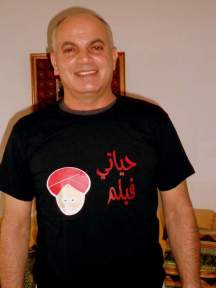
T shirt from shop in Ramallah. The Arabic text reads, “My life is an Indian film”. Photo by Sunaina Maira.

Radhika Sainath writes:

Palestinians in Gaza love Indians. They love Indian dancing, they love Indian music, they love Indian clothes. Whenever I walk out of the house, someone inevitably asks “hiyya hindeyee?” Is she Indian? ”I knew it!” they say when the response is in the affirmative. “Bheb al Hind,” I love India….

So Amitabh, Abhishek, Aishwarya, Amir, Hrithik, Kareena, Salman, Shahrukh, if you’re reading this, how about a shout out to 1.5 million of your biggest fans in the Gaza Strip? Israel has forbidden pasta, tea, cement and freedom flotillas from entering Gaza, but it hasn’t stopped Bollywood. We watch you under the Israeli drones and the F-16s, after being shot at by the Israeli navy and army while fishing, picking olives or going to school. You bring a sliver of joy to people living under the world’s longest occupation in the world’s largest prison, and for that we thank you.

Read the rest of this post by Radhika Sainath at Notes from Behind the Blockade Life: politics and nonviolent resistance inside the Gaza Strip.

Ek Tha Tiger: Death and Bal K. Thackeray

We have reasons to be grateful that Bal K. Thackeray has died, a normal, natural death. Several of those whom he admired, didn’t. Adolf Hitler, the fellow ‘artist’ he often invoked, killed himself, his mistress and his dog. Indira Gandhi, and her son Sanjay, the mother and son firm of despots that Bal Thackeray endorsed, didn’t go gently into the night either. Sanjay Gandhi, the ‘bold young man’ whom Thackeray recognized as a fellow spirit came spiraling down in his own airplane, demonstrating that the indifferent sky does occasionally listen  to the prayers of the earth to alleviate its burden. Indira Gandhi and her son Rajiv both fell to the forces that their own ruling dispensation had nurtured, Khalistani zealots and the LTTE.  Bal Thackeray was lucky to have lived as long as he did, sipping his lukewarm beer, spitting out his bile. Very lucky. As for us, we are fortunate that Thackeray did not get to go down as a Maratha martyr, just as a lapsed cartoonist, a would-be caudillo and a has-been demagogue. Continue reading Ek Tha Tiger: Death and Bal K. Thackeray

The Uttar Pradesh administration has a prominent role in the burning of Bhadarsa: Rihai Manch

This release was put out by the RIHAI MANCH on 9 November

Jannatunisa, a victim of violence in Bhadarsa

Faizabad 9 November 2012: An investigation team of Rihai Manch visited the Bhadarsa village which was affected by communal violence during Dussehra celebrations. The team found out that the violence was well planned and was executed by communal elements in connivance with the administration. The role of the media in this incident is also suspicious. The team also found that the administration is forcing the affected families to erase any evidence of the incident and they have not even been compensated. No FIR has yet been registered yet. The team has also requested the Sheetla Singh Investigation Commission (constituted by the Press Council of India) to visit the area. Continue reading The Uttar Pradesh administration has a prominent role in the burning of Bhadarsa: Rihai Manch

भदरसा के जलने में प्रशासन की अहम भूमिका: रिहाई मंच

This release in Hindi about recent communal violence in the Bhadarsa area of Faizabad district of Uttar Pradesh comes to us from the RIHAI MANCH. Please help us translate this into English by translating just one paragraph in the comments

Jannatunisa

फैजाबाद, 9 नवम्बर 2012। रिहाई मंच के जांचदल ने दशहरा के दौरान हुयी साम्प्रदायिक हिंसा से प्रभावित भदरसा गांव का दौरा किया। जांच दल ने पाया कि भदरसा में हुयी हिंसा पूरी तरह सुनियोजित थी जिसे साम्प्रदायिक तत्वों और प्रशासन की मिलीभगत से अंजाम दिया गया जिसमें मीडिया की भूमिका भी संदिग्ध थी। जांच दल ने यह भी पाया कि प्रशासन की तरफ से आगजनी से पीडित परिवारों से घटना के साक्ष्य जबरन मिटवाए जा रहे हैं जबकि पीडि़तों को न तो उचित मुआवजा मिला है और ना ही एफआईआर दर्ज किये गये हैं। जांच दल ने प्रेस काउंसिल द्वारा गठित शीतला सिंह जांच आयोग से भी भदरसा जाने की मांग की है। Continue reading भदरसा के जलने में प्रशासन की अहम भूमिका: रिहाई मंच

“We may weep but we will stay”: Women resist evictions in Palestine: Kalyani Menon Sen

Guest post by KALYANI MENON SEN

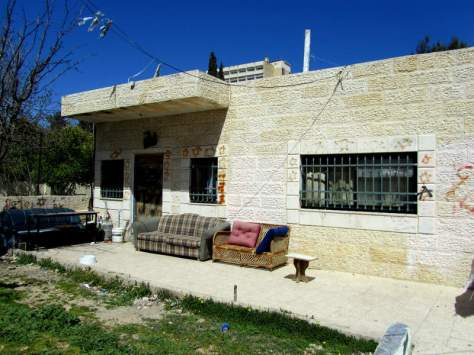
Umm Nabil’s settler-occupied house is painted with Israeli symbols. (Photo: Aruna Rao)

Umm Nabil al Kurd is 82 years old. She is tiny and frail – her hands tremble as she takes the mike. But her voice is steady as she describes how she lost her home.

“We came to Jerusalem from Haifa as refugees in 1948” she says. “The Jordanians allotted us our house. We have lived there for 60 years – my children were born there. It was small and broken when we moved in – we extended it and improved it as our family grew. We planted a garden. When my son got married and the grandchildren came, we built a separate unit for him at the back of the main house. We built with our own money, with our own hands. Then, two years ago, the Israelis came with the police and told us to leave. They said the house was theirs. They pushed me to the ground, called me filthy names, turned their dogs on me. They threw out our furniture and moved into the house. We went to court but the judge said we were occupying the house illegally – he told us to pay 100,000 shekels as rent for the years that we had lived in the house. We had to pay – my husband would have been imprisoned if we did not. We are still fighting the case – the next hearing is in July but I don’t know if we will ever get the house back.” Continue reading “We may weep but we will stay”: Women resist evictions in Palestine: Kalyani Menon Sen

Petition – End the Scourge of Manual Scavenging

This statement is based on a Seminar attended by representatives of Safai Karamchari Andolan, Republic Trade Union of India, Centre of Indian Trade Unions, Tamil Nadu Untouchability Eradication Front; Advocates, Doctors and Health Activists; Faculty and Students of MIDS, IIT-M, New College, ACJ, MSE, Madras University among others. The discussion was one among many incidents happening across the country to support the struggle for abolishing manual scavenging and rehabilitation of manual scavengers.

Others who would wish to endorse this statement may please use the link attached along with this post (from change.org) to sign it.  http://www.change.org/en-IN/petitions/end-the-scourge-of-manual-scavenging-now.

More than a million people (mostly Dalit women and children) in India are still being ordained by the caste-ridden social order to clean the refuse of society with their bare hands. They are systemically forced to sell their labour-power, at a minimal price, to perform this inhuman task – what is termed as “Manual Scavenging”. People from particular Dalit communities, cutting across region and religion, are vulnerable to early death due to fatal infections, disease and exposure to toxic gases that manual scavenging entails. Further, age old casteism, continues to stigmatize and humiliate manual scavengers suppressing them to the status of “lesser humans”. Continue reading Petition – End the Scourge of Manual Scavenging

Why is Naipaul Being Honoured?: Girish Karnad

This is the text of GIRISH KARNAD‘s speech at the Mumbai Literature Festival, as compiled by Outlookindia.com from various sources.

On Friday afternoon at the Tata Literature Live! festival in Mumbai, playwright Girish Karnad surprised audiences with an unexpected and spirited critique of Nobel laureate Vidia Naipaul. Naipaul was awarded the Landmark and Literature Alive’s Lifetime Achievement Award on October 31. Karnad was originally supposed to talk about “his life in theatre” in his session, but instead launched into a scathing critique of Naipaul and the conferral of the award to him

This is what he said at the festival:

At the Mumbai Literature Festival this year, Landmark and Literature Alive have jointly given the  Lifetime’s Achievement Award to Sir Vidia Naipaul.

The award ceremony held on the 31st of October at the National Centre of the Performing Arts coyly failed to mention that Naipaul was not an Indian and has never claimed to be one. But at no point was the question raised. Continue reading Why is Naipaul Being Honoured?: Girish Karnad

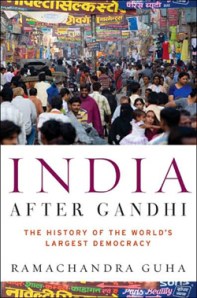
विशालतम लोकतंत्र का संकीर्णतम इतिहास: धीरेश सैनी

(रामचंद्र गुहा की पुस्तक ‘इण्डिया आफ़्टर गांधी’ के हिंदी अनुवादों की धीरेश सैनी द्वारा की गई समीक्षा, समयांतर के अक्टूबर 2012 अंक में प्रकाशित)

रामचंद्र गुहा की बहुप्रचारित किताब `इंडिया आफ्टर गांधीः द हिस्ट्री ऑफ दी वर्ल्ड्स लार्जेस्ट डेमोक्रेसी` का हिंदी अनुवाद पेंगुइन बुक्स ने दो खंडों (`भारतः गांधी के बाद` और `भारतः नेहरू के बाद`) में प्रकाशित किया है। बकौल गुहा, उनका `संपूर्ण कैरियर `इंडिया आफ्टर गांधी` लिखने की एक वृहत (और तकलीफदेह) तैयारी रही है।` यह बात दीगर है कि उन्होंने इस तकलीफदेह तैयारी को बतौर `दुनिया के विशालतम लोकतंत्र का इतिहास` प्रस्तुत करते हुए `ऐतिहासिक किस्सागोई का पुराना तरीका अख्तियार` किया है। किताब के कवर पर इस बात का जिक्र है कि यह `एक `व्यापक शोध के बाद किए गए लेखन का नतीजा है जिसे रामचंद्र गुहा ने अपनी मखमली भाषा में रोचक तरीके से लिखा है।` सुशांत झा द्वारा किया गया अनुवाद भी किस्सागोई और भाषा की रोचकता को बरकरार रखता है। जाहिर है कि इतिहास की किताब का महत्व उसकी किस्सागोई की मखमली भाषा की रोचकता से ज्यादा उसमें कहे गए तथ्यों और उनके विश्लेषण और कहने से छोड़ दिए गए जरूरी तथ्यों पर ही निर्भर करता है। 1947 से छह दशकों के सफर को विभिन्न भागों और अध्यायों के जरिये तय करने वाली इस किताब का हर अध्याय उथलपुथल, हिंसा और दूसरे झंझावतों के बीच `एकीकृत भारत` के अस्तित्व को लेकर निरंतर आशंकाओं (प्रायः पश्चिमी जगत की) का उल्लेख करता है और उसका समापन प्रायः इस `खुशी` के साथ होता है कि देखो दुनिया वालो, यह फिर भी `साबुत` खड़ा है। Continue reading विशालतम लोकतंत्र का संकीर्णतम इतिहास: धीरेश सैनी

Kazmi Solidarity Committee welcomes SC order to grant bail to Syed Kazmi

This release comes from the KAZMI SOLIDARITY COMMITTEE

The Kazmi Solidarity Committee welcomes the Supreme Court order granting bail to Syed Mohammad Ahmad Kazmi after seven months in custody on charges of involvement in the bomb attack on an Israeli diplomatic vehicle.

The committee deplores the obstructive attitude of the prosecution and the Special Cell of the Delhi Police, which have been perversely attempting to keep Mr. Kazmi in prison despite their inability to file a chargesheet within the extended time granted under the Unlawful Activities Prevention Act. Not only did the prosecution seek an extension of 90 days after the mandated period of judicial custody was over, it also used its inefficiency as an alibi, pleading that it needed more time to send out letters rogatory seeking international judicial assistance. While Mr. Kazmi was in custody, the Special Cell left no stone unturned in orchestrating a media trial to establish his guilt, planting malicious stories of his “confession” (while disavowing responsibility for these in court hearings).

Continue reading Kazmi Solidarity Committee welcomes SC order to grant bail to Syed Kazmi

To Build A Bridge in Kashmir: A fable by Abhijit Dutta

Guest post by ABHIJIT DUTTA

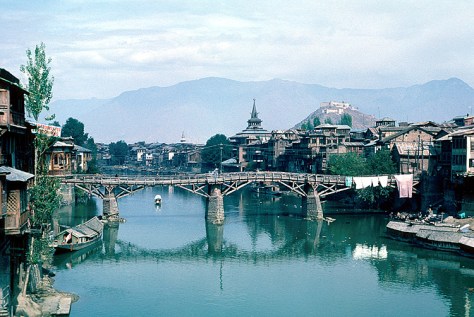
Once upon a time, a young politician – young enough to have a ‘baba’ appended to his name – came to Kashmir to build a bridge in Srinagar. Now as anyone who knows Srinagar knows, the city is filled with bridges. Some are famous, like Gawkadal, some are pretty, like Zero Bridge, and some are simply without charm, like the Abdullah Bridge that goes from fountain square to Rajbagh. There are several others too, each with their own unique character, their own unique relation to the Jhelum.

When he was told about the many bridges in Srinagar, the politician shouted, “I want to build a bridge.”

“But we don’t need a bridge,” said a man softly to him, wanting not to embarrass this well-meaning man who had come to Kashmir from aafar. In response, the young politician turned around and shouted once again: “I want to build a bridge.” Continue reading To Build A Bridge in Kashmir: A fable by Abhijit Dutta

हिंदी का संकट: कुलदीप कुमार

जनसत्ता के 23 सितम्बर, 2012 के अंक में प्रकाशित कुलदीप कुमार के स्तंभ “निनाद” को हम थोड़े संशोधन के साथ छाप रहे हैं.

दक्षिण अफ्रीका के जोहान्स्बर्ग शहर में विश्व हिन्दी सम्मेलन हो रहा है। पहला सम्मेलन 1975 में नागपुर में हुआ था जिसमें जवाहरलाल नेहरू विश्वविद्यालय की ओर से एक प्रतिनिधिमंडल शामिल हुआ था। मैं उन दिनों विश्वविद्यालय की साहित्य सभा का सचिव था और पंकज सिंह उसके अध्यक्ष थे। कवि मनमोहन भी प्रतिनिधिमंडल में शामिल थे। तब तक इमरजेंसी नहीं लगी थी। अगर मेरी स्मृति धोखा नहीं दे रही तो वह जनवरी का महीना था। देश में जेपी आंदोलन ज़ोरों पर था और प्रधानमंत्री इन्दिरा गांधी ख़ासी अलोकप्रिय हो चुकी थीं। हम इस सम्मेलन को तमाशा समझते थे और उसका विरोध करने ही नागपुर पहुंचे थे। दिल्ली से ही एक बयान साइक्लोस्टाइल कराके ले गए थे। जैसे ही इन्दिरा गांधी ने अपना उदघाटन भाषण देना शुरू किया, हम सबने उठकर विरोध में नारे लगाने शुरू कर दिये और उपस्थित प्रतिनिधियों के बीच विरोध-वक्तव्य की प्रतियाँ बांटने लगे। सुबह-सुबह कुछ प्रतिनिधियों के कमरों में दरवाजे के नीचे से हम अपने बयान की प्रतियाँ खिसका आए थे। जैसा कि होना था, बाद में हमें पुलिस ने धर लिया। Continue reading हिंदी का संकट: कुलदीप कुमार

A statement against the arrest of Punjabi publishers and editors for publishing the poetry of Babu Rajab Ali

Names of signatories given at the end; for more details on the campaign, see Whitewashing History

The arrest of two Punjabi publishers and two editors for reprinting old books of poet Babu Rajab Ali which allegedly contained some then used caste names, under the Prevention of Atrocities Against Scheduled Castes and Scheduled Tribes Act, is a totally thoughtless, callous and ruthless action taken by the Punjab government.

We understand that Mr. Amit Mittar of Tarak Bharti Prakashan and Mr. Ashok Garg of Sangam and editors Mr. Jagjeet Singh Sahoke from Moga and Mr. Swatantar from Samana, were arrested by the police on September 15 at the behest of the Punjab government. This is absolutely against academic freedom. Continue reading A statement against the arrest of Punjabi publishers and editors for publishing the poetry of Babu Rajab Ali

Stuck Between Gandhi and Cultural Crap: Papilio Buddha Reveals Much

Sometimes a minor cut on the surface of the skin will do to reveal the rot beneath. This is precisely what the film Papilio Buddha, made by the New York-based Malayalee film-maker Jayan Cherian, which draws broadly upon contemporary caste politics in Kerala, has achieved for us. In fact, its achievement on this count is simply amazing. At a single stroke, it has brought to light several stinking sores above which Malayalees, especially many Malayalee intellectuals who  occasionally don the garb of public intellectuals, strut. Continue reading Stuck Between Gandhi and Cultural Crap: Papilio Buddha Reveals Much

Our search for Charasi Kababs: Saba Dewan

Guest post by SABA DEWAN

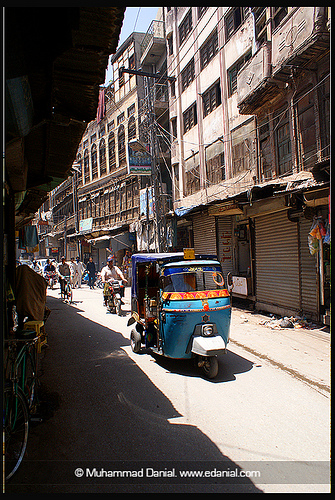
Qissa Khwani bazaar, Peshawar

I was last in Pakistan in 2006 during Ramzan. Rahul had some work in Islamabad, Peshawar and Lahore and I had used that as an excuse to visit my mother’s place of birth. While I had visited my mother’s beloved Lahore a few times earlier this was to be my first trip to Islamabad and Peshawar.

To cut a long story short, on our first evening in Peshawar, post iftaar, we found ourselves in the fabled Qissa Khwani bazaar, the Bazaar of Story tellers. It was here that in 1930 British troops had fired upon an anti-colonial demonstration of non violent, unarmed nationalist Khudai Khidmatgars leaving more than 400 amongst them dead. History has come a long way since then marking contemporary Peshawar as one of the more violence prone cities of Pakistan. Continue reading Our search for Charasi Kababs: Saba Dewan

Joga’s disappearance: Amandeep Sandhu

Rupa Publications; pp 252; Rs 275

This guest post by AMANDEEP SANDHI is an extract from his new book, Roll of Honour, a novelset in the backdrop of the Indian Army’s Operation Blue Star in 1984

During the last summer vacation (from my military school), when I was at home in Patiala, the soldiers had taken away my friend Joga. The government had already censored the newspapers, but the airwaves sneaked in the news of what was happening elsewhere in Punjab. In our living room, Nanaji’s white beard had trembled when we listened to Mark Tully from the British Broadcasting Corporation on our Murphy radio:

The battle of the Golden Temple in Amritsar is being fought hard and constantly. At the height of the battle, there were three hours of hand-to-hand fighting. Weapons allegedly recovered from the separatist Sikh militants were displayed to the world. The fatalities are not… Unofficial estimates go into thousands… Continue reading Joga’s disappearance: Amandeep Sandhu

अपुन का मंटो: पाकदिल, सियाहक़लम, अपूर्व, अप्रतिम, अखंड


मंटो ने रचनात्मक अभिव्यक्ति के लिए कला की कोई भी दिशा चुनी हो, हंगामा किसी न किसी तरह अवश्य हुआ।
– बलराज मेनरा व शरद दत्त


कोई सत्तावन साल पहले महज़ बयालीस की उम्र में तक़सीम-ए-हिन्द और शराबनोशी के मिले-जुले असर से अकालकालकवलित मंटो आज सौ का होने पर भी उतना ही हरदिलअज़ीज़ है, जितना हैरतअंगेज़, उतना ही लुत्फ़अंदोज़ है, जितना तीरेनीमेकश। शा यद आज भी उतना ही मानीख़ेज़। बल्कि यूँ मालूम होता है कि वक़्त के साथ उसके अनपढ़ आलोचकों की तादाद कम होती गई है और पिछले दो-तीन दशकों में मुख़्तलिफ़ विधाओं में पसरे उसके लघु-कथाओं व बड़े अफ़सानों, मज़ामीन, रेडियो नाटकों, मंज़रनामों, ख़तों, फ़िल्मी संस्मरणों और अनुवादों के बारीकतरीन पाठों का सिलसिला थमने की जगह ज़ोर पकड़ने लगा है। और पाठ-पुनर्पाठ की ये धारा सिर्फ़ उर्दू या हिन्दी में ही नहीं, बल्कि अंग्रेज़ी में भी मुसलसल बह निकली है। जिसके बूते दक्षिण एशिया का यह अप्रतिम कहानीकार अब समस्त दुनिया की एक नायाब धरोहर बन गया है। यह वाजिब भी है क्योंकि मंटो के अदब व फ़लसफ़े में पश्चिम व पूर्व का अद्भुत संगम हुआ। मोपासाँ, चेखव व गोर्की वग़ैरह से उसने अगर तुला हुआ, मुख़्तसर अंदाज़े-बयान सीखा तो एशियाई माहिरों से रस बरसाने वाली दास्तानगोई का चमत्कार, और तफ़्सीलात का इज़हार।

Continue reading अपुन का मंटो: पाकदिल, सियाहक़लम, अपूर्व, अप्रतिम, अखंड