Category Archives: Mirror Worlds

From Delhi to Djakarta, Protests Against Sexual Violence Across Borders: Bonojit Husain

Guest post by BONOJIT HUSAIN
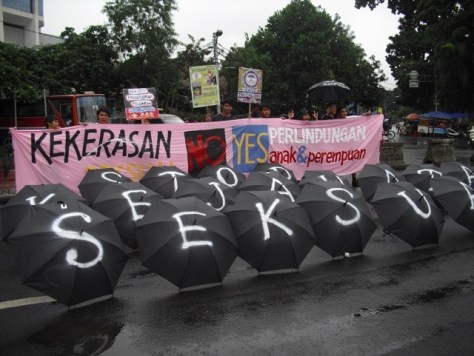
20130115-211244.jpg

(Photographs courtesy: Pipit Apriani who is a Jakarta based activist and a blogger)

Protests against sexual violence are spreading across Asia. Last week demonstrations against rape and sexual violence were held in Nepal, Bangladesh, Pakistan and Sri Lanka.

Inspired by the protests held in Delhi for last three weeks, hundreds of university students and activists march on the streets of Jakarta few hundred meters away from the Presidential Palace for a world free of sexual violence. The call for the protest march was given by a coalition of University Students’ Unions and civil society organizations in response to the death of RI, a 11-year-old girl, who died last week after suffering severe vaginal and rectal injuries due to repeated sexual assaults. Continue reading From Delhi to Djakarta, Protests Against Sexual Violence Across Borders: Bonojit Husain


Stalking, Delhi Police and Memory – Another Encounter: Kavita Krishnan

Guest Post by Kavita Krishnan

I have been wanting to post about an experience with Delhi police since yesterday, but haven’t found the time yet… Here goes.

Some days ago, (early this month if I recall rightly), I got a call from a woman worker living in Usmanpur near Seelampur. She got my number through the son of one of our Trade Union comrades, who is a friend of her brother’s. She said she was being stalked by a man who made calls to her thretening an acid attack. She has 3 children and was concerned for their safety too. She told me she was scared to complain to the police, and asked for advice. I was reluctant to advice a police complaint without her being fully ready, knowing that it might not yield satisfactory results. So I suggested we meet and talk things over before deciding.

But soon after, she called again: feeling buoyed by a sense of hope arising from the ongoing movement, she had gone to the police station – alone – and written out a complaint, giving the stalker’s mobile number, the number of his bike, and offering to share recordings she had made on her phone of the threat calls. She said, though, that the police had not given her any proof of having received or recorded her complaint (in spite of her asking).

Continue reading Stalking, Delhi Police and Memory – Another Encounter: Kavita Krishnan

Breaking the Collective – Notes from Jantar Mantar & Koodankulam: Vivek Vellanki

Guest Post by Vivek Vellanki

The death of the young girl brought incommensurable grief for the ‘Indian’ people. A national angst ensued with divergent voices seeking divergent ends: justice, death penalty, fast track courts, end to patriarchy, chemical castration, and a long list that cannot be spelt out here. There was a glimmer of hope that the discursiveness would ensue a quintessentially democratic process of debate, discussion, and deliberation amongst the people. The Indian state with its long-standing reputation wouldn’t allow for that to happen. It had to continue on its pet peeve of Breaking the Collective! The people’s movement in Koodankulam, the anti-corruption movement, the movement for seperate Telangana are some of the many instances that remind us of this pet avocation of the Indian state being pursued in recent times, almost, vocationally. However cynical it may sound, amidst the entire candle lighting and sloganeering, we failed to realise that the protest in Delhi was happening on the terrain that the government decided, in a manner that it wished for it to play out, and was party to the people it wanted to see there. I wish to argue that the closing down of the metro stations has a relation to the nature of the protests at Jantar Mantar. Furthermore it concurs with the tactics of chocking people’s movements logistically and stifling the collective by pathologizing the everyday life of masses. The tragedy of this lies in the fact that such actions of the state have become so recurrent that they have entered our common sense and they present themselves as normal and logical responses. Albeit they have been rationalized by invoking a specious reference to law, order, and safety, there is a need to unpack such a rationalization. My attempt is to extract these actions from that location of common sense and present them for public scrutiny. Through this essay, I would like to draw the connections between the democratic protests happening in locations across the country and state action in dealing with them. In doing so, I hope to bring to notice how the Indian state uses its machinery to purge protests of their democratic tenor and eventually, at least, attempts to break the collective. Continue reading Breaking the Collective – Notes from Jantar Mantar & Koodankulam: Vivek Vellanki

Akbaruddin Owaisi – You are an Enemy of Muslims (and Hindus)

Guest post by IRSHADUL HAQUE
Translated from Hindi by Shuddhabrata Sengupta

Akbaruddin Owaisi, you are an enemy of Muslims. You are the kind of adversary who lurks like a snake in the grass, ready to strike at the person who cares for that patch. Your desire to provoke a confrontation between India’s 25 crore Muslims and 100 crore Hindus reminds us of Muhammad Ali Jinnah. This is why Javed Akhtar has gone to the extent of calling you ‘the greatest enemy of Muslims’. I know that I am not alone when I find myself agreeing with this view. Many other Indian Muslims will be in agreement with me. Continue reading Akbaruddin Owaisi – You are an Enemy of Muslims (and Hindus)

RSS Supremo Mohan Bhagwat’s Thoughts on Rape

The RSS supremo Mohan Bhagwat (or to call him out in the way he is referred to in the Sangh – Sarsanghchalak Param Pujya Shri Mohan-ji Bhagwat-ji) has now joined the pavilion of eminent Bharatiya moustachioed misogynists. In a breathtakingly revealing statement, he has told us that rapes happen in India, not in Bharat. What he means is that rape only occurs in urban areas where the influence of Paschatya Sanskriti (western culture) leads women astray into being raped by men unable to help or control themselves in the face of the assault of women, out and about, by day and night, defying Mohan Bhageat’s Sangh-mandated Lakshman Rekha.

When an upper-caste landlord in a village claims his ‘droit de seigneur’ (land-owner’s claim) with a Dalit woman, it is not rape, it is a yagya, a time honoured shastric ritual. When husbands persuade minor wives on their ‘suhaag raat’ with a few disciplinary measures that leave them with black eyes and sore limbs, it is not rape, it is the carrying out of an Upanishadic injunction. When swamijis, babajis, acharyas and prachaks have their way with ignorant and nabalik shishyas, it is not rape, it is the partaking of the naivedyam of a woman’s body. It is the realisation of a ‘pushp ki abhilasha’, even if the pushp gets pushed around a little bit in the process. Continue reading RSS Supremo Mohan Bhagwat’s Thoughts on Rape

Justice for Soni Sori. Gathering at Jantar Mantar, 02/01/13

Protests against Sexual Violence continue in Delhi. Earlier this morning, there was a gathering to protest against the gruesome sexual violence committed on Soni Sori while in custody in Chhattisgarh under the supervision of Ankit Garg, Superintendent of Police, Dantewada. Ankit Garg was awarded with a presidential police medal on Republic Day (January 26) in 2012.

Soni Sori’s petition at the Supreme Court is due to be heard tomorrow. Continue reading Justice for Soni Sori. Gathering at Jantar Mantar, 02/01/13

Your rapists and ours

Two interesting articles:

Emer O’Toole in the Guardian CiF:

There’s something uncomfortably neocolonial about the way the Delhi gang-rape and subsequent death of the woman now known as Damini is being handled in the UK and US media. While India’s civil and political spheres are alight with protest and demands for changes to the country’s culture of sexual violence, commentators here are using the event to simultaneously demonise Indian society, lionise our own, and minimise the enormity of western rape culture. [Full article]

And Ananth Krishnan in The Hindu:

The rape case was one of the most discussed topics in Chinese microblogs over the past week, prompting thousands of posts and comments. By Sunday, however, the authorities appeared to move to limit the debate: on Monday, a search for the topic triggered a message on Sina Weibo – a popular Twitter-equivalent used by more than 300 million people – saying the results could not be displayed according to regulations. The message is usually seen as an indicator of a topic being censored by the authorities. [Full article]


Play Haze Kay not Honey Singh: Music from Kashmir against Rape for Delhi

“Justice to the girls who were so innocent,
Justice so our sisters can be roaming free,
Justice to Aasiya and Neelofar,
Justice to the girl from Delhi.”

– a song by HAZE KAY (Rapper from Kashmir)

Haze Kay
Haze Kay

Yesterday, we saw placards on Jantar Mantar that sought to draw linkages of solidarity between young people asking for justice for the gang-rape survivor in Delhi and those committed to the memory of the rape and murder of Neelofar and Aasiya in Shopian and many others in Kashmir.

Today, a Facebook post by Fahad Shah alerted me to a song by Haze Kay – a Kashmiri rapper that made the same linkage of solidarity, from Kashmir, to Delhi.

Here is the song. No further words are necessary. Except to say, call up radio stations in Delhi, and ask RJs to find and play Haze Kay, not Honey Singh.

LYRICS

In the memory of Aasiya and Neelofar and thousands of other girls and women who have been victimized by the crime called Rape ..

intro –

their guns and their clicks , i don’t fear all that .
when the police comes around , i don’t fear all that .
disappeared without a trace , i don’t fear all that .
cause i am from Kashmir so i don’t fear all that. Continue reading Play Haze Kay not Honey Singh: Music from Kashmir against Rape for Delhi

A song for snow: Arif Ayaz Parrey

Guest post by ARIF AYAZ PARREY

The beloved is like snow after a chilly wind. The beloved is a bright sun after snowfall. The lover is like the cinders in a kãger that refuse to die. The lover is the immortal heat of ashes.

     In the 2008 Hindi movie Oye Lucky! Lucky Oye! the playing out of virtues of theft in a world of (corrupt) systems is not the only delicious element. As a matter of fact, even more lovable is the song Tu raja ki raj dulari which echoes Shiv’s plea to Parvati after she has hopelessly fallen in love with him, and chosen a path of austerity competing with his asceticism. Tu raja ki raj dulari mein sirf langoti aala sun, bhaang ragd ke piya karoun mein kunde sote aala sun.  He tells her. “You are a king’s royal darling, I possess only a loincloth (Will tiger-cloth be a more helpful description here?), I drink ashes which I grind on a pistil and mortar.” Now there are several ways of looking at this parable. At the surface, and then again at its very core, it is a narration of one of the major themes of storytelling: An independent, beautiful and strong woman poignantly falling for a clumsy, reclusive and basically loser-type man, against better advice and to much heart-ache all around. But this characterisation holds only at the surface, the patriarchy of this theme works through the neat device of depth, the woman is strong, but only on the outside, quite literally when you know that Parvati once shed her outer mantle which became a powerful warrior-goddess in its own right, but in depth and beyond the obvious, she is a woman after all, while the man, clumsy, reclusive, scrawny on the surface, has an inner strength which can gulp Halahal (funnily enough called zahr-e-Hilal or ‘poison of the crescent-moon’ in Kashmiri) without much ado or do the Tandav when he feels like it. Continue reading A song for snow: Arif Ayaz Parrey

Save indie cinema in India

To:
Door Darshan India (Director General)
President of India (Shri Pranab Mukherjee)
Vice President of India (Shri Hamid Ansari)
Information and Broadcasting Minister (Manish Tiwari)

This petition is jointly filed by: Oscar Award and National Award winning sound engineer Resul Pookutty; National Award Winner and Oscar nominees Ashvin Kumar, Ashutosh Gowariker; National Award winning filmmakers Anant Mahadevan, Aparna Sen, Ashim Ahluwalia, Buddhadev Das Gupta, Girish Kasaravalli, Goutam Ghosh, Jahnu Barua, Janaki Viswanathan, Nila Madav Panda, Onir, Rituparno Ghosh, Sachin Kundalkar, Shivajee Chandrabhushan, Shyam Benegal, Sanjay Suri, Shonali Bose, Sooni Taraporevala, Sudhir Mishra, Suman Mukhopadhyay, Umesh Kulkarni, Vinay Shukla, Vishal Bharadwaj; Film makers Aamir Bashir, Amole Gupte, Anusha Rizvi, Bedabrata Pain, Homi Adajania, Kaushik Mukherjee (Q), Kiran Rao, Krishna D.K., Nandita Das, Rahul Bose, Samar Khan, Srijit Mukherji , Subhash Kapoor, Sudish Kamath, Vinta Nanda, Vipin Vijay, Zoya Akhtar; 5 time National Award winning actror, social activist and MP Shabana Azmi and actor/producer Juhi Chawla

As the country celebrates 100 years of cinema we want to bring to your notice how New Wave Indie Cinema of India is under threat. Among the various challenges that we face as Indie film makers, the biggest is that of exhibition. The multiplexes which were given tax benefits to promote small budget content film have in fact been instrumental in destroying small cinema by only playing the box office game. Continue reading Save indie cinema in India

Amitabh Bachchan in Gaza

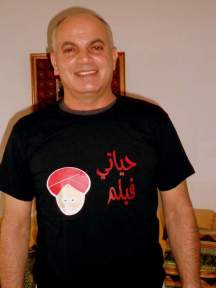
T shirt from shop in Ramallah. The Arabic text reads, “My life is an Indian film”. Photo by Sunaina Maira.

Radhika Sainath writes:

Palestinians in Gaza love Indians. They love Indian dancing, they love Indian music, they love Indian clothes. Whenever I walk out of the house, someone inevitably asks “hiyya hindeyee?” Is she Indian? ”I knew it!” they say when the response is in the affirmative. “Bheb al Hind,” I love India….

So Amitabh, Abhishek, Aishwarya, Amir, Hrithik, Kareena, Salman, Shahrukh, if you’re reading this, how about a shout out to 1.5 million of your biggest fans in the Gaza Strip? Israel has forbidden pasta, tea, cement and freedom flotillas from entering Gaza, but it hasn’t stopped Bollywood. We watch you under the Israeli drones and the F-16s, after being shot at by the Israeli navy and army while fishing, picking olives or going to school. You bring a sliver of joy to people living under the world’s longest occupation in the world’s largest prison, and for that we thank you.

Read the rest of this post by Radhika Sainath at Notes from Behind the Blockade Life: politics and nonviolent resistance inside the Gaza Strip.

Why Manmohan Singh should not visit Pakistan

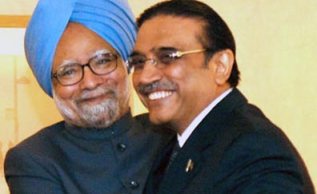
Dr Manmohan Singh is the longest serving Indian prime minister since Jawaharlal Nehru, but history will perhaps note more pertinently that he was the most discredited and unpopular prime minister since Chandra Shekhar Singh, who was in office for a mere eight months. So spectacularly disastrous has his second term in power been that the speed of political crises he battles is now more than one a week. Few will be able to count a single achievement of UPA-2.

And yet there is one achievement, and that is his handling of Pakistan.

The Indian home secretary was returning from a very positive visit to Pakistan when 26/11 happened. The 2008 terrorist attacks in Mumbai shocked not just India but the world. They were not like the bomb blasts we have become accustomed to; their impact was much more than 166 lives. They held India’s commercial capital hostage. They were an act of war and few even in Pakistan pretend that those attacks did not originate from Pakistani soil, across the Arabian Sea. Few in India buy the theory that state actors in Pakistan were not involved. Continue reading Why Manmohan Singh should not visit Pakistan

A Journey in the Punjab: Sohail Abid

Guest post by SOHAIL ABID

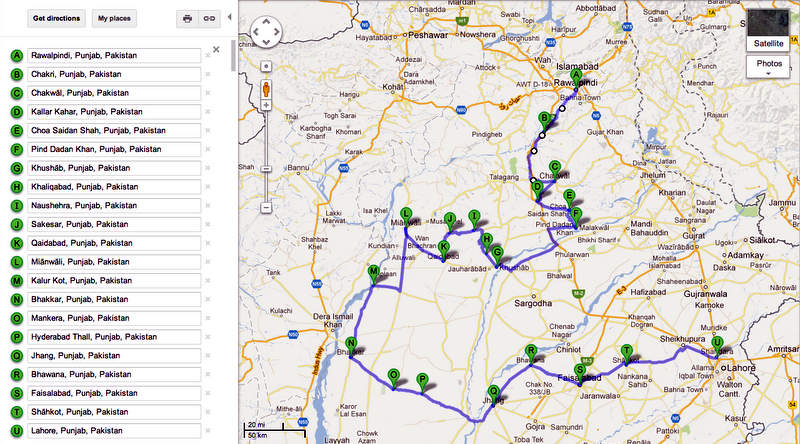
In 2010, I embarked on an ambitious bike trip of Punjab, visiting 30 cities in 30 days, covering 5,000km. That was a wonder experience but limited to big cities and towns. This time I want to see the rural side of Punjab. The idea is to avoid highways and travel through the roads connecting villages and small towns of Punjab. The following photographs are from the first phase of this trip, from Rawalpindi to Lahore through the towns and villages in west Punjab, away from the G.T. Road. I quit my day-job a few months ago. The 9-6 life wasn’t meant for me, I guess. Folklore and Punjab are the two things that fascinate me the most. That’s the reason I founded folkpunjab.com. These travels will one day provide me the base for writing something substantial on the folklore of Punjab. Continue reading A Journey in the Punjab: Sohail Abid

Gurgaon Glossaries: Prasad Shetty, Rupali Gupte and Prasad Khandolkar

This guest post by PRASAD SHETTY, RUPALI GUPTE and PRASAD KHANDOLKAR is research work in progress for Sarai Reader 09 @ Devi Arts Foundation, Gurgaon

This slideshow requires JavaScript.

When a new city settles, new systems are made, new vocabularies get invented, new relations are formed, new methods are devised, new networks are forged, new enterprises are produced, and new life is led to settle the ruffles. This work is a compilation of such systems, vocabularies, relations, methods, enterprises and networks that get formed to shape and settle the city.

CLU:

‘Change of Land Use’ is a town planning provision that is generally a part of town planning acts of various states across India. This provision allows land use changes in the statutory plan. This provision is made to allow governments to respond to unforeseen requirements of the future, where some lands need to be used differently from the planned use. Continue reading Gurgaon Glossaries: Prasad Shetty, Rupali Gupte and Prasad Khandolkar

Shabbo Kumari patrols the border

Photo by Poulomi Basu

The Lens blog at NYTimes.com has a photo essay by Poulomi Basu about women guards of the Indian Border Security Force.

Most of the recruits were from impoverished rural areas. If she could observe them not only in training but with their families as well, she would be able to tell the story of their transformation from villagers into soldiers.

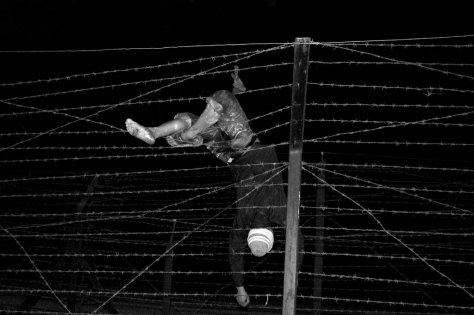
The most haunting image Basu has  is the one above.

One of the most riveting photographs shows a dead man hanging upside down, his legs caught in the high barbed wire fence that India has constructed to demarcate the border. Guards had shot the man as he and others tried to enter Pakistan near Attari, in Punjab State, Ms. Basu said. Continue reading Shabbo Kumari patrols the border

The intruders were not found in possession of any objectionable material apart from a large cache of fish

An arrested Indian fisherman sits at a police station in Pakistan’s port city of Karachi on October 1, 2012. Pakistan maritime security agency arrested 33 Indian fishermen and seized five boats for allegedly fishing illegally in Pakistan’s territorial waters. By Asif Hassan/AFP/Getty Images.

The insensitive governments of India and Pakistan are not moved even when one of their citizens dies in the other country, especially if the citizen was a poor fisherman arrested for the crime of inadvertently crossing a maritime boundary.

After 23 days of lying in the morgue of Ahmedabad’s Civil Hospital, the body of 32 year old Nawaz Ali Jat will finally reach Karachi on Monday by a Pakistan International Airlines flight. His family waited 14 years for his return, but they didn’t even get to know when he died of kidney failure on September 8. Continue reading The intruders were not found in possession of any objectionable material apart from a large cache of fish

हिंदी का संकट: कुलदीप कुमार

जनसत्ता के 23 सितम्बर, 2012 के अंक में प्रकाशित कुलदीप कुमार के स्तंभ “निनाद” को हम थोड़े संशोधन के साथ छाप रहे हैं.

दक्षिण अफ्रीका के जोहान्स्बर्ग शहर में विश्व हिन्दी सम्मेलन हो रहा है। पहला सम्मेलन 1975 में नागपुर में हुआ था जिसमें जवाहरलाल नेहरू विश्वविद्यालय की ओर से एक प्रतिनिधिमंडल शामिल हुआ था। मैं उन दिनों विश्वविद्यालय की साहित्य सभा का सचिव था और पंकज सिंह उसके अध्यक्ष थे। कवि मनमोहन भी प्रतिनिधिमंडल में शामिल थे। तब तक इमरजेंसी नहीं लगी थी। अगर मेरी स्मृति धोखा नहीं दे रही तो वह जनवरी का महीना था। देश में जेपी आंदोलन ज़ोरों पर था और प्रधानमंत्री इन्दिरा गांधी ख़ासी अलोकप्रिय हो चुकी थीं। हम इस सम्मेलन को तमाशा समझते थे और उसका विरोध करने ही नागपुर पहुंचे थे। दिल्ली से ही एक बयान साइक्लोस्टाइल कराके ले गए थे। जैसे ही इन्दिरा गांधी ने अपना उदघाटन भाषण देना शुरू किया, हम सबने उठकर विरोध में नारे लगाने शुरू कर दिये और उपस्थित प्रतिनिधियों के बीच विरोध-वक्तव्य की प्रतियाँ बांटने लगे। सुबह-सुबह कुछ प्रतिनिधियों के कमरों में दरवाजे के नीचे से हम अपने बयान की प्रतियाँ खिसका आए थे। जैसा कि होना था, बाद में हमें पुलिस ने धर लिया। Continue reading हिंदी का संकट: कुलदीप कुमार

Memory: An Act of Forgetting

“Where Memory Resides”: Bridgette Guerzon Mills

Memory: An Act of Forgetting

Right now, just like that
I let a memory of you
Slip through my sleeve
And drop, plop, on the floor.
It had sniveled
Sniveled long
Long up my sleeve!

Really? How did you do it? 

Nothing!
Continue reading Memory: An Act of Forgetting

अपुन का मंटो: पाकदिल, सियाहक़लम, अपूर्व, अप्रतिम, अखंड


मंटो ने रचनात्मक अभिव्यक्ति के लिए कला की कोई भी दिशा चुनी हो, हंगामा किसी न किसी तरह अवश्य हुआ।
– बलराज मेनरा व शरद दत्त


कोई सत्तावन साल पहले महज़ बयालीस की उम्र में तक़सीम-ए-हिन्द और शराबनोशी के मिले-जुले असर से अकालकालकवलित मंटो आज सौ का होने पर भी उतना ही हरदिलअज़ीज़ है, जितना हैरतअंगेज़, उतना ही लुत्फ़अंदोज़ है, जितना तीरेनीमेकश। शा यद आज भी उतना ही मानीख़ेज़। बल्कि यूँ मालूम होता है कि वक़्त के साथ उसके अनपढ़ आलोचकों की तादाद कम होती गई है और पिछले दो-तीन दशकों में मुख़्तलिफ़ विधाओं में पसरे उसके लघु-कथाओं व बड़े अफ़सानों, मज़ामीन, रेडियो नाटकों, मंज़रनामों, ख़तों, फ़िल्मी संस्मरणों और अनुवादों के बारीकतरीन पाठों का सिलसिला थमने की जगह ज़ोर पकड़ने लगा है। और पाठ-पुनर्पाठ की ये धारा सिर्फ़ उर्दू या हिन्दी में ही नहीं, बल्कि अंग्रेज़ी में भी मुसलसल बह निकली है। जिसके बूते दक्षिण एशिया का यह अप्रतिम कहानीकार अब समस्त दुनिया की एक नायाब धरोहर बन गया है। यह वाजिब भी है क्योंकि मंटो के अदब व फ़लसफ़े में पश्चिम व पूर्व का अद्भुत संगम हुआ। मोपासाँ, चेखव व गोर्की वग़ैरह से उसने अगर तुला हुआ, मुख़्तसर अंदाज़े-बयान सीखा तो एशियाई माहिरों से रस बरसाने वाली दास्तानगोई का चमत्कार, और तफ़्सीलात का इज़हार।

Continue reading अपुन का मंटो: पाकदिल, सियाहक़लम, अपूर्व, अप्रतिम, अखंड

The abandoned mandirs of Rawalpindi: Shiraz Hassan

Guest post by SHIRAZ HASSAN

The entry to a temple in Gunjmandi. All photos by Shiraz Hasan

In the early 19th century, the British made Rawalpindi the central seat of military power as they aimed towards Afghanistan. This was in line with their strategic approach towards the Russian Empire in order to enjoy and retain complete control over central Asia. Known as the Great Game, the conflict continues today in another form. Continue reading The abandoned mandirs of Rawalpindi: Shiraz Hassan

Aseem Trivedi and the guardians of good taste

There’s a time for everything. When a cartoonist is being arrested for his cartoons, for cartoons that caused no harm, incited no violence, killed no people, then do you discuss his art or his incarceration? Continue reading Aseem Trivedi and the guardians of good taste