Category Archives: Movements

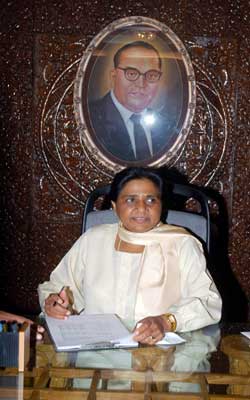
मायावती जी के मुख्यमंत्रित्व काल का एक संक्षिप्त विवरण: राम कुमार

This guest post by RAM KUMAR is a review of five years of Mayawati’s administration in Uttar Pradesh. An English translation has appeared in Fountain Ink magazine, here.
मुख्यमंत्री मायावती जी को 2007 में मिला स्पष्ट जनादेश  महज मुलायम सिंह यादव के खिलाफ एन्टी-इनकमवंसी फैक्टर ही नहीं था, बलिक अराजकता और गुंडागर्दी के खिलाफ भी जनादेश  था। सरकार का खुले रूप से एन्टी-दलित चरित्र और प्रदेश  के अन्दर सरकार  के एन्टी ब्राहम्ण टोन के चलते प्रदेश  में मुलायम सिंह की सरकार के खिलाफ दलित अति पिछड़े हो गये थे। मुलायम सिंह के  कल्याण सिंह प्रेम की वजह से माइनारिटी (अल्पसंख्यक) भी  मुलायम से नाराज हो  गए। बहन जी ने सर्वजन समाज का नारा देकर   विक्षुब्द तबकों को समेटा। सभी को समेटने में रणनीति के तहत अपना नारा बदल “हाथी नहीं गणेष है ब्रम्हा, विष्णु, महेष है” का नारा लगाया। सर्वजन  फार्मूला और मुलायम के खिलाफ गुस्सा बहन जी को पूर्ण बहुमत से सत्ता में लेकर के आया।

बहन जी एक  सशक्त शासनकर्ता के रूप में जानी जाती थीं। इस बार भी बहन जी सत्ता में आयींऔर  सत्ता में आते ही तुरन्त उन्होनें  घोषणा की कि अराजकता और गुडागर्दी नहीं चलेगी, कानून का राज्य चलेगा। इसको  सिद्ध करने के लिये उन्होंने सबसे पहले जो राजनेता अपने साथ बहुत सारे शस्त्रधारियों को लेकर चलते थे,  उन पर प्रतिबंध  लगाया और एलान किया कि  कोई भी नेता सार्वजनिक स्थल पर तीन हथियार से  ज्यादा में दिखे तो उनके खिलाफ कार्यवाही की जायेगी। यही नहीं अपनी पार्टी के एम. पी. रमाकान्त यादव जो आजमगढ़ से हैं, एक गरीब मुसिलम के मकान पर जमीन कबजाने के चक्कर में जबरदस्ती बुलडोजर चलवाया इसकी खबर जब बहन जी को लगी उन्होंने रमाकान्त यादव को अपने मुख्यमंत्री आवास पर मिलने के लिये बुलाया और वहीं से उनको गिरफ्तार करवाया। यह संदेश  देने की कोशिशकी  कि सत्ताधारी दल के हों या विपक्षी पाटी के हों, कानून सबके लिये समान है। अपनी ही सरकार के खाधमंत्री और विधायक आनन्द सेन को एक महिला के अपहरण केस  में बर्खास्त कर जेल भिजवाया और अभी तक 26 प्रभावशाली नेता एवं मंत्रियों को पार्टी के बाहर का रास्ता दिखा चुकी हैं। पिछली सरकार में हुयी 17,868 पुलिस जवानों की भर्ती में हुयी धांधली के चलते भर्ती  प्रक्रिया को निरस्त किया और 25 आई .पी.एस. अधिकारियों को भी सस्पेन्ड किया।

Continue reading मायावती जी के मुख्यमंत्रित्व काल का एक संक्षिप्त विवरण: राम कुमार

उत्तर प्रदेश चुनाव 2012 और पसमांदा मुस्लिम समाज

This is the text of a pamphlet released by the PASMANDA INTELLECTUALS FORUM, Lucknow. It comes to us via Khalid Anis Ansari

पसमांदा समाज की मुख्य माँगें

हमने उत्तर प्रदेश विधान सभा चुनाव, 2012 के मद्देनज़र पसमांदा (दलित और पिछड़े) मुसलमानों   की पांच बड़ी मांगें तय की हैं. आइए, आगे बढ़ने से पहले हम इन मांगों पर नज़र डालें:

  1. पसमांदा मुसलमानों की उत्तर प्रदेश में 15% आबादी है. इस कारण सारी पार्टियां उनकी आबादी  के हिसाब से टिकट दें;
  2. सवर्ण (अशराफ) मुसलमानों को सर्वोच्च न्यायालय के मंडल (इंदिरा साहनी) फैसले (1992) के तहत आरक्षण की  परिधि से बाहर रखा जाये क्योंकि वह संविधान केअनुच्छेद 16 (4) और 15 (4) के तहत ‘सामाजिक और शैक्षिक’ तौर पर पिछड़े तबके नहीं माने जा सकते हैं;
  3. केन्द्र और उत्तर प्रदेश की ओबीसी लिस्ट को बिहार फार्मूले के तहत पिछड़ा वर्ग और अति-पिछड़ा वर्ग में विभाजित किया जाये और सारे पिछड़े मुसलमानों को सामानांतर रूप से पिछड़ी हिंदू जातियों के साथ अति-पिछड़ा श्रेणी में विधिवत शामिल किया जाये;
  4. दलित मुसलमानों / ईसाइयों को 1950 के राष्ट्रपति आदेश (पैरा 3) को रद्द कर के एससी लिस्ट में शामिल किया जाये;
  5. भूमंडलीकरण और नवउदारवादी आर्थिक नीतियों के चलते पसमांदा समाज के कारीगर/दस्तकार/मजदूर तबकों और लघु-उद्योग की बर्बादी को रोका जाए और उनको फिर से पटरी पर लाने वास्ते उचित नीतियां बनाई जाएँ.

Continue reading उत्तर प्रदेश चुनाव 2012 और पसमांदा मुस्लिम समाज

Paramakudi – Six Poems: Ravikumar

In September last year, the Tamil Nadu police killed six Dalits in a firing incident in Paramakudi town of Ramanathapuram district. This guest post by RAVIKUMAR is a set of six poems on the Paramakudi killings. The English translation by RAVISHANKER is followed by the Tamil original. For more on the incident, see articles in Kafila archives by V. Geetha and Bobby Kunhu and over at Atrocity News, a fact finding report (.pdf).

Continue reading Paramakudi – Six Poems: Ravikumar

Bhopal, Media and a “Training Manual”: Shalini Sharma

Guest post by SHALINI SHARMA

It hardly needs any corroboration that the Bhopal Movement led by survivors of the world’s worst industrial disaster adheres to the principles of non- violence as dearly as they adhere to their demands of justice and accountability. However, on the 3rd of  December 2011, as thousands of Bhopal gas victims walked towards the city’s railway lines they had little idea that their act of civil disobedience, marking the 27th Anniversary of the disaster, would be sabotaged by the government and that they would be treated like a violent mob.

Anniversary actions are usually treated as rituals by the media. This occasion was different because even though chakka jaam (block the road) has been organised on several previous occasions, the call for blocking the trains or rail roko was an unusual decision. These survivor-led groups were asking the State government to provide the Supreme Court with the right data related to the number of deaths and actual extent of injuries due to the gas exposure.

Continue reading Bhopal, Media and a “Training Manual”: Shalini Sharma

Wither Wall Street: Challenge of the Occupy Movement

Over the last three months New York City has been electrified by the Occupy Wall Street movement. Prachi Patankar and I have been participating in some of the actions. We have also been part of a number of discussions within the South Asia Solidarity Initiative (SASI) on how an organisation like ours can bring an internationalist perspective to this movement. Prachi is also on the board of the War Resisters League (WRL). Through such discussions SASI and WRL organised Empire on Wall Street actions. With many of our comrades in India and Sri Lanka asking us about the impact of the Occupy Wall Street movement and its future, we decided to write this article. Continue reading Wither Wall Street: Challenge of the Occupy Movement

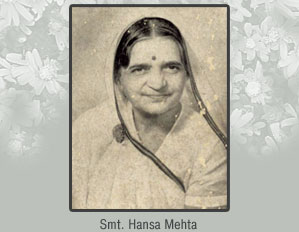
Does the Universal Declaration of Human Rights impose Western values?: Gita Sehgal

The Indian freedom fighter was a key drafter

Guest post by GITA SEHGAL

10 December was Human Rights Day, anniversary of the Universal Declaration of Human Rights. Does the idea of human rights with their firm assertions, their belief in the ‘rule of law’ and their globalised vision, remain relevant in the world? The idea that there are absolute standards has come under attack from both the left and the right. The philosopher Alasdair MacIntyre , author of ‘After Virtue’, said, Natural rights and self evident truths proclaimed in the American declaration of independence are tantamount to belief in witches and unicorns. While from the left,  in ‘Human Rights and Empire’, Costas Douzinas has called human rights the political philosophy of cosmopolitanism and argued that human rights now codify and ‘constitutionalise ‘ the normative sources of Empire. Continue reading Does the Universal Declaration of Human Rights impose Western values?: Gita Sehgal

News TV – Caught Between an Anna and a Hard Place: Abhishek Upadhyay

Guest post by ABHISHEK UPADHYAY

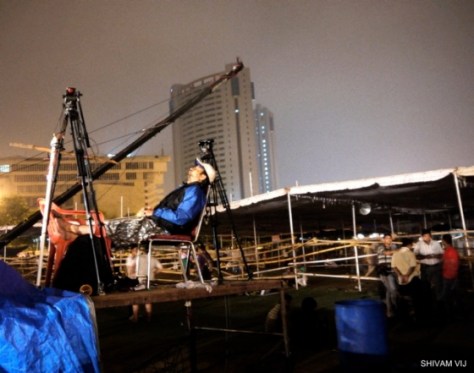
Taken in August 2011 at around 2 am one morning at Ramlila Maidan, this photo shows a news TV cameraperson taking sleeping on his chair.

Anna Hazare has returned with his protests and fasting. Should the media, particularly news TV, be more circumspect this time?

Is it time for the media to learn from the Ramlila Maidan experience in August, or should news channels stick to their earlier editorial line of broadcasting the Anna movement in great detail? Back in August, news TV broadcasted Anna’s “satyagrah” allegedly at the expense of the government. The stage is set again, the jury is out. Continue reading News TV – Caught Between an Anna and a Hard Place: Abhishek Upadhyay

Nationwide opposition to the government’s refusal to a peaceful fast in support of Irom Sharmila: NAPM

Press release issued today by the NATIONAL ALLIANCE FOR PEOPLE’S MOVEMENTS

New Delhi, December 10 : For some months now, Save Sharmila Solidarity Campaign (SSSC) has been spreading the word about Irom Sharmila and her struggle across the nation and beyond.

Started only by few organizations, campaign has now received support over more than 80 organizations and movements and thousands of supporters. Campaign has reached in almost every state of India and even outside. Campaign has organized various programs including its famous Nationwide Signature Campaign, Sri Nagar- Imphal Save Sharmila Jan Karwan in October and Ahemdabad- Srinagar Jattha in November this year. Continue reading Nationwide opposition to the government’s refusal to a peaceful fast in support of Irom Sharmila: NAPM

A woman in Delhi Metro, two women in a bus

Many years ago, I was travelling in a DTC bus – or was it a private-run Blueline? – in which the usual sense of calm-with-commotion was disturbed by a sudden act of strategic, small-scale violence, followed by a moment of stunned silence, then some bickering.

Two women were travelling in a bus full of men, and one of them had slapped a man. The man tried to argue and claim innocence, but to no avail. It was obvious to everyone in the bus that the woman would not slap him without a reason. He must have molested her. Most passengers watched silently, eager to closely observe the tamasha so they could relate it to others, like I’m doing now. But quite a few voiced their support of the women, and the bus conductor asked the man in question to get down at the next stop, returning his entire fare. Continue reading A woman in Delhi Metro, two women in a bus

Release Abhay Sahoo Now: People’s Union for Civil Liberties

This press release comes from the PEOPLE’S UNION FOR CIVIL LIBERTIES

Bhubhaneshwar / Delhi
5th December, 2011
PRESS RELEASE

• Appeal to the Odisha Government to withdraw the frivolous cases and RELEASE ABHAY SAHOO NOW!

• WITHDRAW ALL THE CRIMINAL CASES LODGED AGAINST THE ANTI POSCO ACTIVISTS and put a stop to repressive measures.

• PUCL APPEALS TO OTHER ORGANISATIONS TO COME TO TOGETHER AND INITIATE A NATIONAL CAMPAIGN FOR THE RELEASE OF ABHAY SAHOO AND SUPPORT OF THE POSCO PRATIRODH SANGRAM SAMITI.

The People’s Union for Civil Liberties, represented by its National Secretary Kavita Srivastava and Odisha Convenor, Pramodini Pradhan visited the area in and around Dhinkia Panchayat in Jagatsinghpur district on 1st December, 2011, where the struggle against the proposed POSCO steel plant is taking place for the last seven years. We also went to Choudwar Jail in Cuttack District on 2nd December, 2011 to meet Mr Abhay Sahoo the leader of the POSCO Pratirodh Sangharsh Samiti, who has been arrested against FIRs motivated by the administration under sections causing sexual assault, wrongfully confining somebody and causing atrocities under the SC & ST Act. Continue reading Release Abhay Sahoo Now: People’s Union for Civil Liberties

When Openness is Unfreedom (alternatively, when data is unfreedom) – Part II

This is the second post in the series that I began in October. I want to thank Rasagy Sharma for prompting me to put down the second post in this series.

This evening, Rasagy raised a question on twitter about whether the effort of a developer to make the database of the Indian railways downloadable is ‘official’ or not? As Rasagy later explained, the downloadable database is a list of trains, stations and the railway timetable. This list has has been made available in various downloadable formats (such as .csv, .pdf, etc) to encourage developers/interested persons to make web/mobile based applications. Rasagy’s question was more in the nature of checking the legality of  the act of putting this information/database on another website when it is explicitly copyright of the Indian Railways (as declared on their website). He argued that cities such as New York and some countries across the world have made this information ‘open’, meaning available to the ‘public’. Hence, it is unreasonable for this government entity i.e., the Indian railways, to be ‘closed’ about reuse of this information by private entities and individuals.

Continue reading When Openness is Unfreedom (alternatively, when data is unfreedom) – Part II

The need to influence the trajectory of one’s own life: Ruchi Gupta

Guest post by RUCHI GUPTA

The Arab Spring demonstrations in Tunisia, Egypt, Libya, Bahrain, Yemen, Syria, Jordan, Morocco were hailed in much of the democratic world. However the Occupy Wall Street protests, which till date have spread to 100 cities in the United States and 1500 globally have met with mixed response.

The Arab people are fighting for democracy, and thus their resistance must be respected and supported. But the OWS folks, proudly leaderless and having framed no concrete demands are vulnerable to all manner of criticism, even from those expected to be supportive. Bill Keller, the former editor of arguably one of the most influential newspapers in the world, the ostensibly liberal, New York Times derides,  “the Occupiers have been pandered to (“Love your energy!”); patronized (“Here, I’ve drafted you a list of demands …”); co-opted by unions, celebrities and activists for various causes; demonized by the right; arrested and tear-gassed in some cities; and taken lightly by the likes of me”.

However the uprisings in the Arab nations, the OWS demonstrations and even the wave of anti-corruption protests that swept India this year are all ultimately an expression of people’s resistance to disenfranchisement. Whether it’s those fighting for democracy or those who find themselves powerless in face of a system that’s been hijacked by the illegitimate nexus between the financial and political elite (the metaphorical 1%), the underlying sentiment is a demand for fair play and the right of self-determination. Continue reading The need to influence the trajectory of one’s own life: Ruchi Gupta

Statement Condemning the Repression of the POSCO Pratirodh Sangram Samiti

This statement, signed by many individuals and organisations, was released on 29 November by the CAMPAIGN FOR SURVIVAL AND DIGNITY

CONDEMN THE REPRESSION ON POSCO PRATIRODH SANGRAM SAMITI AND THE LIKELY IMMINENT ATTACK ON THE PEACEFUL PROTESTERS OF THE AREA

The undersigned condemn the growing brutality of the state repression being unleashed against the peaceful, democratic protesters of the POSCO project area, who are only fighting for their legal and fundamental rights.  This repression has reached a peak with the arrest yesterday (Friday) of POSCO Pratirodh Sangram Samiti leader Abhay Sahoo.  The government’s constant announcements of its intention to start construction in the area lead us to apprehend that there will be more violence and brutality against the movement. Continue reading Statement Condemning the Repression of the POSCO Pratirodh Sangram Samiti

Apples and Oranges in Egypt’s Historic Election: Alia Allana

This guest post by ALIA ALLANA, a despatch for Kafila from Cairo, is the eleventh in a series of ground reports from the Arab Spring. Photos by Alia Allana

This slideshow requires JavaScript.

“Votes and rocks: just two ways to get heard,” said Salma.

Continue reading Apples and Oranges in Egypt’s Historic Election: Alia Allana

‘Did the generals think we were fools?’ Alia Allana reports from Cairo

This guest post by ALIA ALLANA, a despatch for Kafila from Cairo, is the tenth in a series of ground reports from the Arab Spring. Photos by Alia Allana

A week into protesting, the revolution became about preservation lest someone forgets.

Mohammed Mahmoud Street, the sight of intense fighting was officially off-limits for protestors. A concrete wall separated the protestors and police. Atop the wall army soldiers kept guard. The aim was simple: to keep protestors from barging past and facing-off with the authorities, like they had done for the past few days. But sometime in the night, a maverick with a graffiti can had his way and the beige concrete wall now read, “Change is coming soon.”  Continue reading ‘Did the generals think we were fools?’ Alia Allana reports from Cairo

Green and Saffron: Hindu Nationalism and Indian Environmental Politics

Cover - Green and Saffron

My book Green and Saffron is just out. The book details and an interview  are on the blog of Permanent BlackFrom the publishers’ notice:

This book examines contemporary environmental issues and movements in independent India on the one hand, and the development of Hindu conservative ideology and politics on the other. It includes the first thorough investigation of Anna Hazare’s movement in Maharashtra.

Mukul Sharma argues that these two social currents—environmental conservation and Hindu politics—have forged bonds which reveal the hijacking of environmentalism by conservative and retrograde worldviews. This, he says, constitutes a major aspect of hinterland political life which neither academics nor journalists have seriously analysed. Environmentalism and politics cannot be seen as separate from each other, for environmental issues are being defined in new ways by an anti-secular form of Hinduism. In turn, Hindu ideologues are gaining mileage for their ideology by espousing major environmental projects. Continue reading Green and Saffron: Hindu Nationalism and Indian Environmental Politics

Egypt, Revolution 2.0: Alia Allana reports from Tahrir Square

This guest post by ALIA ALLANA is a despatch from Cairo for Kafila, the ninth in a series of ground reports from the Arab Spring. Photographs by Alia Allana

This slideshow requires JavaScript.

The police lobbed another tear gas canister and soon the feeling of suffocation would take over. But he didn’t move, instead he stood in the center; he continued to wave the Egyptian flag. The sound of rubber bullets being fired drowned under the sound of the drum. The drum was the harbinger of doom: when it was sounded by protestors, when the cacophony cut through the air, the message was simple – run, run as fast as you can because the police would begin their attack, again.

Continue reading Egypt, Revolution 2.0: Alia Allana reports from Tahrir Square

An account of deadly clashes in Tahrir Square: Alia Allana

This guest post by ALIA ALLANA is a despatch for Kafila from Cairo, the eighth in a series of ground reports from the Arab Spring. Videos and photos by Alia Allana

This slideshow requires JavaScript.

A peaceful protest with men selling candyfloss and making chai turned into an orgy of violence.

Tahrir Square had been quiet for the earlier part of the day today. The Sunday afternoon saw couples strolling, a mother carried her sleeping child, his face was buried in her bosom, scooters with loud speakers blared music.  There was no chanting and very few slogans. Small and sporadic groups of people protested. They called for change.

Continue reading An account of deadly clashes in Tahrir Square: Alia Allana

The Last International: Occupy New York, Occupy the Night, Occupy Earth.

Facebook Found Image of the Occupation of Foley Square, New York

Sometimes just a few images, and a few facebook update texts tell you all you need to know.

New York, 18th November 2011, NYPD estimates say that approximately 36,000 people voted with their feet to take back their city, and their planet. Could this be the beginning of the end of Capitalism, at least as we know it? Continue reading The Last International: Occupy New York, Occupy the Night, Occupy Earth.

Adib Shishakly – The Rebel in the Hotel Room: Alia Allana

This guest post by ALIA ALLANA, a despatch from Istanbul, is the seventh in Kafila series of ground reports from the Arab Spring. Photos by Alia Allana unless otherwise mentioned

Adib Shishakly’s rebellion starts with a small pin on his blue blazer.

Embellishing the the blue of his jacket, clipped on to the left collar is a flag of Syria not seen since the days following the French mandate. Today the flag flies in the besieged areas of Homs, Hama and Dera’a where the protestors have posed Bashar al Assad’s regime with it’s biggest challenge to date. It’s this very flag, with its three golden stars that was outlawed by the Ba’ath Party, by strong man Hafez al Assad.

Continue reading Adib Shishakly – The Rebel in the Hotel Room: Alia Allana

The nuclear energy debate in India: Response to Dr APJ Abdul Kalam from Dr Surendra Gadekar

Dr. SURENDRA GADEKAR is a well-published physicist of international renown, and a Gandhian. After an MSc and PhD (in theoretical physics) in 1979 from IIT Kanpur, he worked for two years as a post-doctoral fellow at Iowa State University, US and then two years as a research associate at IISc in Bangalore. He resigned in 1986 (a little before Chernobyl) to do antinuclear work when the Kakrapar Nuclear Power Plant was started. In 1987, he started Anumukti A Journal Devoted to Non-Nuclear Indiaand has carried out and published studies of the impact of nuclear energy around the plants at Kakrapar, Rawatbata and Jadugoda.  He has also carried out a study at Pokharan, which is as yet unpublished. Dr Gadekar’s response follows:

Dr A P J Abdul Kalam and‭ ‬Mr.‭ ‬Srijan Pal Singh deserve a special thanks for their article in the Sunday edition of The Hindu‭ (‬November‭ ‬6,‭ ‬2011‭) ‬entitled‭ ‬“Nuclear power is our gateway to a prosperous future.‭”‬

Although most of what they write is irrelevant to their topic and the rest just plain wrong,‭ ‬the very fact that the establishment has to bring out its‭ ‬‘Big Guns‭’‬ to answer the questions raised by the Koodankulam movement,‭ ‬is a testimony to the success of the movement.

Originally I had intended to write a point by point refutation of their article,‭ ‬but I have been deterred by the sheer length of the article.‭ ‬What I intend to do here instead is to paraphrase their points and answer them one by one.‭ ‬I would urge activists to visit the Hindu website at and to read the article in the full. I make this request specially so that friends can point out if I have been unfair in summarizing their work or have missed something important.

Continue reading The nuclear energy debate in India: Response to Dr APJ Abdul Kalam from Dr Surendra Gadekar