Category Archives: Politics

Terror, Performance and Anxieties of Our Times – Reading Rustom Bharucha and Reliving Terror: Sasanka Perera

Guest Post by SASANKA PERERA

[ This post by Sasanka Perera is a review of  Terror and Performance by Rustom Bharucha (2014). Tulika Books, New Delhi. Kafila does not ordinarily post book reviews. An exception is being made for this post because we feel that the subject of terrorism, which has interested Kafila readers in the past, is an important one, and needs to be thought through with seriousness. We hope that this post initiates a debate on Kafila regarding terror, the state, performance, and the performances – serious, or otherwise – that typically attend to the discussions of terror, whether undertaken by the agents of the state or by non-state actors, commentators in the media, or by intellectual interlocutors. ]

When I started reading Rustom Bharucha’s latest book, Terror and Performance, it immediately became an intensely personal and gripping engagement. It was difficult to read in a single attempt as the mind kept wandering from one unpleasant moment in our recent annals of terror to another in some of which I had also become an unwitting part – mostly as a spectator. From the beginning, my reading was a conversation with Bharucha’s text through detours of my own experiences and an interrogation to a lesser extent. In 1986, as a young man when I went to the Colombo International Airport to pick up my father who was returning from the Middle East, I was shaken by a tremendously loud sound for which I had no immediate references. I had not heard such a sound before. People started running towards the sound. It was a bomb that had blown up an Air Lanka flight which had come from Gatwick. The Central Telegraph Office in Colombo was bombed in the same year. We learnt that everyone was running towards the sound and not away from it. Dry local political humor very soon informed us that people were trying to get inside the bombed out telegraph office hoping that they could get free phone calls to their relatives in the Middle East as they had heard phones were dangling from the walls with no operators in sight. That was long before mobile phones and call boxes. We were still young in terms of our experiences with terror. However, we soon had very viable references to what all this meant as the political narrative of Lanka unfolded with devastating consequences. But in 1986, when the kind of terror that was to follow in all its fury was still relatively new and quite unknown, we were acutely unaware of the dynamics of the actual act of terror and the structure of feeling it could unleash. This is why many of us in these initial years were naively attracted towards the epicenter of the act rather than being mindful to run away from it. But as the society grew in experience, people soon learned their lessons. Though an academic text in every conceivable way, I was reminded one could always find a few rare books of this kind which might personally and emotionally touch a reader in addition to whatever intellectual stimulation it might also usher in. Terror and Performance is clearly one such book. From the perspective of the writer, Bharucha himself recognizes this personal emotional engagement and investment early in the book. For him, “this writing demands stamina as it faces an onslaught of uncertainties and cruelties at the global level that challenges the basic assumptions of what it means to be human” (xi). It is the same kind of stamina that one also needs to read it as most of us in South Asia would be reading it squarely sitting in the midst of our own worlds of unfolding terror. This is why all those thoughts came gushing into my mind throughout the reading. I was not only reading Bharucha; I was also reading my own past.
Continue reading Terror, Performance and Anxieties of Our Times – Reading Rustom Bharucha and Reliving Terror: Sasanka Perera

Jadavpur’s Infectious Autumn Thunder Goes Viral: Kasturi

Guest post by Kasturi

One of the slogans churned out of the womb of turbulent Paris in the Maydays of 1968 was ‘Don’t trust anyone over 30’. The student uprising of May ‘68 with its audacity and exaggeration might have failed. Yet the mahamichhil (grand rally) called by students which took command over the heart and pulse of Kolkata on 20th September was a literal, vivid, living embodiment of this slogan. As I stood with a video camera on a spot on the Jawaharlal Nehru Road, with hope to capture the moments and 50,000 faces that made history with each footstep, all I could see was an ocean of people most of who had perhaps not even reached their twenty fifth year, and many of who were walking their very first rally. Those slightly older, those weathered yet young at heart paced alongside them in solidarity. ‘Such a student gathering – so huge, determined and disciplined – I have not seen in my life’, wrote poet Sankha Ghosh, ‘This really moved me. It’s very early to say if this will mark the beginning of a new era but I will reiterate this is one of the biggest student rallies I have seen in my life’.

The rally was replete with slogans reflecting basic demands of the movement, but there was a unifying chant, rather a call to action, that instantly bonded with and caught the fancy of the first timers that hit the street – Hok, Hok, Hok Kolorob (‘let there be clamour’). A call, ripped off from a popular song by Bangladeshi singer Ornob and used as hashtag on social media to mobilize – was surreal, refreshing, imaginative enough to break the deafening silence, stupor and suffocation strangling students’ aspirations for democracy, freedom of expression and association across education campuses of Bengal. The other interesting aspect of this call was that unlike regular slogans where someone leads and the rest follow, here there was no single lead but many voices all chanting the four words in unison, accompanied by clapping of hands. As a comrade observed, ‘the zeitgeist and slogan of the contemporary present is #hokkolorob’!’ (‘Kolorob’/ ‘kalrav’, roughly translated here as ‘clamour’, conveys the sense of a symphony of birdsong in many Indian languages.) Continue reading Jadavpur’s Infectious Autumn Thunder Goes Viral: Kasturi

Fast Track to Troubling Times: The Ghadar Alliance

1400132554-1045_1

A promise fulfilled? File photo from scroll.in of what was left in the wake of Modi’s helicopter on the election campaign trail (Image by Ravi Mishra)

The first 100 days of the Modi government points to emergent disaster, says this report by The Ghadar Alliance, a US-based educational/watchdog coalition created by concerned citizens in the wake of the BJP victory. The report points to the Economy, Religious Extremism and Human Rights as areas of biggest concern, and is released on the eve of Modi’s visit to the USA as Prime Minister of India.

The entire report can be downloaded at Fast Track to Troubling Times.

In a press release, The Ghadar Alliance said:

The report is the first independent ‘people’s’ report to be published since Modi came into office, and identifies the economy, religious extremism and human rights as grave areas of concern. Continue reading Fast Track to Troubling Times: The Ghadar Alliance

From Jadavpur University, Kolkata – ‘I am, one of those survivors, who has experienced a nightmare last night’: Tanumay Naskar 


Guest Post by TANUMAY NASKAR

[ This is an account of the events of last night in Jadavpur University, Kolkata, were students sitting in on a peaceful protest against university authorities inaction on a recent complaint of sexual harrassment. What followed (an attack from two fronts, by police and goons affiliated to the Trinamool Congress) brought back memories of the many times that students have been attacked mercilessly in JU. Currently, around 40 students have had to receive medical attention, and 38 are in police detention. Protests against this event are being organized today in Kolkata (at 4:00 in the afternoon, at Jadavpur University, and at 6:00 PM at JNU in Delhi, by the JNU Students Union]

Follow this link to read a detailed time-line of the events as they unfolded.

Follow this hashtag – ‪#‎hokkolorob‬ for details of how people are responding to the situation.


I am one of those survivors who has experienced a nightmare last night.
We were singing. We were dancing. We were peacefully protesting. 
When someone yelled, “Let’s make the barricades, the police is coming”. 
After that, we saw police (READ GOONS) of grade A, barred all the entrances and charged us with Lathis.

Continue reading From Jadavpur University, Kolkata – ‘I am, one of those survivors, who has experienced a nightmare last night’: Tanumay Naskar 


Muslims should Counter the Divisive ‘Love Jihad’ Campaign with Friendship Towards Secular Hindus: Kaleem Kawaja

This is a guest post by KALEEM KAWAJA

Abhee sub kuch nahin mita shaayad
Hindu-Muslim main pyaar baaqi hai
Ek Bhaayee kaa ek Bhaayee pur
Pyar ka kuch udhaar baaqi hai … 

Jawaid Badauni.

unnamed

Since the past one year, especially after the parliamentary elections were looming close, extremist RSS elements have become all the more aggressive all over the country, especially in the north, east and west. They have taken pains to circulate false news stories about Muslims in general, and Muslim youth in particular, as somehow prone to violence ,and conniving to entrap Hindu girls in romantic relationships with the sole object of securing their conversion to Islam. Regional vernacular newspapers have carried fabricated stories about Muslim youth turning to terrorism and planning bomb blasts in many Indian cities.

Since the past one year, especially after the parliamentary elections were looming close, extremist RSS elements have become all the more aggressive all over the country, especially in the north, east and west. They have taken pains to circulate false news stories about Muslims in general, and Muslim youth in particular, as somehow prone to violence ,and conniving to entrap Hindu girls in romantic relationships with the sole object of securing their conversion to Islam. Regional vernacular newspapers have carried fabricated stories about Muslim youth turning to terrorism and planning bomb blasts in many Indian cities. Continue reading Muslims should Counter the Divisive ‘Love Jihad’ Campaign with Friendship Towards Secular Hindus: Kaleem Kawaja

The Indian Illusion: Shashank Kela

Guest post by SHASHANK KELA

Some time ago, I wrote an article seeking to dissect certain myths about Indian politics – and the class that dominates it, despite protestations to the contrary, the middle-class.[1] It is one of the habits of this class to see, and self-pityingly portray itself as victim – of mass politics, reservation policies, the great unwashed, of politicos bent upon appeasing the poor at the cost of sound principles and policies. Its conviction, of course, is that India was great, and on the cusp of becoming so again. This unfading glory is no more to be disputed than the existence of the sun, although opinions differ upon the precise placement of our golden age.

To the rabid fanatics of Hindutva, it resides in an unspecified Vedic time, when Hindus (not Indians) mysteriously succeeded in inventing aeroplanes, dynamite, nuclear weapons, the wheel, zero, and what have you (and mysteriously losing most of these wonderful things). To the Nehruvians, it is the age of Akbar, Ashoka, Harsha, periods of syncreticism and unique tolerance, where people of different faiths lived together peacefully and a composite culture flowered. To them, and to Gandhians, it also resides in the figure of Gandhi and the tradition of practical spirituality. To the fanatics of Islam, it is probably the age of Alauddin Khilji, the reign of Aurangzeb, and so on.

The never-ending debate about India’s pasts contains a diversity of opinions; however, on its future destiny, these begin to converge. The RSS and BJP believe, for example, that India is destined to become a great industrial power. So did Nehru, and assorted Indian Marxists. Indeed, it is an article of faith for the burgeoning middle-class (mostly, but not entirely Hindu) that India can, should and will equal China to become a great power, economic and military (thus leaving Japan and South Korea in the dust). Continue reading The Indian Illusion: Shashank Kela

‘My Heart says Yes, but the Head says No’: Economizing Politics in the Scottish Referendum: Akshaya Kumar

Guest post by AKSHAYA KUMAR

I

About two months ago, while walking by the roadside in Glasgow, a middle-aged man handed me out a pamphlet. In an endorsement of UKIP, the pamphlet declared ‘Our government pays GBP 55 million a day in fees to the EU’ (emphasis added). It went on to inform that in return, the EU gives ‘us’ accounts riddled with fraud, no control over ‘our’ own borders – putting pressure on our health, education and welfare services – and a super-government that makes more than 70% of ‘our’ laws. The pamphlet intrigued me a fair bit, not in the least because as an international student in the UK, I wondered if my case was a bigger or smaller burden on the UK defined thus – their UK. But who are they? One might rubbish them as a deviant community, or one might consider them a threat to yet another definition of us – the liberals or suchlike. But what intrigued me was not the neatness of these boundaries, or the speculations about how many of ‘us’ and ‘them’ there are. I was intrigued by the language of the starkly political proposition. Let us tentatively assume that in the pamphlet, ‘us’ meant the citizens of UK and it constructs an antagonistic position vis-à-vis other national citizens who are entitled to living and working within the UK. Surely the two are politically distinguishable? Or are there too many of them living next to us, so they cannot exactly be identified as such? Continue reading ‘My Heart says Yes, but the Head says No’: Economizing Politics in the Scottish Referendum: Akshaya Kumar

‘Son, you outgrew my lap but never my heart’ – Fauzia Ansari in search of her son: Debangana Chatterjee

On August 14, 2013, Shivam Vij wrote in Kafila  about Hamid Ansari, a young Management Studies graduate from Mumbai who crossed the border illegally to Pakistan in November 2012, to meet a young woman, and has been missing since. At the time Shivam wrote the post, there were indications that Hamid had been picked up by Pakistani security agencies.

Beena Sarwar, Pakistani human rights activist, wrote in July this year about the possibility of ‘cautious optimism’, following the directive of Peshawar High Court to Pakistan’s defence and interior ministries to provide full information about the forced disappearance of Hamid Ansari and of 25 others, who are Pakistani nationals. Her account is worth reading in full, outlining as it does, the ways in which cross border solidarities of democratic forces consistently work to soar above and also to undermine the barbed wire fences of nation-states.

DEBANGANA CHATTERJEE, a Delhi-based MA student, met Hamid’s mother a few days ago, and wrote this piece after talking to her, outlining some new developments in the case. We have retained Fauzia Ansari’s voice as far as possible in this narrative.

The story of Hamid Ansari, a 28 year old IT engineer and management studies graduate, started unfolding when I came across his mother, Fauzia Ansari at a conference on ‘Challenges to Indian Democracy’ organized in Delhi by the Coalition for Nuclear Disarmament and Peace a few days ago, on August 30-31. Fauzia Ansari is a lecturer of Hindi at a college in Mumbai. Like other mothers, Fauzia says she too had vibrant dreams of her son’s bright future. But a nightmare has unfolded instead. Continue reading ‘Son, you outgrew my lap but never my heart’ – Fauzia Ansari in search of her son: Debangana Chatterjee

‘लव जेहाद’ की असलियत – इतिहास के आईने में: चारू गुप्ता

Guest post by CHARU GUPTA

लव जेहाद आंदोलन स्त्रियों के नाम पर सांप्रदायिक लामबंदी की एक समकालीन कोशिश है. बतौर एक इतिहासकार मैं इसकी जड़ें औपनिवेशिक अतीत में भी देखती हूँ. जब भी सांप्रदायिक तनाव और दंगों का माहौल मज़बूत हुआ है, तब-तब इस तरह के मिथक गढ़े गए हैं और उनके इर्द गिर्द प्रचार हमारे सामने आये हैं. इन प्रचारों में मुस्लिम पुरुष को विशेष रूप से एक अपहरणकर्ता के रूप में पेश किया गया है और एक ‘कामुक’ मुस्लिम की तस्वीर गढ़ी गयी है.

मैंने 1920-30 के दशकों में उत्तर प्रदेश में साम्प्रदायिकता और यौनिकता के बीच उभर रहे रिश्ते पर काम किया है. उस दौर में लव जेहाद शब्द का इस्तेमाल नहीं हुआ था लेकिन उस समय में भी कई हिंदू संगठनों — आर्य समाज, हिंदू महासभा आदि –- के एक बड़े हिस्से ने ‘मुस्लिम गुंडों’ द्वारा हिंदू महिलाओं के अपहरण और धर्म परिवर्तन की अनेकोँ कहानियां प्रचारित कीं. उन्होंने कई प्रकार के भड़काऊ और लफ्फाज़ी भरे वक्तव्य दिए जिनमें मुसलमानों द्वारा हिंदू महिलाओं पर अत्याचार और व्यभिचार की अनगिनत कहानियां गढ़ी गईं. इन वक्तव्यों का ऐसा सैलाब आया कि मुसलमानों द्वारा हिंदू महिलाओं के साथ बलात्कार, आक्रामक व्यवहार, अपहरण, बहलाना-फुसलाना, धर्मान्तरण और जबरन मुसलमान पुरुषों से हिंदू महिलाओं की शादियों की कहानियों की एक लंबी सूची बनती गई. अंतरधार्मिक विवाह, प्रेम, एक स्त्री का अपनी मर्जी से सहवास और धर्मान्तरण को भी सामूहिक रूप से अपहरण और जबरन धर्मान्तरण की श्रेणी में डाल दिया गया. Continue reading ‘लव जेहाद’ की असलियत – इतिहास के आईने में: चारू गुप्ता

A civil-war is on the doorstep of India: Interview with Kancha Ilaiah by Mahmood Kooria

This is a guest post by Mahmood Kooria

We are publishing an English translation of an important interview of the intellectual and academic Kancha Ilaiah, conducted by Mahmood Kooria for the Malayalam weekly Mathrubhumi. While what I see as Professor Ilaiah’s underestimation and perhaps misreading of the historic role of the Communists in Indian politics leaves me severely uncomfortable, especially when he exonerates the right from commensurate charges of elitism, his framing of Hindustva and Modi’s appeal within the great stream of caste in the subcontinent is brilliant and thought-provoking, as always. 

Kooria conducted the interview as well as translated it in to English. His introduction is as follows, “At a time when there was no any such discussion, in 2002 Professor Kancha Ilaiah predicted that Narendra Modi will be the prime-ministerial candidate of Baratiya Janata Party. It has come true and now Modi is in the office. At this point, I talked with him at Moulana Azad Urdu University Hyderabad where he chairs the Centre for the Study of Social Exclusion and Inclusive Policy. In the conversation, he talked about the future of Modi government and he predicted that a civil war is going to break out in India if Modi does not cater the needs of backward classes. A Malayalam-version of this interview was published in the Mathrubhumi Illustrated Weekly (August 24, 2014).”

Mahmood Kooria: Ten years ago you wrote that Modi will be the prime ministerial candidate of BJP. What would be your response as your prediction has come true?

Kancha Ilaiah: Well, at that time I was predicting that based on the Left parties’ indifference to understand the caste question. The caste question is not been seriously taken by the Left parties. And, after Mandal, the BJP and the RSS wings started looking at caste-question seriously because when Babari Masjid was demolished they mobilized a lot of backward classes. Though they oppose Mandal reservation, they wanted the backward classes to be part of the Hindu religion. Around 1994, a non-Brahmin called Rajju Bhaiya became the Sarsanghchalak of the RSS. Then he recruited a large number of backward classes, large number of youth, and he promoted the people like Narendra Modi, Uma Bharati at that time. Earlier, the first backward-class chief minister of Uttar Pradesh was a BJP man: Kalyan Sing. He was the chief minister in 1992 when the Babri Masjid was demolished.

The Sangh Pariwar was responding to the backward class demands more. But the Left or the Congress was not responding to the OBCs. The Congress was responding to the Dalits and Muslims. There was upper caste all the time on the top. So, when Narendra Modi became the chief minister and this whole atmosphere was created, I was writing a column in The Hindu. I thought that this seems to be cause/course of India, since the Hindu religion is surviving because of the backward classes. It is inevitable for the Hindutva organizations that they will have to project an OBC for the prime-ministership. But there was resistance from within itself. It is not that the Brahmins have given up the principle of varna-dharma. After that article came and of course after my writing Why I am not a Hindu itself, the backward classes even within RSS seemed to use that material for their advantage. The communists did not use or recognize it. The question of labour and caste which I have been consistently raising, which was also part of their theory, they did not care about. So the Communist Party remained tightly under the control of upper castes.

Continue reading A civil-war is on the doorstep of India: Interview with Kancha Ilaiah by Mahmood Kooria

The European Union And The Twin Civil Wars In Syria/Iraq: Peter Custers

Is this one of those rare occasions where policymakers self-critically correct a gigantic blunder? Or is it a cold turn-about guided by pure self-interest? On August the 15th, the Foreign Ministers of EU-countries gathered in Brussels and decided that each would henceforth be free to supply arms to Kurdish rebels fighting Sunni extremists of ISIS in the North of Iraq. Even Germany which in the past had been unwilling to furnish military supplies to warring parties  in ‘conflict zones’, is now ready to provide armoured vehicles and other hardware to the Kurds opposing ISIS’ advance. The decision of Europe’s Foreign Ministers may surprise some, for barely a year and four months ago, in April of 2013, the European Union had lifted a previously instituted ban on all imports of Syrian oil (1). Moreover, the lifting of this boycott was quite explicitly intended to facilitate the flow of oil from areas in the North-East of Syria, where Sunni extremist rebel organisations had established a strong foothold, if not overall predominance over the region’s oil fields (2). ISIS was not the only Sunni extremist organisation disputing control over Syrian oil fields. Yet there is little doubt but that the fateful decision the EU took last year has helped ISIS consolidate its hold over Syrian oil resources and prepare for a sweeping advance into areas with oil wells in the North of Iraq (3).  Continue reading The European Union And The Twin Civil Wars In Syria/Iraq: Peter Custers

Strange yet familiar – race politics in the USA

images (1)

Here is a link to Jon Stewart on race politics in the USA, in the context of the recent shooting by a white cop of a black unarmed teenager in Ferguson.

See any resemblances to our own fair country and the politics of caste, class, gender and community here? So familiar are the doubts expressed, questions raised, biases proudly stated, you could be pardoned for thinking it’s not the US of A, but Mera Bharat Mahan.  Continue reading Strange yet familiar – race politics in the USA

Who is guiding Modi’s economic thinking and what is their background?: Aditya Velivelli

Guest post by ADITYA VELIVELLI

The Modi government’s actions over WTO are a case of much ado about nothing. They have pointedly created a false perception over a non-issue so as to appear pro-poor. Modi said “Do we choose feeding our poor or getting good press world-wide?” Turn this statement around and one gets to see the truth of the matter. The real attempt here is “How to masquerade as pro-poor and get good press in India by using WTO?”

This demonstration of concern for the poor helps Modi’s government in implementing ultra-neoliberal economic policies in the coming months. To understand the game-plan one should only look at the people guiding Modi’s economic thinking. Continue reading Who is guiding Modi’s economic thinking and what is their background?: Aditya Velivelli

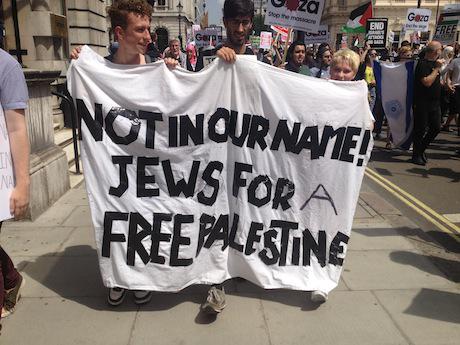
Why I am an anti-Zionist Jew: Ray Filar

RAY FILAR on openDemocracy

IMG_1810

The Israeli government deliberately invokes terrorist attacks, rockets, and scary brown men in headscarfs to stoke the population’s fear, but I am scared of the racism Zionists use to justify the occupation.

The discussions in the comments that follow are equally instructive and interesting – do scroll down and follow those as well.

Don’t let the Magic Fade: Thoughts on Kudumbashree’s Sixteenth Anniversary

I do not write on Kafila as frequently as I used to because I don’t want to be writing stories of impending doom all the time. These are times in which we appear doomed, but it does not help to get obsessed with it; in fact, the obsession may actually hasten the downfall.

But these days, we also hear stories which may be told either way. For example, I can tell the story of the mining going on at Mookunnimala in Trivandrum as yet another episode in the continuing story of the destruction of our natural environment and its impending collapse. But I can also tell it another way, foregrounding the resistance that has shaped up there despite the formation of a deadly nexus of Kerala’s political parties, bureaucracy, predatory capitalists and other criminals against local people. Or, I can tell the story of the ‘development’ of the government school at Attakkulangara in the heart of Trivandrum city as another incident that proves the unrelenting march of ‘urban development’ which is nothing but shorthand for the steady takeover of prime urban space by corrupt officials and venal politicians. But it is also a David-and-Goliath tale of how a few dedicated members of the school’s old students’ association, and nature-lovers and environmental activists who go by the name Tree Walk  managed to draw the attention of others, alert authorities, and arrest the steady pace of these forces. Continue reading Don’t let the Magic Fade: Thoughts on Kudumbashree’s Sixteenth Anniversary

African Solidarity with Palestine: African scholars and scholars of Africa

We, the undersigned African scholars and scholars of Africa, hold that silence about the latest humanitarian catastrophe caused by Israel’s new military assault on the Gaza Strip—the third and most devastating in six years—constitutes complicity. Member state of NATO which mounted an air war on Libya ostensibly to protect civilians in Benghazi have been by and large quiet about the fate of civilians in Gaza. World governments and mainstream media do not hold Israel accountable for its violations of international law. We, however, as a community of scholars have a moral responsibility to do so.

Neither the violation of international law nor the destruction of Palestinian life in Gaza, however, began or will end with the current war[1]. The suffering of Palestinians is not limited to Gaza: the occupation and dispossession in East Jerusalem, the Naqab (Negev), and the West Bank; the construction of walls and fences around the Palestinian population, the curtailment of Palestinian freedom of movement and education, and the house demolitions, all have long histories that will have to be addressed. 

Continue reading African Solidarity with Palestine: African scholars and scholars of Africa

Urgent Call: Bir Zeit University Institute of Women’s Studies, Palestine

Statement from Bir Zeit University Institute of Women’s Studies, Palestine

gaza-under-attack_1

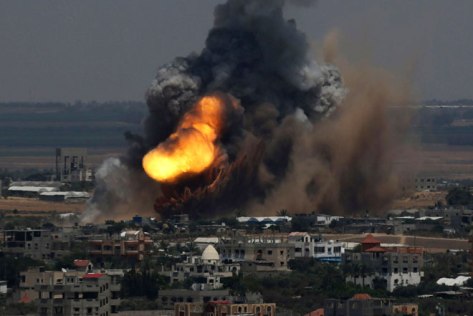
Gaza Under Attack

As we write this statement, 25 days after the brutal incursion on Gaza, over a thousand and four hundred of innocent civilian women, men and children have been butchered by Israel’s war machine and much more are threatened to be killed. The call for raping Palestinian women by the so-called “Bar-Illan University Arabic Literature Professor” teaches us, once again, that Israeli “scholars” and “academic institutions” are an organic and integral part of the Zionist colonial project. Also, the parliament member, who happens to be a woman, advocates the killing of all Palestinian women, a Rabbi calls for mass murder of Palestinians while taking their foreskins as trophies, in addition to the display of many rape references on banners and images (head covered woman from the top while indecent from the waist down with a very provocative statement below) in their neighborhoods that promotes a rape culture and misogyny at the least. Continue reading Urgent Call: Bir Zeit University Institute of Women’s Studies, Palestine

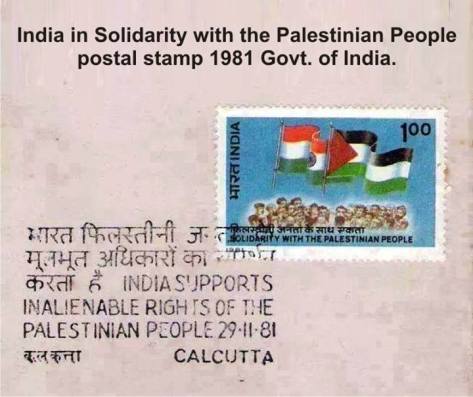
India’s solidarity with Palestine – from the pages of history

securedownload

Image from article by PRIYAMVADA GOPAL ‘India’s Forgotten Solidarity with Palestine’ on Aljazeera.


Spring in Israel? Internal voices of dissent grow

3197080467

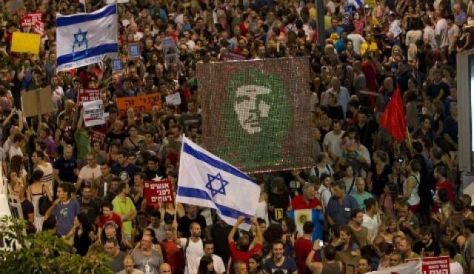
Over 150,000 social justice protesters took to the streets of 11 cities across Israel.These protests, which some are calling part of an “Israeli Spring”, began initially in response to the country’s housing crisis. But since as they began gaining momentum, they have spread to a host of social and economic complaints, including overlap with the struggling Israeli peace movement.

315563642_589779924e_428x321

सीसैट के जरिये सरकारी नौकरियों में दाखिले के खिलाफ एक आवाज के खिलाफ एक और आवाज – रविकांत

Guest post by RAVIKANT

‘निकम्‍मों व गये-गुजरों’ के लोक सेवा आयोग और सीसैट के जरिये सरकारी नौकरियों में दाखिले के खिलाफ एक आवाज के खिलाफ एक और आवाज

(टीप मेरी- इसका यह मतलब नहीं कि सीसैट के खिलाफ बोलने व आंदोलन करने वाले बेहतरीन के समर्थन में नहीं हैं. उन्‍हें बेहतरीन के साथ संवेदनशील के समर्थन में भी होना चाहिये.)

इस वक्‍त जब देश के एक हिस्‍से में कई युवा इस बात पर आंदोलनरत हैं कि लोकसेवा आयोग द्वारा आयोजित की परीक्षाओं में चुने जाने वाले व्‍यक्तियों की जांच भारतीय भाषाओं की जानी चाहिये, उस वक्‍त 27.07.14 के टाइम्‍स ऑफ इंडिया अखबार में श्रीवत्‍स कृष्‍णा का एक लेख छपा है, जो कि खुद भी प्रशासनिक सेवा के एक अधिकारी हैं. इस लेख का प्रमुख तर्क यह है कि भारत की एक राजभाषा अंग्रेजी को छोड़ कर तमाम भारतीय भाषायें (दूसरी राजभाषा हिंदी सहित), भारत में राजकाज चलाने वाले लोगों की क्षमताओं की जांच करने के लिहाज से नाकाबिल है. लिहाजा यह हक अंग्रेजी के पास ही रहना चाहिये.

लेख के नाम व उसके साथ दी गयी टीप का मतलब कुछ यों बनता है – ‘‘फालतू की बात के लिये इतना शोरशराबा- संघ लोक सेवा आयोग और सीसैट के जरिये निकम्‍मों व गये गुजरों का नहीं, बेहतरीन का चयन होना चाहिये.’’

लेख के शीर्षक में ही आंदोलन को फालतू का बता दिये जाने के बाद अगली ही पंक्ति में आंदोलनकारियों के लिये हिकारत की झलक मिलती है, जब लेखक यह संकेत देता है कि यह आंदोलन गये-गुजरों या निकम्‍मों की पैरवी कर रहा है. वैसे मुझे लगता है कि लेखक को लगता है कि यह शोरशराबा फालतू का नहीं है इसलिये उन्‍हें यह लेख लिखने की जरूरत पड़ी. अगर फालतू के शोर शराबे  के खिलाफ किसी को लेख लिखने की जहमत उठानी पड़े तो यकीनन वह इतना फालतू भी नहीं है कि उसकी सफाई देने की जरूरत आन पड़े. Continue reading सीसैट के जरिये सरकारी नौकरियों में दाखिले के खिलाफ एक आवाज के खिलाफ एक और आवाज – रविकांत

Breaking the Silence about Gaza from Israel: Yehuda Shaul

Guest Post by YEHUDA SHAUL

In November 2012, Israel launched a military operation in the Gaza Strip called “Amud Anan”, the literal English translation of which is, “Pillar of Clouds”. Though, the official name in English was deemed, “Pillar of Defense”. A few days ago we launched another operation named, “Mighty Cliff”, which is officially called, “Protective Edge”. Both chosen titles are highly defensive in their essence. When I hear the names given to military operations in Gaza – especially the versions chosen for an international audience – I am reminded of my military service as a combatant in the Israeli army, whose full name (both in Hebrew and English) is: the “Israel Defense Forces” (IDF).

Continue reading Breaking the Silence about Gaza from Israel: Yehuda Shaul