Category Archives: Politics

The Making of Anna Hazare

[This piece is based on my extensive field work on Anna Hazare and his movement in Ralegan Sidhi over some years and is also a part of my forthcoming book Green and Saffron: Hindu Nationalism and Indian Environmental Politics. MS]

The anti-corruption movement, spearheaded by Anna Hazare, and the passage of the Lokpal Bill have generated unprecedented interest amongst a wide spectrum of society about the ideas, politics and organisations of civil society in general, and Anna Hazare in particular. Hazare’s anti-corruption crusade merits attention not only for its importance in ensuring a corruption-free society, but also due to its multifaceted nature. Hazare’s politics however has to be seen in a larger framework and in a wider historical context. Howsoever laudable the goals of anti-corruption movement in India today, the movement is not beyond the categories of gender, caste, authority, democracy, nationalism and ultra-nationalism. Far from transcending them, the movement is transforming and being transformed by the implicit deployment of such categories. I wish to place Hazare in the larger context of his environmental journeys, where the elusive but crucial element is one of authority that is exercised due to a large degree of consent and conservatism. Yet, almost all accounts on him, largely celebratory in nature, do not examine the ideology and politics of his works. These are crucial not only to critically assess the present and the future of our anti-corruption movements, but also to interrogate certain brands of civil society activisms and environmentalisms. Continue reading The Making of Anna Hazare

Of a Few, By a Few, For the Few: Bobby Kunhu

Guest post by BOBBY KUNHU, carrying the debate on the Anti-corruption movement forward

I am distinctly uncomfortable with predictions – using either scientific or unscientific tools. For me it smacks of charlatanry – from astrology to psephology to stock market speculation. But with the charade that was unleashed for the past few days on news television by the mainstream media and of course at Jantar Mantar and a few other town squares across the “mainstream” Indian political landscape by Anna Hazare’s fast – I did dare to make an attempt – both at prediction and more comfortably with dissent. I foretold the outcome of the fast tableau at an emergency meeting that was convened by some co-travellers at the Salem Citizen’s Forum to debate on whether and how to show solidarity to Anna Hazare…

…Well, it is not just Anna Hazare and his team who won this match comfortably. All actors who joined the show have won the match. Everyone – the “civil society” that sat on fast at Jantar Mantar and other places, the Corporate media, the glamour world, the Government, political establishment of all hues and shades – everyone who bothered to join the game. It was like bathing in the Ganges during the Maha Kumbh – everyone’s sins were washed away. And of course nobody in their right minds regardless of political affiliations or ideologies could take a position “for corruption”!!! A veritable Bush-ian position — either you are with Anna Hazare or you are with corruption. And yes, India Incorporated has won the match and it is time for celebrations!

Read the full post on Countermedia

At the Risk of Heresy: Why I am not Celebrating with Anna Hazare

At the risk of heresy, let me express my profound unease at the crescendo of euphoria surrounding the ‘Anna Hazare + Jan Lokpal Bill’ phenomenon as it has unfolded on Jantar Mantar in New Delhi and across several hysterical TV stations over the last few days.

This time around, I have to say that the print media has acted (upto now) with a degree of restraint that I think is commendable. Partly, this has to do with the different natures of the two media. If you have to write even five hundred words about the Jan Lokpal bill, you run out of platitudes against corruption in the first sentence (and who can speak ‘for’ corruption anyway?) and after that you have to begin thinking about what the bill actually says, and the moment you do that, you cannot but help consider the actual provisions and their implications. On television on the other hand, you never have to speak for more than a sound-byte, (and the anchor can just keep repeating himself or herself, because that is the anchor’s job) and the accumulation of pious vox-pop sound bytes ‘against corruption’ leads to a tsunami of ‘sentiment’ that brooks no dissent. Continue reading At the Risk of Heresy: Why I am not Celebrating with Anna Hazare

Shiraz Hassan on cricket diplomacy

کرکٹ ڈپلومیسی، تنازعات کے پرامن حل کا عزم

پاکستان اور بھارت کی تریسٹھ سالہ تاریخ تنازعات کی ایک لمبی داستان ہے۔ دونوں ممالک کے تعلقات اس دوران کئی بات انتہائی کشیدگی کا شکار بھی رہے۔ قیام پاکستان اور ہندوستان کی انگریز حکومت سے آزادی کے بعد سے ہی دونوں ممالک کے مابین اعتماد کی فضا قائم نہ ہو سکی۔ اس ضمن میں دونوں ممالک کے مابین پہلا معرکہ 1948ءمیں کشمیر کے محاذ پر ہوا۔ جس کے بعد حالات مزید کشیدگی کی جانب مائل ہوتے گئے۔ 1965ءمیں ایک بار پھر دونوں ممالک کے افواج آمنے سامنے آئیں۔ 65ءکی جنگ کو ابھی چند ہی برس بیتے تھے کہ پاکستان کو 1971ءکے سانحے کا سامنا کرنا پڑا۔ اس جنگ میں پاکستان کو شکست کا خمیازہ دولخت ہونے کی صورت میں بھگتنا پڑا۔ پاک بھارت کے درمیان 1999ء میں کارگل کے محاذ پر بھی فوجیں آمنے سامنے آئیں اور حالات روایتی جنگ کے آغاز کے دہانے تک آپہنچے۔ البتہ موجودہ دور میں ممالک کے سرحدی علاقے اس وقت خاموش ہیں اور امن کی فضاء تیزی سے فروغ پا رہی ہے گویا دونوں ممالک کے سیاسی و دفاعی ماہرین نے تناو ¿ بھرے ماضی سے یہ سبق سیکھ لیا ہے کہ ”جنگ سے نہیں بلکہ امن سے ترقی ممکن ہے۔ “
پاکستان اور بھارت کے سفارتی تعلقات کے استحکام اور امن کے فروغ کے لئے کرکٹ کا کردار بھی نہایت اہم رہا ہے۔ ورلڈ کپ 2011ءمیں دونوں ٹیمیں موہالی کے میدان میں سیمی فائنل میچ میں آمنے سامنے آئیں ۔ پاکستان اور بھارت کی کرکٹ ٹیموں نے 2008ءمیں ہوئے ممبئی حملوں کے بعد ایک دوسرے کے مدمقابل نہیں کھیلا تھا۔ ان دہشت گرد حملوں میں کم و بیش ایک سو پچاس سے زائد افراد ہلاک ہوئے تھے اور بھارت کی جانب سے ان حملوں کے لئے پاکستان کو ذمہ دار ٹھہرایا گیا تھا۔ ممبئی حملوں کے بعد پاکستان اور بھارت کے درمیان تعلقات ایک بار پھر سخت کشیدہ ہوگئے تھے جس میں وقت گزرنے کے ساتھ کمی آئی ہے تاہم بھارتی وزیراعظم من موہن سنگھ کی جانب سے وزیراعظم گیلانی کو موہالی میں میچ دیکھنے کی خصوصی طور پر دعوت دی گئی جسے وزیراعظم نے قبول کیا اور اس عزم کے ساتھ موہالی پہنچے کہ ان کا یہ اقدام نہ صرف پاکستان بھارت کے درمیان پیدا شدہ کشیدگی کو کم کرنے بلکہ خطہ میں مستقل امن و استحکام کے لئے بھی معاون ثابت ہوگا۔ وزیر اعظم گیلانی اور بھارتی وزیراعظم من موہن سنگھ نے ایک ساتھ میچ دیکھا اور مختلف امور پر تبادلہ خیال بھی کیا۔ میچ کے بعد وزیراعظم گیلانی نے خصوصی عشائیے میں بھی شرکت کی جسے پاکستان بھارت کے درمیان بہتر تعلقات کے استحکام اور تنازعات کے حل کی جانب Continue reading Shiraz Hassan on cricket diplomacy

Indians who want Pakistan to win and Pakistanis who want India to win!

To make our point against jingoism.

To say that no one needs a cricket match to prove their patriotism.

To hope the best for those we’re told we should hope the worst for.

Please join this Facebook Event page and ask your friends across the border to do so, too.

Enter the Paavam: Women Candidates in Kerala’s Elections

I am not surprised that  neither the LDF nor the UDF both of which had endorsed the reservation of fifty percent seats in the panchayats for women, have not fielded a significantly higher number of women in the forthcoming elections to the Kerala State Assembly.  Anyone who has observed the shaping and widening of the division between ‘high politics’ and ‘local governance’ in Kerala since the mid-1990s can well see that the rules of the game remain totally unchanged in ‘high politics’ and it will stay so even if ‘local governance’ is entrusted completely to women’s love and care.  None of the women leaders who entered public life through the panchayats and have by now completely got beyond the loving-caring-maternal stereotype are in, of course. At least one of them,Latika Subhash, who had indeed been a successful leader in local governance, saw the writing on the wall well in advance. I had a chance to listen to an interview she gave a researcher from our team studying gender and governance a few years back, in which she clearly indicated that in order to move up the political ladder, it was necessary to move into high politics. This is how she justified her decision to get back into politics despite being quite popular as a leader of the panchayat.Not surprisingly, most of the women who have indeed become candidates are well-versed with the ways of high politics and possess the necessary connections. Continue reading Enter the Paavam: Women Candidates in Kerala’s Elections

It’s Here, The Privatisation of Higher Education In India

I do not exaggerate. I am not being hasty. The writing is on the wall. What started as a glimmer in the eyes of the IIC-frequenting bureaucrat, the industrialist with profit-making dreams and the politician with an obscenely large government house in Lutyens’ Delhi is now a raging reality. Pick up any newspaper or magazine and check out the number of advertisements for private universities. Do a google search for the latest news reports on committees on higher education. If you have the time and patience, go through all the government documents on higher education in the past five years, almost neatly coinciding with the exit of Arjun Singh as Human Resources Minister and the entry of Kapil Sibal. Speaking of Mr. Sibal, if his cheerfully unapologetic blundering on the 2G scam is anything to go by, we should have an idea of the kind of subtle and layered approach he has in mind when he speaks of ‘reforming the education system.’

Continue reading It’s Here, The Privatisation of Higher Education In India

Ghettoes of the Mind: Khalid Anis Ansari on ‘minority status’ for Jamia Milia Islamia

Guest post by KHALID ANIS ANSARI

Teri azaān mein nahin meri sahar ka payām. [Your call to prayer heralds not my dawn] – Allama Iqbal

A grab from the university's website

The recent judgment of the National Commission for Minority Educational Institutions (NCMEI), favoring ‘minority status’ for Jamia Millia Islamia University, has generated vigorous debate. While it seems to me that most of the articulations have probably been reluctant in staging the immanent logics governing the entire controversy, I see this debate as offering yet another opening for democratic transformation within the Muslim community. While I will resist from taking a straightforward for/against position on the issue, it would be my endeavor to trace the discursive ruptures that instantiated the articulation around the ‘minority status’ for Jamia, and to indicate at the need to frame the Muslim ‘community’ now as a contested terrain with multiple sites of negotiations, cleavages and transformations.

Continue reading Ghettoes of the Mind: Khalid Anis Ansari on ‘minority status’ for Jamia Milia Islamia

What does it mean to be a Muslim in India today?: Mahtab Alam

Guest post by MAHTAB ALAM

Shahina KK

Recently, Shanina K K, a journalist from Kerala, who worked with Tehelka news weekly and now works with Open magazine, received the Chameli Devi Award for being an outstanding woman journalist. While receiving the award she said, “See, I happen to be a Muslim, but I am not a terrorist.” What made her say that and what was she trying to convey or explain? It means, as she explains, “If you belong to the minority community, they will also profile you. It is very difficult to prove that you are not a terrorist. It is equally difficult to prove that you are not a Maoist in our life and times.” Continue reading What does it mean to be a Muslim in India today?: Mahtab Alam

Nukes, Wikileaks and Corruption: National Alliance of People’s Movements

Press Release by NAPM

PM Must Reveal Truth to Nation
Cancel all the Proposed Nuclear Power Plants and Related Facilities
Moratorium on Dams in High Seismic Zones

New Delhi Delhi, March 18 : Prime Minister Manmohan Singh’s statement after the nuclear disaster in Japan that there is no need to be panicky as India will take all safety measures is not only amateurish but also lacks wisdom.
His statement gives the impression that the Japanese have not taken adequate safety measures. What type of natural calamities or man made lapses are in store for us, no one can visualise or predict leave alone taking safety measures against them.

The Prime Minister who has no control over his own cabinet ministers and has unashamedly wailed in public that he was ineffective due to coalition government, and caused the nation unimaginable and unprecedented loss by allowing mind blowing scams, issuing such absurd statements like taking all safety measures- lacks any tangible weight. Continue reading Nukes, Wikileaks and Corruption: National Alliance of People’s Movements

Wikileaks: The India Cables – At Long Last

Mr. [Murli] Deora’s “long-standing connection” to the Reliance industrial group, which includes significant energy equities, was described by the cable as his “only vulnerability.” Besides Mr. Deora, the new entrants with strong pro-U.S. credentials, according to the cable, included Mr. Saifuddin Soz, Mr. Anand Sharma, Mr. Ashwani Kumar, and Mr. Kapil Sibal. [Link]

Gems like the one above should keep readers of The Hindu entertained for days. Congratulations to them on getting the whole set of 5,100 India-related cables from WikiLeaks. They’ve created a sub-site for this. Here’s N. Ram on how they got the cables. Makes you wonder if others tried.

A Brief Introduction to Indian Secularism

The Telegraph's "File picture of suspected illegal migrants detained by police"

I think that should be the title of a poem, but since I can’t write poetry, I want to bring to your attention in pithy prose the Congress party’s time-worn ‘soft Hindutva’ election strategy is back in Assam. Which means that while the Congress, BJP and others in Assam want to welcome Hindus from Bangladesh, the Muslims from there are as ever the “illegal” immigrants, the terrorists, the jehadis, the infiltrators.

They want citizenship for Bangladeshi Hindus and the Bangladeshi Muslims kicked out.

As per India’s non-existent refugee policy, Hindus from Pakistan and Sikhs from Afghanistan have been getting citizenship, but so many other persecuted peoples from all over the world come to India and find it very difficult to get by and soon seek resettlement in a developed country.

This, then, is how I want to introduce Indian secularism to you.

Thanks.

Think Freely, but Obey: Indu Vashist

Guest post by INDU VASHIST

In recent years, we have seen a number of filmic representations of Delhi, (Love Aaj Kal, Delhi 6, Band Baaja Baraat, to name a few.) Amit Trivedi has even given Dilli a new anthem. All of these artist representations have been trying to capture or at least showcase the contemporary social, political and economic layers of India’s Powerpolis. Implicit within these depictions is that Delhi is actually Dilli, a place mired in contradictions and tensions, but still dil wali, a city with heart.

Vishwajyoti Ghosh’s graphic novel Delhi Calm (Harper Collins Press, 2010) recounts the 21-month period from 25 June 1975 – 21 March 1977 that is known in this country as the Emergency. This book shows another side of the city, one that does not talk about or acknowledge the atrocities committed in the name of the nation. In fact, Ghosh’s Delhi functions on the principle that silence or “self-censorship” is the key to survival in this city and by extension the mythical nation. Continue reading Think Freely, but Obey: Indu Vashist

Talking to ULFA: Assam’s Peace Myths and Reality: Tanmoy Sharma

Guest post by TANMOY SHARMA

Last week, when an eight member delegation of the outlawed United Liberation Front of Asom (ULFA) returned to Guwahati after the first round of peace-talks with the central government in New Delhi, the response in Assam is a mixed bag of emotions. Arabinda Rajkhowa, the ULFA chairman who led the delegation, while addressing the press, said that they had been assured of an honourable solution to the three decade long Assam conflict by the Prime Minister.  Earlier, on 10th February the ULFA made history by coming to the talks table in New Delhi for the first time with no firm pre set conditions on its agenda.  It is understood as of now, that no substantial talks would begin before the Assam assembly elections which are expected to be held in April-May this year.  However  this ‘familiarisation exercise’ of the centre with one of India’s most influential and violent separatist outfits at such a crucial time is a hugely significant move in contemporary history of  the insurgency-hit election bound Assam. Continue reading Talking to ULFA: Assam’s Peace Myths and Reality: Tanmoy Sharma

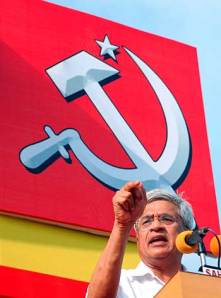
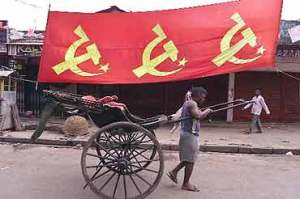
Hypocrisy beneath hammer-and-sickle sign: Sankar Ray

Guest post by SANKAR RAY

Sankar Ray is a veteran journalist based in Kolkata

[This article presents the sordid tale of land acquisitions for the New Rajarhat Township and the involvement of important CPI(M) personnel in this game. One of them, the key protagonist of the story below, was mentioned by Pranab Mukherjee in parliament yesterday, taunting the CPI(M) over its claims to be a crusader against corruption, arousing the ire of its MPs. – AN]

Calling it a ‘shocking experience”, after a visiting a segment of oustees in the Narmada Valley in mid- August 2002,  Sarla Maheswari, then CPI(M) member of Rajya Sabha member told the media – as if her heart bled, and with revolutionary conscience ablaze:  “How can a development project create a disaster in the lives of the most downtrodden tribal people and also thousands of farmers of a huge area? How can it ravage their lives without any protest by mainstream political parties?  Truth indeed is stranger than fiction as the same fire-eating  ‘communist MP’s demagoguery is now in a hot soup as I-T sleuths raided  at  her residence, as a sequel to  detection of an unaccounted sum of Rs 31 crores and 26 benami companies, belonging to the Canopy Group whose chairman is her husband Arun Maheswari. And the CPI (M) brass at the Muzaffar Ahmed Bhavan, Bengal CPI(M)’s state headquarters keep up their recalcitrance, not even demanding a ‘show cause’ of the cash-rich ‘comrade’ . Former MP and CPI(M) CC member Mohd Selim, a spokesman of state party leadership too, ruled out any punitive step until specific indictment by the I-T department, leave alone criticizing the shady land transactions in the controversial New Town project at Rajarhat fully with the knowledge of ‘comrade Sarla Maheswari’  and her family.

Continue reading Hypocrisy beneath hammer-and-sickle sign: Sankar Ray

“dissenting dialogues” on Egypt, Sri Lanka and other debates

The editorial and the list of articles in the dissenting dialogues Issue No 2, February 2011 are posted below. The entire issue can be downloaded as a pdf file from the Sri Lanka Democracy Forum website.

Editorial

As the second issue of dissenting dialogues goes to press, we join in worldwide celebrations of the ongoing democratic revolution in Egypt, itself sparked off by an uprising in Tunisia. The Egyptian uprising, which has tremendous regional and possibly global consequences, came against a background of simmering unrest directed at a dictator who presided over a brutal, authoritarian regime. This regime was distinguished by its incarceration and torture not only of its own dissidents but of prisoners “renditioned” to it by the CIA, the denial of basic democratic rights on the pretext of fighting Islamism, and rising youth unemployment and inflation.

Although the timing and form of Egypt’s popular revolt could not have been predicted, an examination of the recent history of Egypt contextualises the forces at work. For a start, we cannot avoid looking at the recent history of neoliberalism in Egypt, its relationship to the authoritarianism of President Hosni Mubarak’s government, and the regime’s relationship to imperialism. The post-war history of Egypt also charts and indeed defines the historical trajectory of Third World sovereignty. Egypt’s revolt has to be understood in the context of the progressive socialist, anti-colonial struggle for national self-determination of the Bandung era from the 1950s until the liberalisation of the economy in the 1970s, the International Monetary Fund’s “restructuring” in the early 1990s, and the recent capitulation to the accumulation strategy of global finance capital.
Continue reading “dissenting dialogues” on Egypt, Sri Lanka and other debates

Anbulla kaadu (My beloved forest): Madhumita Dutta

Thervoy Kandigai Industrial Complex. The Government issued orders alienating 1127 acres of poramboke land in favour of SIPCOT for formation of a new Industrial Complex in Thervoy Kandigai village of Gummidipoondi Taluk, Thiruvallur District. The land development work is in progress now.

From the website of Industries Department, Government of Tamil Nadu

What this “land development work” involves, and the price that will be paid in human and ecological costs is something that MADHUMITA DUTTA encountered recently.

“A forest that was once ours is now private, a land that was once green now stands barren, a forest where we played, where we wandered freely is now fenced, men in uniform now guard the forest which we protected for generations.”

Thervoy Kandigai. A small nondescript village in Gummidipoondi Taluk of Thiruvallur district, 50 kms north of Chennai.  Surrounded by dense shrubby forests, natural lakes, rice fields and undulating terrain with misty mountain range of Sathyavedu in Andhra as the back drop. This small dalit village of about 1000 families is in the eye of a storm.  A storm that can blow away the dreams of Tamil Nadu government to hand over hundreds of acres of land to French tyre company Michelin, a big ticketed investment worth Rs 4000 crore for the state.   Continue reading Anbulla kaadu (My beloved forest): Madhumita Dutta

The ‘Viral’ Revolutions of Our Times – Postnational Reflections

The Arab Turmoil

According to a  report in The Guardian, the movement in Egypt that overthrew the regime of Hosni Mubarak is “a movement led by tech-savvy students and twentysomethings – labour activists, intellectuals, lawyers, accountants, engineers – that had its origins in a three-year-old textile strike in the Nile Delta and the killing of a 28-year-old university graduate, Khaled Said”. It has emerged, says the report, “as the centre of what is now an alliance of Egyptian opposition groups, old and new.” The April 6 Youth Movement (primarily a Facebook network), came into existence in in 2008, in support of the ongoing workers’ struggle in the industrial town of El-mahalla El-Kubra primarily on issues related to wages. The struggle in the past few years, also moved towards a restructuring of unions with government appointed leaders. The list of demands for the April 6 strike also included a demand for raising the national minimum wages that had remained stagnant for over two and a half decades. Increasing workers militancy over the past few years was a direct response to the World Bank imposed ‘reforms’ that had pushed lives of industrial labour to the brink. It was this sharpening conflict, consequent upon the serious impact of structural adjustment policies, that provides the backdrop in which the middle class youth decided to rally in support of the April 6 2008 strike. It was they who converted the call for an industrial strike into a general strike, according to some reports.  It is virtually impossible to get a sense of any of this in the ecstatic reports of the ‘networking babalog’ making a revolution that is now all over the Indian media.

Continue reading The ‘Viral’ Revolutions of Our Times – Postnational Reflections

Why does the RSS dread the terror tag?

1.
Ram Madhav, the bespectacled ex-spokesperson of RSS is not known for his sense of humour.

It is a different matter that some of the media people just could not control their smiles when sometime back (second week of Feb 2011) in a press conference in the capital he enlightened the journos about l’affaire Aseemanand and the broader phenomenon of Hindutva terror.

Giving a completely new and almost unforeseen twist to the Aseemanand episode he said that he (i.e. Aseemanand) had in fact left the RSS in 2006. Of course, as a good spokesperson – although he has become an ex- he had the usual disclaimers in the beginning: RSS does not believe in violence and is a cultural organisation… One does not know whether much on the lines of the School Leaving Certificate, with which lesser mortals like us are more familiar with, Ram Madhav distributed photocopies of ‘Sangh Leaving Certificate’ of Aseemanand or anything similar to give authenticity to his claims or not. Continue reading Why does the RSS dread the terror tag?

‘We are aware of India’s interests’: Jhalanath Khanal

Interview with Nepal Prime Minister Jhalanath Khanal.

After seven months of living with a caretaker government, Nepal’s Parliament on February 3 elected Jhalanath Khanal, chairman of the Communist Party of Nepal (Unified Marxist Leninist), as the Prime Minister, with the support of the Unified Communist Party of Nepal (Maoist). He spoke to Prashant Jha at the prime ministerial residence in Kathmandu on February 10. Excerpts, as first published in The Hindu:

What’ll be your priorities?

My first priority is to complete the ongoing peace process. Second, my aim is to help complete the Constitution-writing process. Third, I’ll strengthen the institutions of governance, improve law and order, and guarantee security to the common citizens. Fourth, my focus will be on taking the country towards an economic revolution through development, reconstruction and socio-economic transformation.

Your predecessors had similar priorities, and had pledged to complete the peace and constitutional process. What’s different about your government? Continue reading ‘We are aware of India’s interests’: Jhalanath Khanal

Blasphemy, Sedition, Democracy

Have you ever wondered?

Why does our media get so worked up when someone in Pakistan is accused of or convicted for blasphemy but is not overly perturbed when someone is charged with or convicted for Sedition in India?

Is this differentiated response occasioned by the belief that a modern state should overlook things like blasphemy but give no quarter to sedition?

Do anti-Blasphemy laws encroach upon Individual freedom while anti-sedition laws protect national interests? Is convicting someone for blasphemy essentially undemocratic but doing the same for sedition not so?

Let’s for the time being leave these major issues aside and engage ourselves with more mundane issues. Continue reading Blasphemy, Sedition, Democracy