Category Archives: Right watch

माँ, तुझे सलाम! कविता कृष्णन

अतिथि पोस्ट : कविता कृष्णन

“Scout,” said Atticus, “nigger-lover is just one of those terms that don’t mean anything—like snot-nose. It’s hard to explain—ignorant, trashy people use it when they think somebody’s favoring Negroes over and above themselves. It’s slipped into usage with some people like ourselves, when they want a common, ugly term to label somebody.”

“You aren’t really a nigger-lover, then, are you?”

“I certainly am. I do my best to love everybody… I’m hard put, sometimes—baby, it’s never an insult to be called what somebody thinks is a bad name. It just shows you how poor that person is, it doesn’t hurt you.” (To Kill A Mockingbird, Chapter 11)

‘Now, there is a long and honourable tradition in the gay community and it has stood us in good stead for a very long time. When somebody calls you a name – you take it. And you own it.’ (Pride, 2014)

‘टू किल अ मॉकिंगबर्ड’ उपन्यास 1950 के दशक के अमेरिका के दक्षिणी राज्यों में नस्लवाद की कहानी है. उसमें एक वकील जिनका नाम एटिकस है, एक काले नस्ल के आदमी की पैरवी करते हैं जिस पर बलात्कार का गलत आरोप लगाया गया है. एटिकस की 8 साल की बेटी स्कौट कहती है की गाँव के लोग कह रहे हैं कि मेरे पिताजी ‘हब्शी-प्रेमी’ है. वह पूछती है कि इसका क्या अर्थ है, सुनकर लगता है कोई गाली है, जैसे किसी ने मुझे ‘बन्दर’ कहा हो, पर इसका क्या मतलब है?

Continue reading माँ, तुझे सलाम! कविता कृष्णन

Why exoneration of Sadhvi Pragya should worry everyone who stands for justice

Why exoneration of Sadhvi Pragya should worry everyone who stands for justice

There are a few photographs which the bigwigs of the Hindutva Brigade/Sangh Parivar would like to be erased from public memory. One such photograph shows Sadhvi Pragya, an ex-member of the ABVP, sitting with Shivraj Singh Chouhan, Chief Minister of Madhya Pradesh, Rajnath Singh and few others. As it was later revealed they had gathered to console the widow of a BJP leader from MP, who had just died.

Public memory is very short but one can stretch it a bit to recollect the tremendous consternation in BJP/RSS circles when Sadhvi Pragya was arrested by the Anti Terrorist Squad led by the legendary police office Hemant Karkare on 23 October, 2008 for her alleged role in the 2008 Malegaon bomb blast. This photograph had suddenly gone viral when there were denials by many leaders of the saffron brigade that they had never met her.

Now that the NIA, the federal agency established by the government to combat terror in India, has given a ‘clean chit’ to Sadhvi Pragya and few of her accomplices, should one expect that all those photographs showing her proximity to various leaders of the saffron establishment would be prominently exhibited? It must be remembered that leaders of BJP have even claimed that it was an act of “treason” to arrest her.

(Read the remaining article here : http://www.catchnews.com/politics-news/why-exoneration-of-sadhvi-pragya-should-worry-everyone-who-stands-for-justice-1463399413.html)

Who will Educate the Educators? Reflections on JNU today: Janaki Nair

Guest Post by JANAKI NAIR

 In an interview to the journal Frontline on February 16, 2016, just 11 days before he took over one of India’s most prestigious universities, Prof Jagadesh Kumar had this to say:

I am a defender of free expression of thought in a democratic set-up and students are free to question me or challenge my views. I believe in constructive criticism, and as long as it is done peacefully and within the boundaries of the law, there is no problem.

Declaring his  two top priorities, of which one was the redressal of  infrastructural shortcomings, he desired

to improve the learning environment by making it more student-centric. Some of the faculty are great researchers, but they do not have much understanding of teaching. What I want to do requires cooperation from faculty members.

These words, which Prof Kumar has thus far not refuted or denied, should be recalled today, more than three months after his takeover, the  most tumultous months the University has ever known.  It is too early to judge the VC on his infrastructure  promise, as some of us continue to make  bone rattling journeys on cycles over  the most rutted roads on the campus.  Continue reading Who will Educate the Educators? Reflections on JNU today: Janaki Nair

बेहद पोंगापंथी और जातिवादी हैं प्रवासी भारतीय

आम धारणा है कि एक भारतीय विदेश की सरजमीन पर पैर रखते ही जेंटलमैन बन जाता है। वह सभ्यता के नए मूल्यों से परिचित होता है, अपने देश की तमाम रूढ़ियों से नाता तोड़ लेता है और सही मायने में एक आधुनिक व्यक्ति बन जाता है। यह बात एक हद तक ही सही है। कुछ लोगों में भले ही परिवर्तन आ जाता हो पर एक बड़े हिस्से पर शायद उल्टा ही असर होता है। भारत के बाहर जहां-जहां भारतीय बसे हैं, वहां उन्होंने न केवल जाति आधारित संगठनों, संस्थाओं की स्थापना की है बल्कि वहां भी वे निम्न कही जानेवाली जातियों के साथ खुल्लमखुल्ला भेदभाव करने में संकोच नहीं करते। लेकिन उनके चरित्र के दोहरेपन का आलम यह है कि वे चाहते हैं कि ये बातें ढकी-छुपी रहें। वहां के लोग यह सब न जानें।

आजकल अमेरिका के एक बड़े राज्य कैलिफॉर्निया की पाठ्यपुस्तकों में संशोधन चल रहा है। यह एक रूटीन प्रोसेस है जिसके तहत सिलेबस में नए विषय या तथ्य शामिल किए जाते हैं। इस क्रम में वहां सिलेबस में हिंदुओं के बारे में भी कुछ सूचनाएं शामिल की जा रही हैं। लेकिन इस पर विवाद हो गया है कि जानकारियों को किस रूप में रखा जाए। भारतीयों का एक तबका चाहता है कि प्राचीन तथ्यों को नए सिरे से लिखा जाए और हिंदू समाज में मौजूद वर्ण व्यवस्था या छुआछूत की बात को साफ गोल कर दिया जाए। अमेरिका में रह रही दलित ऐक्टिविस्ट थेनमोझि सुंदरराजन ने पिछले दिनों ‘द हफिंग्टन पोस्ट’ में इस संबंध में एक लेख लिखा है जिसके मुताबिक प्रवासी भारतीयों के एक हिस्से में सक्रिय ‘धर्मा सिविलाइजेशन फाउंडेशन’ की तरफ से दलील दी जा रही है कि हिंदुओं में जाति एवं पुरुष सत्ता का जिक्र किया जाएगा तो इससे हिंदू बच्चे ‘हीन भावना’ से ग्रस्त हो जाएंगे। यह उनकी ‘प्रताड़ना’ का सबब बन सकता है, लिहाजा इस उल्लेख को टाल दिया जाए।

सुंदरराजन बताती हैं कि ऊपरी तौर पर आकर्षक लगने वाली यह दलील सच्चाई पर पर्दा डालने जैसी है क्योंकि वही तर्क नस्लवाद के संदर्भ में भी इस्तेमाल किया जा सकता है और किताबों से उसकी चर्चा भी गायब की जा सकती है। लेकिन इन कोशिशों का विरोध भी हो रहा है। विभिन्न धर्मों व नस्लों से जुड़े संगठनों ने एकजुट होकर पाठ्यपुस्तकों में ऐसे हेरफेर की मुहिम पर आपत्ति जताई है। उनका कहना है कि दक्षिण एशिया के इस हिस्से में जातिगत और धार्मिक असहिष्णुता या संस्थागत भेदभाव के प्रसंग को गायब करना न सिर्फ इतिहास को नकारने जैसा है बल्कि यह गैर लोकतांत्रिक भी है। Continue reading बेहद पोंगापंथी और जातिवादी हैं प्रवासी भारतीय

The HLEC and the Aporias of ‘Committeed’ Enquiries: Rina Ramdev and Debaditya Bhattacharya

This is a guest post by Rina Ramdev and Debaditya Bhattacharya

Students of JNU have been on an indefinite hunger-strike for over 15 days now, and the administration’s only official response so far had been the Vice Chancellor’s May 4 statement invoking the vocabulary of the ‘lawful’ and the ‘constitutional’ — in ambivalences closer to threat than appeal. The subsequent May 10 Academic Council meeting has been historic, both for its 53 members’ overwhelming denunciation of the HLEC report, as also for the indelible image of a fleeing VC now forever etched in campus folklore. Further, the Delhi High Court’s stay on the fine imposed upon one of the students lends hope for similar stays with the remaining beleaguered students’ cases. The VC has consequently been referring to the enquiry mandate as being sub-judice, only to grant it an interim legitimacy that may symbolically defeat the stridency of student resistance. Letters have been sent out to the parents of striking students, in an attempt to re-route intimidation and pressure through other non-official means of paternalism. Given the conditions of duress being thus created, until the HLEC’s report is revoked in entirety, there is every reason to believe that the administration’s vindictive punitive designs will leech into the future of university freedoms and campus democracy irreversibly.

Continue reading The HLEC and the Aporias of ‘Committeed’ Enquiries: Rina Ramdev and Debaditya Bhattacharya

Degrees of Self-Deception: Rama Srinivasan

Guest post by RAMA SRINIVASAN

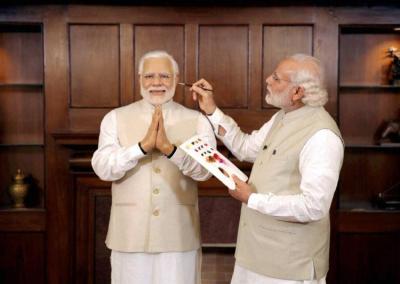
Modi and his double, image courtesy, IndiaTV news

As the crisis of fake degrees blows over I want to be the one to ask the naïve question: Why would Narendra Modi lie? I know it is a naïve question because lies are the most banal political strategy ever. There is a man in US today who repeatedly states that he will make the Mexican government pay for a beautiful, great wall on the border of US and Mexico and people believe him with a degree of sincerity that is frightening. In 2014, at least 31 percent of eligible Indian voters believed in Modi’s promises of development and some of them still do. There may be some who, at the end of the five years, actually believe that Modi has delivered on those promises. But such lies are different. My question is simply: why would he lie on an affidavit which functions as a legally-binding oath?

In his previous election affidavit filed for 2012 Gujarat elections he had left the spouse’s name column empty but following ‘strict legal advice’ he agreed to mention his wife’s name on the affidavit filed for Lok Sabha elections. Technically he had withheld information in previous affidavits which amounts to a legal offence since he had not filed his papers to ‘the best of his knowledge’ but this is not the same as actively lying as it now turns out could be the case with his educational qualifications. Legal experts will determine what is tantamount to punishable crime but if Modi did have legal counsel, who advised him to “come clean on the marriage” as this Times of India article states, why would he continue to provide inaccurate information on other aspects of life?

One speculative answer could be that he knew he was being closely watched as he made his bid for the PM’s post and that his papers would be scrutinised and compared with previous drafts. So it made sense to remain consistent with some of the information even though he had obviously been cornered on the question of his marital status. And yet, as the story of how Modi came to acknowledge the existence of his wife Jashodaben proves, if he had to reveal inconsistencies in previous records, 2014 would have been the best time to do this. No amount of exposés could have hurt the man at that time – his bhakt army, on and offline, on Twitter, were efficiently managing the show and could provide a useful media spin/misdirection to take the focus away from the affidavit that declared to the world that Jashodaben’s repeated claims regarding her marriage and abandonment were not unfounded. Even as the Gujarat Congress urged the state Election Commission, unsuccessfully, to reject his application on the grounds that he had not provided information regarding his spouse’s assets or PAN card number, Modi cruised to victory since his deliberate inconsistencies seem to matter very little to voters.

At that point Modi, indeed, seemed invincible. He was giving explosive speeches and deftly avoiding uncomfortable questions from journalists. In an interview with Rajdeep Sardesai, Modi replied to an indirect question on 2002 with this classic deflection tactic: “My best wishes are with you, Rajdeep Sardesai. You have been living off this issue for the last 10 years … I have heard that those who curse Modi get Rajya Sabha seats or Padma awards. So you have my best wishes to continue this campaign (against Modi) and reach Rajya Sabha or win Padma awards with help of your friends.” What was apparent in the interview is now widely acknowledged as the process of constructing a larger-than-life image, where the man referred to himself in third person. Continue reading Degrees of Self-Deception: Rama Srinivasan

But She was a Law Student …


In a way that is perhaps unprecedented, today, a very large number of Malayalis feel connected to each other by a veritable tsunami of pain. No wonder perhaps, because the veils of our complacency have been ripped off too thoroughly. The immediate context is the gruesome murder of a young Dalit student in central Kerala, in the tiny, rickety squatter-shack that was her home, in full daylight.

At a single stroke, the incident fully exposed the dimensions of social exclusion in contemporary Kerala. Hers was an all-woman family among families deemed ‘properly gendered’, they were lower caste people trapped and isolated among upper and middle caste families, they were the working-class poor without property in an area full of propertied domestic-oriented bourgeois and petty-bourgeois families. Oppressed in all these ways, they were invisible to the state and the political parties. They possessed no form of capital that would have allowed them upward mobility. Yet, the young woman struggled on and reached the law college.

‘But she went to college’, some ask, ‘how could she have been so helpless?’

Read the rest of the article here 


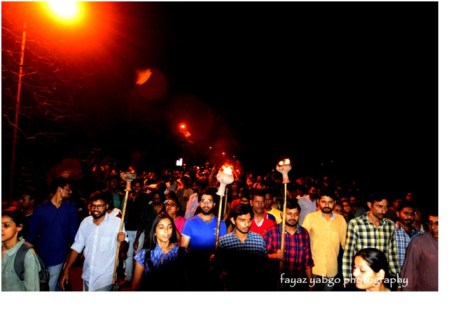
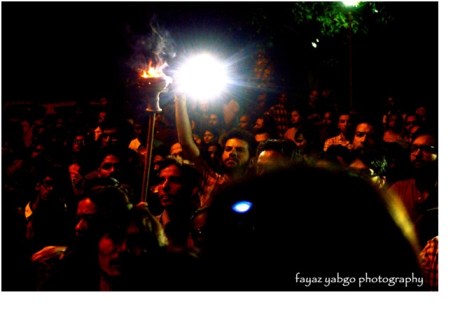
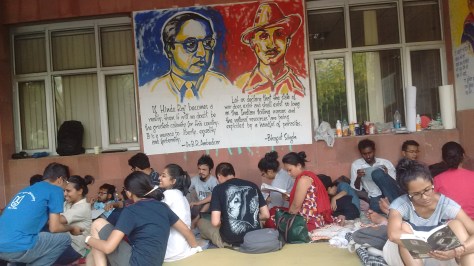
#FightBackJNU through the lens of Fayaz Ahmad

Photo Essay by FAYAZ AHMAD, JNU student on indefinite hunger strike

Untitled

March against the biased and unjust HLEC Report, culminating in hunger strike

Untitled 2

Continue reading #FightBackJNU through the lens of Fayaz Ahmad

Where are we heading? A Bangladeshi feminist’s reflections: Khushi Kabir

Guest Post by KHUSHI KABIR

Very soon after Professor Rezaul Karim Siddque of Rajshahi Univeristy was hacked to death in the morning of April 23, 2016, I wrote my feelings, my frustrations, my concerns and my fears. From all the information we received, Professor Karim appeared to be a quiet man, a man who was of a peaceful nature, a lover of music and a committed teacher.  As is the case with most Bangalis, he loved music.  Cultural activities were in his bloodstream.  He tried to, or did set up a cultural hub in his home, where he lived, not too far from the University where he taught.  He was not a declared atheist, nor a blogger, not even an armchair or facebook activist.  Not one of the usual argumentative Bangalis, the usual picture of the intellectual.  Not one of those who were in the frontlines of activism, not a talk show star, not one who wrote long opinions and editorials about the state of affairs of the country.  Why would he be killed?

We read from the reports that we get from all the different forms of media that exists, that he was what I often describe as the typical example of a citizen of this land, the kind of people I grew up with, secular in his thinking by encouraging culture, music, playing his favourite sitar, reading books, yet sensitive and responsive to the practice of religion of the people he lived amongst, his family perhaps, certainly his neighbours.  We heard of his large donations to the building of the local mosque as a proof of this perception.  His daughter has been very vehement in stating that he was a believer.  I find it very telling on our current state of affairs that we have to insist that we are all believers.  Why should it matter?  A murder is a murder and a gruesome murder has to be taken in all seriousness no matter what one’s beliefs are or where one stands.  We all grew up learning to sing, dance, play an instrument, and write poetry, recite etc.  Where else do we find that recitation is considered a part of cultural practice, a part of the performing arts?  Was his fault that he embodied this very nature of the Bangali? Was he murdered so brutally simply to be used as an example of what not to be?  Was he simply targeted because he embodied the very spirit of 1952, of 1971 in the quiet nature of his being?

Continue reading Where are we heading? A Bangladeshi feminist’s reflections: Khushi Kabir

The JNU administration now faces a crisis of credibility: Ayesha Kidwai

AYESHA KIDWAI in scroll.in

students on hunger strike

The indefinite hunger strike by 17 Jawaharlal Nehru University students has been continuing since April 28, with university teachers and students also showing their solidarity by joining as relay hunger strikers.

Despite the searing heat and failing health of many – including Chintu Kumari, Umar Khalid and Kanhaiya Kumar – the declaration by the Vice Chancellor of JNU that a hunger strike is an “unlawful activity” has only fuelled the strikers’ determination. Although over a hundred teachers met the Vice Chancellor and his team (as he likes to call them) in a bid to break the deadlock, no progress has been made because the JNU administration seems to believe that the fight here is one about the quantum of punishment.

Such is the chasm that separates the current JNU administration’s understanding of what the law is and what justice actually demands that the law has become something of a fugitive in JNU these past few months. The extremely obstinate, vengeful and motivated enquiry proceedings anddisciplinary action over the February 9 event have so perverted university procedures and institutions that the entire JNU administration now faces a crisis of credibility.

Continue reading The JNU administration now faces a crisis of credibility: Ayesha Kidwai

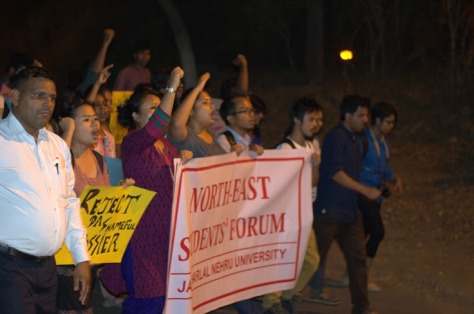
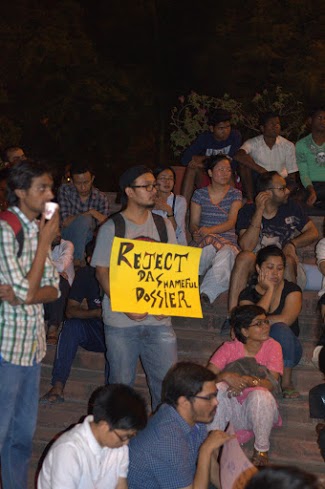
North East Students’ Forum JNU Protests the defamation of JNU by “Dossier”

North East Students’ Forum JNU organized a protest march on May 4, demanding strong action against teachers who are involved in preparing the “internal dossier”. The dossier was also burnt by NESF at Administration Block – Freedom Square – JNU.

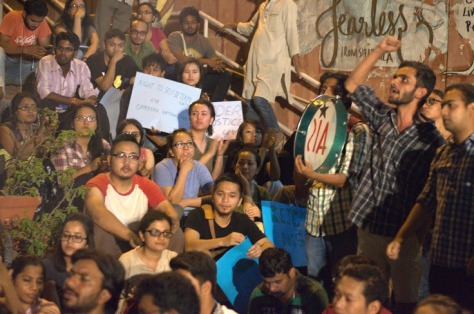
Some images from the march

9c5fc67a-b629-47d0-b7fe-4ae8c0c53695

ab266cdb-324a-48f9-af0f-56f6759b997a

NESF 8

Statement of solidarity for HCU from students and faculty of University of Texas at Austin

Responding to the Challenges of Blue and Red – Reminiscences of a JNU-HCU Alumna: Shipra Nigam

This is a guest post by SHIPRA NIGAM

That the past few months have been cataclysmic is an understatement. Personal tragedies and political catastrophes have exploded within our most cherished spaces, and brought a churning in them.  What was truly transformative was the experience of both the emergence of broad solidarities against right-wing fascism, and of the reminders of multiple registers and contexts within them. These underline the need for multiple conversations to understand both our common struggles, as well as the contradictions within, and to renew a resolve for introspection through them as we move towards real ‘azaadi’.

There is of course an ongoing debate on this, and here I felt that some binaries being invoked in it are not very convincing, while others brought home stark truths that pose challenges to a patriarchal, majoritarian caste hindu ordering of society, within which we are all located at different levels of hierarchy, complicity, and engagement.

I have been part of both public universities under fire right now, and the present brings home the urgency of the dual task of defending the public university as a space for pushing the boundaries of critical thought, and confronting the very hierarchies and complicities with power that shape it. This is necessary even as processes of democratisation and affirmative action take root in public institutions . So these are some reminiscences from an alumna of both these public universities who has been wrestling with articulations and complexities which lie beyond institutional labels or binaries. Continue reading Responding to the Challenges of Blue and Red – Reminiscences of a JNU-HCU Alumna: Shipra Nigam

‘Swacch Bharat Abhiyan invisibilises the linkage of Caste and Sanitation and glamourises broom among Scavenging Communities’ – Bezwada Wilson

In Conversation with Bezwada Wilson, National Convener of Safai Karmachari Andolan

The 125 day Bhim Yatra which started from Dibrugarh and traveresed 30 states and 500 districts to reach Delhi is now over.  As everybody knows it culminated in a big rally coupled with people’s hearing where families of those victims who died while cleaning sewers and septic tanks shared their plight at the hands of state as well as civil society. The call of this Bhim Yatra raised by Safai Karmacharis – ‘Stop Killing Us’ – would could keep reverberating for quite some time. (https://kafila.org/2016/04/14/bhim-yatra-so-that-there-are-no-more-killings/)

Here follows an interview with Bezwada Wilson, National Convener of Safai Karmachari Andolan

 How do you see the impact of  ‘Bhim Yatra’ ?

As far as those people who are still condemned to do scavenging is concerned, the 125 day Bhim Yatra has made two significant impacts :

– It has made people aware that a new act (2013 act) has come into existence for elimination of manual scavenging and they should make use of it for their liberation.

– Second significant impact is that people are realising that we should not do this work, we should leave this work altogether. Babasaheb’s teachings that depressed classes should leave all such professions which are stigmatised and which further help stigmatise them has reached broader cross sections of people engaged in cleaning and scavenging. The slogan ‘ Leave the Broom, Take the Pen’ is slowly reverberating across people especially the younger ones. Continue reading ‘Swacch Bharat Abhiyan invisibilises the linkage of Caste and Sanitation and glamourises broom among Scavenging Communities’ – Bezwada Wilson

The Difference between What They Tell Us and What We Know: Shehla Rashid

Guest Post by Shehla Rashid. Based on a Status Update on her Facebook Page.

They tell us that the military is meant for fighting the “terrorists”; But most of the time, it is the civilians who are killed.

They tell us that “special powers” for the army are necessary for national unity; But the army only teaches us how to hate India.

They say the University is anti-national because it wants to break India; But it’s the University that teaches us to love Indians.

Then, who is anti-national? Those who teach us how to hate India, or those who teach us how to love Indians?

Yes, we see the difference between India and Indians; India is at war with Indians throughout India.

I wish the Indian state could also see the difference between Kashmir, which it claims as its own, and Kashmiris who belong to no one; They claim to love Kashmir but hate and kill Kashmiris.

Continue reading The Difference between What They Tell Us and What We Know: Shehla Rashid

Guggenheim Breaks Off Negotiations with Gulf Labor: Statement from Gulf Labor Coalition

This is a statement issued by the Gulf Labor Coalition

Guggenheim Breaks Off Negotiations with Gulf Labor


On April 13, 2016, Guggenheim Board of Trustees unilaterally severed negotiations with the Gulf Labor Coalition (GLC). In a conference call, the Guggenheim[1] informed GLC that they will no longer meet with us, nor listen to our proposals about the living and working conditions of the workers who are and will be building museums in Abu Dhabi.

On April 17, 2016, Richard Armstrong, Director of the Guggenheim Museum, sent an email to artists, art critics, curators, and museum directors all over the world describing GLC as a group that “continues to shift its demands,” is “continuing to spread mistruths,” and uses “deliberate falsehoods.”[2] He insisted that no work had begun on the Abu Dhabi site, a recurring claim that GLC has already challenged.[3]

Since the announcement of the artist boycott of Guggenheim Abu Dhabi in 2011, GLC has published research reports, analyzed each Pricewaterhouse Cooper (PwC) monitoring report, invited NGOs and labor organizations (e.g., ILO, HRW, ITUC) to join discussions, and initiated multiple meetings with Guggenheim.[4] In response to all this work by GLC, statements made by the museum made it clear that the Guggenheim was never serious about dialogue with artist groups towards fair labor standards Continue reading Guggenheim Breaks Off Negotiations with Gulf Labor: Statement from Gulf Labor Coalition

Statement of Solidarity with Hyderabad Central University from Columbia University, New York

This is a statement of March 29, 2016 from students, faculty and affiliates of Columbia University. We publish it below with apologies for the delay.

We, students, faculty and affiliates of Columbia University, strongly condemn the violation and atrocities brought upon the students and faculty of the Hyderabad Central University (HCU) on March 22, 2016. Since Professor Appa Rao Podile was on leave and under investigation for the institutional murder of Rohith Vemula, his return to the campus to resume duties as the Vice Chancellor was unacceptable. The students justifiably organized a peaceful protest in the campus that day. The institutional responses to that, by the University authorities, the Andhra and Telangana police force, Rapid Action Force personnel, the media, and the members of the Akhil Bharatiya Vidyarthi Parishad (ABVP) on campus, were outrageous, inhuman, and fascist. The University authorities, instructed by Prof Podile, shut down the Internet connection, dining hall and drinking water facilities in retaliation to the peaceful student protest. The Andhra and Telangana police force lathi-charged students and faculty, violently beat up and severely injured them, molested and threatened to rape female students, targeted Muslims and Dalits, abused them verbally, and eventually arrested 24 students and 3 faculty. The ABVP members resorted to violence and aggressive sloganeering from the very beginning of the students’ peaceful protest and also attacked and injured them. The mainstream media has been ignoring these atrocious events at a Central university campus and has decidedly turned away from its responsibility and its accountability to the public. This is ironic, at the very least, when some of the news anchors just last month were so focused on fabricating stories of “terrorist” and “anti-national” activities at the Jawaharlal Nehru University, Delhi. The media ultimately failed to demonize the students then. Now, yet again, the media is unabashedly siding with the authoritarian regime of corporate and state power; this time by ignoring the brutality of the police and the HCU authorities.

We strongly condemn

–       the fascist abuse of power by the University authorities, who decided to deprive the students of basic facilities as ‘revenge’ for the peaceful demonstration

–      the violence, the targeting and the brutality of the police force

–   the irresponsibility of the media for not reporting this on prime time and for effectively siding with the tyrannical regime in power

–       the atrocities unleashed by the casteist, capitalist, Hindu fundamentalist government and its affiliates, especially ABVP.

Continue reading Statement of Solidarity with Hyderabad Central University from Columbia University, New York

How to be free of Caste – Guest Post by Suhas Borker

Guest Post by Suhas Borker

This year, India has sponsored the observation of the birth anniversary of Babasaheb Ambedkar at the United Nations for the first time. The Permanent Mission of India to the UN shall commemorate the 125th birth anniversary of the Dalit icon on April 13 at the UN headquarters, a day before his date of birth, with an international seminar on ‘Combating inequalities to achieve Sustainable Development Goals (SDGs)’. A note circulated by the Indian mission says that the “national icon” remains an inspiration for millions of Indians and proponents of equality and social justice across the globe. “Fittingly, although it’s a matter of coincidence, one can see the trace of Babasaheb’s radiant vision in the SDGs adopted by the UN General Assembly to eliminate poverty, hunger and socio-economic inequality by 2030.”

Juxtapose this with a recent report on caste-based discrimination by the United Nations Human Right Council’s Special Rapporteur for minority issues that has stung the Indian government, provoking it to raise questions about the lack of “seriousness of work” in the UN body and the special rapporteur’s mandate. Ambedkar, the architect of the Indian Constitution, would definitely not be pleased. Nor are the Dalit rights activists in India and abroad.

( Read the rest of the piece here : http://www.thehindu.com/opinion/op-ed/how-to-be-free-of-caste-in-india/article8467518.ece?homepage=true)

Fifty Shades of Grey – Without the Thrills

[This is a response to Shourajenda Nath Mukherjee’s open letter on Kafila by Prof Makarand Paranjape]

Mr. Shourjendra Nath Mukherjee’s “Open Letter” of April 5, 2016 makes only one substantive point, concerning the agency of students, which needs attention. The rest of it, as the Dormouse said to Alice, is “much of a muchness” – confusion, rigmarole, and thumb-twiddling over precious little, which scarcely need be dignified by serious confutation. Continue reading Fifty Shades of Grey – Without the Thrills

NIT and the Never Ending Story of Kashmir: Jagjit Singh

Guest post by JAGJIT SINGH

[The incidents in NIT Srinagar follow those in a number of universities and institutions of higher education and at one level, reflect a similar pattern. Yet, at another level, they – and the forces active behind them – play on a very different template of politics to achieve the same result. The story is similar and yet, radically different. The key dramatis personae are, understandably, the same. How do we make sense of what is happening in NIT Srinagar? Today’s Indian Express story by Nirupama Subramanian gives a sense of one part of the backdrop – life in NIT Srinagar before the incidents. The piece below gives us another sense of the larger history.]

NIT Srinagar non-Kashmiri students demonstrate
NIT Srinagar non-Kashmiri students demonstrate, image courtesy The Hindu

I remember when I was kid and was trying to make sense of a sport which looked very dull and boring but generated passions I had never seen in my hometown. Every time the game ends, the streets would be flooded by countless people with music and firecrackers and slogans in the background. Sometimes we could see fireworks even from our balcony, and some other times we would be locked inside our homes. Only thing we knew was ‘situation is tensed outside’. The game was Cricket and my hometown was Jammu. Jammu has always been RSS’s stronghold, and there are two Muslim-majority areas in Old City, Jammu. The whole tension surrounded these two areas only. Even that time slogan shouting was the test of your love for your country. The more violent and high-pitched your slogan is the more cheers you receive from the crowd. Continue reading NIT and the Never Ending Story of Kashmir: Jagjit Singh

Statement of Solidarity for Hyderabad Central University from UK-based academics

STATEMENT OF SOLIDARITY FOR HYDERABAD CENTRAL UNIVERSITY STRUGGLE

We, the undersigned, who are UK-based concerned scholars, express our deep dismay over the police brutality directed at students and faculty members of Hyderabad Central University, starting on March 22, 2016. We are alarmed that students and staff calling for justice at the University have had charges pressed against them, have been disappeared from the campus, and that there are reports of assaults on them in custody. We condemn the police presence on campus, the authorities’ denial of water, electricity, and food to those remaining in student accommodation, and the brutal attack on a PhD scholar for cooking in University premises.

These actions, coming in the aftermath of events culminating in the suicide of a Dalit scholar Rohith Vemula, constitute a severe assault on democratic rights of free expression and thought, assembly and association. They go against the very purpose of universities as places for critical thinking, and damage the international reputation of HCU. As scholars who admire the work of many academic colleagues and alumni at HCU, we are concerned that HCU seems to be fast descending into a campus of unrestrained repression of dissenting voices among students and staff. Continue reading Statement of Solidarity for Hyderabad Central University from UK-based academics

DISSENT, DEBATE, CREATE