Category Archives: Right watch

Vandalism – The Perfect Solution To Communalism! Nandini Rao

Guest Post by  NANDINI RAO

Thank you, unknown-vandals-out-there.

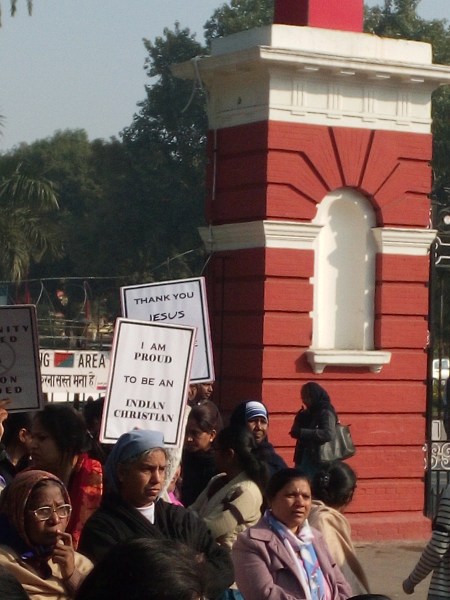
For burning church altars to ashes; for desecrating sacred objects inside houses of worship, for tossing carcasses inside religious places; for converting, de-converting, un-converting or re-converting (as the case may be); for stealing objects from churches that are more valuable to their parishioners for their emotional significance rather than monetary value. For making people ask in hushed tones when and where the next attack is going to take place and what form it will take. For making the pastor conduct midnight mass on Christmas eve outside the church in Delhi, with the faithful offering their prayers in the freezing winter night, simply because they did not have a church to go to.

But most of all, thank you for frightening communities who follow different religions and worship different gods. As for those who do not believe in god or religion, thank you for making them worried about how the social fabric of this country is being pulled apart, thread by thread, through political machinations.

IMG_20150205_094537

Because by doing all of the above, the unknown vandals (they are, needless to say, not criminals, just harmless “vandals”) have made people stop in their tracks and think. They have made communities question law enforcement agencies that brush aside fears and doubts and try to minimise the crimes taking place in their houses of worship. They are compelling them to discuss and debate about forced versus consensual conversions to religions of one’s choice. They are making people of all communities and religions realise how they are being pitted against each other and used as pawns in devious political games. They understand that, in the bargain, it is the poor and the marginalised living on daily wages who are being exploited in the worst possible way. People are realising the importance of their vote and of the very real impact they can make and the change they can bring about, with the single act of pressing a button.

Vandalism has made people come together to hold meetings and consultations to chart out a course to resolve the crises. It has made them stand outside their churches on pavements and on roads, demanding justice and accountability from a state and administration that does not seem to be heeding their voices.

And most important of all, vandalism is teaching us (more than political speeches and advertisements) how one needs to keep on asserting till our voices are heard that we are all citizens in a secular, socialist and democratic republic. That as believers and non-believers, we may worship (or not worship) in varied ways and learn from the teachings of one holy book (or a multitude of books and philosophies), but as citizens, our Holy Book is only the Constitution of India and what it has defined for us, as Indians.

Continue reading Vandalism – The Perfect Solution To Communalism! Nandini Rao

Open Letter to Hindu Mahasabha – we’ll be there on February 14th!

GET READY TO MARRY! 

To the National President, Akhil Bharat Hindu Mahasabha

Dear Chandra Prakash Ji,

It has come to our notice that  you and your self-appointed brigade of protectors of ‘Bharatiya Sanskriti’ have openly vowed to undertake a massive programme on the 14th of February where you promise to marry off anyone who openly expresses their love, whether on the streets or on Facebook. Since you have taken on this gigantic task of marrying so many people on a single day, we would like you to answer some questions that have ‘unnaturally’ crept into our heads as a result of ‘westernization’.

5d67984a9261b26c3a10a7214ddf55d3

Will you marry a boy to a boy he likes, or a girl to a girl?  Will you acknowledge their love for each other, repeal section 377? Or will you send them to jail or Baba Ramdev? Continue reading Open Letter to Hindu Mahasabha – we’ll be there on February 14th!

An Election of Hope Versus Fear

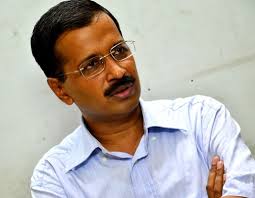
Yes it’s a simplistic dichotomy, but there is really no better way to describe the current Delhi elections. On the one hand, a little ragtag army of Davids behind “Mufflerman”, as his faithful supporters affectionately call him, a person in baggy sweater and sneakers, one you wouldn’t look at twice if you passed him on the road.

Mufflerman Business Standard

  Kejriwal

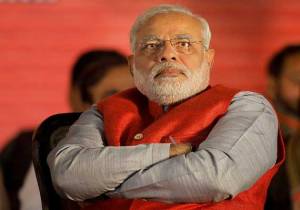
On the other hand, a massively funded, aggressively confident Goliath, openly backed by the corporate bodies and full-page ads, riding a  national “Wave” higher than most Tsunamis, topped by the 56-inch chest of “Modiman”, even if recently modestly covered by a 12-lakh rupee vest.

56-inch Modi78c0d4d3-be9e-4afb-b034-1247529df720wallpaper1

On the one hand, a fearful and awed media establishment donating PR for free to the seemingly invincible King of Gujarat, and on the other, an aam aadmi, a volunteer-cadre run campaign and a palpable vibe of trust and openness on the ground. I know I know, some will say it’s all ‘perception management’ and PR, but barring the googly of the 2 crores party donation thrown at the opportune moment, if Mufflerman’s party was any cleaner, it could have given Lalita ji’s Surf a run for its money. Whatever the result on the 10th (and there is reason to be hawk-eyed about the possibility of tampering as Nivedita Menon’s post has urged), how does anybody not get what a miracle this alone is, in a political economy with a black economy of a size that is higher than the GDPs of most smaller countries? Perhaps this is in fact about hope and fear after all, however clichéd that sounds.

Continue reading An Election of Hope Versus Fear

Statement protesting arrest of Shirin Dalvi, Editor, Awadhnama

We, members of the Mumbai based human rights group Hum Azaadiyon Ke Haq Mein  are disturbed at reports of the multiple cases lodged against Shirin Dalvi, the editor of Awadhnama, Mumbai, and her arrest by Thane district police on January 28, for publishing a news-item on the Charlie Hebdo issue and one of the covers of the magazine on January 17, 2015. We are also shocked at the reports of the continual harassment of Shirin Dalvi.

Responding to readers’ views, she issued a clarification denying any intention to hurt religious sentiments and tendered a public clarification the very next day. However, cases have been registered against her in different police stations in Mumbra and Rabodi (Thane district), Malegaon and Mumbai on charges of violating Sec 295 of the Indian Penal Code (outraging religious feelings by insulting a religion with malicious intent).

While she has sought, and obtained, anticipatory bail in one set of cases from Mumbai Additional Sessions Court judge S D Tekale on January 23, she was arrested in Mumbra, Thane district, and granted bail the same day on Jan 28.

The Mumbai based human rights group Hum Azaadiyon Ke Haq Mein is disturbed at the attempts made to defame her character. Baseless statements appeared in several Urdu newspapers that a colleague had tried to dissuade her from using the Charlie Hebdo cover but the colleague identified was actually not even in office on that day and had resigned a few days ago. Other attempts to defame her included statements that she had joined the RSS women’s wing and was a ‘follower’ of Bangladeshi writer in exile Taslima Nasreen!

Shirin Dalvi is a respected journalist with more than 20 years of experience in Urdu journalism. She is perhaps the only woman editor in Urdu journalism in India, has written on issues concerning women’s rights and politics and is well-known for her literary skill and learning.

The manner in which she is being hounded bodes ill for free debate and discussion and for peaceful resolution of controversy. Besides, the incident is also being used as a pretext to ratchet up polarized public opinion, which is a dangerous game and detrimental to freedom of speech and expression in a democratic society, besides causing immense personal harm and a threat to her life and safety.

We request those who have filed cases against her to accept her clarification in the right spirit with which it has been given and to withdraw all the cases against her.

We also demand that Shirin Dalvi be provided necessary protection forthwith.

sd/-
Hasina Khan
Dr. Ram Puniyani
Adv.Irfan Engineer – Director, Centre for Study of Society and Secularism
Javed Anand – General Secretary, Muslims for Secular Democracy
Sukla Sen
Ammu Abraham
Sameera Khan
Nasreen Fazalbhoy
Mario D’Penha
Divya Taneja
Kamayani Mahabal
Geeta Seshu
Brinelle D’souza – Tata Institute of Social Science
Teesta Setalvad, Editor, Communalism Combat
Rukmini Sen, Hillele Combat TV
Veena Gowda
Anjali Kanitkar
Saaz Shaikh
Rohini Hensman
Chhaya Datar
Susan Abraham
and members and organisations of Hum Azaadiyon ke Haq Mein

Beware BJP’s Filthy Campaign and Desperate Bid to Steal the Elections!

Avam characters

As the AVAM drama unfolds and much more detective work remains to be done, some other disturbing news has also started trickling in. A journalist friend got a mail from an official yesterday, who confided to this journalist:

Dear Sir,
We would like to bring to your notice that our volunteer Mr. XYZ (name withheld for obvious reasons) has attended the preparation of Electronic Voting Machine on 31st January & 1st February and he noticed some discripencies in the EVMs of Booth No. 26, 47A, 75 & 87.
Whichever button he was pushing the vote was being casted in favour of BJP only.
However, after his objection the EVM machines were replaced.

We of course, do not know how many such machines there are.

Meanwhile, another friend – an academic – sent this mail, which tells us something of the sense he got from a tour around Delhi areas – along with his deep suspicion that once again, through some machinations, the elections may be stolen:

This is just to tell you that I accompanied two journalist friends to go on an election tour of Delhi (targetting trader bases with BJP support) and most of the people that we talked to openly supported AAP. Attitudes to Modi ranged from indifference to criticism for blabbering away and not doing anything to plain abuse. Many have started identifying the BJP as a “syndicate” party i.e. as a party of rich businessmen. Above all people think that the 49 day government was a period they felt empowered – and they compare it to the lack of any improvements under Modi for the last 8 months!

This still does not let me lose my belief in the worst: But it gives me a warm feeling when I keep my fingers crossed!

Continue reading Beware BJP’s Filthy Campaign and Desperate Bid to Steal the Elections!

Indian Democracy and the Current Political Dispensation: Ram Puniyani

Guest Post by RAM PUNIYANI

Text of the Dr Asghar Ali Engineer Memorial Lecture

I begin this lecture paying tribute to my very dear friend, Dr. Asghar Ali Engineer, with whom I had the rare privilege of working with for close to two decades. Dr. Engineer was a unique scholar-activist, totally committed to the dream and vision of a humane society that honours the values of diversity and where human rights for all are the defining point.

In this regard, he may have been among the first persons who realized the dangers of divisive communal politics. It was he who set the trend seeking the causal factors behind communal violence, doing his own meticulous investigation after such riots. He contributed massively to reforms that took place in the Bohra community, on the issues of secularism and finally, in the interpretation of Islam. We need to learn a lot from him in order to strive for a society that values peace, amity and compassion.

Where are we standing today? What are the major threats to Indian democracy, today, even more menacing with the coming of the Modi Government?

The factors contributing to his victory have been several. The unstinted support given to him by India’s corporate; the fanatical zeal of the RSS and its lakhs of volunteers; the role of a corporate controlled media; the false projection of the ‘Gujarat model of development’; and the polarization of society along religious lines

The promise of Achhe Din – Good Times – has vanished into thin air. Despite the steep fall in the prices of crude oil in the world, the overall ‘cost of living’ continues to going up. The promise that all the black money stacked abroad will be brought back within six months or so and that we would be surprised to see 15 lakh deposited in our accounts, has been forgotten. The pattern of (good?) governance is only visible in the centralization of power around one person, Modi. Gradually the cabinet system of governance is giving way to one man’s autocratic ways, with secretaries of Government departments reporting directly to the PM.  Continue reading Indian Democracy and the Current Political Dispensation: Ram Puniyani

Modi, Barack and a once sovereign nation

The sheer misery, the excruciating embarrassment, of  watching the Prime Minister of a sovereign (but not secular or socialist) nation desperately, inappropriately, capering about to show off his imagined intimacy with an American President who steadfastly kept his distance and his dignity, is now passing. Time does heal all wounds. (And hopefully, as Groucho Marx put it, Time will also wound all heels) [1]

But the burning question remains – is Modi more shameless than he is ignorant? Much has been said about Modi’s suit that exceeds the worst excesses of the late unlamented Marie Antoinette. Vrinda Gopinath points out:

While the last world leader to don such a suit (it costs around 15,000 sterling pounds or Rs 15 lakhs today) was deposed Egyptian tyrant Hosni Mubarak, it certainly out-dazzled Obama’s working dark grey suit (to cut down on non-vital decisions, the US Prez only wears grey and blue ). However, if Modi was thinking hip-hop bling and ice accessories (his fave diamond Movado watch), it certainly got Obama to make a mention at the President’s banquet when he foxily pointed out how a newspaper back home wrote, “Move aside, Michelle Obama. The world has a new fashion icon.” It must have not passed Obama’s notice that Modi had changed his attire thrice that day.

securedownload

Continue reading Modi, Barack and a once sovereign nation

PK, satire, ramzadas: Prabhat Kumar

Guest Post by PRABHAT KUMAR

download

Commenting on a Hindi film released a month ago is a difficult enterprise, but this ‘delayed’ review of PK highlights what the film critics so far have ignored. Through intelligent crafting of its narrator-figure and its satirical narrative, I argue, this astoundingly successful Hindi film questions the ordinary and banal of Indian public life. The political vision behind PK’s satirical attack is old but relevant: Nehruvian.

Breaking the grammar of normalcy, Pee Ke!

Oye Pee Ke hai kya?” (Are you drunk?), is the dismissive riposte that PK, protagonist-narrator, of the film receives for questions he asks. For, the questions he asks are considered ‘abnormal’. But he is persistent with his ‘odd’ queries and prying gaze, like a drunken man, unmindful of the wrath he may invite from the sober and normal beings. He is tireless and gawking in his ‘weird’ interrogations, like a curious child, unaware of the risk of irreverence to mature beings. But, why does he ask such ‘strange’ questions? What makes his questions ‘unheard-of’ and his snooping eyes ‘clumsy’ in normal everyday life? Why is his ‘drunken-childish’ probing inadvertently insistent to confront the normalcy of mature world? The answer lies in the carefully crafted lead character and the political subtext that inform PK. Continue reading PK, satire, ramzadas: Prabhat Kumar

Resist the Shrinking of Democratic Spaces on Campus: Concerned Students of Tata Institute of Social Sciences, Mumbai

Guest post by Concerned Students of Tata Institute of Social Sciences, Mumbai

Universities are thought to be just, equal and free spaces. However the history of access to universities for certain sections of the society is not very old. Discrimination has been institutionalized and structurally carried out on the basis of caste, race, gender, religion and sexual identity even in the space of the university. However, over time there has been an increase in assertion from the marginalized groups in university spaces that has caused some disquiet among administrators. This is evident from various incidents that are taking place on a day to day basis in university spaces.

Kashmir and North East are two regions which have been frequently used by the Indian state to claim its sovereignty through grave violation of basic rights of people residing in these areas. Contrary to our beliefs, campuses and universities also reflect the larger politics of our society.

We, a group of students invited Dr Dibyesh Anand for a lecture titled “Deliberating Kashmir: Beyond AFSPA and Chutzpah” at the Tata Institute of Social Sciences, Mumbai on 3rd January 2015. Dr Dibyesh Anand is the Head of Department of Politics and International Relations at the University of Westminster, London. He is an acclaimed scholar on violence and States in South Asia and has also written and published extensively on his area of expertise. He has also been a visiting professor to the University of California Berkeley, the Australian National University, the Centre for Bhutan Studies, the Jawaharlal Nehru University and the Central University of Hyderabad. Following the procedure we had booked the room four days prior to the programme and invited students and faculty in TISS and outside to attend the talk. Continue reading Resist the Shrinking of Democratic Spaces on Campus: Concerned Students of Tata Institute of Social Sciences, Mumbai

Love in the Time of Military Courts: Fawzia Naqvi

Guest Post by FAWZIA NAQVI

[ This guest post marks one month of the 16th December massacre of school-children by Islamists in Peshawar, Pakistan ]

Fawzia 1 

Pakistan has become a euphemism for insanity.  Doing the same thing over and over again and hoping for a different outcome. There are though some incredibly brave, thoughtful, humane and patriotic Pakistani men and women who have decided enough is enough and they are determined to chart a different future for the country. Continue reading Love in the Time of Military Courts: Fawzia Naqvi

Swachchh Bharat – Beyond Charity and Symbolism to Legal Rights and Duties: Sujith Koonan

Guest post by SUJITH KOONAN

Sanitation and cleanliness seems to have become buzzwords. Celebrities and political leaders have started talking about sanitation. The call for Swachchh Bharat by the Prime Minister of India was welcomed by many taking brooms in their hands. Several institutions have uploaded prestigiously the photographs of its employees carrying brooms. All of a sudden, the sanitation consciousness seems to have increased in the country. Indeed, it is a good sign that we have started thinking and talking about the ‘unmentionables’ – shit and dirt.

Many of these actions and responses are symbolic and rhetoric in nature. While it may be acceptable to begin with symbolism, the seriousness needs to be demonstrated through concrete long term plans and actions. One can hope that the government will take such steps. One way to show that the ongoing sanitation talk is serious, and the state is sincere about it, is to recognise the legal aspects of sanitation. There are mainly three issues where the government has been a failure in fulfilling its constitutional and legal duties and these are supposed to be at the forefront of the Swachchh Bharat Mission (SBM). Continue reading Swachchh Bharat – Beyond Charity and Symbolism to Legal Rights and Duties: Sujith Koonan

Statement Against Continued Harassment of Teesta Setalvad, Javed Anand and others

The following is the text of a statement issued in Banaras on the 3rd January 2015, by a number of intellectuals 

In Support of Teesta Setalvad, Javed Anand and others

We are deeply shocked and outraged by the continuing attempts of the Modi government and the Gujarat police to somehow implicate the human rights lawyers and activists, Teesta Setalvad, Javed Anand along with three victim survivors of the state sponsored carnage in Gujarat in 2002 on patently trumped up charges.

This is another attempt to derail justice particularly Zakia Jafri’s appeal which is now before the Gujarat High Court where she has accused the then Gujarat chief minister, Narendra Modi, the home minister of Gujarat along with 59 others which include top politicians, civil servants of conspiracy for mass murder and other serious crimes.

It is extremely significant that the amicus curiae appointed by the Supreme Court, Mr. Raju Ramachandran  has told the apex court there was enough prima facie evidence to prosecute Shri Modi. Continue reading Statement Against Continued Harassment of Teesta Setalvad, Javed Anand and others

An old RC ruminates on his ‘Pseudo-Secularist’ roots: Hartman de Souza

Guest post by HARTMAN DE SOUZA

The background and context to this not-so-enigmatic title is very simple. By today’s standards, I am old – I get a hefty discount travelling by train which I am still hooked on, and I am still counting the years and sniffing my coffee. The ‘RC’ is a lot simpler:

Travelling by train from Mumbai to Delhi many, many moons ago, a man in the compartment, in his thirties, got into conversation with me. After I had answered his opening bullet shot questions – You are from? You are doing what? Your father is doing what? – he told me I spoke English like a ‘foreigner’.

I was still fresh from Kenya those days, where I was born, so I got a lot of grief from having a different accent that no one could place.

This was of course much, much before you could study for an undergraduate degree in India (where you were born) and then, if you had the means and the SATs, go and study in the US for a few years. There, in the land of beef and honey, as we now note with pride, many Indians also discovered the ‘free market’ and their ‘authentic’ Hindu roots – then came back to spew communal venom with a makeshift American accent and the dollars to back it.

As if it was stamped on my bloody forehead, he then asked: “You are Christian?” He pronounced this as “Kir-tchin’.

I pretended I hadn’t heard. So he repeated the question. I nodded, hoping he would disappear and let me get on reading my book.  He did not. Instead had a broad grin on his face, like he knew in which bag he could drop me in.  “You are RC!” he said, almost triumphantly.

For a few seconds, he almost had me stumped. I raised my eyebrows.

Ro-maan Catholic,” he offered.

I shook my head and smiled back. “No,” I replied “Retired Catholic…”

He didn’t get the joke. Guys like that still can’t. Continue reading An old RC ruminates on his ‘Pseudo-Secularist’ roots: Hartman de Souza

Anti-Conversion and Ghar Wapsi, Or Hindutva’s Doublespeak: Charu Gupta

Guest post by CHARU GUPTA

The synchronised vocabulary of anti-conversion by the BJP and that of reconversion by the VHP and Dharm Jagran Samiti, an RSS affiliate, reveals the intimate relationship between the two. Anti-conversion and reconversion are two sides of the same coin. Even though the Dharm Jagran Samiti dropped its plan to ‘reconvert’ 4000 Christians and 1000 Muslim families in Aligarh on 25 December, due to pressures from a parliament in session as well as other protests, the day has had strategic significance. Christmas Day has been given a different meaning by the Hindutva brigade — the birth anniversaries of Madan Mohan Malaviya, one of the stalwarts of the Hindu Mahasabha, and Atal Bihari Vajpayee, the eminent BJP leader. Equally critically, on 23 December 1926 Swami Shraddhanand, the leading ideologue of the shuddhi movement (purification; Hindu movement in the late nineteenth and twentieth centuries to reclaim those who had converted from Hinduism to other religions) was assassinated by a Muslim fanatic, and on 25 December, a condolence motion was moved at the Guawhati session of the Congress.

The twin strategies of anti-conversion and ghar wapsi have a long history and past, which saw its efflorescence in the shuddhi movement, but have become much more aggressive in the present context. As part of their community and nation making rhetoric, the Arya Samaj and the Hindu Mahasabha had launched the programme of shuddhi on a large scale in Uttar Pradesh in 1923. Though Arya Samaj had stronger roots in Punjab, shuddhi movement was more effective in UP. Various scholars have pointed to the communal character of the movement. A note prepared by the criminal investigation department at that time stated that though the movement had older origins, ‘its application to mass rather than individual conversion gave it a special prominence’ in 1923. Shuddhi came to be touted as a movement to reclaim the ‘victims’ and protect the ‘faithful’. Reconversion attempts have since been a part of agenda of various Hindutva outfits, and the present assertions should be seen in that context. Today, organisations like the VHP and Dharm Jagran Samiti have acquired a new importance and are emboldened to not only challenge conversions in an organised manner, but also to simultaneously aggressively campaign for reconversion. Just as shuddhi became an instrument for Hindu communal mobilization in early twentieth century, ghar wapsi is fulfilling the same role today. Continue reading Anti-Conversion and Ghar Wapsi, Or Hindutva’s Doublespeak: Charu Gupta

Celebrating ‘Good Governance’ : Mary E John and Satish Deshpande

Guest post by MARY E. JOHN AND SATISH DESHPANDE

It seems odd to associate words like ‘mean’ and ‘petty’ with entities like states.  But it is hard to avoid them when confronted by the despicable attempt of the Modi regime to cancel or restrict the holiday for Christmas.  On the other hand, these words are far too mild to capture the poisonous malice behind this small-minded act that, despite its clumsiness, is clearly part of a systematic campaign to cultivate a culture of vicious aggression towards select “minorities”.

How should one respond to such pettiness, knowing that it is only the surface of a deep reservoir of violent hatred?  One could light heartedly point to the irony that 25th December happens to be the birthday of not only Madan Mohan Malviya (1861) and Atal Bihari Vajpayee (1924), but also a certain Mohammad Ali Jinnah (1876).

Alternatively, one could argue, in a spirit of liberal reasonableness, that Christmas has for long been much more than a holy day for Christians.  The secularisation of Christmas is apparent not only in its relentless commercialisation (much like Deepavali), but also in its longstanding status as a broader symbol of festive good cheer marked by giving and sharing.   Continue reading Celebrating ‘Good Governance’ : Mary E John and Satish Deshpande

Peace on Earth and Social Justice – Christmas greetings!

images

Protest at Delhi Police Headquarters after the burning of St Sebastian’s Church in Dilshad Gardens/ Image from The Indian Express

We observe Christmas today under the ominous cloud of Hindutvavaadi violence against minorities, which began on the very day of the BJP electoral victory seven months ago, and their determined attempt to obliterate all religious identities other than their own narrow version of Hinduism, a Hinduism that brutally excludes even large numbers of people who would consider themselves Hindu. From burning churches to physically attacking ‘Muslim-looking’ men, to trying to erase Christmas under the banal bureaucratese of Good Governance Day – Hindutvavaad has never had it so safe, never has it been so arrogant, as under the protective gaze of Modi, a Prime Minister who produces reams of flowery prose in his speeches, but through his public silence on these atrocities, satisfies both Hindutvavaad and his neo-liberal supporters – the one recognizing his benign encouragement, the other fooling itself that his silence shows displeasure. Continue reading Peace on Earth and Social Justice – Christmas greetings!

Converting Religion, Converting law: Rajshree Chandra

Guest Post by RAJSHREE CHANDRA

The right to freedom of religion  (Art. 25 of the Indian Constitution) in a country like India has a burden so extensive and a content so capacious that the same right functions both as an instrument of individual liberty As well as a mode through which the state intervenes to discipline and curtail religious freedom. It has a history so diverse and conflicted that the right often become a mode of settling quid pro quo battles between religious publics, and law often becomes hostage to the principle of ‘historical correction’.

There have been various modes of historical corrections. If the demolition of Babri Masjid was one, ghar wapasi – a return home to one’s religion – is another. The recent ghar wapasi episode in Agra, where RSS affiliate Bajrang Dal converted 57 Muslims to Hinduism; the proposed and then withdrawn conversion of Muslims and Christians in Aligarh on 25th December 2014 by the RSS’s Dharm Jagran Samiti; and the scheduled holy dip of an expected 50,000 “reconverts” (of the last five years) in the Godavari during the Kumbh at Nashik next August are instances and signs of the “re-conversion” rhetoric steadily mainstreaming itself. The question is how does the state and law respond to this?

‘Re-conversions’ are not new in Indian history. Katju & Sikand document instances of mass conversions of Muslims into Hinduism from 1947 onwards, and more forcefully and openly from the 1990s onwards, as part of the Shuddhi (purification) movement. The VHP, an adjunct of the Sangh, extols the practice of ghar wapasi and had claimed that over 200,000 Christians had been converted to Hinduism. The re-conversion argument – of shuddhi and ghar wapasi – is invoked by the various factions of the Sangh Parivar as a modus that aims to correct the history of conversions away from Hinduism.  Continue reading Converting Religion, Converting law: Rajshree Chandra

A Massacre is a Massacre and There is no Good Taliban: S. Akbar Zaidi

Guest post by S. AKBAR ZAIDI [This post was sent to us by our friend S. Akbar Zaidi. Though published earlier in The International News of Pakistan, we are reproducing it here because it represents a position that is felt by many inside Pakistan but which right-wingers in India would love not to see. Like right-wingers and Talibanis in Pakistan, our very own Hindutvavadis too thrive on presenting a monolithic picture of something called ‘Pakistan’.]

This was a massacre, nothing less. We should call it that, nothing less. We may want to call the children ‘shaheed’, but they were not engaged in any war against anyone. They were too innocent and blameless for this. They were victims. Let us call them that. They were victims of our politics, of our opportunism, of hiding in the dark, and especially of protecting the murderers. Do we simply pray for innocent victims, and absolve ourselves of the crimes that we have allowed to persist which resulted in this massacre? As Mohammad Hanif has so eloquently argued, Pakistan’s civil and military leadership needs to examine their own bloodstained hands when they raise their hands in prayer. It was the bloody Taliban butchers who killed these children, not militants or some obscure, unspecific category called ‘terrorists’. Let us name them for who they are. We cannot hide away from this reality and unless we name names, we will not alter our political economy, our direction. If we are waiting for the good Taliban to emerge and denounce this massacre, we need to stop hoping. We must stop differentiating between different types of killers. There is no good Taliban, just one ideology represented and manifest in different groups and forms. Continue reading A Massacre is a Massacre and There is no Good Taliban: S. Akbar Zaidi

Statement on Peshawar Massacre: People’s Alliance for Democracy and Secularism, Delhi

People’s Alliance for Democracy and Secularism, Delhi, condemns the ghastly attack on school children in Peshawar (Pakistan) by Tehreek-e-Taliban in which over 140  innocent lives were lost. It is a plain case of murders by the people spewing venom in the name of religion and ideology with no regard for human life. PADS demands that such fundamentalist violence be dealt with firmly by the authorities in Pakistan and expresses its solidarity with the parents of the children whose lives were snatched away by the murderous gang which, only to hoodwink the people, claims to be fighting imperialism. By their act they have shown how dangerous they are for the common citizens of Pakistan.

It is also important to note that people in general in Pakistan have to stand up against all kinds of violence. There is no acceptable violence and unacceptable violence. Violence, under the illegitimate legal cover of Blasphemy Laws is being perpetrated, and celebrated in the name of religion in the country. Condoning any kind of violence against the innocent people in the name of religion, provides raison d’etre to the forces like TTP. The ghastly murders in Peshawar is a signal for the Pakistani society  to look inward and work in unison to keep religion away from State to avail the benefits of the democratic rule.

The Indian school children and Parliament have shown solidarity with people of Pakistan by keeping a two minutes silence, on the suggestion of Prime Minister Modi. Such solidarity, however, should be expressed not only at the moment of grave tragedies, but should become a normal state of affairs between the two countries. The political and military leadership of the two countries should avoid aggressive rhetoric and militarisation and peacefully settle all outstanding issues.

PADS notes with the sense of urgency that the Taliban-like Hindutva forces have grown in size, influence, and impact in India orchestrating killings and triggering mass displacement of the people. PADS would like to forewarn the people of India that communalists of any religion have the same traits and ultimately, it is the members of the same community, whose interests such groups claim to espouse, become their targets. This is the time for the peoples of India and Pakistan to unite against the use of religion for committing murders of the innocent.

18.12.2014

Remembering 1992: School of Media and Cultural Studies, TISS Mumbai

Dislocation

Hardening Divides

Remembering 1992 is a site that seeks to revisit and remember the violence that the city of Bombay/Mumbai experienced in December 1992 and January 1993. This site includes 6 films, video interviews and transcripts, news clippings, reports and other resources. The project started with the films that were made by students (Class of 2013) and faculty and used as a part of the campaign Bombay ki Kahani Mumbai ki Zubaani, held between December 2012 and January 2013.

In a political and social context where the memory of this violence has been rewritten and all but erased, it is crucial to remember, to explore the contours of normalised prejudice and to understand how the survivors have struggled with the denial of justice. It is also necessary to think about how and why the memory of such a watershed event gets erased and who benefits from this erasure.

The website explores different kinds of memory, organised around themes and uses a timeline and map to list the events of the 1992-93 riots,based on the Justice Srikrishna report.

Taliban Attack – the Limits of Savagery: Akhlaq Ahan

Guest post by AKHLAQ AHAN

Every sane person is aghast to see what has happened in Peshawar, where Taliban’s attack on a school has crossed all limits of savagery and senselessness. They killed over 140 innocents mostly children, after taking them hostage, burned a teacher with gasoline and made the students watch the ghastly act.

Historically the area is part of the region known as ‘Khorasan e Buzurg’ or the greater Khorasan spanning over the so called North West Frontier, Afghanistan, North East Iran and erstwhile Emirate of Bukhara. The area, for thousands of years, has been the heart and mind of Asia; as this was the region where Gathas of Avesta and Vedas were compiled, Buddhist teachings flourished and survived, Persian traditions were revived, the seekers of truth flocked around Sufi masters to be enlightened. This is the land that produced personalities like Zarathustra, Panini, Alberuni, Khwaja Ansari, Data Ganj Bakhsh, Khwaja Gharib Nawaz, Rumi, Jami, Rahman Baba and hundreds of others. Scores travelled to the region to seek knowledge and training like Faxian, Xuanzang, Yijing, Shams Taprez (Tabrez), Amir Khusraw, Guru Nanak, Jamali and countless others. Though the region has seen occasional strife in the past too but the traditions of inclusion had continued to prevail till about a couple of centuries ago, when these values began to face systematic attacks. A few like Bacha Khan, in his autobiography, gauged the extent of the spread of these exclusionist ideas and warned against them. Continue reading Taliban Attack – the Limits of Savagery: Akhlaq Ahan