Category Archives: Violence/Conflict

Indian Democracy and the Current Political Dispensation: Ram Puniyani

Guest Post by RAM PUNIYANI

Text of the Dr Asghar Ali Engineer Memorial Lecture

I begin this lecture paying tribute to my very dear friend, Dr. Asghar Ali Engineer, with whom I had the rare privilege of working with for close to two decades. Dr. Engineer was a unique scholar-activist, totally committed to the dream and vision of a humane society that honours the values of diversity and where human rights for all are the defining point.

In this regard, he may have been among the first persons who realized the dangers of divisive communal politics. It was he who set the trend seeking the causal factors behind communal violence, doing his own meticulous investigation after such riots. He contributed massively to reforms that took place in the Bohra community, on the issues of secularism and finally, in the interpretation of Islam. We need to learn a lot from him in order to strive for a society that values peace, amity and compassion.

Where are we standing today? What are the major threats to Indian democracy, today, even more menacing with the coming of the Modi Government?

The factors contributing to his victory have been several. The unstinted support given to him by India’s corporate; the fanatical zeal of the RSS and its lakhs of volunteers; the role of a corporate controlled media; the false projection of the ‘Gujarat model of development’; and the polarization of society along religious lines

The promise of Achhe Din – Good Times – has vanished into thin air. Despite the steep fall in the prices of crude oil in the world, the overall ‘cost of living’ continues to going up. The promise that all the black money stacked abroad will be brought back within six months or so and that we would be surprised to see 15 lakh deposited in our accounts, has been forgotten. The pattern of (good?) governance is only visible in the centralization of power around one person, Modi. Gradually the cabinet system of governance is giving way to one man’s autocratic ways, with secretaries of Government departments reporting directly to the PM.  Continue reading Indian Democracy and the Current Political Dispensation: Ram Puniyani

‘Attica, Attica, You Put Them Guns Down!’ Ipsita Barik

On a day when we woke up to the seemingly incomprehensible barbarism of a woman being beheaded in Saudi Arabia, we may do well, apropos Nivedita Menon’s post on MLK, to remember the barbarism that hides in broad daylight within seemingly civilised societies. One such floodlit hideout, so bright it blinds us, is the state of our prisons. Before Guantanamo and Abu Ghraib inaugurated a new era of dehumanisation in the American “correctional system”, there was Attica, and hundreds others like it that continue in the U.S and around the world to this day. We may also remember Professor G.N Saibaba of Delhi University who, despite being 90% disabled, has been not only imprisoned but kept in solitary confinement for almost two years on mere suspicion in an Indian jail somewhere. Really, what more does it take these days?!

This is a guest post by Ipsita Barik

Attica 9

When Al Pacino’s character Sonny Wortzik yells and hollers “Attica – Attica” in the film Dog Day Afternoon, the cops and the FBI officers are left stunned & dumbfounded, but the civilian population collected at the scene, behind the police barricades began to cheer & applaud. The air is soon filled by the chants of the noun and Sonny in his soaked white shirt, flaying his arms and stomping on the ground, gestures at the cops and adds “you put them guns down; you put them down – “AATTICA aattica”. So what was happening here? Why were these people cheering and supporting a man who had come to rob a local bank and was holding hostages inside! And what was Attica all about?

Attica 5

Attica prison riots/uprisings happened at the Attica Correctional Facility, New York, United States; when the prison cells and yards were seized by the inmates, who also held hostages, on September 9th 1971, opening a series of negotiations and dialogues between the establishment and the inmates, which included civilian observers, Tom Wicker of the New York Times, Republican State Senator John Dunne, radical lawyer William Kunstler and Black Panther’s Bobby Seale, on the request of the inmates. The primary demands of the inmates were related to the inadequacies and brutalities within Attica, such as related to insufficient food and medical care, racial discrimination, physical abuse, restricted access to educational and training facilities, all a serious indictment of the prison rules and environment, as the New York State Special Commission on Attica/McKay Commission (set up by the state) subsequently went on to assert and highlight. Continue reading ‘Attica, Attica, You Put Them Guns Down!’ Ipsita Barik

Trampling on Workers’ Rights in Sriperumbudur: Ramapriya Gopalakrishnan and Bobby Kunhu

Guest post by RAMAPRIYA GOPALAKRISHNAN and BOBBY KUNHU

On January 2nd this year, management officials at the Sriperumbudur factory of NVH India Auto Parts Ltd, the Indian subsidiary of a Korean auto parts manufacturing company manhandled the company’s striking workers. The shocking visuals of the Korean managers of the company dragging workers on the floor and a manager standing over a worker holding him between his feet sparked outrage amongst civil society groups and caught the attention of the mainstream media.

Literally trampling workers!

The trigger for the strike was the suspension of 15 workers which their union alleges was without any reason. Several other issues festering for a long time also gave an impetus to the workers to go on strike. These include the lack of adequate toilet facilities. Apparently, there are only 6 toilets in a factory where more than 700 workers are employed of which only 4 are in usable condition. In a juvenile twist, the workers have to seek and secure the permission of the management officials each time they need to use the toilet. If this rule is violated in cases of emergency, warning letters are issued to workers alleging that they were found missing from their work spot. Another issue is the lack of a regular and sufficient supply of drinking water in the factory. The workers were also miffed at being under the glare of surveillance cameras all the time during their work hours. A very important issue that was a sore point was the management’s use of trainees and contract labour to perform production work of a regular nature. The workers were also upset at the attitude of the Korean management and the way they treat them.  They allege that there are instances of physical abuse where the management officials hit and slap workers and spit on their faces. Over and above all this, the permanent workers in the factory were peeved at the failure of the management to grant recognition to the union they had joined in 2013 and negotiate with the union.

Continue reading Trampling on Workers’ Rights in Sriperumbudur: Ramapriya Gopalakrishnan and Bobby Kunhu

Love in the Time of Military Courts: Fawzia Naqvi

Guest Post by FAWZIA NAQVI

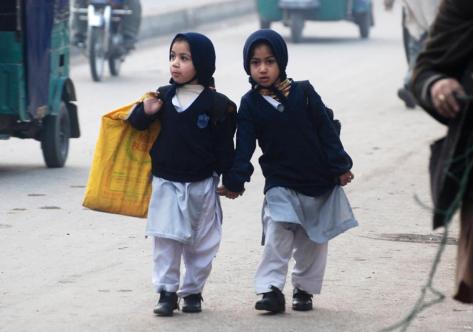
[ This guest post marks one month of the 16th December massacre of school-children by Islamists in Peshawar, Pakistan ]

Fawzia 1 

Pakistan has become a euphemism for insanity.  Doing the same thing over and over again and hoping for a different outcome. There are though some incredibly brave, thoughtful, humane and patriotic Pakistani men and women who have decided enough is enough and they are determined to chart a different future for the country. Continue reading Love in the Time of Military Courts: Fawzia Naqvi

Anti-Conversion and Ghar Wapsi, Or Hindutva’s Doublespeak: Charu Gupta

Guest post by CHARU GUPTA

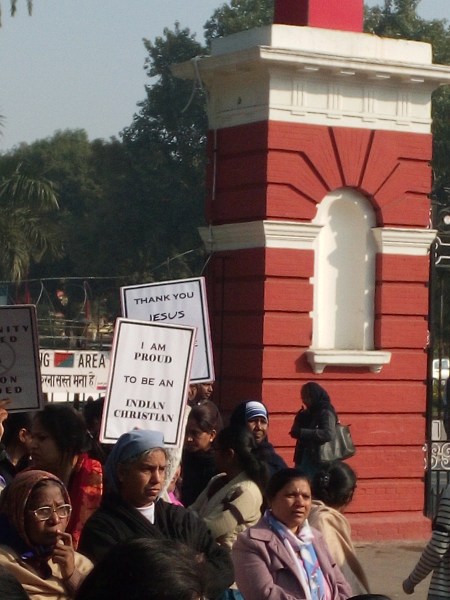
The synchronised vocabulary of anti-conversion by the BJP and that of reconversion by the VHP and Dharm Jagran Samiti, an RSS affiliate, reveals the intimate relationship between the two. Anti-conversion and reconversion are two sides of the same coin. Even though the Dharm Jagran Samiti dropped its plan to ‘reconvert’ 4000 Christians and 1000 Muslim families in Aligarh on 25 December, due to pressures from a parliament in session as well as other protests, the day has had strategic significance. Christmas Day has been given a different meaning by the Hindutva brigade — the birth anniversaries of Madan Mohan Malaviya, one of the stalwarts of the Hindu Mahasabha, and Atal Bihari Vajpayee, the eminent BJP leader. Equally critically, on 23 December 1926 Swami Shraddhanand, the leading ideologue of the shuddhi movement (purification; Hindu movement in the late nineteenth and twentieth centuries to reclaim those who had converted from Hinduism to other religions) was assassinated by a Muslim fanatic, and on 25 December, a condolence motion was moved at the Guawhati session of the Congress.

The twin strategies of anti-conversion and ghar wapsi have a long history and past, which saw its efflorescence in the shuddhi movement, but have become much more aggressive in the present context. As part of their community and nation making rhetoric, the Arya Samaj and the Hindu Mahasabha had launched the programme of shuddhi on a large scale in Uttar Pradesh in 1923. Though Arya Samaj had stronger roots in Punjab, shuddhi movement was more effective in UP. Various scholars have pointed to the communal character of the movement. A note prepared by the criminal investigation department at that time stated that though the movement had older origins, ‘its application to mass rather than individual conversion gave it a special prominence’ in 1923. Shuddhi came to be touted as a movement to reclaim the ‘victims’ and protect the ‘faithful’. Reconversion attempts have since been a part of agenda of various Hindutva outfits, and the present assertions should be seen in that context. Today, organisations like the VHP and Dharm Jagran Samiti have acquired a new importance and are emboldened to not only challenge conversions in an organised manner, but also to simultaneously aggressively campaign for reconversion. Just as shuddhi became an instrument for Hindu communal mobilization in early twentieth century, ghar wapsi is fulfilling the same role today. Continue reading Anti-Conversion and Ghar Wapsi, Or Hindutva’s Doublespeak: Charu Gupta

A Massacre is a Massacre and There is no Good Taliban: S. Akbar Zaidi

Guest post by S. AKBAR ZAIDI [This post was sent to us by our friend S. Akbar Zaidi. Though published earlier in The International News of Pakistan, we are reproducing it here because it represents a position that is felt by many inside Pakistan but which right-wingers in India would love not to see. Like right-wingers and Talibanis in Pakistan, our very own Hindutvavadis too thrive on presenting a monolithic picture of something called ‘Pakistan’.]

This was a massacre, nothing less. We should call it that, nothing less. We may want to call the children ‘shaheed’, but they were not engaged in any war against anyone. They were too innocent and blameless for this. They were victims. Let us call them that. They were victims of our politics, of our opportunism, of hiding in the dark, and especially of protecting the murderers. Do we simply pray for innocent victims, and absolve ourselves of the crimes that we have allowed to persist which resulted in this massacre? As Mohammad Hanif has so eloquently argued, Pakistan’s civil and military leadership needs to examine their own bloodstained hands when they raise their hands in prayer. It was the bloody Taliban butchers who killed these children, not militants or some obscure, unspecific category called ‘terrorists’. Let us name them for who they are. We cannot hide away from this reality and unless we name names, we will not alter our political economy, our direction. If we are waiting for the good Taliban to emerge and denounce this massacre, we need to stop hoping. We must stop differentiating between different types of killers. There is no good Taliban, just one ideology represented and manifest in different groups and forms. Continue reading A Massacre is a Massacre and There is no Good Taliban: S. Akbar Zaidi

Statement on Peshawar Massacre: People’s Alliance for Democracy and Secularism, Delhi

People’s Alliance for Democracy and Secularism, Delhi, condemns the ghastly attack on school children in Peshawar (Pakistan) by Tehreek-e-Taliban in which over 140  innocent lives were lost. It is a plain case of murders by the people spewing venom in the name of religion and ideology with no regard for human life. PADS demands that such fundamentalist violence be dealt with firmly by the authorities in Pakistan and expresses its solidarity with the parents of the children whose lives were snatched away by the murderous gang which, only to hoodwink the people, claims to be fighting imperialism. By their act they have shown how dangerous they are for the common citizens of Pakistan.

It is also important to note that people in general in Pakistan have to stand up against all kinds of violence. There is no acceptable violence and unacceptable violence. Violence, under the illegitimate legal cover of Blasphemy Laws is being perpetrated, and celebrated in the name of religion in the country. Condoning any kind of violence against the innocent people in the name of religion, provides raison d’etre to the forces like TTP. The ghastly murders in Peshawar is a signal for the Pakistani society  to look inward and work in unison to keep religion away from State to avail the benefits of the democratic rule.

The Indian school children and Parliament have shown solidarity with people of Pakistan by keeping a two minutes silence, on the suggestion of Prime Minister Modi. Such solidarity, however, should be expressed not only at the moment of grave tragedies, but should become a normal state of affairs between the two countries. The political and military leadership of the two countries should avoid aggressive rhetoric and militarisation and peacefully settle all outstanding issues.

PADS notes with the sense of urgency that the Taliban-like Hindutva forces have grown in size, influence, and impact in India orchestrating killings and triggering mass displacement of the people. PADS would like to forewarn the people of India that communalists of any religion have the same traits and ultimately, it is the members of the same community, whose interests such groups claim to espouse, become their targets. This is the time for the peoples of India and Pakistan to unite against the use of religion for committing murders of the innocent.

18.12.2014

Remembering 1992: School of Media and Cultural Studies, TISS Mumbai

Dislocation

Hardening Divides

Remembering 1992 is a site that seeks to revisit and remember the violence that the city of Bombay/Mumbai experienced in December 1992 and January 1993. This site includes 6 films, video interviews and transcripts, news clippings, reports and other resources. The project started with the films that were made by students (Class of 2013) and faculty and used as a part of the campaign Bombay ki Kahani Mumbai ki Zubaani, held between December 2012 and January 2013.

In a political and social context where the memory of this violence has been rewritten and all but erased, it is crucial to remember, to explore the contours of normalised prejudice and to understand how the survivors have struggled with the denial of justice. It is also necessary to think about how and why the memory of such a watershed event gets erased and who benefits from this erasure.

The website explores different kinds of memory, organised around themes and uses a timeline and map to list the events of the 1992-93 riots,based on the Justice Srikrishna report.

Taliban Attack – the Limits of Savagery: Akhlaq Ahan

Guest post by AKHLAQ AHAN

Every sane person is aghast to see what has happened in Peshawar, where Taliban’s attack on a school has crossed all limits of savagery and senselessness. They killed over 140 innocents mostly children, after taking them hostage, burned a teacher with gasoline and made the students watch the ghastly act.

Historically the area is part of the region known as ‘Khorasan e Buzurg’ or the greater Khorasan spanning over the so called North West Frontier, Afghanistan, North East Iran and erstwhile Emirate of Bukhara. The area, for thousands of years, has been the heart and mind of Asia; as this was the region where Gathas of Avesta and Vedas were compiled, Buddhist teachings flourished and survived, Persian traditions were revived, the seekers of truth flocked around Sufi masters to be enlightened. This is the land that produced personalities like Zarathustra, Panini, Alberuni, Khwaja Ansari, Data Ganj Bakhsh, Khwaja Gharib Nawaz, Rumi, Jami, Rahman Baba and hundreds of others. Scores travelled to the region to seek knowledge and training like Faxian, Xuanzang, Yijing, Shams Taprez (Tabrez), Amir Khusraw, Guru Nanak, Jamali and countless others. Though the region has seen occasional strife in the past too but the traditions of inclusion had continued to prevail till about a couple of centuries ago, when these values began to face systematic attacks. A few like Bacha Khan, in his autobiography, gauged the extent of the spread of these exclusionist ideas and warned against them. Continue reading Taliban Attack – the Limits of Savagery: Akhlaq Ahan

Human Rights Commission of Pakistan Condemns Killing of Children in Taliban Attack

The HUMAN RIGHTS COMMISSION OF PAKISTAN has issued the following statement on the Taliban attack on school children in Peshawar

December 16, 2014

Lahore, December 16: The Human Rights Commission of Pakistan (HRCP) has called the killing of more than 120 children in a Taliban attack on an army-run school in Peshawar a national tragedy which it said must open the eyes of anyone still harbouring any doubts that Taliban and Pakistan could coexist.

In a statement issued on Tuesday, the Commission said: “HRCP is deeply saddened by the large number of children killed in the Taliban attack on ArmyPublic School in Peshawar. This is a national tragedy of immense proportions, and an extremely sad day for Pakistan. Our heart goes out to the families of the children whose lives have been cut short by this abhorrent act of terrorism.

“The target was an army-run school, but it was a school nonetheless. It is not children who fight against the Taliban. And yet the choice of the target and the heavy casualties among the children leave no doubt that the massacre was aimed at killing as many children as possible.

“Nothing, including religion, norms of armed conflict or even common decency, justifies such brutal targeting of children. But it is no secret that the killers and those who dispatched them to attack the school have respect neither for religious commandments nor notions of civilised or decent behaviour. The targeting of children made sense to them because they stand for blood-letting and not much else.

“HRCP reiterates its firm belief that Taliban and Pakistan cannot coexist and anyone still harbouring any notions to the contrary is naive beyond belief.

“It had already been established, much before Tuesday’s massacre of children in Peshawar, where the Taliban stood in terms of education or value of children’s lives. Their actions today have shown once again that Pakistan will not know peace until this madness is taken on in all its manifestations and defeated. Continue reading Human Rights Commission of Pakistan Condemns Killing of Children in Taliban Attack

Statement on David Bergman Case in Bangladesh: Concerned South Asian Journalists and Others

Guest Post. Statement by Concerned South Asian Journalists, Writers, Historians and Activists

We, the undersigned journalists, writers, historians and activists from South Asia,  are deeply concerned about the use of ‘contempt of court’ law to curb freedom of expression. The conviction and sentencing on December 2, 2014, of Dhaka-based journalist David Bergman by the International Crimes Tribunal 2 on charges of “contempt of court” for citing published research on killings during the Bangladesh Liberation War of 1971, is a serious set-back to Bangladesh’s commitment to free speech and independent scholarship.

At the outset, we reiterate our belief that those responsible for genocide and international crimes during the Liberation War must be prosecuted and punished through an open and transparent process.

Continue reading Statement on David Bergman Case in Bangladesh: Concerned South Asian Journalists and Others

Before the Killing, the End of Honour: Rina Ramdev and Debaditya Bhattacharya

Guest Post by RINA RAMDEV AND DEBADITYA BHATTACHARYA

For daring to elope and marry outside the dictates of caste-community honour codes, a young Delhi University undergraduate came to a brutal death at the hands of her family. The incident since then has become part of public discourse, thanks to our newspaper-educated sensibilities. But the ‘popular’ set of responses that this event has generated from our newsreaderly selves is worth some reviewing. While there has been a large-scale condemnation of this incident from ‘civilized’ quarters of the media-enlightened, the most commonly employed terms of this debate have veered around an imagination of a ‘civilizational modernity’ versus an ‘aggressive-savage primitivism’. Are we still in the Dark Ages, most have asked. Is not ‘love marriage’ a civilizational mandate of the age of the modern, others have comfortably posed and then gone on to conclude that the fact that we – as a ‘society’, metropolitan-converts in this case – have not yet made our peace with a civil code of morality relegates us to a ‘rustic-primitive mindset’. The muse of Indian judicial processes and imaginations of penal justice – ah! the “collective conscience” – has spoken thus and gone back to catching up on Ramzaadas and terror attacks on national ‘honour’. And just while we were conveniently conceding to the relative insignificance of an undergraduate girl’s ‘honour’ compared to the prime-time rhetorical spectres of ‘national honour’ in Jammu & Kashmir, a leading English daily attempted to bring back a few ‘dark’ images from Bhawna Yadav’s past.  Continue reading Before the Killing, the End of Honour: Rina Ramdev and Debaditya Bhattacharya

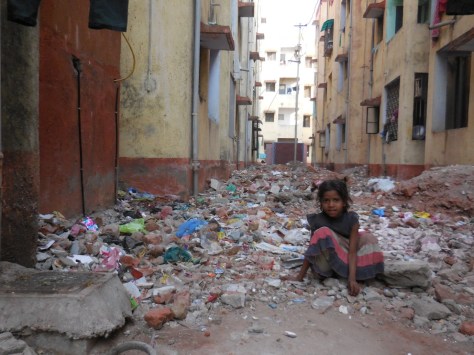
Demolition Drive in Vadodara, 2014: Kathyayini Dash, Rushabh Vishawakarma, Hussain Sabu, Bhagwati Prasad Suryavanshi

Guest post by KATHYAYINI DASH, RUSHABH VISHAWAKARMA, HUSSAIN SABU & BHAGWATI PRASAD SURYAVANSHI

Untitled

In Tarsali, 10 kilometers from Vadodara

Note from authors:

We are a group of friends and students from MS University, Baroda. One of us, Rushabh, lives in Kalyannagar which has partly been demolished and this house too is slated for demolition. We have written this to bring to the surface what demolition and displacement means, from the perspective of those who live in places like Kalyannagar, which cannot even be called a ‘slum’. We could see first hand what happened during the demolition because our friend lived there.  We all have spent happy times at Kalyannagar, Rushabh’s home. We felt we owe it to these memories to at least record these events. You can visit us at BarodaBeat.

Development they say…

They say by 2015, not one jhopdi will be seen…Vadodara’s landscape would be studded with flyovers, high rise buildings, malls, clean pothole-free roads. There will be no stench of garbage, leave alone the sight of it.

The recent floods in Vadodara set off an alarm, urging the quick setting up of “river-front projects” which included the demolition and re-location of slum dwellings near the river which were so awfully affected during the floods.

They say, “this is not fair. They sure need help; first priority in fact. They have to be the first to be taken into consideration before going on to people who have it all: a raised plinth level, a well cemented house, resources to recover the losses incurred in the floods. The jhopdiwaale, well, they have nothing at all, don’t they? Already low on the economic scale, they have no resources to recover the losses incurred during the floods, they don’t even have pakka houses to resist the floods. And on top of it all, they have houses built along the river itself. Poor things, where else would they build their houses. But then, these houses shouldn’t be there in the first place isn’t it? Because this is government land, and they don’t have the right to live there. What good is it anyway?” they say. “It is near the river, there is always a dangerous risk of the river flooding and them and their houses drowning,” they say. Continue reading Demolition Drive in Vadodara, 2014: Kathyayini Dash, Rushabh Vishawakarma, Hussain Sabu, Bhagwati Prasad Suryavanshi

Appeal to Stay the Execution of Surinder Koli: Concerned Women, Individuals and Groups

Guest Post by Concerned Women, Womens’ Groups and Others against the Death Penalty Awarded to Surinder Koli

To,

The President of India

Rashtrapati Bhavan, New Delhi, India.

2 December 2014

Subject:  Execution of Surinder Koli Would be a Travesty of Justice:
Plea for Mercy from Women’s Groups, Lawyers, Academics, Students and Activists

As women who have been engaged in the struggles for women’s rights and justice, (and their allies) we appeal to you to commute Koli’s death sentence or at least to stay his execution till the completion of the other cases involving other Nithari victims in which he is an accused. 

Continue reading Appeal to Stay the Execution of Surinder Koli: Concerned Women, Individuals and Groups

The deadly land policies planned by Modi’s advisers and the links to Ukraine and Honduras: Aditya Velivelli

This is a guest post by ADITYA VELIVELLI

One year after the Land Acquisition Act was passed in Parliament with bipartisan support, commerce minister Nirmala Sitharaman stated that changes will be made to the Act during the upcoming Winter Session of Parliament.

The earliest indication that this would happen, came from of all people, a first-time MP and microfinance lobbyist Jayant Sinha. Sinha had mentioned in a CNBC interview right after BJP’s win that land acquisition policy was the first priority. For those wondering why CNBC interviewed Sinha and allowed Sinha to lay out the new Government’s priorities, and why Sinha has been appointed junior finance minister, they should refer – Who is guiding Modi’s economic thinking and what is their background? Continue reading The deadly land policies planned by Modi’s advisers and the links to Ukraine and Honduras: Aditya Velivelli

Statement by Forum for Democratic Rights in EFLU on the present state of affairs

We, concerned citizens and members of women’s organizations, civil rights, students and minority rights forums, have come together to form the “Forum for Democratic Rights in EFL University” to  demand an immediate and thorough enquiry into the incident of gang rape and the suppression of democratic rights in EFL University. We wish to bring the following matter to your notice.

A recent horrific incident of the gang rape of a girl student took place in the EFLU men’s (Basheer) hostel on the night of 31st October 2014. The victim contacted the University authorities and was directed to the police who then arrested two accused on 2nd November 2014.  While this case of sexual assault on the university campus has deeply shocked the campus community, students, faculty and staff, even more shocking and worrying has been the attitude adopted by the university administration in its aftermath. Instead of seeking to undertake measures to make the campus free of violence and assault and promoting gender-sensitivity, the administration has resorted to several measures that are nothing short of severe repression of all democratic rights of the campus community as a whole.

Immediately after the incident, there were some reports with speculations about the victim’s presence in the men’s hostel. Aided by selective leaks by the University and the police, these reports amounted to character assassination and victim blaming, and divulged crucial information regarding the complainant’s identity. This pernicious reasoning amounts to nothing but a justification of the crime. From the well-known case of Rameeza Bee to the recent Nirbhaya Act, it has been repeatedly asserted that the act of sexual assault or gang rape cannot be justified citing the previous history of the victim.  We strongly condemn the propaganda to malign the victim and underplay the gravity of the rape. The complainant must be provided with adequate and competent legal counsel, her psychological and emotional well-being must be taken care of, and her safety must be ensured.   Continue reading Statement by Forum for Democratic Rights in EFLU on the present state of affairs

We, or our Nationhood, Redefined.

A couple of weeks ago, filmmaker Anand Patwardhan was invited by the Editors’ Guild to deliver its annual lecture. Patwardhan’s speech, titled We or our Nationhood Redefined, was marked by his characteristically cool tone, systematically reassembling facts that have a tricky habit of leaking from national memory. Facts like the twentieth century’s worst genocidal dictator Adolf Hitler and his programme of racial cleansing has a respectable and massive following in India in the form of the Rashtriya Swayamsewak Sangh. That the RSS has at least 50,000 branches across the country with over 40 million members, and runs a network of 18,000 schools across India. That one such child, recruited from the age of 8 from a relatively poor family, is Prime Minister Modi; and another is Party Chief Amit Shah. That just before the recent reshuffle, 5 Chief Ministers and 17 of the 23 Cabinet-level senior ministers were current or former RSS members. That the assassins of Gandhi are really the RSS, not the lone lunatic Godse who merely carried out what others dreamed about. That RSS’s poisonous communal agenda was roundly condemned by Sardar Patel, of whom PM Modi has promised to build the world’s tallest statue. Or more obscure but equally revealing facts, like the letter written by RSS chief Balasaheb Deoras from jail during Emergency, praising Indira Gandhi and especially her programme of sterilisation of Muslims. And those truly mind-boggling-in-their-irony facts, like the widespread involvement of the RSS in the 1984 anti-Sikh pogrom, when the BJP cynically says “1984” every time somebody says “2002”.

On a day when the Nanavati Commission has termed the 2002 anti-Muslim pogrom in Gujarat as a purely communal reaction to Godhra, and cleared then Chief Minister Modi’s government of any wrongdoing, or even inaction, it is critical we re-read Patwardhan’s speech, to remind ourselves exactly what we are up against if we believe in a non-communal, non-divided, heterogenous India. As Patwardhan put it, given the history of the RSS in this subcontinent, if a Modi didn’t exist, he would have to be invented. Read more.

The Class Politics of Blasphemy in Pakistan: Fatima Tassadiq

Guest Post by FATIMA TASSADIQ

The brutal murders of Shehzad and Shama, a Christian couple in the village of Kot Radha Kishan in Kasur district on 4th November, spawned predictable outrage in the press and social media. The rush of horror, the diagnoses and prescribed course of action against such violence involved the familiar paternalistic discourse of the ‘illiterate masses’ whose ‘ignorance’ evidently leaves them particularly vulnerable to the manipulation of the much maligned mullahs. Such a narrative serves the dual function of reducing religious violence to the faceless masses while at the same time reaffirming the educated urban upper class as the rightful custodian of Islam and Pakistan. This construction conveniently ignores the role played by the state and the elite in producing religious violence and feeds the class-based blind spots that exist in our understanding of what constitutes religious extremism.

Continue reading The Class Politics of Blasphemy in Pakistan: Fatima Tassadiq

There is hatred in the air yet again: Preeti Chauhan

Guest Post by PREETI CHAUHAN on the recent communal tension in Noor e Illahi area of Delhi.

It was around 9 pm on Tuesday, November 11th, I was heading to my parents’ home to go with my sister for an interview the next morning, when my cellphone rang, my sister was asking me frantically where I was. I replied a bit anxiously but with irritation, ‘Kya hai? Pahunch jaaungi thodi der mein’. She said don’t come, turn back. I asked why, ‘yahan dange hone waale hain, saari dukaanein band ho rahin hain’, my sister replied. In those two-three seconds my heart skipped many beats, a strange fear about the safety of my family gripped me. I could for the first time feel what it is to live in fear of communal riots. I called up my close relatives who were out of home to ask where they are. There was such an uncertainty as to how will my sister go for the interview tomorrow? Would I be able to reach home tomorrow morning? Would my vehicle be attacked if I decide to go home now?

In those three- four minutes the world seemed to have taken a terrifying turn for me. Mundane, everyday things, everyday routes suddenly turned hostile and suspicious. I could feel the agony and fear so very close. Then there was a sudden burst of anger that I felt against the communal forces that are so hell bent on creating communal trouble everywhere in Delhi. I had not read the newspaper the whole day yesterday and hadn’t watched TV but just before I was leaving home my spouse told me that my native place is in the news and it was then that I had read about the communal tension and curfew in Noore-illahi. It’s the area, the vicinity of my childhood, adolescence and my adulthood too. It’s the area of the weekly bazaar for us, the Eid bazaar as well from which we had returned at 1 am at times. Noor Chicken is where Noor Jahan furniture once stood if I remember correctly; it belonged to the family of one of my classmates in school. I hear today that Noor Chicken’s owner and his son was badly beaten and the son is rumored to have succumbed to injuries. I shudder to think if he is my primary school classmate Shahnawaaz… Continue reading There is hatred in the air yet again: Preeti Chauhan

Crime and Consent: Vrinda Grover

VRINDA GROVER analyses the recent Delhi High Court judgement on the rape and consequent death of a 65 year old woman, acquitting the accused because the woman was ‘menopausal’ and making a curious distinction between ‘forceful’  and ‘forcible’ intercourse.

In a recent judgment in Achey Lal vs State Govt of NCT Delhi, the Delhi High Court on October 30 set aside the conviction of the appellant for rape and murder. What has provoked discussion are the observations, inferences and conclusions of the court. Briefly, the facts as reported in the judgment are: on December 31 2010, a house maid, aged about 65-70 years, was found dead, with her clothes disheveled to expose her body. The accused, Achey Lal, 45 years old, was present in the room in an intoxicated condition. The husband of the deceased deposed that the accused had come at 8 am that day to his house with a quarter bottle of alcohol and when it finished, the husband left, while the accused stayed on with his deceased wife. The cause of death, according to the doctor who conducted the post mortem, “was asphyxia due to aspiration of gastric contents consequent upon forceful sexual intercourse, which was sufficient to cause death in the ordinary course of nature”.

Read the rest of the article in The Indian Express.

Resist the Sangh Parivar’s Hatred of Love: Nayanjyoti and Subhashini

Guest Post by Nayanjyoti and Subhashini

In late October, the youth wing of the Sangh Pariwar among others vandalised a café in Calicut on the pretext that lovers ‘date’ each another sitting in this café. When many young men and women in Kochi gathered together to protest by expressing their love in public, they got beaten up by various right wing groups and the police in response. The students and youths in different regions of the country gathered in solidarity of this protest going by the name of ‘Kiss of Love’. At the same time, as the news spread rapidly through the media and social networking site, a polarization continues to develop in the society, even among the individual activists and similar organizations, for and against the form of this movement.

Continue reading Resist the Sangh Parivar’s Hatred of Love: Nayanjyoti and Subhashini