Category Archives: Violence/Conflict

A Pre-Emptive Defence of an Idea of India

As I write, the siege is not yet over. These words may thus appear to some to be premature, to others alternatively unpatriotic or blasphemous. Perhaps this is precisely the reason to write them now: a pre-emptive defence of what will and has already begun to emerge as the next siege: calls for security, for intelligence, forsurveillance, for safety, for blame, and for control.

Continue reading A Pre-Emptive Defence of an Idea of India

Watching and not-watching

For three days now I have tried to not watch the horror that has unfolded in Mumbai. I am un-sure what my motivations are. In the rooms around me, three televisons harmonize incessantly – talking heads on one channel blending into the sound of gunshots on another; the advertisements on the third seguewaying into the robotic chatter that emerges from the laptops scattered on couches. On my laptop’s tiny speakers, the voices appear shriller, the grenades are accompanied by static, the television guests appear more agitated. Continue reading Watching and not-watching

Lets do the things we normally do

Witnessing Madness 24/7

What is happening? The Taj is burning, gunmen are shooting, the police is storming, the Oberoi is burning, the army is descending, people are running; bleeding; dying. Barkha Dutt is talking, Rajdeep Sardesai is talking, Srinivasan Jain is talking, Vilas Rao Deshmukh is talking, L.K Advani is talking, Manmohan Singh is talking, Vikram Chandra is talking, an eye-witness is talking, the army chief is talking, the naval chief is talking, an ex-hostage is talking, the terrorist is talking, Javed Jaffery is talking, Arnab Goswami is talking, is anyone even listening, is everyone listening—But what is happening?

Continue reading Witnessing Madness 24/7

Words After Violence

The madness of what has happened in Bombay leaves us speechless, even as the media din around evacuates words from their meaning.

So it only appropriate that we borrow words to remind us, in the midst of death, what it means to live. Continue reading Words After Violence

Grotesque Terror Attacks in Mumbai

Courtesy Indian Muslims Blog

In one of the most daring and yet cowardly terror attacks, Bombay/Mumbai has been attacked. In an earlier post we had discussed the question of violence – ‘revolutionary’ violence, and the utter futility of resort to such methods. Violence is not a solution to anything; it cannot be. If anything, it is part of the problem; it is the problem. For violence begets more violence. Continue reading Grotesque Terror Attacks in Mumbai

Ecstatic Archaisms of Aurobindo Ghose – Prasanta Chakravarty

Guest post by PRASANTA CHAKRAVARTY

In Reflections on Revolutionary Violence Aditya Nigam makes some nuanced points about the nature of Maoist violence and by contrast, comments on the bedrock character of democracy itself. Can we trace the sublime cult of blood and gore further down, to the founding principles of Forward Bloc, for instance? Or espy it in the millennial longings of a few Gita wielding swadeshis, for that matter? One may begin to see a pattern.

Continue reading Ecstatic Archaisms of Aurobindo Ghose – Prasanta Chakravarty

Reflections on Revolutionary Violence

In the last one year, I have often found myself going back to a conversation I had had with a Maoist ideologue. As it happened, it was he who started interrogating me about my stand on violence. ‘So, you have become a Gandhian?’ he demanded. I must confess I was a bit taken aback, not quite able to figure out the context of this poser. ‘What do you mean by Gandhian’, I kind of mumbled. Pat came his reply: ‘Well you have been making some noises lately about Maoist violence, haven’t you?’ Suddenly it all became clear. Through this ridicule, he was trying to appeal to that part of me that still remained marxist – presumably now buried in some remote past – and to resurrect it against my ostensible ‘non-marxist’, ‘liberal’ present (for which ‘Gandhian’ was some kind of a short hand code). I found myself at a loss of words. Does a criticism of the mindless and nihilistic violence of the Maoists make one a Gandhian? Is there no space left between these two polar positions? The conversation did not go very far that day but has kept coming back to me ever since.

Continue reading Reflections on Revolutionary Violence

Collateral Damage in our ‘War on Terror’

The Express Story today on the detention and torture of 6 Muslim men/boys in the wake of the Hyderabad blasts makes for chilling, terrifying reading. Amongst over 70 Muslim men who were arrested by the Hyderabad police, they detail custodial abuse and torture which ranges from stripping, to severe beatings on the hands and soles of their feet, to electrical shocks administered to genitalia. With characteristic insouciance and perversity the government has announced a ‘healing touch’ compensation of Rs 30,000 to each victim of the police’s tactile ministrations.

Continue reading Collateral Damage in our ‘War on Terror’

Bihar, Bombay, Boston: Dilip D’Souza

Guest post by DILIP D’SOUZA

What’s the real issue in the whole Raj Thackeray-fueled mess?

Well, according to someone who left a comment on my blog, it is “migration”. With some elaboration, here’s how our back and forth went, after that.

While this person was opposed to the violence, he also thought migration is indeed the issue, and with the agitation, Raj T “has brought out the failure of the UP & Bihar governments to create jobs for the last 50 years.” Continue reading Bihar, Bombay, Boston: Dilip D’Souza

Buddhadeb Bhattacharjee will be grateful to the Maoists – Monobina Gupta

[Guest post by MONOBINA GUPTA. As things begin to change on the ground in West Bengal, the irresponsible attempts by both the Maoists and the Trinamool Congress, to take over and ‘represent’ the popular discontent, in order to legitimize their own brand/s of politics, can only benefit the CPI-M. The alternative to the CPI-M, it might appear, are the Maoists – a sure put off , even for large sections supporting the Singur and Nandigram struggles. AN]

A deadly ambush executed by Maoists earlier this month has given the badgered West Bengal chief minister a god-sent opportunity to deflect attention from the burgeoning resistance in Nandigram-Singur to the more chilling phenomenon of ‘red terror.’

The story runs somewhat like this …

Continue reading Buddhadeb Bhattacharjee will be grateful to the Maoists – Monobina Gupta

Kilvenmani, Karamchedu, Chunduru… Orissa, Pratapgarh?

Reviewing Anand Teltumbde’s book Khairlanji: A Strange and Bitter Crop, Rajesh Ramachandran concludes:

The book however has a serious ideological flaw. It inadvertently falls into the Brahminical trap of theorising class conflicts in terms of positing Dalits against the new Shudra oppressors. Kilvenmani, Karamchedu, Chunduru and other examples are repeated at least seven times in the text to argue that new oppressors are Shudras. If that be, how does Teltumbde explain desperately poor tribals killing and raping Dalits in Kandhamal? The real oppressor is the caste hegemony perpetuated by the core Sangh Parivar constituency of the Brahmin-Bania-Thakur trinity. Is it any surprise that it was Parivar’s Brahminical commentators who first introduced the Dalit-Shudra contradiction to theorise the “failure” of Kanshi Ram’s Bahujan experiment and the split of the unbeatable BSP-Samajwadi Party alliance in UP. Hope the Dalit ‘holocaste’ series doesn’t serve this Hindutva agenda. [Mail Today, 26 October 2008]

Or, indeed, how does one explain atrocities against Dalits by Brahmins?

Sadanand Menon: Who speaks on behalf of Lanka’s Tamils?

[I am posting below an article by Sadanand Menon on Lanka’s Tamils and recent political developments in India.  Sadanand Menon’s solidarity for Lankan Tamils also reflects the principled and committed journalism that is so much need for and on Lanka. The suffering of people living in the Vanni in northern Sri Lanka is of utmost concern at the moment. Their humanitarian needs have to be met and that requires international concern and support. However, just as the Norwegian Peace Process silenced the politics and presence of the Muslims and Up-Country Tamils (Tamils of Indian Origin) in the interest of simplifying the problem in Sri Lanka as one between Sinhalese and Tamils, the current wave of concern in Tamil Nadu at a time of war should not further entrench the ethnicisation of the conflict.  Solidarity from India should be for all the oppressed peoples of Lanka, and should not become an opportunistic game for Tamil chauvinism.  This is where conflating the Tamils with the LTTE (the self proclaimed sole-representatives of the Tamils) continues to have a disastrous impact.  The ruling regime in Sri Lanka has given Sinhala Buddhist nationalism centre stage and marginalized the political process to address the grievances and aspirations of all the minority communities (Lankan Tamils, Muslims and Up-Country Tamils).  As Sadanand Menon says support for a “genuinely democratic political process”, should be the basis for solidarity. – Ahilan Kadirgamar]

Sadanand Menon: Who speaks on behalf of Lanka’s Tamils?


The LTTE, by all accounts, seems to have been lassoed. The dreaded militant outfit fighting for an independent Tamil state within Sri Lanka, is said to be engaged in a last ditch battle from its encircled base in the Vanni region in Jaffna. The Lankan army claims to be a couple of kilometres short of the LTTE’s administrative headquarters in Kilinochchi. Continue reading Sadanand Menon: Who speaks on behalf of Lanka’s Tamils?

Mangalore – Hindutva in expansion mode

Broken limbs (by amathad)

Guest post by APURVA MATHAD Continue reading Mangalore – Hindutva in expansion mode

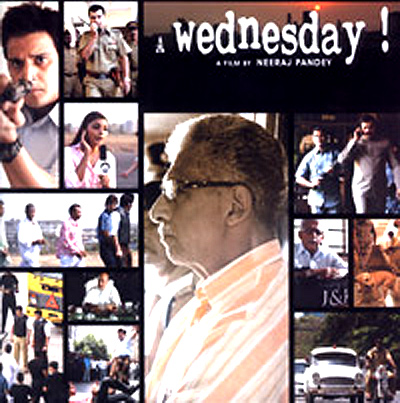
Such absurdity on a Wednesday

Guest post by SHAHRUKH ALAM

On Wednesday, I met some young men from Dhule. I am not at all sure where Dhule is and I said as much to them. “There was some violence there. It has been in the news lately,” they said. “Did any bombs go off in Dhule?” said I. “No bombs, no. But there was communal violence. It was on the news.” “I only watch prime time news. I don’t usually manage to view the afternoon bulletins. Nor the eleven PM one (informative though they are),” I explained. “So where exactly is Dhule?” I persisted. “It is a district on the north-western tip of Maharashtra. It’s not so far from Malegaon.” Ah, Malegaon! Where the blasts occurred? Finally I had a co-ordinate. Continue reading Such absurdity on a Wednesday

Maoist disruption of the non-violent Human Shields movement in Chhattisgarh

[We are posting below a statement issued by some of us on the Maoist threats and intimidation in Chhattisgarh and its most recent manifestation in relation to the human shields programme of the Vanvasi Chetna Ashram. It is a distressing but undeniable fact that, by and large, the civil liberties and democratic rights movement has fought shy of condemning Maoist violence. This is a matter of deep concern as the absolutely undefensible, nihilistic violence perpetrated by the Maoists violates all tenets of the great revolutions of the twentieth century that they themselves swear by. Despite their subsequent degeneration (after coming to power), neither the Chinese revolution nor the Vietnamese (the Russian, of course happened without a single shot being fired) made a cult of violence. Never, in any case, did they use violence against defenseless civilians. In fact, revolutionaries have been known to court defeat and annihilation, rather than kill ordinary people – whenever they were presented with the choice between the two. The perverse cult that targets ordinary, unarmed civilians simply in order to have its way can only be seen as, to say the least, a kind of Left-wing Fascism. – AN]

We, the undersigned, are distressed to learn that a peaceful movement in the conflict-ridden Dantewada district, Chhattisgarh to help villagers return to their land has been disrupted by the Communist Party of India (Maoist). The villagers had been displaced earlier by the state-sponsored Salwa Judum campaign that began in 2005 and has resulted in horrific violence against ordinary villagers in the area. Continue reading Maoist disruption of the non-violent Human Shields movement in Chhattisgarh

Do gods and saints weep?

The star of fortune has risen for Malayali women, not in this world but in the next. Catholics in Kerala celebrated the canonization of Sr. Alphonsa, a young nun from Kudamaloor in Kottayam district, who passed away after a life of intense bodily suffering and prayer in 1946, as a ray of hope in hard times. Becoming a nun and leading a life of asceticism were never easy choices. That too, for a eligible, beautiful young woman in early 20th century Kerala, born in a small village, whose guardians were determined to see her respectably married. Given to excruciatingly difficult forms of prayer even as a child, Alphonsa resisted her maternal aunt’s plans dramatically by trying to disfigure herself. She jumped into a smouldering ash-pit; badly burned, she climbed out. The family was so taken aback that they gave in to her desire to become a nun. Continue reading Do gods and saints weep?

Are the Tatas not to be blamed for the Singur fiasco at all?


Since even the chief minister of Bengal admits that violence was used in Singur to acquire land against the wishes of farmers who owned and/or worked it, there’s virtually nobody who claims otherwise (except our favourite newspaper).

So the line that goes is that it is the state government which botched it up. If only you had allowed the Tatas to acquire land on its own, if only the land acquistion act didn’t require the Evil State to acquire the land… market forces of demand and supply would have prevailed. Continue reading Are the Tatas not to be blamed for the Singur fiasco at all?

The Jamia Nagar Encounter: ‘Curioser and Curioser’

The well known journalist Praveen Swami, who is celebrated by some as an ‘encounter expert’ and ‘authority on terrorism’ has finally offered his comment on the Jamia Nagar encounter in the Hindu. See Behind the Batla House Encounter. It smells fresh.

Now, I really like Lewis Carrol, and am happy that Swami has invoked Carrol, Alice and Wonderland while criticising those (like me) who have chosen to take a skeptical stance towards the official handout of what exactly happened on the 19th of October in L-18, Batla House, Jamia Nagar. With due respect to Praveen Swami, lets read him in the spirit of Carrol and come to conclusions about who is Alice, who is the Red Queen and who is the white Rabbit, in due course.

It takes far more intelligence to read Swami than it must take for Swami to write like Swami. Which is disconcerting, given, that in Swamis case, he has a whole bureau full of intelligence to back him up, and all we have is the stuff between our individual ears, and occasionally our own eyes, our own ears and our own two feet. No wonder, we have to strain our credibility to believe the six and more impossible things that the police’s special cell, the intelligence bureau and its anointed experts would have us swallow whole for breakfast, with each morning’s headlines in the newspapers.

Continue reading The Jamia Nagar Encounter: ‘Curioser and Curioser’

Jamia Teachers’ Solidarity Group: Some Questions for the Delhi Police and Embedded ‘Journalists’

In the past few days, our favourite newspapers have been scrambling to counter the growing doubts about the supposed “encounter” at L 18. (See Indian Express and Times of India).

Jamia Teachers’ Solidarity Group responds to the latest claims by the police.

1) The police was caught by surprise. Or was it?

In its response to the questions being raised by the civil society, the police say, “the presence of armed terrorists took them by surprise.” “The police did not expect an encounter at L-18.” (Indian Express October 9)

Continue reading Jamia Teachers’ Solidarity Group: Some Questions for the Delhi Police and Embedded ‘Journalists’

Converting lions to elephants

As the most hideous kinds of violence are unleashed on Christians in Orissa and Karnataka by proud Hindu terrorists, one issue that the liberal Hindu mind-set stumbles over is that of conversions. Of course, violence is bad, it bleats, nothing justifies killings, but mass conversions, you know…

Conversions. Images of Muslim hordes waving their fierce banners, sweeping across the North Indian plains; images of sly Christian missionaries swindling innocent tribals and dalits with food and education and social status, into accepting an alien god. The liberal Hindu, who would never dream of converting anybody to Hinduism, shrinks at these images.

Aditya has drawn our attention to Ambedkar’s clear-eyed insight into why Hinduism is not a proselytizing religion. Can you convert a non-Hindu into a Brahmin? Nope.

Continue reading Converting lions to elephants