भगत सिंह और गांधी

क्या भगत सिंह और गांधी पर एक साथ बात की जा सकती है? परस्पर विरोधी विचारों और व्यक्तित्वों का ऐसा युग्म शायद ही मिले.एक को हिंसा का पक्षधर और दूसरे को हिंसा का घोर विरोधी माना जाता है.एक की छवि चिरयुवा की है,दूसरे की एक स्थिर वार्धक्य की. एक अधैर्य का प्रतीक माना जाता है,दूसरा धीरज की प्रतिमूर्ति.एक समाजवादी क्रान्ति का पैरोकार है तो दूसरा सह्य पूंजीवाद का वकील ठहराया गया है जिसके लिए उसने ट्रस्टीशिप की खूबसूरत आड़ ली.

असमानताएं यहीं खत्म नहीं होतीं.भगत सिंह ने औपचारिक शिक्षा न के बराबर ली, हालाँकि वे भयंकर अध्ययनशील थे,गांधी ने एक भले इंसान की तरह पूरी पढ़ाई की और फिर एक पेशेवर वकील की ज़िन्दगी बसर करने की कोशिश की. भगत सिंह अपनी पारिवारिक पृष्ठभूमि के कारण बचपन से ही ब्रिटिश साम्राज्य के घोर विरोधी थे.गांधी के जीवन के आरंभिक वर्ष ब्रिटिश साम्राज्य के वफादार के थे और वे उसकी बुनियादी अच्छाइयों में यकीन करते थे.भगत सिंह का ब्रिटिश हुकूमत के खिलाफ होना ही स्वाभाविक और तर्कसंगत था, गांधी कई संयोगों और दुर्घटनाओं के रास्ते इस नतीजे पर पहुंचे. Continue reading भगत सिंह और गांधी

Of Peas and War: Sajan Venniyoor

This is a Guest post by Sajan Venniyoor


“How you can sit there, calmly eating muffins when we are in this horrible trouble, I can’t make out. You seem to me to be perfectly heartless.” “Well, I can’t eat muffins in an agitated manner. The butter would probably get on my cuffs.” – Oscar Wilde, ‘The Importance of being Earnest’

When Vijay Patil (49) was detained by the Mumbai police for drinking tea in a suspicious manner, the accused moved the High Court challenging his detention and seeking damages. The Court expressed bewilderment at the arrest. Their Lordships Patel and Dharmadhikari – for whom I have only the greatest respect and admiration – observed with unbecoming levity,

“We were unaware that the law required anyone to give an explanation for having tea, whether in the morning, noon or night. One might take tea in a variety of ways, not all of them always elegant or delicate, some of them perhaps even noisy. But we know of no way to drink tea ‘suspiciously’.”

More worldly men than the Mumbai HC bench have known it is perfectly possible to drink tea in a suspicious manner. It was said of the poet Alexander Pope, as the Mumbai Police said of Mr. Vijay Patil, that he hardly drank tea without a stratagem.

Continue reading Of Peas and War: Sajan Venniyoor

A Tihar Experience: Nitheesh Narayanan

Guest Post by NITHEESH NARAYANAN 

This account of a young student’s experience of a week in Tihar Jail as a political prisoner gives us the opportunity to reflect afresh on ‘appropriate’ punishment, in the context of the recently revived debates on the death penalty. In those debates, incarceration is assumed to be the more humane punishment, but Nitheesh’s account reopens even older debates on the prison itself as a mode of disciplining society (Foucault), Angela Davis’s stirring question – Are Prisons Obsolete? – in which she argues that the current prison system perpetuates the same power relations of race, class and gender that society is based upon, and widespread critiques of the prison industrial complex in the USA, where private corporations run prisons for profit, using prisoners as practically free labour. (It is alarming therefore, to see an argument for privatizing prisons in India being put forward as a measure to “reform” prisons!)

Here then, offering us a view of prison as a microcosmic reflection of every oppressive power structure outside it, is Nitheesh Narayanan:

Tihar Jail, Central Jail no. 4, Ward no.1, and seven days spent in Barracks 1, 2 and 3. Around thirty of us, including SFI’s National President Com. V Sivadasan and some comrades from JNU decided on a protest demonstration at Kerala House, New Delhi, in solidarity with the series of protests in Kerala against the Chief Minister involved in the Solar Panel scam and to mark our indignation at any form of corruption. There were no policemen at the gate as the protest was unexpected. We entered the compound and sat in the portico of the main building. We burned Kerala Chief Minister Oommen Chandi’s effigy, raising slogans all the while. It was when Com. Sivadasan was addressing the protestors that about a hundred policemen entered the compound and started unleashing violence on us and arrested us. Nine of us were booked under severe offences.

We spent that night in a shabby lockup room full of filth and spit, lying on a newspaper sheet. One of the inmates in that lock-up room was an accused in a crime involving a core and a half rupees and a murder. We were shocked when he told us that in order to weaken the charges against him, he had poured almost fifteen lakhs into the pockets of corrupted officials.  Continue reading A Tihar Experience: Nitheesh Narayanan

Casting a backward glance after a court order – the UID project: Usha Ramanathan

Guest Post by USHA RAMANATHAN

On September 23, 2013, the Supreme Court ‘s directed that “no person should suffer for not getting the aadhaar card in spite of the fact that some authority had issued a circular making it mandatory”. Reacting to an argument of Mr Anil Divan, Justice Puttaswamy’s counsel, the judges added that “when any person applies to get the Adhaar Card voluntarily, it may be checked whether that person is entitled for it under the law and it should not be given to any illegal immigrant”. The order regarding making the UID mandatory  was made in the context of the questionable legality of the project, and the instructions being issued, as it has been in Maharashtra, that  teaching and non-teaching staff and judges of the High Court would not get their salaries unless they have a UID. The latter part of the order on `illegal immigrants’ echoes those who wanted, and got, an amendment to the Citizenship Act in 2003 authorising the creation of a National Register of Citizens. This was inherently illogical and opportunistic; for, the rhetoric of threat from the outsider drew upon the Kargil standoff in 1999, when it was Pakistan that was seen as sending in terrorists who needed to be identified and dealt with, but the politics of the day made the migrant from Bangladesh the `threat’. The Home Minister of the day saw them in every shadow. The UID project is a part of this enterprise.

The UID Project, with Mr Nandan Nilekani at its helm, has developed ambitions of its own in the four years since it was set by executive notification. In these four years, what observers and analysts have seen of the project has produced disturbing questions around what constitutes identity and how it will be established: [1]

Continue reading Casting a backward glance after a court order – the UID project: Usha Ramanathan

Onathallu Redux? Some thoughts on Onam

I remember, as a young child, going with my father one Onam in our ancestral home to watch the local Onam sports-and-games.My admittedly-fuzzy memory is of a large crowd of men gathered in an open paddy field or ground (I remember a lovely cloud of dragon-flies hovering above doing some sort of crazy-excited dance), getting ready for Onathallu — physical combat between
two men. Continue reading Onathallu Redux? Some thoughts on Onam

In the shadow of AFSPA – Not so uncommon lives: Chonchuirinmayo Luithui

Article on Armed Forces Special Powers Act in Manipur by CHONCHUIRINMAYO LUITHUI received via Repeal AFSPA list

AFSPA Nagaland_thumb[1]

My father was picked up from home by the Indian Army late one evening, tortured till dawn, he was pushed down a slope and left for dead. It was a miracle that he survived that night. I had just started kindergarten and was learning the Alphabets. I remember screaming the A B Cs outside the window of his room at the hospital so that he could hear me because I was told not to make noise inside. I wanted him to know what I was learning at school. I was a few months shy of my fourth birthday.

It was from that age that my idea of the ‘enemy’ was drawn. Any big guys in uniform were the real life villains. Dogra Regiment, Sikh Regiment, Assam Rifles, etc were common names. You could only hate them. But this was not an exceptional situation. It was common to most of the children from my generation in the Naga areas. We grew up knowing of, at least, one person tortured or killed by the Indian army and associated them with everything that we were scared of. Parents would frighten us when we were out of line that the ‘shipai’ (soldiers) were coming or that they would give us to the ‘shipai’. Not the best way to discipline a child but it worked. We might never witness the violent acts of the Indian army but we heard and knew when the grownups talked in hush hush manner. Children are smart that way.  Continue reading In the shadow of AFSPA – Not so uncommon lives: Chonchuirinmayo Luithui

If It Happened There … the Government Shutdown: Joshua Keating

This is the first installment by JOSHUA KEATING of “If It Happened There,” a regular feature on SLATE in which American events are described using the tropes and tone normally employed by the American media to describe events in other countries. 

182532993.jpg.CROP.promo-mediumlargeWASHINGTON, DC – SEPTEMBER 30: The sun sets on an uneasy capital.

WASHINGTON, United States—The typical signs of state failure aren’t evident on the streets of this sleepy capital city. Beret-wearing colonels have not yet taken to the airwaves to declare martial law. Money-changers are not yet buying stacks of useless greenbacks on the street.

But the pleasant autumn weather disguises a government teetering on the brink. Because, at midnight Monday night, the government of this intensely proud and nationalistic people will shut down, a drastic sign of political dysfunction in this moribund republic.

READ THE REST OF THIS ARTICLE HERE

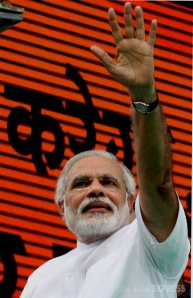
Can Narendra Modi Apologize to Four Hundred and Five Million Rural Women in India?

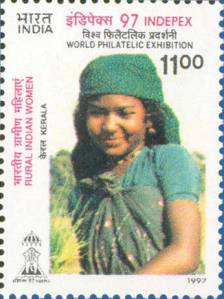
1744_Rural_Women_Keral 1742_Rural_Women_Gujar B_Id_424710_Narendra_Modi_

Rural Indian Women (Courtesy India Post) and An Urban Indian Man (Narendra Modi)

I watched the television broadcast of BJP’s Prime Ministerial candidate Narendra Modi’s speech at the Japanese Park in Rohini in Delhi on Sunday morning with breathless anticipation and some trepidation. With the restless anxiety that he would spin at least half a new idea, that could induce some naive fence-sitters in Delhi, my city, to sign up behind his juggernaut along with the rest of his zombie horde.

Would his spin doctors have worked hard and tirelessly overnight to give their client a new teflon coating? Would his savvy advisers have given him a sharp new statistic to play with, an incontrovertible fact, a compelling argument that would persuade my fellow citizens? Continue reading Can Narendra Modi Apologize to Four Hundred and Five Million Rural Women in India?

Modi says sorry to Kafila

Invitation from Kafila

Dated: Saturday, 28 September, 2013

Dear Narendrabhai,

We at Kafila would like to invite you to a small get-together in Lodi Gardens tomorrow (Sunday 29th) at 10 am. We really really (really!)  hope you can make it.

Best wishes forever,

Kafila Team

From the Office of Mr Narendra Modi, CM, Gujarat

Dated: Monday, 30 September, 2013

Dear Kafila team,

We thank you for your kind invitation to Mr Modi. He sends his regrets that he was unable to attend your get-together as he was otherwise occupied on Sunday 29th at 10 am.

US EMBASSY SORRY FOR NOT ATTENDING SUNDAY RALLY, CLAIMS BJP

Aadhaar – What next after the SC ruling? Kalyani Menon-Sen

Guest Post by KALYANI MENON-SEN

Poor Mr Nilekani. Just when everything was going swimmingly for him – adulatory interviews in the foreign press, tantalising rumours of a Congress ticket for the 2014 polls, lots and lots of votes on a poll to select the Greatest Living Indian – comes another well-aimed spanner in his works from that bunch of litigacious Jokers who have been playing rasta roko with his Batmobile for some time now.

The Supreme Court ruling of 23rd September is curt and unequivocal – a) two other challenges to Aadhar in the High Courts of Chennai and Mumbai to be clubbed with this one and heard by a Constitution Bench; b) an immediate freeze on linking Aadhar to benefits under social schemes; and c) a direction to tighten up the registration process to make sure that only Indian citizens are enrolled.

Every line of this ruling is a painful blow for Aadhar. It’s bad enough that the Court has taken seriously the charge that Aadhar violates Constitutional rights. The implication that there are serious errors in the registration process is even worse, and pulls the plug on one of the main arguments in support of the UID  – that it will stop leakages in government schemes by weeding out bogus beneficiaries. Worst of all is the decoupling from the “Apna Paisa Apne Haath bandwagon. If the UPA decides not to  jettison the cash transfer scheme – its big-ticket strategy for the 2014 polls – it will find a way to keep it going without Aadhar. Whether or not this strategy pays off, Aadhar will be the loser. Continue reading Aadhaar – What next after the SC ruling? Kalyani Menon-Sen

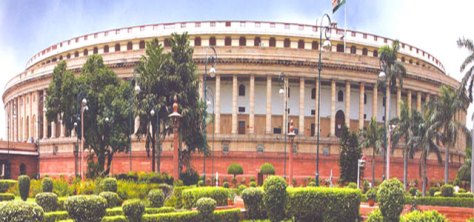
World’s Biggest Old Age Home with Cheapest Canteen

parliamnthouse

Information received via Rakesh Chaturvedi

The only place in India where food is cheap.

Tea- 1.00
Soup-5.50
Daal-1.50
Meals-2.00
Chapati-1.00
Chicken-24.50
Dosa-4.00
Biryani-8.00
Fish-13.00

Rakesh Chaturvedi suggested that instead of the Food Security Bill, let the Government give food to the poor at the Parliament canteen rates.

Good idea. That may allay the corporate media’s fears that the Food Security Bill  may further strain India’s weakening economy.

Taking off from this interesting price list, some idle research  on this rainy Sunday morning yielded the following information: There has been a noticeable shift in the age profile of MPs in  Lok Sabha. Continue reading World’s Biggest Old Age Home with Cheapest Canteen

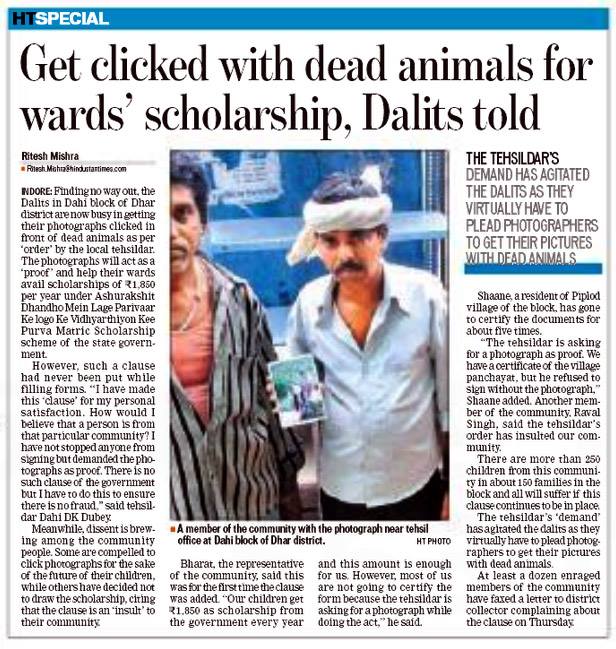
Get Clicked With Dead Animals for Wards’ Scholarship, Dalits told

Image

The chief architect of Indian constitution Dr. B. R. Ambedkar had declared in 1948 ‘democracy in India is a top-dressing on an Indian soil, which is essentially undemocratic.’ How true this is, even after sixty years of Indian democracy! Why have all the legal provisions, and valiant struggles of dalits to emancipate themselves failed to annihilate Caste system? As the ruling elites of India celebrate their arrival on the world scene, these are the skeletons in the cupboards of their rule they are most ashamed to admit.  Continue reading Get Clicked With Dead Animals for Wards’ Scholarship, Dalits told

Online mapping of sexual harassment in Mumbai

header_mumbai-1024x409
After the spate of rapes and molestations in Mumbai and of course, the daily sexual harassment of women, AKSHARA CENTRE decided to launch HarassMap-Mumbai. it is a socio techno tool using crowdsourcing to enable women to report their experiences and citizens to spot and report unsafe spaces. The idea is to get women to report and engage local groups and the police to take action. This is possible if people use their mobiles and internet connections.
Check it out: HarassMap-Mumbai

भगत सिंह और आज का नौजवान: अपूर्वानंद

कभी कभी हर समाज में ऐसे क्षण  आते हैं जब उसे अपने अस्तित्व के तर्क की पड़ताल करनी पड़ती है. उस समय वह अपने किन बौद्धिक संसाधनों का प्रयोग करता है और किन स्रोतों से तर्क की सामग्री जुटाता है, यह  काफी महत्वपूर्ण है.क्या एक समाज के रूप में भारत के लिए अभी ऐसा ही कोई क्षण उपस्थित हो गया है? एक ऐसा तबका है जो भारत नामक किसी एक सामाजिक इकाई के बौद्धिक औचित्य को ही नहीं मानता. उसकी बात जाने दें.भारत अभी भी अनेकानेक लोगों के लिए एक यथार्थ है जिसकी अपनी भावनात्मक और बौद्धिक वैधता है.वे उसे बार-बार समझने और अपने लिए आयत्त करने की कोशिश करते हैं.इस क्रम में वे किनकी ओर  देखते हैं? Continue reading भगत सिंह और आज का नौजवान: अपूर्वानंद

Commonwealth giving Sri Lanka carte blanche for human rights abuses: Amnesty International

This release was put out by AMNESTY INTERNATIONAL on 27 September 2013

Sri Lanka’s disturbing human rights record means it should be barred from hosting a key Commonwealth summit in November or chairing the organization, Amnesty International said ahead of a key meeting of Commonwealth foreign ministers today.

The Commonwealth Ministerial Action Group – made up of foreign ministers and Secretary-General Kamalesh Sharma, who gather to address violations of the Commonwealth’s fundamental values, including human rights – is meeting in New York today.

“Today’s meeting is an opportunity for the Commonwealth to show some real leadership on human rights. The organization has been shamefully silent so far about Sri Lanka’s human rights crisis– including the persistent lack of justice for past crimes and ongoing attacks on human rights defenders and other activists,” said Polly Truscott, Amnesty International’s Deputy Asia- Pacific Director. Continue reading Commonwealth giving Sri Lanka carte blanche for human rights abuses: Amnesty International

Twenty myths about the Pakistani Taliban: Raza Rumi

Continue reading Twenty myths about the Pakistani Taliban: Raza Rumi

PUCL statement on the police raid at Prof GN Saibaba’s residence

24th September, 2013
STOP THE WITCHHUNT!
PUCL STATEMENT CONDEMNING THE POLICE RAID OF PROF. GN SAIBABA’S RESIDENCE

The People’s Union for Civil Liberties (PUCL) condemns the illegal raid and search of the residence Professor GN Saibaba of Delhi University on 12th September, 2013. Professor Saibaba is a differently abled person and is wheel chair bound. Ironically, over 50 police persons and intelligence officers raided his house! Prof Saibaba and his entire family including his minor daughter and the driver were all locked in different rooms, during the three-and-half-hour search. It is believed that the raid is pre-cursor to the imminent arrest of Prof Saibaba.

SEARCH WARRANT ILLEGAL

Continue reading PUCL statement on the police raid at Prof GN Saibaba’s residence

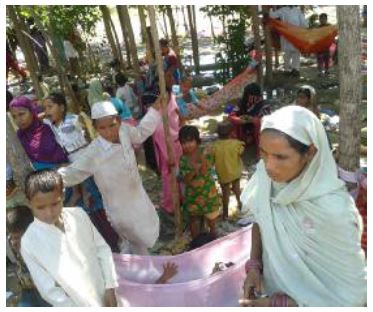
In the relief camps of Muzaffarnagar and Shamli

This report was prepared by a group of citizens (whose names are given at the end), and released on 20 September 2013.

shamli

A human tragedy unfolds, as the State watches, In the relief camps of Muzaffarnagar and Shamli Districts

A Preliminary Citizens’ Report
September 20, 2013

A. On September 17-18, 2013, an 11 member team consisting of both independent activists as well as activists affiliated with 5 organizations based in Lucknow, Chitrakoot, Muzaffarnagar and Delhi visited relief camps in two affected districts of Muzaffarnagar (3 Relief Camps – Madrasa camp at Bassi Kalan, Madrasa camp at Tawli and camp at Haji Aala’s house, Shahpur) and Shamli (3 Relief Camps – Madrasa camp on Panipat Road in Kairana, Malakpur camp in Kairana, and the Idgah camp in Kandhla). In Shamli District the team also met with senior members of the district administration – the District Magistrate and the Superintendent of Police.

B. This was not conceived of as a fact-finding visit, but was a recce visit to determine the human needs on the ground in the relief camps, and to see how we might plan to help survivors in initiating procedures towards criminal justice (lodging of FIRs and complaints), accessing compensation for death, injury, destruction of property, planning rehabilitation, and also to confirm unverified news reports of sexual violence against women. Continue reading In the relief camps of Muzaffarnagar and Shamli

भाषा का फासीवाद

भाषा का कार्य न तो प्रगतिशील होता है और न प्रतिक्रियावादी, वह  फासिस्ट है: क्योंकि फासिज़्म अभिव्यक्ति पर पाबंदी नहीं लगाता, दरअसल वह बोलने को बाध्य करता है. रोलां बार्थ का यह वक्तव्य पहली नज़र में ऊटपटांग और हमारे अनुभवों के ठीक उलट जान पड़ता है. हम हमेशा से ही फासिज़्म को अभिव्यक्ति का शत्रु मानते आए हैं. लेकिन बार्थ के इस वक्तव्य पर गौर करने से, और हमारे आज के सन्दर्भ में खासकर, इसका अर्थ खुलने लगता है. इसके पहले कि हम आगे बात करें, यह भी समझ लेना ज़रूरी है कि बार्थ की खोज कुछ और थी. वे अर्थापन की नई विधि या पद्धति की तलाश में थे. अंततः उनकी खोज अर्थ से मुक्ति की थी, एक असंभव संधान लेकिन दिलचस्प: स्पष्टतः वह एक ऐसी दुनिया का स्वप्न देखता है जिसे अर्थ से मुक्ति हासिल होगी( जैसे किसी को अनिवार्य सैन्यसेवा से छूट मिली होती है). हम हिन्दुस्तानियों के लिए इसका पूरा अभिप्राय समझना कठिन  है लेकिन एक अमेरीकी या रूसी या इस्राइली के लिए नहीं. उन्हें पता है कि वयस्क होते ही राज्य उनको  सेना में भर्ती होने के लिए बाध्य कर सकता है. प्रसंगवश अनेक न्यूनताओं के बावजूद भारतीय लोकतंत्र के पक्ष में  यह बात भी है कि उसने अपने नागरिक को सैन्य पदावली में परिभाषित नहीं किया. भारतीय होने की शर्त या उसकी कीमत अपना सैन्यीकरण नहीं है. Continue reading भाषा का फासीवाद

No Country for Visually Challenged Persons ?

Yesterday I got a call from Lucknow regarding an article I had penned down for a Hindi newspaper.

The focus of the write-up was the plight of four candidates – all of them visually challenged – who had cleared the UPSC (Union Public Service Commission) examinations way back in 2008, scored more marks than many ‘normal’ students and were still waiting for appointment letters. The Commission as everybody knows is India’s central agency authorised to conduct civil services and other important examinations.

The caller said that he was one among the four and shared with me the long struggle he along with others were engaged in to get their due. Apathy exhibited by people in the higher echelons of the Commission as far as visually challenged persons are concerned is really disturbing. And it was not for the first time that it had failed to give appointment letters to such candidates. Merely three years back Ravi Prakash Gupta had to approach the highest courts of the country namely the Supreme Court to get his appointment letter. Last February it was the Prime Minister’s Office  which had to intervene so that seven candidates from similar category could join their duty. Continue reading No Country for Visually Challenged Persons ?

DISSENT, DEBATE, CREATE