Set Top Boxes: State-Corporate Nexus (Again)

When I came across this headline over my morning coffee, “Set-top boxes a must from July for greater choice“, I was very excited.  More choices always make my little heart beat very hard.

So this is the deal:

Starting July, every household in Delhi will need a set-top box to be able to view channels of one’s liking. The information and broadcasting ministry is planning to implement a ‘must-provide clause’ for cable operators to enable TV viewers in the four Metro cities to ask for their favourite channels as a right. After July 1, the sub-divisional magistrates across Delhi will take action against all cable operators who are found violating the new norms, which mandate provision of set-top box enabled digital facilities to all viewers.

Hold on, so I can no longer go with the local cable operator who already provides me with all the channels I want legally, at a very low cost, but will be forced to pay larger amounts directly to the big companies (Tata, Reliance)?

This is more choice?

Continue reading Set Top Boxes: State-Corporate Nexus (Again) →
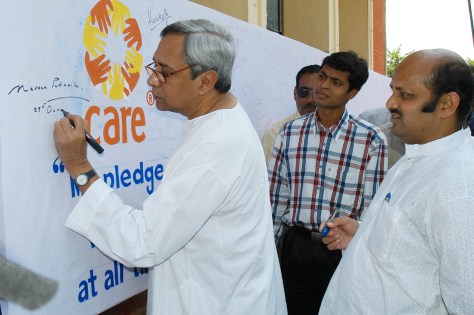
Will Naveen Patnaik please wake up to atrocities against Dalits in Odisha?

This memorandum was submitted on 22 March 2012; see full list of signatories at the end

A Memorandum of Demands Seeking Chief Minister’s Immediate Intervention to stop the Ongoing Brutal Atrocities/ Crimes against Dalit Communities in Odisha

Date: 22/03/12

Dear Sir,

We, the undersigned victims of human rights violation, representatives of various mass organisations, Non-Governmental Agencies, Community Based Organisations, Human Rights Activists, journalists and citizens belonging to the marginalised communities would like to draw your attention to the ongoing atrocities against Dalit Communities in Odisha. Continue reading Will Naveen Patnaik please wake up to atrocities against Dalits in Odisha? →

Does democracy stop at the doorstep of the women’s hostel?

This appeal comes to us via MAYA JOHN

Friends,

Since January of 2012, residents of Delhi University’s largest postgraduate women’s hostel, University Hostel for Women (UHW) have been waging a battle against outright suppression of their democratic rights by, both, their hostel authorities and the University’s Proctorial Committee. Since the hostel’s Chairperson is also the Proctor of the University, the Proctorial Committee has been intervening in the matter, not as a neutral party, but in complete connivance with the hostel authorities. There are two issues which are central to the ongoing struggle of the women students, namely, the imposition of a union constitution by the authorities, and the existence of archaic and conservative rules in the hostel.

Continue reading Does democracy stop at the doorstep of the women’s hostel? →

How India made it easy for everyone to play internet censor: A primer from SFLC.in

This FAQ has been put out by the Delhi-based SFLC.in

The Central Government notified the Information Technology (Intermediaries Guidelines) Rules, 2011 in April, 2011.  The rules which seek to control the intermediaries end up controlling the actions of users. As these rules attempt to cover a wide range of activities through a duplicate, complicated structure, neither the industry nor the end users are able to understand the boundaries of their rights and duties.

This FAQ aims at making these rules easy to understand and at sensitising the beneficiaries to the problems that the rules raise.

Who are intermediaries? Continue reading How India made it easy for everyone to play internet censor: A primer from SFLC.in →

Artists protest against coup in Maldives

Here is a report on artists protesting against a coup in our neighbourhood that landed in my inbox recently. You would have thought that the Indian media would be as interested in what happens in the Maldives as it is in what happens in some of our other neighbouring countries. But sadly, that is not the case, and so, one gets to hear little of what happens in the Maldives, even though you get to see it often as an unnamed exotic locale or a little beach side remance in Bollywood films.

Continue reading Artists protest against coup in Maldives →

Kudankulam Update

Below is a note written by Udayakumar, one of the leaders in Kudankulam that is being circulated. Further below is an update from activist Nityanand Jayaraman on the Madras High Court interim orders in response to cases filed against all the illegal steps taken by the government on Kudankulam.
Please watch this blog for another audio broadcast from Sundari, an activist and member of the community in Idinthakarai. Continue reading Kudankulam Update →

Mobile phone based report for Community Radio from Idinthakarai, Kudankulam

Recording of a report by Sundari from Idinthakarai, the village in Kudankulam where many are on fast unto death and 15000 people have gathered in protest of the Nucelar Plant. Sundari is a long time local activist in the region who has been part of the struggle against the Nuclear plant.

Police have cracked down on the village and there is now a complete blockade. Journalists are not being allowed at all. This is an effort to get news out regularly. This recording has been made possible by the efforts of activists who work with enabling reporting for community radio through mobile phones. These broadcast and others that will follow, will be sent to community radio networks within Tamilnadu and around the country. Please spread the news. A translation is available below.

Sundari reports from Idinthakarai here.

Continue reading Mobile phone based report for Community Radio from Idinthakarai, Kudankulam →

On Sri Sri Ravi Shankar’s views about government-run schools

This press statement comes via Kavita Srivastava; see full list if signatories at the end.

PRESS RELEASE

Jaipur, 21st March, 2012: We are shocked and strongly condemn the statement made by the Global Corporate Brand “Art of Living” businessman, Ravi Shankar in Jaipur on 20th March, 2012, wherein he states that “Government schools are breeding grounds of violence and Naxalism ….that is why Government run schools and colleges must be handed over to private bodies….and that ‘Adarsh schools’ must reach all areas”. We would like to demand evidence from Ravi Shankar that Government schools, in which 16 crore children of the age group 6 to 14 years are studying are breeding grounds for violence and Naxalism. An army of Indian engineers, doctors, nurses, computer professionals, government servants army and police personnel and factory workers come from government schools. It would appear that this human resource that is the backbone of this country is wholly ‘Naxalite’ in the eyes of this completely irrational guru.

Continue reading On Sri Sri Ravi Shankar’s views about government-run schools →

Urgent Action Alert: Koodankula​m – Call/ SMS ADGP and SP

Dear all,

The Tamilnadu police in alliance with the paramilitary, rapid action force, Industrial security force has laid an utterly illegal and anti democratic siege on the peaceful struggle by fisherpeople and others in Idinthakarai village. In an attempt to terrorise the people and weaken their struggle the police in a nexus with civil administration has suspended electricity and water supply to the village. Vital supplies like milk powder, medicines and food stuff have been blocked entry. When neighbouring villagers tried to bring in firewood through the sea route they were blocked this morning. A pregnant woman who was in labour pain was detained by the police for quite some time and her admission into the hoispital was delayed. There are thousands of children, women, elder people and men in the protest site surrounded by layers and layers of police of every possible denomination and this is a peaceful struggle waged by the poor people of idinthakarai to safeguard their livelihoods and also to protect all of us all of humanity from yet another nuclear disaster.

So please take time and call/ message

Vijendra Bidari, SP, Tirunelveli : 09940193494

George, ADGP: o9442200913

Register your protest.

Demand them to stop intimidating the peaceful protesters.

SMS message: “Do not block media, food, water, medicines or movement of people in and out of Idinthakarai. Restore access to basic facilities and media freedom”

Reflections of a Refugee from Modi’s Gujarat: Reza Noorani

Guest post by REZA NOORANI

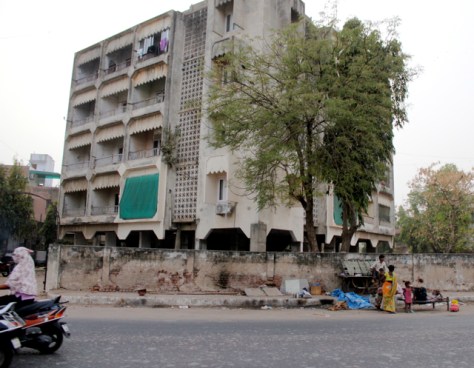
Kashana Flats, Paldi, Ahmedabad, as they stand today. Photo credit: Prateek Gupta

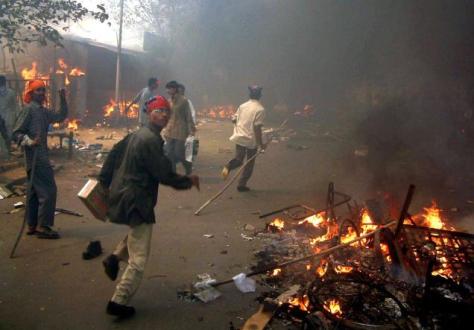
When the riots broke out in 2002 in Ahmedabad, after the burning of the Godhra coach, I was in the tenth standard. I remember listening to the news in the morning, just after which my best friend Ketan had called me and asked “Why did you guys do this?” I didn’t know how to respond to that. I think I just laughed it out and we began discussing what was happening in the city. My father took the phone away from me. I was preparing for my board exams and was just about to leave for one of the last days of school, after which we would go on a study leave. My father, who had experience with riots, told my two elder sisters and me to not go to school and stay at home that day. Continue reading Reflections of a Refugee from Modi’s Gujarat: Reza Noorani →

Kudankulam: Letter from concerned activists in Chennai to Activists and Media persons

Dear friends

You must all be aware of the sustained struggle put up by the people of Idinthakarai and other neighbouring villages against the commissioning of the nuclear energy plant at Kudankulam. The struggle has been a concerted one, waged by fishers, agricultural labourers, small peasants and those in the artisanal trades. It has been a struggle for asserting people’s right to livelihood, life and liberty, all of which stand imperiled by the proposed nuclear reactor.
The struggle has now reached a crucial moment of crisis: the ministry of the ruling AIADMK government has passed a resolution asking for the plant to be reopened. This, after several months of promising support to the protesters, and offering to look into radiation effects, on human beings, the coastal environment and on the problem of nuclear waste.  Continue reading Kudankulam: Letter from concerned activists in Chennai to Activists and Media persons →

Kudankulam: A brief history and a recent update

These are moments when spaces like Kafila become so important.

On the 19th of March, news came in that Tamilnadu Police men of six districts led by the ADGP for Crime of the Tamilnadu Police, Mr. O.S.George were sent to Kudankulam. This meant 6000 armed police men, 3 DIGs and 20 SPs were in Kudankulam. The TV reports, when they were still possible, showed police violence and extensive police presence in the village. We also saw women from Kudankulam, the backbone of the movement, declaring that there will be a strong people’s response to this violence and that they cannot be taken peaceful protest cannot be taken for granted. The first project taken up by the police seems to have bee to block off the village from any outsiders.  Nearby villagers who tried to approach the villages by sea were also arrested by the police. As of now, all roads to the village have been blocked. Communication systems have been tampered with.  Continue reading Kudankulam: A brief history and a recent update →

Jai Bhim, Comrade Patwardhan

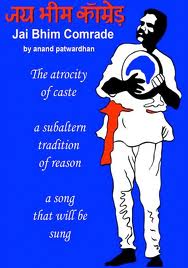
How many murdered Dalits does it take to wake up a nation? Ten? A thousand? A hundred thousand? We’re still counting, as Anand Patwardhan shows in his path-breaking film Jai Bhim Comrade (2011). Not only are we counting, but we’re counting cynically, calculating, dissembling, worried that we may accidentally dole out more than ‘they’ deserve. So we calibrate our sympathy, our policies and our justice mechanisms just so. So that the upper caste killers of Bhaiyyalal Bhotmange’s family get life imprisonment for parading Priyanka Bhotmange naked before killing her, her brother and other members of the family in Khairlanji village in Maharashtra, but the court finds no evidence that this may be a crime of hatred – a ‘caste atrocity’ as it is termed in India. Patwardhan’s film documents the twisted tale of Khairlanji briefly before moving to a Maratha rally in Mumbai, where pumped-up youths, high on testosterone and the bloody miracle of their upper caste birth are dancing on the streets, brandishing cardboard swords and demanding job reservations (the film effectively demolishes the myth that caste consciousness and caste mobilisation are only practised by the so-called ‘lower castes’). Asked on camera about the Khairlanji murders, one Maratha manoos suspends his cheering to offer an explanation. That girl’s character was so loose, he says, that the entire village decided to teach her a lesson.

Continue reading Jai Bhim, Comrade Patwardhan →

Let’s not count the poor (seriously)

As someone recently commented on a Kafila post, we live in a post-fact world where there are no facts. Everyone believes what they want to. So depending on your  ideology, poverty in India has reduced or increased. But such is the debate on poverty that the definition of poverty itself is subject to debate. How poor do you have to be, so that the government will say you are poor? This poverty debate has been on around the same lines for about ten years now, with the economic left arguing that India isn’t shining, and the economic centre-right arguing that millions of people have been lifted out of poverty by India’s super-successful economic growth. The debate will go on forever, there will be no certainty in numbers, and perhaps there shouldn’t be – perhaps counting the poor cheapens the issue of poverty. Counting the poor leads us to ask, what about the only -slightly-better-than-the-poor? Counting the poor leads us to compare poverty numbers and give us relief. Ah, only 30% Indian poor now, as opposed to 50% in such and such decade, nice! Great job India! No, this is not what the poor deserve, whether they are 30% or 50%. Perhaps we should stop counting the poor. Continue reading Let’s not count the poor (seriously) →

On the low morale of Gujarat Police: RB Sreekumar

This guest post by former Gujarat DGP RB SREEKUMAR is a letter to the Union Minister of Home Affairs.

Dear Shri P. Chidambaram,

I belonged to Gujarat cadre of Indian Police service (IPS)-1971 batch-and retired from service on 27.2.2007 in the rank of Director General of Police (DGP), Gujarat state.

2. As a senior citizen (age-65 years) staying in Gujarat since 1970s, I am constrained to write the following for your kind consideration and urgent remedial action.

3. The morale, self esteem and image of the Gujarat Police in general and of IPS officers giving leadership to police force in the state in particular, have been in steady decline since 2002 anti-minority genocide. The media, reputed human rights activists and national bodies like the National Human Rights Commission, the National Commission for Minorities and the National Commission for Women have thrown light on serious intentional acts of commission and omission by Gujarat government functionaries (except in cities like Surat, Bhavnagar and a few districts in South Gujarat and Saurashtra), that facilitated extensive and gruesome mass violence against minorities.

Continue reading On the low morale of Gujarat Police: RB Sreekumar →

FDI In Retail – What Does the Government’s Own Data Say? Shankar Gopalakrishnan

Guest post by SHANKAR GOPALAKRISHNAN

In his budget speech, Finance Minister Pranab Mukherjee declared that the government’s “decision” to allow FDI in multi-brand retail outlets “has been held in abeyance” until there is a “broad based consensus.”  In other words, it’s already a decision, but it’s just being held back until the government feels it can go ahead safely.  The question though is: why is the government so convinced of its decision?  How does Mr. Mukherjee so firmly declare that “organised retail helps in reducing costs of intermediation… benefiting both consumers and producers”?  Has the government done the homework to justify its actions?  This note looks at the government’s own data to find out.

As far as is known, there was only one study commissioned by the government in this regard (Business Standard 2007)  This was done by ICRIER in 2007, first published as a Working Paper in 2008 (Joseph et al 2008), and subsequently converted into a book – Retail in India: A Critical Assessment – in 2009, with one chapter added by other authors.[i]

Continue reading FDI In Retail – What Does the Government’s Own Data Say? Shankar Gopalakrishnan →

The Final Countdown in Nepal

Five years after a peace accord marked the end of a decade long civil war, Nepal’s political transformation has entered its final phase.

On May 27, 2012, the term of the Constituent Assembly — extended four times beyond its original two-year term — will expire. And this time, politicians will not find it easy to give the CA another lease of life due to a judicial stricture. The Supreme Court (SC) has declared that the current extension is final, and if the constitution is not promulgated, there should be another election or referendum. There is also rising popular pressure to wrap up the prolonged transition, which has been accompanied by abysmal service delivery.

That gives the political forces less than three months to wrap up the peace process and write a constitution. Together, this will shape the nature of Nepal’s political institutions and security apparatus. Continue reading The Final Countdown in Nepal →

Sepia Mutiny (2004-2012)

The great Indian American blog Sepia Mutiny is shutting shop.

I also truly feel that the mission of Sepia Mutiny is complete, especially for what I envisioned SM would be all about (other bloggers can share their view).  Back in 2004 there was very little brown representation in the media and very little “voice” representing us.  There was not a single loud speaker for the South Asian American community. Now there is quite a bit more and brown is everywhere.  There seems much less need for a “Mutiny” given our strides.  We were even invited to blog at the 2008 Democratic National Convention which was hard to imagine in 2004.  That is not to say we are anywhere near where we’d like to be, but a Mutiny should naturally give way to a more organized movement of some kind.  I believe SM did its job in sowing the seeds for that next chapter, whatever forms it now takes. Continue reading Sepia Mutiny (2004-2012) →

Thinking through UP election results with numbers: Rahul Verma

Guest post by RAHUL VERMA

Here’s a closer analysis of Uttar Pradesh 2012 election results

In an article the Times of India says the Samajwadi Party’s victory in Uttar Pradesh seems to be an even more impressive sweep than the BSP’s 2007 showing, but it’s actually a less comprehensive domination. According to the same article, the SP did not do well in western UP and Bundelkhand. They do not provide any reason for this.

My analysis of the election results data shows that average number of candidates per assembly constituency and average number of candidates per one lakh electorate in west UP and Bundelkhand, was slightly lower than other regions of the state. In west UP and Bundelkhand, the average number of candidates per one lakh electorate was approximately 8.5 and average number of candidates per assembly constituency was approximately 16. Whereas in other parts of the state average number of candidates per one lakh electors was approximately 9.5 and average number of candidates per assembly constituency was 17. This means that in other regions of the state votes were more divided and thus the SP got an edge in terms of winning seats. In the first-past-the-post (FPTP) system with multi-cornered contests, even such small gaps lead to big swings in terms of seats a party can win. Continue reading Thinking through UP election results with numbers: Rahul Verma →

Free Waqar Ahmad

The text below comes from the FREE WAQAR CAMPAIGN, freewaqar.org

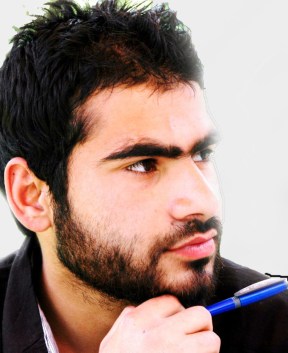
Waqar Ahmad Moharkan was born in Indian-held Kashmir in 1990. Currently, he is a final year student of Bachelor’s in Commerce at Srinagar’s Islamia College of Science and Commerce. Waqar was arrested on 4 October, 2011, during a raid on his house in Lal Bazaar on charges of participating in protests in the Downtown area of Srinagar. Waqar was arrested by police personnel from MR Gunj station. The court allowed his bail application on 23 October, 2011. Instead of being released, he was rebooked by same police station and shifted to Central Jail under judicial remand on 15 December, 2011 and suddenly slapped with the draconian Public Safety Act (PSA). Continue reading Free Waqar Ahmad →

We, the People of Gujarat: Urvish Kothari

This guest post by URVISH KOTHARI was originally written in Gujarati and has been translated by VISTASP HODIWALA

Associated Press

Some facts are so simple and self-evident that they elude you completely at the time they happen. Digesting them takes time – 2, 3,7, maybe even 10 years. By that time, the passion and the anger has abated a bit and there is a sense of composure that pervades our beings.

Like the fact about the communal violence that gripped the State of Gujarat in 2002.

Of course, a mere mention of this is enough to get the chief minister’s fanboys roll up their sleeves, even as their opponents ready themselves to launch a counter onslaught. But with the passage of ten long years, the first question should not be about whether the Chief Minister was complicit in the crime or not. No, it cannot be.

Continue reading We, the People of Gujarat: Urvish Kothari →

DISSENT, DEBATE, CREATE