National Alliance of People’s Movements: Resolution on LGBTQ issues

We oppose persecution and discrimination on the basis of sexuality and gender orientation in all formsand strive towards full social and political equality of all individuals who identify as Lesbian, Gay, Bisexual,Transgendered, Intersex and Queer (LGBTQ).

While welcoming the July 2nd 2009 judgment of the Delhi high court to decriminalize homosexuality NAPM recognizes that the LGBTQ community continues to be discriminated against in schools, colleges, workspaces,homes, the streets and before the law. We affirm that sexual orientation and gender identity are innate andcannot be consciously changed and we oppose attempts to convert LGBTQ individuals into heterosexuals orforce them to conform to dominant notions of masculinity or femininity on the grounds of morality, religion ornature. Continue reading National Alliance of People’s Movements: Resolution on LGBTQ issues

The disappearing body and feminist thought

Presented at conference organized by  Department of English (Delhi University)  February 14, 2011. The title of the  conference was “Postfeminist Postmortems?  Gender, Sexualities and Multiple  Modernities”.
Cross-posted on Critical Encounters

To paraphrase Anthony Appiah’s famous and oft-quoted question – Is the post of postfeminist the post of postmortem? That is, as in postmortem, does “post” mean definitively over, after, having transcended, gone beyond? To those who would answer “yes”, those privileged young women who float through their empowered lives in the wake of over a century of feminist struggles but disown their own heritage, to them I can only say – I’ll be a post-feminist in post-patriarchy. Or – not for a long time yet, baby.

But my answer to that question is “no”. I understand the post of postfeminism in the sense that Laclau and Mouffe understand their postmarxism. That is, post-feminist as indicating “having passed through” that body of thought; having lived through, experienced, feminist theory and politics in such a way that the terrain one now inhabits has been decisively transformed; but also post-feminist in the sense that in the course of this passage new objects have been configured that the old feminism could not have seen, or recognized.

It is in this kind of postfeminist moment that I locate my presentation today.

Continue reading The disappearing body and feminist thought

Anbulla kaadu (My beloved forest): Madhumita Dutta

Thervoy Kandigai Industrial Complex. The Government issued orders alienating 1127 acres of poramboke land in favour of SIPCOT for formation of a new Industrial Complex in Thervoy Kandigai village of Gummidipoondi Taluk, Thiruvallur District. The land development work is in progress now.
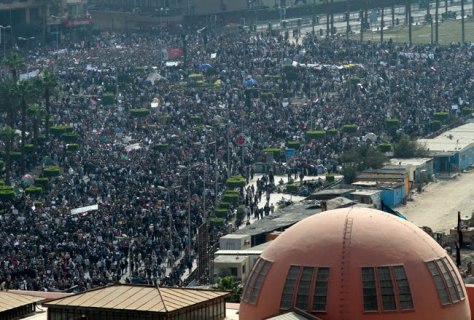

From the website of Industries Department, Government of Tamil Nadu

What this “land development work” involves, and the price that will be paid in human and ecological costs is something that MADHUMITA DUTTA encountered recently.

“A forest that was once ours is now private, a land that was once green now stands barren, a forest where we played, where we wandered freely is now fenced, men in uniform now guard the forest which we protected for generations.”

Thervoy Kandigai. A small nondescript village in Gummidipoondi Taluk of Thiruvallur district, 50 kms north of Chennai.  Surrounded by dense shrubby forests, natural lakes, rice fields and undulating terrain with misty mountain range of Sathyavedu in Andhra as the back drop. This small dalit village of about 1000 families is in the eye of a storm.  A storm that can blow away the dreams of Tamil Nadu government to hand over hundreds of acres of land to French tyre company Michelin, a big ticketed investment worth Rs 4000 crore for the state.   Continue reading Anbulla kaadu (My beloved forest): Madhumita Dutta

The ‘Viral’ Revolutions of Our Times – Postnational Reflections

The Arab Turmoil

According to a  report in The Guardian, the movement in Egypt that overthrew the regime of Hosni Mubarak is “a movement led by tech-savvy students and twentysomethings – labour activists, intellectuals, lawyers, accountants, engineers – that had its origins in a three-year-old textile strike in the Nile Delta and the killing of a 28-year-old university graduate, Khaled Said”. It has emerged, says the report, “as the centre of what is now an alliance of Egyptian opposition groups, old and new.” The April 6 Youth Movement (primarily a Facebook network), came into existence in in 2008, in support of the ongoing workers’ struggle in the industrial town of El-mahalla El-Kubra primarily on issues related to wages. The struggle in the past few years, also moved towards a restructuring of unions with government appointed leaders. The list of demands for the April 6 strike also included a demand for raising the national minimum wages that had remained stagnant for over two and a half decades. Increasing workers militancy over the past few years was a direct response to the World Bank imposed ‘reforms’ that had pushed lives of industrial labour to the brink. It was this sharpening conflict, consequent upon the serious impact of structural adjustment policies, that provides the backdrop in which the middle class youth decided to rally in support of the April 6 2008 strike. It was they who converted the call for an industrial strike into a general strike, according to some reports.  It is virtually impossible to get a sense of any of this in the ecstatic reports of the ‘networking babalog’ making a revolution that is now all over the Indian media.

Continue reading The ‘Viral’ Revolutions of Our Times – Postnational Reflections

On the fuzziness of Personal Identity: UIDAI and the national identity card of India: Taha Mehmood

Guest post by TAHA MEHMOOD

I – The spread of Identity cards in Southasia:

An identity card virus seems to be spreading across south-Asia. The pathogen emerged long ago in 1971, when Pakistan established a paper based personal identity system. !971 was also the year when Pakistan was engaged with India in a military conflict which led to the creation of Bangladesh. In 1972, a year later, the Department of Registrations of Persons located at Colombo, Sri Lanka, was entrusted with the responsibility of issuing a national identity to citizens who were over sixteen years of age. In 1972 the name of the island was changed from Ceylon to Sri Lanka and Tamil Tiger leader Velupillai Prabhakaran formed the Tamil New Tigers (TNT), which later became LTTE or Liberation Tigers of Tamil Eelam. The state of Sri Lanka was at war with LTTE for the next three decades. Nothing new happened on the national identity card front for the next two decades. Continue reading On the fuzziness of Personal Identity: UIDAI and the national identity card of India: Taha Mehmood

Why does the RSS dread the terror tag?

1.
Ram Madhav, the bespectacled ex-spokesperson of RSS is not known for his sense of humour.

It is a different matter that some of the media people just could not control their smiles when sometime back (second week of Feb 2011) in a press conference in the capital he enlightened the journos about l’affaire Aseemanand and the broader phenomenon of Hindutva terror.

Giving a completely new and almost unforeseen twist to the Aseemanand episode he said that he (i.e. Aseemanand) had in fact left the RSS in 2006. Of course, as a good spokesperson – although he has become an ex- he had the usual disclaimers in the beginning: RSS does not believe in violence and is a cultural organisation… One does not know whether much on the lines of the School Leaving Certificate, with which lesser mortals like us are more familiar with, Ram Madhav distributed photocopies of ‘Sangh Leaving Certificate’ of Aseemanand or anything similar to give authenticity to his claims or not. Continue reading Why does the RSS dread the terror tag?

JNU and the ‘sex scandal’: Aprajita Sarcar

This is a guest post by APRAJITA SARCAR

As a former JNU student, it is a pity that I have to write this post in order to draw attention to a crisis that needs urgent attention: the inability to talk about intimacy.  I say intimacy, as against sex, as against scandal, as against molestation, as against the “professionally shot” footage that made it to the front pages of newspapers.

Jawaharlal Nehru University (JNU) has a crisis to face that has been imminent for a while, and it comes from the inability to talk intimately, about intimacies. Because intimacies are distinct from rhetoric. Continue reading JNU and the ‘sex scandal’: Aprajita Sarcar

A Moment of Revelation: Prasanta Chakravarty

Guest post by PRASANTA CHAKRAVARTY

[A Report on ‘The Everyday Life of a Discipline’- a colloquium on contemporary English Studies that took place on February 4, 2011, at the Department of English, University of Delhi]

Unlike the social sciences, humanities in India at least, have been less systematic and meticulous about introspection. This is slightly odd owing to the fact that the onslaughts on humanitities, from both outside and from within its own quarters, have been quite relentless and ballistic of late. Besides, it is a good idea to take stock of things from time to time as disciplines morph and change gear. So, when I was asked to be part of a group of practitioners of humanities who were at the forefront of the last bit of stock-taking that took place during the late nineteen-eighties, I was curious to know how they see their own transition at this point of time and also get a sense about their assessment of English studies now, apart from my own contribution to the current debates.

Continue reading A Moment of Revelation: Prasanta Chakravarty

What can Egypt and Tunisia teach us?

The protests in Tunisia and Egypt have won the first of what will have to be many victories. Mubarak and Ben Ali have fled and dictators have fallen to people’s uprisings – the street and the public square have, at least for the moment, reclaimed their voice from the boulevards and corridors of power. Globally, these have been reported and rightly hailed as victories over entrenched dictatorships. Yet the uprisings have much to teach those of us who live in “democracies” – we must not lose the opportunity to ask what Egypt and Tunisia can teach us, no matter where we are.

I’ve been trying to write something about this for a few days now – nothing quite settles at the end of the pen. So here’s a set of thoughts/questions/ruminations that I think we must take on – in rambles, and intended as a provocation to comments and hopefully follow up posts.

Continue reading What can Egypt and Tunisia teach us?

The Virtues of Waiting Patiently: Arnav Das and Soumik Mukherjee

Guest post by ARNAV DAS SHARMA and SOUMIK MUKHERJEE. Photographs by SOUMIK MUKHERJEE

This slideshow requires JavaScript.

Peepalguda, Koraput, Odisha: “You see, for the bridge over that rivulet, forty thousand rupees were sanctioned”, the sarpanch of Mossigam gram panchayat starts off emphatically. It is only after a good amount of probing that he confesses that it was foolish of the Public Works Department (PWD) to sanction Rs 40,000 for a bridge when a similar bridge was built seven years ago in another village for Rs 43 lakh. In any case, a slight bureaucratic nudge resulted in even this amount to get diverted to another village in the Lima panchayat. Continue reading The Virtues of Waiting Patiently: Arnav Das and Soumik Mukherjee

‘We are aware of India’s interests’: Jhalanath Khanal

Interview with Nepal Prime Minister Jhalanath Khanal.

After seven months of living with a caretaker government, Nepal’s Parliament on February 3 elected Jhalanath Khanal, chairman of the Communist Party of Nepal (Unified Marxist Leninist), as the Prime Minister, with the support of the Unified Communist Party of Nepal (Maoist). He spoke to Prashant Jha at the prime ministerial residence in Kathmandu on February 10. Excerpts, as first published in The Hindu:

What’ll be your priorities?

My first priority is to complete the ongoing peace process. Second, my aim is to help complete the Constitution-writing process. Third, I’ll strengthen the institutions of governance, improve law and order, and guarantee security to the common citizens. Fourth, my focus will be on taking the country towards an economic revolution through development, reconstruction and socio-economic transformation.

Your predecessors had similar priorities, and had pledged to complete the peace and constitutional process. What’s different about your government? Continue reading ‘We are aware of India’s interests’: Jhalanath Khanal

Ravinder Tyagi of Batla House (in)fame in yet another frame up!: JTSA

This release comes from the JAMIA TEACHERS’ SOLIDARITY ASSOCIATION

10th February 2011

Ravinder Tyagi of Batla House (in)fame in yet another frame up!

Veteran of fake encounters must be suspended immediately!

It seems there is no end to Special Cell’s gallantry. One of its most celebrated and decorated heroes, Ravinder Tyagi, also the key architect of the Batla House ‘encounter’ has been found guilty of yet another frame-up of innocents as terrorists. The additional sessions judge Virendra Bhat yesterday absolved and acquitted seven men accused of terrorism in a case dating back to 2005; while pronouncing four officers of the Delhi Police guilty of manufacturing a fake story about an ‘encounter’. The Police had claimed to have recovered AK-47 assault rifles, fake currency and ammunition from the men they claimed were ISI agents—a brazenly false claim. Continue reading Ravinder Tyagi of Batla House (in)fame in yet another frame up!: JTSA

Remembering Shahid Azmi, the Shaheed: Mahtab Alam

Guest post by MAHTAB ALAM

It must have been around nine pm on 11th February last year. The nightfall and Delhi’s infamous wintry chill ensured that I stayed indoors at the mercy of closed walls and work for company. Sure enough, I was seated warmly in my setting of a cyber cafe of Jamia Nagar in Okhla. Okhla, an area I had migrated to as a 14 year boy from my hometown, to pursue my further education, like many other Muslim students from other parts of this country. As Basharat Peer has rightly observed, ‘India’s Muslims don’t move to Delhi; they move to Okhla’. Continue reading Remembering Shahid Azmi, the Shaheed: Mahtab Alam

Tragedy and Anguish: Can We Be True to Soumya?

There are no words to express the terrible anguish into which many of us have been plunged at the entirely-preventable fate of 23-year-old Soumya, raped and brutally murdered on her journey back home from work a week back. A criminal kicked her out of a slow-moving train between Shornur and Vallathol Nagar, robbed her, dragged her into the bushes, where he raped and wounded her fatally. After five days in hospital, she died. There were other passengers, men, who heard her cries. But none of them bothered to pull the chain, which would have saved her from both rape and murder.There are no words for anguish anymore in the Malayalam media. It has plenty of words to convey, to inspire craven fear and rancid sentimentalism, but none to express and pass on anguish. Continue reading Tragedy and Anguish: Can We Be True to Soumya?

Of land and other demons

The Hindu/Aman Sethi

Since January this year, I have been traveling in North Chhattisgarh to try to understand the scale of land acquisition and dislocation in a state that markets itself as India’s “Power Hub”.

There is something pretty massive going on in North Chhattisgarh – as a recent Down to Earth Cover pointed out :

The state has 10,300 MW of coalbased power capacity, including the captive 2,063 MW that industry consumes. This is about 12 per cent of India’s current coal-based power capacity. To this, it will add 56,000 MW, which is 65 per cent of the country’s coal-based installed capacity, as per the Central Electricity Authority. Nearly two-thirds of this capacity are planned in Raigarh (37 per cent) and Janjgir- Champa (34 per cent).

For this to happen, the state has to acquire vast amounts of land – in some places because the land happens to be above a coal bed, and in other because the land happens to be adjacent to a coal-bed. Most developers prefer “pit head plants”, or plants just adjacent to coal mines to reduce transportation difficulties.

Over the last month, I worked on two interesting legal cases that point to how such acquisition is taking place.  I think the two cases offer an interesting insight into the sort of battles that villagers are fighting.

Continue reading Of land and other demons

Blasphemy, Sedition, Democracy

Have you ever wondered?

Why does our media get so worked up when someone in Pakistan is accused of or convicted for blasphemy but is not overly perturbed when someone is charged with or convicted for Sedition in India?

Is this differentiated response occasioned by the belief that a modern state should overlook things like blasphemy but give no quarter to sedition?

Do anti-Blasphemy laws encroach upon Individual freedom while anti-sedition laws protect national interests? Is convicting someone for blasphemy essentially undemocratic but doing the same for sedition not so?

Let’s for the time being leave these major issues aside and engage ourselves with more mundane issues. Continue reading Blasphemy, Sedition, Democracy

Md. Salman discharged from the 2008 Delhi Blasts Case

Release from the JAMIA TEACHERS’ SOLIDARITY ASSOCIATION
5th February 2011

Show me the evidence, says Judge
The Prosecution is able to produce none!
Md. Salman discharged from the 2008 Delhi Blasts Case!

Md. Salman, arrested by the Uttar Pradesh ATS from Siddharthnagar on 6 March 2010, was accused of being a conspirator in the 2008 Delhi blasts. Today (5th February 2011), additional sessions Judge Ms. Santosh Snehi Mann threw out all charges against him— at the point of charge—in all five cases in Delhi bomb blasts for lack of any evidence that could prove that he had conspired to bomb various places in Delhi in 2008. Continue reading Md. Salman discharged from the 2008 Delhi Blasts Case

A Photo Album of Women of the Egyptian Revolution: Leil-Zahra Mortada

A photo collection by various photographers, compiled by Leil-Zahra Mortada

This is a homage to all those women out there fighting on the streets of Egypt, to those whose voices and faces were hidden from the public eye during the first days of the revolution! The album by now has traveled the world back and forth via online social networks, blogs and websites.
First and foremost the credit for this album goes to the courageous people of Egypt who are teaching us that freedom is taken and not given.
Second, to the women who by their courage, determination and strength are inspiring millions of us around the world.
Third to the photographers who took these photos and especially to those who have caused absolutely no problems when it came to copyright issues.


See the album and read more here

‘How Leaving the Internet Fueled Our Revolution’

For those who worry themselves sick about laptop radicalism, this is essential reading:

The web is in many ways a more modern, much larger version of the kinds of public spaces and forums that have made citizenship possible throughout history. Losing it for a week didn’t stop Egyptians from protesting or airing their frustrations; we still know how to use physical public spaces, after all. But it did remind us that a forum for the open exchange of words and ideas is central to any sustainable democracy; alternatively, we end up in a perilous cycle of control and chaos. Instead of expressing pent-up opinions with fists and bullets, as is happening now in the streets of Cairo, people who can express them freely in conversation, even in a virtual one, have a chance to hear one another and deliberate together about the future. Never mind the vacant symbolism of “Twitter revolutions” and Youtube activism: losing the Internet at the hand of our own government simply offers us a powerful reminder of why we actually want the Internet to begin with, and why we’re doing any of this. [Read the full article by Haisam Abu-Samra]

Excellent as the al-Jazeera coverage is, if you’re tired of it, see videos from Egypt on YouTube, created and uploaded by the people whose revolution it is. It will give you the closest possible feel of what it’s like to be there. Not even al-Jazeera can manage that!

And if you’ve been watching the events in the Arab world and consoling yourself that it’s not that bad in India, consider this: India recently gave Hosni Mubarak an award in Nehru’s name for ‘international understanding’ and Vice President Hamid Ansari addressed him thus:

Your support for regional and international efforts to promote and maintain peace in the West Asian region is eloquent testimony to your commitment to the promotion of international peace and goodwill. I feel deeply privileged to convey my warmest greetings to you. [Press Information Bureau]

Death of a River

This was first presented as a paper in a seminar on “The River” organised by the Max Muller Bhawan on 11 and 12 December 2010. Photo credits: Gigi Mon Scaria, Himanshu Joshi and Sohail Hashmi. Maps: The coloured map of Delhi is the restored version of an 1850 map; restoration is by E Ehlers and T Krafft. The black and white map is based on an 1807 map of the draingage of Delhi, made by a British cartographer. The three current three maps have been drawn by Shela Hashmi Grewal. You can stop at any image in the silde show above, by using the controls that you will discover once you hover the cursor over the slideshow.

This slideshow requires JavaScript.

The Final scene in the epic tragedy of the Jamna is being enacted at these very moments and the agencies that have wrought this havoc continue to initiate decisions that will permanently erase all signs of the river that has sustained the city that you and I call Hamari Dilli.

Before coming to my understanding of what needs to be done to save the Jamna, instead of what is being done to destroy it. I would like to draw your attention to certain geographical features of the land around Delhi, in order to better understand the factors that contributed to the location of the several Delhis and their relationship to the river. Continue reading Death of a River

DISSENT, DEBATE, CREATE