And then Suresh Sankhyan wanted to do the post-mortem

amank1
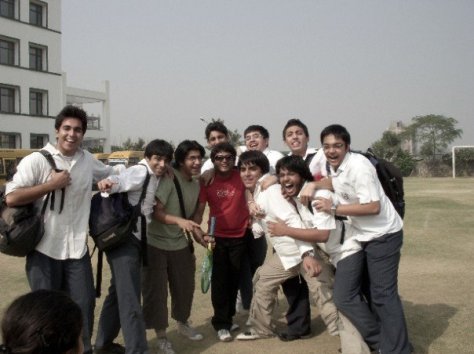
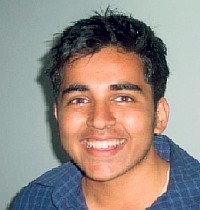
Aman Satya Kachroo, left-most, in his school days. Photo by Vaibhav Chhabra via Facebook

Before he died of brain haemorrhage (and not cardiac arrest as the papers incorrectly claimed), Aman Satya Kachroo wrote a note about who beat him up. In the note he named the four accused who are all now in jail. The note reads like a dying declaration and is signed by 12 witnesses. It seems unlikely that even one of the 12 witnesses will have the courage to say in court that they saw the lynching happening before their eyes. Even as they came down to Gurgaon for the cremation, they must have been getting calls from their parents, ‘Beta, just say you didn’t see anything. Why get into these court hassles and potential threats from the families of the accused?’ Continue reading And then Suresh Sankhyan wanted to do the post-mortem

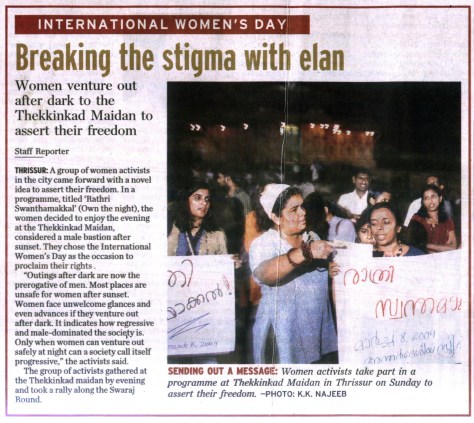
Women’s Day 2009, Thrissur

securedownload

Smile Pinki, Pinki Sonkar

If you’ve recovered from your Post-Slumdog Stress Disorder, may I dare to write a short post about Smile Pinki, the short documentary that also won an Oscar and that is also set in India? Continue reading Smile Pinki, Pinki Sonkar

Why Aman Kachroo’s won’t be the last ragging death, and what his family should do

thumbcms1Update 2: And then Suresh Sankhyan wanted to do the post-mortem

*

Update: Additional Solicitor General Gopal Subramaniam, who is I think the amicus curae in the ongoing case, says he will ask the Supreme Court to take note of the case and charge the Principal and Vice-Chancellor with “contempt, inaction, negligence and failure.” But who will charge whom for lack of implementation of the SC orders on ragging?And Himachal Pradesh has an anti-ragging ordinance too. (The ordinance had expired in 1998 1992, I gather, as it had not been turned into a law within six months)

*

I don’t know why this report does not use the word lynching, because that is what seems to have happened at the Dr Rajendra Prasad Medical College, Tanda. Continue reading Why Aman Kachroo’s won’t be the last ragging death, and what his family should do

Fifteen Reasons Why Your Rant is Not Even a Good Rant

‘In the wake’, as journalistic cliches go, of the Pink Chaddi campaign there’s a curious phenomenon of the Pink Chaddi campaigners finding more critics than those who went to a pub to and beat up women to get prime time attention. The latest is an article that, yawn, critiques internet activism as an echo chamber of the elite.

Since all that it does is nit-picking about online activism in India, it may not be a bad idea to do some similar frisking of the article itself. Continue reading Fifteen Reasons Why Your Rant is Not Even a Good Rant

The Survey Unfolds

Guest post by SHVETA SARDA

lnjp1

Between 26 February, when it started and 6 March, yesterday, the survey of 220 houses has been completed in LNJP. There are roughly 1000 houses left to be covered. From the groundwork done end of last week by a group young women and men residents of LNJP, documents of many have been put in order, and the encounter with the survey teams this past week was much more confident. Continue reading The Survey Unfolds

Exclusive TV tamasha at Ashoka Road

I was in Delhi for a few days last week to cover, among other issues, the pre-election mood for a few Nepali publications.

Now, it is not as if I am totally unfamiliar with the Indian media scene. We watch Indian news channels here in Kathmandu and know the nature of the beast. I have friends in the Indian TV business who had come to cover Nepal elections last year but ended up reporting on adventure sports despite the huge Maoist win. “Boss, no one is interested in Nepali politics. Rafting will sell,” they had said. And we saw India TV go hysterical when the Maoist government appointed Nepali priests in the Pashupati Temple to replaces the ones from Karnataka – the media induced pressure forced ‘secularists’ like Mulayam Singh and Amar Singh, on a visit to Kathmandu, to force the government to retract and got venom spewing Ram Yatris like L K Advani to make calls to Prachanda to convey his ‘disappointment’. Continue reading Exclusive TV tamasha at Ashoka Road

How ‘news’ became ‘interesting’

Our friend, like all stringers, would send Lucknow a lot of stories but all would go waste. A story a month, at the most, just a thousand bucks. Something interesting, get something interesting, the input editor on the other side of the mobile phone would say. Continue reading How ‘news’ became ‘interesting’

Civility, Harmuniya Bajaiyke: Prasanta Chakravarty

This guest post was sent to us by PRASANTA CHAKRAVARTY

A recent exchange in a congregation addressing the nature of contemporary civil society caught my attention. This was a formal gathering where there was supposed to be a pitch on an idea tentatively christened civility index: that is, whether it was possible to empirically measure civility and come up with some conceptual conclusions, as well as have more practical usages once such indicators will have been developed. A searching question came from someone who had spent a lifetime fighting liberal centrism and opportunism. “Why do you call the whole thing civility index,” she inquired, “civility connotes propriety and manner and etiquette, when you are interested to scale human capacities, right?”

This is a fundamental and worthy question, especially keeping in mind that certain variants of civil society discourse has caught the imagination of many invested in democracy right now, even as they wish to steer clear of old leftist certainties and eschew easy liberal pluralism at once. Are propriety and etiquette wholly irrelevant to our understanding of modern civil society? Is manner rudimentary to civil society, counterproductive to doing anything worthwhile? Does civility dilute the associational potential of civil society—human capacities being robbed off by issues of mere conduct and comportment? Are traditional societies uncivil by definition? And does civility, more than just civil, civic or public, betray fashionable elitism unabashedly?

Continue reading Civility, Harmuniya Bajaiyke: Prasanta Chakravarty

Silencing Social Activists

An escalating wave of attacks on social activists has been sweeping the country. Several recent incidents indicate an increase in the number of cases alleging grave human rights abuses against social activists, and a shift from low-level targeting, such as intimidation and harassment, to more serious violations, such as detention, prosecution, imprisonment and threats to their physical integrity. The authorities are also trying to silence them through unfair trial, denial of bail and long prison terms. There is excessive use of force, torture and other ill-treatment by the police. Women social activists are facing further violations, as women and as human rights defenders, including sexist verbal abuse and derogatory accusations. Continue reading Silencing Social Activists

Dalits in ‘Hindu Rashtra’

The Gujarat Earthquake in the year 2001 and the consequent relief and rehabilitation programme was an eyeopener to the outside world regarding the deep seated caste bias in the Gujarati community apart from the much talked about bias against the minorities. There were reports that at places the relief and rehabilitation work bypassed the dalits and the Muslims.

Interestingly Babasaheb Dr Bhim Rao Ambedkar had asked his followers to stop Hindu Raj becoming a reality at all costs. Continue reading Dalits in ‘Hindu Rashtra’

The Survey Begins

Guest post by SHVETA SARDA

LNJP is an old settlement at the edge of old Delhi, opposite Turkhman Gate, beside the LNJP hospital, from which it gets its name. It began to be settled in the late ’60s, and is now home to about 12000 people. With the planned changes in the city ahead of the Commonwealth Games, LNJP, one of the oldest and last surviving settlements, has also now been earmarked for eviction and demolition.

The survey that precedes demolition has begun in LNJP. A survey is conducted by representatives from the Slum Department of the Municipal Corporation, to produce knowledge about the settlement to be demolished, in order to ascertain how many of its residents are eligible for resettlement. According to a Central Government order of 2000, all those who have lived in a settlement since before 1998 are eligible for resettlement; those who have lived there since before 1990 will be allotted plots of 18 sq m, and those who settled there between 1990 and 1998 will be alloted 12.5 sq m. Continue reading The Survey Begins

SC Order on Blogger

:)

finally the order, and so its definitely not precedent in any manner Continue reading SC Order on Blogger

When it’s not defamation

In the context of the ongoing discussion on defamation and the Indian internet space, it may be useful to point out that an act of criticism has ten defences before it can be called defamation and the speaker/writer be sentenced to simple imprisonment for two years. Continue reading When it’s not defamation

The Arrest of Shamim Modi at Industrialists’ Behest

Activist Working for Rights of Tribal People Arrested

Ms Shamim (nee Meghani) Modi, a law graduate working among the tribals in Betul district, Madhya Pradesh, has had to pay a heavy price for taking up the cause of tribal people and other industrial workers. Shamim, who works with the Samajwadi Jan Parishad (an organization of socialist-Gandhian orientation) has been put behind bars in Hoshangabad jail for exposing the corrupt nexus between politicians and the mining mafia.  She was arrested in gross violation of democratic rights on 10th February 2009 from her residence at Harda, M.P. The process of attempting to secure bail from M.P High Court is now on.

The arrest was made on false charges, one of instigating tribals to ‘attack forest officials’ and another of ‘kidnapping with the intention to kill’ these officials! These charges were brought against her (and her husband) two years ago in 2007. Subsequently no enquiries were conducted, and no follow-up was done but the fact that these charges hung over their heads was presumably meant to cow them down. These charges have suddenly been resurrected because the administration has been under pressure from industrialist lobbies. Earlier, the trial court had rejected her bail plea despite the fact that the person supposed to have been ‘kidnapped’ was said to be present in court and denied any such thing. Another evidence, if any was still required, of the deep nexuses of power that operate at these levels. Continue reading The Arrest of Shamim Modi at Industrialists’ Behest

Slumdog as aesthetic

The Oscars have passed us by, leaving us with moments that op-ed writers could possibly only dream up: bollywood dancers on an Oscar stage; two of the three nominees for Best Song being sung in a language nearly the entire audience couldn’t even identify let alone speak; the English-speaking of the bevy of ‘India’s children’ translating the English questions into Marathi for the ‘kid from an actual slum’ in a we’re-all-one-across-the-ocean-moment; and, of course, the most harmonious moment of India-is-England-is-India convergence since the founding of the East India Company. It’s an embarrassment of riches.

So what does any of this have to do with slums? Let me be clear: this is not a tirade against the movie in any way. It actually isn’t about the movie at all. It is though about the one thing that the movie has brought back into our attention but that, somehow, no one actually seems to be talking about – that thing called the slum. Slumdog and the debates, protests, and celebrations around it, in equal measure, seem to beg a question: how do we, as Indians who are not Danny Boyle, think about the slum? How should we? Can Slumdog teach us a trick or two about our own backyards?

Continue reading Slumdog as aesthetic

Bloggers and Defamation

Justice Balakrishnan, in refusing to quash criminal proceedings against a nineteen year old blogger, says that any blogger posting material on the web should be aware of the reach of the internet and hence also be willing to face the consequences of such action. This sounds fair enough, and it would seem that if bloggers are exercising their right to freedom of speech and expression, then they should be subject to the same norms as a newspaper or magazine would, including the possibility of legal action being taken against them.

This sentiment reminds me of Anatole France’s famous statement that the law, in its majestic equality, forbids the rich as well as the poor to sleep under bridges, to beg in the streets, and to steal bread. The quick equation of an individual blogger with the might of a newspaper or a magazine is a little troubling. Individuals do not have the same kind of power, money or reach to be able to defend themselves in the way that newspapers may be capable of. Continue reading Bloggers and Defamation

SS Stormtroopers attack OBCs celebrating Shiv Jayanti

(Apologies for posting a mere press release, but it’s something important and yet I don’t think it will be ‘interesting’ enough for the ‘national’ media to pick up. This is not to take sides at all, because there are no sides to take.)

RASHTRIYA SAMAJ PAKSH

PRESS RELEASE

Rashtriya Samaj Paksh, Shiv Jayanti meeting attacked by Shiv Sainiks in Mumbai

The Shiv Sena once again proves that it is a Brahmanical party by attacking OBC’s

Mumbai – February 23, 2009

A meeting that was organized by the activists of the Kurla unit of the Rashtriya Samaj Paksh (RSP) was attacked by Shiv Sainiks. The SS storm troopers, numbering 50, unleashed their fury on the meeting, shouting slogans, attacking the people and throwing chairs. The very fact that the Shiv Sainiks attacked Shiv Jayanti celebrations organized by the OBC (Other Backward Caste) activists, namely the Dhangar community (Shepherds) has once again exposed the Manuwadi – Brahmanical character of the Shiv Sena. Continue reading SS Stormtroopers attack OBCs celebrating Shiv Jayanti

Supreme Court on Liability of Bloggers

While I still dont have a copy of the order/ judgment, there have been news reports about the Supreme Court holding that a person who starts a blog/ community page cannot claim that it was a community page and not meant for public consumption. I will update this the moment I get hold of the order, but just wanted to flag this for the moment, because of the serious implications that it can have. While bloggers and web content have always been subject to the same rules that determine other forms of publication, there are a number of issues and questions involved in the liability of online content, including whether the author of a blog can be held liable for comments / posts by others. Continue reading Supreme Court on Liability of Bloggers

Bailout or Bankruptcy?

With the economy in the doldrums, Barack Obama in the White House, and Elton John releasing a line of crystal encrusted Ipods for charity, it’s suddenly fashionable to talk about “Sacrifice” once more; a trend that senior management at General Motors seems to have picked up on.  Their December 2, 2008 proposal to the Senate Banking Committee calls for sacrifices no less than nine times in twenty four pages from everyone including stake holders, share holders, bond holders, management, senior executives and in one instance, even the GM balance sheet (it has been asked to sacrifice leverage).   That the Company wrangled out $13.4 billion from the TARP suggests an era in which nothing succeeds like sacrifice, but the accompanying term sheet suggests that the time for martyrdom has just begun.

Continue reading Bailout or Bankruptcy?

A Fragile Peace in Nepal

In the six months that Maoist chairman Pushpa Kamal Dahal ‘Prachanda’ has been Prime Minister, he has realised that running a state is more complex than waging a war.

Since mid-August when he took charge, the PM has had to deal with multiple challenges – an intense ideological debate within his party; a deadlock in the peace process; breakdown of consensus with the G P Koirala led Nepali Congress (NC); acrimony between the defence ministry and Nepal Army (NA); opposition from sections of civil society suspicious of Maoist commitment to democratic norms; rampant lawlessness in the eastern Tarai and ethnic assertion in eastern hills; the collapse of basic services with 16 hour power cuts; and the impact of the global meltdown with remittances dipping. Continue reading A Fragile Peace in Nepal

DISSENT, DEBATE, CREATE