Statement condemning the murder of Gulnaz Khatun

Statement Condemning the murder of Gulnaz Khatun and demanding a speedy investigation

We the undersigned feminist groups, activists and individuals are deeply anguished at the killing of a 20-year-old poor Muslim girl, Gulnaz in a village in Bihar‘s Vaishali district. The young girl, an economic support to the family and about to be married was killed after her stalkers poured kerosene oil on her and burnt her alive on 30 October 2020. The girl was admitted in a nearby hospital with 75 percent burns and later moved to Patna Medical College. In her video statement when she was in excruciating pain, she clearly identified the three attackers. She succumbed to her injuries on 15th November 2020. The case has made hardly any progress. There is very limited coverage about the case in electronic Media and print media. According to the reports one accused has been arrested and police is still looking for the other two.. There are also reports that the family of victim is being harassed by the accused. Continue reading Statement condemning the murder of Gulnaz Khatun

The Farmers’ Struggle and the Agrarian Crisis


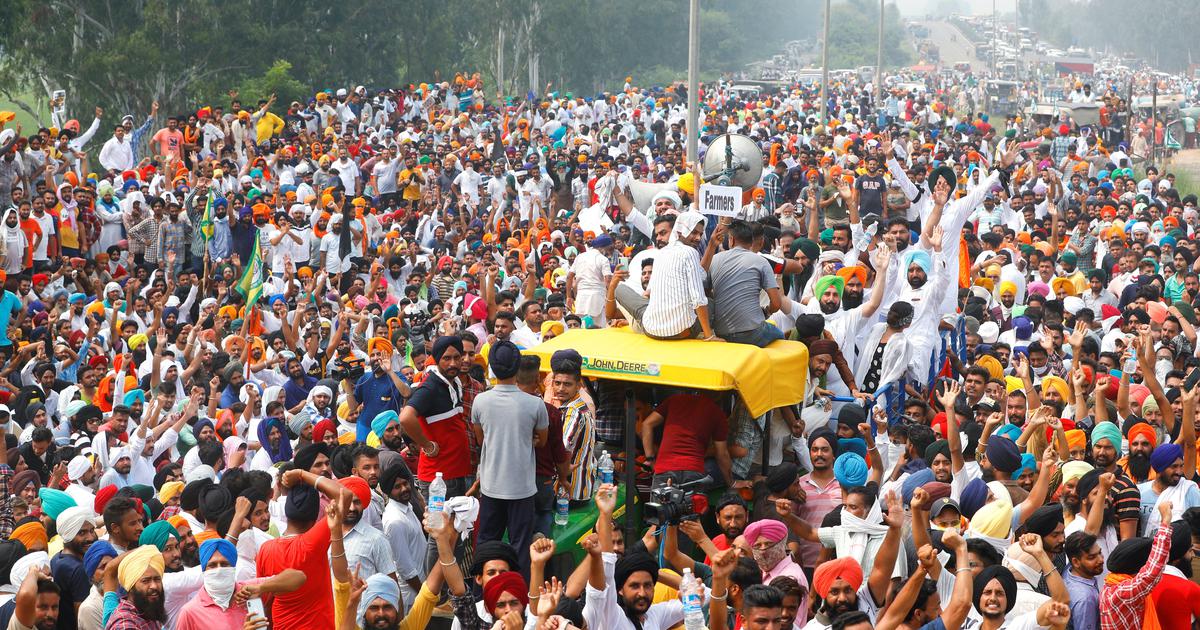
Famers’ struggle, image courtesy Scroll.in

Not only did the Modi government not pay any heed to the demands raised by the massive Kisan Mukti March of November 2018, it in fact, went on to surreptitiously promulgate three ordinances, in June this year, that go directly against everything that the farmers want. Indeed, they seek to hand over agriculture to the corporate sector – which will effectively mean destruction for a large mass of farmers. Naturally they are up in arms in what is perhaps the most determined struggle of the last four decades. The protests have been going on in many states since September 2020 and have reached the capital only now.

The three ordinances – now laws – that are currently pushing farmers into a ‘do or die’ struggle in different parts of the country, have been widely written about and their different dimensions explained (for instance, here, here and here). We will therefore not go into their analysis in this article. The ordinances are: (i) Farmers Produce Trade and Commerce (Promotion and Facilitation) Ordinance, 2020, (ii) The Farmers (Empowerment and Protection) Agreement on Price Assurance and Farm Services Ordinance, 2020, and (iii) The Essential Commodities (Amendment) Ordinance, 2020. Farmers’ organizations opposing the ordinances claim that they have been very misleadingly named so as to give the impression that they empower the farmers;  they suggest the ordinances might be more accurately renamed the “APMC Bypass Bill”, “Contract Farming Promotion Bill” and the “Food Hoarding by Corporates Bill” respectively.

The long and short of these ordinances is quite nicely summed up in these suggested names – for what the three together aim to achieve is the dismantling of state procurement (though on paper it may continue to remain), and thereby open agriculture to contract farming for big corporations, allowing them to corner essential food commodities in as large quantities as they want. The entire attempt, it is not hard to see, is to open out the agriculture sector to giant retail chains like Reliance – which is why it is necessary to remove the limits on purchase and storage of essential commodities. 

Contract farming, already happening informally at individual levels, once it is made the norm, is certainly going to seriously compromise food security for all. For if an agribusiness firm eyeing quick and massive profits wants farmers to change from essential food production to some other crop, it will decide what will be produced. And of course, what gets you quick profits is not what is sold as essential food item in the domestic or local market but it could be anything from potatoes for chips to maize to manufacture  ‘alternative fuel’ for US consumers. So entire cropping patterns can change, endangering our food sovereignty as a people.

The farmers, in a word, are not just fighting a battle for their own survival but one where the survival of all of us is at stake. If the design visualized in the three ordinances comes to pass, it will also lead to the complete destruction of lakhs of people who earn their livelihoods by selling fruit and vegetables – for those too will be produced by farmers under contract farming with corporations which will sell them at their retail stores. Prices for millions of consumers too will then be determined by these giant retail chains.

But these issues have only come up now. Why have the farmers/ peasants been agitating for the last couple of years?

Rewind to November 2018 Continue reading The Farmers’ Struggle and the Agrarian Crisis

The changing face of Delhi in travellers’ accounts – Dilli hai jiska naam IV: Swapna Liddle

We thought of a series on Delhi that does not talk only of the narrow lanes of Shahjahanabad, the Mughalia, aka Mughlai delights and the lip-smacking Chaats of Chandni Chowk or the grand ruins of the seven Delhis and the wide open spaces and broad roads, but a series that also looks at the way Delhi has evolved. We wanted to explore the logic of the city and of the forces that have shaped the idea of the city itself.  It was this idea that made us approach people who have engaged with the city with love and care for decades and we requested them to write for Kafila.

This series is titled Dilli hai jiska naam, and the links to the previous posts can be found at the end.

This is the fourth post in the series, by SWAPNA LIDDLE

The changing face of Delhi in travellers’ accounts : Swapna Liddle

There are many sources through which we can learn about the history of a city, and these are often the writings of its inhabitants, such as personal letters, diaries, newspapers, and official documents of various kinds. When it comes to basic descriptions of a place, however, it is often the writings of travelers that give us the most vivid accounts. Residents often take their surroundings for granted, neither very conscious of nor feeling any imperative to record their own impressions of their surroundings.

Visitors, on the other hand, are struck by the novelty of the place, and the farther they come from, the more this is true. They often also want to record their memories, in words and in images. In the case of Delhi, a particularly large number of European visitors passed through and recorded their experiences from the late 18th century onwards. This coincided with the expansion of the British East India Company’s control over the Gangetic plain, and became a deluge after the Company actually conquered and began to administer Delhi in 1803. Sometimes the records of these travellers were personal aide memoires for a journey undertaken, but often accounts to be shared with those back home, via letters to near and dear ones. Some of these ended up in the form of published journals with a larger readership.

To us today, the words and pictures left behind are a valuable peek into a landscape that has since then changed profoundly, and this article will be largely dealing with that change. At the same time, 18th century observers were also acutely aware that they were seeing a changing landscape, that had been affected by both natural and human factors. Antoine Polier, the Swiss adventurer visiting Delhi in 1776, was aware that the river Yamuna had quite recently changed its course, from just below the walls of the Red Fort, to about a mile eastwards, leaving only a narrow channel separating Red Fort from Salimgarh.

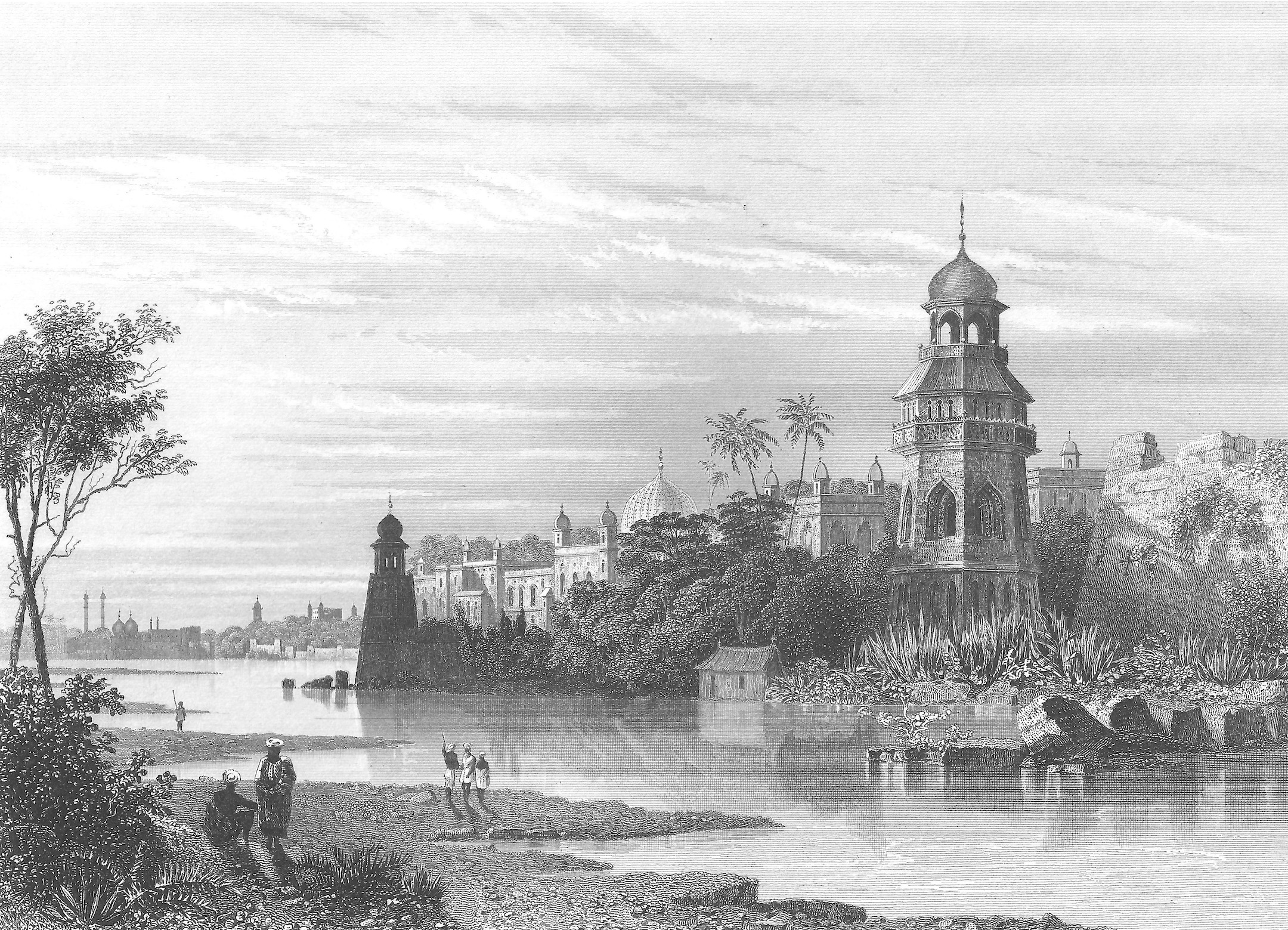
It is this narrow channel flowing between the two fortifications that we see in many of the earliest sketches, such as those of Captain John Luard in the 1820s and Charles Stewart Hardinge in 1847.

“Red Fort” by Charles Stewart Hardinge

Continue reading The changing face of Delhi in travellers’ accounts – Dilli hai jiska naam IV: Swapna Liddle

The Spectre of Evil…The world Since 1989 : Kumar Ketkar


The fifth lecture in the ‘Democracy Dialogues Series’ organised by New Socialist Initiative was delivered by Kumar Ketkar, Member of Parliament, Rajya Sabha at 6 PM (IST) on Sunday, 6 th December

Theme : The Spectre of Evil…The world Since 1989

Continue reading The Spectre of Evil…The world Since 1989 : Kumar Ketkar

How Can India Reinvigorate Phule’s Revolutionary Legacy ?

Remembering a colossus in the times of Hindutva.

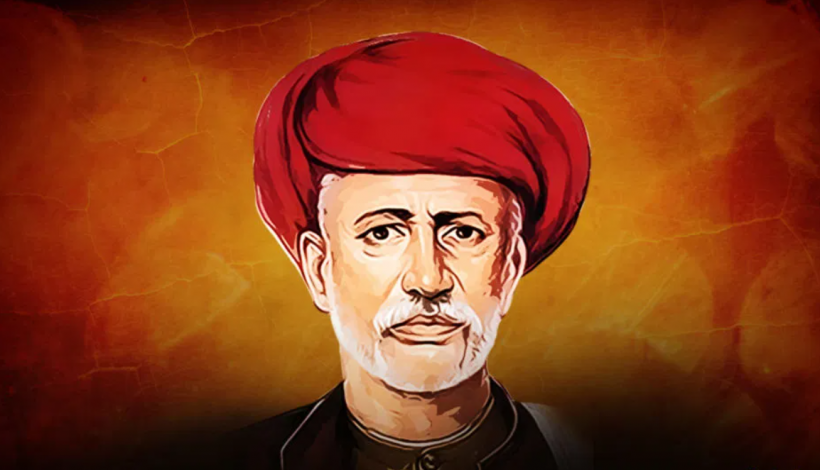
Jyotirao phule.

Who will reinvigorate Phule’s legacy? This question stares us in the eye on 28 November, the 130th death anniversary of Jyotirao Phule, considered the “father of social revolution in India”. Phule largely remains relegated to the background—a result of selective amnesia and identity politics in modern India, where his path-breaking contributions, and those of his wife Savitribai and her fellow traveller Fatima Sheikh are rarely remembered.

They are credited with opening the first school for girls from the historically “untouchable” communities in Pune, which was once ruled by the Peshwas. This school created an upheaval in the Brahmin-dominated Maharashtra of yore, as a 14-year-old Muktabai, belonging to the formerly “untouchable” Mang caste, who studied in the school, wrote: “O learned Pandits, wind up the selfish prattle of your hollow wisdom and listen to what I say.” The student’s essay was published in 1855 in Dnyanodaya, a journal popular then. (From Women Writing in India, Edited by Susie Tharu and K Lalitha, Pandora.)

Jyotirao Phule was given the honorific of “Mahatma” a few years before he breathed his last in 1890, for a life spent engaging in tremendous innovation and creativity. He initiated his wife into writing and she later became an independent activist too—a rarity in those days. He opened the doors of his home for those considered the lowliest among the low. He came to the defence of scholar-activists, such as Pandita Rambai, when she embraced Christianity. So he fought against the conservative onslaught single-handedly. Many such instances in his life are worth emulating today.

( Read the full article here)
इस्लामिस्ट एवं हिन्दुत्ववादी: कब तक चलेगी यह जुगलबंदी!

आखिर इस्लामिस्ट क्यों खुश हैं नागरिकता संशोधन अधिनियम से

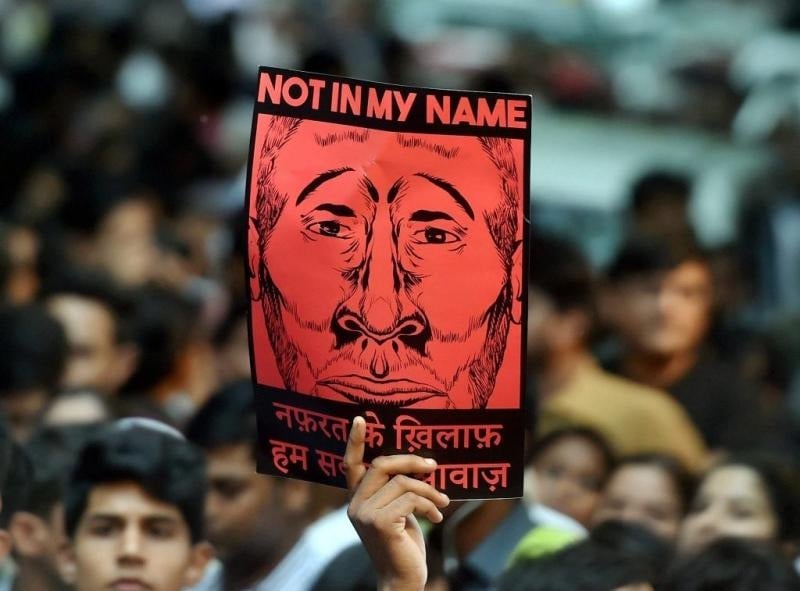
not in my name

प्रतीकात्मक तस्वीर। 

विजयादशमी के दिन सरसंघचालक की तकरीर आम तौर पर आने वाले समय का संकेत प्रदान करती है।

विश्लेषक उस व्याख्यान की पड़ताल करके इस बात का अंदाज़ा लगाते हैं कि दिल्ली में सत्तासीन संघ के आनुषंगिक संगठन भाजपा की आगामी योजना क्या होगी।

विगत माह विजयादशमी के दिन संघ सुप्रीमो के व्याख्यान का फोकस नागरिता संशोधन अधिनियम पर था, जिसमें उन्होंने यह दावा किया कि यह अधिनियम किसी भी ‘धार्मिक समुदाय’ के साथ भेदभाव नहीं करता है और मुसलमानों को एक छद्म प्रचार से गुमराह किया गया है। उनके मुताबिक संसद में यह कानून संवैधानिक प्रक्रिया का पालन करके पारित हुआ है, एक तरह से सरहद पार के उन भाइयों एवं बहनों को सुरक्षा प्रदान करता है, जिन्हें वहां धार्मिक प्रताडना झेलनी पड़ती है।

मालूम हो कि उन दिनों चूंकि बिहार चुनावों की सरगर्मियां बनी हुई थीं, लिहाजा उनके वक्तव्यों से निकले संकेतों पर अधिक बात नहीं हो सकी।

गौरतलब है कि बंगाल के चुनावों के मद्देनज़र भाजपा के कुछ अग्रणी नेताओं ने भी इसी किस्म की बातें शुरू कर दी हैं। मालूम हो कई बार अपनी आम सभाओं में उनके कई अग्रणी, ‘दीमक’ की तरह ऐसे ‘अवांछितों’ को हटाने की बात पहले ही कर चुके हैं।

प्रश्न यह है कि क्या कोविड काल में इस सम्बन्ध में नियम बनाने का जो सिलसिला छोड़ दिया गया था क्या उसी मार्ग पर सरकार चलने वाली है और इसे लागू किया जाने वाला है या यह सिर्फ चुनावी सरगर्मी बनाए रखने का मामला है।

( Read the full article here )

The Pride of piecemeal engineering : An open letter to the wcc

Dear Friends at the WCC

Seared by the news this morning, and knowing well that all of you are as burned as I am by it, I let my mind wander to graze and find its own source of comfort. It wandered, to my surprise, to a completely unexpected place: to some writings of a well-known philosopher of science, Karl Popper. More specifically, to Karl Popper’s vision of social intervention, which he called ‘piecemeal engineering’. Put very simply, ‘piecemeal engineering’ refers to taking small, even modest, cautious, self-critical steps towards some desired social goal of fighting a ‘concrete social evil’.

Continue reading The Pride of piecemeal engineering : An open letter to the wcc

RE-ORIENTING URBAN PLANNING STRATEGIES and The Master Plan of Delhi – Dilli hai jiska naam III: A.G. Krishna Menon

We thought of a series on Delhi that does not talk only of the narrow lanes of Shahjahanabad, the Mughalia, aka Mughlai delights and the lip-smacking Chaats of Chandni Chowk or the grand ruins of the seven Delhis and the wide open spaces and broad roads, but a series that also looks at the way Delhi has evolved. We wanted to explore the logic of the city and of the forces that have shaped the idea of the city itself.  It was this idea that made us approach people who have engaged with the city with love and care for decades and we requested them to write for Kafila. 

This series is titled Dilli hai jiska naam and the links to the previous posts can be found at the end.

This is the third post in the series by AGK MENON

Re-orienting urban planning strategies – The Master Plan of Delhi: A.G. Krishna Menon

Introduction

Delhi is an extraordinary historic city, comparable to Rome or Istanbul in the range and significance of its extant heritage. It is now the capital of a politically and economically aspiring Republican. However, unlike Rome or Istanbul, the significance of the city’s historic legacy plays little role in determining how the contemporary city is envisaged. In fact, this legacy is elided in civic planning and politically contested.  Therefore, when in January 2013, the Government of India forwarded a dossier to UNESCO, to nominate Delhi as a World Heritage City, it was a historic turnaround because it marked a paradigm shift in how the civic authorities sought to view its future.

Until then, India had never sought to celebrate any of its remarkable historic cities for their heritage characteristics let alone conserve it. However, it had been the contention of the Delhi Chapter of the Indian Trust for Art and Cultural Heritage (INTACH), that there was a strong correlation between not valuing the cultural legacy of historic cities and the degraded conditions they had been reduced to in contemporary times. For example, the Master Plan of Delhi officially identified Shahjahanabad, the pre-eminent Mughal city built by Emperor Shahjahan in 1648, as a slum that needs to be redeveloped in the manner the bombed out cities of Europe after World War II were rebuilt. These circumstances motivated INTACH to actively advocate the need to conserve historic cities and it worked to get Delhi nominated as a World Heritage City. Continue reading RE-ORIENTING URBAN PLANNING STRATEGIES and The Master Plan of Delhi – Dilli hai jiska naam III: A.G. Krishna Menon

Condemn the harassment and unlawful arrest of Anti-CAA Activist Zainab Siddiqui’s family: Citizens’ Statement

The following is a statement issued by concerned citizens, activists and organizations

We condemn the shocking assault, humiliation and harassment of human rights Activist Zainab Siddiqui’s family by Uttar Pradesh Police in Lucknow on 5th November. This targeting of grassroots Activists is a new way of curbing voices of dissent and must be strongly resisted.  
Zainab Siddiqui, an Activist based in Lucknow, has been working extensively at grass root level on Women & human rights issues. She is part of Bebaak Collective. As a young Activist she enthusiastically participated in demonstrations against CAA/NRC/NPR.
On 5 November 2020, UP Police visited Zainab’s residence asking her parents whether she was part of Anti CAA/NRC/NPR agitations. Her Parents responded by saying that she has worked with grass roots organizations. At 8:00 pm, Anti Terrorism Squad (ATS) & Uttar Pradesh Police barged into Zainab’s house without any due process of law and took Zainab’s father into custody. They also took Zainab’s Brother into their custody who studies in Std 10 and is 16 years old. The police assaulted & abused Zainab’s Mother and younger sisters who were in the house and snatched away their phones.
The Anti Terrorism Squad (ATS) & Uttar Pradesh Police were unwilling to co-operate. Even after requesting repeatedly, they refused to provide arrest warrant. Anti Terrorism Squad (ATS) & Uttar Pradesh Police then took Zainab’s Father and 16 year old brother to Sarojini Nagar Police Station, Lucknow. The younger brother of Zainab, a juvenile was beaten by the U.P Police and kept in custody for a night. Zainab has also received threats from Uttar Pradesh Police. 
We condemn this act of terrorizing people around her locality. We condemn the barbarous violence that Anti Terrorism Squad (ATS) & Uttar Pradesh Police has subjected Zainab & her family. It is a matter of utmost shame that human rights defender and their families are being attacked while those who commit acts of violence and promote social enmity roam free. 
We are also concerned that in the past one year Uttar Pradesh Police has been systematically targeting Activists who are associated with Anti CAA-NRC-NPR protests which are inimical for the functioning of democracy in this country.
We appeal to human rights Activists & organizations to endorse this appeal in solidarity with Zainab & her family and condemn despotic action of Anti Terrorism Squad (ATS) and Uttar Pradesh Police.

Continue reading Condemn the harassment and unlawful arrest of Anti-CAA Activist Zainab Siddiqui’s family: Citizens’ Statement

Bengal 2021, Fascism and the Left(s)


‘The specific threat of National Socialism was obscured amid general talk of the perils of “fascists”, a term egregiously applied to Bruning, Social Democrats and all and sundry. Dogmatic catastrophist theorising led the Communists to actively underplay the Nazis: Ernst Thalman warned the KPD [Communist Party of Germany] Central Committee in February 1932 “that nothing would be more disastrous than an opportunistic overestimation of Hitler-fascism.’  – Michael Burleigh, The Third Reich – A New History, p. 136

Ernst Thalman warned his party’s Central Committee against ‘opportunistically overestimating Hitler’, literally months before Hitler was appointed Chancellor in January the following year. What is more, this statement was made at a time when the intentions of the Nazis were hidden to nobody. As Burleigh puts it, they had frequently announced their contempt for the law and ‘by 1932 were vowing to intern Communists and Social Democrat opponents in concentration camps.’ (p. 149) Thalman, we know, was killed in the Buchenwald concentration camp in August 1944, eleven years after being held in captivity. Indeed, Thalman was arrested barely a year after he warned his party not to overestimate ‘Hitler-fascism’.

Continue reading Bengal 2021, Fascism and the Left(s)

डॉक्‍टर राजकुमारी बंसल – एक अंबेडकरवादी दलित जिन्हें ‘नक्सल भाभी’ बना दिया गया

A statement by WOMEN AGAINST SEXUAL VIOLENCE AND STATE REPRESSION

हाथरस में एक दलित लड़की के साथ हुई बलात्कार की घटना व उसकी जघन्य हत्या के बाद, पीड़ित परिवार के साथ डॉक्टर राजकुमारी बंसल जिस निर्भीकता और साहस के साथ खड़ी हुईं उन पर देश भर की मीडिया ने जिस तरह की फर्ज़ी और झूठी खबरें चलाईं उसके विरोध में हम सभी सामाजिक कार्यकर्ता, प्रोफेशनल व तमाम संगठन, जो जातिगत और यौनिक हिंसा का विरोध करते हैं, डॉ. राजकुमारी बंसल के समर्थन में एकजुट हैं। उनकी निर्भीकता व मानवीय प्रयास के लिए हम उन्हें सलाम करते हैं।

विगत 24 अक्टूबर 2020 को मध्य प्रदेश महिला मंच, छत्तीसगढ़ महिला अधिकार मंच, एनएफआईडब्ल्यू (मध्य प्रदेश), नागरिक अधिकार मंच, डब्ल्यूएसएस (मध्य प्रदेश-छत्तीसगढ़) के प्रतिनिधियों ने डॉ. राजकुमारी बंसल से जबलपुर में उनके घर पर मुलाकात की। 

Continue reading डॉक्‍टर राजकुमारी बंसल – एक अंबेडकरवादी दलित जिन्हें ‘नक्सल भाभी’ बना दिया गया

Jawaharlal Nehru and the Current Challenge to the Idea of India : Prof aditya mukherjee


The fourth lecture in the Democracy Dialogues series organised by New Socialist Initiative was  delivered by eminent scholar Prof Aditya Mukherjee, Centre for Historical Studies, JNU who is also editor of the ‘Sage Series in Modern Indian History’

Theme :
Jawaharlal Nehru and the Current Challenge to the Idea of India
Sunday, November 15, 2020
Facebook.Com / newsocialistinitiative.nsi
Abstract :

In this talk I will look at how Jawaharlal Nehru tried to implement the vision of our national liberation struggle, which was reflected in our Constitution.  Critical elements of this vision were the creation  of a sovereign, secular, inclusive, democratic and pro-poor state. There was a consensus among the entire  Nationalist spectrum, from the Left to the Right on all these elements. While there was a consensus on the “pro-poor” aspect, from the early nationalists to Gandhiji to socialists and communists, there was no consensus on the idea of socialism, though a large and growing section was moving towards that objective. (The communalists and other loyalists who claimed to represent sectional interests, naturally did not share any aspect of this vision).

I will seek to outline how Nehru undertook the stupendous and in many respects historically unique task of creating a modern democratic nation state in a plural society, left deeply divided through the active collusion of the colonial state; of promoting modern industrialization within the parameters of democracy and sovereignty in a backward and colonially structured economy; of finding the balance between growth and equity in an impoverished, famine-ridden country; of empowering the people and yet expecting them to tighten their belt for the sake of the nation as a whole; of promoting the highest level of scientific education, a field left barren by colonialism; in short, of un-structuring colonialism and bringing in rapid economic development but doing it consensually, without the use of force, keeping what has been called the “Nehruvian consensus” intact in the critical formative years of the nation. I will also briefly discuss Nehru, who was deeply influenced by Marxism, tried to creatively move towards the socialist objective without compromising on the non-negotiable principle of democracy; though with limited success because of  a variety of reasons.

I shall end with reminding ourselves that, in these days of trying to erase Nehru’s memory altogether or to remember him in an unrecognisable demonised image created though false propaganda, much can be learnt from the legacy left behind by Nehru’s ideas and practice by those who wish to struggle to meet the current challenges to all the pillars of the Idea of India.
Sun, 15 Nov at 06:00 GMT+05:30
[https://www.youtube.com/playlist?list=PLtXBfoS5KZ78UFI_aYzROjUss8ZzhUKxy
This is the link of the playlist where you can find all the democracy dialogues video.]


Basti Basna Khel Nahin Hai – Dilli hai jiska naam II: Narayani Gupta

This is the second part of a series on Delhi that does not talk only of the narrow lanes of Shahjahanabad, the Mughalia, aka Mughlai delights and the lip-smacking Chaats of Chandni Chowk or the grand ruins of the seven Delhis and the wide open spaces and broad roads, but a series that also looks at the way Delhi has evolved. We wanted to explore the logic of the city and of the forces that have shaped the idea of the city itself. It was this idea that made us approach people who have engaged with the city with love and care for decades, and we requested them to write for Kafila.

This series is titled Dilli Hai Jiska Naam, and the first post in the series by Pradip Krishen can be read here.

Here is the second post, by NARAYANI GUPTA

Basti basna khel nahin: Narayani Gupta

Presented at a seminar on ‘The Right to the City’ at Indraprastha College, Delhi University, on 5 September 2019 

The strident cry of the Right to the City takes us back 50 years, to Henri Lefebvre. 50 years ago, when I was in my 20s,  parts of the world turned upside down – 1967 saw the Naxalbari peasant uprising, in 1968, Lefebvre’s book Le Droit a la ville was followed by the  protest movements of students and workers in Europe. 1969, the rhythms of Woodstock, and in India the excitement of the founding of JNU… Today we get late for appointments because of the pile-up of cars on the roads. 50 years ago it was because of the river of red flags that eddied through the streets from Ramlila Maidan to Sansad Bhavan. Government bred its ‘other’ – protest. Things fall into place when recalled from a later time, but when they happen they merely disturb the surface.

So this is a golden jubilee moment, but also a nostalgia moment, nostalgia for that stubborn sense of hope which we seem to have lost, for the battle-cries now replaced by triumphalist slogans.

The plea for a collective life and an equal access to resources – which is implied in the battle-cry ‘The Right to the City’ – has to be placed against the histories of particular countries. It is certain conjunctures that explain why something happens when it does – even the rallying-cry of the Right to the City.

Continue reading Basti Basna Khel Nahin Hai – Dilli hai jiska naam II: Narayani Gupta

CAA and dissent – the mere passing of a law does not imply democratic consensus: Abhik chimni

Guest post by ABHIK CHIMNI

The Citizenship Amendment Act, 2019 (CAA) is a legislation which along with the National Register of Citizens (NRC)  gives rise to a legal regime which is not consistent with the tenets of the Indian Constitution.

The CCA/NRC violates the basic structure of the Indian Constitution, primarily the equality clause and the principle of secularism embedded within the constitutional framework.

I further argue that Fundamental Rights are in fact dissenting rights.

The Indian Constitution – A story in three parts

The Constitution can be broadly divided into three parts.

The first accounts for protection of individual liberty through the fundamental rights chapter stipulated in Part III of the Constitution.

The second seeks to create independent institutions such as the constitutional courts, the Election Commission, the Comptroller Auditor General and the Governor’s office etc.

Continue reading CAA and dissent – the mere passing of a law does not imply democratic consensus: Abhik chimni

The Tragic innocence of being faisal khan

India cannot take its syncretic tradition for granted. A culture of communal amity has to be rebuilt from the ground up.

Fasial.

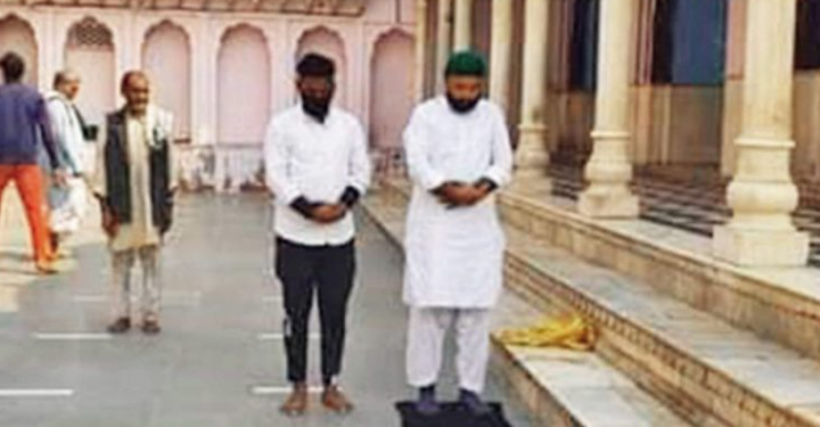
Irony died a thousand deaths on Monday, 2 November, when 48-year-old non-violent activist Faisal Khan, a founder member of a revived Khudai Khidmatgar, was arrested by the Uttar Pradesh police. The charge against him is that he spread disharmony and hurt religious sentiment, by offering namaz at a Krishna temple in Mathura. He and three other members of his organisation, whose name roughly translates to “servants of god”, have been charged by the police, though Faisal is the only one arrested so far.

Faisal was arrested at “Sabka Ghar”, a centre for communal harmony he has established near Ghaffar Manzil. People of all faiths can stay at this centre and celebrate festivals of all religions together. He had revived the historic Khudai Khidmatgar, an organisation established by the legendary Abdul Ghaffar Khan, also known as Frontier Gandhi, whose role in the anti-colonial struggle has been documented in South Asia and the world.

Faisal himself is well-regarded for his deep knowledge of Hindu and Islamic religious traditions and scriptures, and it is for promoting harmony within India, and between India and Pakistan, that he is most recognised. He and his team have also provided relief to people devastated by communal riots or natural disasters.

( Read the complete article here)

The Big Bang, Black Holes and Gravitational Waves : Dr Ravi Sinha

The Relativity Story from Albert Einstein to Penrose and Hawking

The 8th lecture (in Hindi) in the Umang Library popular science series will happen this Sunday, November 8, at 5 PM IST. The series is aimed at creating awareness about science in the Hindi belt of India. This coming lecture will be on how the cosmos has been turned from being a subject of genesis myths into a playground of hard science in the course of the last one hundred years. Continue reading The Big Bang, Black Holes and Gravitational Waves : Dr Ravi Sinha

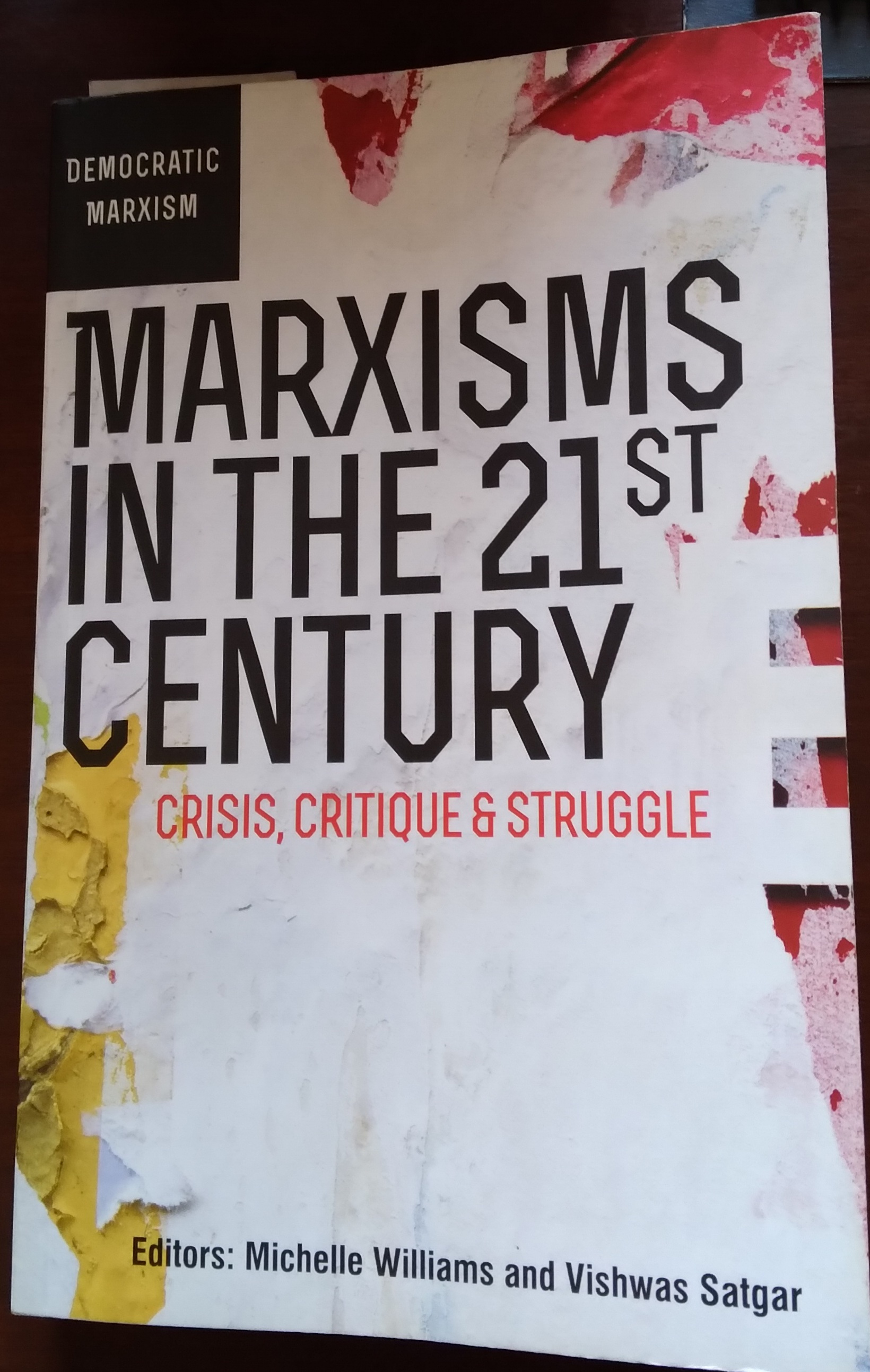
‘Marxisms in the 21st Century’ – What do Bihar Elections Have to do With It?


In the  course of the Bihar election campaign of behalf of his party, the Rashtriya Janata Dal (RJD) and the Mahagathbandhan (the  grand alliance), the chief  ministerial face of the alliance Tejashwi Yadav has been indicating a significant shift of focus. ‘That was the era [his father Laloo Yadav’s] of social justice; this is the time of economic justice and the youth today want jobs’. Clearly this shift comes against the backdrop of the massive loss of jobs and livelihoods over the past six years since this government came to power. The lockdown was only the most inhuman culmination the the process of destruction of livelihoods that began with demonetization, followed by the ill-thought out Goods and Services Tax (GST).

Continue reading ‘Marxisms in the 21st Century’ – What do Bihar Elections Have to do With It?

After Capitalism – Democratic eco-socialism: Vishwas Satgar

Guest post by VISHWAS SATGAR

This article was earlier published in Global Dialogue

In the contemporary carbon-centric lifeworld of capitalism, gas-guzzling automobiles, hi-tech airplanes, massive container ships, and energy-using skyscrapers are weapons of mass destruction. The more these resource-intensive and carbon-centric social relations prevail, the more climate change is accelerated. After rupturing the earth system, this new capitalist nature – under patriarchal domestication, scientifically observed and managed – now has to be geo-engineered and carbon emitted has to be stored in the deep recesses of planet Earth; despite the uncontrollable consequences for life on the planet, oil spigots will only be shut when the last dollar is extracted from this deadly resource. The logic of contemporary capitalism is not merely about dispossession, but about ecocide, that is, the obliteration of the conditions necessary to sustain human and non-human life on planet Earth. This is what Karl Marx called the “metabolic rift of capitalism” and Rosa Luxemburg, the “conquest of the natural economy.”

Neoliberalism’s terminus

Continue reading After Capitalism – Democratic eco-socialism: Vishwas Satgar

Restoring Delhi’s Central Ridge – Dilli hai jiska naam I: Pradip Krishen

We thought of a series on Delhi that does not talk only of the narrow lanes of Shahjahanabad, the Mughalia, aka Mughlai delights and the lip-smacking Chaats of Chandni Chowk or the grand ruins of the seven Delhis and the wide open spaces and broad roads, but a series that also looks at the way Delhi has evolved. We wanted to explore the logic of the city and of the forces that have shaped the idea of the city itself.  It was this idea that made us approach people who have engaged with the city with love and care for decades, and we requested them to write for Kafila. 

This series is titled, Dilli Hai Jiska Naam, and here is the first piece, by PRADIP KRISHEN

Restoring Delhi’s Central Ridge:  Pradip Krishen

(All images by Pradip Krishen)

Delhi’s Central Ridge is big — a little more than 850 hectares. That’s 8 and a half square kilometres of semi-wild forest in the heart of a totteringly large metropolis.

The Central Ridge is mostly open thorn forest but it can be quite dense in pockets. An evergreen climber called ‘heens’ (Capparis sepiaria) adds to the impression of density

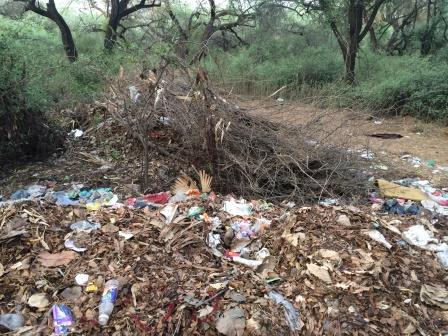
It’s true the Ridge is degraded and filled with invasive trees from South America, its potholed roads are used as a rubbish dump and there are all sorts of other problems inside, but it’s still remarkable that the Central Ridge exists at all. And that it hasn’t been taken over to make multi-storeyed flats for civil servants. Or worse.

The President’s Bodyguard leases a polo ground inside the Central Ridge and does some damage by scattering rubbish from its Polo clubhouse indiscriminately on the Ridge.

I can’t say I know all of the Central Ridge. But it’s now been nearly 50 years since I first started going in there, and there’s a portion — it could be as much as 90 or 100 hectares or so — that I can claim to know really well because I walk there every day. I’m writing a journal-style book about the C Ridge — only about this parcel I’m most familiar with — and I hope to give you a sense of what it is about the C Ridge that I find not just fascinating but important from the angle of how this city is evolving and growing. Continue reading Restoring Delhi’s Central Ridge – Dilli hai jiska naam I: Pradip Krishen

Who is afraid of anuradha bhasin ?

Attacks on the media have become more “sophisticated”, such as stopping advertisements, which adds to the threat of violence.

Anuradha bhasin

In the first week of October came news from Jammu that the government-allotted apartment where Anuradha Bhasin, the executive editor of Kashmir Times has lived for twenty years, had been ransacked. The act was allegedly perpetrated by the relative of a former member of the Legislative Council. The intruders tried not to be photographed in the act by Bhasin, but later she published them and wrote on social media about how her “jewellery, silverware and other valuables” were taken by them in “connivance with the [Jammu and Kashmir] Estates Deptt and some police personnel”. Bhasin had not been served a show-cause notice to vacate the flat.

Soon after the office of her newspaper, located in the Press Enclave area in Srinagar, was also sealed, again without giving its legal owner or editor any reason. “Today, Estates Deptt locked our office without any due process of cancellation & eviction, same way as I was evicted from a flat in Jammu, where my belongings including valuables were handed over to ‘new allottee’,” Bhasin wrote.

One is suddenly reminded of the various storms the oldest and most-circulated newspaper published from Jammu and Kashmir has faced all these years. In 1983, some 200 Hindu right-wing lumpen, armed with batons and sharp weapons, barged into the offices of Kashmir Times in Jammu and attacked the editor at the time, Ved Bhasin. This attack followed a news report published by the then forty-year-old newspaper, which had apparently “hurt” their sentiments. The grand old man of English journalism, as Ved Bhasin was known in Jammu and Kashmir, survived the attack and continued his work with renewed vigour.

(Read the full article here)

Post Covid world and Bahujan: Pramod Ranjan

Guest Post by PRAMOD RANJAN

Translated from the original Hindi by Ekta News and Features

It is said that had the spread of the Novel Coronavirus not been contained by imposing lockdowns, by now, it would have consumed a substantial chunk of the human residents of the earth. But this claim requires closer examination.

Lockdown killed lakhs of persons the world over and its after-effects have ruined the economies of scores of low- and middle-income countries like India. Crores of persons have been condemned to a life of poverty and misery.

What is going to change
Offices and educational institutions were a gift of modern age. By bringing human minds together, the places of work and the centres of education not only scripted a new chapter in the development of the human race but also brought diverse communities on common platforms. It is almost certain that in the post-Covid world, schools and offices would not exist as we know them today.[1] A new law for bringing about changes in educational institutions has come into force in India.[2] Labour laws have been almost abolished and companies have been given the licence to exploit the workers.[3] Not only manual labourers but white-collar workers, too, would be caught in this web of exploitation and mental turmoil[4]. The rights of journalists and media employees, related to their service conditions and salary and allowances, have been withdrawn through changes in the law.[5]

There is also a real danger that globalization (the spurt in commercial and business activities at the global level around the 1990s) would be reversed. This will spell disaster for the economies of the developing countries. In India and many other countries, the poor could join the middle-income group only due to globalization[6]Continue reading Post Covid world and Bahujan: Pramod Ranjan

DISSENT, DEBATE, CREATE