This guest post is an investigative report by MAYA JOHN, SUNITA TOPPO and MANJU MOCHHARY, who are associated with Gharelu Kamgar Union and actively involved in organizing domestic workers.
Recently, the otherwise docile workforce of domestic workers – most of whom are migrant labourers from the poorest states in the country – showed remarkable collective zeal against their wealthy employers in Noida (Uttar Pradesh). On the morning of 12th July 2017, a confrontation broke out between wealthy residents in a posh housing society, Mahagun Moderne in Noida Sector 78, and a gathering of agitated domestic workers and their families. The rampant exploitation of domestic workers, and the huge antagonism between their interests and those of their employers was directly exposed with the outbreak of this agitation.
The 12th July incident and subsequent developments have also revealed the sickening nexus between the police, employers, and right-wing politicians who have extended support to the wealthy residents. Within hours, an obvious labour issue, and the struggle of workers against the alleged illegal confinement of a female domestic worker was projected as a communal confrontation. With the accused employers and their sympathizers identifying the protesting workers and the missing domestic worker as ‘Bangladeshis’, the social media exploded with communal diatribe and messages of hate. Conditions for communal discord were consciously sown by Mahagun residents, putting at risk the lives of hundreds of workers living in neighbouring slums.
In the midst of all the cacophony and shrill pseudo-nationalist rhetoric that is destroying the fabric of a plural India, often in the name of the Armed Forces, 114 veterans of the Indian Armed Forces have spoken out. They have spoken out in no uncertain terms against targeted attacks on Muslims and Dalits and against the attempts to destroy the Constitution – upon which arose the new, independent India.
An Open Letter from Veterans of the Armed Forces
To: the Prime Minister of India, Chief Ministers of the States, and Lieutenant-Governors of the Union Territories.
30 July, 2017
We are a group of Veterans of the Indian Armed Forces who have spent our careers working for the security of our country. Collectively, our group holds no affiliation with any single political party, our only common commitment being to the Constitution of India.
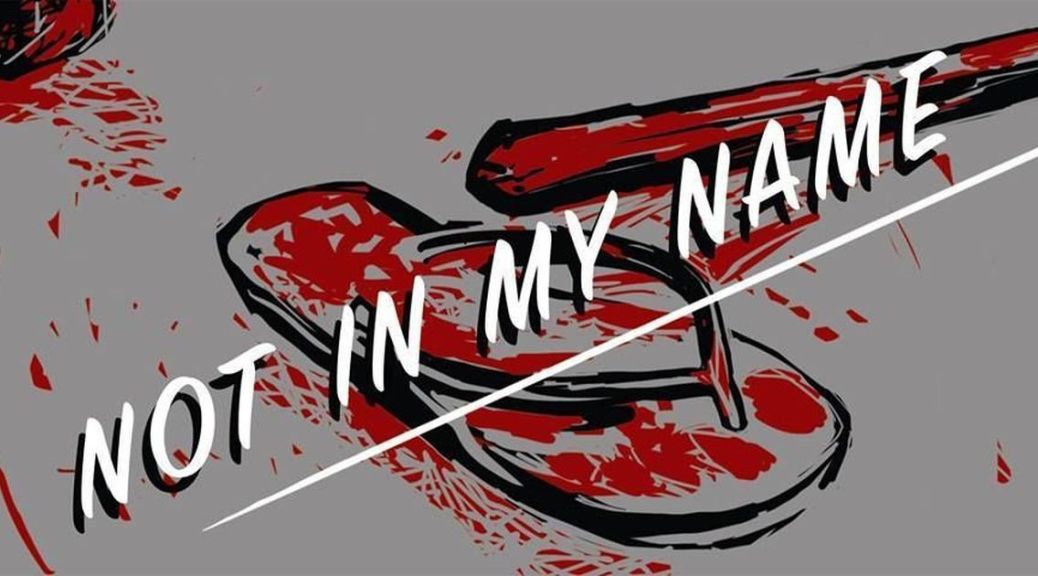
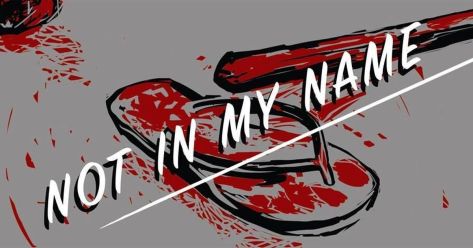
It saddens us to write this letter, but current events in India have compelled us to register our dismay at the divisiveness that is gripping our country. We stand with the ‘Not in My Name’ campaign that mobilised thousands of citizens across the country to protest against the current climate of fear, intimidation, hate and suspicion.
The Armed Forces stand for “Unity in Diversity”. Differences in religion, language, caste, culture or any other marker of belonging have not mattered to the cohesion of the Armed Forces, and servicemen of different backgrounds have fought shoulder to shoulder in the defence of our nation, as they continue to do today. Throughout our service, a sense of openness, justice and fair play guided our actions. We are one family. Our heritage is like the multi-coloured quilt that is India, and we cherish this vibrant diversity. Continue reading Armed Forces Veterans Speak Out – ‘Act Now to Uphold the Constitution’→
From the night of July 11 when Zohra Bibi did not return home to the evening of July 16 when union minister Mahesh Sharma, member of parliament for Gautam Budh Nagar, UP met with residents of Mahagun Moderne, much has transpired. Promptly after the minister’s assurances of ‘justice’ and even retribution to the flat-owners, the settlement of tin walled shacks in which Zohra Bibi and other workers like her lived with their families was demolished the next day. Many of the ‘facts’ of the matter remain disputed – while Zohra Bibi maintains that she neither admitted to the theft of cash nor hid in the basement of the building, the allegation that her employers Harshu and Mitul Sethi harassed and detained her, confiscating her mobile phone is denied by them. Meanwhile, thirteen men, a majority of them Bengali Muslims from West Bengal, arrested from the workers’ settlement are denied bail on the charge of attempted murder on the might of three FIRs filed by residents of Mahagun Moderne and languish in judicial custody. The Noida police are yet to commence any investigation of the Sethis as required by the FIR filed by Zohra Bibi and her husband Abdul Sattar. What does this language of the riot, of murderous mobs with which residents of the swanky apartment complex took to social media with #MaldainNoida accomplish? As security cards, required by domestic and other workers to enter the gated community, were revoked for 80-odd workers under the cry of ‘ban the Bangladeshi maid’, the bogey of the illegal Bangladeshi immigrant reared its ugly head. Continue reading Under the sign of security – Why the bogey of ‘the illegal Bangladeshi immigrant’ is so powerful across urban Indian homes: Sahana Ghosh & Rimple Mehta→
भारत खुद को भले किसी महान प्राचीन ज्ञान-परंपरा का वारिस समझता हो पर उसके विश्वविद्यालयों की दशा चंद चमकदार अपवादों के बावजूद खस्ताहाल है। उच्चशिक्षा की हालत किसी मरणासन्न नदी जैसी है जिसपर पुल तो बहुत बड़ा बन गया है पर पानी सूखता जा रहा है। भारत अपने साथ ही यह झूठ बोल रहा है कि वह ज्ञान या ज्ञानियों का आदर करता है, जबकि सचाई इसके विपरीत है। आधुनिक युग में भारत ने जितना ज्ञान की अवहेलना और अनादर किया है, उतना शायद ही किसी देश ने किया होगा। हर तिमाही-छमाही आने वाली रिपोर्ट्स हमें शर्मिंदा करती हैं कि संसार के सर्वोच्च 100 विश्वविद्यालयों में भारत के किसी विश्वविद्यालय को नहीं रखा जा सका। पूरा शिक्षा-जगत डिग्रियों की खरीदफरोख्त में लगे विचित्र किस्म के अराजक और अपराधिक सौदेबाजियों से भरे बाजार में बदलता जा रहा है। यहां अपराधी, दलाल और कलंकित नेता अपने काले धन व डिजिटल मनी की समन्वित ताकत लेकर उतर पड़े हैं और हर तरह की कीमत की एवज में कागजी शिक्षा बेचने लगे हैं। इस बाजार में ‘नालेज’ और ‘डिग्री’ का संबंध छिन्नभिन्न हो चुका है। कमाल की बात यह है कि यह स्थिति हमें चिंतित नहीं करती।
दूसरी ओर, उच्चशिक्षा अभी भी समाज की नब्बे फीसदी आबादी के लिए सपने सरीखी है। उच्चशिक्षा में जीईआर यानी दाखिले के अनुपात की गणना 18-23 आयुवर्ग के छात्रों को ध्यान में रखकर की जाती है और अभी भी भारत में केवल दस फीसदी लोग उच्चशिक्षा के संस्थानों के दरवाजे तक पहुंच पाते हैं। इसमें भी दलित व गरीब मुस्लिमों की हालत बेहद खराब है। दलितों में दो फीसदी से भी कम लोग उच्चशिक्षा प्राप्त कर पाते हैं तो मुस्लिमों में यह आंकड़ा केवल 2.1 फीसदी का है। भारत की ग्रामीण आबादी में केवल दो फीसदी लोग ही उच्च माध्यमिक शिक्षा के पार जा पाते हैं। ये आंकड़े भारत में उच्चशिक्षा की आम लोगों तक पहुंच की भयावह तस्वीर को प्रस्तुत करते हैं और दिखाते हैं कि हम जिन संस्थानों, बड़े कालेजों-विश्वविद्यालयों आदि को भारत के विकास के प्रमाण के रूप में पेश करने की इच्छा रखते हैं, वे देश की नब्बे फीसदी आबादी से बहुत दूर रहे हैं। Continue reading विश्वविद्यालय, अंध राष्ट्रवाद और देशभक्ति : वैभव सिंह→
Following the bizarre idea, earlier mooted by retired army officials, now taken up by the Vice Chancellor of JNU, to install a tank on university campus, ostensibly to instill nationalism in the university community, the JNUTA has issued the following statement:
The JNUTA is amused by the JNU VC’s earnest desire that a tank be rolled onto JNU campus. It is surprising that Prof. Jagadesh Kumar can only be inspired to patriotism upon beholding instruments of war. This seems to be only a personal affliction, since the rest of the JNU community does not need these visual aids to feel love and concern for this land, its environment and all its peoples, whether in the armed services or elsewhere.
The JNUTA also hopes that the JNU VC will understand that developing what he believes is the correct affective attachment towards the Indian Army is not part of his job description. JNU cannot be made into a theatre of war. His statutory role is one of “maintaining and promoting the efficiency and good order of the University” and of upholding the JNU Act and Statutes.The full statement can be read here.
Following is the text of the open letter by members of the EPW Community addressed to Sameeksha Trust
As long-standing well-wishers and members of the intellectual community served by the EPW, we are appalled and dismayed by the recent events leading to the abrupt resignation of the Editor, Paranjoy Guha Thakurta.
We are distressed that the Board of the Sameeksha Trust has insisted that the Editor retract an article published in the journal, and is preparing to introduce new norms for the Board-Editor relationship and appoint a co-editor. It is obvious that, taken together, these actions (mentioned by the Editor in interviews to the press and not denied in the statement issued by the Trust) would force any self-respecting editor to resign. By failing to distinguish between internal issues of procedural propriety in Board-Editor relationship from the much larger question of the EPW’s public reputation for integrity, the Board of the Sameeksha Trust has dealt a strong blow to the journal’s credibility. Continue reading Open Letter to the Board Members of the Sameeksha Trust→
[ A month ago from yesterday, a teenager called Junaid was lynched and murdered on a train in Haryana. Sabiha Farhat writes in the wake of visiting his house and meeting his family. The news cycles may have moved on to other stories, but we need to keep remembering Junaid, and why he was killed. – Kafila]
Once upon a time there was a 15 year old boy called Hamid, who went shopping on the day of Eid with his Eidi . A few days ago there was Junaid who went shopping on the eve of Eid. Premchand’s Hamid was an orphan and lived with his grandmother in extreme poverty. Junaid lived surrounded with love of his brothers, a sister, a doting mother, father and friends. Instead of the old, decrepit house of Hamid, Junaid’s house has two rooms, it is not falling apart but it’s size and unplastered walls, do speak about the economic condition of his family.
As we approached Khandawli, Junaid’s village in Ballabhgarh a fear gripped me. I did not have the courage to walk upto the house. Junaid was brutally murdered on 22nd and here I was on 25th. It was too soon, my mind said. I should have let Eid pass. But how could I have prepared Sewai in my house when a mother like myself had lost a young, healthy, happy child to hindutva fanatics? I am a mother, I was angry and ashamed at home. And here, standing outside Junaid’s door, I was weak and helpless. Useless too.
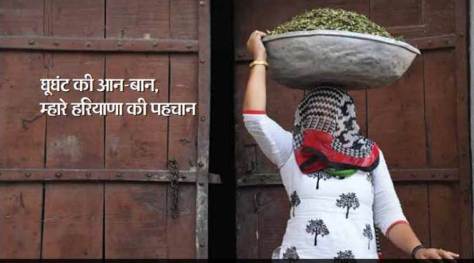
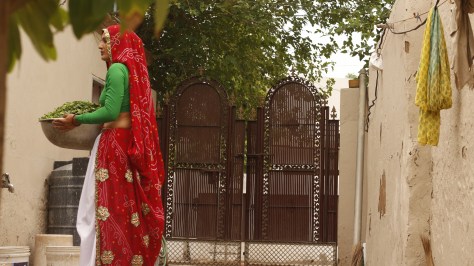
हरियाणा सरकार को घू़ंघट पर कुछ बोलने से पहले इन महिलाओं की बात सुन लेनी चाहिए थी.
जब हरियाणा सरकार ने अपनी मासिक पत्रिका में एक घूँघट काढ़ी हुई औरत को राज्य की आन, बान और पहचान कहा तो मीडिया में इसका काफ़ी विरोध हुआ. फ़ेस्बुक पर लोगों का यह कहना था कि जब साक्षी मालिक, गीता फोगत, संतोष यादव और कल्पना चावला जैसी औरतें हरियाणा का नाम दुनिया भर में रौशन कर रही हैं, तब भी हरियाणा सरकार क्यूँ घूँघट वाली औरतों को ही अपनी शान समझती है. क्या उन औरतों की मेहनत, लगन और सफलता राज्य की शान नहीं है? क्या सिर्फ़ पुरुष खिलाड़ी ही राज्य को गर्व महसूस करवा सकते हैं?
स्वयं हरियाणा की औरतों के इस विषय पर विचार लेने मैं रेवाड़ी ज़िला गयी. वहाँ कुछ औरतों से घूँघट के और उनकी शान के विषय में बात की.
These days, when lynch mobs, cow-killings, and aggressive patriotism dominate the headlines, what does the passing away of a mere historian mean? Not much, it seems. Yet, for those who knew Dr Biswamoy Pati, or had the good fortune of being taught by him, this has caused nothing short of a major storm in their lives.
I got to know Dr Pati in the summer of 1996, when he was a young and energetic lecturer in Delhi. I waited eagerly for his lectures (as did everyone else), which were really my first introduction into new ways of thinking about the world.
Red FM’s RJ Malishka features in a peppy video that went viral, mocking Mumbai’s Municipal Corporation (BMC) for the dismal lack of civic amenities and the havoc the rains can wreak in the city. In a lively parody of the popular Marathi folk song Sonu Tuza Mazyavar Bharosa Nahi Kay (Sonu, Don’t you Trust me?), she sang cheekily, Sonu, don’t you trust BMC?
Potholes, traffic jams, slow trains, all the woes of the Mumbaikar in the fabled rains of Western India.
Guest Post by Madhura Balasubramaniam and Padmapriya Govindarajan
On July 1, 2017 a gathering of citizens congregated at the Valluvar Kottam monument in Chennai, India, in solidarity with the spate of demonstrations across the nation condemning the rise in instances of mob lynching and violence that disproportionately targeted Dalit and Muslim citizens for beef consumption. The protests were triggered by the murder of 16 year old Junaid Khan by a train mob. Since July 28, peaceful citizen gatherings have joined a wave that attempts to call out government silence, and thereby perceived tacit complicity, regarding the actions ofGau Rakshaks and other vigilante mobs that engage in lynching with a strongly communal or casteist skew. They have been collectively termed as #NotInMyName protests, alluding to the argument that these murders occurred in the name of the cow and in the name of Hinduism. Continue reading #BreakTheSilence – Chennai against mob lynching: Madhura Balasubramaniam and Padmapriya Govindarajan→
Bharat Mata’s daughter? But the Hindutvavadi motherland produces only sons – Hindu, savarna sons – to protect their mother’s ever fragile honour.
Let us begin these reflections with a moment from Nisha Pahuja’s disturbing film the World Before Her, which tracks two young women – Ruhi, a beauty pageant contestant and Prachi, a trainer with the Durga Vahini, women’s wing of the Vishwa Hindu Parishad.
While Ruhi and her fellow participants emerge as conventional and pallid, Prachi is fierce and questioning, independent minded. But towards the end of the film, you realize that for both women (and not for Ruhi alone), this period of training was only a small window that gave them a brief glimpse of broader horizons. It was only a brief moment of excitement and hope, and what seemed like freedom, before real life – the real lives of real women – closed in on them.
Throughout the film, Prachi has been telling the film-maker that she will never get married, she will live her life as a Hindutva activist. She emphatically rejects the ordinary life of a wife and mother. But towards the end, her father declares quite explicitly that this is out of the question. She can never be a full time activist. Of course she must get married. She has a womb, do men have wombs? Her responsibility then, is to bring up children. Initially in this sequence, Prachi argues against him vehemently, verges on the insolent, but gradually she falls silent. Her expression, still rebellious, but devastated, resigned, signals to us her recognition that the daughter of the Hindu nation is only in training to be a mother. That is the highest ambition she can have.
Playing for the Oxford University Women’s team and the Oxford Cricket Club, I have noticed three different rules for women’s cricket. These may be observed in other countries as well. I argue that these rules are based only on gender stereotypes about women’s inferior sporting abilities and even if were once instituted to encourage them to join the game, have now outlived their utility. 1. The women’s match ball is lighter than the men’s ball (also true at the international level). 2. The women’s match boundary is smaller than the men’s and; 3. One of my coaches here told me that the men’s bat is different from the women’s. This is incorrect, and the England and Wales Cricket Board (ECB) website states that both men and women are entitled to use Type A bats for one-day internationals. However, I include this point in my analysis because regardless of a rule, these kinds of statements from a coach translate into the lived experience of a female cricketer, and act as a rule for them. Continue reading Women’s Cricket – Rules Based Only on Gender Stereotypes Need to Go: Surabhi Shukla→
Bhupendra Singh Chudasama, Education minister of Gujarat and his colleague Atmaram Paramar, who handles the Social Justice Ministry, were in the news sometime back- albeit for wrong reasons. A video went viral which showed them participating in a felicitation ceremony of exorcists in Botad. They were also seen watching how a couple of the exorcists were beating themselves with metal chains to live music near the stage.
Perhaps it did not matter to them that the Constitution frowns upon such activities and Article 51A (h) of the Indian constitution clearly says that it shall be a fundamental duty of all citizens “to develop the scientific temper, humanism and the spirit of inquiry and reform.” Neighbouring state Maharashtra has even enacted a law (The Maharashtra Prevention and Eradication of Human Sacrifice and other Inhuman, Evil and Aghori Practices and Black Magic Act, 2013) to rein in all such activities and it criminalises practices related to black magic, human sacrifices, use of magic remedies to cure ailments and other such acts which exploit people’s superstitions. And it was a culmination of a prolonged movement led by activists led by Dr Dabholkar – who even faced martyrdom for his activities. Continue reading Promoting Superstition – Everything Official About It !→
The recent incident of violence that led to the death of a police officer, DSP Ayub Pandith, was condemned by all kinds of people in Kashmir, as well as elsewhere. It prompted introspection, sadness and regret – like any tragedy of this nature should.
Guest Post by Sanjay Kak, for #Notinmyname / Statement from Not In My Name, Delhi
Last evening’s (June 28th) spirited protest at Jantar Mantar, New Delhi, under the banner of Not In My Name, was an autonomous citizens protest against the recent spate of targeted lynchings of Muslims in India – the most recent of 16 year old Junaid, stabbed to death on 23 June 2017 in Delhi (NCR).
For an audience that was estimated to be 3500 strong, the torrential downpour at a little past 8 pm may have rained out a part of the programme. But something remarkable had already been achieved: the evening had washed away, even if temporarily, an almost overwhelming sense of despondency, of hopelessness, and of fear.
Since the Not In My Name protest had announced that the platform was not meant for political parties, and their banners and slogans, the stage saw the marked absence of the speeches (and faces) of routine protest meetings at Jantar Mantar. Rhetoric was displaced by feeling, and it was left to the poets and musicians to carry the sharp political messages of the day. On an evening that was often very emotional, the most difficult moments came when a group of young men from Junaid and Pehlu Khan’s extended families (and residents from their respective villages) came on stage and spoke to the audience.
When the call for a protest meeting went out last Sunday we were hoping that a few hundred people would gather to express their outrage at what is happening around us. For the attacks on Muslims are part of a pattern of incidents that targets Dalits, Adivasis, and other disadvantaged and minority groups across the country. In almost all these incidents the possibilities of justice seem remote, as the families of the victims are dragged into procedures they are ill-equipped to handle. Through all these heinous crimes the Government has maintained a silence, a gesture that is being read as the acquiescence of all Indians.
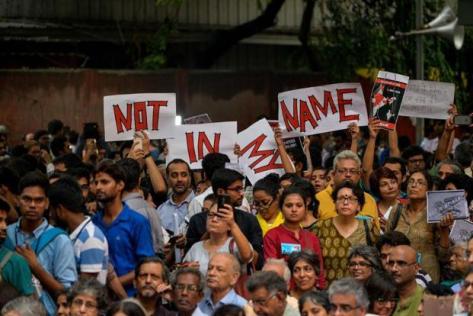
Not In My Name aimed to break that silence. But the scale and spirit of the protest meeting at Jantar Mantar became amplified many times over, as similar gatherings were spontaneously announced all over the country. As word spread through social media, groups in 19 other locations announced Not In My Name protests, and this phenomenal synergy inevitably drew media attention to all the events, and gave the protest a solidarity and scale that was truly unprecedented – there were at least 4 protests in cities abroad too. (And more protests have been announced for later this week…) The protest meeting ran on the shoulders of a group of volunteers who managed to put together everything in less than four days. No funds were received (or solicited) for the expenses from any political party, NGO, or institution. Instead volunteers worked the crowd and our donation boxes received everything – from Rs 10 coins to currency notes of Rs 2000, and everything in between.
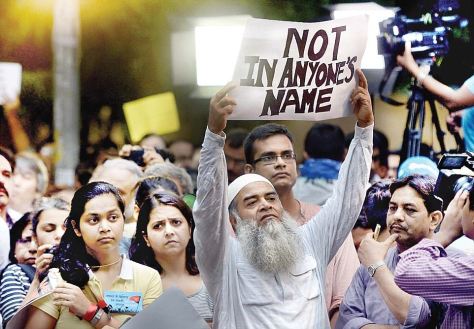
Citizens hold placards during a silent protest Not in My Name against the targeted lynching, at Janter Manter in New delhi on wednesday. Photo by Parveen Negi/Mail Today, June 28, 2017
The impact of the Not In My Name protest at Jantar Mantar yesterday only points to the importance of a focused politics to deal with the crisis this country seems to be enveloped by. Less than a day after the protests Prime Minister Modi broke his silence on the matter of lynchings. It could not have been a coincidence: speaking in Ahmedabad he said killing in the name of gau bhakti is unacceptable. But to protect the life of a 16 year old being brutalised in a train needs more than a tweet, and we all wait and watch.
This fight has just begun. In the days to come the exceptional solidarity attracted by the protest in New Delhi will have to become less exceptional, and more everyday.
Sanjay Kak is a filmmaker and writer based in Delhi.
The #NotinMyName protests, which began in a response to a Facebook post uploaded by Delhi filmmaker Saba Dewan, have since taken place in more than twelve cities in India, and also in the UK, USA and Pakistan. More protests, under the #NotinMyName tag, as well as independently of it are being planned by citizens groups, organizations and individuals in many places.
Tomorrow, July 2nd, 2017 will see a sit in at Jantar Mantar from 11 in the morning, at Jantar Mantar, New Delhi called by families, individuals and panchayats from Nuh, Ballabhgarh and Faridabad, they will be joined by students, activists and other individuals.
ऊपर से शांत दिखने वाली भीड़ का हिंसक बन जाना अब हमारे वक्त़ की पहचान बन रहा है. विडंबना यही है कि ऐसी घटनाएं इस क़दर आम हो चली हैं कि किसी को कोई हैरानी नहीं होती.
15 वर्ष का जुनैद ख़ान, जिसकी चाहत थी कि इस बार ईद पर नया कुर्ता पाजामा, नया जूता पहने और इत्र लगा कर चले, लेकिन सभी इरादे धरे के धरे रहे गए. उसे शायद ही गुमान रहा होगा कि ईद की मार्केटिंग के लिए दिल्ली की उसकी यात्रा ज़िंदगी की आख़िरी यात्रा साबित होगी. दिल्ली बल्लभगढ़ लोकल ट्रेन पर जिस तरह जुनैद तथा उसके भाइयों को भीड़ ने बुरी तरह पीटा और फिर ट्रेन के नीचे फेंक दिया, वह ख़बर सुर्ख़ियां बनी है.
दिल्ली के एम्स अस्पताल में भरती उसका भाई शाकिर बताता है कि किस तरह भीड़ ने पहले उन्हें उनके पहनावे पर छेड़ना शुरू किया, बाद में गाली गलौज करने लगे और उन्हें गोमांस भक्षक कहने लगे और बात बात में उनकी पिटाई करने लगे. विडम्बना है कि समूची ट्रेन खचाखच भरी थी, मगर चार निरपराधों के इस तरह पीटे जाने को लेकर किसी ने कुछ नहीं बोला, अपने कान गोया ऐसे बंद किए कि कुछ हुआ ही न हो.
ट्रेन जब बल्लभगढ़ स्टेशन पर पहुंची तो भीड़ में से किसी ने अपने जेब से चाकू निकाल कर उन्हें घोंप दिया और अगले स्टेशन पर उतर कर चले गए. एक चैनल से बात करते हुए हमले का शिकार रहे मोहसिन ने बताया कि उन्होंने ट्रेन की चेन भी खींची थी, मगर उनकी पुकार सुनी नहीं गई. इतना ही नहीं, रेलवे पुलिस ने भी मामले में दखल देने की उनकी गुजारिश की अनदेखी की.
विडंबना ही है कि उधर बल्लभगढ़ की यह ख़बर सुर्ख़ियां बन रही थी, उसी वक़्त कश्मीर की राजधानी श्रीनगर की मस्जिद के बाहर सादी वर्दी में तैनात पुलिस अधिकारी को आक्रामक भीड़ द्वारा मारा जा रहा था. जुनैद अगर नए कपड़ों के लिए मुंतज़िर था तो अयूब पंडित को अपनी बेटी का इंतज़ार था जो बांगलादेश से पहुंचने वाली थी.
( Read the full article here : http://thewirehindi.com/12095/mob-lynching-and-india/)
On 22 June 2017 fifteen-year old Hafiz Junaid was stabbed to death on a Mathura-bound train from New Delhi. He was traveling home for Eid with his brothers and two friends. A dispute over seats resulted in a group of men repeatedly assaulting and stabbing Junaid and his companions. The assailants flung their bodies onto the Asoti railway platform. A crowd gathered. At some point an ambulance was called and two bodies were taken away. Junaid is dead. His companions are in critical condition. While one person has been arrested the police investigations are running into a wall of social opacity since they have been unable to find a single eye-witness to the incident. Of the 200 hundred strong crowd that assembled on Asoti railway platform on Thursday evening, the police cannot find one person who can say what they saw. The police cannot find a witness because something very peculiar seems to have happened to those present at Junaid’s death. A report by Kaunain Sherrif M in the Indian Express provides specific details. When asked if he had seen anything that evening, Ram Sharan a corn-vendor whose daily shift coincides with the killing, Sharan said he was not present at the time of the incident. Two staffers who were sent to investigate by the station master were unavailable for comment. Neither the station-master, the post-master or the railway guards saw the event they were present at.
In this startling piece the journalist reports how the public lynching of a Muslim child becomes a social non-event in contemporary India. He shows the reconfiguring, and splitting, of a social field of vision. He reports all the ways in which people – Hindus- did not see the body of a dead – Muslim – child that lay in front of them. The Hindus on the Asoti railway platform managed to collectively not see a 15 year old Muslim boy being stabbed to death. Then they collectively, and without prior agreement, continued to not see what they had seen after the event. This is the uniquely terrifying aspect of this incident on which this report reflects: the totalising force of an unspoken, but collectively binding, agreement between Hindus to not see the dead body of a Muslim child. Hindus on this railway platform in a small station in north India instantly produced a stranger sociality, a common social bond between people who do not otherwise know each other. By mutual recognition between strangers, Hindus at this platform agreed to abide by a code of silence by which the death of a Muslim child can not be seen by 200 people in full public view on a railway platform in today’s India. Continue reading Why Two Hundred Ordinary Hindus Did Not See A Dead Muslim Child On A Railway Station In North India→
At some point during the Khalistan movement, I came across a brief news item about a constable of the Punjab Police killed by Delhi Police personnel. The two teams had completed their interrogation of a suspected militant. Whose job was it to clean up the blood? Disagreement, a scuffle, a killing.
Legitimized brutality; the stench of blood inflaming the senses; the knowledge of absolute power and absolute impunity.
All of India is that interrogation room now.
Hindu Rashtra is here.
Has there not been violence earlier in this land? Yes of course there has been. A full seven decades of an independent state’s violence against the people of the land declared to be India – against dispossessed peasants and tribal people, against industrial workers, against the people of Kashmir, and of the states of the North East; centuries of violence by savarna Hindu society against the Dalit-bahujan; misogynist, sexist violence against women, up to and including female foetuses in the womb; decades of coldly planned and executed communal violence by institutionalized systems of riot production coordinated by the organizations of the RSS – against Muslims, against Christians, and as a secondary force, against Sikhs in 1984.
(Protest in Guwahati against unconstitutional and discriminatory policy of the Assam govt. in teacher recruitment, organised by KMSS on 19 June 2017 (Photo courtesy: Amar Asom)
In an unconstitutional and discriminatory move, the Education Department of the Assam government has recently come up with a notification that bars candidates who have studied in the vernacular medium from appearing for the Special Teachers Eligibility Test (TET) for Graduate Teachers in the Adarsha Vidyalayas in Assam. The advertisement No. RMSA/Special TET/842/2017/2 dated 7 June 2017, issued by the Secondary Education Department of the state government states: “The candidates must be passed out from English Medium Schools as Adarsha Vidyalayas are CBSE affiliated English Medium School (sic).” To further clarify the matter, the Education Minister of the state, Himanta Biswa Sharma, said in a press conference that those who studied in Assamese or vernacular medium schools do not have the essential ability to teach in English medium schools. Mr. Sharma not only ridiculed and questioned the qualifications of those who studied in the vernacular medium but also invalidated the entire vernacular medium education system of the state. Continue reading The method in madness and the case of Adarsha Vidyalayas in Assam : Delhi Action Committee for Assam→
On the First Anniversary of the Una Floggings – Call from JIGNESH MEWANI and RASHTRIYA DALIT ADHIKAR MANCH
उना से आई फिर आवाज़,नहीं सहेंगे हिंदु राष्ट्र, भगवा आतंकवाद और पूंजीवाद!
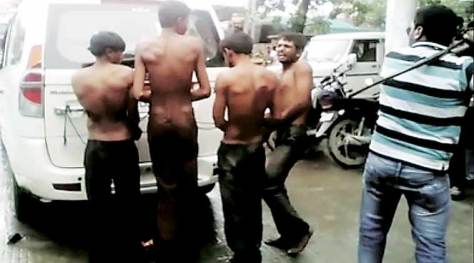
Una floggings, image courtesy Indian Express
दलित, मुस्लिम, मज़दूर और किसान साथ मिलकर मांगेगे तीन साल का हिसाब
बहुजन,मज़दूर और किसान साथ मिल फिर ललकारेंगे ‘गाय की पूंछ तुम रखो, हमें हमारी जमीन दो’
साथियों,
आप जानते हैं, 11 जुलाई को उना के दलितों के उत्पीड़न की जगानेवाली घटना को एक वर्ष होने जा रहा है. जिस तरह पिछले वर्ष 11 जुलाई को गुजरात के गिर सोमनाथ जिले के मोटा-समधियाला गांव के बालू भाई सरवैया और उनके चार बेगुनाह लड़कों को दिन दहाड़े, भरे बाजार गाड़ी के साथ बांधकर पुलिस थाने के सामने बेरहमी के साथ मारा गया और जिस तरह इस कारनामे को अंजाम देने वाले इन तथाकथित गौ रक्षकों ने खुद ही अपने इस कारनामे को सोशल मीडिया पे वायरल किया, उससे पूरा देश हिल गया था.
इस अमानवीय कारनामे को अंजाम देने वाले लोग खुद ही अपनी इस घिनौनी हरकत को सोशल मीडिया पे वायरल करे उससे पता चल जाता है कि यह तथाकथित गौ रक्षक कितना बेखौफ महसूस करते और उनको राजसत्ता की कितना संरक्षण मिला हुआ है.