Didi, I Want to Learn the Harmonium and Roam Around Freely: Samhita Barooah

Guest post by SAMHITA BAROOAH

During a visit to the Kishori Mandal at Apne Aap Women Worldwide’s Uttari Rampur Centre in Forbesganj I met some lovely girls. They stayed in the community near the red light area. They were eager to learn new things. They asked me my story of life, “Didi aapki kahani sunao? Aapne kaise yaha tak sangharsh kiya?” I was again very surprised to encounter the subversion of queries. I should have been the one to ask those questions to the girls, but they wanted to know more about me. Perceptual understanding is a perspective rooted in feminist standpoint theory which could apply to any context from the onlooker’s context. For the young girls from the Red Light Area in Forbesganj, I was trapped in some realities which connected me to them. That was why she asked me to share my story of struggle. When I said education enabled me to survive the world around me, they laughed and said that was not their story. They said, “For us we have to get married as soon as we are 18 years old but sometimes even earlier. We just want to enjoy our freedom now in this centre till we get married. After that we do not know what holds true for us.” As women whether we are in the Nat community of Bihar or we are in the liberated spaces of North East India, our identities get defined by our marriage, cultural practices and socialisation. Unbound freedom for women seems to be a misnomer which should be forbidden for women as the evolved souls say.

Continue reading Didi, I Want to Learn the Harmonium and Roam Around Freely: Samhita Barooah

Demonetization not a “war on black money” unless finances of political parties made accountable: Nishank Varshney

Guest Post by NISHANK VARSHNEY

While the common man is being subjected to infinite scrutiny and daily changing rules, the political parties enjoy to have a free-run at not disclosing a large part of their income, running into thousands of Crores. As long as the political parties continue to enjoy this exemption, the menace of black money cannot be said to have been tackled.

In one of the most unprecedented decisions in the Indian history that was taken on 8th November, 2016, the Prime Minister Shri Narendra Modi, suddenly announced the cancellation of Rs. 500 and Rs. 1000 notes with a view of “eliminating black money”. Over the last seven weeks, the PM has regularly reiterated this stand, and called Demonetization a “war on black money” through his speeches at various election rallies, the survey on his mobile app, and most recently in his “Mann ki Baat” program on Sunday. However, Mr. Nasim Zaidi, the Chief Election Commissioner of India, recently expressed that “many political parties are being used as conduits for siphoning off black money”.

As per the Representation of the People Act, 1951 (RP Act), political parties are not required to report the names of the individuals or organizations from whom they have received donations of amounts less than Rs. 20,000. A study by Association for Democratic Reforms (ADR) has shown that these ‘unaccounted donations’ form a large part of political parties’ income. In the year 2014-15 alone, BJP declared an income of 505.26 Crore from unknown sources, while Congress received a sum of 445.22 Crore from unknown sources during the same time-period. At present, there are over 1700 registered political parties in India, and many political parties may have been misusing this exemption to convert their black money, as voiced by the Chief Election Commissioner. Continue reading Demonetization not a “war on black money” unless finances of political parties made accountable: Nishank Varshney

Dangal and the Phogat Sisters – A Tale of Many Struggles: Praveen Verma

Guest post by PRAVEEN VERMA

1-phogats-and-film

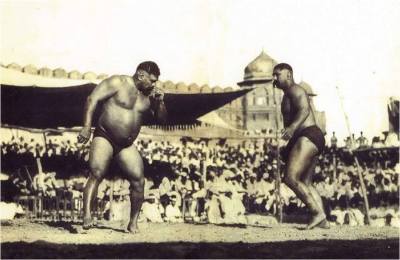
Dangal literally means the Indian style wrestling competition for male pahalwans (wrestlers). Dangal has been an important form of entertainment for ages, especially in rural (north and west) India. Dangals act in many ways. It works to settle the personal score between different Akharas and pahalwans. It’s a place where honour, reputation and social status are on stakes and personal and political rivalries are fought out, or settled. For example, one of the most important dangals used to happen every Sunday at Eidgahi Maidan, Jama Masjid in Delhi, till very recently. Itwari dangal, as it was fondly called, was the place where pahalwan like Gama, Imam Baksh, Chandgiram used to come and show their talent in front of thousands of wrestling lovers. I remember whenever I used to come to Delhi, I always wanted to win the bout at Eidgahi Maidan, as it meant a lot to win at Eidgahi maidan rather than any other place!

Gama Pahalwan at Eidgahi

As it was strictly meant for male pahalwans, women were not even allowed to watch them fighting, let alone participating. Something similar to Khap Panchayats, where women still are not welcome. Women are the fairly latecomers in wrestling arena and yet not so welcome. In this context to make a film on the emergence and development of women wrestling in India itself is a fascinating idea.

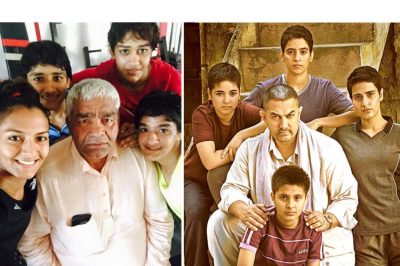
Dangal, the movie is based on a true story of Mahavir and his firebrand daughters and their ‘quietly’ active mother. It is an important movie to watch for many reasons. Firstly, it portrays a father who wanted his daughters to pursue something (wrestling) which was un-imaginable in those days. It reveals what it took for the first generation of women wrestlers to break those masculine stereotypes and depicts the overall impression of wrestling in the realm of sports culture in India. There are so many moments in the film to cheer about, to get goosebumps (at least I got many). Writing review is an unknown territory for me but there is a personal reason to taking to this venture of writing.  The release of this film forced me to say something which, as a former wrestler for almost ten years, is still left with me. Continue reading Dangal and the Phogat Sisters – A Tale of Many Struggles: Praveen Verma

Do not let a university turn into a ‘shakha’ of a poisoned tree

Have the JNU students and faculty seriously considered taking legal action against the current Vice Chancellor? From every report that I have seen, all his actions in the recently concluded farcical Academic Council (AC) meeting seem to me to be instances of prima facie procedural violation. (Or am I incorrect in assuming this?)

From what I have heard, his conduct includes the deliberate misrepresentation of the minutes, pretending to consensual decisions where there were none, and disruptive and arrogant behavior towards Academic Council members. If this is indeed the case, could there not be strong legal grounds to ask for his removal on the grounds of his willful violation of institutional procedures and ethics? What do people with legal experience think of such a possibility? What do students and faculty think?

If recourse to legal action is not feasible or practical, what else can be done to remedy this situation? What kind of campaign can restore a semblance of sanity to JNU (and to universities, generally) that have been serially assaulted by university administrations acting at the behest of right-wing thugs.

It seems to me, that this man, Mamidala Jagadesh Kumar (the current JNU vice-chancellor) is acting like a criminal, and I think he should be treated as such from now on. Co-operating with his decisions, or even tacit acceptance of his manner of functioning, should now be seen as complicity with an agenda to destroy the university. Let us also not forget that this VC continues to protect those who assaulted Najeeb Ahmed before he disappeared from JNU. In the unfortunate possibility of anything untoward having happened to Najeeb Ahmed, this VC should be seen as being responsible. He creates the conditions of impunity that threaten the safety of each and every student. His decision to punish the students who protested yesterday with arbitrary and unjust suspension orders is exactly analogous to the authoritarian conduct of Podile Appa Rao, VC of HCU, that led to the tragic suicide of Rohith Vemula. The manner in which both Jagadesh Kumar and Appa Rao have acted suggests a pattern of the deliberate victimization of students on the basis of their caste identities. This only brings shame and disrepute to the institutions headed by them.

In my considered view, (and please view this only as a suggestion) the time has come for Faculty and Students of JNU to come together (irrespective of their political positions and postures) to demand the unconditional removal of Mamidala Jagadesh Kumar from the vice-chancellorship of JNU and from the university itself. I think that all limits have now been crossed by his conduct. His declarations about what the AC decided should be treated as null and void (also because they are violative of the principles of social justice and democratic education), and the suspension orders against the students who were targeted must be revoked. I hope that the present JNUSU and JNUTA will not fail in their responsibility to conduct a coherent and militant campaign to reverse this situation. If they vacillate, or, are unable to offer a coherent, well worked out strategy, they too will be seen as responsible for the mess that JNU is in today.

I hope that every student (and here I mean ‘common students’ as well as student activists within and outside organizations) and every teacher at JNU is able to rise above the temptation of negativism and needless point-scoring at this juncture. Just as the JNUSU crucially must not see itself as immune to criticism, or fail to act with militant resolve and clarity, and in resonance with the concerns of students, (including of those outside the union) so too, those outside the union could help matters by not falling to the temptation of adopting ‘holier than thou’ postures that impede practical unity. Let there be solidarity in struggle, and the kind of criticality that aids , rather than impedes, solidarity.

This time, this opportunity, this moment of necessity for thoughtful, militant, intelligent unity of all students, teachers and all friends of the idea or a free and open university is too precious to lose at the altar of either posturing or prevarication.

Restore freedom to freedom square! Do not let a university turn into a ‘shakha’ of a poisoned tree! Eject Mamidala Jagadesh Kumar! Reject Podile Appa Rao! Bring back life to our universities !

Corrupt Notes – the Black Comedy of Tragic Error: R Srivatsan

Guest post by R. SRIVATSAN

Reflections on the many paradoxes of the demonetization process: the schizophrenia of the BJP, the desire of the well to do, the baffling sacrifice of the have nots, the faults and fault lines that propagate through our society in crisis.

Narendra Modi and Arun Jaitley, in their brilliant strategy to kill black money through the withdrawal of currency, show no basic understanding of what the term ‘black money’ signifies.  Prabhat Patnaik has recently argued there is no such thing as black money – there is only a black economy.  However, one aspect of the black economy is the refusal to pay taxes and instead hoard wealth in the form of currency that is not recorded in bank deposits.  Another is the payment of bribes with untraceable currency to authorities and politicians who use their position of leverage as personal property on which they charge a rent for use. Both these uses of black money as corruption have a common lineage. In both cases, corruption is the failure of categories that were supposed to have been water-tight.  A) “All income is taxable” B) “Public servants are true servants of the people”

But first, here is an attempt to shake our convictions that the refusal to pay taxes is a moral evil.  To do so, let me take the example of a Hollywood film, Stranger than Fiction (2006).  The plot of this film, which has a quite complex fantasy storyline, baits the viewer’s desire through the emerging love interest between an IRS auditor Harold Crick and his investigative target Ana Pascal, who runs a bakery.  Ana is a conscientious objector against taxation. She argues that she openly defies taxation since she doesn’t support the hegemonic objectives of the USA which spends most of its revenue income on weapons of war and destruction.  Ana is thus the beautiful and charming face of morally upright conscientious objection which masks the libertarian hatred for a state that taxes more than minimally.  As Robert Nozick asserted long ago such taxation is seen as thievery, against the sacred right to private property.  Ana’s position thus also masks the refusal to redistribute wealth through welfare. As a viewer, I found it extremely difficult to think of Ana as an evil person.  She was the most charming free-spirit I had encountered on celluloid (well, on a TV screen) for a long time. The objective of this sub-plot of film criticism is to help the reader shed the ready moral judgement that not paying taxes is a universal crime and a sin against society, so that it becomes possible to examine exactly what the complex nature of the act that constitutes tax evasion is. Continue reading Corrupt Notes – the Black Comedy of Tragic Error: R Srivatsan

JNU VC sabotages democratic functioning of Academic Council to push through anti-social justice policies

First, here is the statement issued by 20 faculty members of the Academic Council today, about half the members present at the adjourned 142nd AC Meeting.

PRESS RELEASE BY MEMBERS OF THE JNU ACADEMIC COUNCIL

We, faculty members of the JNU Academic Council, are shocked and dismayed at the manner in which the Vice Chancellor has conducted the 142nd Academic Council meeting of December 23rd (adjourned to December 26th). This was a thinly attended meeting since it was held at short notice in the middle of the winter vacation, despite several requests for rescheduling.

The minutes of the previous (141st) Academic Council meeting that had been circulated contained many errors, misrepresentations, and falsities. Several of these had been pointed out by many members of the Academic Council, including in written representations to the Registrar.

Continue reading JNU VC sabotages democratic functioning of Academic Council to push through anti-social justice policies

On Barak Valley Bandh on 16th December, 2016 – Some Nascent Observations: Arunima Chakraborty

This is a Guest Post by ARUNIMA CHAKRABORTY

Let’s begin with the usual: by ruing over Indian mainstream media’s overlooking of what could have been treated as more newsworthy. Today, that is, 16th of December, 2016 witnessed a bandh in southern Assam’s Barak valley protesting against the statement by the union minister of state for railways, Rajen Gohain that ‘Bengali…should be withdrawn from Barak valley as official language’ since ‘there cannot be two official languages’.[1] And a simple, layman-like google-news search reveals that there are just three entries on the issue/event.

This piece is aimed not at joining the state Congress and the local SUCI(Socialist Unity Centre of India) cadres who are decrying comment by Gohain, the union minister and a senior BJP leader in Assam but rather at attempting a delineation of the ominous portents which it seems to have unleashed. And of course, to trace the genealogy of the statement.

First of all, a rather facile fact: Mr. Gohain’s observation that there cannot be two official languages clashes with article 345 of the Indian constitution which allows for the adoption of one or more official languages by any state of the Indian union. Article 347 also allows for respecting the desire of a significant section of a populace of a state for the usage of a language of their choice.[2] A couple of months ago, while visiting Assam, I watched, or rather listened, on an Assamese news channel, a shrill voice issuing a caveat to its viewers, “…barak upatyakat asomiya bhasha nokoya hoiche”. ‘Assamese is no longer spoken in the Barak valley’. Anybody remotely familiar with the history of the region could have retorted back with the question, when was Assamese ever spoken in the region?

Continue reading On Barak Valley Bandh on 16th December, 2016 – Some Nascent Observations: Arunima Chakraborty

The Laziest Blog Post Ever Written – Educational reform and Demonetization

Remember the FYUP debacle? Remember (as repeatedly written about on Kafila as elsewhere) that it was the latest in a long series of badly-conceived, mindlessly-borrowed and forcibly-implemented ‘educational reforms’ that practically crippled universities around the country? And remember a certain Rev. Valson Thampu, authoritarian, controversy-soaked Principal of St. Stephens College and eager soldier for the reforms? Well Thampu, now-retired, has thrown his weight against demonetisation these days in a set of articles on The Daily O. Now the thing is, almost everything Thampu finds objectionable about monetary reform, can be said about educational reform.

No, literally, every single thing.

So I simply took his post and replaced some key words, to produce a post about education. I know, I know, it’s not nice to do this, especially when you know, he speaketh the truth on demonetisation and all. But it is too wonderful an opportunity to pass up, to not use Thampu’s own eloquent words to say, yet again, what he has steadfastly refused to listen to in the past. Besides, as I say above, this is the laziest blog post I have ever had to write – that’s always an incentive.

His article in the original can be read here.

POLITICS HIGHER EDUCATION | 5-minute 7-minute read | 22-12-2016 23-12-2006 VALSON THAMPU SUNALINI KUMAR

Continue reading The Laziest Blog Post Ever Written – Educational reform and Demonetization

डिजिटल दुनिया के देशभक्त सैनिक और औसत आदमी : मनीष राज

Guest post by MANISH RAJ

चारों तरफ देशभक्ति का खुमार चढ़ा देख मैं सोच में पड़ गया. क्या मैं भी देखभक्त कहलाने लायक हूँ? क्या मेरे अन्दर भी देशभक्ति के वे सभी गुण मौजूद हैं जो एक भारतवासी में होने चाहिएं? इस सवाल का जवाब जानने के लिए पहले मुझे देशभक्ति के मायने समझने होंगे. आखिर देशभक्ति किसे कहते हैं?

सबसे पहले मैंने इस शब्द के शाब्दिक अर्थ पर गौर किया. देशभक्ति यानि देश की भक्ति. लेकिन भक्ति तो भगवान् की होती है न जी, जिसका गुणगान करना मोक्ष का मार्ग माना जाता है. या फिर उन बाबाओं की, जिनके एक आशीर्वाद, एक अंगूठी या एक ताबीज़ से आपका धंधा चल निकलता है, आपके बच्चों की शादियाँ हो जाती है और सारी बीमारियाँ ठीक हो जाती है. वैसे आजकल भक्ति शब्द अलग-अलग नामों से बहुत फैशन में है. एक समूह दुसरे समूह को किसी व्यक्ति विशेष का भक्त बता रहा है, तो वहीँ दूसरा समूह पहले समूह को पुरानी धारणाओं से ग्रसित और किसी दूसरे व्यक्ति का चमचा बता रहा है. सूचना के लिए बता दूं कि मैं अपनी गिनती इन दोनों समूहों में नहीं करता. इन दोनों में खचाखच भीड़ है, और भीड़ में मेरा दम घुटने लगता है.

शब्दों में उलझ गया तो फिर सोचा कि व्यस्तता से भरे आधुनिक जीवन में शब्दों की तितलियों के पीछे दौड़ने का क्या लाभ. इसलिए व्यावहारिक होते हुए मैंने देशभक्ति के प्रमाणिक सबूत तलाशना शुरू किया. देशभक्त किन्हें माना जाता है और उनमें क्या गुण होते हैं? Continue reading डिजिटल दुनिया के देशभक्त सैनिक और औसत आदमी : मनीष राज

Buying into Demonetisation- the Popular Ideological Receptors of Creeping Fascism: Sanjay Kumar

Guest Post by SANJAY KUMAR

The withdrawal of eighty six percent of currency notes by the Modi government has been an administrative fiasco. It is clear that little economic thought, and only a political urge has gone into the exercise. Informal sector of the economy, which accounts for 80% of the employment and 40% of the national output, has suffered short to medium term damage. All cash dependent transactions, wages, wholesale and retail trade, agricultural purchase and sale, are at a crawl. Workers are not getting wages, factories are closing, mandis are empty. Crores of young and old working people are spending hours in queues at banks and ATMs to withdraw their own money now gone scarce.  Press reports count more than eighty deaths. Parliament of the country is in a limbo, because the prime minister thinks it below his worth to reply to charges by the opposition party MPs. While ordinary people are suffering, the Nero like rulers are trumpeting the arrival of the nirvana of a cash less economy as the answer to India’s economic ills.

Even while Mr Modi’s government is solely responsible for this needless and widespread suffering, it would be naive to expect an automatic popular backlash against it. The politics of the ruling party does not fit into the patronage or identity driven models of its competitors. Its closest template is fascist politics, which  is a very particular kind of authoritarianism. What distinguishes a fascist regime from other modern authoritarian regimes like military dictatorships is the popular support it is able to garner for its policies and depredations. This is achieved by carefully working upon popular anxieties, prejudices, desires and fears, and refashioning them as grounds for aggression against selected minorities, and a belief in an imminent deliverance under the personalised rule of a leader. Continue reading Buying into Demonetisation- the Popular Ideological Receptors of Creeping Fascism: Sanjay Kumar

Economic Emergency – Notes From Sargana: Zaheeb Ajmal

GUEST POST by ZAHEEB AJMAL

Nothing remained normal after November 8. Prime Minister Narendra Modi announced that evening that Rs. 500 and Rs. 1000 currency notes were to be ‘demonetised’ at the stroke of midnight (full announcement here: https://www.youtube.com/watch?v=gJYFE59rLhM). Not only were the high denomination notes held by people rendered worthless, but stringent limits were imposed on cash withdrawals. People were given time until December 30 to exchange their existing, now worthless, currency notes for newly-minted ones.

As everywhere else in the country, the announcement sent shockwaves across Sargana. People went into a tizzy to exchange their old high-denomination currency notes for new ones. Not only that, the limits on cash withdrawals meant that people began to worry about requisitioning cash for daily usage. Continue reading Economic Emergency – Notes From Sargana: Zaheeb Ajmal

Angela Davis appeals to President to repeal AFSPA

img_20161217_105346

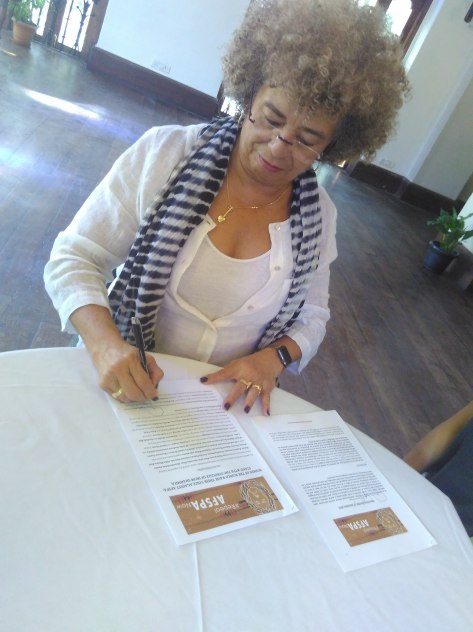
At an exclusive meet-the-press in Mumbai, American black feminist activist and human rights defender, Angela Davis joined feminists in India spearheading a global women’s campaign appealing to the President of India to use his Constitutional powers and repeal the draconian Armed Forces Special Powers Act (AFSPA). In doing so, she extends her solidarity to the struggles of women in India against the impunity granted to security forces under the AFSPA and the consequent widespread violation of rights in all areas where this law has been in force. In particular, Ms Davis salutes the historic struggle of Irom Chanu Sharmila whose 16 year long fast against the AFSPA helped foreground the issue both nationally, and internationally, saying “I am utterly inspired by Irom Sharmila’s strength and perseverance.”

There has been a global campaign of feminists seeking an end to AFSPA.

The full list of signatories can be seen here.

A Dog Writes to a Minister: Dear A K Balan …


Dear Mr A K Balan

I am writing to you because I feel that it is my duty to disabuse you of the ideas you seem to harbour of, and in the name of, Indian nationalism (and not just bark at the portentous approach of the peddlers of ‘nationalism’, the Hindutvavaadis). You are a Minister in the CPM-led government of Kerala, which was elected by  Malayali citizens to ward off the monstrous Hindtuva-Nazi-Predatory Capitalist combine that has taken over India nearly, and so my barking should have been enough. But you seem to be totally wrapped up in your ignorance. Continue reading A Dog Writes to a Minister: Dear A K Balan …

Infantilization of Women in Punjab’s Left: Nikita Azad

Guest post by NIKITA AZAD

It would be an understatement to say that apart from sexualization of young girls, society infantilizes women on a regular basis. Whether in domestic sphere where men decide what is best for the family and women, or office where men consider their women counterparts as less intelligent and inferior, such infantilization manifests itself in various forms and at various places. A similar trend can be observed in movies where men are usually portrayed as saviors whereas women are depicted as young ‘girls’ waiting to be saved. American TV serials from I Love Lucy onwards have routinely infantilized women, and contemporary Hindi soap operas too, represent and treat women as children to be taken care of by their families and husbands/lovers. Such an approach towards women not only reduces their value and identity as thinking, rational human beings, but it also provides men and the patriarchal structure an argument to justify their control over women. It strengthens the general belief that women are inferior, not only biologically but also mentally, and thus, it perpetuates male intellectual hegemony.

In recent times, many white-collar women employees and actresses have spoken against wage gap and workplace discrimination prevalent in their respective fields, which is as much a result of infantilization of women as it is that of gender discrimination. The work done by a woman, however good, is considered inferior as compared to that done by a man, based on the ground that women are more sensitive, emotional, and child-like; and are thus, there are more possibilities of their committing mistakes. Women feminists and non-feminists, who opine on social media on gender discrimination, are often seen as ones who are easily offended and are emotionally immature. Their responses are treated with sexism than with any serious arguments; the reactions are usually perceived as ‘angry’. Their Face Book and twitter accounts are filled with sexually abusive messages and their opinions are seen as having zero or less value when compared to their men counterparts. A good example would be a recent experiment done by a couple on Twitter, whereby a man and a woman, working for the same organization, The Washington Post, published two articles on similar issues but the responses they received were shockingly different. While the man’s inbox was crowded with racist comments, the woman’s inbox was filled with sexist and degrading names that the man could not bring himself to repeat on his post on Twitter.

While the consequences of the sexist practice of infantilization of women have been widely discussed in feminist circles, a study of its presence in otherwise democratic and progressive circles remains absent. Continue reading Infantilization of Women in Punjab’s Left: Nikita Azad

Towards a One-Man Dictatorship: Santosh Rana

GUEST POST by SANTOSH RANA

It is a rare sight in Indian Politics.  On 23rd November, 2016, the Members of Parliament from almost all the opposition parties united in New Delhi to register protest against the Prime Minister Narendra Modi’s demonetization policy.  To some, the atmosphere in the capital on that day brought back memories of the Emergency and the Bofors era.

This unique event took place under unique circumstances.  When all the democratic institutions of the country are being destroyed in order to establish one man’s undisputed control over Power, the event signified the first step towards a united resistance against these inauspicious developments.  Continue reading Towards a One-Man Dictatorship: Santosh Rana

Love Can’t Be Forced: Protest Against Sanghi Hubris at IFFK!


 I am hoping to protest at whichever venue of the International Film Festival of Kerala that I can manage to go to, wearing a printed badge saying ‘DEAR SUPREME COURT, NO LOVE CAN BE FORCED’. Yesterday, six people who did not stand up when the national anthem was played were arrested. Sanghi elements and overenthusiatic people who have picked up Modi’s style of projecting instant nationalism on the debris of Indian democracy have been heckling people who refused to comply with the SC’s order and filing complaints. Indeed, they took photos of people who didn’t stand up during the anthem. How come they have not insulted the national anthem according to their own standards since they too were expected to stand in attention?
 

Continue reading Love Can’t Be Forced: Protest Against Sanghi Hubris at IFFK!

परवेज हुदभॉय क्यों चिन्तित हैं ?

Image result for pervez hoodbhoy quotes

परवेज हुदभॉय (Pervez Hoodbhoy) भारतवासियों के लिए अपरिचित नाम नहीं है!

जानेमाने भौतिकीविद और मानवाधिकार कार्यकर्ता के अलावा उनकी पहचान एक ऐसे सार्वजनिक बुद्धिजीवी के तौर पर है जिनके अन्दर बुनियादपरस्त ताकतों से लोहा लेने का माददा है। पाकिस्तान में इस्लामीकरण की बढ़ती आंधी में वह ऐसे शख्स के तौर पर नमूदार होते हैं, जो सहिष्णुता, तर्कशीलता, की बात पर जोर देते रहते हैं। नाभिकीय हथियारों से लैस दोनों पड़ोसी मुल्कों में आपस में अमन चैन कायम हो इसके लिए आवाज़ बुलंद करते रहते हैं।

पिछले दिनों ‘डॉन’ अख़बार में लिखे अपने नियमित स्तंभ में उन्होंने पाठयपुस्तकों के माध्यम से प्रचारित किए जा रहे विज्ञान विरोध पर लिखा।( http://www.dawn.com/news/1300118/promoting-anti-science-via-textbooks  ) खैबर पख्तुनख्वा में प्रकाशित जीवविज्ञान की पाठयपुस्तक का जिक्र करते हुए उन्होंने बताया कि किस तरह उसमें चार्ल्स डार्विन के सिद्धांत को सिरेसे खारिज किया गया है। किताब में लिखा गया है कि चार्ल्स डार्विन द्वारा प्रस्तावित इवोल्यूशन अर्थात विकासवाद का सिद्धांत ‘अब तक का सबसे अविश्वसनीय और अतार्किक दावा है।’ किताब इस धारणा को ही खारिज करती है कि संश्लिष्ट जीवन सरल रूपों से निर्मित हुआ। किताब के मुताबिक यह विचार कामनसेन्स/सहजबोध का उल्लंघन करता है और यह उतनाही ‘बकवास’ है जब यह कहा जाता हो कि दो रिक्शा के टकराने से कार विकसित होती है। हुदभॉय के मुताबिक प्रस्तुत किताब अपवाद नहीं है। खैबर पख्तुनवा की एक अन्य किताब बताती है कि ‘‘एक सन्तुलित दिमाग का व्यक्ति पश्चिमी विज्ञान के सिद्धांतों को स्वीकार नहीं कर सकता। /कहने का तात्पर्य सिर्फ पागल लोग स्वीकार सकते हैं ?/ सिंध की भौतिकी की पाठयपुस्तक स्पष्ट लिखती है कि ‘ब्रहमाण्ड तब अचानक अस्तित्व में आया जब एक दैवी आयत/श्लोक का उच्चारण किया गया।’ विज्ञान का यह विरोध निश्चित ही पाठयपुस्तकों तक सीमित नहीं है। वहां विज्ञान और गणित के तमाम अध्यापक अपने पेशे से असहज महसूस करते हैं। Continue reading परवेज हुदभॉय क्यों चिन्तित हैं ?

On Indian Exceptionalism and Kashmir: Dia Da Costa

This is a guest post by Dia Da Costa

‘If Trump is elected, I will move to Canada,’ many Americans noted in passing, in jest, and then in all seriousness once the results were out.

If it has taken this election result to make people recognize the pervasive racism in the US, that is because of the success of US exceptionalism and its ability to deflect attention from its ongoing colonization of indigenous land, relentless imperialism, Islamophobia, and ongoing brutalities against black people in the aftermath of abolition and the civil rights movement. If it has taken this election result to make people really want to move to Canada, that too is because of the success of Canadian multicultural exceptionalism. Apparently, Canadian exceptionalism is still able to pass as not-as-racist by deflecting attention from its ongoing colonization of indigenous land, relentless participation in imperialism cloaked all too often as humanitarian development, growing Islamophobia, and its self-congratulatory representation of itself as having no history of slavery even as its anti-Black violence pervades cities and small towns alike.

For those of us who can recognize these forms of exceptionalism, I want to ask if we acknowledge Indian exceptionalism, and its specific relation to Kashmir? ‘If Trump is elected, I will move back to India’, I saw many Indians say on social media. If it has taken this US election result to make Indians really want to move back to India, that is not just because of the apparent success of US exceptionalism among Indians, who could see racism but could ultimately deal with, and even love life in the US. It is also because of Indian exceptionalism. To be sure, Indian exceptionalism is nurtured by the caste and class privilege that allows some Indians to declare that they will simply up and leave when the going gets tough (whether it is in India or in the US), or joke about the same.

But there is more to it. Indian exceptionalism is a state projected discourse turned commonsense perception of India as a complicated and diverse nation that is ultimately unified against all odds by the absolute commitment of its people to democracy. Whether we believe it at face value or we critique the many excesses of the Indian state, ultimately something draws us to this idea of India as the world’s largest democracy. Continue reading On Indian Exceptionalism and Kashmir: Dia Da Costa

The Sultan of Sophistry:Satya Sagar

GUEST POST by  Satya Sagar


It is early winter and a thick, grimy fog, black and white tinged with grey, hangs over Delhi much of the day. Morning visibility is bad, clears up a bit with a dull sun in the afternoon, before darkness descends again on the city.

A month after Prime Minister Narendra Modi announced his demonetisation policy, the gloomy weather in the national capital describes quite well the mood of the people here. Sullen but not angry, worried but not yet panicked, uneasy about the future but focused for the present on solving daily problems.

And yet somewhere deep down there is a growing feeling that we are witnessing the twilight of the Indian Republic – at least as we have known it for over six decades- a sovereign, federal, democratic nation, which with all its flaws, stumbles along intact. Few fully understand the real implications of 86% of the Indian currency disappearing overnight but there is foreboding it is a sign of many more drastic events to come. Continue reading The Sultan of Sophistry:Satya Sagar

Wrought of Iron Until She Was No More – Jayalalithaa’s Passing: Francis Cody


This is a guest post by FRANCIS CODY

All who did and most who did not support the Chief Minister are in mourning, in some form or another.  J. Jayalalithaa is no more.  A cinema star-turned-leader, whose determination in the face of massive adversity had won her the titles of ‘Iron Butterfly’ and ‘Revolutionary Leader’, Jayalalithaa captured the imagination as a woman not necessarily of the people, but certainly with the people as a ubiquitous presence and force in political and popular life.  It’s hard to fathom the Tamil landscape with the knowledge that all of those portraits of the leader no longer point back to a living, sentient being.  The outpouring of emotion she commanded in life and now in death never cease to amaze those do not have a feel for how the political and popular affect have been collapsed into one another, for better and for worse.  Without getting into the task of proving the sincerity of sentiment leading some to go so far as to take their own lives in acts of political devotion, or the opposite and equally misguided one of showing that those who participate in public displays of mourning are doing so because of some culture of political ‘sycophancy’ as it is often dubbed, we must shift the terms of debate on the nature of her power while appreciating the massive loss Tamil Nadu has sustained with her passing.

  Continue reading Wrought of Iron Until She Was No More – Jayalalithaa’s Passing: Francis Cody

Memories of a Machine, or the Machine of Memory?


Watching the much-debated ten-minute-film ‘Memories of a Machine’, which has been accused of justifying paedophilia, I remembered this woman:

I met her, a young woman professional working at Technopark, Thiruvananthapuram – where else, in these days, but in the queue in front of an ATM . In response to my grumbling, she told me that she had never experienced any kind of power in her whole life.  She had not even been affected by demonetisation much, she insisted. ‘True, I couldn’t pay the dhobi and the ironing-man, but those were minor inconveniences,’ she quipped cheerily, quite convinced, of course, that the predicament of these two people, definitely as much professionals’ as her, was none of her concern. Indeed, her constant effort was to cheer people in the queue with her don’t-worry-be-happy body-language with which she slipped and slid between acting and sounding like a grown woman and chirping and giggling like a teenager or child. She was attracted to the BJP, she said, because she needed some ‘philosophy’ in her life, to balance the heavy workload she carried in her workplace. As far I could see, her life was such that the philosophy-lesson she would find useful could have been obtained from something as commonplace as a treadmill – start slow, peak up, take regular dips, continue for a spell sufficiently long, stretch after the workout. In other words, her life seemed to be just one long workout, with no indication of when it would end or yield result. But just the feeling that she was on her way was enough to make her cheery to the point of being silly. Continue reading Memories of a Machine, or the Machine of Memory?

DISSENT, DEBATE, CREATE