All posts by subhash gatade

Ambedkar For Our Times!

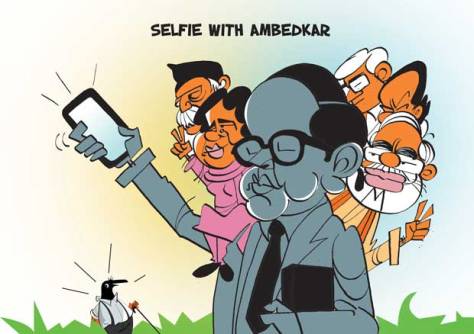
( Till 1992, 6 th December was remembered as ‘Parinirvan Divas’ of Dr Ambedkar, legendary son of the oppressed who had clearly recognised the true meaning of Hindutva and warned his followers about the dangers of Hindu Rashtra ; post 1992, 6 th December has an added meaning and it relates to the demolition of Babri Mosque undertaken by these very forces.

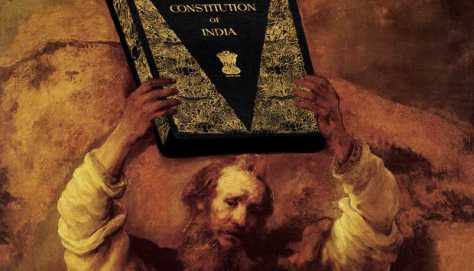
Apart from the fact that this event led to the biggest communal conflagaration at the national level post-independence, whose repercussions are still being felt and whose perpetrators are still roaming free, we should not forget that it was the first biggest attack on the principles of secularism and democracy, which has been a core value of the Constitution drafted under the Chairmanship of Dr Ambedkar.

What follows here is an edited version of the presentation made at Dept of Social Work, Delhi University, during their programme centred around 1 st Ambedkar Memorial Lecture)


“If Hindu Raj does become a fact, it will no doubt, be the greatest calamity for this country. No matter what the Hindus say, Hinduism is a menace to liberty, equality and fraternity. On that account it is incompatible with democracy. Hindu Raj must be prevented at any cost.”

– Ambedkar, Pakistan or Partition of India, p. 358

‘Indians today are governed by two ideologies. Their political ideal set in the preamble of the constitution affirms a life of liberty, equality and fraternity whereas their social ideal embedded in their religion denies it to them’

– Ambedkar

Continue reading Ambedkar For Our Times!

Silencing Caste, Sanitising Oppression – Understanding Swachh Bharat Abhiyan

The Hindu notions of purity and pollution, inextricably linked with the caste system and the practice of untouchability, underlie the unsanitary practices in Indian society. These beliefs perpetuate the oppression of the “polluted castes,” who are forced to undertake manual scavenging, unclog manholes and clean other people’s filth. The availability of cheap Dalit labour to do these dehumanising jobs can be cited as one of the reasons why development of toilet facilities and a modern garbage and sewage management system have been neglected so far. As long as the Swachh Bharat Abhiyan attempts to delink the relationship between caste and sanitation, its lofty goal of cleaning India will remain unachievable.

(Read the full text here http://www.epw.in/system/files/pdf/2015_50/44/Silencing_Caste_Sanitising_Oppression.pdf)

Happy Constitution Day. Yet, India is where some are forced to eat cow dung

(First published in http://www.catchnews.com)

pic

Mujadpur, a village in Haryana’s Hisar district,  which has been in the news recently for what the government  lexicon calls ‘dalit atrocities’, involving murders and ‘suicides’.

Recently, it was hit by another such incident, albeit of a less fatal nature: Members of the Jat community thrashed a dalit man called Ramdhari and his family members and stuffed cow dung in his mouth. Reportedly, Ramdhari installed a statue of BR Ambedkar in his house and that provoked the upper caste Jats.

The irony of this cannot be emphasised enough.

One does not know whether in an area dominated by the Jats, Ramdhari’s perpetrators have been arrested under provisions of the Scheduled Caste and Scheduled Tribe Prevention of Atrocities Act (1989) or not.

Or has the incident been explained away in the light of some vague personal animosity, which is what happened when two children in Sunped were recently killed by throwing of inflammable material in their house by dominant castes.

As the nation begins another series of grand celebrations, this time to celebrate the contributions of BR Ambedkar, the plight of a dalit family for merely installing his statue stares at us in our eyes. It is symptomatic of the gap between the principles and values on which the Constitution is based and the situation on the ground.

Read the full text of the article here. 

Davids Versus Goliath – How Yogi Adityanath had to ‘Go Back’ to …..(err not Pakistan but) Gorakhpur

Displaying IMG_20151119_172721574.jpgDisplaying IMG_20151119_172721574.jpgThe Pandal was ready.

The Sainiks with their saffron bandanas  – who were scattered here and there – were eagerly waiting to listen to another fiery call from their Senapati.

Time was already running out but the ‘Star Speaker’ was nowhere to be seen.

Little did they knew that their Senapati had already made an about turn and was headed back home as the district administration had ‘advised’ him against entering the district and was told that he would face ‘legal action if he dares to do so.’

For Yogi Adityanath, the firebrand MP of BJP, who is widely known for his controversial statements as well as  acts and who every other day asks dissenters to ‘go to Pakistan’ , it was his comeuppance moment when he was rather forced to ‘go back’ to Gorakhpur. And all his plans to be the star speaker at the inaugural function of Students Union of Allahabad University – once called ‘Oxford of the East’ – lay shattered. Continue reading Davids Versus Goliath – How Yogi Adityanath had to ‘Go Back’ to …..(err not Pakistan but) Gorakhpur

Com Kislay and Shubham Arrested by Goa Police – Glory to the Struggle of FTII students

big_ftii_2students

(Photo : Courtesy – goanews.com)

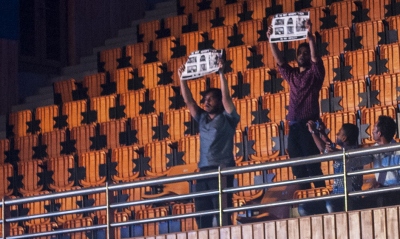
Ultimately the roaring voice of the FTII students reached the IFFI (International Film Festival of India) inaugural held at Panaji, Goa.

Just when the inaugural had formally ended, chief guest had spoken and the administration was on the cusp of heaving a sigh of relief for a ‘trouble free beginning’ and was contemplating to ‘pat its own back’ for managing to save its ‘image’ the precints of the Shyama Prasad Mukherjee Stadium reverberated with slogans in favour of the historic FTII struggle.

This struggle, which had continued for around five months since 12 th June , a struggle against political appointments at one of the most prestigious institutions of India which was also a wake up call at the systematic attempts underway since the ascendance of the Modi regime at centre to undermine the academic autonomy of universities and educational institutions, as everybody knows has received tremendous national-international support.

Slogans were loud enough that all the celebrities and dignitaries who had gathered there heard them.

‘It was heard by Information and Broadcasting Minister Arun Jaitley, his state minister Rajyawardhan Rathore, defence minister Manohar Parrikar and all the I&B ministry officials.

The two students found an empty block on top, where they were seated silently till the whole inaugural ceremony ended.’

(http://www.goanews.com/news_disp.php?newsid=6374)

Security people who were present there in large numbers pounced on the two of them – Com Kislay, a young film director, an alumni of FTII, who has received critical acclaim for his very first film and Shubham, another alumni of FTII – and according to a facebook post (https://www.facebook.com/FTII-Wisdom-Tree-1607915209448356/?fref=ts)

both of them have been badly beaten by the Goan police for showing the placards and shouting slogans… They are still under the police custody and being interrogated.

As of now they have been detained in Agassaim Police Station  and would be presented before the magistrate. It is also learnt that they are being ‘charged with serious offences’

It is important to note that the authorities at various levels went out of way just to ensure that the voice of FTII students does not reach the IFFI. It ‘ensured’ that this year the festival would not screen a single film by students of the prestigious FTII whereas in recent years, at least five FTII entries could make it to the screening of this annual fest.

As opposed to its regular practice of paying for the conveyanc and accomodation of its students who had enrolled for the same, the FTII administration took an adhoc decision and told the students to bear their own expenses.

But despite all their attempts to intimidate the students into silence the voice did reach IFFI. It is definitely a victory of sorts – albeit of a symbolic kind.

There is no doubt that this struggle of the FTII students would continue to receive the support which it has received from artists, intellectuals, film personalities and all those people who believe are opposed to the dumbing down of society under all pretexts.

If possible contact the Goa police – especially its higher officials – and ensure that the two are not further harmed and released immediately without any charges.

Glory to the struggle of FTII students.

गांधी से नफरत, गोडसे से प्यार

 देश विभाजन के काफी पहले ही गांधीजी को मारने की साजिश रची गई थी।

( Photo by Mondadori Portfolio via Getty Images,  Courtesy – blogs.timesofindia.indiatimes.com

हिन्दू महासभा ने 15 नवंबर को बलिदान दिवस मनाने का फैसला किया है। इस दिन महात्मा गांधी के हत्यारे नाथूराम गोडसे को फांसी हुई थी। पिछले साल हिन्दू महासभा ने देश भर में नाथूराम गोडसे के मंदिरों का निर्माण करने का ऐलान किया था। काफी हो-हल्ला मचने के बाद यह अभियान रुक गया। इस बार केंद्र सरकार हिन्दू महासभा के प्रति क्या रुख अख्तियार करती है, यह देखना दिलचस्प रहेगा। महात्मा गांधी की हत्या को लेकर एक बात अक्सर कही जाती है कि नाथूराम गोडसे गांधीजी से नाराज था, क्योंकि गांधीजी ने देश का बंटवारा होने दिया और वह पाकिस्तान को पचपन करोड़ रुपये देने की बात किया करते थे।                                                                                                                                              

दरअसल इन दो तथ्यों की आड़ में उस लंबी साजिश पर पर्दा डाला जाता है जो हिन्दूवादी संगठनों ने रची थी। सचाई यह है कि गांधीजी को मारने की कोशिशें विभाजन के काफी पहले से शुरू हो गई थीं। आखिरी ‘सफल’ कोशिश के पहले उन पर चार बार हमले के प्रयास किए गए। चुन्नी भाई वैद्य जैसे सर्वोदयी के मुताबिक हिन्दूवादी संगठनों ने कुल छह बार उन्हें मारने की कोशिश की, जब न पाकिस्तान अस्तित्व में था और न ही पचपन करोड़ का मसला आया था। पिछले दिनों गांधीजी की हत्या पर ‘बियॉन्ड डाउट: ए डॉशियर ऑन गांधीज असेसिनेशन’ नाम से लेखों का संकलन (संपादन: तीस्ता सीतलवाड) प्रकाशित हुआ है, जो इस मामले की कई पर्ते खोलता है। Continue reading गांधी से नफरत, गोडसे से प्यार

A Dalit Employee’s Death and Its Aftermath – in a Central University: Solidarity for Amar Singh

The following is a guest post by SOLIDARITY FOR AMAR SINGH

We are writing this quite late. On 27 July 2015, a Monday, a young person named Amar Singh passed away in Lucknow. We came to know it very late, only on the other day, since we no longer reside in the city and, to confess, do not remain in regular touch with the happenings there. A leading Hindi daily’s Lucknow edition had reported this death two days later in a small column which we have just recovered. The report provided information about his father as well as about his native place, Faizabad. Though the daily did not state his caste in its description of what could be discerned like an accident, it made a note of his name, his age, his father’s name, and the job he was doing. But we knew Amar’s background. Amar was a dalit. He was Hela by caste and hailed from a poor family. His death could well be an accident, though what exactly happened remains mysterious. People who know a little about the incident are however emphatic that it was not suicide. But what appeared very intricate is how his death was reported and how the whole incident was handled since then, in the well-known public spheres—not only of Lucknow but also of other places.

The daily, Dainik Jagran, indeed reported it on 29 July 2015, stating that on Monday night at Nishatganj, a young man passed away under mysterious circumstances, and that he was a sanitation worker at the Moti Mahal lawns. It also informs that his relatives had asked for an investigation by the police. The report reads further like this: “Originally from Faizabad, the son of Ram Ratan, Amar Singh (23) had gone to his employer’s house at Nishatganj on Monday. Soon after leaving the premise there, he was found on the road in a state of unconsciousness. The passersby took him to a private hospital where he passed away.” The report ends there. It had appeared as an insignificant column at the left bottom of page 9 of the daily, with one of the most common headings one can come across, “a young man dies under suspicious circumstances”. But who was this employer here? Who were the passersby? Continue reading A Dalit Employee’s Death and Its Aftermath – in a Central University: Solidarity for Amar Singh

Knowledge and Innovation for a Better Society : Ravi Sinha

An Address to the Students of Gokhale Institute of Politics and Economics, Pune, India

Guest Post by Ravi Sinha

It should be a matter of no small comfort if, in today’s world and in today’s India, any discussion takes place anywhere about the relationship between knowledge and innovation on the one hand and the prospects for a good society on the other. It is greatly more satisfying and reassuring if this topic interests talented young minds such as present here, who, I hope, also nurse hopes for a better future, not only for themselves but also for the entire society and civilization. Yours is an esteemed institution with such a long history of cultivating and disseminating knowledge about society – about politics, economics and other related disciplines. I am sure this issue has been a core concern right from the inception of this institute, and I doubt if I will be able to bring in anything of added value. But, as I said, this is always a welcome topic for discussion. I am very happy for this opportunity to share some of my thoughts with you.

Today if one mentions these two words – knowledge and innovation – together, it is very likely that the image of a Mark Zuckerberg or Steve Jobs or Bill Gates will come to mind, even if such an association is not obvious to everyone. I, for one, often need to tell myself that I should not complain. After all, these gentlemen are symbols of one of the greatest technological revolutions humanity has experienced and we are living through. It has changed the way humanity works, communicates and lives, and it is not over yet. Unrealized potentials far outweigh the realized ones and far greater changes are in the pipeline. Physicists have recently discovered that the Universe now expands at an accelerated rate, but when it comes to accelerated expansion into the unknown, the Universe appears to be no match for technology.

For many the technological explosion is a cause for unadulterated excitement and a source of unbounded hope. For many others it is a cause for grave concern. There are yet others for whom it presents a mixed picture. In times of rapid and radical transformations, it is not unusual for many to have a sense of unease. Humanity has always innovated and created new ways and forms of life, and it has always found it difficult to adjust to its own innovations and creations. But the capacity to adjust improves with time. If the sense of unease or consternation appears widespread despite a greatly improved capacity for adjusting to the new, part of the reason lies in the break-neck speed of the current change. Continue reading Knowledge and Innovation for a Better Society : Ravi Sinha

You are wrong Mr Prime Minister – It was not a fight, but plain murder : Sanjay Kumar

Guest Post by Sanjay Kumar 

In an election rally in Bihar on 8 October, country’s Prime Minister exhorted his audience with a homily pretty standard in India’s secular discourse. He asked Hindus and Muslims to decide whether they want to fight each other, or fight poverty together. His call against communal strife had come ten days after a Muslim man was lynched by a mob in Bisada, a village near the mofussil town of Dadri, 50 km from the national capital. There was no reference to events in Bisada in Mr Modi’s speech, yet ‘PM has spoken on Dadri lynching’ became the prime news on TV, and headline news in every newspaper the next day. If nations are imagined communities, then the media in the neo-liberal era imagines itself to be the prime mover and shaker of national imagination. And, when the ‘national leadership’ had remained silent on an important national news for more than a week, a subtle disquiet had indeed settled; as if, the story maker was not getting suitable yarn to complete the web and tie open leads. This may explain media’s eagerness to combine Mr Modi’s election rally remarks with Dadri lynching, about which he actually said nothing. Perhaps the media is expecting too much, and has a rather pompous self image. The women of Bisada had assaulted reporters and TV crews on 3 October, accusing them of presenting only one side of the story, bringing a bad name to their village and disrupting normal life. We have a Prime Minister who is pained even when a pup is killed under a motor car. Is not it unjust to expect him to express his anguish publicly every time some one is murdered in this  huge country of ours? The PM has declared many times that his one motivation and project is to build a strong and vibrant India. Should not his country men and women be content with the nation’s highest elected official using his exemplary social media skills for projecting a happy and confident mood. Would not shouting from the roof top on issues about which he is genuinely worried tarnish the very image he has been so painstakingly trying to build? Continue reading You are wrong Mr Prime Minister – It was not a fight, but plain murder : Sanjay Kumar

सम्मान वापसी पर कवि-चिन्तक मनमोहन का वक्तव्य

Guest Post by Manmohan

Displaying Manmohan- Hindi poet.jpg(

(हिंदी के वरिष्ठ कवि-चिंतक मनमोहन ने हरियाणा साहित्य अकादमी से 2007-08
में मिला `महाकवि सूर सम्मान` और उसके साथ मिली एक लाख रुपये की राशि
अकादमी को वापस भेज दी है। उन्होंने मौजूदा हालात और रचनाकारों के
प्रतिवाद को लेकर यह वक्तव्य भी जारी किया है।)

देश के हालात अच्छे नहीं हैं। जिन्हें अभी नहीं लगता, शायद कुछ दिन बाद
सोचें। जिन लोगों ने नागरिक समाज का ख़याल छोड़ा नहीं है और जिनके लिए
मानवीय गरिमा और न्याय के प्रश्न बिल्कुल व्यर्थ नहीं हो गए हैं, उन्हें
यह समझने में ज्यादा कठिनाई नहीं होगी कि परिस्थिति असामान्य रूप से
चिन्ताजनक है। Continue reading सम्मान वापसी पर कवि-चिन्तक मनमोहन का वक्तव्य

Neoliberalism, Hindutva Supremacism and Challenges before Revolutionary Movement

Dear Comrades

I feel honoured to be here to be part of the sixth conference of Human Rights Forum*. Many thanks are due to the organisers to invite a left activist like me to this deliberations and giving me an opportunity to share my ideas.

For me it was a belated realisation that the conference is taking place around sixth death anniversary of the legendary activist for human rights and for justice late K Balgopal, who played a key role in the formation of the Forum. It does not need underlining that late K Balagopal was a rare combination of a scholar – mathematician by passion and lawyer by commitment – and activist who not only broke new grounds in the discourse around civil liberties and human rights but did not hesitate to raise uncomfortable questions when the time came. One can still imagine the loss you all must have felt when he suddenly left six years ago. As rightly mentioned by the late K G Kannabiran in his obituary then, how he was ‘one in a century rights activist’ who brought on agenda ‘jurisprudence of insurgence’. Continue reading Neoliberalism, Hindutva Supremacism and Challenges before Revolutionary Movement

The Indian Unconscious : Ravi Sinha

Guest Post by Ravi Sinha

There is yet another head on the political platter of the world’s largest democracy. This head is not metaphorical. It does not signify a disgraced leader or a government that has fallen. It is a literal head dripping with literal blood – battered with bricks that supported a leg-less bed. The bed belonged to one Muhammad Akhlaq who lived in a village called Basehara in Dadri, Uttar Pradesh, not too far from the national capital of India. The head too belonged to him.

It has been only a few days but this latest episode in the long-running Indian serial is already well-known to the world. On a late September night it was announced over the loudspeakers of the village temple that there was going to be beef on Akhlaq’s dinner plate. A mob hundreds-strong – some say thousands – gathered within no time. It attacked the family killing Akhlaq on the spot and badly injuring his son, Danish.

In the meantime, meat-loafs confiscated from the family fridge have been sent for forensic examination. The system of justice must check whether it actually was beef, although, as one commentator points out, “…mere possession of beef isn’t illegal in Uttar Pradesh.”[1] Shedding helpful light on feebly lit corners of the Hindu moral universe, a prominent Hindutva ideologue wrote in a national daily, “Lynching a person merely on suspicion is absolutely wrong, the antithesis of all that India stands for and all that Hinduism preaches.”[2] The lynch-mob should have waited till the forensic reports came.

A few suspects have been apprehended for the murder. This has made the village livid with anger. There are protestations that those arrested are innocent. Journalists have been attacked for making such a big thing out of a small matter and bringing a bad name to the village. Cameras have been broken and OB vans damaged. There is a pertinacious wall of angry women guarding the village against any further intrusion by outsiders who can neither understand the village mind nor the Indian culture.

It is not easy to understand the collective mind of an Indian village. Even learned anthropologists are of little help. Their ethnographic techniques of studying a form of life from its internal standpoint are particularly susceptible to the rationalizations of a complex cultural species. If anyone has a chance, it would, perhaps, be a villager who has stepped out – an Archimedean Point created out of the same cultural universe. Ravish Kumar, by now a near iconic journalist and anchor of a prominent Hindi news channel, stood out for this very reason.[3] His eyes could see the natural rhythm and the instinctual response of an Indian village in the immediate aftermath of a collective crime. Nearly everyone had disappeared from the village. Whoever could be found claimed that he was miles away at the time of the incident. The lynch-mob had materialized instantaneously out of thin air. It had as quickly melted away after the job was done. Everyone has now returned to defend the honor of the village and strategize about how to deal with the unwarranted intrusions of modernity including that of the law. Continue reading The Indian Unconscious : Ravi Sinha

श्रीराम सेने से नफरत, सनातन संस्था पर इनायत !

उत्तरी गोवा के बंडोरा गांव की पंचायत का एक फैसला पिछले दिनों राष्ट्रीय स्तर पर सुर्खियों में आ गया। उन्होंने न तो किसी नए सड़क की मांग की न किसी स्कूल की। वे एक संस्था पर पाबंदी चाहते थे। वे चाहते थे कि उस संस्था का मुख्यालय गांव से हटे। उनका कहना था कि उस संस्था के चलते गांव की बदनामी हो रही है। उसी के कारण आए दिन पुलिस और गुप्तचर एजेंसियों के लोग वहां पहुंचते रहते हैं। उनका कहना था कि अगर उनकी मांग नहीं मानी गई तो इसके लिए वे जल्द ही आंदोलन शुरू करेंगे। गौरतलब है कि कुछ साल पहले भी उन्होंने यह मांग की थी, जिस पर ध्यान नहीं दिया गया था। दरअसल हाल के दिनों में नए सिरे से चर्चा में आई ‘सनातन संस्था’ का मुख्यालय इसी गांव में है।

नैतिक पहरेदारी

यह वही संस्था है, जिससे जुड़े सांगली के समीर गायकवाड़ को पिछले दिनों कॉमरेड गोविंद पानसरे की हत्या की साजिश रचने के आरोप में गिरफ्तार किया गया। इस साजिश में उसके अन्य साथी भी पकड़े गए। पुलिस को उसके अन्य कार्यकर्ताओं रुद्र पाटिल और सारंग अकोलकर की भी तलाश है, जिन्हें अक्टूबर 2009 के मडगांव बम विस्फोट में फरार घोषित किया गया है। महाराष्ट्र के मुख्यमंत्री ने बयान दिया कि लंबी निगरानी के बाद ठोस सुरागों के आधार पर ही ये गिरफ्तारियां हुई हैं। पानसरे की हत्या की जांच के आगे बढ़ने के क्रम में इस बात के भी संकेत मिल रहे हैं कि 2013 में हुईर डॉ. नरेंद्र दाभोलकर की हत्या और पिछले दिनों कर्नाटक में हुए प्रोफेसर कलबुर्गी के मर्डर में भी आपसी रिश्ता रहा है।

आध्यात्मिकता की बात करने वाली, मगर अपने कार्यकर्ताओं की हिंसक कार्रवाइयों के कारण विवादास्पद बनी ‘सनातन संस्था’ पर पाबंदी की मांग कांग्रेस और आम आदमी पार्टी के अलावा वामपंथी दलों ने भी की है। फिलवक्त बीजेपी इस बात को लेकर असहज है कि संस्था पर पाबंदी की मांग उठाने वाले अपने ही विधायक विष्णु वाघ को क्या जवाब दे? वाघ ने अतिवादी संगठनों पर पाबंदी को लेकर सरकार के दोहरे रुख को उजागर किया है। उन्होंने सनातन संस्था की तुलना प्रतिबंधित संगठन ‘सिमी’ (स्टूडेंट्स इस्लामिक मूवमेंट ऑफ इंडिया) से करते हुए दलील दी है कि इस संस्था पर अगर बाहर के कई देशों में पाबंदी लग सकती है, तो यहां क्यों नहीं? अगर प्रमोद मुतालिक की अगुआई वाली श्रीराम सेने की गतिविधियों पर रोक लगाई जा सकती है तो सनातन संस्था पर क्यों नहीं? Continue reading श्रीराम सेने से नफरत, सनातन संस्था पर इनायत !

बढ़ती असहिष्णुता और फासीवादी प्रवृतियां : किशोर

Guest Post by KISHORE

(Image : Courtesy – http://www.huffingtonpost.in)

अख़बारों में आई खबर के अनुसार ग्रेटर नॉएडा में भीड़ ने एक व्यक्ति को इस अफवाह के आधार पर मार दिया कि वह गौमांस के व्यापार में लगा था. यह बताने की जरूरत नहीं कि मरने वाला किस धर्म को मानने वाला था और मारने वाले किस धर्म के अनुयायी थे. अब आ रही खबरों के अनुसार यह अफवाह झूठी थी और जिस पुजारी ने इस अफवाह की शुरूआत करी. उस पुजारी को यह अफवाह उड़ाने के लिए मजबूर किया गया था. कुछ लोग यहाँ तक कह रहें हैं कि यह बर्बर हत्या किसी ग़लतफ़हमी के कारण हुई है, पर मेरे एक मित्र ने बड़ा ही प्रासंगिक प्रश्न उठाया कि हम अगर यह मान भी ले की वह व्यक्ति गौ मांस के व्यापार से जुड़ा हुआ था तो क्या उसकी हत्या को उचित ठहराया जा सकता है.

इस बात में कोई दो राय नहीं कि अगर मेरा धर्म मुझसे अपेक्षा रखता है कि मैं ये खाऊँ और ये ना खाऊँ और मैं उसमे विश्वास रखता हूँ, तो यह मेरा चयन हो सकता है कि मैं कुछ ना खाऊँ. कोई मुझे वह चीज़ खाने के लिए मजबूर नहीं कर सकताण. पर क्या यह जरूरी है कि मेरे खाने या ना खाने के चयन का पालन बाकि लोग भी करें. खाना.पीना, पहनना-ओढना और कुछ अच्छा लगना या न लगना हर किसी का निजी मामला है. क्या समाज यह तय कर सकता है कि मैं क्या खाऊँ और क्या ना खाऊँ ? और एक वर्ग की प्राथमिकताओं के हिसाब से न चलने पर उसको मौत के घाट उतारना किसी न्यायोचित समाज की निशानी है या बर्बर समाज की ? Continue reading बढ़ती असहिष्णुता और फासीवादी प्रवृतियां : किशोर

तर्क और विचारों से कौन डरता है ? – दाभोलकर, पानसरे और कलबुर्गी की शहादत के बहाने चन्द बातें

1

Photo : Courtesy – http://www.newslaundry.com

1.

आग मुसलसल जेहन में लगी होगी
यूं ही कोई आग में जला नहीं होगा

दोस्तों

कातिल के पिस्तौल से निकली ऐसी ही आग का शिकार हुई तीन अज़ीम शख्सियतों की याद में हम सभी लोग ‘कलम विचार मंच’ की पहल पर यहां जुटे हैं। विगत दो साल के अन्तराल में हम लोगों ने डा नरेन्द्र दाभोलकर, कामरेड गोविन्द पानसरे और प्रोफेसर कलबुर्गी को खोया है। गौरतलब है कि सिलसिला यहीं रूका नहीं है। कइयों को धमकियां मिली हैं। ऐसा समां बनाया जा रहा है कि कोई आवाज़ भी न उठाए, उनके फरमानों को चुपचाप कबूल करे। दक्षिण एशिया के महान शायर फैज़ अहमद फैज़ ने शायद ऐसे ही दौर को अपनी नज्म़ में बयां किया था। ‘निसार मैं तेरी गलियों पे ऐ वतन, के जहां ; चली है रस्म के कोई न सर उठा के चले..’

और इसी माहौल के मददेनज़र हम इसी अदद मसले पर आपस में गुफतगू करना चाह रह हैं कि आखिर तर्क और विचार से इस कदर नफरत क्यों दिख रही है ? कौन हैं वो लोग, कौन हैं वो ताकतें जो विचारों से डरती हैं, तर्क करने से खौफ खाती हैं ? चन्द रोज लखनउ की सड़कों पर उतर कर भी आप ने ऐसे हत्यारों के खिलाफ आवाज़ बुलन्द की थी। और एक तरह से समूचे देश के विभिन्न नगरों, कस्बों में जो इस मसले पर जो बेआरामी, बेचैनी देखने को मिली थी, उसके साथ अपनी आवाज़ जोड़ी थी। आज की यह चौपाल, आज की यह गोष्ठी दरअसल इसी सिलसिले की अगली कड़ी है। हम उन चिन्ताओं को आपस में साझा करना चाह रहे हैं ताकि यह जो माहौल बन रहा है, जो गतिरोध की स्थिति बनती दिख रही है उसमें थोड़ी हरकत पैदा की जा सके।

इसे दिलचस्प संयोग कहेंगे कि इस गोष्ठी का आयोजन बीसवीं सदी के पूर्वार्द्ध के महान सामाजिक विद्रोही पेरियार रामस्वामी नायकर / 17 सितम्बर 1879-24 दिसम्बर 1973/ के 139 वें जन्मदिन के महज एक दिन बाद हो रहा है। कल ही देश के तर्कशील समूहों, संगठनों ने, विचारों की अहमियत जाननेवाले तमाम लोगों ने उनका जन्मदिन मनाया, वही पेरियार जिन्होंने ताउम्र तार्किकता, आत्मसम्मान, महिला अधिकार और जातिउन्मूलन के सिद्धान्तों का प्रचार किया और आन्दोलन किए। मालूम हो कि तमिल लिपि में नए बदलावों के जनक पेरियार समाजवादी रूस की उपलब्धियों से भी प्रभावित थे और उन्होंनेे नास्तिकता एवं तर्कशीलता के प्रचार के लिए अभिनव मुहिमों का आयोजन किया था।

Continue reading तर्क और विचारों से कौन डरता है ? – दाभोलकर, पानसरे और कलबुर्गी की शहादत के बहाने चन्द बातें

पेटलावद विस्फोट – मौतों पर बजती तालियाँ : जसबीर चावला

Guest Post by Jasveer Chawla

Madhya Pradesh CM Shivraj Singh Chouhan, who visited the blast site at Petlawad near Jhabua this morning, faced protests from angry residents               (Photo courtesy : http://www.odishanewsinsight.com)

मध्यप्रदेश के झाबुआ जिले के पेटलावद क़स्बे में बस स्टेंड के पास भीड भरे स्थान पर रहवासी और व्यवसायिक क्षेत्र के एक मकान में अवैध रूप से रखे विस्फोटक जिलेटिन के भंडार में शनिवार विस्फोट हो गया. विस्फोट से ९० लोगों की मौत हो गई और दर्जनों घायल हैं जिनमें से कई की हालत गंभीर है,जिन्हे इंदौर,दाहोद अादि जगह भेजा गया.

मुख्यमंत्री श्री शिवराज सिंह चौहान ने रविवार को घटनास्थल का दौरा किया और सार्वजनिक रूप से घोषणा की कि सरकार हायकोर्ट के किसी जज से इसकी न्यायिक जाँच करवायेगी.दोषियों को दंडित किया जायेगा. मृतकों के परिजनों को १० लाख रुपये और घायलों के इलाज का सारा खर्च सरकार करेगी और पीड़ित परिवारों के रोजगार पर भी सरकार ध्यान देगी.

✔️ ‘व्यापमं’ प्रदेश के मुख्यमंत्री जब ये घोषणायें कर रहे थे तो उनके पास खड़े उनके दल के लोग उनकी ‘भामाशाही’ घोषणाओं पर बार बार तालियाँ बजा कर स्वागत कर रहे थे.सामने दुखी और पीड़ितों का विरोध करता हुजूम था.

✔️ इस ‘विस्फोट’ से सीधे प्रश्न उठते है.मध्यप्रदेश कोई सीमावर्ती राज्य नहीं है जहाँ कोई आतंकवादी आ गया और मुठभेड़ हुई और मकान में रखे विस्फोटक सुलग उठे ना ऐसी आतंकवादी घटना है जिसमे आतंकवादी बाजार/घर / ट्रेन/बस में बम प्लांट कर देते हैं और रिमोट से या आत्मघाती तरीके से विस्फोट कर देते हैं.ऐसा कुछ नहीं था.

यहां के जैन समुदाय का एक व्यापारी (आतंकवादी की कोई जाति या धर्म नही होता,ऐसा ही लिखते हैं ना ?) जो भाजपा के स्थानीय व्यापारिक प्रकोष्ठ का पदाधिकारी था (अपराधी किसी भी राजनैतिक दल का हो सकता है ?) १० वर्षों से क़स्बे में एवं मध्य व्यवसायिक क्षेत्र में अवैध रूप से किराये के मकान में भारी मात्रा में रखे जिलेटिन डायनामाइट का भंडारण कर रहा था.

इतनें वर्षों तक पुलिस, प्रशासन सोया था जो वहाँ पर इतनी मात्रा में कुएँ /खदानों में वैध/अवैध विस्फोट के लिये जिलेटिन का भंडारण हो रहा था ? Continue reading पेटलावद विस्फोट – मौतों पर बजती तालियाँ : जसबीर चावला

Statement on Controversial Amendments to Land Laws by Gujarat Assembly: Jameen Adhikar Aandolan Gujarat

Jameen Adhikar Aandolan Gujarat (JAAG)

Khet Bhavan, Opp. Cargo Motors, Near Gandhi Ashram, Ahmedabad-380 027

PRESS NOTE

The Gujarat Assembly has, recently, passed some controversial amendments to 4 existing legislations, viz.

§  The Gujarat Tenancy and Agricultural Lands Act, 1948

§  The Saurashtra Gharkhed, Tenancy Settlement and Agricultural Lands Ordinance, 1949

§  The Gujarat Tenancy and Agricultural Lands (Vidarbha Region and Kutch Area) Act, 1958

§  The Gujarat Agricultural Lands Ceiling Act, 1960

The thrust of all amendments in these 4 legislations is to make transfer of land to industry and industrialists as easy as possible and at minimum cost to the purchasing industry/industrialist by legalizing any and all (past) illegalities on their part. Not only that, pending legal cases are also to be deemed to have lapsed, bringing into question whether the phrase ‘rule of law’ holds meaning any longer. Moreover, while deciding legality/validity or otherwise of questionable transactions, the government official (Collector/Mamlatdar) have been granted arbitrary powers of the highest degree. The government is also, by law, making it mandatory for itself to ‘rescue’ a rogue industrialist who fails in his/her undertaking to put up an industry and to compensate him/her ‘adequately and appropriately’.

 We hold these amendments to be wholly anti-people and completely unconstitutional. The GoG cannot, any more, claim to be pro-farmer (despite repealing the LARR Bill) or pro-poor, as these amendments expose its anti-farmer mindset. We also maintain that these amendments are not geared to spur ‘development’ at all; they are consciously trying to increase the already unbridgeable economic disparities thus exacerbating social unrest.

While we condemn the government, we are also mindful of the fact that the opposition (in this case the INC) has a constitutional duty and people’s mandate to raise its voice whenever it perceives the government to be straying from its pro-people orientation. Sadly, we find the present dispensation to be entirely laidback and lackadaisical in discharging this duty. We condemn the opposition in equal terms in failing to uphold its constitutional duty and in making the voice of the farmer, and the poor heard in the Assembly.

Achyut Yagnik, Anand Mazgaonkar, Ashim Roy, Ashok Shrimali,  Bharat Jhalla, Ghanshyam Shah, Girish Patel, Hiren Gandhi, Indukumar Jani,Krishnakant, Persis Ginwalla,Rajnibhai Dave, Rohit Prajapati,Rohit Shukla,Sagar Rabari, Saroop Dhruv, Sonal Mehta, Swati Desai, Trupti Shah

P.A.D.S. Statement on the killing of Prof MM Kalburgi – a sane voice against communalism and superstition

People’s Alliance for Democracy and Secularism (PADS)

Murder of another rational voice against communalism and superstition

The respected and loved Kannada scholar and writer MM Kalburgi was murdered by two unidentified men on August 30 at his home in Dharwad. The seventy seven year scholar was actively researching Vachanas literature of early Kannada and literature produced during the Adil Shahi period in Northern Karnataka. He was a source of wisdom for many students and scholars, and his killers gained access posing as students. He was also a vocal critic of religious superstitions and had been targeted by fundamentalists within his own Lingayat community and by Hindutva organisations. He had received many threats and his house had been attacked with stones and bottles. He was given police protection, which was withdrawn only days before his murder.

Professor Kalburgi’s cold-blooded murder has caused widespread shock and dismay in the literary and intellectual circles of Karnataka. Many protests involving ordinary citizens have been held in Bangalore and Dharwad. At least one Hindutva Bajrang dal activist has publicly welcomed the assassination, warned another rationalist of Karnataka, Prof KS Bhagwan of the same fate.

Prof Kalburgi’s killing comes after the murders of two other prominent critics of religious superstitions. Dr Narender Dabholkar was killed in 2013 in Pune. Trade Unionist and Communist Govind Pansare was killed in Kolhapur in February this year. There are uncanny similarities in the modus operandi of all three cases. It is likely that as in the earlier cases, the police will fail to solve Prof Kalburgi’s murder. Continue reading P.A.D.S. Statement on the killing of Prof MM Kalburgi – a sane voice against communalism and superstition

A Consummate Hanging Bares Gaping Holes in Nation State’s Democratic Facade : Sanjay Kumar

Guest Post by Sanjay Kumar

At 7AM on 30 July, 2015, the Republic of India hanged a man named Yakub Memon. By all means, though without anyone’s planning, the hanging turned out to be the endpoint of a consummate exercise. Three judges of the highest court of the land sat through the night, right up to two hours before the execution to decide on the last petition of the condemned convict. The highest law official of the central government came to put forth arguments against the petition at two thirty in the morning, while some of the most respected and best legal minds of the country argued for it. Even before this post mid night hearing, the case of Mr Memon had been through more than one round of curative and review petitions in the Supreme Court, and mercy petitions with the President of the Republic. Much earlier, in fact more than twenty years ago, the Mumbai police had carried out perhaps the most painstaking, and detailed investigation of independent India into the 12 March, 1993 blasts; cracking the case within two days and filing a 10,000 page charge sheet within eight months. The trial involving 123 accused, 684 witnesses and voluminous material evidence ran for ten years. After Mr Memon’s guilt and conviction were established by the trial court, his appeals had gone on in the Supreme Court for nearly a decade. Two years ago the then Government of India had hanged Afzal Guru, a Kashmiri convicted in the Parliament attack case, without informing his family, and refused to hand his dead body to them. Nothing of that shameful behaviour was repeated this time. What more could the criminal justice system of the country have done in the case of Mr Memon! Yet, his execution has left behind more questions on the institutional biases, and ideological underpinnings of the Indian state, than perhaps any other execution. Continue reading A Consummate Hanging Bares Gaping Holes in Nation State’s Democratic Facade : Sanjay Kumar

India Census 2011 – Where are the Atheists?

The consternation witnessed around release of religious figures in Census 2011 has rather overshadowed an interesting fact which has emerged through this mammoth exercise. It tells us that India has 2.87 million people who have no faith in any religion, which is around 0.24 per cent of our population. Definitely it includes not only atheists, rationalists but all those people who do not believe in any faith but some ‘unknown’ force.

Definitely it is a welcome development that the state has finally acknowledged their existence and what Dravid Kazhagam leader K Veeramani said ‘recorded their voice for the first time in the census’. but a cursory glance at earlier surveys and studies makes it amply clear that the figures are on the lower end. Continue reading India Census 2011 – Where are the Atheists?

जनगणना में अल्पसंख्यक : नकली डर पैदा करने की कोशिश

‘ लोकप्रिय स्तर पर लोगों के लिए इस हकीकत पर गौर करना या उसे जज्ब़ करना मुश्किल जान पड़ता है जब उन्हें बताया जाता है कि बहुसंख्यक मुस्लिम आबादी वाले इंडोनेशिया की प्रजननक्षमता (कुल प्रजनन क्षमता दर 2.6) की दर बहुसंख्यक हिन्दू आबादी वाले भारत की तुलना में (कुल प्रजनन क्षमता दर 3.2) कम है। दरअसल इंडोनेशिया में प्रजनन क्षमता में कमी को परिवार नियोजन पर कारगर अमल, जो मुल्क की स्वास्थ्यसेवाओं के साथ अभिन्न रूप से जुड़ी हैं, से जोड़ा जा सकता है। हाल के समयों में बांगलादेश में भी परिवार नियोजन के बढ़ते स्तर ने वहां की प्रजनन क्षमता को में काफी तेजी से कमी दिखाई दी।’’
/फेक्ट एण्ड फिक्शन आन हिन्दुत्व क्लेम्स, आर बी भगत, सितम्बर 25, 2004, इकोनोमिक एण्ड पोलिटिकल वीकली )

1.
जनगणना के आंकड़े एक गतिशील समाज के तेजी से बदलते परिद्रश्य को उदघाटित करते रहते हैं। आंकड़ों का यह समुच्चय नीतिनिर्धारकों को ही नहीं समाजविज्ञानियों, राजनीतिक विश्लेषकों या सामाजिक-राजनीतिक कार्यकर्ताओं के लिए एक खजाने के तौर पर उपस्थित होता है, जिसका विश्लेषण करके वह अपनी समझदारी तय करते हैं या अपने हस्तक्षेप की रूपरेखा बनाते हैं। एक सौ बीस करोड़ से अधिक आबादी का भारतीय समाज – जहां दुनिया के लगभग सभी धर्मों के अनुयायी मिलते हैं – और जो अपने उपमहाद्वीपीय आकार के चलते ; भाषाई, सांस्क्रतिक तथा अन्य विविधताओं के चलते दुनिया भर के जनसंख्याविशारदों के लिए कुतूहल एवं अध्ययन का विषय बनता है, ऐसा ही नज़ारा उपस्थित करता है।

यह अलग बात है आज जबकि दक्षिण एशिया के इस हिस्से में बहुसंख्यकवाद अर्थात मेजोरिटेरियानिजम का बोलबाला बढ़ा है और भारत के इस हिस्से के धर्मनिरपेक्ष एवं समावेशी जनतंत्र के क्षरण की कोशिशें तेज हो चली हैं हम पा रहे हैं कि जनगणना के आंकड़ों के माध्यम से अपनी संकीर्ण राजनीति को ही हवा देने की कोशिशें तेज हो रही है, और उसके व्यापक निहितार्थों पर परदा डाले रखने के प्रयास चल रहे हैैं। यह महज इत्तेफाक नहीं कि बिहार विधानसभा चुनावों के ऐन मौकों पर जनगणना के धार्मिक आंकड़ों को जारी किया गया है ताकि उसके आंशिक निष्कर्षों को सामने लाकर अल्पसंख्यकों की ‘बढ़ती आबादी’ के नाम पर बहुसंख्यकों का ध्रुवीकरण किया जा सके और चूंकि 2001-2011 के दरमियान हिन्दुओं की आबादी की तुलना में मुसलमानों की आबादी अधिक बढ़ने के आंकड़े सामने आए हैं, लिहाजा उसी को लेकर एक नए ध्रुवीकरण के फिराक में वह दिखती है। विडम्बना है कि जनगणना के जाति सम्बन्धी आंकड़ों पर अभी भी चुप्पी है, जिसकी लम्बे समय से मांग हो रही है। Continue reading जनगणना में अल्पसंख्यक : नकली डर पैदा करने की कोशिश