Category Archives: Countryside

Why I’ll Wait for Aan Allaatha Party in Kerala

The discussions about the concrete shape the AAP will take in Kerala have begun to heat up here. Two suggestions appear to be equally strong at the moment. One, the apparent interest taken by VS Achutanandan and his supporters as well as groups that have broken away from the CPM and possess some electoral clout, like the RMP, have been read as a beginning. The second indication is from news that public intellectuals like Sarah Joseph, who have a long history of struggle in and within Kerala’s largely leftist oppositional civil society, are joining the AAP Kerala. There is also some fear that the fledgling party will be choked by middle-class college lecturers and others who are angry about Kerala being ‘too politicized’ and who would read AAP as essentially politics in the service of anti-politics. A fourth prominent group is of sceptics who ask if the AAP is doing anything more or different from the militant welfarism of the left in Kerala in the mid-20th century decades. Is the AAP even relevant in Kerala, they ask. Continue reading Why I’ll Wait for Aan Allaatha Party in Kerala

March to Implement the Gadgil Committee Report in Kerala: An Appeal and Some Dilemmas

Tomorrow, Thiruvananthapuram will witness a protest march to the Kerala Legislative Assembly  by those who feel that the recommendations of the report of the Western Ghats Ecology Experts Panel (WGEEP 2011), popularly known as the Gadgil Committee Report, submitted to the Union Ministry of Environment and Forests (MoEF) in August 2011, and published recently following an order from the Central Information Commission, must be implemented. Kerala is one the states affected deeply by the recommendations of the report. Please join the march from the Secretariat Gate in Thiruvananthapuram at 11 AM. Continue reading March to Implement the Gadgil Committee Report in Kerala: An Appeal and Some Dilemmas

Independent inquiry into Muzaffarnagar ‘Riots’: Mohan Rao, Ish Mishra, Pragya Singh, Vikas Bajpai

Press Statement on the Report  prepared by Mohan Rao, Ish Mishra, Pragya Singh and Vikas Bajpai                                                                                

December 30, 2013

A team of independent academics and a journalist carried out an inquiry into the communal violence that shook Muzaffarnagar district in UP this past September. The report is based on the findings of the team during its visit to Muzaffarnagar district on the 9th and the 10th of November and again on the 27th November. The members of the team were:

  • Dr. Mohan Rao, Faculty, Centre for Social Medicine and Community Health, JNU.
  • Mr Ish Misra, Faculty, Department of Political Science, Hindu College, Delhi University.
  • Ms.Pragya Singh, Journalist, Outlook, and
  • Dr. Vikas Bajpai, Ph.D. Scholar, Centre for Social Medicine and Community Health, JNU.

The team also drew upon the assistance of Dr. Subhash Tyagi, Professor of Geography, Machra College, Meerut, and Praveen Raj Tyagi, Principal Greenland Public School, Duhai, Ghaziabad, in the collection of some data and the conduct of the visit.

OBJECTIVES OF OUR ENQUIRY:

  1. To investigate the role of state agencies in either preventing or containing violence, in taking appropriate punitive actions against the guilty and also to investigate some incidents of communal violence.
  2. To investigate the role of the government in providing relief and rehabilitating the displaced and the progress made in displaced people going back to their villages and homes.
  3. To understand economic, social and political reasons that led to the recent spate of communal violence in this area of Western Uttar Pradesh. Continue reading Independent inquiry into Muzaffarnagar ‘Riots’: Mohan Rao, Ish Mishra, Pragya Singh, Vikas Bajpai

सामूहिक अपराध और जवाबदेही

मुज्ज़फरनगर की सांप्रदायिक हिंसा की जिम्मेदारी तय करने का मसला पेचीदा होता जा रहा है.क़त्ल हुए हैं,बलात्कार की रिपोर्ट है, घर लूटे और बर्बाद किए गए हैं.हजारों मुसलमान अपने घरों और गावों से बेदखल कर दिए गए हैं.यह सब कुछ अपने आप तो नहीं हुआ होगा.किसी भी अपराध के मामले में इंसाफ की प्रक्रिया की शुरुआत अभियुक्तों की पहचान और उनकी नामजदगी से होती है.मुज्ज़फरनगर के हिंदू ग्रामीणों को इस पर ऐतराज है.उनका दावा है कि शिकायतें, जो मुस्लिम उत्पीड़ितों ने दर्ज कराई हैं और जिनके आधार पर अभियुक्तों को चिह्नित किया गया है,गलत हैं.वे और उनके लोग निर्दोष हैं और इसलिए पुलिस को धर पकड़ की अपनी कार्रवाई से बाज आना चाहिए.

अभियुक्तों को गिरफ्तार करने गई पुलिस पर हमले किए जा रहे हैं और पकड़े गए लोगों को छुड़ा लिया जा रहा है.हथियारों के साथ औरतें सड़क पर हैं,कहते हुए कि वे अपने बच्चों और मर्दों के साथ नाइंसाफी नहीं होने देंगी.किसी तुलना के लिए नहीं,लेकिन ऐसे सामूहिक प्रतिरोध के बारे में राय कायम करने एक लिए क्या हम किसी दहशतगर्द हमले में शक की बिना पर किसी मुस्लिम बस्ती में की जा गिरफ्तारी के इसी तरह के सामूहिक विरोध की कल्पना कर सकते हैं?उस समय हम उसे उस समूह की  अविचारित सामूहिक प्रतिक्रिया ही मानेंगे. Continue reading सामूहिक अपराध और जवाबदेही

पड़ोसी और अजनबी

पड़ोसी कब पड़ोसी न रह कर अजनबी बन जाता है ? या वह हमेशा ही एक अजनबी रहता है जिस पर मौक़ा मिलते ही हमला करने में ज़रा हिचक नहीं होती ? हम अपना पड़ोस चुनते कैसे हैं? क्या पड़ोस मात्र एक भौगोलिक अवधारणा है? क्या जो भौगोलिक दृष्टि से हमारे करीब है, वही हमारा पड़ोसी होगा? पड़ोस चुनना क्या हमारे बस में नहीं? क्या पड़ोस कुछकुछ धर्म या भारतीय जाति की तरह है जिसके साथ जीवन भर जीने को हम बाध्य हैं? क्या पड़ोस का अर्थ हमेशा आत्मीयता ही है? क्या पड़ोस का मतलब एक दूसरे का ख़याल रखना,आड़े वक्त एक दूसरे के काम आना ही है? या यह रिश्ता अक्सर उदासीनता का होता है , जिसमें हमें दरअसल अपने पड़ोसी में दिलचस्पी नहीं होती? क्या इस उदासीनता के हिंसा में बदल जाने के लिए कोई भी कारण काफी हो सकता है? यह प्रश्न जितना शहर के सन्दर्भ में प्रासंगिक है उतना ही भारतीय गाँव के सन्दर्भ में भी पूछे जाने योग्य है. एक बार फिर, मुज़फ्फरनगर के गाँव में हुई हिंसा के बाद, पड़ोस के मायने पर बात करना ज़रूरी हो उठा है. Continue reading पड़ोसी और अजनबी

Laxmanpur Bathe, Then and Now: Monobina Gupta

Guest post by MONOBINA GUPTA

I remember a chill running down my spine that early afternoon in 1998. I was standing at Laxmanpur Bathe – the site of a cold-blooded massacre a year ago. Then a reporter with The Telegraph, I was touring Bihar, reporting on the 1998 general elections, less than two years after the United Front government came to power. Bihar was then firmly under the thumb of the redoubtable Lalu Prasad. Tensions between the Maoist Coordination Committee (MCC) and the Ranvir Sena, a private army of upper caste landlords, were running high. Every reporter visiting the area had been advised by the district magistrates concerned not to travel after sundown. Newspapers in Delhi were full of stories about Bihar’s lawlessness, extortions and abductions even in broad daylight.

I had read details of that deadly night in the newspapers; and then of the sudden trips made by VIP cavalcades to the village in the aftermath of the bloodbath. The massacre had pitched the forgotten hamlet of Dalits into the glaring spotlight. Crowds of politicians and media descended on the spot, even as the grief stricken survivors were struggling with the shock of the attack and the terrible loss of their loved ones. Continue reading Laxmanpur Bathe, Then and Now: Monobina Gupta

Nobody Killed the 58 People Who Died in Laxmanpur Bathe on 1 December 1997: Dipankar Bhattacharya

Guest Post by Dipankar Bhattacharya

Predictably enough, the Patna High Court has acquitted all the 26 persons convicted by the trial court in the Laxmanpur-Bathe massacre case. This is the fourth successive instance of wholesale acquittal of convicts by the Patna High Court in cases of massacre of the oppressed rural poor in Bihar. Once again eye witness accounts have been dismissed as being not fully credible and convicts granted acquittal on ‘benefit of doubt’. The judges could not however disprove the fact that 58 people had been killed and post-mortems done, and hence they asked the trial court to calculate the compensation payable to the nearest kin of the victims as per relevant provisions the Motor Vehicles Act on the basis of the minimum wage prevalent in the area at the time of the massacre. They of course did not forget to add that any ex gratia paid after the massacre should be deducted from the amount of compensation!

Continue reading Nobody Killed the 58 People Who Died in Laxmanpur Bathe on 1 December 1997: Dipankar Bhattacharya

Indian Government needs to differentiate the real vs false solutions in agriculture this World Food Day : Neha Saigal

This is a guest post by NEHA SAIGAL


It is well-recognized globally that hunger and malnutrition are serious issues, but even after years of failed attempts by world leaders to try and solve this complex problem there has been little change. In 2009 for the first time in history the population considered to be malnourished exceeded one billion people signalling the serious issue of food insecurity we are faced with. In an effort to bring this serious issue to the forefront, the Food and Agriculture Organization (FAO) of the United Nations marks 16 October every year as ‘World Food Day’. Continue reading Indian Government needs to differentiate the real vs false solutions in agriculture this World Food Day : Neha Saigal

The Nation did not want to know about Laxmanpur Bathe and that is why Sachin Tendulkar is ‘God’

Searching for Laxmanpur Bathe in Times Now
‘No Results Found’ on Searching for Laxmanpur Bathe in Times Now on the night of Oct 12-13, 2013

In a country where the bloodthirsty rhetoric of ‘hang them, shoot them’, an ‘eye for an eye’ and ‘their heads for our heads’ is heard so regularly, and so loudly on prime time television, we were greeted by an odd and chilling silence in the course of this week. It wasn’t for a lack of noise, vendetta laced sound-bytes, storms in tea-cups, or of talking heads.

Continue reading The Nation did not want to know about Laxmanpur Bathe and that is why Sachin Tendulkar is ‘God’

Can Narendra Modi Apologize to Four Hundred and Five Million Rural Women in India?

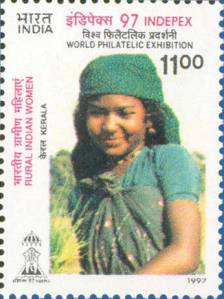
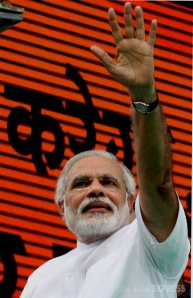
1744_Rural_Women_Keral 1742_Rural_Women_Gujar B_Id_424710_Narendra_Modi_

Rural Indian Women (Courtesy India Post) and An Urban Indian Man (Narendra Modi)

I watched the television broadcast of BJP’s Prime Ministerial candidate Narendra Modi’s speech at the Japanese Park in Rohini in Delhi on Sunday morning with breathless anticipation and some trepidation. With the restless anxiety that he would spin at least half a new idea, that could induce some naive fence-sitters in Delhi, my city, to sign up behind his juggernaut along with the rest of his zombie horde.

Would his spin doctors have worked hard and tirelessly overnight to give their client a new teflon coating? Would his savvy advisers have given him a sharp new statistic to play with, an incontrovertible fact, a compelling argument that would persuade my fellow citizens? Continue reading Can Narendra Modi Apologize to Four Hundred and Five Million Rural Women in India?

Muzaffarnagar 2013 – Violence by Political Design: Centre for Policy Analysis

This fact-finding exercise was coordinated by the CENTRE FOR POLICY ANALYSIS. Team members were the human rights activist and former civil servant Harsh Mander; former Director-General of the Border Security Force, E N Rammohan; Professor Kamal Mitra Chenoy of Jawaharlal Nehru University; National Integration Council member John Dayal; senior journalist Sukumar Muralidharan and CPA Director and senior editor Seema Mustafa.

Introduction and Overview

The first impression of the Muzaffarnagar countryside, now green with the sugarcane ripening for harvest, is of utter desolation. Villages are tense with fear.  Kasbas and hamlets are purged of their Muslim presence and the Hindu quarters have also emptied out in a self-imposed curfew even at midday, as women and children peep out from behind closed doors and windows, their menfolk having fled to avoid arrest as criminal complaints are made out against them. Fear is in the air. The atmosphere reeks of embitterment and betrayed trust, with neighbour now unwilling to trust neighbour, and apprehensive of ever returning to their accustomed lives. All the evidence points towards people who were forced to flee their habitations in sheer terror and seek out the safety of gathering among others of their own faith, occupying any vacant space in areas where they could be sure of not being targets just because of who they were.

“We will never go back to our villages”, say Muslim women refugees in a makeshift camp in the tehsil town of Budhana, some twenty kilometres from Muzaffarnagar. Continue reading Muzaffarnagar 2013 – Violence by Political Design: Centre for Policy Analysis

A Fight till Death, A Fight for the Commons – The Story of Kathikudam, Kerala: Parvathy Binoy

This is a guest post by PARVATHY BINOY

“There is a lot of polluted rivers and lands in India…but this is not a big issue in Kerala”, Kerala Pollution Control Board Chairman (KPCB), 2011

We have no one with us now, neither the party in power nor its opposition, we only have the people with us” – Daisy Francis, Kadukutty Panchayat President, June 2013 Continue reading A Fight till Death, A Fight for the Commons – The Story of Kathikudam, Kerala: Parvathy Binoy

Interim report of the Kathikudam Fact Finding Commission THRISSUR, 30 and 31 July 2013

The news of police action against those agitating against the Nitta Gelatine India Ltd.,(NGIL) formally known as Kerala Chemicals and Proteins Ltd.)plant on 21 July 2013 in Kathikudam,Kerala, shocked the members of the civil society of the country. Various organizations across the country have come together in the form of this Commission to look into the matter. The team visited the site of the agitation of the NGIL Action Committee and some of the spots which are affected by the pollution of NGIL. The team also interacted with the affected residents and the members of Kadukutty Gram Panchayat to get a better insight into the pollution that the villagers have been alleging and the event that transpired on 21 July 2013. Continue reading Interim report of the Kathikudam Fact Finding Commission THRISSUR, 30 and 31 July 2013

People’s Victory Against Chutka (Madhya Pradesh) Nuclear Power Plant: Lokesh Malti Prakash

Guest Post by Lokesh Malti Prakash

The People of Chutka and adjoining villages in Mandla district of Madhya Pradesh won another victory against the Chutka (Madhya Pradesh) Nuclear Power Plant (being imposed on them by Congress-led Central government in active collusion with BJP-led state government) as the government was forced for the second time to postpone its farcical public-hearing on the project that was scheduled on 31st July. After a sustained protest by people of the region that was actively supported by almost every section of left-democratic forces in the state and beyond, the district administration called off the public-hearing on 29th July.

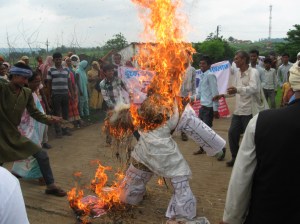
Burning the Effigy of Nuclear Power at Chutka

Continue reading People’s Victory Against Chutka (Madhya Pradesh) Nuclear Power Plant: Lokesh Malti Prakash

मुकदमा क्या सिर्फ मीना कुमारी पर चले ?: अपूर्वानंद

मीना कुमारी पुलिस हिरासत में हैं.उन पर भारतीय दंड संहिता की धारा 302 और 120 के तहत मामला दर्ज किया गया है. यानी उन पर छपरा के गंडामन गाँव के नवसृजित प्राथमिक विद्यालय में पढने वाले तेईस बच्चों की ,जो स्कूल का मध्याह्न भोजन खाने के बाद मारे गए, इरादतन ह्त्या और उनकी ह्त्या के लिए आपराधिक षड्यंत्र का आरोप है.उन पर मुकदमा चलने और साक्ष्यों के स्थापित होने के  पहले ही बिहार के मुख्यमंत्री ने अपने दल के कार्यकर्ताओं के समक्ष शिक्षा मंत्री के षड्यंत्र के सिद्धांत को दुहराया है. आज , जब मैं जनसत्ता में छपी अपनी टिप्पणी को देख रहा हूँ, मुख्यमंत्री ने इसे दुर्घटना मानने से इनकार किया है. लेकिन वे इसे बाहरी साजिश का नतीजा मानते हैं. पहले ही इशारे किए जा चुके हैं. मीना कुमारी के पति के राष्ट्रीय जनता दल से सम्बन्ध की बात बार-बार कही जा रही है. कहा जा रहा है कि दुर्घटना वाले दिन वह स्कूल आया था और यह भी कि भोजन सामग्री की खरीदारी वही किया करता था. पहले यह खबर लगातार चलाई गई कि भोजन-सामग्री उसकी दुकान से खरीदी जाती थी. सच यह है कि उसकी कोई दुकान नहीं है. यह भी कोई  नहीं पूछ रहा कि आखिर मीना कुमारी का पति  सामान न खरीदता तो और कौन था यह काम करने वाला? क्या यह काम भी मीना कुमारी को ही करना चाहिए था?

मीना कुमारी की तस्वीर खलनायिका की बन चुकी है: रसोई बनाने वाली के संदेह के बावजूद  खाना उसी तेल में बनाने और फिर बच्चों की हिचक के बाद भी उन्हें खाने को मजबूर करने वाली औरत हत्यारी नहीं तो और क्या हो सकती है! Continue reading मुकदमा क्या सिर्फ मीना कुमारी पर चले ?: अपूर्वानंद

The buck should not stop with Meena Kumari

Let us recount some facts to understand the circumstances that led to the death of 23 children at a primary school at Gandaman, Chapra . First, some micro-facts :

  • The primary school struck by the  tragedy  is  a NAV SRJIT VIDYALAYA, a  newly created school. In fact, it is a break away from an earlier existing middle school   in the village.
  • This school, if you care to call it by this name, is a single room structure  with a floor full of potholes.
  • There is neither a kitchen nor a   facility to store the raw food-items in the school.
  • There is no source of clean drinking water in the school. There is a hand pump there but you get hard water from it.
  • Meena Kumari was NOT the headmistress of the school . She was only the teacher –in-charge of the school.
  • The school has two women teachers including Meena Kumari. The other one was on maternity leave  at the time of the incident. Meena Kumari was the only teacher left to look after more than 60 children, from class one to five who study there , a duty which includes teaching, supervising Mid-Day Meal (MDM) and other administrative duties. Continue reading The buck should not stop with Meena Kumari

Boyalagudem’s Search for Water: Rajendran Narayanan

Guest post by RAJENDRAN NARAYANAN. Boyalagudem – The name sounds like one of those nondescript railway stations in south India that an express train whizzes by in utter condescension of its portly status. Except that in this case it is much worse. There are no railway tracks in a 50 kilometre radius of this village, tucked away in a corner of Mahabubnagar district in Andhra Pradesh. The landscape here is various hues of brown with not even a pretension of greenery anywhere, barring a few adamant shrubs as if standing up for their fraternity.

A not so covetous claim to fame of this region is its proneness to drought. People here spend each year in the hope that weather cannot play a prank every year. Prayers are offered each year in the second week of June to please the rain gods so that the chosen gods can have mercy this time around. But, the gods in turn haven’t been too pleased with the prayers so offered for the past few years.

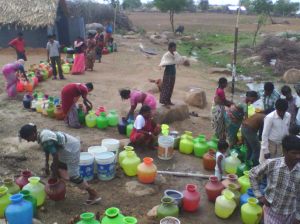
Boyalagudem's scramble for water
Boyalagudem’s scramble for water

To cut to the chase, water is scarce in this region and so is electricity. Most villages in this part of the district have a central water pump connected to a storage tank that gets water when the State takes pity and provides electricity. Thus, no electricity implies no water. Electricity comes and goes at random times of the day and consequently there is no fixed schedule regarding the availability of water. Some desperate villager wakes up at 4 AM and rushes to the water pump in the hope of getting water. Another sleepy villager  walking out to take a leak at that hour observes an active man with four colourful pots running to get water and rushes back to his house to join the early riser in the daily water fetching ritual. News of water availability spreads and within 30 minutes one can see majority of the villagers, from 6 year olds to70 year olds, wiping their sleep off their face, walking, running or cycling, each with four to six bright colourful plastic pots to the solitary water pump. Multicoloured fluorescent pots form a long and winding queue to usher in the day. The chaotic queue naturally lends itself to quarrels and verbal skirmishes about who came first and why somebody has come with eight pots to hoard water.

Continue reading Boyalagudem’s Search for Water: Rajendran Narayanan

We do not want to see a repeat-performance of Muthanga: Appeal against Police Violence at Kathikudam

[When he finished recounting a glorious story of struggle by fisher folk against an obnoxious, oppressive feudal lord in a coastal village in Kerala, a senior activist told me: “But we can’t rest … the places where the poor live in Kerala are being taken over again … this time to be waste-dumps of the rich. This village can’t be an exception.” He was referring to the heavy pollution caused by the high-end pleasure resorts mushrooming around the village. Indeed, in all districts of Kerala, local struggles are becoming all the more frequent against the pillage of the earth to satisfy consumerist greed of the predatory rich and the shameless dumping of waste in areas where the poor live. The people of Kathikudam have been fighting a long battle — not just against the Nitta Gelatine factory’s heavily polluting practices which have nearly destroyed the Chalakudi river, wetlands in the area, extracting a huge toll on animal, and plant life in the region  and causing immense difficulties to local people there.  They are also condemning the company’s stealthy attempts to dump waste in distant border adivasi areas. Yesterday the police unleashed bestial violence against protestors, which has been widely condemned in the state.

Below is an appeal in protest signed by concerned intellectuals and activists. If the present UDF government considers itself to be above being a bunch of wheeler-dealers whose sole interest is grabbing the crumbs that fall from the table of predatory capital, they must act decisively and justly against this wanton disrespect to democracy on the part of the police they control. Those who wish to endorse the appeal may please indicate so in the comments]

We, the undersigned, are shocked to hear and read about the unfortunate and avoidable response of the police in the handling of the peaceful protest against thee pollution by Nitta Gelatin Company Limited has been creating in the village of Kathikudam in Thrissur District of Kerala.
The police attack on the protest has been brutal and the violence is against the people of the village who have been denied justice in the wake of insufferable pollution, which has been causing severe damage to the air, water, soil and agriculture of this region for three decades. This is what prompted the protestors to take action in the form of removing the pipe that carries effluents to the river. Continue reading We do not want to see a repeat-performance of Muthanga: Appeal against Police Violence at Kathikudam

We’re singing Holi songs: Inayat Anaita Sabhikhi

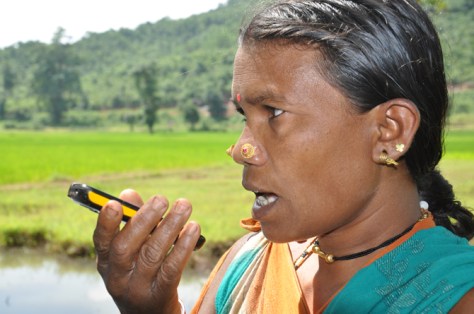
Guest post by INAYAT ANAITA SABHIKHI: CGNet Swara is a voice based portal, where stories reported by citizen journalists are available for playback online on their website or through a regular mobile phone. By dialing the CGNet number, you can either record a message or listen to the previous four messages recorded on the server. This is primarily operating in the Central Gondwana region, a tribal belt in central India known to be economically and socially disadvantaged.

woman-reporting

A reporter for CGNet Swara

The idea behind this, as explained by its founder, Shubhranshu Choudhury in this TEDx talk is to democratise the use of media. It is an attempt to combat the neglect and skewed approach of mainstream media towards this entire region and its people. Continue reading We’re singing Holi songs: Inayat Anaita Sabhikhi

Palamau, Ardh Satya and the Activist Life: Vikrant Dadawala

This is a guest post by VIKRANT DADAWALA: “We have lost a lot”, says Manoj-ji, president of Vikas Sahyog Kendra. “Aadmi ko ek bar aag choo jaye toh woh ekdam se peeche ho jaata hai.” (If fire touches a man once, he flinches every time)

I am standing outside the Vikas Sahyog Kendra office in Daltonganj, Palamau. It is the end of my first day as an intern with the organization. Manoj-ji is trying to give us, three interns, a sense of why Vikas Sahyog Kendra does not have a signboard. “Niyamat Ansari and Lalit Mehta’s murders shook us badly”, Manoj-ji says. “We’re no longer as fearless as before.”

I am little disappointed, unreasonably so. It is evening but still mindlessly hot. My first impressions of Daltonganj take in its bareness – unfinished buildings, loudspeakers blaring bhajans, the ostentatious houses of minor bureaucrats and contractors standing like castles against the dry summer wind. Continue reading Palamau, Ardh Satya and the Activist Life: Vikrant Dadawala

Huge Rally of Narmada Dam Oustees in Bhopal: Jeevan Adhikar Satyagraha and Upwaas begins with Demand for Rehabilitation and Resettlement

This is a press release by the NARMADA BACHAO ANDOLAN

28th June 2013

Rally 2

Thousands of oustees affected by the Indira Sagar, Omkareshwar, Maheshwar, Upper Beda and Man dam demonstrated in capital city Bhopal today and began their Satyagrah. Despite continuous rain in the entire Narmada valley, over 8000 men and women displaced persons have reached Bhopal to camp here for the next 5 days. The affected people demand that all the oustees of these dams should be rehabilitated and resettled with land and all other entitlements, and the injustice being wreaked on them for decades be stopped. Shri Alok Agarwal, senior activist of the Narmada Bacahao Andolan along with 4 men and women oustees have started their fast for 5 days in this “Narmada Jeevan Adhikar Satyagraha and Upwaas”.

Gyapan

Continue reading Huge Rally of Narmada Dam Oustees in Bhopal: Jeevan Adhikar Satyagraha and Upwaas begins with Demand for Rehabilitation and Resettlement