Category Archives: Debates

The BabriMasjid/Ayodhya Judgement of 2010 – Some questions for today


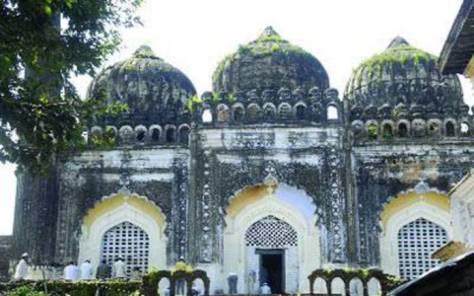
Babri Masjid before its demolition. It was still a mosque in 1992 when Hindutva mobs demolished it, and namaz was offered there until 1949 when under growing pressure from Hindutva forces, it was locked and made out of bounds for the public. However, Hindu puja was permitted there once a year.

This post is an analysis of the Allahabad High Court judgement of September 2010, on the BabriMasjid /Ayodhya issue. The final judgment ruled that the disputed land would be divided into three parts, one third going to the Hindu Maha Sabha which represented Ram Lalla, one third to Sunni Waqf Board and the rest to Nirmohi Akhada including Ram Chabutara and Sitaki Rasoi.

This essay was written at the time, and published in Economic and Political Weekly. Two of the key issues of this case arose in two of the recent judgments of the Supreme Court on other matters.

One, the status of ‘Next Friend’, which is central to the Ayodhya case, was brought up in the judgement on the Bhima- Koregaon Five. Regarding  the PIL filed by historian Romila Thapar and four other eminent persons challenging the alleged-unlawful arrest of these five activists,

the court assumed that the writ petition has now been pursued by the accused themselves and was of the opinion that the petition, at the instance of the next friend of the accused for an independent probe or a court-monitored investigation cannot be countenanced, much less as a PIL as the petitioners cannot be heard to ask for the reliefs which otherwise cannot be granted to the accused themselves.

Two, the status of the deity as a person in law came up centrally in the judgement on Sabarimala.

Apologies for posting this long piece, which is not a blog post but an analytical essay closely examining the 2010 judgement by Allahabad High Court. I have not updated it in any way, as that is the judgement that currently stands. The  case is currently in the Supreme Court.

The Ayodhya judgement: what next?

 Published in Economic and Political Weekly Vol 46 No. 31 July 30 – August 05, 2011

Since the Allahabad High Court judgement on the Ayodhya dispute was delivered on September 30, 2010, a substantial body of reflection upon it has emerged. Historians, political commentators, legal scholars and lawyers have all produced serious and engaged critiques of the judgement, pointing out flaws in reasoning and flaws in law. In an engagement with the debate so far, particularly with the critical voices, of which I am one, I hope here to develop a composite picture of the problems with the judgement, currently under appeal in the Supreme Court. And to ask, what are its weakest links?

Continue reading The BabriMasjid/Ayodhya Judgement of 2010 – Some questions for today

The Impossible Gandhian Project and its Limits – Remembering the Mahatma Today

Gandhi, Nehru and Azad, Wardha 1935, image courtesy Governance Now

Majboori ka naam Mahatma Gandhi (Roughly: Compulsion thy name is Mahatma Gandhi)

I have grown up hearing this expression and have often wondered about its meaning and at the almost proverbial status acquired by it. Whose majboori or compulsion was Gandhi really? Well, at one level, everybody’s, for practically every current within the anti-colonial struggle was uncomfortable with his presence and his leadership. Jawaharlal Nehru had even remarked once that after independence, his fads would have to be kept in check. All nationalists who fought for independence from colonial rule (as opposed to the pseudo-nationalists who tried to convert it into a cow-protection movement) had their gaze fixed on the state. They wanted control of that coveted instrument – that was the crux of their anticolonial struggle. There were others like BR Ambedkar, who too invested a lot in the state but realized that the state in the hands of the nationalists would be a disaster for his people. But no one among them (poet-thinkers like Tagore apart) was prepared to look beyond the state. And Gandhi’s disavowal of the state – and of politics as such – was something that no one could digest. More than anything else, that was what made him a majboori for this set of people who could only lay their hands on their object of desire as long as Gandhi was in the leadership – for he alone could move millions like no one among his contemporaries could.

But my hunch is that these were not the people who coined this expression. Gandhi was a bigger majboori for another set of people who were, ironically, equally disinterested in the state and its ‘capture’ – at least till recently. Yes, these were the different currents of the Hindutva Brigade (VD Savarkar of the Hindu Mahasabha and his followers and the Rashtriya Swayamsevak Sangh). They had to tolerate Gandhi – that is exactly what their majboori meant – till they could finally eliminate him. And it was one Nathuram Godse, with connections to both Savarkar and the RSS, who eventually killed him. There were earlier attempts too on Gandhi’s life – all from upper caste Hindus (one lot being Chitpavan Brahmins). Continue reading The Impossible Gandhian Project and its Limits – Remembering the Mahatma Today

Do Not Ride the Tiger of Hindtuva: Sabarimala Entry and Hindutva Women

The Supreme Court judgment on women’s entry into Sabarimala has got Hindutva women in Kerala into a hand-wringing, hair-tearing frenzy, and that is to put it lightly. I say ‘Hindutva women’ deliberately, to refer to a sub-set of Hindu women, who (1) believe, like the RSS chief, that the Hindu(tva) lion is under threat from dogs (guess who the dogs are in this case) (2) identify craven submission to Hindutva commonsense about gender as ‘Indian tradition’ (3) are willing to sacrifice all public decency for the sake of upholding that common sense. Continue reading Do Not Ride the Tiger of Hindtuva: Sabarimala Entry and Hindutva Women

The Poverty of Politics and Pre-Requisites of an Anti-Hindutva Front: Moggallan Bharti

Guest post by MOGGALLAN BHARTI

Going by the track record of past four years of Narendra Modi’s government, the only definitive political narrative today is that of the ruling party, characterized by its brand ideological vehemence/ aggression and paralleled by corresponding ideological ennui in the opposition camp. The fact that there is an astronomical rise in hate crimes against Muslims, Dalits, Women and other minorities, silently supported by large numbers of people, underlines the  onset of an ideology, conceptualized by the caste Hindus and institutionalized as Rashtriya SwayamSevak Sangh (RSS).

The electoral success of BJP – the political wing of RSS – only points to a reality which is the logical outcome of the political processes, wherein the Hindu right has been handled with the customary albatross of secularism around all of our necks – defying the social reality of India. In a predominantly caste society, secularism tends to obfuscates real social cleavages and gives preeminence to an idea shaped by the literate elites. That is not to say there is something inherently misplaced with the idea of secularism in this country. Certainly not! On the contrary, it is the dishonesty and the utter insincerity of the India’s political class for whom the politics of secularism remains a mere means to claim political power. Nothing wrong with that too, as long as, this means was directed to its logical end of making an India actually secular. Alas, India’s attempt at constructing a sincere secular society have been halfhearted at its best and nonexistent at its worst, regardless of the secular nostalgia that some people – very sincere and honest people – find themselves attached to.

Continue reading The Poverty of Politics and Pre-Requisites of an Anti-Hindutva Front: Moggallan Bharti

Constructing Democratic Rights Activists as Conspirators: Preeti Chauhan

Guest Post by PREETI CHAUHAN

The recent arrest of activists and intellectuals, and raids on various others connected with rights activism across five states in India is a grim reminder of the shrunken space for protest, criticism and dissent in our democracy today. This tendency to muzzle opposing voices has been on brazen display over the past four years though earlier governments had also tried to brand civil rights activists as ‘Maoists’ and as anti-development and anti-progress in a sense. The case against Dr. Binayak Sen, an office bearer of People’s Union for Civil Liberties comes to mind who was also alleged to be a Maoist.

The entire episode raises many questions on the motives of the government for this kind of concerted clampdown on human rights defenders. As of now, the charges against the activists seem far-fetched and entirely fabricated. Most of the activists who are now in jail or under house arrest are long-time members of the civil liberties movement in our country in the post-emergency period. Civil and democratic rights organizations and their activists have faced the charge of being fronts of this and that organization earlier too, and some have been attacked and killed also as in Andhra Pradesh. But what is important to understand is the location of the civil and democratic rights movement vis a vis democracy in India. Continue reading Constructing Democratic Rights Activists as Conspirators: Preeti Chauhan

How to Deal with Male Chauvinist Piorge: Ten Tips

After the floods comes the pestilence. Even as the rest of us are focusing all our energies on making sure that epidemics and sheer psychological trauma aren’t going to bring our people devastated by floods to the brink of their endurance, here is a bizarre person, a certain P C George, MLA from Poonjar, Kerala, indulging in the worst kinds of patriarchal excess. At this time one would expect our elected representatives to be aiding and comforting people in their respective constituencies. Instead, we have this man spew unspeakable, stupid trash on the public. I do not want to reproduce it here; you can read for yourself.  I’d rather try to think of how we may deal collectively with those of his ilk. Continue reading How to Deal with Male Chauvinist Piorge: Ten Tips

Statement Demanding Immediate Release of Writers, Activists and Human Rights Defenders: IIT Kanpur Alumni and Others

We, a group of alumni of IIT Kanpur and others as students, researchers, faculty, staff and other community members affiliated with the same institute strongly condemn the arrest of IIT Kanpur alumna Sudha Bharadwaj (Integrated MSc., Mathematics, 1979-1984) and other activists namely, Vernon Gonsalves, Arun Ferreira, Gautam Navlakha and Varavara Rao, and the raiding of houses of Anand Teltumbde, K. Satyanarayana and Stan Swamy among many others. These arrests seem to be a mere sequel in an ongoing attempt to intimidate and arrest activists, eminent writers, professors, journalists, and human rights defenders around the country.

Sudha Bhardwaj has a public record of dedicating herself to the most marginalized through her work spanning more than thirty years. She finished her integrated bachelors and masters program of Dept of Mathematics, IIT Kanpur, in 1984. Already socially conscious as a student, by 1986 she had moved to Chhattisgarh working with a workers’ organization and trade union in the mining-industrial belt of central Chhattisgarh. It is here she found her calling as a trade unionist, and later, as a lawyer. We have compiled a short biography of her long journey at https://goo.gl/J6F9kK – it is clear that she dedicated herself entirely to the most vulnerable and powerless, working through the rights and frameworks guaranteed in the Indian constitution. Continue reading Statement Demanding Immediate Release of Writers, Activists and Human Rights Defenders: IIT Kanpur Alumni and Others

Statement Issued by NSI on the recent arrests : Democracy Under Siege !

A Statement Issued by New Socialist Initiative (NSI) on the recent arrests of human rights defenders and public intellectuals

Democracy Under Siege !

With Ground Slipping Fast Beneath Its Feet, BJP government Resorting to Draconian Measures !

1.

New Socialist Initiative strongly condemns the arbitrary and malicious manner in which the Pune Police, at the behest of its saffron masters, raided the houses of leading human rights activists, lawyers, professors and poets in different cities simultaneously and arrested five of them – Sudha Bharadwaj, Gautam Navlakha, Arun Ferreira, Vernon Gonsalves and Varavara Rao – under concocted charges.

Demanding immediate release of all these persons unconditionally and withdrawal of fabricated charges filed against them under the draconian Unlawful Activities Prevention Act (UAPA) , it also said that appropriate action should be taken against the guilty policemen as well involved in this act. Continue reading Statement Issued by NSI on the recent arrests : Democracy Under Siege !

KPMG?

Today morning, The Hindu reported a decision of the Communist-led Kerala government: “The State Cabinet on Thursday decided to appoint a consultancy firm to guide in the post-floods reconstruction. The Cabinet is understood to have decided to appoint KPMG as its consultants on the subject.”

Continue reading KPMG?

Brackish Reflections on the Great Deluge of 2018: Roby Rajan

This is a guest post by ROBY RAJAN

Epic. Biblical. Apocalyptic. These are some of the words that have been used to describe the floods and landslides that have wreaked havoc in Kerala over the last few weeks. Entire towns and cities were submerged, and entire rivers altered their courses overnight. Continue reading Brackish Reflections on the Great Deluge of 2018: Roby Rajan

A National Pledge for Kerala after the Great Deluge of 2018

  • Kerala is the land of my birth, and my life is intertwined closely and inseparably with the lives of all fellow-Malayalis. I will respect and remember this truth and will never think of my life as totally unrelated to nature, my neighbours, and the government that we elect to rule us.

Continue reading A National Pledge for Kerala after the Great Deluge of 2018

A List of Little-Knowledge Theories about Kerala in the Wake of this Disaster

By now everyone knows what the Sanghis, probably not just outside Kerala, but also inside, have been up to when others were battling the deluge, saving lives, working round the clock to organize relief: making Lord Ayappan look like a stupid brat (or, actually, painting him in their likeness), spreading idiotic claims that only the rich were affected, or that the Christians/Muslims/commies/everyone who isn’t a Hindutva bigot, are responsible for this catastrophe, and circulating fake photos, from relief work in Gujarat or somewhere else as RSS relief work for Kerala. Really, how we wish we could persuade them all to migrate to the Hindi heartland where ecological disasters are unheard of and will never ever be! Continue reading A List of Little-Knowledge Theories about Kerala in the Wake of this Disaster

A letter to Sanghiannan in the wake of our common woe

[Before you read this post, you might want to read KR Meera’s brilliant portrait of the average Malayali middle-class Sangh supporter, in her story Sanghiannan, which I translated as ‘My Brother Sanghi’, published by Juggernaut at : https://www.juggernaut.in/books/088d472b19d745d29492560654250e15 . I recommend this also because she sketches beautifully the spirit of deep compassion that inheres in the thought of Sreenarayana Guru, who tried to imagine the faith outside the brahmanical framework of caste. This will help you to get a sense of that section of Malayali middle class I address here.]


Kerala declares

Continue reading A letter to Sanghiannan in the wake of our common woe

Beware of Poisoning-Eating Maggots in Flood-Hit Kerala

In Malayalam, the usual way of referring to virulence that feeds on negative experience is paashaanathil krmi — or the maggot that is fattened by poison, instead of getting killed by it. Over the past few days, many of us have lived completely on the edge, bereft of sleep or ease, tossing about in a seemingly-unending nightmare, as the rain, floods, and landslides uproot not just our physical world, but the very culture of smugness and complacency that took over our deepest selves over the past twenty years or so. Continue reading Beware of Poisoning-Eating Maggots in Flood-Hit Kerala

Government should not Fail Children to Cover up Education System’s ailure: A Statement

A statement by concerned organizations, teachers’ unions and academics against government proposal to amend RTE Act to scrap no detention policy and to fail children in class V and VIII. The statement was issued in New Delhi on 25 July 2018

The civil society organisations, teacher unions, and academicians working in the education sector across 20 states of India strongly oppose the Lok Sabha’s decision to pass‘ The Right of Children to Free and Compulsory Education (Second Amendment) Bill, 2017’. This bill paves the way for the scrapping of the provision for ‘No Detention’ by allowing states to detain children in class V and VIII. Over 20,000 Indians had already urged the government to withdraw the bill scrapping the ‘No Detention Policy’.

Continue reading Government should not Fail Children to Cover up Education System’s ailure: A Statement

Fascinating Manu

It is easy to see the linkages between Manu, Nietzsche, Hitler and the worldview of Hindutva supremacism

RSS and Fascism

Manu and his ‘magnum opus’ Manusmriti keeps hogging headlines in the 21st century as well.

Thanks to the fascination it still holds among the Hindutva supremacists of various kinds even around seventy years after the promulgation of Constitution, which in the words of Dr Ambedkar, had “ended the rule by Manu”.

The latest to join the ‘mission glorification’ of Manusmritihappens to be another stalwart from the Hindutva brigade, called Sambhaji Bhide, the leader of Shivpratishthan Sangathan, who also happens to be an accused in the Bhima Koregaon case. Addressing his followers known as dharkaris (believers of violence) – as opposed to varkaris(who go to Pandharpur from Pune on foot), he exhorted them to disseminate Hindu religion and form Hindu Nation. He also added how ‘Manusmriti was superior to the teachings of saints Dnyaneshwar and Tukaram’. 

( Read the full article here : https://newsclick.in/fascinating-manu)

Who feeds whom? Reflections on the Left responses to the Abhimanyu murder case

The recent murder of an SFI activist, Abhimanyu, at the Maharajah’s College, Ernakulam, allegedly by activists of another student organization, the Campus Front, has once again triggered a series of intense campaigns against the Popular Front of India (PFI), which is accused of having terror links, even with the ISIS. This last claim has become commonsense almost impossible to contest.

Continue reading Who feeds whom? Reflections on the Left responses to the Abhimanyu murder case

അഭിമന്യുവധം ഉയർത്തുന്ന കാതലായ പ്രശ്നം

സത്യം പറഞ്ഞാൽ അഭിമന്യു എന്ന വിദ്യാർത്ഥിയുടെ ഞെട്ടിക്കുന്ന കൊലപാതകത്തിനു ശേഷം ആ ചെറുപ്പക്കാരൻറെ മാതാവിൻറെ വിലാപം മാത്രമാണ് ഇപ്പോഴും മുഴങ്ങിക്കേൾക്കുന്നത്. ആ ശബ്ദം മനസ്സിൽ നിന്ന് മായുന്നതേയില്ല.

Continue reading അഭിമന്യുവധം ഉയർത്തുന്ന കാതലായ പ്രശ്നം

“Selfless Patriot” – In Search of the Real Shyama Prasad Mukherjee

Shyama Prasad

It has been said with good reason that the Jana Sangh resulted from a combination of a partyless leader, Syama Prasad Mookerjee, and a leaderless party, the RSS”.

(The Jana Sangh: A Biography of an Indian Political Party, by Craig Baxter p. 54) 

1.

In Search of the “Selfless Patriot”

An untimely death of a political leader — whose career is just blossoming — is always a loss to the party they belong to, the ideology they espouse, or the cause(s) they pursue. It also leaves the field open for political pundits of different shades to make all sorts of speculations, or to involve themselves in endless deliberations about what would have been the future of the formation if the said person hadn’t died.

The death of Shyama Prasad Mukherjee (06 July 1901 – 23 June 1953), founder of Bharatiya Jana Sangh (precursor to the BJP), at the relatively young age of 52 years, can be considered one such loss for the project he had undertaken. One cannot stop thinking about how the party he helped found after resigning from Hindu Mahasabha would have developed had he remained alive. His differences with the Hindu Mahasabha, which he even led in 1944, were political in nature, and stemmed from the considered opinion that it abandoned its exclusivist character.

However, to his legatees, who are always bothered very little by the nuances and niceties, he is a leader who provides them a fig leaf to counter the criticism that they had played no role in freedom struggle, or had no place in the comprehensive list of ‘makers of modern India’. Their ascension to the citadel of power has provided them with ample opportunity to project him as a key figure in the ‘Making of India’. (https://thewire.in/politics/search-syama-prasad-mookerjee-true-patriot)

In addition to that, by repeatedly claiming that ‘history failed to serve justice to Mukherjee,’ they are able to easily target Jawaharlal Nehru, the first Prime Minister of India, who played the key role in institutionalising democracy after the assassination of Mahatma Gandhi and early demise of Sardar Patel, and was aware that any leeway to Hindu Supremacist ideology would lead India into becoming a mirror image of Pakistan — a Hindu Pakistan.

( Read the full article here : https://newsclick.in/selfless-patriot)

Statement of Jadavpur University Alumni Against University Decision to Scrap Entrance Examinations

Following is a statement of Jadavpur University alumni on the current controversy around the scrapping of the entrance examination by the university authorities. 

There is also a Change.org petition that has been put up for those wanting to sign. Over 5075 people have signed the petition at last count.

Thos who who wish to sign in solidarity with Jadavpur University teachers, students and staff can do so here.

We, the alumni of Jadavpur University, unequivocally condemn the decision of the authorities to not conduct entrance examinations for admission to the university’s Bachelor of Arts programme.

Several departments of the Jadavpur Arts Faculty annually conduct their own entrance examinations. For the last forty years, teachers have carefully prepared question papers and rigorously evaluated the answers in order to admit the candidates that they deem fit. The tradition of the entrance examination, in which thousands of students participate every year, has ensured that the Faculty of Arts continues its legacy of academic excellence. No weightage is given to Board examination marks because the Boards’ prescribed methods of arts education and evaluation simply do not match those of tertiary education in the humanities. The entrance examinations test students for their interest in literature, history, philosophy and arts, their ability to think independently about texts, and their commitment to understanding the world around them using the skills of reasoning and speculation, the theoretical and methodological capital furnished by the humanities.

The entrance examination has enabled these departments to gain talented students year after year. Many of us would have never made it to the top-ranked Arts departments in the country had we been judged solely on the basis of our marks in school-leaving examinations. Admissions based on Board exam scores would have never enabled students from varied cultural, class and economic backgrounds to be trained in the humanities by the best minds in the country. The rich and diverse professional accomplishments of Jadavpur University alumni – in art, academia, film, entrepreneurship, publishing, writing, advertising and many other fields – constitute a further testament to the success of these departments in scouting and honing talent. First-person accounts of how the erstwhile admissions process created equality of opportunity and access for students from across a range of social and educational backgrounds have poured in from Jadavpur alumni since yesterday (3/7/2018). (To read personal testimonials and opinion pieces from faculty, alumni, staff and current students regarding the significance of the admission process, visit https://juforadmissiontest.wordpress.com/)

The admission test is a time-tested process which has ensured academic excellence in the Faculty of Arts and brought glory to the university. To tamper with this process is to threaten the very core of the humanities – to attack free thinking, liberty, and equality of opportunity. It directly undermines the dreams and hopes of the 17,000-odd students who have applied to Jadavpur University this year. Among these 17,000, there must be brilliant young minds that couldn’t obtain 90% or more in the Board examinations. Their merit cannot be reliably boxed into multiple-choice questions. There must be, in those 17,000, young people who do not seek conventional careers, or if they do, wish to combine them with independent thinking, exploring and lifelong learning.

To stop the admission test is to kill the dreams of anyone who does not participate in the mad rat race of public examinations. It is an attack on the community of scholars, researchers, teachers, alumni, students, and staff who have carefully built up the university and its reputation over the years. To stop the admission test is to tear into the very fabric of the university – its tradition and its history. We must recall that Jadavpur University was set up as an alternative to the education imparted by the erstwhile rulers of India, the British. It has always been home to those who dare to defy norms.

The larger implications of this administrative decision concern the scope and function of higher education in this country. Do we, as a nation, wish to create a more homogenised and technocratic culture that rewards learning by rote, or do we wish to invest in greater autonomy for centres of excellence? Difference and dissent are what all democracies should aspire to; they are the touchstones of any free and open society, and any administration that encourages these tendencies signals its confidence in itself and hope for the future. What we are seeing here is, accidentally or not, congruent with a larger attempt to fundamentally redefine the idea of higher education, to increase administrative interference in universities large and small, more and less prominent (similar conflicts are playing out in JNU, to cite just one example) and to condemn generations of young people to the backwaters of real learning, thought and creativity.

As concerned alumni, we strongly condemn the decision of the authorities to take away independent admission tests from the Faculty of Arts. We demand an immediate revocation of this order, which irrationally, pointlessly, and appallingly undertakes to disrupt a fair and successful admission process. This disruption will impact the futures of countless students, and reduce the entry-point of tertiary education in the humanities to a lottery.

We stand in solidarity with the protesting teachers, students and staff of Jadavpur University. Continue reading Statement of Jadavpur University Alumni Against University Decision to Scrap Entrance Examinations

Jadavpur University Scraps Admission Tests – Not going down without a fight: Sritama Chatterjee

Guest Post by SRITAMA CHATTERJEE

The Executive Council (EC) of Jadavpur University recently decided to scrap the admission test in the Humanities for the academic year 2018-2019. This is no surprise to many of us who have been closely following the chain of events that have unfolded at the university in the last couple of days. According to published news reports, the education minister of West Bengal, Partha Chatterjee had “advised” the university back in November 2017, to do away with the procedure of conducting admission tests.[i]  This raises a serious question whether the education minister of a state can even advise a university on how to conduct its admission process, especially considering that the university is an autonomous institution.  The motives of the EC about the admission tests were becoming increasingly suspicious when they postponed the dates for the admission test twice, thereby causing inconvenience to many applicants, especially those students who had applied from outside West Bengal and had their itinerary planned according to the declared dates. Not only were the dates postponed but also the method of admitting students were changed from the earlier notification of admitting students solely on the basis of admission tests to 50% weightage on board examination and 50% weightage on admission test to completely scrapping the admission test, altogether. Although I acknowledge that the parameters to rank and evaluate the performance of universities have its own set of problems which is outside the scope of this piece, it cannot be denied that Jadavpur University has done significantly well in the National Institutional Ranking Framework(NIRF) published recently by the MHRD, in spite of the fact that as a state university, the funding received by JU is scanty in comparison to the central universities. It is noteworthy that one of the parameters on the basis of which the NIRF rankings are based is perception, in which JU has not scored well. I wonder that after facing the harassment that applicants had to go through because of the fickle-minded decisions of the EC, whether the “public perception” about JU would become better. The VC and the EC must answer. Continue reading Jadavpur University Scraps Admission Tests – Not going down without a fight: Sritama Chatterjee