Category Archives: Debates

Reflections on the Kafila Journey: Seventeen Years of ‘Beyonding’

[This is the third of the “Reflection on the Kafila Journey” series. The first post in this series by Subhash Gatade can be read here and the second by Aditya Nigam can be read here.]

I started writing on Kafila in 2007. I met Nivedita at a conference in Delhi where she listened to my research on sexuality and development in Kerala; she took me by the arm gently, persuaded me to start writing in a non-academic but rigorous style, and showed me the possibilities of the new medium.

Continue reading Reflections on the Kafila Journey: Seventeen Years of ‘Beyonding’ →

Professor Balveer Arora in Democracy Dialogues, 5 th January 2025, 6 PM (IST)

https://youtu.be/GM6KiF9zwII?si=hA3U2WAY_lh18jLF

Democracy Dialogues Series 35 / Organised by New Socialist Initiative

Theme : India’s Federal Democracy @ 75: Is it Secure?

Speaker : Prof Balveer Arora

Chairman, Centre for Multilevel Federalism and Former Professor of Political Science and Rector, JNU

Time and Date : Sunday, 5 th January, 2025 6 PM ( IST)

Live Streamed on : facebook.com/newsocialistinitiative.nsi

Abstract :As we celebrate the 75th year of the Constitution, it is important to remember that Indian federalism flowered late. In the initial years, the development of democracy overshadowed the federal provisions of the Constitution. Certain formulations of the Constitution and single-party dominance even cast doubts on its very existence.

Dismissed as quasi, much was made of the preference for the term Union to question even the federal intent of the framers of the Constitution. As India’s federal polity developed, it became clearer that federalism was not merely intended but also an integral part of the basic structure of the Constitution. It was further defined and refined with asymmetrical provisions to accommodate its burgeoning diversity.Is it being denied today?

The federal fact is central to the understanding of contemporary Indian politics. Federalism has imparted resilience to Indian democracy. Traditionally, the concept of federalism involved relationships between central governments and federated units. Defined in legal- constitutional terms as different power distributions between the central government vis-à-vis the states and local governments, they typically limited relationships to those between governments, notably between various actors in the executive branch. We seek to go beyond this framework to look at federalism as a democratic process.

The threats to the federal essence of the polity are many, majoritarianism being the foremost. Majoritarian democracy is incompatible with the federal principle, which is based on the recognition of the right to self-rule for all constituents of the federal polity. Is this under siege today by an integrationist vision that seeks unity through uniformity? How can federal democracy be protected and preserved under these conditions? Can it be made more secure?

About the Speaker : BALVEER ARORA is Chairman, Centre for Multilevel Federalism and Former Professor of Political Science and Rector, JNU. Earlier, he was a visiting fellow at the National Political Science Foundation, Paris and the Center for the Advanced Study of India, University of Pennsylvania, USA. He has edited / co edited many books : Here is a list of few of his publications :
– Transforming India: Social and Political Dynamics of Democracy
– Multiple Identities in a Single State: Indian Federalism in Comparative Perspective
– Party System in India: Emerging Trajectories ,
– Federalism in India: Origins and Development
– The Value of Comparative Federalism: The Legacy of Ronald L. Watts
– Federalism and Public Health in India: Dissonant Discourses

Reflections on the Kafila Journey – Looking Back at a Tumultuous Experience

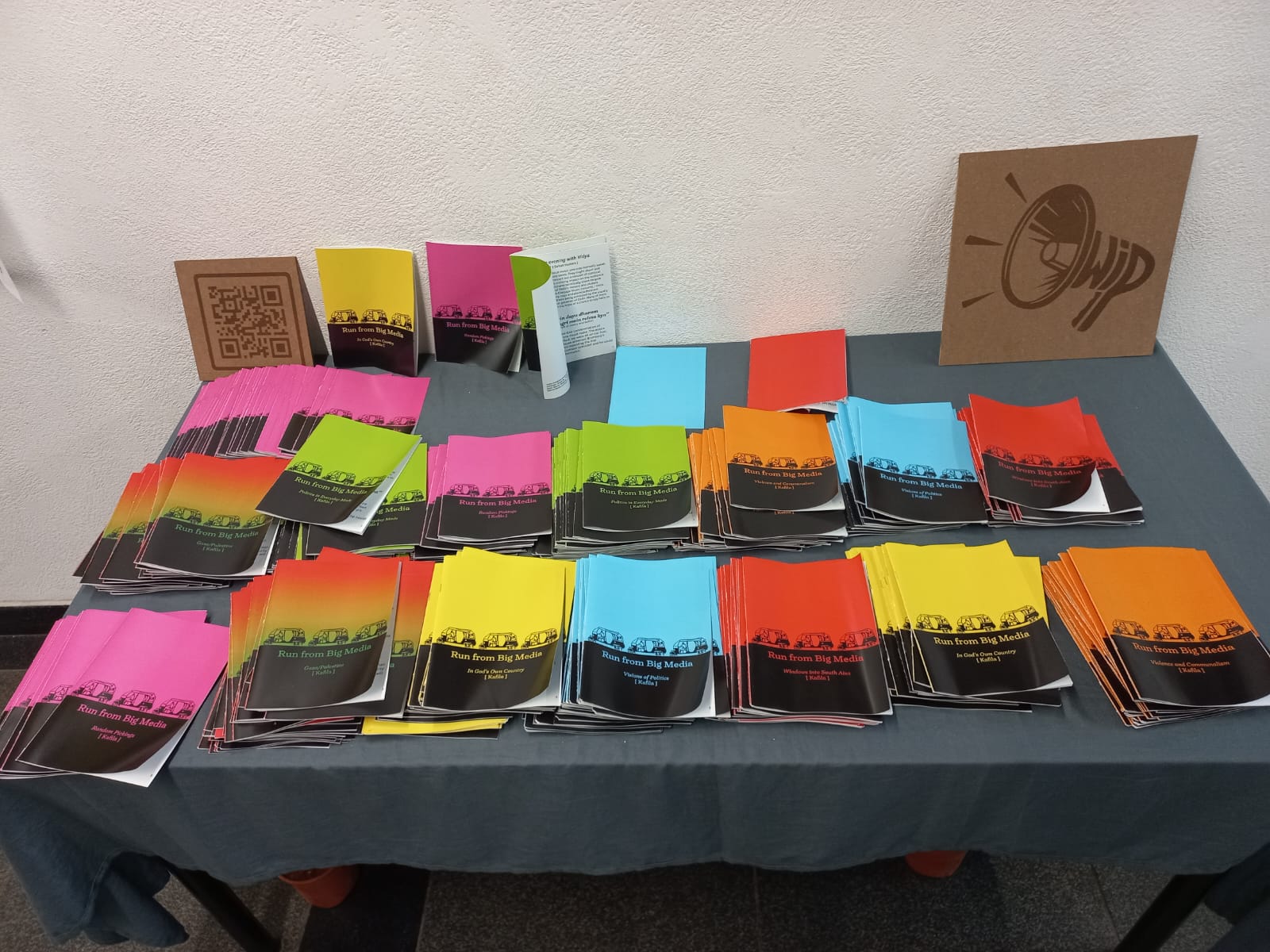
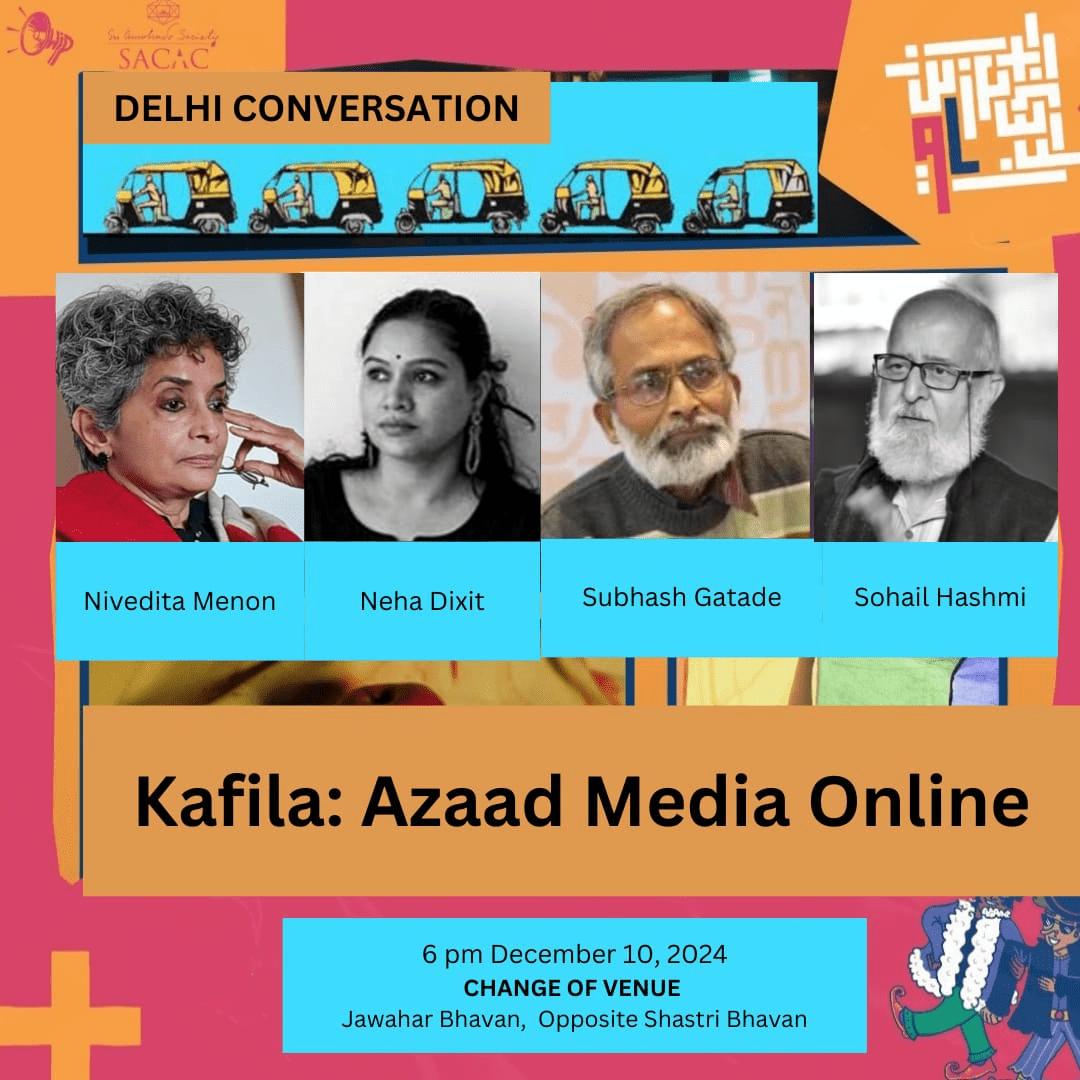
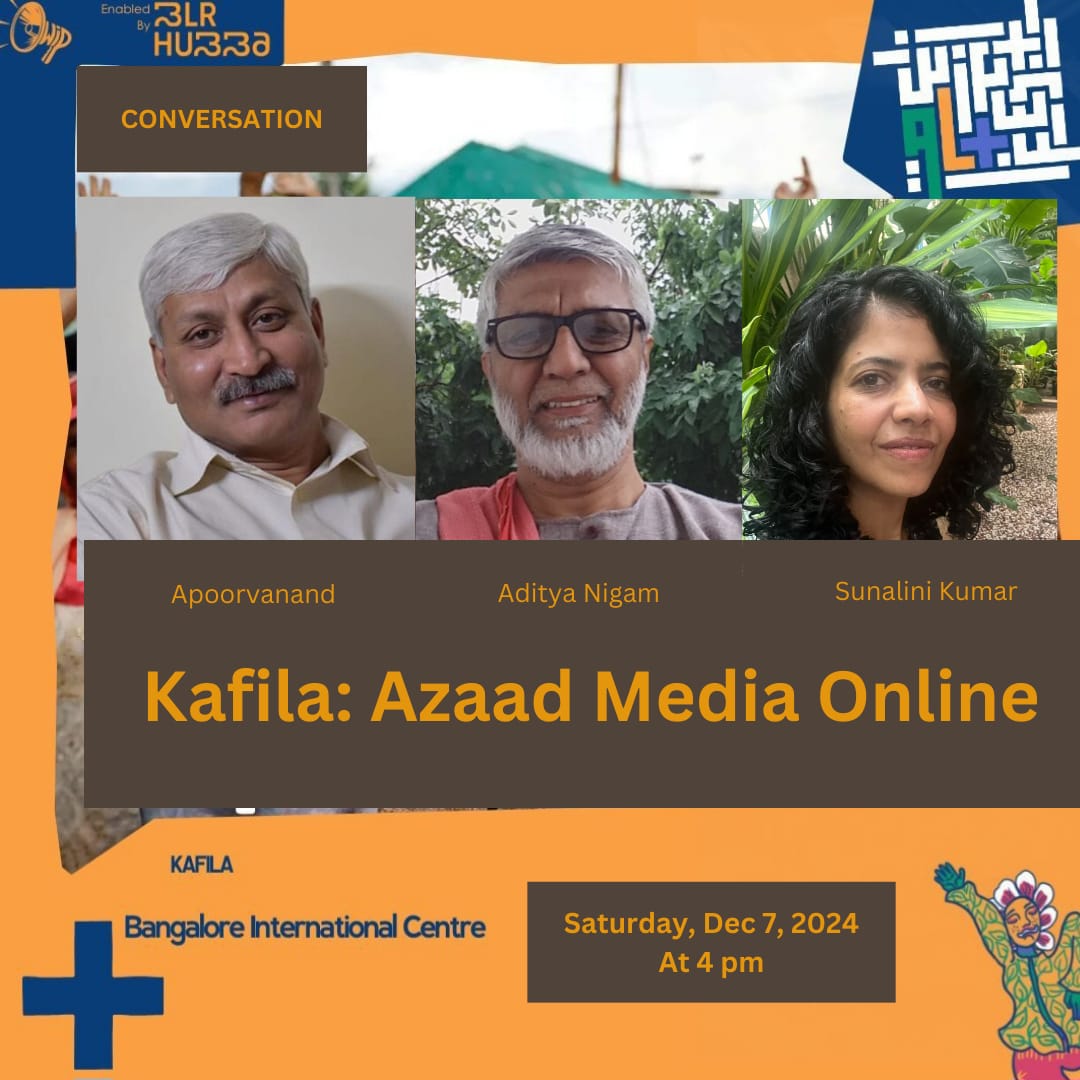
An expanded version of the presentation   at the panel on Kafila held as part of the W.I.P alt.FEST held in Bangalore and Delhi in  December 2024. While the first post in this series by Subhash Gatade is linked below in the text, the third by J. Devika can be read here.

Kafila was formally launched on 6 November 2006 at a session of the India Social Forum in Delhi, though its first post had gone up a couple of weeks earlier, on 19 October. However, there is a prehistory to the actual formal formation of Kafila which goes back to two earlier movements that had brought many of us together.

As rightly mentioned by Subhash Gatade in his reflections, the first of these was the movement against the relocation of polluting/ hazardous industries starting from late 1996. It was this movement that, perhaps for the first time in India brought the issue of workers’ rights into the discourse on urban pollution and environment. It took the discussions on urban planning, linking air and water pollution, zoning, transport policy and questions of workers’ occupational health, outside the charmed circles of urban planners. Initiated by the Indian Federation of Trade Unions, the formation of the Delhi Janwadi Adhikar Manch was the platform that had enabled this by bringing all of us together.

Continue reading Reflections on the Kafila Journey – Looking Back at a Tumultuous Experience →

Reflections on the Kafila journey : ‘We Should Learn from Them!’

Presentation   at the panel on Kafila held as part of the W.I.P alt.FEST held in Bangalore and Delhi in  December 2024. The second post in the series can be read here and the third by J. Devika here.

They were different times.

Times when the space for debate and discussion had not shrunk as we it witness today, when stigmatisation of ‘others’ or ‘criminalisation of differences’ had not yet started; times when one had rarely heard about writers. rationalists or cultural workers coming under murderous attacks in this part of South Asia, just because they dared to speak the truth.

Perhaps it is better to begin from the beginnings.

One still remembers the very first meeting we had at CSDS, Delhi in Aditya’s room to discuss the idea of a blog and its launching. Apoorvanand was there, a young blogger Shivam Vij – was also present ( who became a ‘Guru’ of many of us ‘oldies’ for sometime, who were then taking baby steps in this virtual world of self publishing).

For me it was my first experience to be directly associated with a blog.

None of us  had any premonition that we are in for interesting times and would be helping catalyse conversations on various issues of concern among a wide spectrum of writers, activists, scholars and concerned individuals.

All of us had our own teething troubles then, in fact initially I found it extremely difficult even to upload my posts on the blog and had to take the help of a close friend in the IT sector to do it. 

What is worth underlining about Kafila

Looking back, one today feels mesmerised the way it could attract people of various shades to contribute for the blog . Thanks to the wide network of contacts of a few among us- the number of admins reached the figure of twenty two . What connected them was their unflinching opposition to communalism, capitalism, casteism, patriarchy etc and their yearning to  enhance and enrich the intellectual atmosphere in their own way and promote a culture of discussion and debate in the rest of the society.

Nirbhaya movement and the  India against Corruption campaign – popularly called as Anna Movement were the two high points when Kafila reached its peak. One can still recall Shuddho returning from a rally in Jantar Mantar and on his way back home, posting an article on the theme which used to gather scores of comments the next morning

It was a period when even the mainstream magazines, publications felt it necessary to pay attention to the debates happening there and gladly rerepublished pieces which had earlier appeared on Kafila or even referred to Kafila post. Another important facet of Kafila was that there were occasions when the views of Kafila admins themselves differed but what was remarkable that it did not create any bad blood or any rancour among us. We continued to remain friends / comrades as earlier.

Perhaps it also had its genesis in the long bonding which had emerged between many of us during various social political interventions in the capital since mid nineties. Campaigns for defence of rights of workers (Delhi Janwadi Adhikar Manch) or struggles against communalism (Aman Ekta Manch) or issue of caste (Durban Abhiyan)  etc

Anna movement was the high point also because it clearly witnessed a clear division of opinion between us – few of us were completely opposed to the movement for its politics, who felt that it was a RSS inspired movement but others were equally vehement supporters of the movement, who felt that it provided a ray of hope in those times.

Another important point was the impact it could generate across a large sections of people.

It was the year 2014 ( elections were yet to be held) and one fine morning I got a call from an officer associated with a Eurozone country that he wanted  to meet me. This gentleman – who was much familiar with Kafila – who had even read the morning article which had appeared in Kafila, felt that someone like me could provide him with necessary details and analysis of the unfolding situation and also the possibility of Modi’s coming to  power.

What one observed that influence of Kafila was not restricted to only lefts and liberals, it was also read by the Rightwing.

A close relative of mine – who was then associated with a Hindutva Rightwing organisation but had started having doubts about their project – then had shared with me about the discussion he heard in the ‘family’ office.

He heard two of the seniors talking, ‘ we should learn from Kafila, look how they write and polemicise’



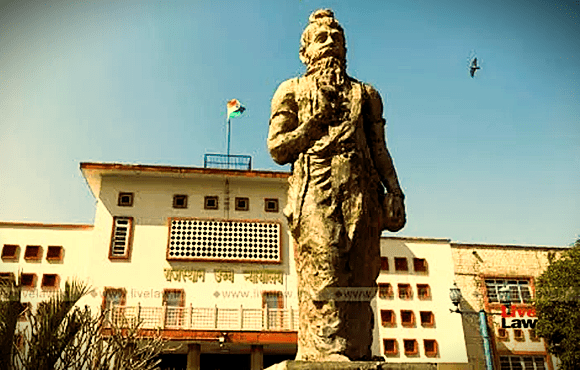
न्यायपालिका और हिन्दुत्व वर्चस्ववादी परियोजना 

दुनिया में जनतंत्र पर मंडराते खतरों की तरफ हाल के समय में बार-बार लिखा गया है। जानकारों ने इस बात को साफ किया है कि किस तरह जनतंत्र का कवच साबित होने वाली उसकी संस्थाओं को अंदर से कमजोर करके, कार्यपालिका, विधायिका या न्यायपालिका को अंदर से खोखला करके या इन सुरक्षा कवच ( guardrails of democracy) का अपहरण करके भी इसे बखूबी अंजाम दिया जा सकता है।

भारत में जहां हम कार्यपालिका का, अर्थात उसकी विभिन्न संस्थाओं को प्रभावहीन बनाने या उन्हें सत्ताधारी पार्टियों के मातहत करने की परिघटना को बारीकी से देख रहे हैं, मगर अभी तक न्यायपालिका में आ रहे बदलावों की तरफ हमारी निगाहें कम गई हैं।

गौरतलब है कि भारत में ऐसे बहुत कम कानून के विद्वान हैं या वकील हैं जिन्होंने भारत की न्यायपालिका के गति विज्ञान को बारीकी से देखा है और उसके रास्ते हमारे सामने रफ्ता-रफ्ता नमूदार हो रहे ख़तरों की तरफ इशारा किया है। जनाब डॉ. मोहन गोपाल, का नाम ऐसे लोगों में शुमार है।

कानून के यह आलिम और प्रैक्टिशनर हिन्दुत्व वर्चस्ववादी ताकतों के नज़रिये के बारे में और उनकी रणनीतियों के बारे में बारीक समझ रखते हैं और संविधान के हिसाब से एक धर्मनिरपेक्ष, लोकतांत्रिक, समाजवादी और संप्रभु भारत को हिन्दू राष्ट्र में तब्दील करने के उनके इरादों के बारे में बताते हैं कि ‘वह संविधान को उखाड़ फेंक कर नहीं बल्कि सर्वोच्च अदालत द्वारा उसकी एक हिन्दू दस्तावेज के रूप में व्याख्या करके’ अमल में लाना चाहते हैं।

कुछ वक्फ़ा पहले ‘लाईव लॉ’ द्वारा आयोजित एक प्रोग्राम में बोलते हुए उन्होंने उसके गतिविज्ञान को साफ किया था। ( Read the full article here : https://janchowk.com/beech-bahas/judiciary-and-scheme-of-hindu-dominance/)

God-Willed Justice ?

Is the judiciary being internally hijacked to usher in Hindu Rashtra?

There are a very few legal scholars or advocates who have perceptively looked at the dynamics of India’s judiciary and cautioned us about the dangers that can come our way through those routes only.

Dr Mohan Gopal, is an exception.

This noted scholar who has been very clear about the worldview and strategies of the Hindutva Supremacist forces to achieve the goal of establishing Hindu Rashtra, explains their strategy of executing it “not by overthrowing the Constitution but by interpretation by the SC as a Hindu Document”

Speaking in a programme organised by Live Law, Gopal had explained its dynamic as a two-step process:

One, appointing judges who are ready to look beyond the Constitution.

Two, how with an increase in the number of theocratic judges who find the source of law in religion rather than the Constitution, it will be easy to declare India as a Hindu theocracy under the same Constitution.

( Read the full article here : https://www.newsclick.in/god-willed-justice)

Beyond ‘Islamists vs Awami League’ – The Political Reality of July Uprising of Bangladesh: Sohul Ahmed

Guest post by SOHUL AHMED

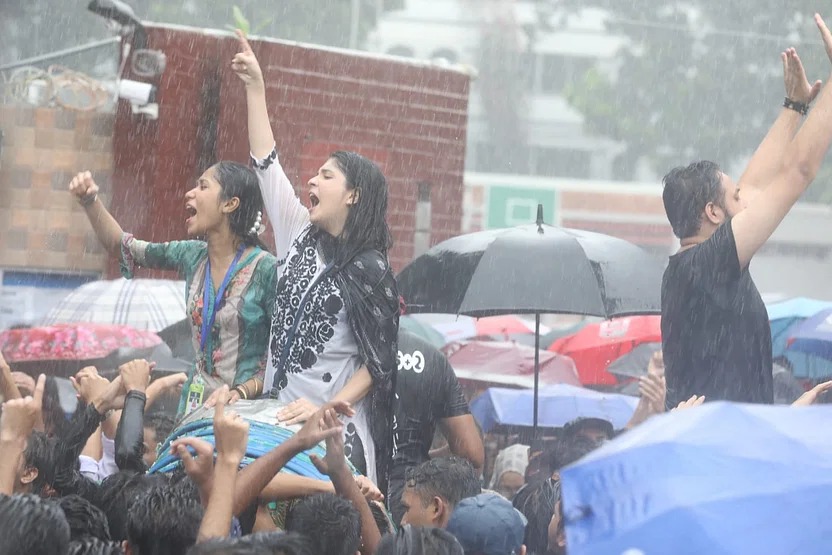
Students protesting in Uttara, Dhaka, August 2, 2024. Photo: Ashraful Alam

Sheikh Hasina, often labelled as fascist and autocratic leader in Bangladesh, was forced to flee the country following a popular uprising in July-August 2024. Many writings have appeared exploring the character of the movement and the consequent developments. Recently, renowned Indian historian and journalist Vijay Prashad published an article titled ‘Will Bangladesh be another Egypt?’, where he expressed the concern that Bangladesh could follow a path similar to Egypt’s. Vijay presents the  popular uprisings as both a continuation and, to some extent, a counter-response to the Shahbagh movement, while drawing parallels to the Arab Spring. However, his disregard for certain political realities in Bangladesh—such as the country’s long tradition of democratic movements and the presence of major centrist parties like the BNP—makes his comparison uneven and incomplete in some respects.

Continue reading Beyond ‘Islamists vs Awami League’ – The Political Reality of July Uprising of Bangladesh: Sohul Ahmed →

Who is Entitled to Hurt Religious Statements ?

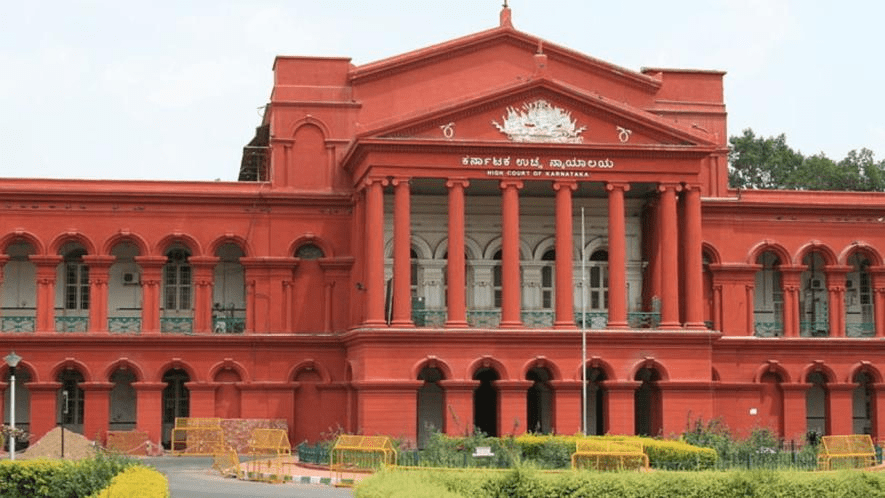
The judiciary in Karnataka is once again the focus of discussion in the national media.

The judiciary in Karnataka is once again in the news.

The latest case in a series of such cases is the Karnataka High Court’s recent judgment saying that shouting ‘Jai Shri Ram’ inside a mosque does not outrage religious feelings.

In an ambience where Right-Wing forces are hell bent upon creating more discord in the society, this judgement can easily be used by those who wish to further vitiate the atmosphere in the country. There are instances galore when such elements have tried to mount atop religious places of ‘other’ communities and deliberately create tension.

There is a feeling of sadness and surprise that despite the incident being caught live on CCTV, where the duo was seen entering a mosque late at night on their motorcycle, the courts did not look into the intention behind their act.

No doubt legal eagles in the country or civil liberty activists would be looking into the Karnataka HC judgement to formulate a suitable response and possibly challenge it at higher levels. For example, at the immediate level, it is being argued by analysts that the single-judge bench’s comparison of this issue with the highest court’s ruling in ‘Mahendra Singh Dhoni vs. Yerraguntla Shyamsundar’ case was notably different. ( Read the full article here : https://www.newsclick.in/who-entitled-hurt-religious-sentiments)

Goodbye Welfare State ? Welcome ‘Labharthis’

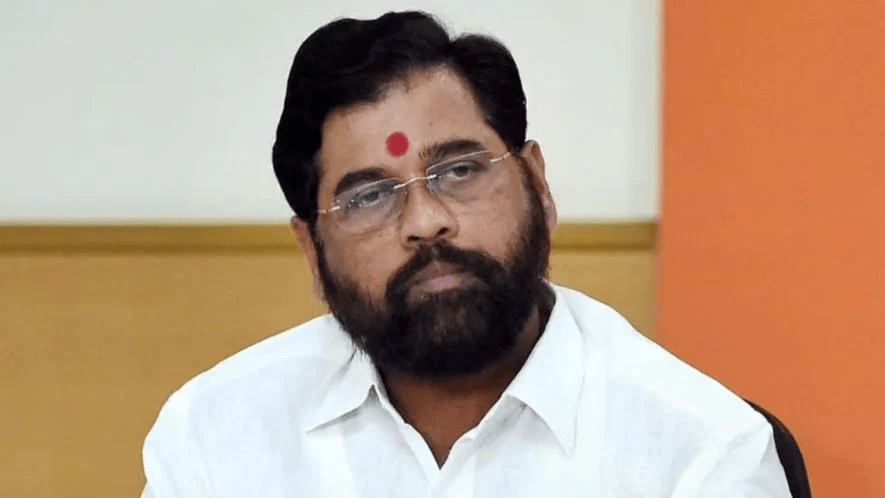
Ahead of Maharashtra Assembly polls, announcement of schemes like the Ladki-Bahin scheme reduce citizens to being ‘subjects’ rather than persons with basic constitutional rights.

Image Courtesy: PTI

Times have definitely changed.

There was a time earlier when a postcard sent by an ordinary citizen had spurred the judiciary into action, not any more.

One does not know whether the legal notice sent by a conscientious journalist to the Maharashtra government will similarly have any impact or not.

The focus of this legal notice is on the recent scheme launched by the Maharashtra government, called Ladki Bahin, under which women will be given Rs 1,500 per month. Launched on the eve of the elections to the state, the notice raises issues of the scheme’s timing, the claim that Rs 1,500 given to women would be sufficient; how such doles create a dependency culture and how it effectively punctures the whole idea of a welfare state. (Read the full article here :https://www.newsclick.in/goodbye-welfare-state-welcome-labharthis)—————————-

Here is a Hindi version of this write-up :https://janchowk.com/pahlapanna/citizens-as-beneficiary-the-achievement-of-the-amrit-kaal-of-the-republic/

हिंदुत्व की दक्षिण की नई प्रयोगशाला !

नरम हिन्दुत्व या ‘सेकुलर’ दलों की लड्डू पॉलिटिक्स?

Credit: PTI photo

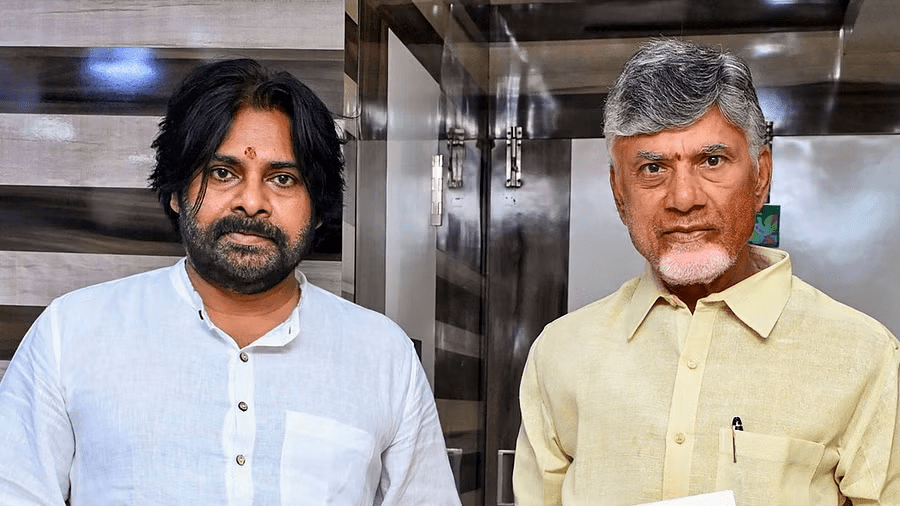
(क्या आंध्र प्रदेश दक्षिण में हिंदुत्व प्रयोग की नई प्रयोगशाला बनाने जा रहा है।  दक्षिण के अग्रणी अख़बार डेक्कन हेराल्ड ने पिछले दिनों इस मसले पर विशेष सामग्री पेश की थी ा गौरतलब है कि इस सूबे की आंतरिक गतिविधियों पर शेष मुल्क की तब निगाह पड़ी, जब तिरुपति के लड्डू के मसले को सुर्खियां मिली . मगर ‘हिंदुत्व लाइट’ का यह सम्मोहन महज वहीं तक सीमित नहीं है )

सियासत भी अजीब होती है। अकसर इस बात का अंदाजा भी नहीं लग पाता कि कैसे वह शैतानों के सन्त में रूपांतरण को मुमकिन बना देती है और कैसे अन्य समुदायों के जनसंहारों को अंजाम देने वालों को ‘अपने लोगों’ के हृदयसम्राट या रक्षक के तौर पर स्थापित कर देती है।

शायद इसी विचित्रता की यह निशानी है कि अमेरिका के पूर्व राष्‍ट्रपति डोनाल्ड ट्रम्प  द्वारा हैती से आए आप्रवासियों को लेकर फैलायी जा रही झूठी ख़बरें कि वे कुत्तों का भक्षण करते हैं, अमेरिका की आबादी के अच्छे-खासे हिस्से को अविश्वसनीय नहीं लग रही- जिनका लगभग अस्सी फीसदी हिस्सा साक्षर है। इन झूठी और नफरती ख़बरों को लेकर हैती से जुड़े समूहों को ही अदालत का दरवाजा खटखटाना पड़ रहा है।

जहां दुनिया का सबसे ताकतवर जनतंत्र कुत्तों को लेकर पैदा किए गए एक विवाद में उलझा दिखता है, वहीं खुद को दुनिया में डेमोक्रेसी की माता कहलाने वाले भारत में लड्डू के इर्द-गिर्द खड़े किए गए इसी किस्म के एक फर्जी विवाद में पिछले दिनों लचीले हिन्दुत्व की राजनीति के नए रणबांकुरे उलझे दिखे थे । ( Read the full article here : https://junputh.com/open-space/soft-hindutva-and-laddoo-politics-of-naidu/)

The New Janus of Sri Lanka: Revolution at the Gate? Maya John

Guest post by MAYA JOHN

[Maya John has been part of the Left Movement for the past two decades and this piece is in response to ongoing dialogues with Sri Lankan comrades.]

Anura Kumara Dissanayake, photo courtesy AP News

The recent presidential election has installed Anura Kumara Dissanayake (“AKD”) from the Janatha Vimukthi Peramuna (JVP)-led National People’s Power (NPP) alliance as the new president of Sri Lanka. This victory is seen as a result of rising popular hostility towards mainstream parties and rogue dynasts. Consequently, we find that AKD garnered an overwhelming share of the votes from those same electoral constituencies which had earlier voted in bulk for the corrupt Rajapaksas. Prior to this presidential election, the frustrated Sri Lankan masses, plagued by growing economic and political crises, generated the powerful people’s movement – the janatha aragalaya – that ushered in a huge legitimacy crisis for the ruling elites.

Continue reading The New Janus of Sri Lanka: Revolution at the Gate? Maya John →

Fascinating Hindutva Lite

After the ascent of Hindutva Supremacists at the Centre, avowedly secular parties also seem to be falling prey to it under mass pressure for short-term electoral gains.

Politics is a strange beast.

It looks incredulous how at times it helps Satans being metamorphosed into Saints and biggest murderers of hapless communities emerging as the defenders or ‘heartthrobs’ of their ‘own people.’

Perhaps it is a sign of this weirdness that Donald Trump’s vitriolic speeches targeting Haitian immigrants – that they eat pets — have not appeared incredulous to a large section of the US population, which is 79% literate, as the records show. Finally, Haitian groups themselves had to approach the courts to expose “racial animus against Haitian immigrants” over the years.

Interestingly, while the strongest democracy in the world is in the midst of a manufactured controversy around pets, the biggest democracy in the world, is witnessing another fabricated controversy around Laddoo – a spherical sweet from the Indian subcontinent — thanks to the intervention of what can be called as ‘new converts’ to Hindutva Lite politics. ( Read the full article here : https://www.newsclick.in/fascination-hindutva-lite-among-opposition-parties)

A Misguided Narrative – A Response to the Lemkin Institute’s Statement on Bangladesh: Sohul Ahmed

Guest post by SOHUL AHMED

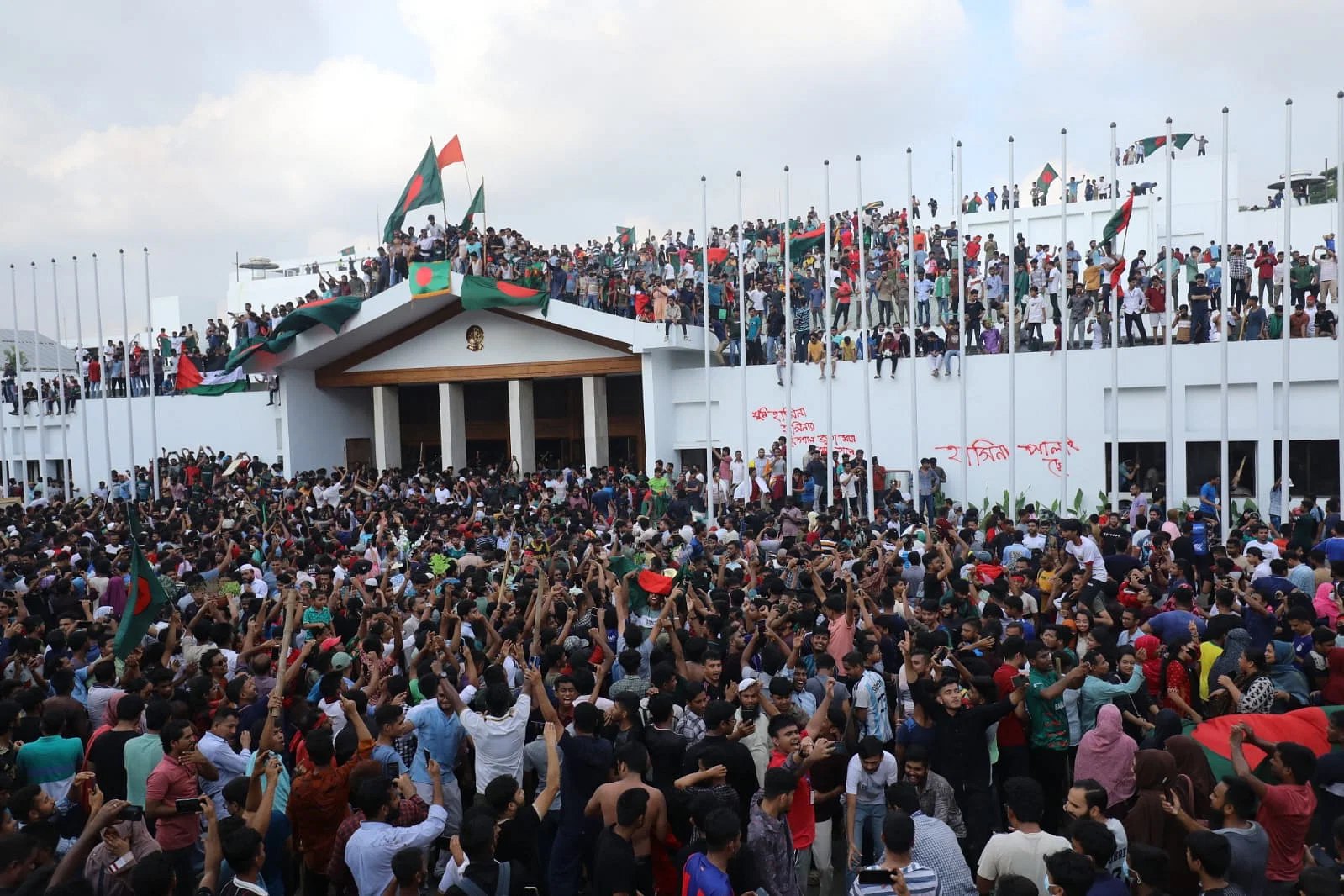
Crowds outside the prime minister’s office during the Uprising. Photograph by Dipu Malakar, courtesy Prothom Alo

The statement issued on 24 September 2024 by the Lemkin Institute for Genocide Prevention titled ‘Statement on Threats to Democracy in Bangladesh’[1] has drawn our attention not only due to misrepresentation of facts but also because it aligns more with the narrative of the ousted autocratic regime led by Sheikh Hasina and her party Awami League than with the aspirations of the people of Bangladesh. The statement has failed to capture the complexities of the situation in Bangladesh and thereby presents a misguided narrative about the uprising and its aftermath. Under the circumstances we feel obligated to respond to set the record straight and point out the inaccuracies in the statement.

Continue reading A Misguided Narrative – A Response to the Lemkin Institute’s Statement on Bangladesh: Sohul Ahmed →

न्याय के रास्ते धर्मतंत्र की कवायद: जस्टिस श्रीशानंद, विहिप की बैठक और काशी-मथुरा की बारी

इन दिनों कर्नाटक उच्च न्यायालय के एक न्यायाधीश वी. श्रीशानंद सुर्खियों में हैं। उन्‍होंने बीते 28 अगस्‍त को एक अदालती सुनवाई के दौरान बेंगलुरु के एक मुस्लिम-बहुल इलाके को पाकिस्तान कह दिया और एक महिला वकील को लेकर आपत्तिजनक टिप्पणी की। इस बयान के कथित वीडियो पर सोशल मीडिया में जब काफी शोर मचा, तब मुल्क की आला अदालत घटना के को लेकर हरकत में आई। उसके कारण अगले ही दिन श्रीशानंद को खुली अदालत में खेद जताना पड़ा।

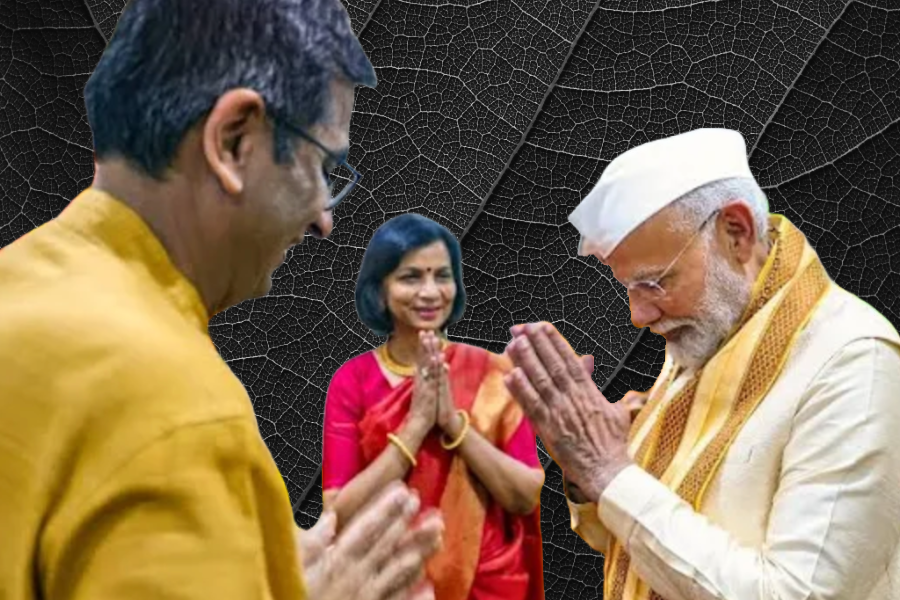
सुप्रीम कोर्ट के मुख्य न्यायाधीश चंद्रचूड़ की अध्यक्षता में पांच जजों की पीठ ने 20 सितंबर को श्रीशानंद के बयान पर स्‍वत: संज्ञान लेते हुए उसे ‘अनावश्‍यक’ करार दिया और कर्नाटक उच्च न्यायालय के रजिस्‍ट्रार जनरल को इस संबंध में रिपोर्ट बना कर भेजने का आदेश दिया था। सुप्रीम कोर्ट ने यह भी कहा था कि वह सुनवाई के दौरान जजों के प्रेक्षण को लेकर कोई दिशानिर्देश जारी कर सकती है। अगली सुनवाई की तारीख 25 सितंबर दी गई थी।

इस दूसरी ही तारीख पर मामले को निपटा दिया गया। 25 सितंबर को सुनवाई शुरू होते ही मुख्य न्यायाधीश ने बताया कि 23 सितंबर को ही कर्नाटक उच्च न्यायालय के रजिस्‍ट्रार जनरल द्वारा उक्त रिपोर्ट जमा कराई जा चुकी है। चूंकि जस्टिस श्रीशानंद ने खेद जता दिया है, तो सर्वोच्च अदालत इस मामले को आगे नहीं ले जाएगी और उन्हें नोटिस नहीं देगी।

दिलचस्प है कि सर्वोच्च न्यायालय ने केस को निपटाते हुए जजों के लिए कथित ‘दिशानिर्देशों’ का कोई जिक्र नहीं किया, जिसका हवाला 20 सितंबर को दिया गया था। इससे भी ज्यादा हैरान करने वाली बात है कि इस मामले में श्रीशानंद के बयान को मुख्य न्यायाधीश ने “बुनियादी रूप से भारत की अखंडता के खिलाफ” करार दिया। पहले उन्होंने इसे “अनावश्यक” कहा था।

बहरहाल, सुप्रीम कोर्ट का यह हल्का हस्तक्षेप भी काबिले तारीफ है, पर सवाल उठता है कि जजों के लिए अगर कोई दिशानिर्देश बन भी जाए तो भविष्य में अदालतों में कही जाने वाली उलट-सुलट बातों पर क्या रोक लग जाएगी?  ( Read the full post here :https://followupstories.com/politics/ethics-of-judiciary-and-justice-shrishanand-episode/)

Your Honour, the Rot Runs Really Deep !

The Karnataka HC episode is a wake-up call for the judiciary, as the battle to save it from interference by the executive could have long-term consequences for democracy.

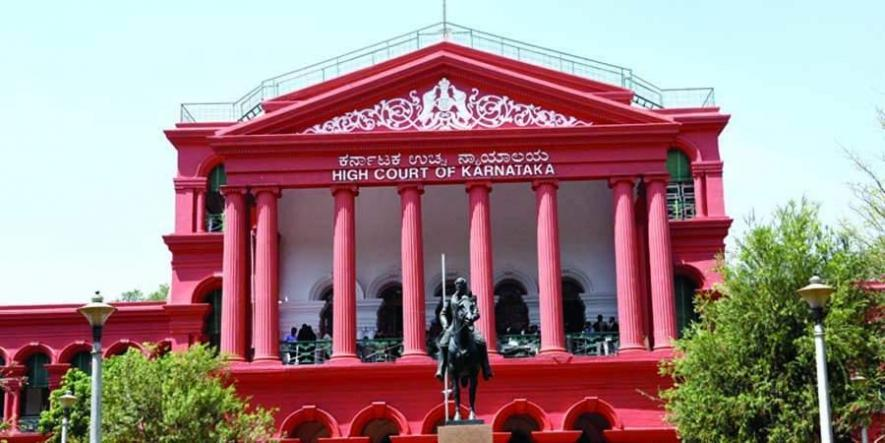
High Court of Karnataka. Image Courtesy: Wikimedia Commons

Justice Srishananda of the Karnataka High Court is in the news for wrong reasons.

What has caused tremendous unease is the way he openly referred to a Muslim-majority area in Bengaluru as “Pakistan” during a hearing and even made a misogynistic comment involving a woman lawyer.

The open display of prejudice toward a community and gender — by someone who is supposed to uphold the Constitution — infuriated a wide cross-section of people. A five-judge bench of the Supreme Court led by Chief Justice Chandrachud also lost no time in condemning these highly irresponsible remarks and asked the Karnataka HC to submit a report in this connection.

..The SC’s quick intervention in the Karnataka case is definitely a welcome development.

The question arises whether establishing such clear guidelines would really prove a dampener to such utterances in courts in future? Would it really put a stop on judges who have had no qualms in declaring that ”based on religion, India should have been declared Hindu nation after independence.’ or declaring ‘Modi a model and a Hero’. ( Read the full article here : https://www.newsclick.in/your-honour-rot-runs-really-deep)

Would Agniveer Ever Be Scrapped ?

It is a plan to militarise civilians a la Israel.

Representational Image.

Truth, as they say, has an uncanny ability of bursting out into the open, unannounced. This seems to have happened with the controversial Agniveer Scheme – the introduction of contract based employment in the military for four years – which even cost the ruling dispensation a few seats in the recent parliamentary elections.

What Prafulla Ketkar, who has been editor of ‘Organiser’ for the last eleven years, underlined in an event merits close attention in this connection. To a pointed question where he was asked ‘[w]hether India should prepare civilians for situations similar to those faced by Israel’, he specifically mentioned that ‘[t]he Agniveer scheme was introduced for this purpose only. The scheme aims to train military-ready individuals who can be deployed during crises.’

It has been more than four days since Ketkar made this explosive statement, which obviously contradicts what the government wants us to believe. But there has been neither any denial of the statement from the highest level nor has he been reprimanded by top bosses of the Sangh Parivar for making such outrageous statements.

( Read the full article here : https://www.newsclick.in/would-agniveer-ever-be-scrapped)

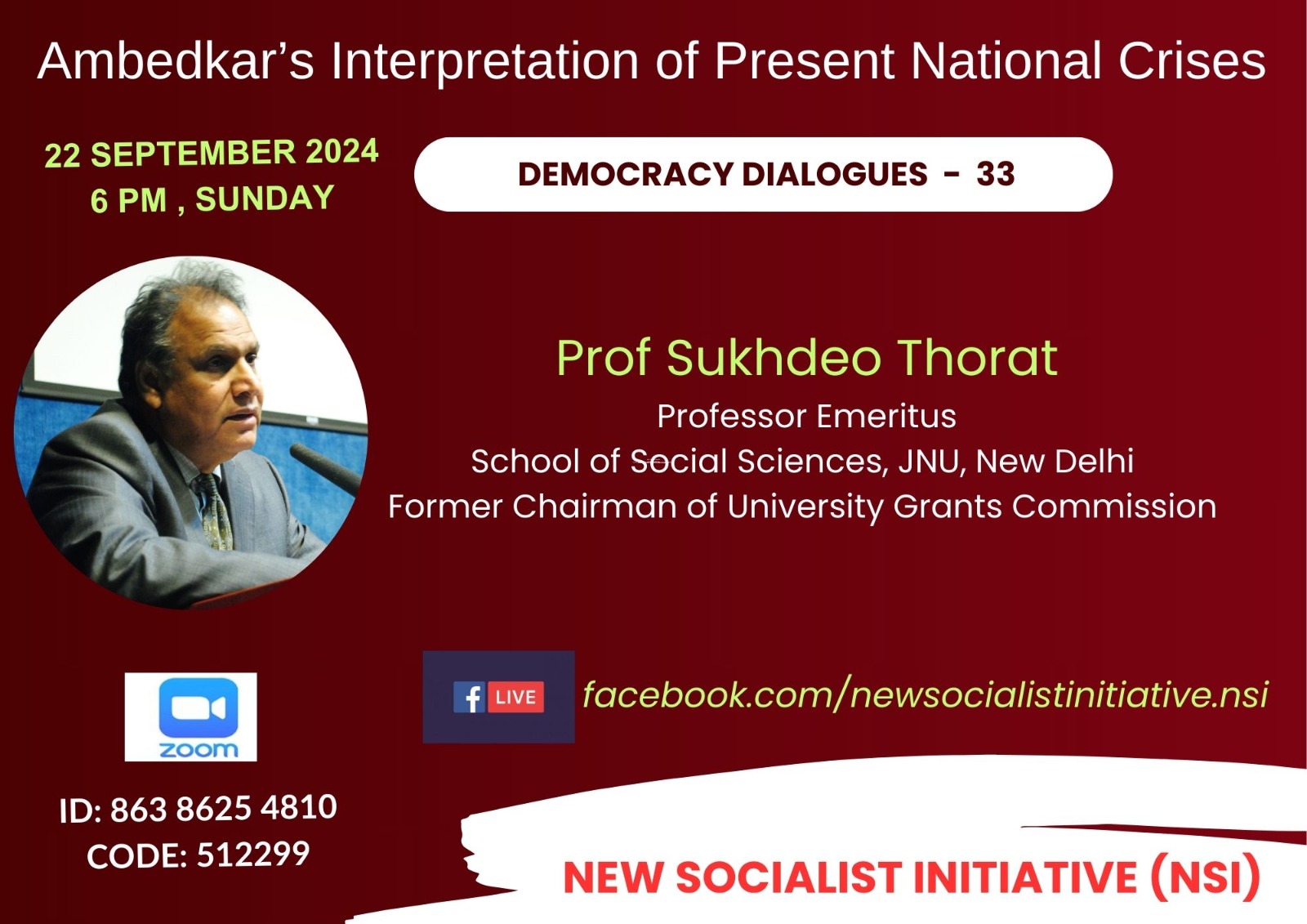
Dr. Ambedkar’s  Interpretation of Present  National Crises

Prof Sukhdeo Thorat

Professor Emeritus, School of Social Sciences, Jawaharlal Nehru University, New Delhi 

Theme :Dr. Ambedkar’s  Interpretation of Present  National Crises

Number of scholars have tried to explain the present crisis by drawing insights from  the experience of Fascism of Hitler in Germany 1930’s and/or  similar viewpoints . Without undermining these attempts, I feel that  Ambedkar’s  theoretical perspective on Indian history presumably helps us more to grapple with the  present crisis .In Ambedkar’s view it is continuation of the non-stop efforts from ancient times to bring back Brahmanism . Ambedkar observes that “that there was in ancient India, a great struggle between Buddhism and Brahmanism. It is not even a struggle but a quarrel over some creed ,The Buddhism  was revolutionary and while Brahminsm  was  counter-revolutionary. It was a revolution and counter revolution in doctrine by a revolution in political and social philosophy”. The present attempt is an on-going legacy of the ancient Indian where it began , and carried through the medieval to British and to the present time with tenacity and stubbornness to maintain the privileges that the Brahmanical ideology bestowed on  those who coined this ideology .The lecture will try to bring insights on Ambedkar’s perspective .

About the Speaker
Prof Sukhdeo Thorat, Professor Emeritus, School of Social Sciences, Jawaharlal Nehru University, New Delhi ; former Chairman of University Grants Commission and former Chairman of ICSSR (Indian Council of Social Science Research) is a leading economist, educationist and writer.
A renowned Ambedkar scholar Prof Thorat graduated with a B.A. from Milind College of Arts, Aurangabad, Maharashtra and has done PhD in Economics from Jawaharlal Nehru University. He was a  Faculty Member at Jawaharlal Nehru University, New Delhi and visiting faculty at Department of Economics, Iowa State University, Ames, USA and has been associated with various national-international institutes and organisations.
Recipient of many awards including Dr Ambedkar National Award (2011) and Padmashree ( 2008), he has authored and edited many books and monographs. Here is a list of his major publications :
– Ambedkar on Social Exclusion and Inclusive Policy
– Dalits in India? Social and Economic Profile (Sage)
– Ambedkar in Retrospect: Essays in Economics, Society, and Politics (edited) with Aryama & Negi. (Rawat Publication)
– Social Science Research in India : Status, Issue and Policies ( co-authored with Samar Varma) – Oxford University Press ( 2016)
– Politics of Representation : Historically Disadvantaged Groups in India’s Democracy ( co edited with Prof Sudha Pai) Palgrave Macmillan ( 2012)
– Untouchability in Rural India Sage, 2006 (with G. Shah, Harsh Mander, Satish Deshpande & Amrita)
– Caste, Race, and Discrimination – Discourse in International Context (edited) (with Umakant), Rawat Publication, Jaipur (2004)

Vikalp Sangam – A Decade of Exploration on Alternatives in India: Ashish Kothari

Guest post by ASHISH KOTHARI

Abstract [1]

The multiple crises humanity confronts require fundamental shifts in how we relate to the Earth and to each other. This entails tackling the roots of these crises head-on, including the structures and relations of patriarchy, racism, colonialism, capitalism, statism, and anthropocentrism. This in turn needs to be done within the context of visions of the ideal society we want. This essay presents a process in India, Vikalp Sangam (Alternatives Confluences), that has attempted for a decade to document, visibilise, network, and create collaborations amongst movements and groups involved in alternative approaches for justice, equity, ecological sustainability. It describes the process and its various components, the challenges and opportunities of bringing very diverse groups from different cultural contexts together, the potential of a bottom-up and participatory visioning process, and the excitement of attempting to bridge conventional traditional-modern, practitioner-intellectual, urban-rural, and other divides.

Keywords: Democracy; Visioning; Alternatives; Environment; Civil society

Introduction: The Making of Vikalp Sangam  

A decade is not a short span of time – and yet, it is too short. These are the contrasting thoughts I have as I contemplate a process that I have been part of since its initiation, as I and my colleagues enter into a phase of reviewing whether it is on course to meeting the objectives it began with. This is Vikalp Sangam, or Alternatives Confluence, a national platform established in India in 2014.

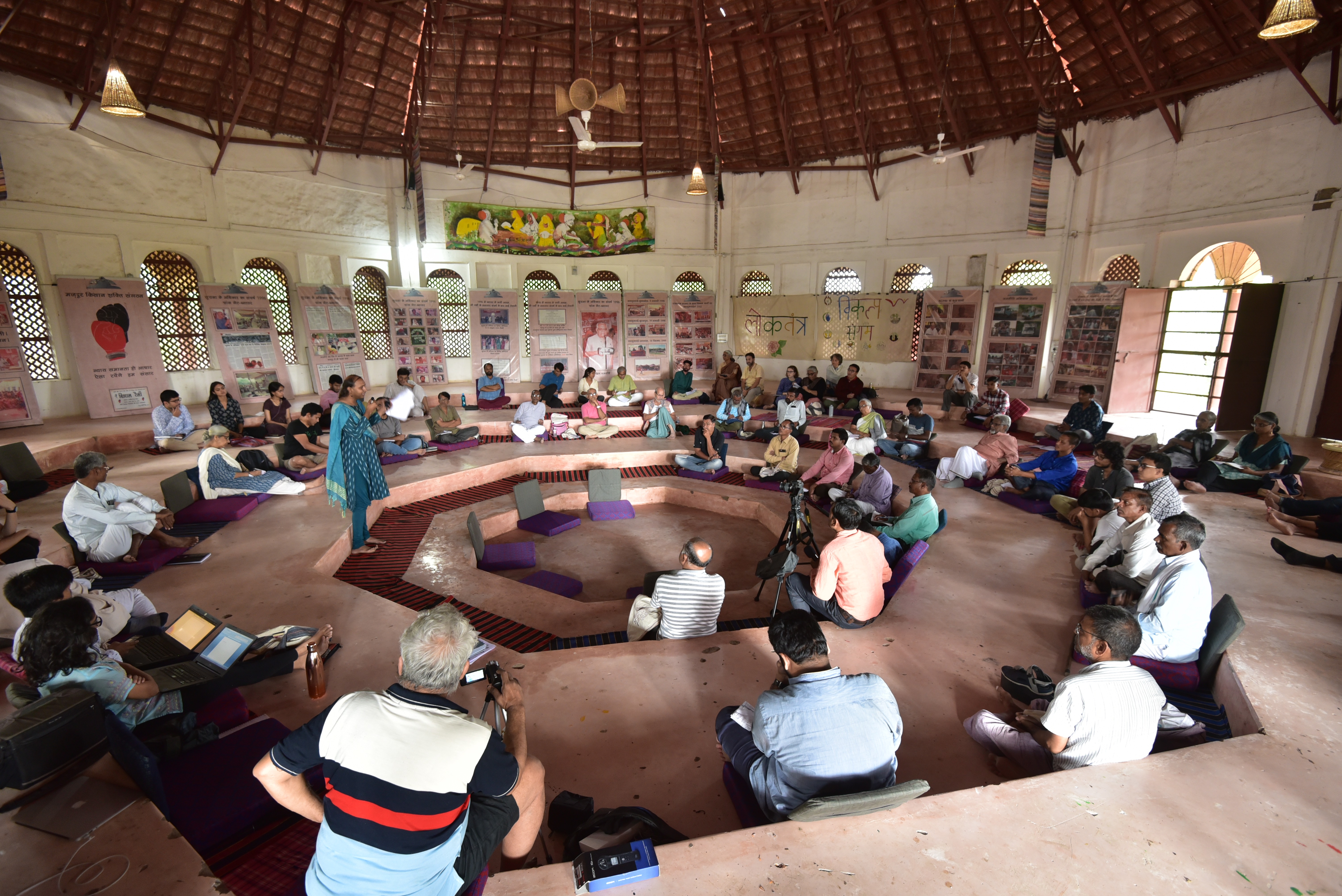
Democracy Vikalp Sangam, School for Democracy, Rajasthan, October 2019
Continue reading Vikalp Sangam – A Decade of Exploration on Alternatives in India: Ashish Kothari →

Labour Rights Violations Revealed by the Hema Committee Report: A Public Discussion — Althea Women’s Collective

This is the recording of a public discussion of a set of proposals to be submitted to the Kerala Labour and Skills Department, addressing the issues raised by the Hema Committee Report which probed the conditions of women workers in Malayalam cinema. The committee was set up in the wake of the kidnapping and sexual assault of a female actor which was allegedly orchestrated by an influential male actor as an act of revenge. Outraged by the attack on their colleague, some women actors in Malayalam cinema came together to form the Women in Cinema Collective. It was their pressure that resulted in the formation of the committee. The committee took up this truly challenging assignment and completed it in December 2019, but the Kerala government delayed releasing it till last month. Only a redacted version was released which led to an uproar about the way the government seemed determined to protect the accused men, rumoured to be the most powerful actors and others in the industry. The uproar led to resignations of powerful peddlers of misogyny and upper-caste violence in the Malayalam cinema industry — notably, Ranjith, Chairman of the Kerala State Chalachithra Academy and the en masse resignation of the executive committee of AMMA, the gatekeeping organisation set up and controlled by dominant elements in the industry. The report’s release encouraged many less-prominent female artists to complain against powerful actors. The resignation of Mukesh, actor and CPM MLA has been demanded strongly by feminists, but the CPM has refused to order him to step down.

The Althea Women’s Collective is a feminist group based in Thiruvananthapuram. This discussion is based on the proposals they intend to add to a petition to be submitted to the Kerala State Labour and Skills Department.

Twenty Days that Shook the World – Bangladesh Uprising II : Shahed Suvo

Guest post by SHAHED SUVO

This is the second part of the two-part article by Shahed Suvo, published earlier in Bangla in Ekak Matra on 10 August 2024. The first part appeared yesterday and can be accessed here. This part deals with the last days of the Sheikh Hasina regime and the transition that immediately followed. It has been translated for Kafila by ARUN SINHA.

Responding to the call of the anti-discrimination student movement, student-citizens gathered at Shaheed Minar on August 3. Young people continued to gather at Shaheed Minar with separate protest processions.  At this time, elderly citizens were also seen participating in the protest march with them. At around 5:30 PM in the afternoon, the coordinator of the organization leading the quota reform movement Md. Nahid Islam announced a one-point demand in a speech to the students-people gathered at Shaheed Minar – Prime Minister Sheikh Hasina and her cabinet must resign.

Asif Mahmud, another coordinator of the movement, announced the outline program of the non-cooperation movement.

Continue reading Twenty Days that Shook the World – Bangladesh Uprising II : Shahed Suvo →

Feminist Solidarity in the Times of the Hema Committee Report

The Hema Committee Report has led to a welcome flurry of feminist activism in Kerala, both among the mainstream feminists as well as others. All political viewpoints within Malayali feminism have stood strongly with the WCC and sought to further their fight, with the implicit agreement that the WCC should not perceived as responsible for all further work.

Continue reading Feminist Solidarity in the Times of the Hema Committee Report →